- There are no classes. Eivor's three skill trees, Raven (stealth), Wolf (melee) and Bear (ranged and power attacks), are unlocked with the same skill points, so a build is a direction you lean, not a box you're locked into.
- Spend the opening hours in Norway. It is short on purpose and teaches raiding, the settlement and the map icons before England opens up properly.
- Ravensthorpe grows through buildings bought with raided supplies, not through a skill tree of its own. A handful of early buildings unlock systems the rest of the game depends on.
- Power level matters more than character level for deciding where to go. A location's recommended power tells you how ready your gear and skills are, not how strong your character number is.
- Wealth, mysteries, artifacts and Order of the Ancients targets are the actual open-world loop in England; the main story is a fairly small part of total playtime.
- Wrath of the Druids (Ireland) and The Siege of Paris (Francia) are paid expansions from the Season Pass; River Raids and the Mastery Challenge were free updates added later. Dawn of Ragnarök is a separate, much larger paid expansion released in 2022.
- Valhalla was the last of the Origins-Odyssey-Valhalla RPG trilogy before Assassin's Creed Mirage returned to a smaller, stealth-first format and Assassin's Creed Shadows changed the formula again.
What kind of game this is before you start#
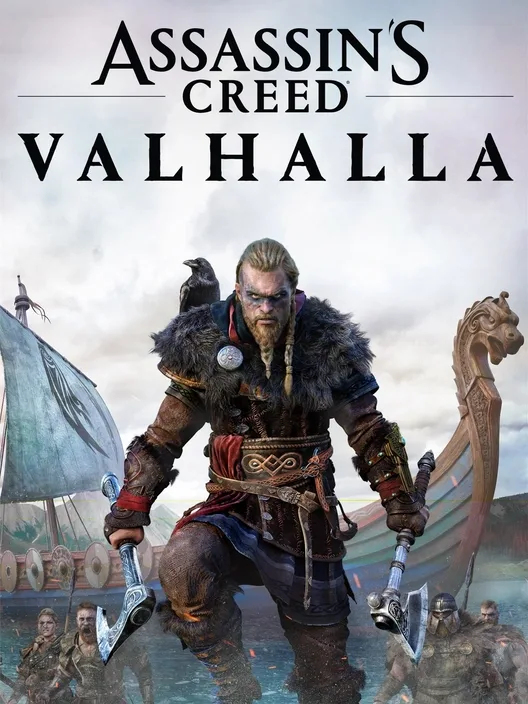
Assassin's Creed Valhalla, released on 10 November 2020 for PlayStation 4, Xbox One, Windows PC and Google Stadia, with PlayStation 5 and Xbox Series X|S versions following within days as part of that console generation's launch window, is an open-world action RPG built around Eivor, a Viking raider who leads their clan from Norway to England to build a new home. It continues the systems Assassin's Creed Origins and Assassin's Creed Odyssey introduced: a levelled world with gear stats, a skill tree instead of a linear upgrade path, and a map covered in optional activities rather than a tightly authored campaign.
What makes Valhalla different from those two games is the structure around the open world. Instead of one continuous landmass, the game is split into England, divided into a dozen or so kingdoms called into regions, plus a short Norway prologue and, later, additional regions added by DLC. Each region has its own story arc, its own local lord to ally with or fight, and its own recommended power level. You are meant to move between them as your character grows, not clear one from top to bottom before moving to the next.
The other structural change is the settlement. Ravensthorpe, the Viking camp you found early on, is a persistent base that grows visibly as you invest raided materials into it, and several of its buildings gate off systems you will use for the rest of the game. None of this is explained in much detail by the tutorial, so this guide covers it before you need it.
Skill trees: how the build system actually works#
Eivor has no class selection screen. Instead, there is a single skill tree shaped like a constellation, divided into three branches that correspond to combat styles:
| Branch | Focus | What it rewards |
|---|---|---|
| Raven | Stealth, assassination, ranged utility | One-hit assassinations, hidden blade upgrades, bow synergy, adrenaline generation from stealth kills |
| Wolf | Dual-wielding and aggressive melee | Fast weapon-swap combos, dual-wield damage, stamina efficiency in extended fights |
| Bear | Heavy weapons, blocking, crowd control | Two-handed weapon damage, parry and block windows, area attacks against groups |
Skill points are earned by levelling up and by finding Books of Knowledge scattered across the world, each of which grants one extra point outright. Points are spent on nodes along the constellation, and reaching certain nodes also increases your base attributes (health, and stat bonuses tied to Raven, Wolf or Bear values that gear can also boost). Because every branch draws from the same pool of points, a build is really a question of which nodes you prioritize first, not a permanent choice.
In practice, most players end up leaning into two branches rather than one: Raven and Bow-focused Wolf hybrids for a stealth-heavy playstyle that finishes fights it can't avoid with heavy hits, or Wolf and Bear together for a player who wants to fight most encounters head-on. Pure Bear builds, tanky and slow, are the most forgiving for players unfamiliar with the combat, since blocking and parrying carry you through fights a stealth-focused build would rather avoid entirely.
A few structural things matter more than which branch you favor:
- Two-handed weapons and dual-wielding both work without a stat penalty, but each has its own upgrade nodes, so switching between the two loses you some of your invested points' value. Pick a primary combat style early and commit for a while.
- Assassination damage scales with Raven investment and remains extremely strong throughout the game, including against enemies well above your recommended power level, if you approach undetected. This makes stealth valuable even in a build built around melee.
- Adrenaline fuels special abilities tied to your equipped weapons, separate from skill points; it fills through combat and stealth kills alike and should never sit unused before a hard fight.
- Runes, socketed into weapons and armor, are a second progression layer on top of the skill tree and matter as much as skill points by the midgame. A well-runed weapon at a lower tier can outperform an unruned upgrade.
There is no formal respec penalty; skill points can be reset for a rune-based cost at any time, so experimenting with a build in the first ten hours costs little.
Norway: the short prologue that teaches the game#
The opening hours take place in Norway, in Eivor's home region of Rygjafylke, and they are deliberately compact. This section exists to teach four things before England opens up: basic combat, the raiding loop, the settlement concept, and how the map's icon system communicates activities. It typically runs three to five hours depending on how much of the optional content you clear.
During this stretch you'll raid a handful of monasteries and outposts near your homeland, recruit key characters who later become part of your inner circle in England, and make the decision that sends Eivor across the sea. None of the choices here lock you out of major content later; they mostly affect which allies appear and small narrative details.
Two things are worth doing before leaving Norway rather than rushing through:
- Clear the wealth and artifact icons close to your starting village. They are low-risk, and the rewards (early gear pieces and raw materials) carry over and give you a head start once Ravensthorpe needs investment.
- Pay attention to the raiding tutorial fights. Raids are the main way you gather building materials for the settlement in England, and Norway is the only place the game explicitly walks you through the loop of breaching a locked door, killing the defenders and looting the chest inside before your crew leaves.
Do not expect Norway's zone to represent the density of England. It is a tutorial region wearing an open map's clothing, and treating it as a full region to 100% will just delay the more varied content across the sea.
England: how the regions and pacing actually work#
Once Eivor arrives in England, the map opens into a set of distinct kingdoms and territories, each shown with a recommended power level rather than a fixed order. Some early regions, like Ledecestrescire and East Anglia, sit at a low recommended level and make sense to visit first; regions further north and west scale up considerably and are meant for a mid-to-late-game character.
The pacing loop in each region generally follows the same shape:
- Arrive and speak to the regional ally (a lord, an abbess, a local leader) who explains the political situation.
- Work through a handful of story missions tied to that alliance, usually ending in either securing the region peacefully or removing a hostile figure by force.
- Complete the alliance by raising the region's status, which increases the resources Ravensthorpe receives from it going forward.
- Along the way, clean up the region's wealth, mysteries, artifacts and Order of the Ancients targets at your own pace.
Nothing forces you to fully finish a region's alliance mission before moving to another one, and many players bounce between two or three regions rather than committing to one until it's finished. The main throughline, though, is that your Power Level and Ravensthorpe's development both climb faster if you engage with a region's alliance content rather than only doing side activities, since alliance rewards include gear and settlement resources you don't get any other way.
Settlement building: what Ravensthorpe actually needs#
Ravensthorpe starts as little more than a longhouse and a beach. Raided supplies, mainly raw materials collected from raid chests and side activities, are spent on constructing and upgrading buildings, and each building change is visible on the map rather than tucked into a menu screen.
The buildings that matter most for a new player, roughly in the order they become worth prioritizing:
| Building | Unlocks | Why it matters early |
|---|---|---|
| Hidden Ones Bureau | Order of the Ancients tracking, assassination contracts | Turns the invisible "Order" system into a visible list of targets and clues |
| Stable | Faster horse, mount cosmetics | Quality-of-life once you're covering large distances regularly |
| Blacksmith (upgraded) | Higher armor and weapon upgrade tiers | Gear upgrades cap out fast without this; a low-tier smithy bottlenecks your Power Level |
| Tattoo Parlor, Seer's Hut and similar cosmetic buildings | Appearance options, some minor gameplay tie-ins | Optional, low priority |
| Fishing Hut, Barracks and other resource buildings | Passive income of materials or recruitable allies | Worth building once core progression buildings are done |
Materials come from raiding monasteries (marked by a raven icon on the map, distinct from ordinary points of interest) and from completing certain quests and mysteries. Raiding is fast, repeatable, and generally the most efficient way to catch the settlement up if it falls behind your character's own progress.
A settlement lagging behind your Power Level is a common beginner problem: characters who rush the main story while ignoring raids end up under-equipped relative to what the story expects, because gear upgrades are gated behind smithy tiers that require settlement investment. If a region feels harder than it should, checking whether Ravensthorpe's blacksmith is behind is worth doing before assuming the fight itself is unfair.
The activity loop: wealth, mysteries, artifacts and the Order#
Outside the main story and regional alliances, England's map is covered in four recurring activity types, and understanding what each gives you avoids wasted time:
- Wealth covers the largest category: hoards of silver, gear chests, and books of knowledge. These are the most numerous icons and the most worth clearing as you pass through an area, since silver funds settlement construction and gear chests are a real source of early equipment upgrades.
- Mysteries are small, self-contained puzzles or combat challenges, often with a short unique reward like a specific piece of gear or a cosmetic. They vary widely in quality; some are genuinely clever, others are a short fetch task. They're worth doing when convenient, not worth detouring far for.
- Artifacts include Ancient Rune slots, Well-Worth-Knowing tips, flyting duels (rap-battle style verbal contests) and other regional flavor content that mostly rewards cosmetics or small mechanical bonuses.
- The Order of the Ancients is the game's throughline connecting Valhalla back to the wider Assassin's Creed premise. A shadowy group has infiltrated England's power structures, and finding clues (often from interrogating minor targets, reading letters or completing certain quests) reveals members' identities, locations and weaknesses on a dedicated tracking board in the Hidden Ones Bureau. Assassinating members grants meaningful skill points and gear, and the Order investigation is one of the better-paced systems in the game because it turns exploration into detective work rather than a simple checklist.
A sensible approach for a first playthrough is to clear wealth and Order clues as you naturally pass through a region during the story, treat mysteries as a bonus when stumbled upon, and not worry about 100%-ing a region before moving on. The game's pacing assumes overlap between regions, not sequential completion.
Combat basics worth knowing early#
Valhalla's combat is heavier and slower than Odyssey's, with a stronger emphasis on parrying. A few habits make the first several hours noticeably less frustrating:
- Parry timing (not blocking) is the core defensive skill. A well-timed parry against a flashing red attack staggers most human enemies and opens them to a heavy follow-up; simply holding block drains stamina and eventually fails against unblockable attacks.
- Dual-wielding light weapons trades damage per hit for speed and adrenaline generation, while two-handed weapons hit far harder but leave you exposed during their wind-up; matching your weapon choice to how comfortable you are with parry timing matters more than raw stats.
- Assassinations bypass most fights entirely when done from stealth, and Raven-branch investment keeps this viable well past the early game, including against tougher enemy types most builds otherwise struggle with.
- Runes are not optional flavor. Socketing a weapon or armor piece with runes that match your playstyle (bleed on a dual-wield build, health-on-kill for aggressive Bear builds) is a bigger power spike than most single skill points.
DLC and expansions: what's actually in each piece#
Assassin's Creed Valhalla received an unusually large amount of post-launch content across roughly a year and a half, split between paid expansions, a season pass, and free updates. It's easy to lose track of what's included where, so here is what each piece actually adds.
| Content | Type | Release | What it adds |
|---|---|---|---|
| River Raids | Free update | 16 February 2021 | A replayable, roguelite-style raiding mode along generated river routes, separate from the main map |
| Wrath of the Druids | Paid expansion (Season Pass) | 13 May 2021 | A new region, Ireland, with its own story involving a Druidic cult, new gear, mounts and a mystery-solving system |
| Mastery Challenge Pack | Free update | 15 June 2021 | Repeatable stealth and combat trial modes plus a handful of new weapons, aimed at players who've finished the main story |
| The Siege of Paris | Paid expansion (Season Pass) | 12 August 2021 | A new region in Francia, culminating in the historical siege of Paris, with its own story arc, gear and a new endgame-adjacent activity |
| Dawn of Ragnarök | Standalone paid expansion | 10 March 2022 | A large, separate expansion set in the mythological realm of Svartalfheim, playing as the god Odin, with its own progression system and roughly 35 hours of content |
The Season Pass, sold separately from the base game or bundled into the Complete Edition, covers Wrath of the Druids, The Siege of Paris, and the smaller Legend of Beowulf quest content. Dawn of Ragnarök is not part of the Season Pass; it is a separate, larger purchase, reflecting its scale relative to the earlier two regional expansions. The Complete Edition bundles the base game, the full Season Pass content, Dawn of Ragnarök and a cosmetic Berserker gear pack, making it the most straightforward way to buy everything at once if you're starting today.
River Raids and the Mastery Challenge Pack are free for anyone who owns the base game, added as ongoing support alongside the paid expansions rather than requiring any additional purchase.
If you're deciding what to buy, the practical answer is: the base game alone is a complete story on its own with dozens of hours of content, Wrath of the Druids and The Siege of Paris are worthwhile mid-sized additions if you want more of the same regional-alliance structure in new settings, and Dawn of Ragnarök is a genuinely different, mythology-driven expansion best saved for after the main campaign.
Where Valhalla sits in the series#
Assassin's Creed Valhalla closed out the trilogy of open-world RPGs that began with Assassin's Creed Origins in 2017 and continued with Assassin's Creed Odyssey in 2018. It was, at the time, the largest of the three in scope, and it remained the series' flagship release until Assassin's Creed Mirage arrived in October 2023, deliberately built smaller and faster to return to the series' stealth-and-parkour roots after three consecutive RPGs. Assassin's Creed Shadows followed in March 2025 with yet another structural shift, introducing dual protagonists and a feudal Japan setting.
None of that history is required to enjoy Valhalla; the game tells a complete, self-contained story. It's useful context mainly for understanding why Valhalla feels the way it does: it's the last and largest entry built on the Origins/Odyssey RPG foundation, made at a point when Ubisoft was still leaning fully into scale, before the series pulled back in a different direction.
Frequently asked questions#
How long does Assassin's Creed Valhalla take to finish? The main story runs somewhere in the 25 to 35 hour range if you move through regions with minimal side content. Engaging with wealth, mysteries and Order of the Ancients targets along the way pushes that well past 60 hours, and a genuine full completion including all DLC is closer to 100 hours or more.
Do I need to play Origins or Odyssey first? No. Valhalla's story stands on its own, and the systems (skill tree, gear tiers, region structure) are explained from scratch. Familiarity with the earlier games mostly adds recognition of returning characters and lore threads rather than mechanical knowledge.
Is there a wrong order to play the DLC in? Wrath of the Druids and The Siege of Paris are each self-contained regional stories that can be played in either order once unlocked, generally after some progress in the main England campaign. Dawn of Ragnarök is best left until after the main story, since its difficulty and systems assume a developed character.
Should I focus on the main story or explore first? A mix works best. Ravensthorpe's growth and your gear both depend on raiding and wealth collection, so ignoring the open world to rush the story tends to leave you under-equipped for later regions.
What's the difference between River Raids and normal raiding? Normal raids happen on the main map at fixed monastery locations tied to the story regions. River Raids is a separate free-update mode with its own generated river routes and modifiers, designed to be replayed repeatedly for materials and gear rather than experienced once.
Can I change my build later if I don't like it? Yes. Skill points can be reset for a rune cost at any time with no other penalty, so testing a Raven-heavy stealth approach against a Bear-heavy melee approach early on costs little.
Is the Complete Edition worth it over buying the base game alone? If you already know you want the DLC, yes, since it bundles everything (Season Pass content plus Dawn of Ragnarök) at once. If you're unsure whether you'll finish even the main campaign, starting with the base game and adding expansions later is the lower-commitment option.