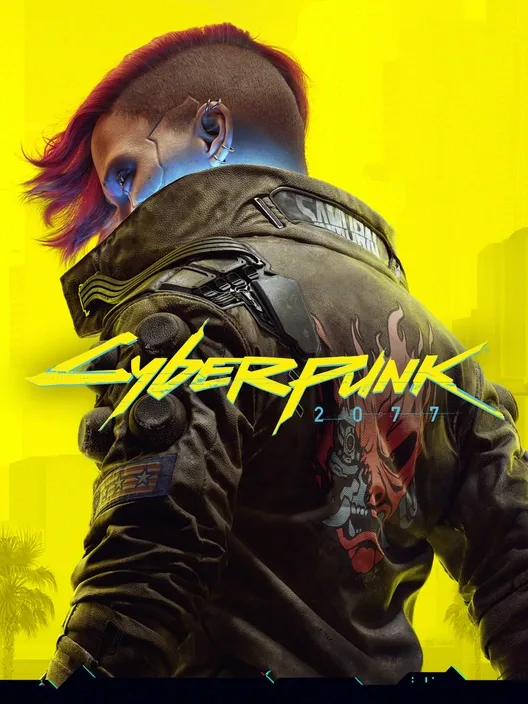
- Cyberpunk 2077 is not the game it was at launch in December 2020. Update 2.0, released in September 2023 alongside the Phantom Liberty expansion, rebuilt the perk trees, police AI, cars and cyberware from the ground up. Play the current version, not the one you remember reading about.
- Lifepath (Nomad, Streetkid or Corpo) only changes your prologue, a handful of unique dialogue lines and one or two side jobs. It does not lock any build, weapon or ending. Pick the one whose opening hour sounds the most fun.
- Attribute points now go into five stats: Body, Reflexes, Technical Ability, Intelligence and Cool. Perks sit inside each attribute's tree, so raising an attribute is what unlocks the perks under it.
- You do not need Phantom Liberty to play a complete, current version of the game, but the expansion is where most of the endgame content, the best late perks and one whole ending now live.
- Phantom Liberty only opens once you reach a specific point partway through Act 2, or you can skip straight to it from a fresh save at level 15.
- Gigs and side jobs are not filler. Several of the best character writing, the strongest unique weapons and one of the game's main endings come from side content, not the critical path.
- Cyberware is equipped like gear, not spent like a skill point, and almost every early cyberware slot is worth filling as soon as you can afford it.
What state is Cyberpunk 2077 in right now#
Cyberpunk 2077 launched on 10 December 2020 for PlayStation 4, Xbox One, PC and Stadia, and it launched in rough shape: bugs, poor console performance and a wave of refunds that are well documented and don't need repeating here. That is not the game on shelves today. CD Projekt Red spent three years rebuilding the game's core systems, and Update 2.0, released on 21 September 2023, replaced the entire perk and attribute system, reworked police behaviour so officers now respond realistically instead of teleporting in, added a proper vehicle combat system, and overhauled cyberware into its current slot-based form. Phantom Liberty, the game's one story expansion, released five days later on 26 September 2023.
The game is available on PC, PlayStation 5, Xbox Series X|S, and, since 5 June 2025, on Nintendo Switch 2 as Cyberpunk 2077: Ultimate Edition, which bundles the base game and Phantom Liberty together and is the first time the game has appeared on a Nintendo platform. PlayStation 4 and Xbox One support for new content ended after the 2.0 era; the last-gen versions still run, but the current-gen and PC versions are where ongoing patches land.
CD Projekt Red has continued releasing free updates into 2026, including patches focused on stability, AutoDrive and photo mode adjustments, and the studio has said publicly that it is winding down numbered content updates for Cyberpunk 2077 as its own team's attention shifts to the sequel, codenamed Project Orion. None of that changes what a new player needs to know: the 2.0-plus version is a different, considerably better game than the one that launched, and everything in this guide describes that current version.
Choosing a Lifepath: what it actually changes#
At the start of a new game you pick a Lifepath: Nomad, Streetkid or Corpo. This is the single most over-explained decision in the game, so it's worth being direct about what it does and doesn't do.
| Lifepath | Opening scene | What carries into the rest of the game |
|---|---|---|
| Nomad | You leave the Aldecaldos clan in the Badlands and head into Night City for the first time. | Occasional unique dialogue options referencing your clan background, a couple of Badlands-flavoured side interactions, and a distinct opening flashback used later in the story. |
| Streetkid | You already live and hustle in Night City and know its streets. | Unique dialogue with certain gang members and fixers who recognise you, and a different opening flashback. |
| Corpo | You work for Arasaka before a job goes wrong and you're cast out. | Unique dialogue in scenes involving Arasaka staff and corporate settings, plus a different opening flashback. |
That's the whole list. Lifepath does not affect your attributes, your available perks, your weapons, your romance options, your cyberware, or which of the game's endings you can reach. It changes roughly the first thirty to sixty minutes of the game, a scattering of dialogue lines you'll mostly notice as flavour rather than mechanics, and the specific flashback sequence that appears at a key story moment later on. Every Lifepath ends up in the same place, playing V, in the same Night City, with the same build options.
So the real decision is much simpler than most guides make it sound: pick the opening that sounds most interesting to you. Streetkid gives the most immediately grounded, low-key introduction to the city. Nomad gives the strongest sense of arriving somewhere new, which pairs well if you want that outsider feeling. Corpo gives the sharpest, most cynical opening and the most unique dialogue with corporate NPCs later. None of them is a wrong choice, and none of them locks you out of anything mechanical.
Attributes and perks: how builds work now#
Under the 2.0 system, everything you spend on your character routes through five attributes. Each level-up gives you an Attribute Point to put into one of them, and each attribute has its own perk tree that only opens up as you raise that attribute's level. Perk Points, earned separately from levelling and from certain quests, are what you actually spend inside those trees.
| Attribute | Governs | Typical playstyle it supports |
|---|---|---|
| Body | Max health, melee and shotgun damage, ability to force doors and grapple enemies | Tanky brawlers, shotgun and melee builds, anyone who wants to survive mistakes |
| Reflexes | Crit chance, handling with assault rifles, submachine guns and blades, dodging | Fast, mobile builds built around blades or automatic weapons |
| Technical Ability | Armour, crafting quality, resistance to environmental damage, tech weapon handling | Crafters, tech-weapon users, builds that lean on grenades and armour |
| Intelligence | Quickhacking strength, RAM capacity, hacking-related cyberware | Netrunners who fight primarily through quickhacks rather than guns |
| Cool | Crit damage, stealth detection range, pistol and sniper handling, resistance to detection | Stealth builds, cold-blooded perks that reward chaining kills |
A few practical points that matter more than any specific perk pick:
- You are not locked in. Respec is available from very early on through a machine called a Ripperdoc-adjacent shard, or more simply, by resetting your attribute and perk points for an in-game cost that most players can easily afford. Experimenting with a build is cheap.
- Cold Blood, under Cool, is one of the most broadly useful perk lines in the game regardless of build, because it grants a temporary buff after any kill that stacks and benefits nearly every playstyle.
- A "pure" build is optional. Because respeccing is cheap and attributes cap at 20 each with a level cap of 50 in the base game (60 with Phantom Liberty installed), most players end up spreading points across two or three attributes that support one coherent playstyle, such as Body and Reflexes for a melee build, or Intelligence and Cool for a stealthy netrunner.
- Cyberware slots are separate from attributes, but several attributes gate which cyberware you can equip, so a heavily specialised build will also want to check what cyberware its attribute spread unlocks.
Cyberware basics#
Cyberware in the current version is equipment, not a permanent skill purchase. You buy or find cyberware, install it at a Ripperdoc, and swap it out again whenever you want, the same way you'd swap a weapon. It sits in dedicated body slots: Frontal Cortex, Nervous System, Circulatory System, Integumentary System, Skeleton, Hands, Arms, and a few others depending on the item.
A handful of early cyberware choices carry outsized value for a new character:
- Kerenzikov (Nervous System) slows down time briefly whenever you dodge, and is one of the strongest single pieces of cyberware for staying alive in gunfights, especially before you've built up armour or perks.
- Any Operating System-tier cyberware in the Frontal Cortex slot improves quickhacking, which matters even for players who aren't building a full netrunner, because a few utility quickhacks (short-circuit, weapon glitch) are useful in almost every fight.
- Subdermal armour (Integumentary System) is a cheap, direct survivability boost with no real downside.
- Cyberware capacity is governed by Technical Ability and, to a lesser extent, Body, so a character dumping everything into one combat attribute and ignoring these two may find their cyberware options limited later on.
There is no need to min-max cyberware on a first playthrough. Buying whatever your Ripperdoc has that fits your build and upgrading it when better versions appear is enough to keep pace with the game's difficulty curve.
Key early decisions#
A few choices come up early and are worth knowing about before you hit them blind, described here without spoiling their outcomes.
- The relic and Johnny Silverhand. Early in the main story, an engram of the deceased rockerboy Johnny Silverhand becomes lodged in V's mind and begins appearing as a companion of sorts throughout the story. His attitude toward you, expressed through dialogue choices across many missions, tracks in the background and affects some late-game content. There's no need to manage this deliberately; playing however you naturally would is the intended approach.
- Judy and Panam's questlines. Both characters offer substantial, well-written personal storylines tied to romance options (Judy for female-voiced or bisexual-leaning V, Panam for male-voiced or bisexual-leaning V, with some flexibility depending on your choices). These aren't required for the main story, but they're widely considered some of the best writing in the game and shouldn't be skipped purely to rush the plot.
- Pyramid Song and the point of no return. Once you begin the mission that starts the endgame sequence, the game locks you out of the open world and side content until you finish. The game gives you a clear warning before this point, but it's worth knowing the warning exists so you don't trigger it by accident while trying to finish "just one more job."
- How you treat fixers. Regis, Wakako, Mr. Hands, Dino, and the other fixers each hand out gigs across different districts. There's no reputation system that locks you out of their work, but completing gigs for one unlocks more from the same fixer, so it's worth working through a fixer's board rather than jumping between all of them at once if you want to see their character writing develop.
Gigs, side jobs and pacing against the main story#
Cyberpunk 2077's main story can be finished in roughly 20 to 25 hours if you only follow the critical path. That is not how the game is designed to be experienced, and rushing it skips most of what makes Night City work as a setting.
The city's side content splits into three tiers, and they are not interchangeable:
| Content type | What it is | Worth your time? |
|---|---|---|
| NCPD Scanner Hustles | Small map markers: a crime in progress, a stash of loot, a minor combat encounter | Skippable in bulk. Good for quick cash and cyberware components, not for story or characters. |
| Gigs | Short jobs from a fixer, usually 10-20 minutes, often with a twist or a moral wrinkle | Worth doing steadily. Several of the best-written moments in the game, and some memorable unique weapons, are gig rewards. |
| Side Jobs | Longer, named questlines with recurring characters, often multi-part | Do not skip these. This is where most of the game's character writing and several unique outcomes to the main story actually live. |
A reasonable pace for a first playthrough is to treat the main story missions as the spine and weave gigs and side jobs in between them district by district, rather than doing every side job in one area before ever advancing the plot, or doing nothing but plot until the credits. The game paces its difficulty and its story beats assuming you're doing a mix of both, and going in level-appropriate for each district (which mostly happens naturally if you don't rush) keeps encounters fair without ever needing to grind.
Content that's commonly missed#
A few things new players regularly walk past without realising they exist:
- Cyberpsycho Sightings. A set of NCPD-flagged optional bosses scattered around the city, each a short, dangerous fight against a heavily modified enemy with its own backstory delivered through shards found at the scene. They're easy to ignore because they look like generic map markers, but they have some of the best environmental storytelling in the game.
- Riding the metro. A fully modelled, functional metro system was added as part of Update 2.0. It's optional, since fast travel exists, but it's one of the best ways to see Night City's districts up close rather than skipping straight past them.
- Photo Mode and vehicle customization. Both were substantially expanded after launch and are easy to never open if you don't go looking for them in the menus.
- The full Phantom Liberty ending path. Because Phantom Liberty is only accessible from partway through Act 2, and because its own story has a lasting effect on how the base game's ending plays out, players who buy the expansion but treat it as an optional side trip can miss how directly it ties into the main story's final act.
- Militech and Voodoo Boys side content, tied to the Panam and Judy questlines respectively, which contain some of the most substantial world-building outside the main plot and Phantom Liberty.
When to start Phantom Liberty#
Phantom Liberty is CD Projekt Red's one expansion for Cyberpunk 2077, adding the walled-off district of Dogtown, a new spy-thriller storyline built around the character Solomon Reed, a new perk tree (Relic), new weapons and cyberware, a raised level cap, and an ending path that reshapes how the base game's story can conclude.
You cannot access it immediately from a new game. On an existing save, it opens up once you reach a specific point roughly a third to halfway through Act 2 of the main story, when a character reaches out about the malfunctioning relic in V's head. If you're starting fresh purely to play the expansion, the game also offers a "Skip Ahead to Phantom Liberty" option at the start of a new game, which drops you into a level 15 character right at the point the expansion opens up, skipping the earlier parts of the main story.
For a first-time player who owns Phantom Liberty, the better approach is usually to play the base game's main story up to the point where the expansion unlocks naturally, do a healthy amount of side content along the way so you're not badly under-levelled, and then decide whether to detour into Dogtown immediately or finish more of the base game first. Phantom Liberty's own difficulty assumes a reasonably built, mid-game character, so jumping in the moment it unlocks at a low level with few perks is more punishing than waiting until you're a little stronger.
Frequently asked questions#
Do I need Phantom Liberty to play Cyberpunk 2077 properly? No. Update 2.0's systems overhaul, which touches perks, police, cars and cyberware, is free and applies to every copy of the game. Phantom Liberty adds a new district, story and ending path on top of that, but the base game is a complete, current experience without it.
Does Lifepath affect my build or ending? No. It changes your opening sequence, a flashback used later, and a handful of dialogue lines. It has no effect on attributes, perks, weapons or which ending you can reach.
How long is the main story? Roughly 20 to 25 hours following only the critical path. Doing a healthy mix of gigs and side jobs alongside it typically brings a first playthrough closer to 60 to 80 hours; seeing most of the game's content, including Phantom Liberty, runs well beyond 100 hours.
Can I respec my attributes and perks? Yes. Respeccing costs an in-game resource but is available early and is cheap enough that experimenting with different builds is never a serious risk.
Is Cyberpunk 2077 good on Switch 2? The Nintendo Switch 2 version, released 5 June 2025 as the Ultimate Edition, includes the base game and Phantom Liberty together and was built specifically for that hardware rather than ported as an afterthought.
Which Lifepath should I pick if I can't decide? Streetkid gives the most straightforward introduction to the city and its factions if you want a grounded start. Nomad and Corpo both offer a stronger sense of arriving from somewhere else, which some players prefer for the tone it sets.
Should I romance Judy or Panam? Both questlines are substantial and well written, and which one is available depends partly on V's voice and your dialogue choices. Neither is required for the main story, and skipping both to rush the plot means missing some of the game's strongest character writing.