- Pick a class based on how you like to fight, not on tier lists. All five original classes can clear the campaign and the endgame; none of them are secretly bad.
- Barbarian and Spiritborn are the most forgiving melee starts, Sorcerer and Necromancer give the most room to play from range, and Rogue sits comfortably in between.
- World Tiers are gone. Since patch 2.0, everyone starts on one of four base difficulties and only unlocks Torment 1 to 4 later through the Pit, on any character, at any time.
- The campaign is optional after the first character. Every class unlocked, an alt, or a fresh season start can skip straight to a guided endgame tutorial instead.
- Helltides, Nightmare Dungeons and the Pit are the three pillars of the endgame loop. Learn what each one is for before grinding any of them blind.
- Seasons reset progress on a separate seasonal character every few months and hand out a free and a paid Battle Pass track; your permanent Eternal Realm characters are never touched.
- Two paid expansions exist as of September 2026: Vessel of Hatred (October 2024) and Lord of Hatred (April 2026). Neither is required to enjoy the base game and its free seasonal updates.
What to know before you start#
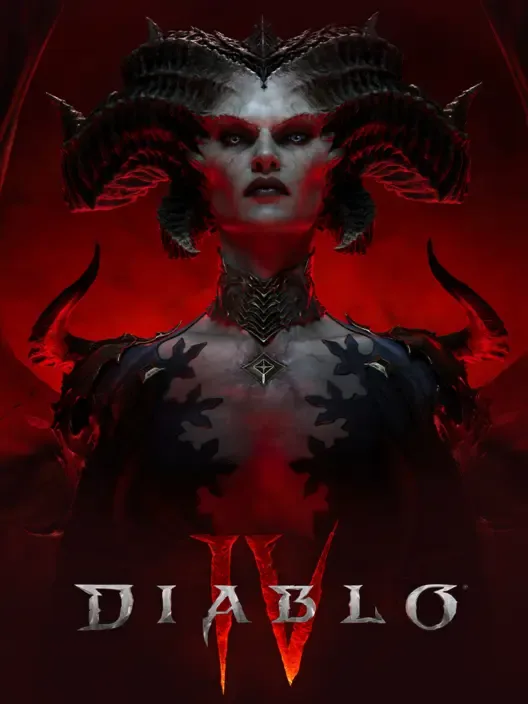
Diablo IV is Blizzard's isometric action RPG, released in June 2023 for PlayStation 4, PlayStation 5, Xbox One, Xbox Series X|S and PC. It is also part of Xbox Game Pass on console and PC, which is the cheapest way to try it if you already subscribe. Unlike Diablo III, which launched thin and grew over a decade, Diablo IV shipped with a full campaign, an open world shared by other players in town hubs, and a live-service structure built around three-month seasons from day one.
The core loop never really changes: kill demons, pick up loot, use the loot to kill bigger demons faster. What changes constantly is the difficulty system, the endgame content and the character options around that loop, because Blizzard has rebuilt large parts of Diablo IV twice since launch. The most important thing a returning or brand-new player needs in 2026 is not "how do I play", it is "what does the game look like right now", because a guide, a build or a screenshot from 2023 can describe a system that no longer exists.
Three things anchor everything else in this guide:
| Concept | What it is | Why it matters now |
|---|---|---|
| Difficulty | Four base tiers (Normal, Hard, Expert, Penitent) plus four Torment tiers unlocked later | Replaced the old World Tier system in October 2024; see the section below |
| Seasons | A three-month content cycle with a Battle Pass and an optional seasonal character | The current one is Season 15, Season of Hell's Legacy, live since 15 September 2026 |
| Expansions | Paid story and system expansions that add classes, regions and endgame content | Vessel of Hatred (2024) and Lord of Hatred (2026) are both out; neither is required |
Choosing a class: the five classes everyone starts with#
Every class in Diablo IV can clear the campaign, farm Nightmare Dungeons and push high Pit tiers eventually. The differences are in how a class feels to play at level 1, not in whether it works. Pick the playstyle that sounds fun, because you can level a second or third character quickly once you know what you are doing.
| Class | Playstyle | Resource | Best for |
|---|---|---|---|
| Barbarian | Melee, weapon-swapping, huge single hits and shouts | Fury | Players who want to stand in the middle of a fight and hit things until they stop moving |
| Sorcerer | Ranged elemental caster, fire, cold or lightning | Mana | Players who want to control a room from range and chain elemental effects |
| Druid | Shapeshifting melee or ranged storm and pet caster | Spirit | Players who like flexibility, werewolf or werebear brawling, or a companion-heavy playstyle |
| Rogue | Fast melee or ranged hybrid with combo points and traps | Energy, Combo Points | Players who want mobility, stealth options and both a bow and dual blades |
| Necromancer | Minion army, curses and corpse-based bone and blood magic | Essence | Players who like commanding a small army and watching enemies pop into showers of bone |
The recommendation, ranked for a first character
- Barbarian is the easiest class to understand on day one. You hold multiple weapons at once, swap between them mid-combo for extra damage, and the class has some of the highest raw survivability in the game thanks to Fortify and Unstoppable effects. There is no elemental theory to learn, just bigger weapons and bigger numbers.
- Spiritborn, available to anyone who owns Vessel of Hatred, is nearly as forgiving. It summons a spirit guardian, gets a passive resistance boost, and its early skills already deal strong single-target and group damage without much setup. It is the fastest class to level in the game.
- Rogue rewards players who like variety. A Rogue can go pure bow, pure dual-wield melee, or mix both, and Combo Points give a clear short-term goal in every fight: build them up, then spend them on a finisher.
- Necromancer is the most visually distinct class and one of the sturdiest, because a minion build lets skeletons and golems soak hits while you stay safe. It asks a little more of a new player, since minion upkeep and corpse generation both need attention.
- Druid offers the most raw variety of any class: a Druid can be a pure werewolf brawler, a pure werebear tank, a ranged storm caster, or all three at once. That freedom is also why it is the hardest class to build well as a first character, since spreading points across three playstyles usually does none of them well.
- Sorcerer deals some of the best damage in the game once a build comes together, but it starts with low health and a real risk of dying to attacks it never saw, because the class rewards positioning far more than any other. A first-time Sorcerer should lean on Teleport and crowd control rather than standing still to cast.
Whatever class is chosen, the difficulty selection is a separate decision made afterwards, and it can be changed freely at almost any time. Class choice shapes the first ten hours, not the whole game: gear, skill trees and, from level 15 onward, the Paragon board reshape a build completely as a character grows.
Difficulty in 2026: from World Tiers to Torment#
For the first year and a half of Diablo IV, difficulty was chosen once at character creation as a World Tier, from Adventurer up through World Tier IV, and raising it required finishing the campaign or clearing a capstone dungeon at a minimum character level. That system is gone. Blizzard replaced it in patch 2.0, released alongside Vessel of Hatred in October 2024, with a difficulty ladder that any character, new or old, can move through freely from the pause menu.
The current ladder has eight steps in two groups:
| Difficulty | Group | How to unlock | Who it is for |
|---|---|---|---|
| Normal | Base | Available immediately | Never picked in practice; skip straight to Hard |
| Hard | Base | Available immediately | New characters, the campaign, low-level leveling |
| Expert | Base | Available immediately | Characters in their teens to twenties who want faster leveling |
| Penitent | Base | Available immediately | Endgame preparation, right before Torment |
| Torment 1 | Torment | Cleared via a Pit tier requirement, not a level requirement | The real start of the endgame loop |
| Torment 2 | Torment | Higher Pit tier clear | Players with a full build and decent gear |
| Torment 3 | Torment | Higher Pit tier clear | Strong builds pushing item power and Masterworking |
| Torment 4 | Torment | Highest Pit tier clear | The current top of the ladder, for min-maxed builds |
The base tiers scale enemy health and damage upward while giving better loot in return, and any character can switch between them at any point outside combat with no penalty and no unlock requirement. Torment tiers are different: they unlock by clearing a matching tier of the Pit, Diablo IV's timed dungeon-pushing activity, and they are the only tiers that drop the highest-rarity crafting materials and the strongest item affixes. A brand-new player has no reason to touch Torment for the first several dozen hours; a returning player from 2023 should know that "raise your World Tier before Nightmare Dungeons unlock" is outdated advice.
Campaign vs endgame: the loop that actually keeps people playing#
The campaign tells the story of Lilith's return to Sanctuary across five acts and roughly 20 to 25 hours for a first playthrough. It is fully voiced, has genuine highs, including one of the better final acts Blizzard has written for the series, and it is worth playing at least once. After the first character finishes it, or on any later character on the same account, Diablo IV offers a Skip Campaign option at character creation that jumps straight into a short prologue and drops the new character into the open world at level 1 with the endgame systems already unlocked.
Once the story is out of the way, or skipped, the game becomes a loop built around three activities layered on top of the open world:
- Nightmare Dungeons are regular dungeons with an added modifier and a set item power level, unlocked from a Nightmare Sigil found as loot or bought from the Occultist. They are the main way to level a Glyph, the socketable rune that powers the Paragon board, and they are the most reliable source of steady, controllable loot.
- Helltides are timed open-world events that turn a large zone hostile, corrupted red for roughly an hour. Killing enemies and closing Fiend Rifts fills a meter that spawns a Blood Maiden or lets you open Tortured Gift chests for Aberrant Cinders, the currency spent at the event's own boss encounters and reward chests.
- The Pit is Diablo IV's answer to a pushable difficulty ladder: a timed dungeon with a set of escalating tiers, cleared to earn both bragging rights and, crucially, the unlock for the next Torment difficulty. It is also the best source of Masterworking materials, used to push gear stats above their base roll.
A newer player's honest order of operations is: finish or skip the campaign, spend a few hours on Nightmare Dungeons and Helltides to gear up on Hard through Penitent, unlock Torment 1 through a matching Pit tier, then repeat the same loop at each successive difficulty. None of these systems require an active season or a seasonal character; all three work identically on a permanent Eternal Realm character.
Seasons, the Battle Pass and your characters#
Diablo IV runs on roughly three-month seasons, each with its own theme, a set of temporary powers unique to that season, and a Battle Pass with free and paid tracks. As of late September 2026 the game is in Season 15, Season of Hell's Legacy, which launched on 15 September 2026 and centres on Diablo, Mephisto and Baal together, with a reputation system built around Splinters of Evil and a set of remixed dungeons pulling scenes from earlier Diablo games.
The character model behind every season works like this:
| Character type | Where it lives | What resets each season | What carries over |
|---|---|---|---|
| Eternal Realm character | Permanent, always available | Nothing | Everything: level, gear, gold, Paragon, Renown |
| Seasonal character | Tied to the current season only | The character starts fresh at level 1 | Nothing during the season; once the season ends, the character and its gear move permanently into the Eternal Realm |
Creating a seasonal character is entirely optional. It is the only way to earn that season's unique seasonal mechanic and to compete on the seasonal leaderboards, but the Battle Pass itself, cosmetics, and most seasonal Renown rewards apply account-wide regardless of which realm is played. A player who only wants to enjoy Diablo IV's base systems without racing a new build every three months can ignore seasons entirely and keep playing a single Eternal character indefinitely; nothing about the loop described above requires starting over.
The two expansions: Vessel of Hatred and Lord of Hatred#
Diablo IV has shipped two paid expansions since launch, and both changed systems that apply even to players who never bought them.
Vessel of Hatred, released in October 2024, added the jungle region of Nahantu, the sixth playable class Spiritborn, a new endgame dungeon built for co-op, and an overhaul to the Paragon system that made Paragon points and glyphs shared account-wide rather than tied to one character's level. It also shipped alongside the free 2.0 patch that removed World Tiers entirely, which is why the current difficulty system described earlier in this guide applies to every player, expansion or not.
Lord of Hatred, released on 28 April 2026, is the second expansion. It adds the region of Skovos, continues the story toward Mephisto, and introduces two more classes, Paladin and Warlock, built respectively around Faith and Oath-based holy combat and around demon-summoning shadow magic. Like Vessel of Hatred, its class additions and story content are exclusive to owners of the expansion, but the seasonal content, Battle Pass and base difficulty and endgame systems it ships alongside remain free for everyone.
Neither expansion is necessary to have a complete Diablo IV experience. A new player on a budget can play the base game, all five original classes, every season's free content, Helltides, Nightmare Dungeons and the Pit indefinitely without spending anything beyond the base purchase or a Game Pass subscription. The expansions are worth it specifically for players who want the newest classes, the newest regions, and the deeper story content tied to Mephisto's return.
Ten mistakes almost every beginner makes#
- Grinding Normal difficulty. Normal exists mostly as a legacy option; Hard gives meaningfully better loot for barely tougher enemies and should be the default from character creation onward.
- Ignoring Renown rewards. Renown, earned per region by clearing side content and activating Waypoints and Altars of Lilith, unlocks permanent Skill Points, Paragon Points and stash space account-wide. Skipping it on a first character leaves real power on the table.
- Hoarding gold and materials. Crafting materials and gold both have a real use ceiling per season; spending them on gear upgrades and Masterworking beats sitting on a large stockpile that expires in relevance every patch.
- Not respeccing. Skill points and Paragon points can both be refunded for gold at almost any time. A build that feels wrong at level 30 is not a permanent mistake.
- Skipping Altars of Lilith. Each one grants a small permanent stat bonus. There are enough scattered across the map that ignoring them noticeably slows down survivability.
- Fighting everything at once. Diablo IV rewards target selection. Elite packs with dangerous affixes, marked by a colored border and icon above their health bar, are worth reading before engaging blind.
- Never checking item power versus difficulty. Loot quality is tied directly to the difficulty it drops on. Farming Hard difficulty at character level 60 produces far weaker gear than the same time spent on Penitent.
- Underusing the Occultist and Blacksmith. Both let you reroll affixes, upgrade rarity and imprint Aspects from the Codex of Power onto gear, which is how most strong builds actually come together, not from random drops alone.
- Waiting too long to try Nightmare Dungeons. They scale to the Sigil's own item power level, not strictly to character level, and jumping in earlier than expected is usually safe and always faster experience than repeating the campaign's later zones.
- Assuming the game still uses World Tiers. Guides, videos and forum posts from before October 2024 describe a difficulty system that no longer exists. If a piece of advice mentions "World Tier III" or a level requirement to raise difficulty, treat it as outdated.
Frequently asked questions#
How long does Diablo IV take to finish? The five-act campaign runs roughly 20 to 25 hours for a first playthrough. There is no true ending to the endgame loop; Nightmare Dungeons, Helltides, the Pit and each new season are designed to continue indefinitely.
Which class is best for beginners? Barbarian for the simplest first character, Spiritborn as a close second for anyone who owns Vessel of Hatred. Both are melee-focused, high-survivability classes with little setup required before they feel strong.
Do I need to play the campaign every time? No. Only the very first character on an account is required to play it in full. Every later character, including seasonal ones, can use the Skip Campaign option at creation.
What happened to World Tiers? They were removed in October 2024 with patch 2.0. Difficulty is now Normal, Hard, Expert and Penitent as freely selectable base tiers, followed by Torment 1 through 4, which unlock by clearing matching tiers of the Pit rather than by character level.
Do I need to buy a season pass every three months? No. The free Battle Pass track exists in every season and gives usable rewards; the paid track only adds cosmetics and a currency shortcut, never gameplay power.
Is Diablo IV on Xbox Game Pass? Yes, on console and PC Game Pass, which is the lowest-cost way to try the base game before deciding whether to buy either expansion.
Do I need Vessel of Hatred or Lord of Hatred to enjoy the game? No. Both add classes, regions and story content, but seasons, the core difficulty system, Helltides, Nightmare Dungeons and the Pit are free and identical for every owner of the base game.
What is the current season? Season 15, Season of Hell's Legacy, started on 15 September 2026 and centres on the return of Diablo, Mephisto and Baal together, with a reputation system built around Splinters of Evil.
Can I play solo, or does Diablo IV require other players? Diablo IV can be played entirely solo. Towns and some open-world events are shared with other players by default, but dungeons, the campaign and most endgame activities can be entered alone or with a private group.
Should I start a seasonal character or stick to the Eternal Realm? Start a seasonal character if the current season's mechanic sounds interesting or if leaderboards matter to you; otherwise a single Eternal Realm character loses nothing meaningful by skipping seasons, since it keeps every season's permanent additions, like new Aspects and skills, automatically.