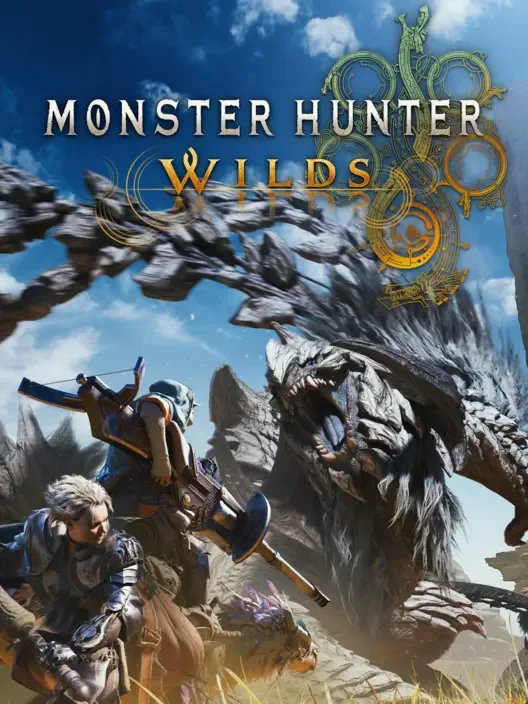
- Do not agonise over your first weapon. Every weapon can break every part and destroy every wound in Focus Mode, so nothing you pick is objectively weaker.
- Start with Sword and Shield, Long Sword or Dual Blades. All three are fast, forgiving to move with, and teach the game's rhythm without punishing every mistake.
- The Seikret is not just a horse. It carries a second, fully separate weapon loadout, follows monster scoutflies automatically, and lets you heal, sharpen and restock while it runs.
- A hunt has two phases that matter: tracking the monster to its resting spot, then wearing down its stamina and health until it can be captured or killed. Capturing is usually the smarter choice.
- Focus Mode is not optional flavour. Aiming your attacks at a monster's wounds with Focus Strikes is the single biggest damage and stagger tool in the game.
- The story ends around 20 to 25 hours, but that is a fraction of the game. High Rank, Tempered Monsters and the Artian weapon system are where Monster Hunter Wilds actually opens up.
- Check the in-game notice board and the Field Survey and Support Hunter systems before you assume there is nothing new to do. Most of the content beginners miss is optional by design, not hidden.
What Monster Hunter Wilds actually is#
Monster Hunter Wilds is Capcom's mainline entry in the Monster Hunter series, released on 28 February 2025 for PlayStation 5, Xbox Series X|S and PC via Steam. A Nintendo Switch 2 version has been announced for release later in 2026. The premise is simple to state and takes dozens of hours to fully explore: you join the Hunters Guild's Forbidden Lands expedition, travelling between distinct regions to track, fight and either capture or slay giant monsters for materials that become your armour and weapons.
What separates Wilds from earlier games in the series is not the core hunting loop, which is largely unchanged, but three systems built around it: the Seikret mount that keeps you moving instead of walking, a dynamic weather system that changes what a region looks like and how monsters behave in it, and a heavily reworked targeting system called Focus Mode that turns "hit the weak point" from a memorised fact into something you actively aim for. None of these systems are hidden behind late-game unlocks; you are using all three within the first hour, and understanding them properly is what turns a confusing opening into a game that clicks.
There is a low-rank story campaign first, followed by a High Rank continuation once you finish it, and then an open-ended endgame built around repeatable hunts of increasingly dangerous versions of monsters you already know. Four free content updates released through 2025 and into early 2026 added new monsters, a weapon-upgrade system, and harder Arch-Tempered versions of existing fights, and a paid expansion called Ascendance, set after the story and adding a new sky-island region, was announced in mid-2026 for release the following year. None of that content is necessary to enjoy the base game, but knowing it exists helps explain why players who "finished" Wilds in year one are often still playing it in year two.
Choosing a weapon: all fourteen types#
The biggest wall new players hit is not a monster, it is the weapon selection screen. Monster Hunter Wilds has fourteen weapon types, each with a genuinely different moveset, rhythm and role in a fight. The good news is that the choice is much less permanent than it looks: your hunter can carry any weapon at any time, the training area lets you try each one for free against a stationary target, and every weapon can wound and destroy a monster's Focus Mode weak points equally well. Picking "wrong" costs you an evening of practice, not a wasted playthrough.
| Weapon | Style | Range | Good for a first weapon? |
|---|---|---|---|
| Great Sword | Slow, huge single hits, block with the flat of the blade | Melee | Only if you like patient, all-or-nothing timing |
| Long Sword | Fast combos that build toward a finishing counter-slash | Melee | Yes, one of the best starting picks |
| Sword and Shield | Fast, mobile, can block, item-use and attack without sheathing | Melee | Yes, the most forgiving weapon in the game |
| Dual Blades | Very fast flurries, a rage mode called Archdemon Mode | Melee | Yes, great if you prefer constant pressure |
| Hammer | Blunt, high stun potential, best against a monster's head | Melee | Reasonable, but stun timing takes practice |
| Hunting Horn | Plays melodies mid-combat that buff the whole party | Melee | Only if you enjoy supporting a group over solo damage |
| Lance | Poke-and-block, extremely safe, low mobility | Melee | Good if you dislike dodging and prefer holding ground |
| Gunlance | Lance with shelling attacks and a big wyrmstake finisher | Melee/ranged hybrid | Fun but has more to learn than it looks |
| Switch Axe | Swaps between a sword form and a heavier axe form with elemental phials | Melee | Better as a second weapon once basics click |
| Charge Blade | Swaps between sword-and-shield and a charged axe form | Melee | One of the most complex weapons in the series; not a first pick |
| Insect Glaive | Vaults into the air, uses a Kinsect to steal buffs from monsters | Melee, airborne | Fun but has a real learning curve |
| Bow | Fast, mobile ranged attacks with elemental coatings | Ranged | Good if you want a ranged option that still feels active |
| Light Bowgun | Fast, mobile, rapid-fire ranged weapon with a moderate ammo pool | Ranged | Solid beginner ranged pick |
| Heavy Bowgun | Slow, high raw damage, wide ammo variety including Cluster and Wyvernheart | Ranged | Powerful but ammo management is a lot to track early |
The recommendation, in order
- Sword and Shield is the single easiest weapon to learn. It is fast, it can block, and it is the only weapon that lets you drink a potion, sharpen your blade or throw an item without sheathing first, which means you almost never have to fully disengage from a fight to do housekeeping. It will never hit the hardest of any weapon, but it teaches monster attack patterns faster than anything else because you are never standing still doing a long animation.
- Long Sword is the pick for players who want something with more visual flair and a satisfying combo structure. Its Spirit Gauge builds as you land hits and lets you unleash a strong finishing slash, and its guard and counter options are generous enough that a beginner is not punished for an imperfect read. It rewards aggression more than Sword and Shield does.
- Dual Blades is the third strong option, particularly for players coming from action games who want to be moving and attacking constantly rather than reading a slower rhythm. Its Archdemon Mode trades your stamina bar for a burst of speed and damage, which is an easy concept to grasp immediately and refine over time.
Everything past those three is worth trying in the training area, but Charge Blade and Insect Glaive in particular ask you to track more than one resource on screen at once, and Great Sword and Hammer ask for patience that is easier to develop once you already understand monster attack timing from a faster weapon. There is no wrong final answer here, only a harder or easier first ten hours.
The Seikret: more than a mount#
Every hunter travels with a Seikret, a bird-like mount that is summoned almost anywhere outdoors and follows scoutflies toward the monster you are tracking automatically once you have gathered enough tracks. Riding it is the fastest way to close distance across a region, and unlike walking it lets you use items, apply sharpening and even fire ranged attacks while moving, which removes a lot of the downtime that used to interrupt a hunt.
The detail that surprises most new players is that the Seikret carries a second, completely separate weapon. You can swap to it mid-hunt from the mount, which means you always have a genuine backup option, whether that is a ranged weapon to soften a monster before it notices you, an elemental weapon to exploit a specific weakness, or simply a second copy of your main weapon type built with different skills. Setting this second weapon before a quest, rather than ignoring the slot, is one of the easiest ways to get more out of every hunt without changing how you play at all.
Seikrets can also be customised with different skins and gear over time, though none of that affects how a hunt plays out; it is purely cosmetic. What does matter mechanically is that the mount has its own health while ridden into danger and will retreat automatically rather than dying outright, so using it aggressively near a monster carries much less risk than it first appears to.
A living, changing world#
Monster Hunter Wilds' regions are built as connected, seamless spaces rather than the loading-screen-separated areas of older Monster Hunter games. Walking from a camp to a hunting ground, or from one sub-area to the next, happens without an interruption, and the world keeps simulating itself while you are away from a spot: monsters wander, fight each other, and leave evidence of it behind, so revisiting an area can genuinely look different from how you left it.
Layered on top of that is a dynamic weather system built around cycles the game calls the Fallow and the Plenty, separated by a short, intense weather event unique to each region called an Inclemency, such as a sandstorm or a sudden downpour. These are not just visual changes. Weather affects which monsters are active in an area, alters the resources you can gather, and in some cases changes how a monster itself behaves, so a fight that felt straightforward in one weather state can play out very differently in another. New players do not need to plan around this in detail, but it explains why a monster that "wasn't there yesterday" often simply was, in a different weather state.
Anatomy of a hunt#
A hunt in Monster Hunter Wilds breaks down into a handful of repeatable steps, and understanding the structure removes most of the confusion in the opening hours.
- Tracking. Most quests start with the monster's location unknown. Scoutflies gather at points of interest, footprints and torn foliage, and once you have collected enough of them the game reveals the monster's rough location and lets your Seikret auto-path there.
- The approach. Smaller monsters in the area will sometimes get in your way; you can fight, avoid or, in some cases, use them to your advantage, since large and small monsters can genuinely fight each other in the wild.
- The fight. This is where wounds, Focus Mode and weapon combos matter. You are working down two resources at once: the monster's health, and its stamina, which affects how often it can perform its most dangerous attacks and how tired it looks over time.
- The decision point: capture or kill. Once a monster's health drops low enough and it starts limping back toward its den, you can either finish the fight normally or set a trap and use tranquiliser items to capture it instead. Capturing ends the hunt faster, spares you the final chase, and gives comparable rewards to a kill, minus the option to carve extra materials from the corpse. For most early hunts, capturing is the more time-efficient choice, and there is no story or systemic penalty for choosing it.
- Rewards. Back at base, you get materials from carves or the capture reward pool, which you spend on new armour and weapons at the smithy.
None of these steps require external knowledge the game does not eventually show you, but knowing the shape of it in advance turns the first few hunts from a confusing scramble into a plan.
Focus Mode: aiming for wounds#
Focus Mode is the mechanical core that Monster Hunter Wilds adds on top of the traditional hunting loop, and it is worth understanding properly rather than treating as an optional aiming assist. Holding the Focus Mode input pulls the camera in, highlights the monster and lets you direct your attacks, guards and movement more precisely toward wherever you are looking, rather than relying purely on your character's default facing.
Repeated hits to the same part of a monster raise a wound: first a Tear, then a fully formed Open Wound, visible as a distinct mark on the monster's body. Landing a Focus Strike, a special attack every weapon has access to in Focus Mode, on an Open Wound destroys it outright, dealing a large burst of damage and a significant amount of stagger, sometimes enough to interrupt an attack the monster was about to use. A destroyed wound leaves a Scar, so you always know which spots have already been exploited on that particular hunt.
Every weapon type has equal access to this system, just with different Focus Strike animations and timings, so no weapon is mechanically locked out of the game's biggest damage tool. A separate but related mechanic, the offset attack, lets certain weapon moves interrupt specific monster attacks with precise timing, trading a well-read punish for a chunk of damage and an opening; not every weapon has offset options, and it is worth checking your weapon's move list in the training area rather than assuming it does.
Commonly missed content#
A large amount of what beginners describe as "running out of things to do" after finishing the main story is actually optional content that the game never forces on you.
- Support Hunters. Rather than only relying on other players for four-hunter parties, you can bring AI-controlled Support Hunters on most quests. This is the easiest way to make a difficult hunt more manageable without changing your own build, and a lot of players finish the story without ever using it.
- Field Surveys and Investigations. Beyond the story quests and the standard optional quest board, the game generates repeatable survey-style quests tied to specific monsters and locations, which are the main way to farm specific materials once you know what you are looking for rather than hoping for a lucky drop.
- Optional quests on the request board. Many of these unlock new merchants, side characters and gear rather than story content, and several of the game's most useful early crafting materials come from following them rather than the main path.
- Side character storylines. NPCs at your base camps have their own dialogue and small quest chains that do not appear on any main objective marker; checking in on them after major story beats is usually rewarded with new services or gear.
- The Palico and Seikret customisation systems. Cosmetic, but deep enough that players who never open the relevant menus miss a large chunk of the game's character-building content, even if none of it changes combat.
The endgame: High Rank and Tempered Monsters#
Finishing the low-rank story campaign, which takes most players somewhere around 20 to 25 hours, unlocks High Rank: tougher versions of monsters you already fought, new monsters exclusive to this tier, and better equipment to craft from their materials. This is not a difficulty toggle you choose; it is simply the next chapter of progression, and it roughly doubles the amount of content available.
The true endgame loop centres on Tempered Monsters, high-rank variants that are more aggressive and hit harder than their standard counterparts, and are the main source of Weapon Shards. Those shards can be appraised and used to forge Artian Weapons, a system of randomised, re-rollable weapon stats that lets committed players chase a near-perfect version of a specific weapon rather than simply owning the one fixed version everyone else has. Beyond that sit Arch-Tempered monsters, an even harder tier introduced through free content updates, designed for hunters who have already built out strong High Rank gear and want a genuine challenge with no shortcuts.
None of this content is required to feel finished with Monster Hunter Wilds, but it is where the game's replay value actually lives, and it is easy to miss entirely if you assume the credits are the end.
Post-launch content and the roadmap#
Monster Hunter Wilds received four numbered free Title Updates across 2025 and into the following winter, each adding a new large monster alongside quality-of-life and balance changes: Mizutsune, Lagiacrus, Seregios and, in December 2025, Gogmazios, which arrived alongside the Armor Transcendence system and an Arch-Tempered version of Jin Dahaad. A further update in February 2026 added an Arch-Tempered version of the game's cover monster, Arkveld, alongside a crossover event tied to Monster Hunter Stories 3, and closed out the base game's free update cycle.
In mid-2026, Capcom announced Ascendance, a paid expansion set after the main story that adds a new sky-island region, several new large monsters including returning Elder Dragons, and a new traversal mechanic, with a release planned for 2027. None of this affects whether the base game is worth starting now: everything described in this guide is part of the game every player owns from day one, and the free updates and paid expansion are additions on top of a complete story and endgame loop, not content withheld from new players.
| Update | Approximate timing | Headline addition |
|---|---|---|
| Title Update 1 | Spring 2025 | Mizutsune |
| Title Update 2 | Mid 2025 | Lagiacrus |
| Title Update 3 | Autumn 2025 | Seregios |
| Title Update 4 | December 2025 | Gogmazios, Armor Transcendence, Arch-Tempered Jin Dahaad |
| February 2026 update | February 2026 | Arch-Tempered Arkveld, Monster Hunter Stories 3 crossover |
| Ascendance (paid expansion) | Announced 2026, releasing 2027 | New sky-island region, returning Elder Dragons |
Multiplayer basics#
Up to four hunters can take on most quests together, either through matchmaking or by inviting friends directly. If you would rather not rely on other players, Support Hunters fill the same slots with AI-controlled allies that use their own weapons and gear, and they scale a hunt's difficulty similarly to a human party without requiring you to coordinate a group. Joining or hosting a multiplayer hunt does not lock you out of story progress; quests you have already completed solo can usually still be repeated with friends for extra rewards, which makes multiplayer a way to revisit content rather than a separate track you have to choose between from the start.
Platforms and performance#
Monster Hunter Wilds launched on PlayStation 5, Xbox Series X|S and PC, with a Nintendo Switch 2 version announced for later in 2026. On PC, Capcom lowered the published minimum and recommended specifications shortly after release as optimisation work continued, and the game supports DirectStorage for faster asset loading on supported systems. A free official benchmark tool lets you test your specific hardware before buying, which is worth running given how demanding the game's dense, monster-filled regions can be compared with earlier entries in the series.
| Platform | Notes |
|---|---|
| PlayStation 5 | Full release version from launch day, 28 February 2025 |
| Xbox Series X|S | Full release version from launch day, 28 February 2025 |
| PC (Steam) | Full release version from launch day; DirectStorage support; official benchmark tool available |
| Nintendo Switch 2 | Announced for release later in 2026 |
Frequently asked questions#
How long is Monster Hunter Wilds? The main low-rank story takes most players roughly 20 to 25 hours. High Rank, Tempered Monster hunts and the Artian weapon system extend that considerably, and there is no fixed endpoint to the endgame loop.
Which weapon should a total beginner start with? Sword and Shield for the most forgiving all-rounder, Long Sword for a faster, more aggressive feel, or Dual Blades if you want constant pressure. All three are easy to switch away from later since every weapon type shares your hunter's overall progression.
Do I need to play previous Monster Hunter games first? No. Monster Hunter Wilds tells its own story and its tutorials cover tracking, Focus Mode, capturing and the Seikret from the very first hours, regardless of series experience.
Should I capture or kill monsters? Capturing is usually the better choice once it becomes available on a hunt: it takes less time, gives comparable rewards, and only costs you the option to carve extra materials from a corpse. Kill instead when you specifically need carve-only materials.
What is Focus Mode actually for? It lets you aim precisely at a monster's body to build and then destroy wounds with a Focus Strike, which is the single biggest source of extra damage and stagger available to every weapon type.
Can I play solo? Yes. Every quest can be taken alone, and Support Hunters can fill out a party with AI allies if a fight is difficult enough that a full group would help.
Is the Switch 2 version out yet? Not at the time of writing; it has been announced for release later in 2026, after the PlayStation 5, Xbox Series X|S and PC versions that launched together on 28 February 2025.
Is there more content coming? Yes. Capcom released four free content updates through the game's first year and closed out that cycle in February 2026, and has announced Ascendance, a paid expansion with a new region, for release in 2027.