
A puzzle game that dares you to laugh at the wrong moment#
Aerial_Knight's MrFreezy is a small, strange thing: a puzzle game about a woman with an axe piecing together the story of an infamous serial killer, told in a tone the game itself calls light-hearted. That gap between subject and tone is not a flaw to work around. It is the pitch. Released on September 1, 2026, exclusively on Steam for PC, MrFreezy is the latest game from Aerial_Knight, the small, Detroit-based, Black-owned indie team behind Aerial_Knight's Never Yield and Aerial_Knight's DropShot. Neither of those games was a puzzle game, which makes MrFreezy a genre swing as much as a new release, and on the strength of its central mechanic, it is a swing worth paying attention to.
It is worth being upfront about what kind of review this is going to be. MrFreezy is a small game from a small studio, and the public record around it, at the time of writing, is thinner than the record around a major publisher's flagship release. That is not a reason to pad the gaps with guesses. It is a reason to spend real time on what is actually confirmed, what it implies, and how it stacks up against games and genre conventions that are well documented, rather than inventing detail about MrFreezy itself just to fill space. Everything below sticks to that line, and where something is not known, it says so plainly rather than hedging around it.
What makes MrFreezy different#
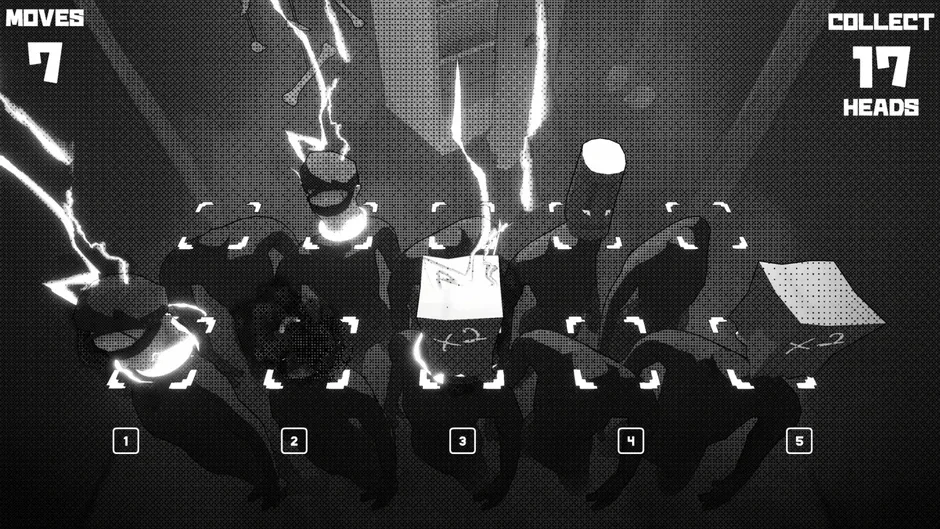
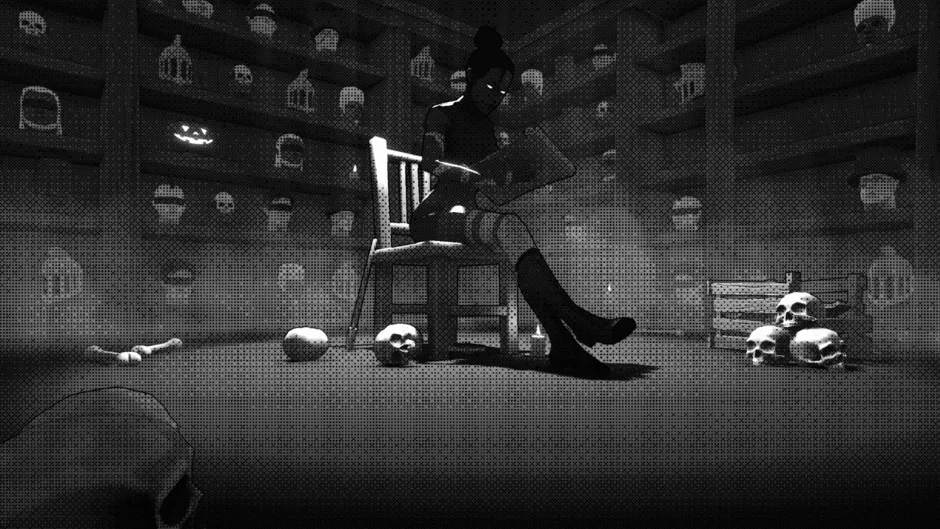
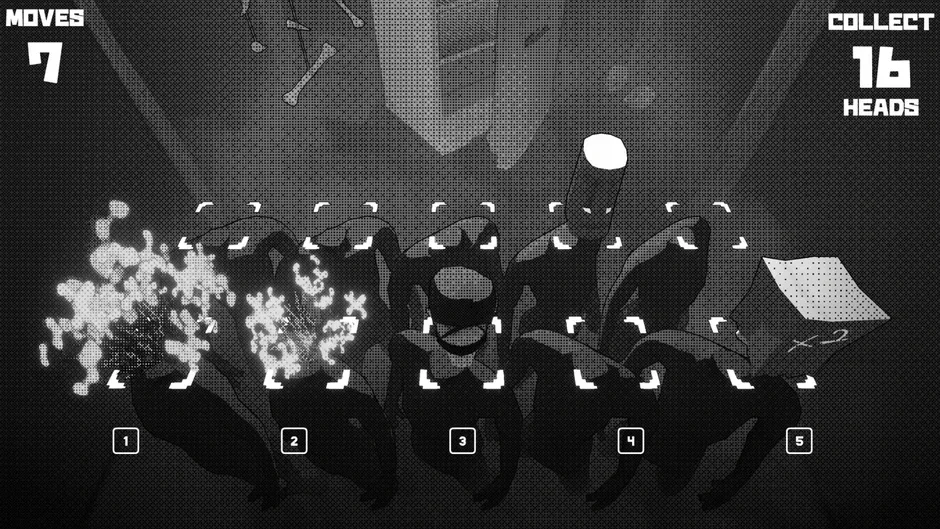
The one idea that carries the whole game is the single-slice combo: you play as an axe-wielding woman investigating the story behind Mr. Freezy, a serial killer figure haunting the fictional city of New Detroit, and the core puzzle task is arranging severed heads into position so that a single swing of the axe removes several of them in one combo. It is a strange sentence to type about a game described as light-hearted, and that friction is exactly what makes MrFreezy stand out from the pile of falling-block and match puzzlers it otherwise resembles in structure. Most puzzle games ask you to clear a board. MrFreezy asks you to clear a board that is, diegetically, a crime scene, while the presentation keeps a straight, cheerful face about it. Whether that reads as dark comedy or as tastelessness will depend entirely on the player, and the game does not try to soften the choice for you.
What makes this more than a shock-value gimmick is the mechanical commitment behind it. The premise alone would be a five-minute joke if the puzzle underneath it were shallow. Instead, the confirmed hook is a combo system: not simply removing a head, but arranging several so that one action clears them together. That single design decision does a lot of work. It turns the macabre subject matter into an actual skill expression rather than a punchline delivered once and repeated. A game that wanted only to be edgy could have stopped at "you have an axe and there are heads." MrFreezy instead ties the joke to a real puzzle-solving loop, which is the difference between a meme and a game people might actually want to keep playing after the joke has landed once.
The tone is the trick, not a side effect#
It would be easy to assume a premise like this is edgy for its own sake, but the confirmed framing points the other way: MrFreezy is explicitly light-hearted despite the Mr. Freezy character being an infamous serial killer within its own fiction. That is a deliberate tonal decision, and it is the kind of decision that either clicks immediately or never does. Games about serial killers usually reach for dread, mood lighting and a slow, oppressive pace, because that is the genre convention true crime and horror media have trained players to expect from the subject matter. MrFreezy instead treats the investigation as the backdrop for a puzzle toy, which puts it closer in spirit to games and media that use a grim setting as a punchline than to anything trying to be a horror game.
This kind of tonal juxtaposition is not new to games as a medium; the puzzle and arcade genre in particular has a long, comfortable history of pairing violent or macabre subject matter with cheerful, colorful presentation, precisely because the abstraction of a puzzle board makes the violence feel more like a rules system than a threat. What is worth noting about MrFreezy is how explicit it is about doing this on purpose, rather than treating the contrast as an accident of budget or scope, the way a low-budget horror game sometimes ends up looking silly instead of scary purely because it could not afford better production values. Here, the mismatch between subject and mood reads as the actual design thesis. A team that wanted a straightforwardly funny game would not have picked a serial killer as the antagonist. A team that wanted a straightforwardly grim game would not have called it light-hearted. Choosing both, on purpose, is a statement about what kind of humor the game is going for: not slapstick, and not shock, but something closer to a deadpan joke told without ever breaking character.
There is not yet public detail on how far the game pushes this joke across its full length, how the story is delivered moment to moment, whether it leans on dialogue, environmental storytelling, cutscenes, or text between levels, or what New Detroit looks like beyond being the fictional setting for the case. Those are real gaps, and they matter for anyone deciding whether to buy in: a joke that is stated once in a game's marketing and never developed further plays very differently from a joke that gets new angles added to it over several hours. What is confirmed is the intent behind the tone, and intent is not nothing. It tells you the team knew exactly what contrast they were building and leaned into it rather than stumbling into it, which is at minimum a sign of a clear creative point of view, even before anyone has verified how deep the follow-through goes.
A puzzle mechanic that is easy to picture and hard to master#
Combo-based puzzle design lives or dies on whether the player can see the combo coming before they commit to it, and the head-arranging, single-slice mechanic is built around exactly that kind of forward planning. You are not clearing pieces reactively as they appear, the way you would in a falling-block game where the challenge is largely about speed and pattern recognition under time pressure. You are setting up a board so that one axe swing does the most work possible, which shifts the challenge toward reading the whole layout, anticipating chain reactions, and deciding where a small mistake early on will cost you a combo several moves later. That is a satisfying loop on paper, closer in spirit to a line-up puzzle or a careful sorting puzzle than to a fast-twitch action game, and it explains why a small studio best known for a fast runner and a shooting game would pick this idea to build a whole release around: it is compact enough for a team of limited size to execute well, and distinctive enough that it does not need a large budget or a sprawling story to justify its own Steam page.
The appeal of this kind of mechanic, when it works, is that it rewards patience without punishing curiosity. A player who wants to move fast and clear a board however they can should still be able to finish a level; a player who wants to sit with a layout and find the perfect single-swing combo should be rewarded for that patience with a cleaner, more satisfying clear. Puzzle games that manage that balance well tend to have long lives, because they support more than one way of playing without forcing the more casual approach to feel like a failure state. Whether MrFreezy achieves that balance across its full level set is, again, something that cannot be verified from the outside based on what has been confirmed so far, but the mechanic as described has the right shape for it.
The open question, and it is a genuinely open one rather than a manufactured caveat, is how much the mechanic evolves over a full playthrough. A single strong combo idea can carry a demo comfortably, where seven levels can each show a fresh wrinkle on the same core rule without ever needing to repeat itself, and still need real escalation, new head types, new obstacles, new constraints on movement or timing, to carry a whole game across dozens of levels without repetition setting in. Nothing in the confirmed material spells out how MrFreezy paces that curve past its opening hours, how many total levels the full release contains, or whether new mechanical wrinkles are introduced gradually or front-loaded into the demo to make the best possible first impression. That is precisely the kind of detail a buyer would want to know before committing to a purchase, and it is precisely the kind of detail this review will not invent an answer for.
Aerial_Knight Games' track record, and what a genre swing risks and gains#
Aerial_Knight is not a studio making its first game, and that context changes how MrFreezy should be read. The team, small and Black-owned, based in Detroit, previously released Aerial_Knight's Never Yield and Aerial_Knight's DropShot. Neither of those is a puzzle game in the sense MrFreezy is: they sit in genres built around fast reactions and forward momentum rather than deliberate, static arrangement. That matters for two reasons.
First, it means MrFreezy is not the work of a team learning to finish a game for the first time. A studio's second or third release tends to benefit from lessons the first one taught, about scope, about what a small team can realistically ship, about how to communicate a game's hook in a single Steam page and trailer. Whatever specific lessons Aerial_Knight carried over from Never Yield and DropShot are not detailed in public material, but the general pattern, that a team's later work tends to be more confidently scoped than its first, is a reasonable expectation to bring into a small studio's third release, even without confirmed specifics about MrFreezy's production.
Second, and more interesting, it means MrFreezy is a genuine genre swing rather than an iteration on a formula the studio already knew worked. That is a real risk for a small team. It is far safer, commercially, for an indie studio with two prior games in adjacent genres to make a third game in that same lane, refining what already has an audience, than to pivot into a slower, more cerebral puzzle format built around planning rather than reflexes. Choosing to make that pivot anyway, and to build the entire pivot around one distinctive, slightly macabre puzzle idea rather than a safer, more generic match mechanic, says something about the team's appetite for a real creative swing rather than a safe sequel. Whether that swing pays off, in sales, in review reception beyond this one, or in the eventual scope of the full game, is not something this review can confirm ahead of the fact. What can be said honestly is that it is a more interesting bet than simply making a third fast-reflex game, and that a track record of two shipped, distinct games at least establishes that this is a team capable of finishing what it starts.
Compared with Fruit Ninja, Unpacking, Two Dots, and Aerial_Knight's own back catalogue#
MrFreezy's combo-slicing hook invites an obvious comparison to Fruit Ninja, the slicing game that made a whole genre out of satisfying single strokes across a screen. It is worth working through that comparison on more than one axis, because the differences say a lot about what kind of experience MrFreezy is actually offering.
On pacing, Fruit Ninja is fast and continuous: fruit appears, you react, more fruit appears, and the game's tension comes from keeping up with an accelerating stream of targets. MrFreezy, based on its confirmed combo-arrangement mechanic, appears to be the opposite shape. There is no indication of a real-time reaction challenge here; instead, the tension comes from studying a static or slower-paced layout and deciding how to set it up before committing to a single decisive action. That is a fundamentally different kind of pacing, closer to a chess puzzle's "find the right move" tension than to an arcade game's "keep up or lose" tension.
On tone, Fruit Ninja is cheerful and abstract almost by necessity: fruit has no face, no story and no stakes beyond a score counter, so the slicing never carries any weight beyond spectacle. MrFreezy's slicing carries a story wrapped around it, however lightly, and that is precisely the tension the tonal section above spent time on. A player drawn to Fruit Ninja purely for the physical satisfaction of a clean, well-timed cut will find a familiar sensation in MrFreezy's core action, but wrapped in a framing device that asks for a very different kind of buy-in. Anyone who liked Fruit Ninja for the cut itself, but always wished there were a slower, more deliberate puzzle underneath it, and did not mind a dark joke riding along, is closer to MrFreezy's actual audience than anyone expecting a pure reflex game.
On difficulty philosophy, Fruit Ninja scales its challenge by speeding up its stream of targets and adding hazards you must avoid slicing. A planning puzzle like the one MrFreezy appears to offer typically scales instead by adding new piece types, new constraints on how pieces can be arranged, or tighter limits on moves or time to plan. Which of those levers MrFreezy actually pulls as it progresses past its demo content is not confirmed, but the category of approach, escalate the puzzle's complexity rather than the player's reaction speed, is the one a planning-based combo game would be expected to use, based purely on how that genre of puzzle design generally works.
It is also worth placing MrFreezy against two more comparison points on the "what should you play instead, and why" side of things, which will come up again later in more detail: Unpacking, a calm, story-light puzzle game about arranging belongings into a room, and Two Dots, a straightforward mobile match puzzle. Against Unpacking, the comparison is about intensity of subject matter rather than mechanical shape; both games ask you to arrange objects thoughtfully within a bounded space, but Unpacking wraps that in a quiet, domestic narrative with no violence at all, while MrFreezy wraps a mechanically similar impulse, careful spatial arrangement, in exactly the opposite kind of narrative. Against Two Dots, the comparison is about narrative weight versus pure mechanic; Two Dots offers almost no story at all, just an escalating sequence of match puzzles, while MrFreezy's puzzle is inseparable from its joke. A player who wants the puzzle without any story attached at all is better served by something like Two Dots; a player who wants the puzzle specifically because of the joke attached to it is MrFreezy's actual target audience.
Finally, it is worth placing MrFreezy against Aerial_Knight's own earlier work, because the audience-fit question cuts differently here than it does against unrelated games. Never Yield is a rhythm-driven runner, built around forward momentum and reacting to obstacles in time with music, and DropShot is built around fast reflexes rather than deliberate planning. MrFreezy is a genre departure for the studio in every sense: slower, quieter, and built around arrangement rather than reaction. Fans coming in expecting the studio's earlier pace, the propulsive, music-driven energy of a runner or the twitch-reflex demands of a shooting game, should recalibrate their expectations before buying based on the developer's name alone. This is a different kind of game from a team stretching into new territory, not a spiritual sequel to either of its predecessors, and treating it as one is likely to set the wrong expectations regardless of how good the puzzle mechanic itself turns out to be.
What GameAvant doesn't know yet, and why that matters to a buying decision#
It would be easy to bury the open questions about MrFreezy in a single disclaimer sentence and move on. That undersells how much those open questions actually matter to someone deciding whether to spend money on this game, so it is worth spelling them out properly, and thinking through what each one implies rather than just flagging that it exists.
The first open question is price. Nothing confirmed here states what MrFreezy costs on Steam. That matters more for a small puzzle game than it would for a major release, because a small game's value proposition rests almost entirely on the ratio between what it costs and how satisfying its one core idea feels to return to. A five-dollar price tag and a fifteen-dollar price tag would put MrFreezy in completely different competitive positions against the mobile and casual puzzle market, where a lot of comparable mechanics are available for free with ads or a small one-time fee. Without a confirmed number, any specific verdict on value would be a guess dressed up as analysis, which is exactly what this review is trying not to do.
The second open question is total length and level count. The demo's seven levels are confirmed and give a real, if partial, sense of pacing. What is not confirmed is how many levels the full release contains, whether it is built more like a two-hour arcade puzzle toy meant to be replayed for high scores, or a longer, structured campaign with distinct chapters and an actual narrative arc around the Mr. Freezy investigation. Both are legitimate designs for a game like this, and they would earn very different recommendations. A two-hour toy is judged on whether its one idea is fun enough to justify a low price and a short session; a ten-hour campaign is judged on whether that same idea can carry real variety and pacing across a much longer stretch.
The third open question is how the story is actually delivered and how far the tonal joke is pushed. The premise, an investigation into an infamous serial killer told with a light heart, is confirmed as a framing device. What is not confirmed is whether that framing is mostly set dressing around a series of disconnected puzzle levels, or whether the game commits to an actual narrative structure with named story beats, revelations and a real arc to the investigation. A review that invented specific story beats here to sound more thorough would be doing exactly the wrong thing; the honest answer is that this is unverified, and a buyer who cares specifically about how much narrative payoff they will get for their time should treat that as a real unknown rather than assume either a rich story or a thin one.
None of these unknowns are a strike against the game on their own. Plenty of good small indie games launch with limited public information before release, and demos exist precisely to let players fill in some of those gaps for themselves before spending money. But they are the reason this review is calibrated the way it is: confident about the ideas that are confirmed, because those ideas are genuinely interesting and well described, and deliberately restrained about everything downstream of them that has not yet been verified.
Worth the money?#
This is the section where a bigger review would weigh a specific price against a specific number of hours, and honestly, that comparison cannot be made responsibly here: there is no confirmed pricing or completion-time information available for MrFreezy at the time of writing, and inventing either would go against everything this review has been trying to do up to this point. What is confirmed, and what actually matters for a game this size, is that a free, seven-level Steam demo was available ahead of the September 1 launch. That demo is the honest answer to "is it worth it": it lets you test the single-slice combo mechanic and the tone against your own taste before spending a cent, which is a more useful signal for a small puzzle game than any hours-per-dollar math would be, and it is a far better use of your time than reading a paragraph of invented pricing speculation dressed up as advice. Anyone on the fence should start there rather than take a review's word for it either way, in this review or any other.
Play this instead if…#
Shorter and calmer: Unpacking, a quiet puzzle game about arranging belongings rather than heads, if the premise here is more than you want to sit with but the appeal of a tidy, satisfying spatial-arrangement puzzle loop is the part you actually want, without a single dark joke anywhere in the frame.
Simpler, without the dark joke: Two Dots, a straightforward mobile match puzzle game, if you want the low-stakes, plan-a-few-moves-ahead feeling without any story wrapped around it at all, and would rather the puzzle stand entirely on its own mechanical merits.
From the same studio, different genre entirely: Aerial_Knight's Never Yield, if what you actually want is this developer's earlier, faster-paced runner rather than a puzzle game, and you are curious about the studio without wanting the tonal risk MrFreezy is taking on.
Frequently asked questions#
How long is MrFreezy? There is no confirmed completion-time figure available. The free demo covers seven levels, which is a reasonable way to estimate the pace of the full game for yourself, though the full release's total level count is not confirmed.
Is MrFreezy on console or Xbox/PlayStation? No. It launched on September 1, 2026 exclusively on Steam for PC, with no confirmed console release.
Does MrFreezy have multiplayer or co-op? There is no confirmed multiplayer or co-op mode.
Do you need to have played Aerial_Knight's Never Yield or DropShot first? No. MrFreezy is a different genre from both, built around planning rather than reflexes, and there is nothing confirmed tying its story to either earlier game.
Is MrFreezy actually violent, given the premise? The developer describes the game as light-hearted despite its serial-killer subject matter, which points to a tone closer to dark comedy than to horror, though the exact visual presentation beyond that general tone is not detailed in confirmed material.
How much does MrFreezy cost? There is no confirmed price at the time of writing. The free demo is the best way to gauge value for yourself before a price is factored in.
Is there a demo? Yes. A free, seven-level demo was available on Steam ahead of the September 1, 2026 launch, and it is the best way to judge the mechanic and tone for yourself.
The GameAvant verdict#
MrFreezy is not a game that can be judged the way a hundred-hour open-world release gets judged, and it would be dishonest to pretend otherwise by stretching thin material into false certainty. What is here is a small, confident puzzle game with one genuinely clever idea, a combo mechanic that rewards looking at the board before you swing, wrapped in a tonal joke that a Black-owned Detroit studio commits to rather than winks at. That studio's own history, two prior games in entirely different genres, suggests a team willing to take real creative swings rather than repeat a safe formula, and that willingness is worth crediting even before the full game's scope is known.
The unanswered questions, how it prices itself, how long it runs, how deep the story goes, and whether the mechanic keeps evolving past its opening levels, are real gaps, not invented ones, and they are the reason this lands at a 7 rather than higher: the idea earns real respect, the follow-through cannot yet be fully verified. The demo did the smart thing by letting people find that out for free before the game asked for their money, and that is the right way to approach it here too, rather than trusting any review, including this one, to have already made that judgment for you on details nobody outside the studio can currently confirm.
7 out of 10 – a sharp, well-told joke of a puzzle mechanic that deserves the free demo before the full price.