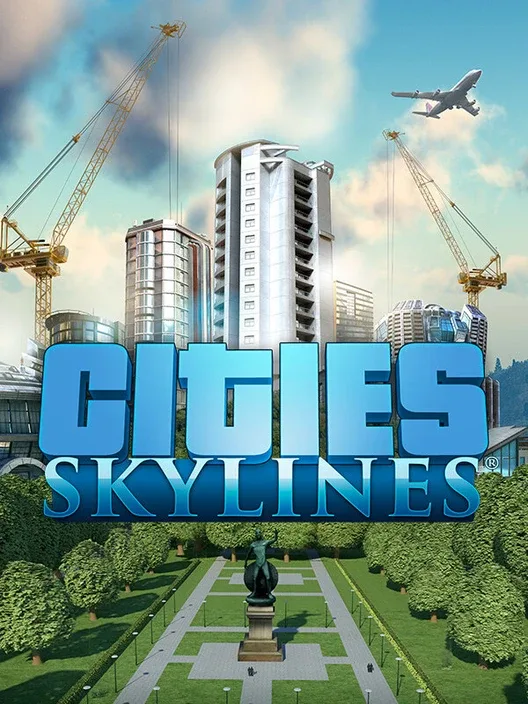
 Cities: Skylines
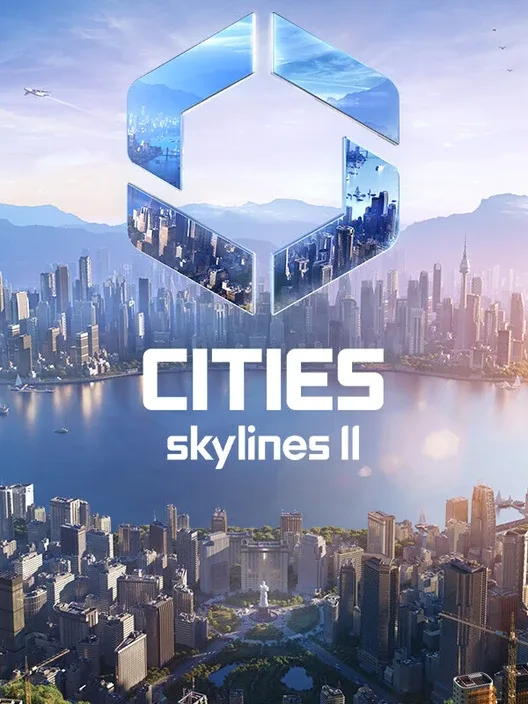 Cities: Skylines II
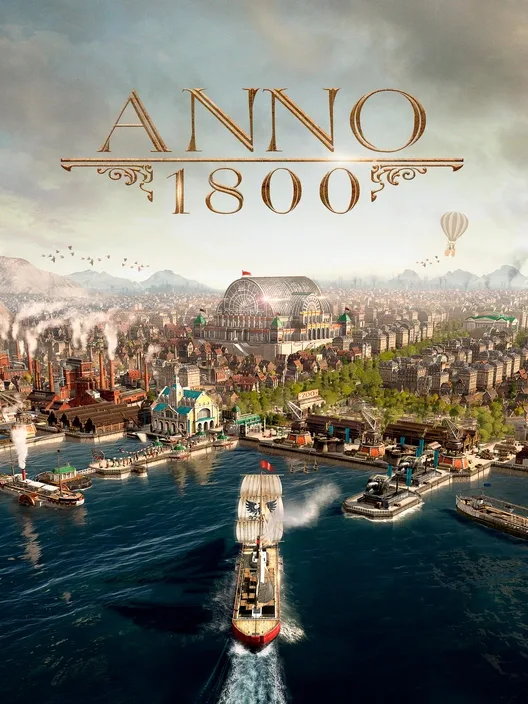 Anno 1800
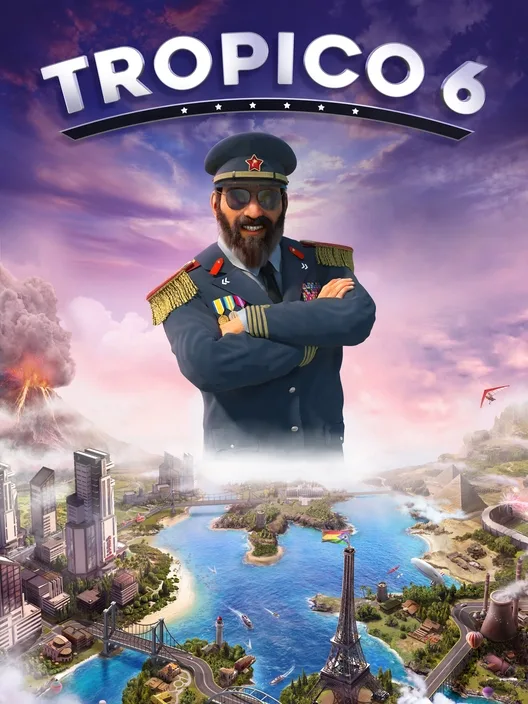 Tropico 6
 Manor Lords
 Banished
Game Avant's ranked list of the best city builders narrows the building category down to games about growing a settlement, town, or city over time — laying roads, zoning districts, managing services, and balancing a budget as a population grows — rather than the resource-chain optimization of a factory game or the single-character colony micromanagement of a colony sim, both of which live on their own separate ground elsewhere on this site. That's also why RimWorld and Factorio, however much building they involve, don't appear here: they're colony-sim and factory games first, judged against their own genre's yardstick rather than a city's. What unites the games below instead is a population, however abstracted, that reacts to the choices a player makes about layout, services, and growth, whether that's individually simulated citizens with names and commutes or a more abstracted approval meter tied to zoning decisions.
The order below blends IGDB's aggregate critic score with Steam's own user review percentage, with real editorial judgment applied on top of the raw numbers so a focused, beloved smaller release doesn't get buried under a bigger name's larger but less enthusiastic review base. It shifts as more people rate these games or as new releases, including Cities: Skylines II's post-launch recovery, earn a stable review sample. Read the write-ups below for what each of the best city builders actually does well and where it genuinely falls short.
1. Cities: Skylines#
Colossal Order's 2015 release, published by Paradox Interactive, became the genre's modern default by pairing a detailed road-hierarchy system — highways, avenues, one-way streets, and roundabouts that each carry traffic differently — with a district system letting specific zones opt into unique policies like free public transit or increased industrial pollution controls. Traffic simulation, tracking individual vehicle pathing across the entire map rather than an abstracted flow value, makes road design a genuine engineering problem rather than a simple zoning exercise, and the Traffic Manager: President Edition mod became close to essential for players optimizing at scale. The RICO zoning system splits growth into Residential, Commercial, Industrial, and Office categories, each with density tiers that unlock as population and land value grow, while specialized industry areas — forestry, farming, oil, ore — introduce dedicated resource-chain management within the broader city. A decade of expansions, from Mass Transit's cable cars and monorails to Airports' full terminal design and Sunset Harbor's dedicated fishing industry, considerably deepened systems the base game only lightly touched. The game's extensive Steam Workshop modding scene, among the largest of any city builder, extended its lifespan well past what the base game alone offers. The honest drawback: the aging engine struggles with very large, densely built cities, where simulation performance can degrade noticeably even on strong hardware, a limitation the sequel was specifically built to address.
2. Cities: Skylines II#
Colossal Order's 2023 sequel, also published by Paradox Interactive, rebuilds the traffic and economy simulation from the ground up around individual agent-level tracking for every citizen and vehicle's full daily routine, from commute to shopping trips to leisure activities, a considerably deeper simulation layer than the original's more abstracted systems. The updated RICO zoning system adds building-level customization through packs and asset variety, while the road tool's context-sensitive upgrades — adding sidewalks, bike lanes, or power lines directly onto existing roads without full replacement — streamline the original's more piecemeal infrastructure editing. Economy simulation ties resource production, demand, and taxation together with more granular feedback than the original, so an industrial zone's actual output now visibly affects a commercial district's supply chain rather than relying on an abstracted resource pool. The game's day-night cycle and seasonal weather, including snow accumulation that affects traffic speed, are new systems entirely absent from the 2015 original. Ongoing free updates since launch have addressed a significant share of the game's early performance and economy-balance issues. The honest drawback: the game's 2023 launch shipped with serious performance problems and an unbalanced economy that drew sharp criticism even from reviewers who liked its underlying systems, and Paradox's own split from developer Colossal Order in 2025 added real uncertainty to its long-term support.
3. Frostpunk#
11 bit studios' 2018 release pairs city-building with survival-strategy stakes rarely seen in the genre: a single generator-warmed city must keep its population alive through an apocalyptic frost, with heat radius, building placement, and resource stockpiling all directly tied to whether citizens freeze to death rather than just whether they're satisfied. The Book of Laws, a branching policy tree unlocked with Society research points, forces genuinely difficult trade-offs — child labor increases workforce capacity at a real moral cost, and the choice between an Order-based or Faith-based late-game path reshapes the entire city's social structure going forward. Automatons, late-game robotic workers unlocked through research, reduce the population's exposure to the coldest, most dangerous outdoor work sites, but only after considerable resource investment that competes directly with heat and shelter needs. Scenario-specific mechanics, like The Last Autumn's industrial construction race or The Rifts' branching narrative choices, gave the base campaign's core survival loop distinct framing across its expansions. Discontent and Hope meters, tracked separately from raw survival stats, can end a run in failure even if the population is technically still alive and fed. The honest drawback: the game's tightly scripted core scenarios offer comparatively little of the genre's usual open-ended sandbox freedom, and a single early misstep in heat or resource planning can put a save in an unrecoverable death spiral hours before it's obvious.
4. Frostpunk 2#
11 bit studios' 2024 sequel shifts scale dramatically, moving from a single generator-warmed city to managing an entire growing metropolis built around districts rather than individual buildings, with the Council, a body of competing political factions, replacing the original's more direct top-down law system with negotiated votes on major policy. The Frostland map, a broader explorable region surrounding the city, introduces expedition-based resource scouting and outpost management that the more contained original never included, tying the city's growth to external territory control. Factions, each with their own ideology and demands, must be balanced against each other through the Council's voting system, where pushing an unpopular law through anyway risks unrest or outright rebellion rather than a simple discontent meter ticking down. District-level zoning, replacing individual building placement with broader area specialization, changes the moment-to-moment building loop considerably from the original's more granular city-grid approach. The game's narrative campaigns retain the original's morally weighted scenario writing, now applied to city-scale political decisions rather than individual survival trade-offs. The honest drawback: the shift from granular building placement to district-based zoning and Council politics is a real structural departure from the original that longtime fans of that game's tighter, more hands-on survival loop may find less immediately satisfying.
5. Anno 1800#
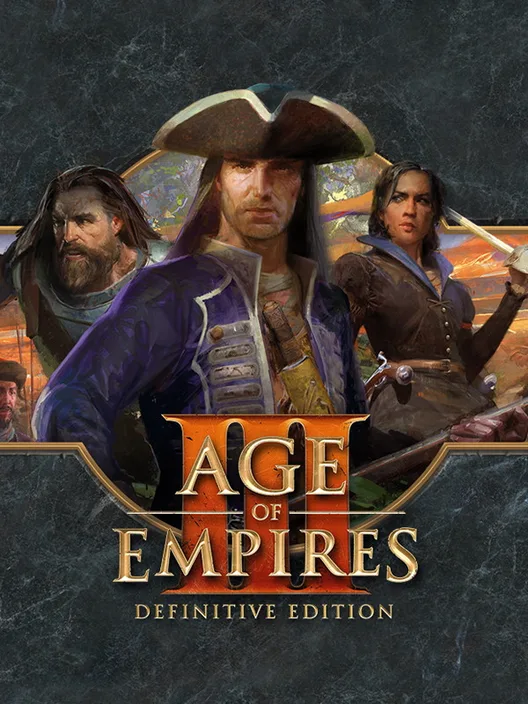
Ubisoft Blue Byte's 2019 release, the eighth mainline entry in the long-running Anno series, sets its industrial-revolution-era city building around a needs-based population tiers system, where citizens progress from Farmers to Workers to Artisans and beyond only once specific consumer goods — schnapps, soap, work clothes — are reliably supplied, tying growth directly to an increasingly complex production chain. Multiple distinct island regions, from the temperate Old World to the resource-rich New World and later Arctic and African expansions, force separate specialized economies connected by shipping routes, since no single island can produce everything a growing population eventually demands. The trading and diplomacy system with AI-controlled rival mayors adds a layer of negotiation and occasional naval conflict on top of the core building loop, while the Old World's political system lets specific consumer-good production be boosted through elected specialists. Expeditions, sending ships on scripted resource-and-story missions to distant, unbuildable regions, add a light narrative layer separate from the main city-building loop. Several large paid DLC campaigns, including the Nintendo-crossover-adjacent Docklands and the New World Rising season, considerably expanded the base game's scope over years of post-launch support. The honest drawback: the production-chain complexity that makes the mid-and-late game so deep is a genuinely steep onboarding wall, and new players can find themselves untangling a tangled web of supply shortages long before they understand what's actually causing them.
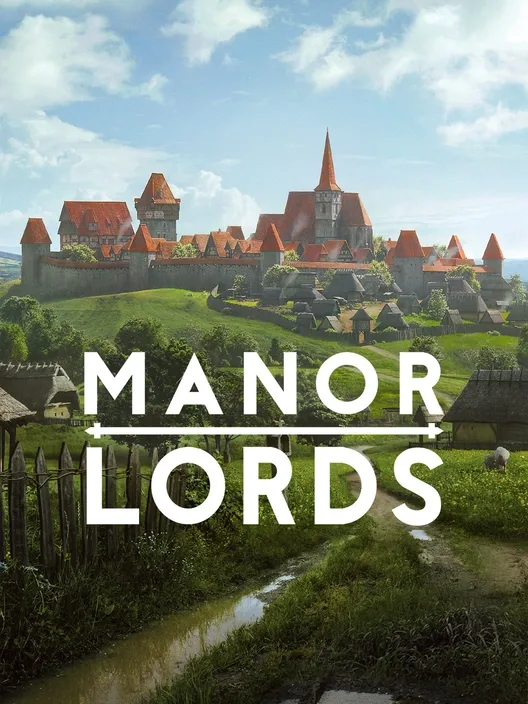
6. Manor Lords#
Slavic Magic's 2024 early access release, developed almost entirely by solo creator Greg Styczeń before Hooded Horse stepped in to publish, blends medieval city building with a real economic simulation where individual households, rather than an abstracted population number, each have their own needs, occupations, and production output that the player influences but doesn't directly micromanage. The burgage plot system lets each household's home lot be individually assigned to a trade or subsistence use, from a small vegetable garden to a dedicated tannery, with each plot's specific layout and size affecting its output. Regional trade and seasonal farming, including crop rotation and specific soil-quality requirements per field, tie the game's economy to real medieval agricultural constraints rather than an abstracted universal resource. An integrated tactical battle layer, letting the player raise and command period-appropriate militia and mercenary forces in formation-based skirmishes against rival lords, is a structural feature relatively rare among the genre's peaceful builders. The game's road system, requiring manually paved paths for efficient trade cart movement rather than an automatic connectivity assumption, ties infrastructure planning directly into the economic simulation. The honest drawback: as a still-evolving early access release, the game currently offers a comparatively thin late-game content ceiling and several systems, including diplomacy and the wider campaign map, remain in active, sometimes rough development.
7. Planet Zoo#
Frontier Developments' 2019 release applies the studio's Planet Coaster-honed building tools to zoo management, with individual animals simulated down to specific welfare stats — enrichment, terrain preference, social group size — that directly affect breeding success and visible animal behavior rather than functioning as an abstracted happiness number. Habitat construction requires matching a species' specific terrain, climate, and enclosure-size needs, with a barrier-strength system meaning an underbuilt fence for a powerful animal like a tiger or elephant can result in a genuine, consequential escape. The conservation and research systems, tied to a scientific points economy earned through zoo operations, let breeding programs and trading with other zoos, including community-shared ones online, build toward reintroducing endangered species to the wild in scripted scenarios. Guest happiness, tracked separately from animal welfare, ties path design, shop placement, and enclosure viewing angles to a distinct economic loop from the animal-care systems, forcing a balance between the two rather than optimizing purely for one. The Career mode's scripted scenarios, each built around a specific existing zoo layout and constraint, offer structured challenges distinct from the open-ended Franchise and Sandbox modes. The honest drawback: the sheer depth of the animal welfare simulation is a genuinely steep system to learn in full, and the game's habitat-size and terrain requirements can make certain popular animals frustratingly space-intensive for smaller zoo layouts.
8. Planet Coaster#
Frontier Developments' 2016 release refines the amusement park building formula established by the studio's earlier Planet Coaster forebear RollerCoaster Tycoon with piece-by-piece coaster track construction that lets curves, loops, and drops be sculpted freely rather than snapped to a rigid grid, alongside a scenery system built from thousands of individually placeable decorative pieces for genuinely custom ride and building theming. Guest simulation tracks individual visitor happiness through specific, readable factors — queue length, ride intensity tolerance, hunger, nausea after an intense coaster — giving park design real behavioral feedback rather than an abstracted satisfaction score. The park management economy, balancing ticket pricing, staff wages, and ride maintenance against guest spending on food and merchandise, ties the creative building tools to a genuine operational puzzle rather than treating construction as purely decorative. Blueprint sharing through the Frontier Workshop lets players download entire pre-built coasters and buildings from the community, considerably lowering the skill floor for achieving the game's more elaborate custom builds. Career mode scenarios, each built around restoring or expanding a specific existing park under defined constraints, complement the fully open Sandbox and Franchise modes. The honest drawback: the sheer granularity of the piece-by-piece building tools, while enabling genuinely impressive custom creations, comes with a real time investment that can make simply building a functional, attractive park a slower process than the genre's more template-driven competitors.
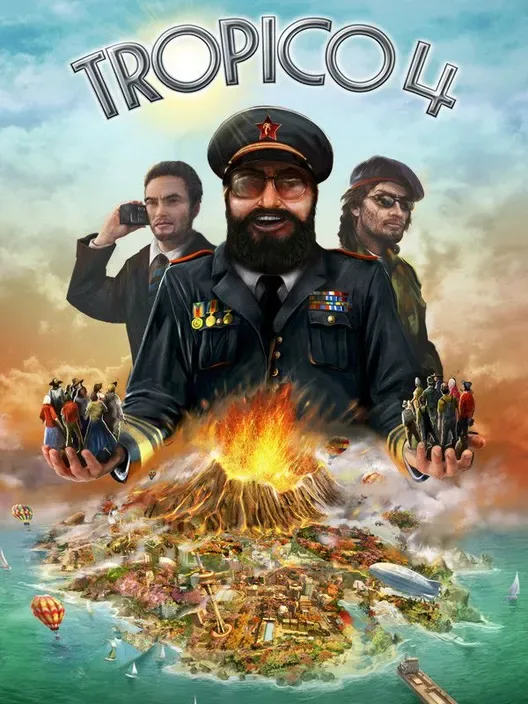
9. Tropico 6#
Limbic Entertainment's 2019 release, published by Kalypso Media, continues the satirical dictator-simulator series with multi-island management for the first time, requiring bridges and ferry routes to connect separate islands' distinct resource deposits and buildable space into a single functioning economy. The Almanac system tracks approval ratings across seven distinct demographic factions — Militarists, Environmentalists, Religious, and others — each with separate demands that frequently conflict, forcing genuine political trade-offs rather than a single unified happiness meter. Edicts and dynasty-family management let El Presidente's relatives be assigned to boost specific ministries or trade deals, tying the game's satirical banana-republic tone directly into a real mechanical system rather than pure flavor text. The raid system lets famous landmarks, from the Statue of Liberty to the Sphinx, be stolen from other nations and rebuilt on Tropico's own islands as a tourism-boosting attraction, a mechanic unique to the series' irreverent political-satire framing. Era progression, moving the island nation from the Colonial period through the Cold War and into the Modern era, changes available buildings, trade partners, and superpower relations as the campaign or sandbox game advances. The honest drawback: the added multi-island logistics layer, while expanding the series' scope, introduces real transportation-routing friction that the earlier single-island Tropico games never had to account for.
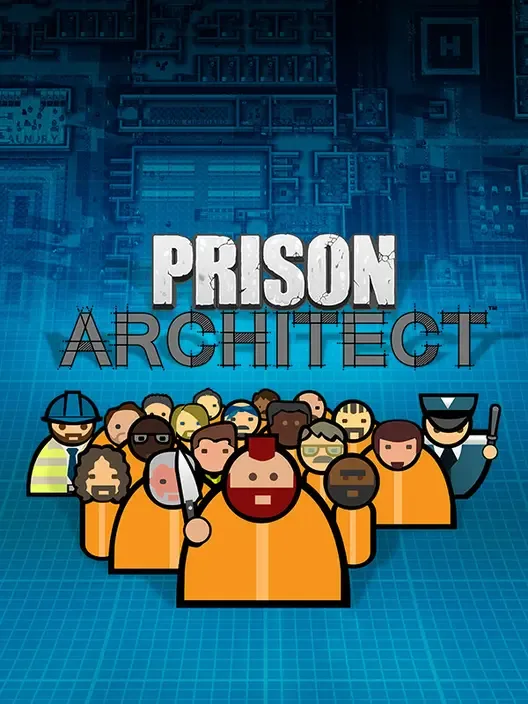
10. Prison Architect#
Introversion Software's 2015 release, following a lengthy 2012-to-2015 early access period, applies detailed facility-management building to a prison specifically, requiring separate zoning for cell blocks, kitchens, laundry, workshops, and a security perimeter, each with staffing and supply-chain needs that directly affect whether the facility stays under control. Prisoner simulation tracks individual inmates by need, gang affiliation, and reoffending risk, with an understaffed or poorly designed facility able to spiral into riots that can genuinely damage or destroy carefully built infrastructure, giving the building layer real operational stakes rather than purely aesthetic ones. The security and contraband systems, including metal detectors, dog patrols, and informant networks, create an ongoing cat-and-mouse dynamic between the warden's design choices and the prisoner population's attempts to smuggle weapons or escape. Programs and rehabilitation options, from education classes to family visitation, offer an alternative to a purely punitive facility design, trading short-term control for better long-term reoffending statistics. The escape-mode campaign, playable from a prisoner's own perspective attempting to break out of a player-built facility, is a structural rarity that inverts the entire genre's usual builder-only viewpoint. The honest drawback: the game's darker subject matter and occasionally grim prisoner-death and riot outcomes are a real tonal departure from the genre's more typically wholesome city-building framing, which won't suit every player drawn to the format.
11. Timberborn#
Mechanistry's 2023 release, following roughly two years in early access, builds its city-building loop around beavers rather than humans, with a vertical construction system that lets buildings and dams be stacked on multiple height levels, turning water management and terrain elevation into the core building constraint most city builders don't have to consider at all. The dynamic water simulation, tracking actual water flow and seasonal droughts across the map, forces genuine engineering around dam placement and irrigation channels, since a poorly planned water network can leave crops to fail during a drought cycle scripted into every map. Two distinct beaver factions, Folktails and Ironteeth, offer meaningfully different building sets and production chains, giving repeat playthroughs a real structural difference rather than just a cosmetic reskin. District management, splitting a growing settlement into separate zones connected by resource-hauling routes, becomes necessary once a colony outgrows a single contiguous build area, adding a logistics layer on top of the base construction loop. The game's map editor and Steam Workshop support let players build and share entirely custom terrain and challenge scenarios beyond the included maps. The honest drawback: the drought-and-flood water cycle central to the game's identity can punish an otherwise well-designed city for a terrain or planning mistake made many in-game seasons earlier, and diagnosing exactly what went wrong isn't always straightforward.
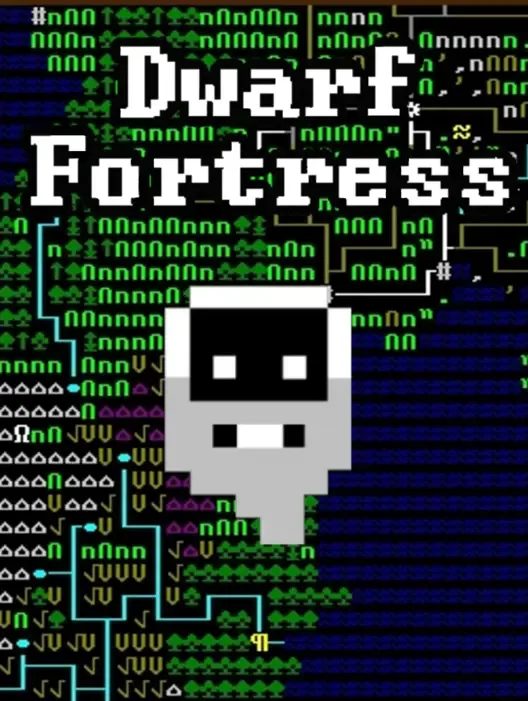
12. Dwarf Fortress#
Bay 12 Games' original ASCII-based simulation, in continuous development by brothers Tarn and Zach Adams since 2002, reached a wider audience through Kitfox Games' December 2022 Steam release, which added a paid tile-based graphics set and soundtrack on top of the same free, famously deep simulation underneath. Fortress mode's construction system lets a dwarven settlement be dug directly into and built onto a procedurally generated mountain, with individually simulated dwarves each tracking their own skills, personality traits, relationships, and moods that can spiral into a "tantrum spiral" of cascading mental breakdowns if a fortress's needs go unmet. The crafting and workshop chains are famously deep, letting raw ore be smelted, forged, and turned into finished goods through dozens of interconnected production steps, each staffed by a dwarf whose skill level genuinely affects output quality. Military and defense systems, including squad-based combat orders and elaborate trap-and-fortification design, let a fortress be defended against sieges using the same construction tools used for peaceful building. The procedurally generated world persists a full simulated history before play even begins, with past civilizations, wars, and legendary figures that a fortress's own story can intersect with directly. The honest drawback: even with the Steam release's considerably friendlier interface, the game's sheer systemic depth and notoriously punishing "losing is fun" design philosophy remain a genuinely steep wall for players used to the genre's more forgiving, guided city builders.
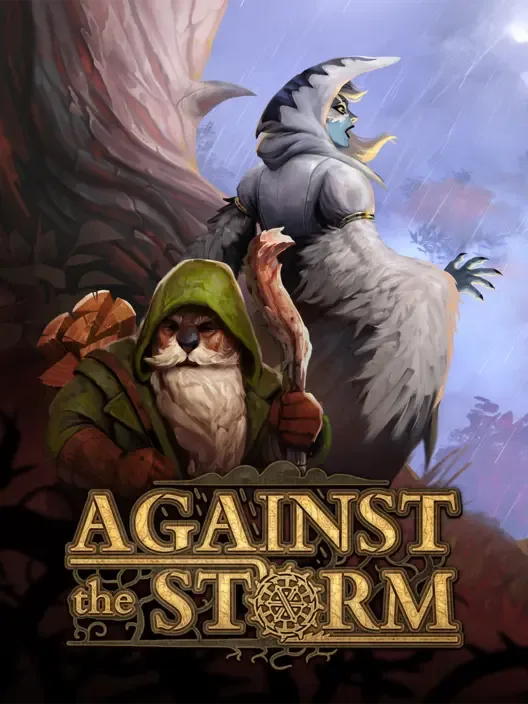
13. Against the Storm#
Eremite Games' 2023 release, following roughly a year and a half in early access, blends city-building with roguelite run structure: each settlement is built under a ticking Reputation clock in a specific biome with its own resource bonuses and hazards, and a completed or abandoned settlement's progress feeds into a persistent overworld campaign rather than existing in isolation. Multiple playable species — Humans, Beavers, Lizards, Harpies, and Foxes — each have distinct housing needs, resource preferences, and morale quirks, forcing a settlement's building layout and production chains to adapt to whichever combination of species has arrived that run. The Blueprint and Glade Event systems introduce run-specific modifiers and story-flavored choices that reshape a given settlement's strategy, similar in spirit to a roguelike's run-altering relic pool. Production chains lean on genuine trade-offs between raw and refined goods, since refined resources satisfy more citizen needs per unit but cost real production time and worker allocation a smaller settlement may not be able to spare. The Smoldering City hub, developed between runs using resources and reputation earned from completed settlements, ties each individual run's success back into permanent meta-progression. The honest drawback: the roguelite run-reset structure, while adding replayability, is a real departure from the genre's usual single persistent city that longtime city-builder fans specifically looking for one continuous, ever-growing settlement may not enjoy.
14. They Are Billions#
Numantian Games' 2019 release, following roughly two years in early access, merges city building directly with real-time-strategy defense, requiring a settlement's wall placement, tower coverage, and unit garrisons to hold against increasingly massive zombie hordes that can number in the thousands by a scenario's later waves. The tech tree and building-tier system gates stronger walls, ranged towers, and economic buildings behind research points earned through the settlement's own production, tying military strength directly to how efficiently the economic side of the base has been built up. Individual zombie infection spreads through any breach in the settlement's defenses, meaning a single undefended gap can turn a thriving colony into a lost cause within minutes if the breach isn't sealed and cleared immediately. The campaign mode strings together a persistent story across multiple maps with carried-over tech progression, while the separate Survival mode offers single-map, high-difficulty challenge runs built around surviving an endless escalating horde. Map variety, spanning temperate, desert, and snow biomes with different resource layouts, changes which building and wall strategies are actually viable from one scenario to the next. The honest drawback: the tension between the genre's usual patient, low-stakes building pace and the game's real-time horde-defense pressure is a real structural mismatch for players who came to the genre specifically for its typically low-stress pacing.
15. Northgard#
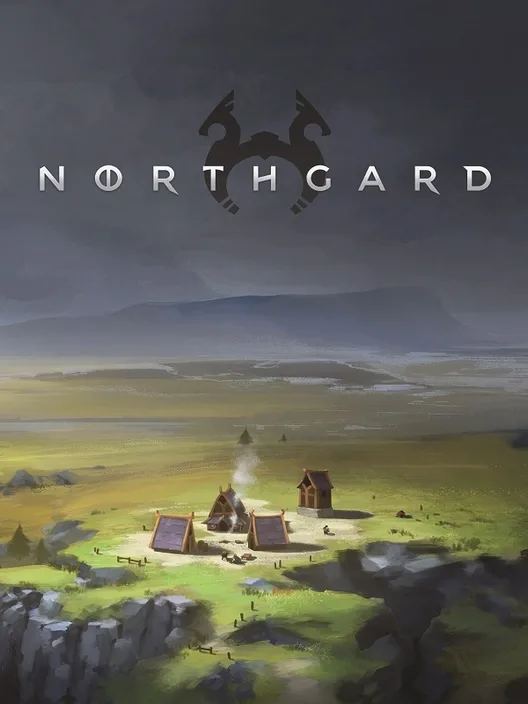
Shiro Games' 2018 release blends Norse-mythology-themed city building with 4X-adjacent territory expansion and light real-time-strategy combat, requiring clans to claim adjacent map regions one at a time, each with its own specific resource — food, wood, stone, or a rarer strategic resource like iron or skalds — that dictates what can be built once that territory is under control. Seasonal cycles, including a punishing winter that increases food consumption and can bring famine or plague if a clan's stockpiles run short, force genuine seasonal planning around a resource economy that a purely temperate-climate city builder doesn't need to account for. Multiple playable clans, each themed around a different Norse animal totem with a distinct bonus and playstyle — the Wolf clan's military aggression, the Goat clan's trading focus, the Raven clan's map-wide vision — give repeat games a real structural variety beyond a cosmetic skin change. Victory conditions include military conquest, trading-based economic wins, lore-based fame accumulation, and a domination-adjacent territory-control win, letting a single map support several genuinely different playstyles. The Relics of the North and other expansions added new clans, biomes, and specific late-game mechanics like naval raiding well past the base game's original scope. The honest drawback: the map's territory-claiming structure imposes a hard ceiling on how large a settlement can realistically grow, a real departure from the more open-ended, sprawling city scale the genre's biggest names typically offer.
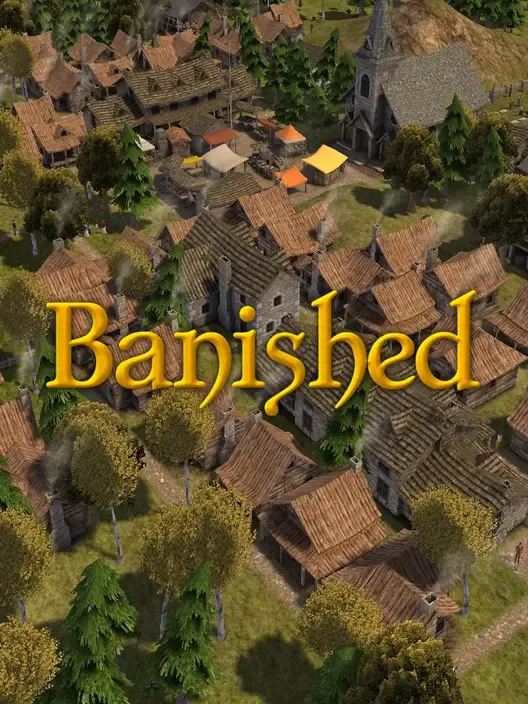
16. Banished#
Shining Rock Software's 2014 release, developed almost entirely by solo creator Luke Hodorowicz, strips city building down to a tight, resource-scarce survival core: a small group of exiled travelers must be settled, fed, and housed with no combat, no enemy factions, and no real win condition beyond keeping the town alive and growing through a genuinely unforgiving cycle of seasons, famine risk, and disease. Individually simulated townsfolk age, marry, have children, and eventually die of old age, meaning population growth is a real long-term planning problem rather than an instant zoning outcome, and a poorly balanced food supply during a harsh winter can wipe out a meaningful share of the population in a single bad season. Building placement is tightly constrained by realistic production chains — a woodcutter's lodge needs nearby forest, a farm needs suitable soil and won't produce in the depths of winter — forcing settlement layout to follow the land's actual constraints rather than an idealized grid. Trading posts allow surplus goods to be exchanged with passing traders for resources the local map doesn't provide, a limited but genuinely necessary economic outlet in a game with no other city or faction to interact with. The game's small-team, single-developer scope kept its systems tightly focused compared to the genre's larger, more feature-heavy entries. The honest drawback: the complete absence of any combat, disaster events beyond weather and disease, or late-game objective structure means the game's second half can feel comparatively aimless once a stable, self-sufficient town has been established.
17. Kingdoms and Castles#
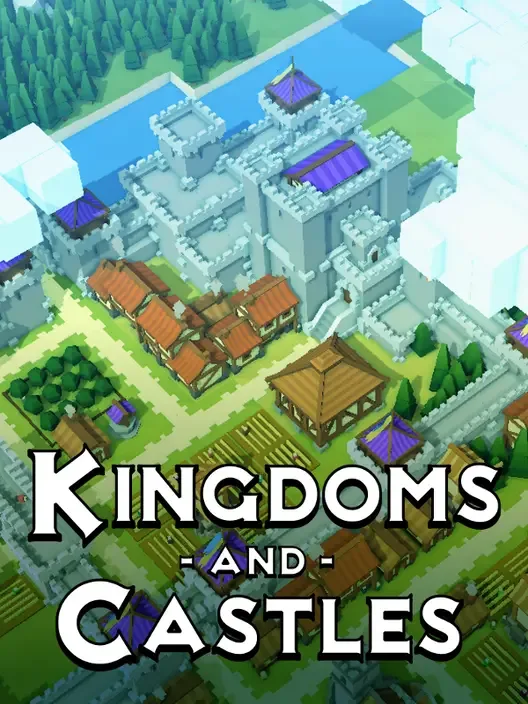
Lion Shield's 2017 release, developed largely by a two-person team, builds a distinctly cozy, low-poly medieval city builder around a simple but genuinely interconnected set of systems: housing density and road placement determine tax income, church coverage determines happiness and population growth caps, and granary and farm placement determine whether a town can survive its own winter famine risk. Castle and wall construction, including towers and gatehouses, plays into periodic Viking raids that test a town's defenses directly, giving the otherwise peaceful building loop occasional real combat stakes without turning the whole game into a strategy title. Dragon attacks, a rarer and more destructive threat than the Viking raids, can burn down significant portions of an undefended town, forcing a defensive infrastructure investment most cozy builders don't require. Trade and market systems let surplus goods be exchanged with other kingdoms for resources unavailable locally, a lighter-weight version of the trade systems found in larger, more complex genre entries. The game's low-poly art style and relatively small scope, compared to the genre's biggest releases, keep individual sessions considerably shorter and more approachable than a Cities: Skylines-scale project. The honest drawback: the systems, while genuinely interconnected, are comparatively shallow next to the genre's deeper simulation-focused entries, and experienced city-builder players may find the challenge ceiling here lower than they're used to.
18. Dorfromantik#
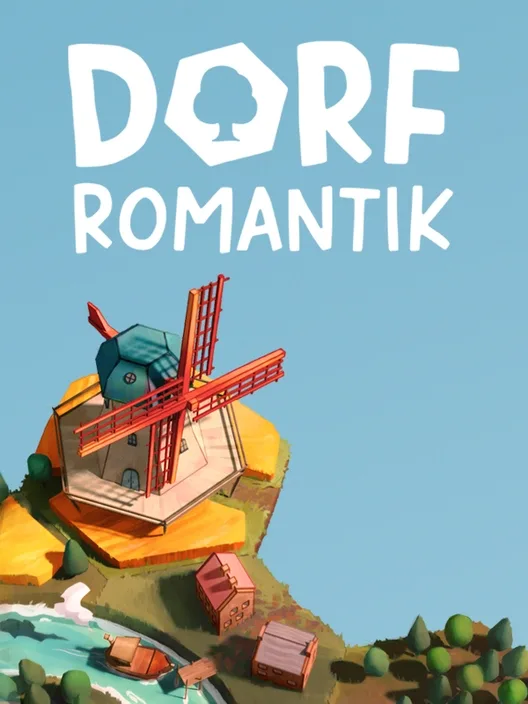
Toukana Interactive's 2022 release, expanded from a 2021 student-project prototype, adapts the tile-laying board game format into a meditative, open-ended digital city builder, where hexagonal tiles featuring forests, fields, houses, rivers, and rail lines are drawn one at a time and placed to extend a continuously growing landscape without a fixed map boundary. Quest tiles, occasionally drawn instead of a normal terrain tile, set specific short-term objectives — connect a certain number of houses to rail lines, surround a lake with a given number of forest tiles — that reward points and further tile draws when completed. The scoring system rewards matching terrain types across tile edges, so a river tile placed against a forest edge scores differently than one bordering a field, giving even the game's relatively simple placement mechanic genuine strategic depth around long-term landscape planning. The game has no fail state and no time pressure in its core mode, a deliberate departure from the genre's usual budget-and-crisis management that leans instead on the pure satisfaction of watching an aesthetically pleasing landscape grow. A separate Kites and Kits-style seasonal-challenge mode, added post-launch, introduces optional time-limited objectives for players who want more structured goals than the freeform base mode offers. The honest drawback: the almost complete absence of the genre's usual economic or crisis-management systems is a deliberate design choice that will read as a lack of real depth to players expecting Cities: Skylines-style complexity rather than a calmer, puzzle-focused experience.
19. Two Point Hospital#
Two Point Studios' 2018 release, developed by several former Bullfrog and Lionhead staff behind the classic Theme Hospital, applies that 1997 game's comedic, absurdist illness-and-treatment loop to modern building tools, requiring hospital rooms to be individually designed and staffed to treat exaggerated fictional ailments like Light-Headedness or Cubism, each needing a specific machine and specialist to cure. Staff management, including doctor and nurse training paths, skill specializations, and a happiness system tied to workload and facility amenities, ties the game's comedic tone to a genuinely functional operational layer rather than pure flavor. Hospital-level progression across multiple distinct locations, each with its own layout constraints and disease mix, forces repeated redesign of the same core room types under new spatial and epidemiological conditions map to map. Research points, earned through successful treatment, unlock new room types, equipment upgrades, and staff training options, tying the building-and-decorating loop directly to operational success rather than treating cosmetics as separate from gameplay. Marketing, reputation, and a star-rating system tied to patient outcomes give hospital design real economic consequences beyond simple room efficiency. The honest drawback: the game's determinedly comedic, low-stakes tone is a genuine mismatch for players looking for the deeper, more serious operational management sim its Theme Hospital lineage occasionally gestures toward but never fully commits to.
20. Mini Motorways#
Dinosaur Polo Club's 2021 release strips city building down to its most minimalist form: colored houses and matching destination buildings appear on a spare, abstract map, and the only real building tool is drawing roads between them, with traffic congestion, not a housing or happiness meter, serving as the game's core failure condition once too many buildings go unconnected. Limited weekly upgrades — an extra bridge, a roundabout, traffic lights, or a highway segment — are chosen from a small random selection each in-game week, forcing real trade-offs about which infrastructure problem gets solved first rather than allowing unlimited building. The game's real-world city maps, including London, Tokyo, and Paris, each impose distinct geographic constraints like rivers and coastlines that dictate which road-routing strategies are actually viable on that specific layout. Public transit options, including train lines added later in a run, offer an alternative to pure road expansion for handling growing traffic volume once a city's road network approaches its practical limit. The daily challenge mode, generating a new random map seed every day for the whole community to compete on the same layout, adds a structured competitive layer on top of the otherwise endless sandbox-style core loop. The honest drawback: the game's deliberately minimalist scope, with no zoning, no economy, and no population simulation beyond colored building icons, is a real departure from what players expecting a fuller city-management sim on this list are likely looking for.
City builders live or die on whether growth feels like the player's own doing, and the twenty games above cover that idea from Dwarf Fortress's simulated dwarves to Mini Motorways' abstracted road puzzle without losing the through-line of a settlement that reacts to how it's built. The ranking blends IGDB's aggregate critic and user score with Steam's own review percentage, weighted toward games with a real sample size behind the number, and it will keep shifting as Cities: Skylines II's post-launch patches and new releases earn enough ratings to be scored fairly. Treat it as a live snapshot of the genre's current standing rather than a fixed, permanent verdict.