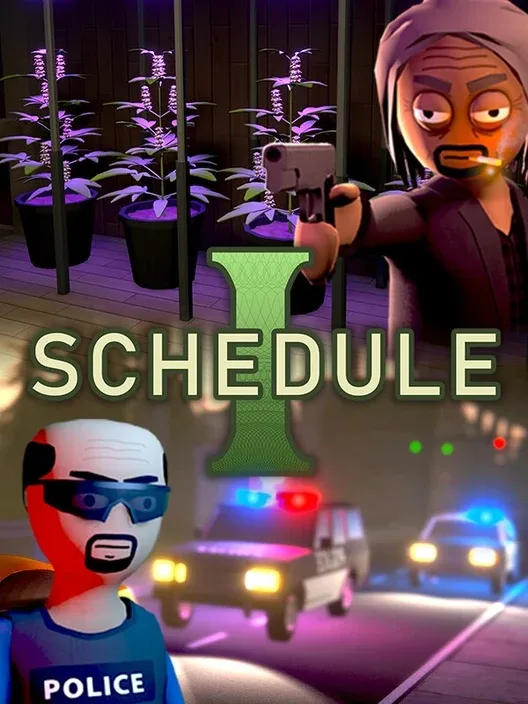
 Satisfactory
 RimWorld
 Frostpunk
 Prison Architect
 Two Point Hospital
 Cities: Skylines II
This is Game Avant's own ranked list of the best building and management games right now, built from the site's combined critic and player rating data rather than picked by hand. "Building & Management" on this page covers city builders where zoning, services, and infrastructure decide whether a district thrives or collapses, colony and base-building games where survival depends on what gets constructed and where, factory-automation games where the entire challenge is designing a production chain rather than fighting through one, and business or logistics management games where running an operation efficiently is the whole point. It does not mean loosely-tagged "simulation" games where building is a side activity bolted onto a different core loop — a farming sim or a life sim earns its own page elsewhere on this site, and a game only belongs here if constructing, expanding, or managing a system is what a player is actually doing turn to turn.
The order below comes from blending IGDB's aggregate rating with Steam's own user review percentage, weighted toward games with a real sample size behind the score, and curated for genuine breadth rather than raw percentage alone — a list built purely from the highest rating numbers tends to bury the famous, broadly-played city builders and factory games under smaller titles with fewer but more enthusiastic reviewers, so this page deliberately mixes both: the genre's most recognizable, most-played entries alongside excellent smaller games that don't have the same audience size behind them. Read the write-ups for what each game's systems actually do — the rank tells you how it currently scores among the best building and management games on the site, not which one fits a particular mood.
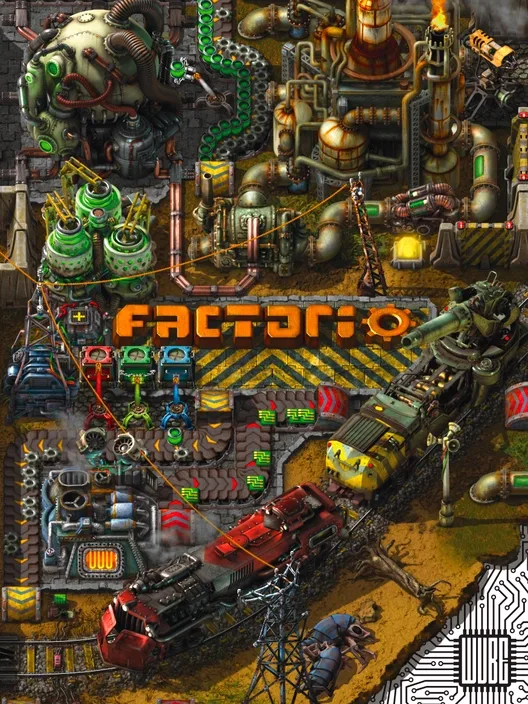
1. Factorio#
Wube Software's factory-automation game left early access with its 1.0 release in 2020 and remains the genre's reference point for logistics taken to its logical extreme: conveyor belts, inserters, and assemblers have to be chained into production lines balanced against real resource throughput, and train networks, oil processing, and the Kovarex enrichment process for late-game nuclear fuel eventually demand planning across an entire continent-spanning base rather than a single factory floor. The 2024 Space Age expansion extended that same logistics problem across multiple planets, each with its own resource constraints and hazards, forcing players who've already mastered Earth-bound belts to redesign entire production chains around vacuum, heat, or corrosive terrain instead of simply scaling up what already worked. Blueprints, letting a solved section of factory be copied, rotated, and stamped down elsewhere, turn what would be repetitive manual construction into an actual design problem about modularity and throughput, and the circuit network — wiring sensors and combinators into real logic gates — pushes the endgame closer to programming than building for anyone willing to go that deep. Among management games built for players who think in bottlenecks and belts-per-minute, few reward that mindset as directly: a stall is always traceable to a specific smelter or belt, and always fixable by redesigning around it. The honest drawback: the biters, the game's answer to combat and external threat, are clearly the least-developed system in the whole design, and the genre's own well-worn joke about "just one more belt" reflects a save file that can genuinely balloon into something overwhelming to return to after time away.
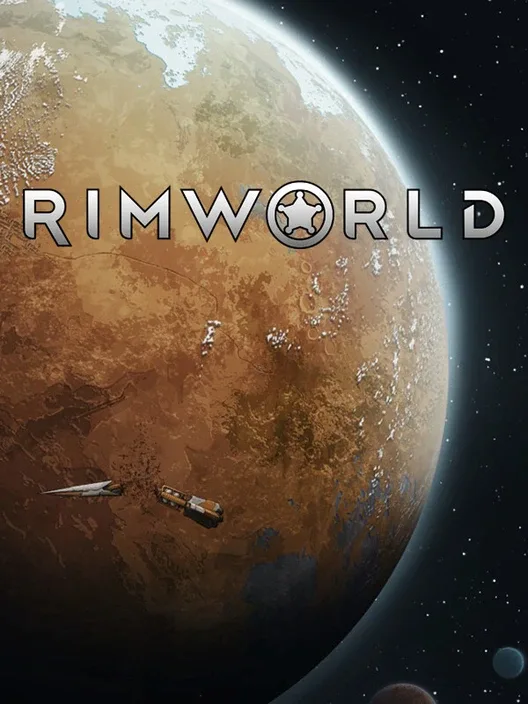
2. RimWorld#
Ludeon Studios' colony sim, designed by Tynan Sylvester and reaching its 1.0 release in October 2018, runs an entire colony's fate through an AI Storyteller — Cassandra Classic escalating threats on a structured curve, Phoebe Chillax pacing them gently, or Randy Random throwing events out with no pattern at all — that decides when a raid, a disease outbreak, or a stray cargo pod lands on the settlement, and building has to happen fast enough between crises to matter. Colonists carry procedurally generated backstories, skills, and personality traits that genuinely constrain how a base can be laid out — a pyromaniac colonist near a wood-walled stockpile is its own kind of structural risk — and the mood system, fed by room quality, food variety, and social relationships, can push someone into a mental break that undoes careful planning in minutes. Raid difficulty scales dynamically to a colony's total wealth, which means hoarding resources or over-building a base carries a direct, escalating military cost rather than being a purely economic decision, and killboxes, chokepoint layouts designed to funnel and kill raiders efficiently, have become their own sub-discipline of the game's base-building side. Research and production trees stretch from simple stonecutting to space-worthy technology, giving a colony's construction priorities genuine long-term direction beyond just surviving the next event. The honest drawback: the combat AI can be exploited fairly easily with the same chokepoint and doorway tactics that make killboxes so effective, trivializing what should be tense raids, and the vanilla game's building options are comparatively thin next to what its enormous modding community has since built around it.
3. Cities: Skylines II#
Colossal Order's sequel, released in October 2023, pushed the city-builder's underlying simulation further than the original dared: individual citizens are tracked with their own jobs, commutes, and needs rather than aggregate statistics, and the traffic model responds to genuine road-network decisions in a way that exposes a badly planned intersection through real gridlock rather than a cosmetic slowdown animation. Economic modeling ties tax policy, service coverage, and land value together as interacting variables, so a budget decision in one district can visibly ripple into unemployment or pollution somewhere else on the map, and zoning density, building upgrades, and utility placement all draw on that same underlying citizen simulation rather than a simplified population counter. Patches through 2025 and into 2026 have steadily reworked citizen pathfinding and job-seeking behavior specifically to keep large cities running at a playable frame rate, addressing what was the game's most persistent complaint at launch. When it works, it's one of the more convincing believable-systems city builders available, closer to a genuine urban-planning model than a building-placement game with a population number attached. The honest drawback, and it remains a real one even after two years of patches: the game launched with serious performance problems that made large cities run poorly even on strong hardware, several planned features and paid expansion content were delayed or scaled back after release, and while the ongoing patch cycle has closed much of that gap, the rocky launch is still the first thing most players bring up about it.
4. Frostpunk#
11 bit studios' 2018 city-survival game does something most management games avoid: it makes every efficiency decision a moral one. The core loop of keeping a coal generator's heat radius fed while a surviving population freezes outside it is standard resource management on its face, but the Book of Laws — where players choose policies like child labor, forced overtime, or executing dissenters to keep the city functioning — turns every optimization choice into a values statement the game never lets the player forget. The generator's heat-zone mechanic, where distance from the core literally determines who freezes first, gives city layout genuine strategic stakes rather than purely aesthetic ones, and scouting parties sent into the frozen wasteland outside the city return with resources, survivors, or grim discoveries that reshape a scenario's story mid-run rather than just refilling a stockpile. The tension between keeping people alive and keeping them from revolting — discontent and hope are tracked as separate, competing resources — means there's rarely a clean win available, only a least-bad one, and the research tree itself branches toward either steam-powered automation or increasingly severe faith-based social control, giving two playthroughs of the same scenario genuinely different late-game character. The honest drawback: the campaign length is genuinely short for the price point, and the game's insistence on staging every building decision as a moral dilemma occasionally tips into heavy-handedness rather than letting the situation speak for itself.
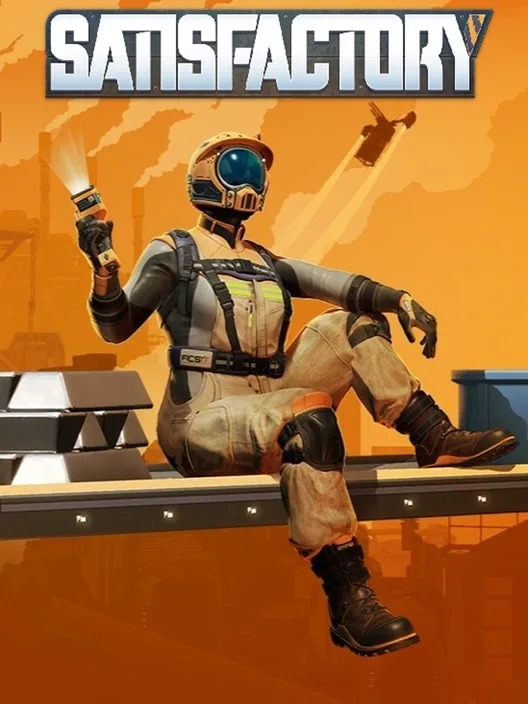
5. Satisfactory#
Coffee Stain Studios' factory-automation game spent over five years in early access before its full 1.0 release in September 2024, casting a lone FICSIT Inc. pioneer with building an entire industrial supply chain from raw resource nodes up to advanced finished components. Its core systems are precise and interlocking: conveyor belts move raw and intermediate materials between miners, smelters, and assemblers at fixed throughput rates, a tiered power grid has to keep pace with an expanding factory's actual consumption rather than a flat cap, and a blueprint designer lets a solved production module be copied and stamped down elsewhere the way Factorio's own blueprint books do. Trains and drones extend that same logistics problem across the map once belts stop being practical, turning long-distance supply into its own layer of route and scheduling planning, and full multiplayer support lets a factory be built cooperatively, with different players responsible for different production chains feeding into a shared supply network. Unlike more abstracted automation games, Satisfactory's first-person, fully 3D factory floors mean pipe routing, foundation placement, and vertical stacking are physical spatial problems as much as logistics ones, and it's frequently cited among management-genre heavyweights for how directly it rewards redesigning a bottlenecked production line once the actual cause is traced. The honest drawback: performance degrades noticeably in very large, late-game factories, with frame rates that can drop sharply as belt calculations pile up even on strong hardware, and combat against the planet's wildlife is widely considered the weakest system in the game — fiddly weapons and short-ranged explosives make it something to avoid rather than engage with.
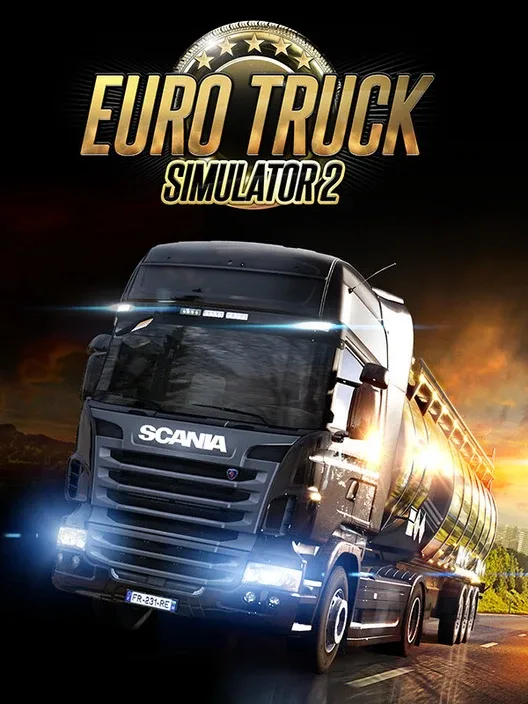
6. Euro Truck Simulator 2#
SCS Software's trucking game has spent over a decade growing from a single-country delivery sim into a continent-spanning logistics-management operation, with each expansion adding not just new roads but new border rules, fuel prices, and delivery contracts specific to that region's economy. Its trucking-company management layer is the part that earns it a place among building and management games rather than pure driving games: hiring AI drivers, expanding a garage fleet, and assigning routes turns the experience from a solo delivery run into an actual logistics business once a player wants it to be one, with driver skill progression and fleet income to track alongside the roads themselves. The core driving model — realistic braking distances, cargo weight affecting handling, fatigue management on long hauls — gives even a routine delivery real stakes, since a badly judged overtake with an oversized load has consequences a more arcade racer wouldn't bother modeling. Garage upgrades and depot placement across an expanding map turn expansion itself into a resource-allocation decision, not unlike deciding where to place a new warehouse in a dedicated city builder. The scale of its community-made map expansions, built on genuinely open modding tools, has kept the base game relevant far longer than most driving-adjacent management titles manage. The honest drawback: the core loop of driving from A to B is fundamentally repetitive once the systems are understood, the career-management layer sitting on top of it is comparatively shallow next to a dedicated business sim, and freight variety plateaus well before the map does.
7. Stellaris#
Paradox Development Studio's 2016 space strategy game hands players a blank galaxy and lets empire management — species design, government type, and sprawling multi-planet administration — genuinely reshape how the game plays rather than existing as flavor text. Individual planets have to be developed like small cities in their own right: districts for housing, mining, or energy production, building slots for specialist infrastructure, and a growing pop economy that has to be balanced against food, consumer goods, and unity production the further an empire spreads. The sector and planetary-automation tools, letting an AI governor handle routine management on distant colonies, exist specifically because manual per-planet micromanagement stops scaling once an empire crosses a dozen systems, and the tension between full manual control and delegated automation is itself a genuine management decision. Megastructures — Dyson Spheres, ring worlds, habitat rings — turn the late game into massive, multi-decade construction projects with real strategic payoff, giving the building side of the game an entirely separate, higher tier once basic infrastructure is settled. Origins, chosen at empire creation, front-load a unique starting scenario that shapes an entire campaign's early construction priorities, from a fractured homeworld needing reunification to a species that starts already scattered across several systems. The honest drawback: the mid-game is a real slog for many players, as pop and building micromanagement scales up faster than the automation tools meant to handle it, turning a long stretch of turns into genuine administrative chore before the game's pace picks back up.
8. Age of Empires II: Definitive Edition#
Microsoft's 1999 real-time strategy game, kept alive and rebalanced for over two decades through the Definitive Edition and its ongoing update cycle, is as much a base-building and economy-management game as a battle one: forty-plus civilizations each with unique units, bonuses, and tech-tree gaps mean the actual skill being tested is as much town-layout and resource-chain optimization as combat. The age-up structure — Dark, Feudal, Castle, Imperial — creates a natural rhythm of construction investment followed by a military spike, and villager management, assigning a fixed population to wood, food, gold, and stone gathering while building farms, mills, and town centers in the right order, is the actual foundation every match is won or lost on before armies ever meet. Wall placement and defensive building layout matter enough that a well-designed choke point can hold off a numerically superior army, and the wonder-race win condition gives even a losing military position an alternate, construction-based path to victory. Its esports scene, still active a quarter-century after release, is proof the underlying economy-and-building systems reward genuine mastery rather than just memorization. The honest drawback: the early-game villager and economy management is unforgiving of mistakes, the competitive meta is dominated by scripted opening build orders that can feel like homework before a match even becomes interactive, and newcomers matched against experienced players can lose a game in the first five minutes without understanding why.
9. Sid Meier's Civilization VI#
Firaxis Games' 2016 entry reworked the series' city-building fundamentals around unstacking cities across the map: districts — Campus, Commercial Hub, Industrial Zone, and others — now occupy their own physical tile with real adjacency bonuses, so where a district is placed relative to mountains, rivers, or other districts genuinely changes its output rather than being a menu abstraction. Housing and amenities are tracked as separate caps on growth, forcing a city's building priorities to balance food and production against the infrastructure needed to keep a growing population fed and content, and the government-and-policy-card system lets an empire's entire economic identity be reshaped between eras rather than locked in at the start. Builders, worker units with a limited number of uses before being consumed, turn terrain improvement into a genuine resource-allocation decision instead of an infinite, free action, and the Golden Age and Era Score systems reward sustained development across multiple areas rather than a single specialized strategy. Expansions added governors, deployable specialists who boost specific cities toward science, culture, or loyalty, and a loyalty mechanic that can cause a poorly managed, unhappy city to defect to a rival empire entirely, giving city management genuine stakes beyond simple growth. The honest drawback: the base 2016 release was noticeably thinner than its predecessor at launch, and the AI's city planning and building placement remain visibly weaker than a human player's, making high-difficulty games as much an exercise in managing bonuses as genuine competition.
10. Anno 1800#
Ubisoft Blue Byte's 2019 entry in the long-running Anno series moved the franchise's trade-and-production formula into the Industrial Revolution, and the shift fits the genre perfectly: production chains for goods like beer, soap, and clothing have to be built out tier by tier, and a population that keeps demanding new, more sophisticated goods to stay happy makes city growth and factory expansion the same problem viewed from two angles. Trade routes, sailed manually or automated between multiple islands with different resources, turn overseas logistics into their own layer of management on top of the individual city screens, and the workforce system ties factory output directly to a city's actual working population rather than an abstract production multiplier, so overbuilding factories without the housing to staff them stalls an economy just as badly as underbuilding them. Expeditions send hired specialists off on scripted, risk-reward missions for rare goods and artifacts, adding a light layer of management outside the main island economy, and the New World and later Arctic and archipelago expansions each introduced entirely new production chains and climate-specific building constraints that reshape what a well-run empire actually looks like. Its scale — juggling several island economies simultaneously, each feeding goods to the others — makes it one of the more demanding pure economy-management games on this list. The honest drawback: the mid-game production-chain math is genuinely dense and unforgiving of a badly planned factory layout, and multiple island economies running in parallel can turn later stages of a campaign into extensive bookkeeping between the more active moments of expansion.
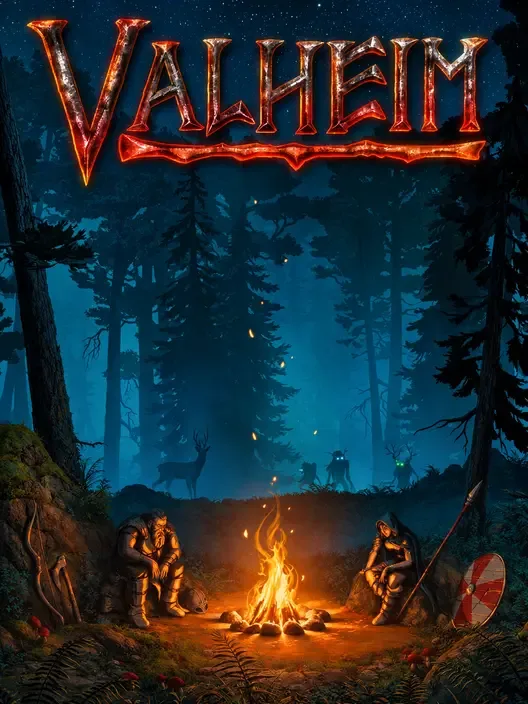
11. Valheim#
Iron Gate Studio's Norse-mythology survival game, released into early access in February 2021, built its reputation as much on base construction as on combat: a physics-driven building system requires actual structural support — beams, pillars, and roof angles that can visibly collapse if overextended — rather than letting pieces snap together with no regard for load, which makes base design a genuine engineering puzzle rather than a purely decorative one. Biome-specific building materials, from core wood to the later iron and stone, gate what's structurally possible at any given stage, and each new biome's hostile creatures push base defenses — moats, spike walls, watchtowers — to keep pace with escalating raid events that specifically target a player's own construction. The portal network, once unlocked, turns a sprawling world map into a manageable, fast-travel logistics system between separate bases built around different resources, and the Hearth and Home and Ashlands updates progressively expanded building pieces, food systems, and crafting stations well past what launched in 2021. Cooperative building, with up to ten players sharing a world and its structures, turns a single base into a genuinely collaborative construction project rather than a solo effort. The honest drawback: the building system's structural-integrity rules can be genuinely punishing and occasionally counterintuitive for players used to more permissive construction games, and the core loop of biome progression, gather, craft, build, defeat a boss, repeats a familiar shape that some players find grows thin well before the Ashlands endgame.
12. Timberborn#
Mechanistry's beaver-colony builder left years of early access behind with its 1.0 release in March 2026, and its central construction hook — building both on the ground and vertically up cliff faces and platforms — makes terrain itself a design constraint most city builders never have to account for. Water management is the whole game's spine: dams, sluices, and irrigation channels have to be actively engineered to survive a scripted drought-and-flood cycle, and a colony that hasn't stored enough water before a dry season simply starves regardless of how well everything else is built. The 1.0 update added a full automation layer of logic buildings — levers, flow sensors, power meters, and logic relays — that let structures be wired to respond to conditions automatically, pushing the late game toward the same kind of systems-design thinking Factorio popularized in industrial automation, applied here to water and production logistics instead. Two distinct beaver factions, Folktails and Ironteeth, use different building sets and resource priorities, meaningfully changing what an efficient settlement layout looks like depending on which is chosen. Newly added geothermal fields and unstable, explosive cores in the post-apocalyptic terrain give map choice its own risk-reward calculation before a single building goes up. The honest drawback: the drought-cycle pressure that makes water management so tense can also make an unlucky map feel unfairly punishing in the early game, and the presentation, charming as it is, is noticeably lighter in scale and spectacle than the genre's biggest city-building names.
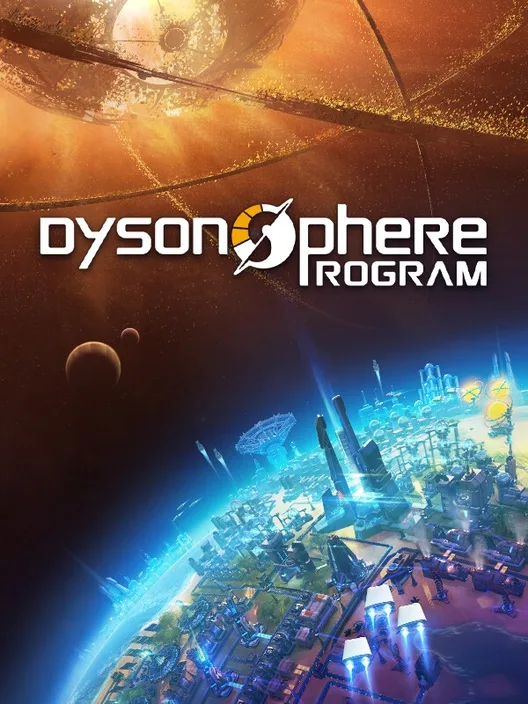
13. Dyson Sphere Program#
Youthcat Studio's interstellar factory-automation game, in early access on Steam since January 2021 and still receiving major content updates, takes Factorio's core belt-and-assembler logic and scales it out to a literal solar system: production doesn't stop at a single planet, and the ultimate goal of physically constructing a Dyson Sphere around a star means factories on multiple worlds have to be linked by an interplanetary logistics network of cargo rockets and space elevators rather than a single continuous belt line. Its Interstellar Logistics Stations manage automated resource transport between planets and star systems, turning what would be Factorio's train-scheduling problem into a genuinely three-dimensional, orbital-mechanics-adjacent one, and the Dyson Sphere construction itself — building out individual solar collector shells in an expanding structure around a star — gives the game an explicit, visually enormous endgame project that most automation games never provide. The Rise of the Dark Fog update added a real combat and defense layer to what had been a purely peaceful builder, forcing production lines to also account for military production once hostile forces begin threatening a factory. Its blueprint and mega-structure tools let complex production modules be copied and mass-deployed across dozens of planets rather than rebuilt manually each time. The honest drawback: the game remains in early access with no confirmed full 1.0 release date, and the sheer scale of managing production across multiple planets and star systems creates a UI and logistics-tracking burden that outpaces even Factorio's own famously dense late game.
14. Kenshi#
Lo-Fi Games' squad-based sandbox, released in December 2018 after over a decade of solo and small-team development, folds settlement construction into an otherwise open-ended survival RPG: a player-built outpost has to be sited, walled, and defended in a world that has no scripted difficulty curve and no guarantee of fairness, where a poorly placed base can be raided into rubble by bandits or hostile factions with no story-driven mercy. Building placement interacts directly with the game's economy and production chains — farms, mines, and research buildings all have real yield and defense trade-offs based on terrain and faction territory — and recruited or rescued characters have to be trained up from weak, injury-prone recruits into capable defenders and workers, tying settlement growth to the same character-progression systems that drive the game's combat. Its faction and diplomacy systems mean a base's location has real political consequences: building too close to a hostile empire's territory invites raids, while allying with a faction can open trade and protection a solo outpost wouldn't otherwise have. The sheer openness of its roughly 870-square-kilometer world means a settlement's purpose — trade hub, mining operation, defensible fortress — is entirely up to what a player decides to prioritize rather than a scripted objective. The honest drawback: the interface and base-building tools are notoriously unfriendly to newcomers, with little in the way of tutorial guidance, and the game's commitment to unscripted fairness means a promising settlement can be wiped out by bad luck as easily as by a genuine strategic mistake.
15. Frostpunk 2#
11 bit studios' sequel, released in September 2024 and built on Unreal Engine 5, moves the series from managing a single generator-heated city to governing an entire sprawling metropolis built around it, and that shift changes what "building" means in the game: rather than placing individual structures by hand, players now zone whole districts — housing, industry, logistics — onto the frozen map, turning city planning into a higher-level, more abstracted management layer than the original's building-by-building placement. The Council, a body of competing political factions with genuinely opposed ideologies, has to be persuaded or maneuvered around to pass any major law or infrastructure project, layering a legislative-negotiation system on top of the resource-and-construction management the first game was built around. The shift from coal to oil as the city's new lifeblood forces an entirely new set of extraction and logistics buildings to be planned around scarcer, more contested resources than the original's generator-centric economy. Frostland expeditions, sending scouted parties out to secure resources or discover new settlements to bring into the city's orbit, extend the management layer beyond the capital's own walls for the first time in the series. The honest drawback: longtime fans of the original's more intimate, building-by-building tension have found the sequel's zoned, district-level abstraction colder and less personally consequential, and the Council's factional politics can occasionally overshadow the construction-and-survival mechanics that defined the first game's identity.
16. Manor Lords#
Slavic Magic's medieval city builder, a one-developer project released into early access on April 26, 2024 after becoming one of the most-wishlisted games on Steam ahead of launch, pairs organic, non-grid town layout — houses and production buildings placed freely along terrain rather than snapped to a fixed grid — with a genuinely detailed production-chain economy where burgage plots, the individual housing-and-garden units a town is built from, can each be assigned to farming, crafts, or trade depending on what the wider settlement needs. Regional trade routes and a full seasonal calendar tie construction planning to real timing pressure: a granary that isn't stocked before winter, or fields planted in the wrong rotation, has consequences that show up months later rather than immediately. Its large-scale medieval battles, fought with formations of levied townsfolk rather than a separate military unit roster, tie directly back into the town's own economy, since every soldier pulled from the fields or workshops is a worker the settlement's production chains no longer have. The game remains in active early access, with the developer targeting roughly a year of ongoing development from its 2024 launch to round out missing systems and content before a full 1.0 release. The honest drawback: large sections of the game, including a full campaign map and deeper diplomacy systems, are still unfinished or placeholder as of its current early-access state, and performance in larger, more developed towns can bog down noticeably compared to more optimized, established city builders.
17. Prison Architect#
Introversion Software's prison-management game, released in 2015, asks a player to build and run a functioning penal facility from the ground up — cell blocks, kitchens, laundries, and security infrastructure all have to be planned around a population of inmates with individual needs, grievances, and escape ambitions rather than a static, decorative crowd. Riot mechanics, triggered by neglected needs or mishandled incidents, turn poor building layout into a genuinely dangerous cascading failure rather than a simple efficiency penalty, and reform systems — education programs, work assignments, parole tracking — give the management layer a real ethical dimension about what a prison is actually meant to accomplish beyond containment. Room-by-room construction has to account for security clearance zones, guard patrol routes, and CCTV coverage as interlocking systems rather than separate checklists, and a badly planned choke point between a cell block and the yard can turn a routine lockdown into a full riot. The 2024 sequel, Prison Architect 2, moved the format into isometric 3D and reworked several core systems, though the shift drew a mixed response from a community attached to the original's more legible 2D logistics and construction tools. As a management game willing to sit with genuinely uncomfortable subject matter rather than softening it, the original remains a notable entry among the best building and management games in the genre. The honest drawback: the original's interface and tutorial coverage show their age, and the sequel's redesigned systems are still finding their footing against what longtime players expected from the format.
18. Dave the Diver#
Mintrocket's hybrid splits its day-night cycle cleanly between two different systems: diving by day through a procedurally shifting reef to catch fish, dodge sea creatures, and manage a limited oxygen and inventory loadout, then running and expanding a sushi restaurant by night where the catch from that same dive determines the night's menu and profit. The restaurant-management half is a genuine building-and-staffing operation in its own right: floor layout, seating capacity, and staff hiring and assignment all have to scale up as the restaurant's reputation grows, and specific upgrades — bigger kitchens, additional prep stations, expanded dining space — are direct investments funded by how well the diving half performs that same day. That feedback loop, where a good dive directly funds better diving gear and restaurant construction, gives the management half genuine stakes tied to the action half rather than the two existing as separate minigames bolted together. Guest-chef crossover events, bringing real recipes and characters from other franchises into the restaurant rotation, add novelty without breaking the underlying loop's internal logic. It sits comfortably among the best building and management games precisely because it doesn't over-explain the fantasy — running a business off what's caught that day reads as a genuinely coherent system rather than two genres sharing a save file. The honest drawback: the diving-and-combat side is mechanically simple compared to a dedicated action game, and the story's pacing slows considerably in the back half as narrative sections stretch out between the restaurant-management loops that made the opening hours compelling.
19. Ark: Survival Evolved#
Studio Wildcard's dinosaur-survival game, which left early access in 2017, ties its base-building system directly to taming: hundreds of tameable creatures can be put to work as mounts, combat units, or dedicated resource gatherers, and a base's defenses have to scale against genuinely dangerous wild and rival-tribe threats that specifically target vulnerable structures. Building tiers — thatch, wood, stone, metal, tek — gate what's structurally possible at a given tech level, and each tier demands its own resource-gathering infrastructure to support, turning base upgrades into a real production-chain problem rather than a single unlock. Its tribe system lets a base be built and defended cooperatively across dozens of players on dedicated servers, with shared resource stockpiles, structure ownership permissions, and coordinated raid defense turning base management into genuine multiplayer logistics. Breeding mechanics, letting tamed creatures be bred for improved stats across generations, extend the management layer beyond structures into long-term creature-husbandry projects that can take real in-game time to pay off. The map system, with multiple distinct DLC maps each offering different biomes, resources, and building constraints, gives the base-building side of the game genuinely different problems to solve depending on which map a tribe settles into. The honest drawback: the game's notoriously demanding hardware requirements and its history of technical instability, especially on official servers, have been persistent complaints since launch, and its structure-decay and raid mechanics can make a solo or small-tribe base a fragile, time-consuming thing to maintain against larger, more organized groups.
20. Two Point Hospital#
Two Point Studios' spiritual successor to Theme Hospital, released in August 2018, keeps the same fictional-illness humor — patients arriving with Bloaty Head or Lightheadedness, each requiring its own comically specific treatment room — while building a genuinely interconnected hospital-construction and management simulation underneath the jokes: room placement, staff training, patient flow, and hospital reputation all interact rather than existing as separate menus. Individual rooms have to be built, sized, and decorated with the right equipment to actually function, and item placement inside them affects a room's overall quality rating, which in turn affects how quickly and how well patients are treated — construction and interior design are genuinely mechanical decisions here, not cosmetic ones. Expansion packs added entirely new illness categories and specialist rooms, meaningfully expanding what a fully built-out hospital actually needs to handle rather than just adding cosmetic variety to existing systems, and staff skill progression, letting doctors and nurses train into specializations that make certain treatments faster or more effective, gives hospital layout genuine strategic weight beyond simply placing rooms where they fit. The comic tone never undercuts the real management-and-construction mechanics running underneath it, which is a harder balance than it looks. The honest drawback: several individual systems are simplified compared to what Theme Hospital's own devoted fanbase remembers as deeper in the original, and the illness-of-the-week humor, while consistently funny early on, thins out across a long campaign of hospitals built to the same basic formula.
21. Raft#
Redbeet Interactive's survival-building game starts a player with a single raft tile floating in open ocean and grows outward from there: every expansion — new floor tiles, walls, a second story, dedicated rooms for farming or research — is built directly from resources hooked in with a floating net, making resource scavenging and construction the same continuous activity rather than separate phases. Foundation frames have to be planned before floor tiles snap onto them, and a raft's growing footprint directly affects how it handles in open water, giving structural layout a genuine functional consequence beyond aesthetics. Story islands, added across several content updates after the game's full 1.0 release in 2022, introduce land-based building and base expansion beyond the raft itself, giving players a second, more traditional building context alongside the ocean-bound structure that defines the game's identity. Its cooperative multiplayer, letting up to a handful of players share and build out the same raft simultaneously, turns limited early-game floor space into a genuine spatial-planning negotiation between players before the raft grows large enough to comfortably divide into separate zones. Defense against the recurring shark that circles the raft gives base placement and hull design a low-grade but persistent survival stake beyond simple expansion. The honest drawback: the building system itself is comparatively simple next to dedicated construction games on this list, largely limited to a fixed grid of floor and wall pieces, and the story content bolted onto later updates is generally considered weaker than the core raft-building loop that made the game popular in the first place.
22. Astroneer#
System Era Softworks' space-exploration and base-building game, which reached its full 1.0 release in December 2019, is built around a deformable-terrain system that makes construction and terraforming the same tool: the handheld terrain tool can dig, flatten, or build up ground directly, meaning a base's foundation is something a player actively sculpts rather than simply builds on top of pre-set terrain. Modular base structures — platforms, habitats, research stations, and resource-processing buildings — snap together on customizable, extendable platforms, and the tethered power-and-oxygen network running between them means a base's layout has to account for literal life-support logistics, not just production efficiency. Its resource-processing chain, smelting and refining raw materials into composite resources through specific building types, gives base expansion real production-chain depth despite the game's relatively gentle, low-stakes survival pressure compared to harsher entries in the genre. Multiplanetary bases, once a player has the means to travel between the game's several procedurally generated planets, extend the management layer into logistics between separate outposts, each with its own resource profile and environmental hazards to build around. Full cross-platform cooperative play lets a base be constructed collaboratively, dividing terraforming, resource gathering, and building tasks across a group. The honest drawback: the deformable terrain that makes construction so flexible can also make precise, symmetrical building layouts fiddly compared to a fixed-grid building game, and the overall difficulty curve is gentle enough that base defense and resource pressure rarely become a serious management challenge on their own.
23. Cult of the Lamb#
Massive Monster's roguelike hybrid, released in August 2022 and published by Devolver Digital, pairs dungeon-crawling combat runs with a genuine base-building and cult-management layer back at the player's home settlement: followers have to be housed, fed, and kept content through a full needs system, and neglecting sanitation, faith, or hunger for too long spirals into disloyalty or outright rebellion rather than a simple stat penalty. Building placement directly affects follower happiness and productivity — a shrine's proximity, a farm's layout, or an overcrowded sleeping area all measurably shape how the cult performs — and the doctrine system, letting new commandments and rituals be unlocked and assigned, gives the management side of the game an actual ideological lever beyond pure construction efficiency. Resource loops tie the two halves of the game together directly: dungeon runs bring back the materials, followers, and unlocks that fund cult expansion, while a well-run cult back home produces the faith and supplies that make the next dungeon run sustainable. Sacrificial rituals and public sermons, performed at constructed altars and gathering spaces, let a player actively shape follower loyalty and belief rather than leaving it to passively accumulate. The honest drawback: the cult-management half, while genuinely substantial, is mechanically simpler than a dedicated colony sim's systems, and the roguelike dungeon runs can start to feel repetitive well before the management layer's own content is exhausted.
24. American Truck Simulator#
SCS Software's US-set companion to Euro Truck Simulator 2 models the specific realities of American long-haul trucking — state-line weigh stations, wide interstate geography, and a rollout of states, from California at launch in 2016 through later additions like Texas, Colorado, and Montana, each modeled with real regional landmarks and terrain — and layers the same trucking-company management system its European sibling uses: hiring AI drivers, expanding a garage fleet, and managing depot locations across a growing map turns solo driving into an actual logistics operation once a player chooses to build one out. Its core driving model shares the same cargo-weight-affects-handling physics as its European counterpart, and the sheer scale of some American routes gives long hauls a genuinely different rhythm than the more densely packed European road network, which in turn changes how a fleet's routes and depot placements should be planned. Multiplayer convoy support lets a fleet of players run the same route together, turning solitary long-distance driving into a shared road-trip and shared-business experience. Garage upgrades, unlocked as the company's income grows, function as the same kind of infrastructure-investment decision a city builder asks of its players, just applied to trucking capacity instead of urban zoning. As a technically serious driving-and-logistics-management game rather than an arcade racer, it holds up well against most of the vehicle-focused competition on this list. The honest drawback: the core loop is fundamentally the same repetitive delivery cycle as its European counterpart, new US states have rolled out slowly over nearly a decade, leaving real geographic gaps in the map for long stretches, and the career-management layer on top of the driving remains fairly shallow.
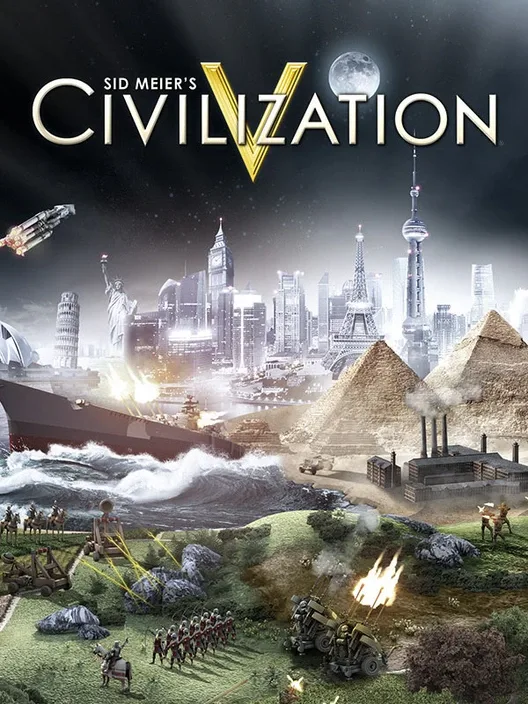
25. Sid Meier's Civilization V#
Firaxis Games' 2010 entry, published by 2K Games, rebuilt the series' city and territory management around a decision that reshaped every layer of play: the switch from square tiles to a hexagonal grid paired with the one-unit-per-tile rule, which broke the stack-of-doom tactics of earlier entries and forced armies to spread across the map, turning terrain chokepoints into a real defensive-building concern rather than a simple garrison count. City-states, independent minor civilizations that can be courted with gifts, protected from rivals, or conquered outright, gave the map a layer of small-scale diplomacy and investment separate from full-scale city founding, and completing their quests for influence could unlock unique resources or free units without the overhead of managing an additional city directly. The social policy system replaced Civilization IV's Civics with a tree of its own, letting a civilization commit to Tradition, Liberty, Honor, or a dozen later branches as a standing identity that shapes how cities are meant to grow rather than a single swappable government. Great Works, generated by specialists and slotted into constructed museums and amphitheaters, turned a late-game culture push into an actual collection-building project with its own tourism and influence math tied directly to specific buildings. Wonders remained one-per-world, so racing a rival civilization to construct Stonehenge or the Great Library stayed a genuine building-focused flashpoint. The honest drawback: the base 2010 release launched noticeably thinner than Civilization IV, missing religion, espionage, and a functioning culture victory outright, and while the Gods & Kings and Brave New World expansions eventually filled those gaps, the vanilla game many players first encountered was a genuinely stripped-down version of what the series became.
26. Zeus: Master of Olympus#
Impressions Games' 2000 city builder, published by Sierra Studios, swaps the more grounded historical settings of its Caesar and Pharaoh predecessors for actual Greek mythology, and that swap changes what the genre can do: heroes like Heracles can be recruited by constructing them a dedicated building stocked with the right commodities, then sent out to fight monsters and rival cities directly, giving a normally passive city-management genre an active, adventure-driven layer most competitors never attempted. The standard production-chain puzzle of housing, goods, and worker walk-radius that defines the Caesar-lineage city builders is still the backbone here, but trade agreements with named city-states and the gods themselves, who can be appeased with temples and offerings for concrete gameplay bonuses, add a diplomatic and religious dimension on top of it. Mission-based scenarios escalate deliberately, introducing new monster threats and city-management wrinkles at a pace that keeps a fairly simple core loop from going stale across a full campaign. The Poseidon expansion pack later layered in the underworld and a further set of monsters and heroes drawn from deeper in the mythological cycle, giving an already myth-rich game an even wider cast of gods and threats to build around. The honest drawback: the isometric building placement and grid-snapping are fiddly by modern standards, and unlike its stablemate Pharaoh, Zeus never received a fan-made or official HD remaster, so its interface and resolution options show real age next to newer city builders.
27. Scrap Mechanic#
Axolot Games' sandbox construction game left early access with its 1.0 release in July 2026, and its central appeal has always been a physics-driven building system where machines built from individual parts — wheels, pistons, logic gates, and structural blocks — actually behave according to real physics rather than a scripted animation, meaning a poorly balanced vehicle will genuinely tip over and a badly wired logic circuit simply won't work. Survival mode ties that open-ended building toolkit to an actual progression structure: for the first time with the 1.0 update, the mode ships a complete, voice-acted story from start to finish, with new locations and growlabs to explore and new enemies that put base defenses built from the same part library to a real test. The Claygun, a new tool introduced in the 1.0 update, lets players reshape the surrounding terrain directly, adding a construction option that goes beyond snapping parts together to actually sculpting the ground a base sits on. Its creative building tools, unconstrained by survival's resource limits, have supported an active community of Steam Workshop creations built entirely from the game's logic and mechanical parts, from working calculators to elaborate automated farms. Cooperative multiplayer lets a base or vehicle be engineered collaboratively, dividing part fabrication, wiring, and testing across a group the way an actual small engineering team would split the work. The honest drawback: the physics-driven building system that makes machines so satisfying to engineer also makes them fragile and occasionally unpredictable, and mastering the logic-gate wiring needed for genuinely automated builds has a steep learning curve with limited in-game guidance.
28. Stacklands#
Sokpop Collective's card-based village builder, released in April 2022, reduces city and resource management down to literal cards stacked on a tabletop: dragging a villager card onto a berry bush spawns berry cards to eat, dragging wood and stone cards toward a blueprint card constructs an actual building, and the entire economy of food, housing, and production runs through combinations of cards rather than a traditional isometric map. Card packs, bought with in-game coin earned from selling surplus resources, introduce new building types, tools, and hazards at a steady drip, turning progression into a genuine deck-and-economy-building problem rather than a fixed tech tree. Villagers themselves are cards with real limits — they need food and shelter to survive, and losing one to starvation or a hostile encounter is a permanent loss unless a new one is recruited — which gives the game's minimalist presentation surprisingly real survival-management stakes. Combat against hostile creature cards is resolved by dragging villagers onto them, and defeated enemies frequently drop resource or reward cards as loot, tying the game's light combat directly back into its building economy rather than treating it as a separate system. Its tabletop-card conceit strips city-building down to a form few other entries on this list attempt, trading visual scale for an unusually tactile, readable version of the same resource-chain thinking. The honest drawback: the format's minimalism, while a genuine strength early on, means the mid-to-late game can start to feel like repetitive card-shuffling once the core combinations have been learned, and the game offers little in the way of the spatial, layout-based design that drives most other city builders.
29. House Flipper#
Frozen District and Empyrean's renovation game turns a genuinely mundane premise — cleaning, repairing, and redecorating derelict houses to sell for profit — into a satisfying construction-and-management loop built on an actual property-flipping business underneath the task-completion appeal. Individual tools, from a wallpaper roller to a pressure washer to a full furniture catalog, each have their own physically modeled interaction rather than a single context-sensitive "fix" button, which keeps a renovation feeling like a sequence of real construction jobs rather than one abstracted task, and structural repairs — walls, flooring, plumbing fixtures — have to be addressed before cosmetic redecorating even begins. The sequel, House Flipper 2, expanded the scope to include full customer-request systems and neighborhood-level property investment, giving the loop more business-management structure than the original's more freeform sandbox, including managing multiple properties and client relationships simultaneously rather than one house at a time. Property valuation ties directly into renovation choices, so decisions about which rooms to prioritize and which finishes to install are genuine business trade-offs rather than purely aesthetic ones. It's a reliable entry point for players newer to the building-and-management genre who want something closer to relaxing task-based construction than a spreadsheet-driven economic model. The honest drawback: the task lists underlying each job are genuinely repetitive once the tool set is learned, and the narrative justification for why any given house needs flipping is thin enough that it rarely matters — the appeal is entirely the doing, not the story wrapped around it.
The ranking above blends IGDB's aggregate critic and user rating with Steam's own user review percentage, and only for games with a real sample size behind the score rather than a handful of early ratings that can swing wildly. Nothing on this list was hand-picked for placement — the order is a direct output of that combined score — but the field itself was curated deliberately for breadth: a purely percentage-sorted list tends to bury the genre's most recognizable, most-played city builders and factory games under smaller titles with fewer but more enthusiastic reviewers, so this page mixes both pools on purpose rather than defaulting to raw numbers alone. Whether the goal is a sprawling factory floor, a medieval town, or a single overloaded raft, treat this as a live snapshot of how these best building and management games are currently rated relative to each other, not a fixed, permanent verdict — check back as the data changes, because it will.