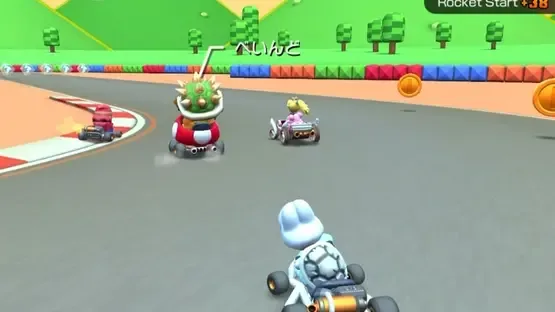
 Forza Horizon 5
 Forza Horizon 6
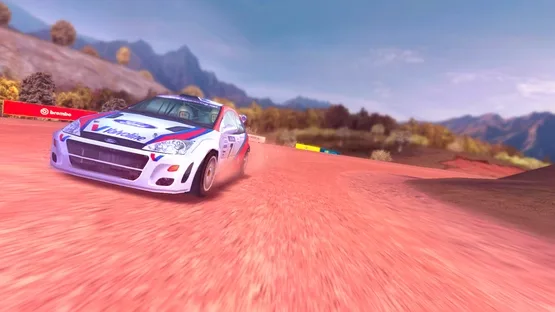
 Dirt Rally 2.0
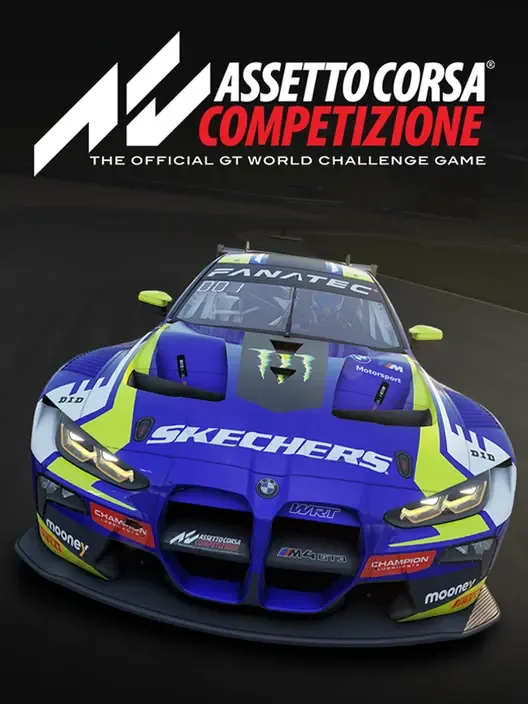 Assetto Corsa Competizione
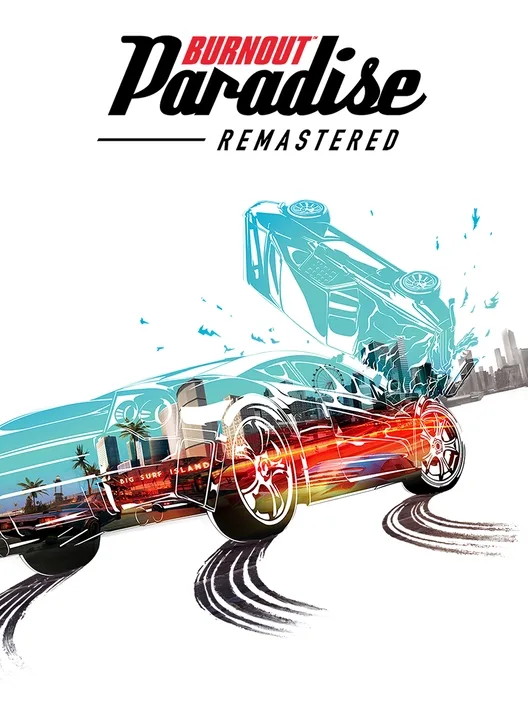 Burnout Paradise Remastered
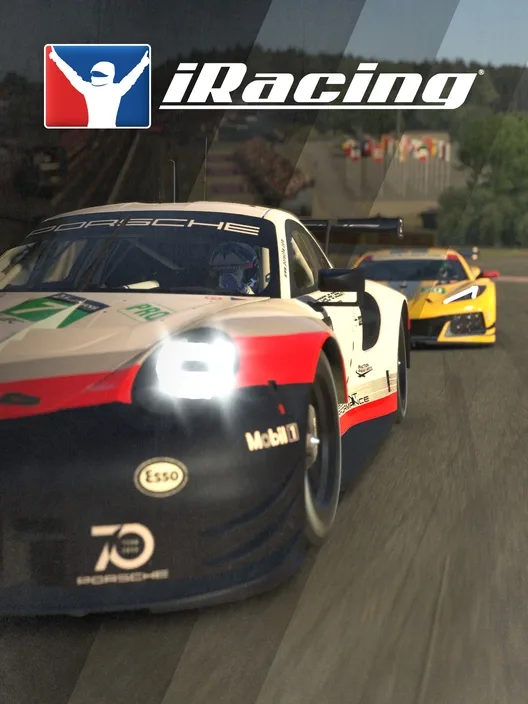 iRacing
This is GameAvant's own ranked list of the best racing games right now, built from the site's combined rating data rather than picked by hand. The pool blends IGDB's aggregate critic and user score with Steam's own review percentage, and it only counts games with a real sample size behind that score — which is why a well-loved niche title can occasionally outrank a franchise giant, and why a few names below will be unfamiliar even to people who follow the genre closely. Racing covers a wide spread of what "driving" can mean: arcade racing built on spectacle and forgiving handling, simulation racing built on tire wear and braking precision fine enough to lose a race over, and rally sitting between the two, borrowing sim-grade physics and applying them to roads a driver has never actually seen before a stage starts. Kart racers and drift-focused games round out the picture, proof that the best racing games rarely agree on what realism should even mean.
What follows isn't a hierarchy where every entry beats the one below it in every way. A driver chasing the best sim racing experience available and a driver who just wants a forgiving arcade playground are being served by different parts of this same list, and the honest drawback noted for each game is there so a reader can tell which kind of racing game worth playing they're actually looking at. Some entries below are genuinely obscure — small teams, modest budgets, review counts in the low thousands rather than the millions — and they rank here purely because the people who did play them rated them highly and consistently, not because GameAvant's editors decided they belonged. That's a deliberate tradeoff of scoring by data rather than by name recognition, and it's worth keeping in mind while scanning a list that puts a free fan-made kart racer within a few slots of a decade-old console classic. Read the write-ups for what a game does well and where it falls short — the rank says how it currently scores against the rest of the field, not which one is right for any particular driver, and not every top driving game here needs a wheel and pedal set to be worth a look.
1. Gran Turismo 7#
Polyphony Digital's flagship sits at the top by refusing to pick a single lane: the GT Café structure walks new drivers through curated menus built around specific cars and eras, teaching taste in machinery the way a mentor would rather than dumping four hundred vehicles into a garage and hoping something clicks. The physics model underneath is genuinely detailed enough to reward setup tinkering — tire pressure and camber adjustments show up in lap times, not just a spec sheet — while Sport mode's daily online races give the whole package a competitive spine most single-player-focused racers lack. Scapes, the photo mode built around real-world location scans, gives the car collection a reason to exist beyond a garage list. The honest drawback: the game's launch-era in-game economy leaned hard on grinding and microtransaction-adjacent pricing for rare cars, and while patches have softened it, the memory of that period still colors how some drivers approach the credit grind years later.
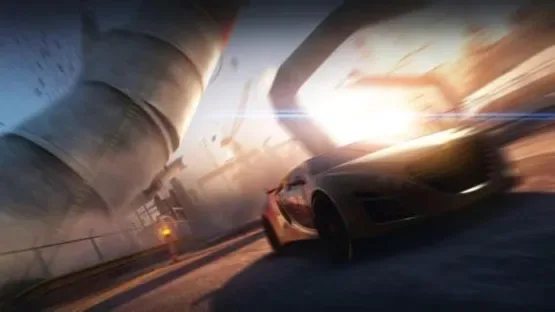
2. Forza Horizon 5#
Playground Games built its Mexico-set open world around scale as a virtue in its own right, and the design holds up under that pressure: volcanoes, jungle, and desert sit inside one continuous map rather than a series of disconnected zones, and the seasonal Horizon Arcade events keep pulling a driver back toward stunts and spectacle rather than a fixed race calendar. EventLab, the community track-and-challenge creator bundled into the game, has produced entire minigames built by players that rival anything the studio shipped at launch. It remains one of the best arcade racing games precisely because it never apologizes for being one — grip is generous, crashes are rarely fatal to momentum, and the fun lives in discovery rather than lap-time optimization. The honest drawback: the scale that makes the map so impressive also means mechanical depth per car is shallower than a dedicated sim, and force-feedback wheel support feels like an afterthought bolted onto a controller-first design.
3. Forza Motorsport#
Turn 10's 2023 reboot rebuilt the series' circuit-racing side around the Builders Cup career and a genuinely reworked tire model that tracks temperature and wear across a stint rather than treating rubber as a fixed grip value. Maple Valley, a returning fictional circuit from the earliest Forza Motorsport games, feels meaningfully different to drive here than it did fifteen years ago because the underlying physics actually changed, not just the lighting engine. Dynamic time-of-day and weather on select tracks add a layer of race-strategy thinking — tire choice ahead of a forecasted rain shower — that the series hadn't fully committed to before. The honest drawback: the game launched with real technical rough edges, including frame-rate stutters on a mid-generation console refresh and a noticeably smaller track roster than older entries in the series shipped with, both of which took months of patches to meaningfully improve.
4. Assetto Corsa Competizione#
Kunos Simulazioni built its entire identity around GT3 and GT4 machinery rather than chasing genre breadth, and that narrowness is the whole point: tire temperature, fuel load, and mechanical damage are modeled closely enough that a poorly managed set of tires during a long stint at the Nürburgring Nordschleife genuinely costs a race rather than existing as a cosmetic number. Dynamic weather that actually changes the racing line — a drying track revealing a faster path lap by lap rather than switching conditions instantly — is one of the more convincing weather systems in any of the best sim racing games available. The honest drawback: the single-class focus means there's no career mode in the traditional sense, the learning curve assumes a driver already understands GT-car behavior, and a newcomer expecting Gran Turismo's hand-holding will find none of it here.
5. iRacing#
iRacing runs its entire platform as a subscription service built around a strict safety-rating and license system, which means access to certain series is earned through clean racing rather than simply purchased, and that structure alone sets it apart from every other entry on this list. Laser-scanned versions of real circuits and official series tied to NASCAR and IndyCar give the platform a legitimacy competitive sim racers take seriously, and the safety rating genuinely changes driver behavior — a driver protecting their rating brakes earlier into a contested corner than one racing an offline AI grid ever would. It remains the clearest benchmark among the best sim racing games for anyone chasing structured, consequence-driven online competition rather than a single-player campaign. The honest drawback: the subscription-plus-paid-content model means the real cost of full access adds up quickly, and the unforgiving safety-rating system punishes an honest early mistake almost as harshly as reckless driving.
6. Dirt Rally 2.0#
Codemasters built its rally stages around genuine surface degradation — tarmac stages accumulate a visible racing line of rubber across repeated runs, and gravel stages cut deeper ruts as a rally progresses, both of which change how a stage should actually be driven on a second or third pass. Stages across Wales and New Zealand punish overconfidence severely: a driver who ignores a tightening hairpin called out two seconds ahead by the co-driver doesn't get a second attempt at that exact corner in that exact run. The damage model is unusually honest about consequences, a heavy off-road excursion can end a rally outright rather than just costing time. The honest drawback: that same unforgiving damage model means a single misjudged braking point can end an entire stage in seconds, which is realistic but genuinely frustrating for a driver still learning pace-note reading.
7. Gran Turismo 3: A-Spec#
The PS2-era entry that introduced much of the world to serious sim racing still holds up as a genuinely important racing game, built around a GT Mode structure and license tests that taught an entire console generation what braking points and racing lines actually meant before online tutorials existed for any of it. Suzuka and Trial Mountain, among the game's signature circuits, remain well-regarded layouts on their own mechanical merits rather than just nostalgia. The presentation, for its era, was a genuine technical showcase — reflective car paint and replay-camera work that made the game look years ahead of its PS2 contemporaries. The honest drawback: two and a half decades on, the AI behavior and smaller car and track roster read as clearly dated next to modern entries in the same series, and a driver coming from Gran Turismo 7 will notice the gap in physics depth immediately.
8. Automobilista 2#
Reiza Studios built its simulation around breadth across disciplines rather than a single class treated in isolation — historic touring cars, open-wheel machinery, and oval racing all sit inside the same platform, and Brazilian circuits like Interlagos get a level of localized attention few Western-developed sims bother with. Genuine weather transitions mid-session, a drying line appearing gradually rather than switching a track's grip level instantly, give races an evolving-strategy layer that rewards a driver paying attention to changing conditions rather than just memorizing a dry-weather line. The historic Formula content in particular lets a driver feel the difference between eras of open-wheel racing in a way most modern-only sims never attempt. The honest drawback: the interface and overall presentation are noticeably less polished than AAA competitors, and while VR support is genuinely strong, the base visual fidelity looks dated next to Assetto Corsa Competizione or Gran Turismo 7.
9. Need for Speed: Most Wanted#
EA Black Box's 2005 entry remains the series' most fondly remembered chapter, built around a Blacklist of fifteen named rival racers and a police-heat system where evading a pursuit escalates from a single cruiser to a coordinated roadblock the longer a chase runs. Beating a Blacklist racer unlocks their car and their specific handling quirks, turning progression into a genuine reason to learn a rival's strengths rather than just unlocking a stat upgrade. The cop chases themselves remain one of the most purely fun ideas any arcade racer has built a game around, turning evasion into its own skill separate from lap times entirely. The honest drawback: the handling model and visuals have aged in ways later Need for Speed entries corrected, and several PC ports of the era were notably rougher than the console originals.
10. Burnout Paradise#
Criterion's open-world reinvention of its own demolition-racing formula replaced Burnout's earlier menu-based structure with a single continuous city, Paradise City, where every intersection is its own race start and every road eventually loops back to something worth crashing into. Showtime, the mode that turns a wrecked car into a pinball-style points chase through traffic, is the clearest expression of the series' central idea: a crash isn't a failure state, it's content. The open-world structure means discovery, finding a shortcut through an alley that shaves seconds off a familiar route, matters as much as raw driving skill. The honest drawback: the original release offered no fast-travel option and expected a driver to drive everywhere manually, which some found meditative and others found a genuine structural annoyance, and the loose narrative framing barely qualifies as a story at all.
11. Burnout 3: Takedown#
Criterion's earlier, tighter entry is where the Takedown mechanic, ramming a rival hard enough to send them into a wall or off the road entirely, became the series' signature idea, turning ordinary traffic-dodging into an aggressive cat-and-mouse game between racers rather than a straightforward best-lap-time contest. Crash mode, a dedicated non-racing mode built entirely around causing the most spectacular multi-car pileup possible at a busy intersection, remains one of the most purely entertaining ideas the arcade racing genre has ever shipped as a side mode. Aftertouch, the ability to steer a wrecked car mid-crash for extra chaos points, turns even a failed takedown into something worth watching. The honest drawback: the PS2-and-Xbox-era visuals are clearly dated now, and the game's structure, entirely circuit- and point-to-point-based, has no open world at all by design.
12. Mario Kart 8 Deluxe#
Nintendo's definitive version of its own kart racer adds anti-gravity sections that let karts drive briefly up walls and across ceilings on specific tracks, plus the return of a proper Battle mode that the Wii U original launched without, and the Booster Course Pass DLC eventually added forty-eight remastered tracks from across the series' history on top of the base roster, drawn from entries going back to the SNES original. It remains, deliberately, the least realistic entry on this entire list — items, shortcuts, and rubber-band difficulty matter more than any car's actual handling model — and that honesty about its own priorities is exactly why it works as one of the best kart racers for a mixed-skill group sharing a couch rather than a dedicated racing circle. The honest drawback: the same rubber-banding and item randomness that keeps a room of mixed-skill players competitive also means a skilled driver can lose a commanding lead to a single unlucky blue shell in the closing seconds, no matter how clean the preceding laps were.
13. R4: Ridge Racer Type 4#
Namco's PS1-era entry built its entire identity around drift-based handling rather than grip racing, where holding a controlled slide through a corner is the intended fast line rather than a mistake to correct, and the Grand Prix story mode's rival racing teams, each with a distinct car and personality, gave the drifting model a competitive framework beyond pure lap times. The soundtrack, a genre-blending mix that leaned heavily on drum and bass and acid jazz, is still cited as one of the best in the format and shaped how an entire generation of arcade racers thought about music pacing. The honest drawback: the drift-heavy handling model is a deliberate stylistic choice that reads as alien to a driver expecting grip-based racing, and the presentation, while a genuine PS1-era technical achievement, is unmistakably dated by any modern visual standard.
14. Blur#
Bizarre Creations built its combat racer around real-world-inspired tracks layered with power-ups, shock bolts that stun a targeted rival, shunts that slam nearby cars sideways, turning circuits based on genuine city layouts into something closer to a weaponized Mario Kart with a straighter face. The power-up targeting system, requiring a driver to actually aim a weapon at a specific rival rather than firing blind, added a layer of tactical decision-making most combat racers skip in favor of pure chaos. Multiplayer, built around sixteen-driver lobbies at launch, was genuinely the game's strongest mode while its servers were active, and its Fan Tag system let players record and share highlight clips of a good takedown years before that became a standard feature elsewhere. The honest drawback: those multiplayer servers have since been shut down, which removes the mode the game was arguably built around, and the single-player campaign alone is noticeably shallower without it.
15. FlatOut 2#
Bugbear's demolition-focused arcade racer leans into ragdoll physics as an actual feature rather than a bug, launching the driver through the windshield during specific minigame events (a driver-launch dartboard, a bowling-pin crash course) that have nothing to do with lap times and everything to do with slapstick spectacle. The demolition derby modes, built around deliberately destructible environments and genuinely convincing car deformation for the era, gave crashes real visual weight rather than a scripted animation. Track design leans on shortcuts through destructible scenery, rewarding a driver willing to plow through a fence rather than follow the marked route, and the roster of over thirty licensed and fictional cars gave the demolition modes genuine build variety rather than one obviously optimal wrecking machine. The honest drawback: the underlying physics and visuals are unmistakably dated now, and the campaign structure around the demolition content is thin compared to more modern arcade racers.
16. Trackmania#
Nadeo's stripped-down arcade racer removes narrative and open-world scale entirely in favor of short, deliberately absurd tracks, loops, jumps, physics-defying stunts, built for attempts measured in single seconds rather than multi-lap endurance, and its medal system (bronze through the elusive author medal) gives even a thirty-second track genuine long-term replay depth. The real engine behind its longevity is the community track editor: years after launch, players are still building and sharing entirely new tracks rather than waiting for official content, which keeps the pool of available courses effectively infinite. Ghost-replay racing against a personal best or a friend's time turns even solo play into a constant competitive loop. The honest drawback: there's no career or story structure to speak of, and the format's obsessive focus on split-second precision can feel punishing rather than fun to a driver who isn't chasing a leaderboard.
17. Wreckfest#
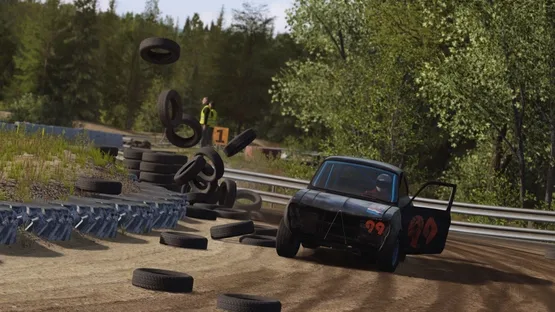
Bugbear's spiritual successor to its own FlatOut games goes further than its predecessor on deformable damage modeling — cars visibly crumple, lose parts, and eventually stop functioning entirely across a race rather than just displaying cosmetic scratches, and derby modes built around school buses and combine harvesters as playable vehicles lean fully into banger-racing chaos rather than pretending at realism. The physics underneath the chaos are genuinely convincing, weight and momentum in a collision feel consequential rather than arbitrary, which is what separates it from a pure demolition-derby toy. Track variety, mixing oval banger circuits with more traditional road courses, keeps the destruction from being the only thing on offer. The honest drawback: the single-player career mode is thin structurally, and a driver chasing precise lap-time competition rather than chaos will find the physics model prioritizes spectacle over racing-line purity.
18. CarX Drift Racing Online#
CarX Technologies built its entire platform around drift-specific physics rather than treating drifting as a side mechanic bolted onto a grip-racing engine, and tandem drift battles, two cars sliding through a corner side by side with a scored gap between them, are the clearest expression of what the game is actually for. Deep tuning options, down to suspension geometry and differential settings specifically for sustained slide angles, give the drift community a genuine reason to treat setup work as its own skill. The niche focus has produced a small but committed competitive scene built entirely around judged drift events rather than lap times. The honest drawback: the track roster is small compared to full-scale racing games, and the drift-only focus, by design, narrows its appeal to drivers specifically chasing that discipline rather than racing broadly.
19. Art of Rally#
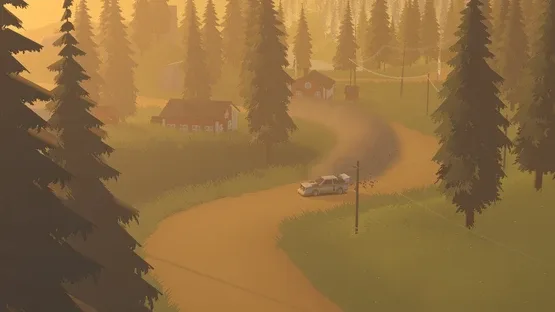
Funselektor's stylized rally game strips away photorealism entirely in favor of a minimalist, top-down-adjacent visual style, and that choice turns out to clarify rather than compromise the actual rally-line reading a driver needs to do on a blind stage. The focus on Group B and Group S era rally cars, the most infamous and powerful class in the sport's history before regulation reined it in, gives the roster a specific historical identity rather than a generic rally-car grab bag. Stage design leans on genuine elevation change and camera work that makes a crest or blind compression feel tense despite the simplified art style. The honest drawback: the content depth is genuinely shallower than a dedicated sim like Dirt Rally 2.0, and the calm, meditative pacing it's built around is a deliberate trade against the sustained intensity some rally fans are chasing.
20. Forza Horizon 4#
Playground Games' Britain-set predecessor to Horizon 5 introduced dynamic seasons that actually reshape the map on a rotation, winter freezes lakes into new drivable routes, autumn drops visibility-cutting leaves onto forest roads, giving the same road network a meaningfully different feel depending on when a driver visits it. The shared-world structure, other drivers visibly present on the map in real time, gave the open world a sense of a living place rather than an empty sandbox. Its stunt and festival content set much of the template Horizon 5 later expanded on a larger map. The honest drawback: the game is now genuinely overshadowed by its own sequel, which does nearly everything it does at a larger scale, and some of its shared-world online features have aged as server support shifted toward the newer game.
21. F1 2020#
Codemasters' pandemic-era entry introduced My Team, a mode letting a driver found and manage an entire eleventh F1 team rather than simply driving for an existing one, handling sponsorship deals and driver contracts alongside actual racing. A roster of classic cars spanning multiple eras of the sport, driveable outside the current-season content, gave the game a historical dimension the yearly series doesn't always bother with. The core physics model, tuned specifically around each season's actual car regulations, remains a solid entry point into officially licensed F1 racing, and its two-player split-screen career option is still one of the few ways to race a full F1 season locally against a friend rather than strangers online. The honest drawback: as a yearly-iteration sports title, much of its core handling and career structure carries over largely unchanged from adjacent entries in the series, and its physics model sits well below Assetto Corsa Competizione or iRacing in outright simulation depth.
22. Tokyo Xtreme Racer#
The 2025 revival of the long-running Japanese street-racing series rebuilds its identity around expressway battles clearly modeled on the real Shuto and Wangan highway culture, where a rival ranking system tracks a driver's reputation as they climb through named opponents rather than a generic career ladder. Highway-specific handling, tuned around sustained high-speed cornering on multi-lane expressways rather than circuit apex-hunting, gives the format a genuinely different feel from most Western-style street racers. The rival-encounter structure, where beating a specific named driver actually changes standing on that stretch of highway, gives progression a sense of place the genre often skips, and the car-tuning system leans specifically into the Japanese street-tuning culture the series has always been built around rather than a generic upgrade tree. The honest drawback: the game launched into early access with rough technical edges that took months of patching to smooth out, and its scope remains narrower than open-world street-racing alternatives.
23. BallisticNG#
An anti-gravity racer built as a deliberate tribute to the PlayStation-era combat-racing format, complete with a chunky low-poly visual style that recreates that generation's rendering limitations on purpose rather than as a technical shortfall, BallisticNG asks a driver to master weapon pickups and boost management on tracks that loop, invert, and drop without the forgiving grip of a modern arcade racer. The track editor gives the format's small but dedicated community a way to keep expanding the pool of available courses well past what the base game shipped with, and its split-screen local multiplayer support is a genuine rarity in a genre that has mostly abandoned the format. The honest drawback: the game is unapologetically niche, the low-poly aesthetic is a genuine barrier for players expecting modern visual fidelity, and the multiplayer population is small enough that finding a full lobby outside peak hours can be genuinely difficult.
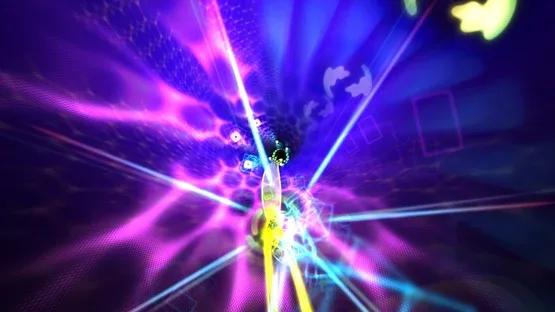
24. Distance#
Refract Games' survival-horror-tinged arcade racer bolts platforming mechanics directly onto its racing structure — wall-running, mid-air rotation, and gap-jumping are as central to getting through a track as steering itself, and the drift-and-jump combination the game builds toward turns even a straightforward circuit into something closer to a 3D platformer at speed. The Survival mode, an endless procedurally-assembled gauntlet of the same obstacle types, gives the format long-term replay value beyond its scripted campaign. Visually, its neon-lit, fog-shrouded city aesthetic gives it an identity distinct from most other arcade racers on this list, and its level editor and workshop support have kept a small but active custom-track scene going years past launch. The honest drawback: the campaign itself is short, and the platforming-and-racing hybrid structure is a genuinely different proposition from a pure racing game, which makes it a harder recommendation for a driver looking for lap-time competition specifically.
25. Retrowave#
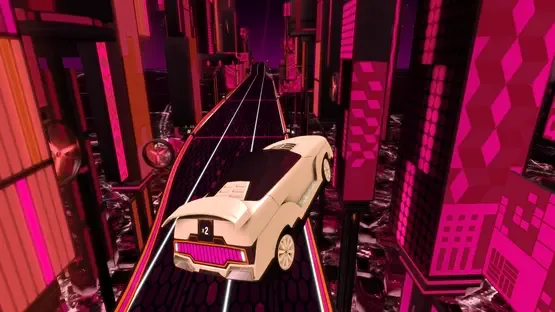
An endless-highway arcade racer built entirely around synthwave aesthetics, neon lighting, palm-tree silhouettes, and an '80s supercar roster, Retrowave keeps its core loop deliberately simple: drive as far as possible, earn currency from the run, and spend it upgrading or unlocking one of its twenty-two cars for the next attempt. More than twenty distinct visual "universes" and over forty-five original synthwave tracks give the format more variety than a single endless road usually offers, turning repeated runs into a tour through different settings rather than the same backdrop on loop, and unlocking a faster car noticeably changes how far ahead a driver needs to be reading the road. The honest drawback: the underlying structure is still fundamentally an endless runner rather than a full circuit-based racer, and the lack of proper track variety means the format's appeal depends heavily on tolerance for its specific aesthetic and repeated-run loop.
26. Nightmare Kart#
A free horror-themed kart racer built by a small independent team and inspired directly by Bloodborne's gothic aesthetic, Nightmare Kart replaces its inspiration's combat with combat-racing mechanics, letting drivers race and fight through the blood-soaked streets of the fictional city of Miralodia atop grotesque, gothic-steampunk vehicles rather than conventional karts. The low-poly, original-PlayStation-inspired visual style is a deliberate choice that matches its horror influences far more convincingly than a modern-rendered kart racer could manage. A full campaign alongside dedicated boss fights and a versus battle mode gives the free release more structural ambition than most fan-inspired projects attempt, and offering thirteen karts across fifteen maps at no cost at all is a genuinely generous amount of content for a passion project built by a small team. The honest drawback: the kart and track roster is modest next to a full-priced kart racer, and its extremely specific gothic-horror tone is a niche appeal rather than a broad one.
27. Euro Truck Simulator 2#
SCS Software's long-running driving sim builds an entire game around the unglamorous mechanics of long-haul cargo delivery across a meticulously modeled European road network, where fatigue management, cargo-weight handling through a loaded trailer's extra momentum in corners, and a genuine day-night cycle across a long haul matter more than outright speed. The scale of the road network, expanded continuously through years of DLC covering entire countries, gives it a sense of place few racing-adjacent games attempt at this scope, and its trucking-company management layer, hiring drivers and assigning routes once a garage is established, gives the loop a business-simulation dimension beyond the driving itself. The honest drawback: it is deliberately not a competitive racing game in any conventional sense, the pace is slow by design, and a driver expecting the tension or spectacle of a traditional racer will find neither here — its appeal is a specific, patient kind of relaxation rather than adrenaline.
28. American Truck Simulator#
SCS Software's companion title to its European original rebuilds the same long-haul driving-sim formula around the scale and highway culture of the United States, weigh stations, sprawling interstates, and region-specific cargo and scenery that shifts noticeably crossing from Nevada's desert into Oregon's forested routes. The truck customization depth, extending to cab interiors and engine specifications that actually affect handling and fuel consumption on a long haul, gives the format a mechanical layer beneath its relaxed pacing. Its state-by-state expansion structure mirrors its European sibling's country-by-country approach, steadily growing the map years past initial release, and the visible shift in terrain, road quality and scenery between states gives a cross-country haul a genuine sense of geography rather than a repeating loop of generic highway. The honest drawback: it shares its companion title's fundamental appeal ceiling, the pace is deliberately slow, and it offers essentially nothing for a driver looking for competitive racing rather than a long, calm highway drive.
29. Night-Runners Prologue#
A free prologue built ahead of a larger Japanese street-racing project, Night-Runners Prologue drops a driver into the underworld of late-1990s and 2000s street racing crews battling for territory across a real-location-inspired open world, where wager races against named rivals and detailed car customization, down to engine maintenance tasks like oil changes performed between races, give the format a grounded, mechanical texture most street-racing games skip. Purchasing a first car from a used-car auction rather than a menu screen sets a tone of scrappy authenticity the full release is clearly building toward. The honest drawback: as a prologue, its content is intentionally limited in scope, existing mainly as a preview of a larger game rather than a complete racing experience in its own right, and its systems are noticeably thinner than the full street-racing genre leaders it's positioned against.
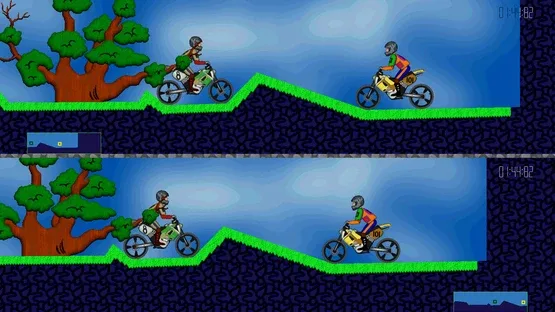
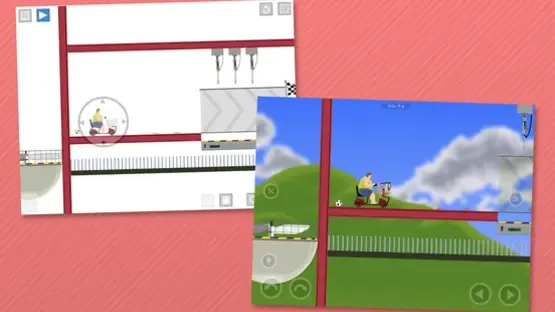
30. Elasto Mania#
An indie 2D physics racer descended from the earlier Action SuperCross, Elasto Mania asks a driver to pilot a fragile motorbike across obstacle-heavy side-scrolling levels where the goal is survival and precision timing rather than outright speed — a single mistimed throttle input can flip the rider and end an attempt instantly, turning even a short level into a genuine skill test measured in fractions of a second. The physics-driven ragdoll rider, whose head connecting with anything ends the run, gives the format a tension closer to a precision-platformer than a conventional race. A dedicated level-editor community has kept new content flowing years past the game's original release. The honest drawback: the visual presentation is unmistakably dated even by the standards of its own remaster, and the format's unforgiving precision demands are a genuine barrier for a driver expecting a conventional racing game rather than a physics obstacle course.
The ranking above blends IGDB's aggregate critic and user rating with Steam's own user review percentage, and only for games with a real sample size behind the score rather than a handful of early ratings that can swing wildly in either direction. Nothing on this list was hand-picked for inclusion or placement — the order is a direct output of that combined score, which means it updates automatically as more people rate these games or as new releases enter the catalog with enough reviews to be scored fairly. That also means a title can move a few places in either direction as its review count grows, which is exactly why a snapshot like this one is worth revisiting rather than treated as settled once and read only the one time. Whether the goal is the best arcade racing games, the best sim racing games, or something in between, read this as a live snapshot of how these racing games are currently rated relative to each other among the best racing games 2026 has to offer, not a fixed, permanent verdict.