 Divinity: Original Sin II - Definitive Edition
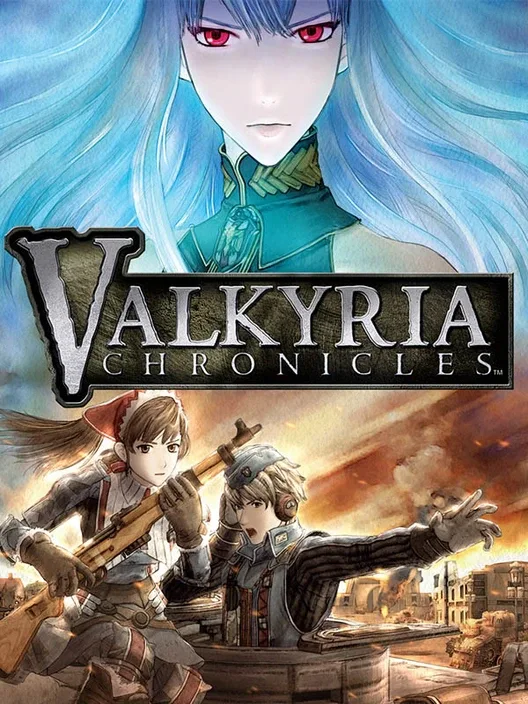 Valkyria Chronicles
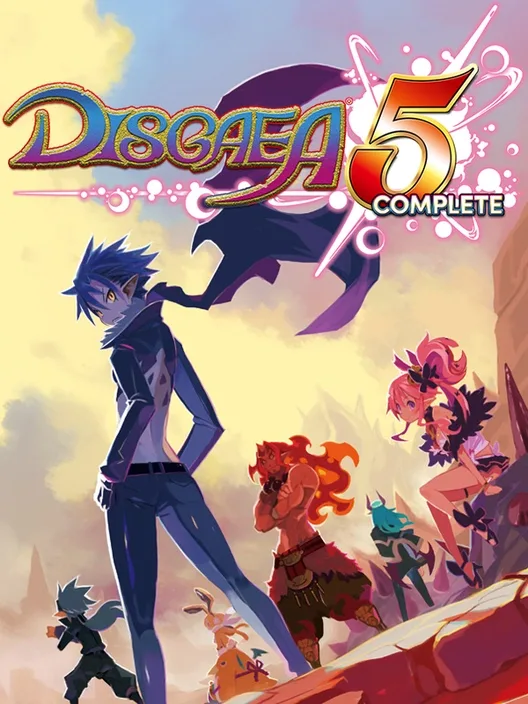 Disgaea 5 Complete
 Final Fantasy Tactics: The Ivalice Chronicles
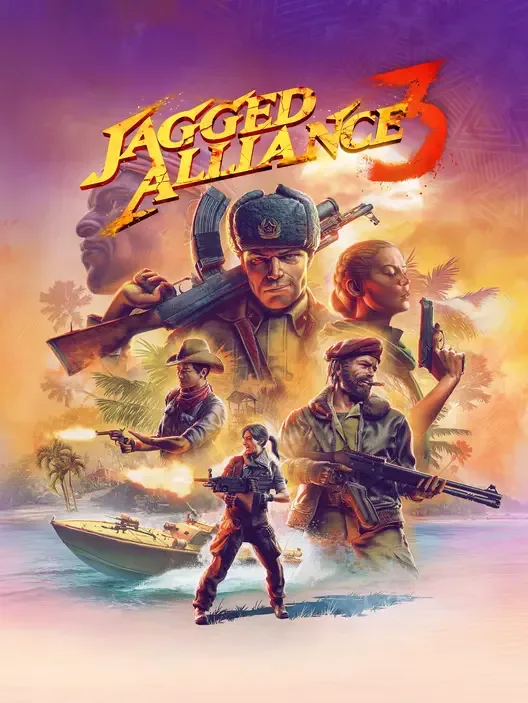 Jagged Alliance 3
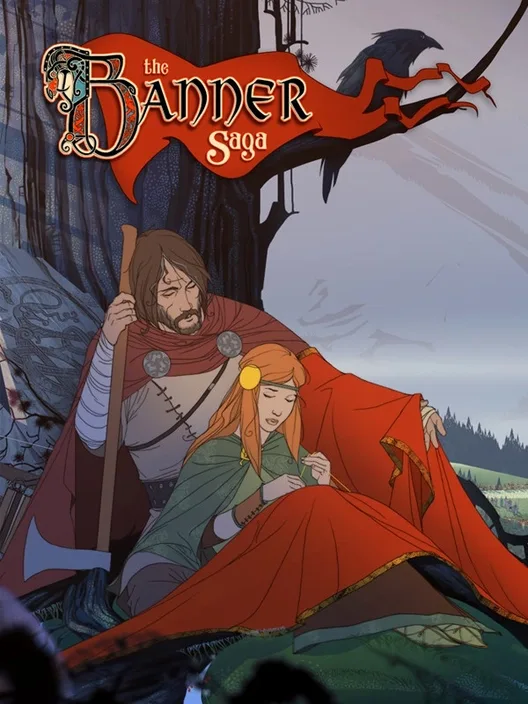 The Banner Saga
This is Game Avant's own ranked list of the best tactical RPG games right now, built from the site's combined critic-and-player rating data rather than picked by hand. "Tactical RPG" on this page means something more specific than "turn-based RPG with a story" — it means combat fought on a grid or a positioned battlefield where terrain, formation, facing, and elevation change the math of a fight as much as a character's stats do. Standing on a hill, flanking through a back arc, blocking a corridor with a tank while archers hold a ridge behind them: that's the layer this genre is built around, and it's also the line that separates this page from Game Avant's separate turn-based RPG category. A game where combat is purely "pick a move, wait your turn, repeat" on an abstract battlefield belongs there instead; a game where a character's square on a map determines whether an attack even connects belongs here.
The order below comes from blending IGDB's aggregate critic score with Steam's own user review percentage, filtered by a 50-review minimum so a handful of early ratings can't swing a placement, the same standard used across every other category page on the site. That means small, cult-favorite tactics games can sit above bigger names when the data says players and critics rate them higher, and it means the ranking is a snapshot of current standing rather than a permanent hierarchy. Read the write-ups below for what each of these best tactical RPG games actually does on the grid and where it comes up short.
1. Fuga: Melodies of Steel 2#
CyberConnect2's 2023 sequel keeps the original's central conceit intact: the child crew of the Shindenju tank fights from stations mounted on the vehicle itself, meaning every battle is really two grids at once — the enemy formation outside, and the arrangement of the player's own turrets and their fields of fire across the tank's deck. Positioning a heavy cannon crewmember up top versus a support gunner belowdecks changes both range and exposure to counterattack, and swapping children between stations mid-campaign is a genuine tactical decision rather than menu-shuffling. The Malice system returns and deepens, tracking how much a child's rage and trauma has built up in combat and letting that stat transform them into a berserk "Soul Cannon" state that trades control for devastating output, a risk-reward mechanic tied directly to the game's dark WWII-allegory tone. The overworld map, now expanded with more branching routes through the Grimm War's occupied territory, gives more room for optional encounters and resource runs between story beats than the original game allowed. Boss encounters lean hard on multi-turret coordination, forcing the player to think about which characters cover which arcs rather than just which characters hit hardest. The honest drawback: the tank-grid conceit, however clever, means most fights still happen on the same handful of turret positions, and the game's emotional weight depends heavily on having played the first Fuga, which this sequel does little to recap for newcomers.
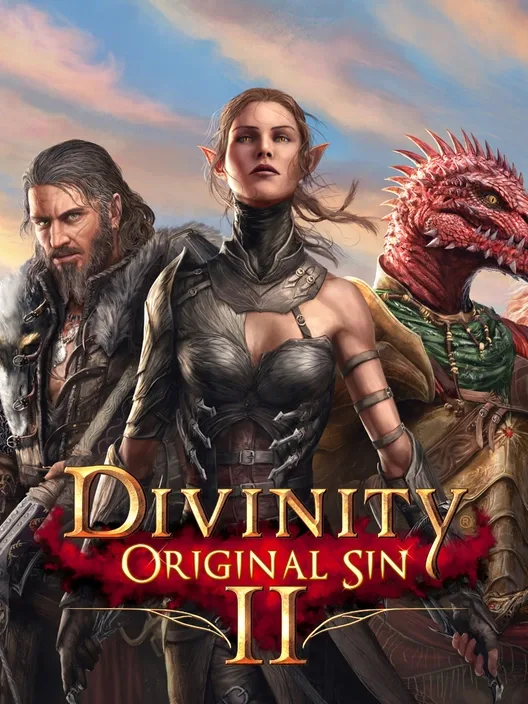
2. Divinity: Original Sin II – Definitive Edition#
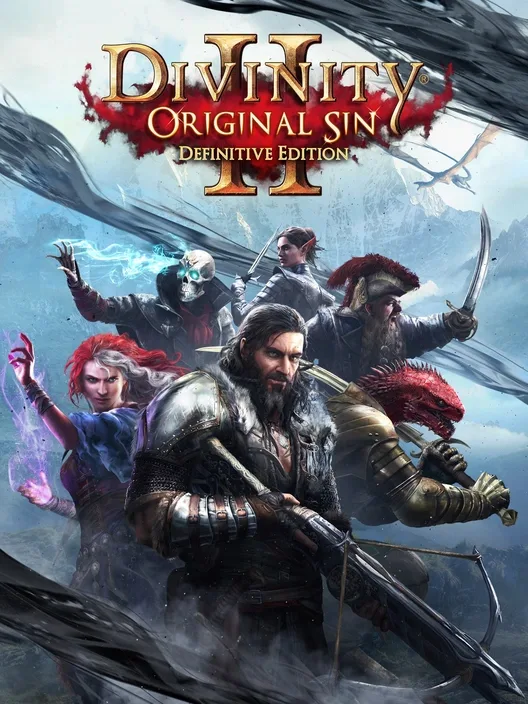
Larian Studios' 2017 release, refined into the 2018 Definitive Edition, builds its tactical layer around elemental surfaces that persist and interact on the battlefield: poison gas ignites into a fireball that keeps burning the ground beneath it, water pools conduct incoming lightning damage to everyone standing in them, and blood surfaces can be frozen into slick ice that sends a heavily armored fighter sliding out of position. Height matters concretely — a rogue who teleports a target off a ledge deals fall damage and repositions them out of melee range in the same action, and archers firing downhill get a real accuracy bonus rather than a cosmetic one. The Lone Wolf talent restructures the entire tactical approach by cutting the party to two characters in exchange for massively boosted action points and stats, rewarding players who want fewer, more mobile units to maneuver rather than a full four-person formation. Origin characters each carry a personal quest that can put party members at odds with each other mid-campaign, occasionally turning ordinary encounters into unplanned three-way skirmishes on the same grid. Full four-player multiplayer, including a dedicated PvP arena, extends the tactical layer into direct player-versus-player positioning fights. The honest drawback: the surface-and-status interactions can spiral into fights that drag on far longer than they need to once both sides start layering effects, and newcomers to tactical RPGs specifically can find the sheer number of interacting systems overwhelming before the positioning fundamentals click.
3. Shining Force II#
Camelot's 1994 Sega Genesis tactical RPG remains one of the clearest early examples of grid-based squad tactics done right, built around a roster of more than thirty recruitable characters spread across distinct unit types — armored knights who can absorb hits at the front line, mages and archers who need bodies between them and the enemy, and flying or mounted units who can cross terrain ground troops can't. Formation is not optional: sending a healer forward without an escort gets that healer killed in a turn or two, and the game's maps are built with chokepoints, bridges, and elevated ground specifically to reward players who read terrain before committing units. The promotion system lets most characters evolve into a stronger class partway through the campaign — a Centaur becoming a Baldiore, a base Priest becoming a Vicar — turning long-term investment in a specific unit into a real mechanical payoff rather than a stat bump alone. Egress and Return spells let the whole party retreat from or re-enter a dungeon mid-expedition, a quality-of-life system ahead of its era that kept exploration and battle preparation genuinely connected. The bonus post-game dungeon, accessible only under specific conditions met earlier in the campaign, rewards players who built their roster with long-term promotion choices in mind. The honest drawback: several promotion items are missable without foreknowledge, and losing access to a character's strongest class for an entire playthrough because of an early, unsignposted mistake is a real design wart by modern standards.
4. Troubleshooter: Abandoned Children#
Dandylion's 2020 tactical RPG borrows its cover-and-elevation combat structure directly from XCOM while layering in a JRPG's density of systems and story — a campaign that runs well over fifty hours for a single playthrough, with dedicated players regularly logging past two hundred. Set in the fictional megacity of Valhalla, the story follows Albus building a private "Troubleshooter" agency from nothing while getting dragged into a city-wide war between corrupt police and organized crime syndicates. The class-change system, unlocked once a character hits level fifteen and their base class reaches level ten, lets a single recruit be reshaped into one of a dozen-plus viable roles depending on equipment and skill investment rather than locking a build in at recruitment. Cover, elevation, and flanking angles matter in nearly every encounter, and the game's mastery system rewards specializing a character's gear and skill loadout around a specific tactical role — a dedicated sniper holding high ground, a shield-tank anchoring a choke point — rather than generic stat-stacking. The sheer number of recruitable Troubleshooters, each with their own combat kit and personal storyline, gives long-term roster management real weight. The honest drawback: the density of overlapping systems is a genuine onboarding wall, and the game's relative obscurity outside a dedicated fanbase means new players get little external guidance when its mechanics get genuinely confusing.
5. Fuga: Melodies of Steel#
CyberConnect2's 2021 original introduced the Shindenju tank-grid concept that its sequel would later expand: child crew members are assigned to weapon stations across the tank's body, and each station's arc of fire and exposure to return damage has to be planned around before a fight starts rather than adjusted freely mid-battle. The game's central moral tension runs through the Malice mechanic — every kill and every act of cruelty in battle pushes a character's Malice meter up, and a character who maxes it out transforms permanently into a monstrous "Soul Cannon," an irreversible loss dressed up as raw offensive power. Built on the Little Tail Bronx setting Panzer Dragoon and Solatorobo fans will recognize, the story follows a crew of children conscripted to fight the Berman Empire, and the tension between keeping the crew alive and keeping them human runs through nearly every tactical decision on the tank's grid. Side objectives during battles, like protecting a specific civilian convoy visible on the map, add positioning pressure beyond simply defeating the enemy formation. The honest drawback: the tank-grid structure limits battlefield variety more than a traditional open tactics map would, and the game's slower, more deliberate pacing in its early hours asks for real patience before the moral weight of the Malice system starts to land.
6. Shogun Showdown#
Roboatino's 2024 release compresses tactical combat down to its sharpest form: fights happen on a single one-dimensional lane of five to nine tiles, and every turn is a puzzle of moving forward, turning to change facing, queuing up to three attacks in advance, or bracing for what the enemy has already telegraphed. Stripping the battlefield down to one axis makes positioning almost mathematically pure — since every unit, ally or enemy, occupies a single tile on the same line, a single misjudged step can put a fighter directly in front of an attack meant for someone else, or line up a devastating counter. The roguelike structure layers a growing deck of skills and relics onto each run, so the specific tools available for managing that lane change completely from one attempt to the next, forcing fresh tactical reads rather than a memorized solution. The queued-attack system, where up to three actions can be locked in and interrupted by enemy movement before they resolve, rewards reading an opponent's pattern over several turns rather than reacting turn by turn. Its stripped-down samurai aesthetic and short run length make it one of the more approachable entries here for players who want tactical decision-making without a fifty-hour campaign attached. The honest drawback: the single-lane structure that makes the game so sharp also caps its structural variety, and repeated runs can start to feel mechanically similar once the core toolkit has been fully explored.
7. Utawarerumono: Mask of Truth#
Aquaplus's 2016 conclusion to the Mask duology pairs a lengthy visual-novel narrative with grid-based tactical battles where positioning around the EX Gauge — a shared resource built up by landing attacks and spent on powerful character-specific special moves — decides most encounters more than raw stat growth does. Facing and flanking matter concretely on the grid, with attacks from the side or rear dealing significantly more damage and armor-break potential than a frontal strike, which pushes the player toward encircling formations rather than a straight battle line. Character-specific mechanics add real variety to squad building — some units specialize in area suppression across multiple tiles, others in single-target burst damage that only pays off from a flanked position, and the roster's distinct kits mean a formation built around one lead character plays noticeably differently from one built around another. As the finale of a story that began with Mask of Deception, the game leans on an already-established cast and world, giving its late-game story beats weight that depends on the earlier chapter having been played first. The honest drawback: newcomers who skip the preceding Mask of Deception will be lost both narratively and in terms of established character relationships, and the heavy visual-novel pacing between battles is a real barrier for players who came only for the tactics layer.
8. Wildermyth#
Worldwalker Games' 2021 release generates its campaigns procedurally, chapter by chapter, and grid-based tactical combat sits inside a larger structure where characters can be permanently altered by "mythic" story events between fights — losing a hand to a cursed blade and having it replaced with living wood, or fusing partway into stone after a botched ritual, changes that character's abilities and appearance for the rest of the campaign and any future one they're carried into. On the battlefield itself, terrain interaction goes further than most tactics games attempt: trees can be knocked down to create new cover or block enemy movement, and characters can boost each other onto rooftops or ledges for a positioning advantage that has to be set up a turn in advance. The legacy system carries veteran characters, complete with their mythic scars and companions, into entirely new procedurally generated campaigns, letting a favorite fighter's story continue across unrelated adventures rather than ending with one campaign's credits. Party composition genuinely shifts week to week as characters age, retire, or die permanently in combat, forcing the kind of roster turnover most tactics games only simulate through recruitment menus. The honest drawback: the papercraft-style presentation and procedurally assembled story beats can feel repetitive in their phrasing after multiple campaigns, and permanent character death removes builds a player may have specifically invested hours shaping.
9. Shadow Gambit: The Cursed Crew#
Mimimi Games' 2023 release, the studio's final game before it closed, applies its real-time stealth-tactics formula to a crew of undead pirates, each carrying a unique supernatural power that reshapes how positioning works around them — one ghost can turn into a raven to scout or bypass a locked area entirely, another can trigger an explosive death that clears a guard patrol and simply resurrect afterward. Line of sight, guard patrol routes, and cover are tracked in real time rather than on a fixed grid, but the underlying logic is the same positioning-first tactics the studio built its reputation on with Shadow Tactics and Desperados III: a badly timed advance into a guard's cone of vision can unravel an entire plan in seconds. The Plan of the Day mode generates a fixed random loadout and objective set daily, turning the same island into a fresh positioning puzzle without touching the main campaign's structure. Choosing which three of the twelve playable ghosts to bring on a mission, out of an open-ended island order the player picks themselves, means squad composition has to account for a specific level's terrain and guard density before the mission even starts. The honest drawback: the real-time-with-pause structure asks for more precise, moment-to-moment execution than a turn-based tactics fan may want, and the difficulty spikes sharply on the hardest guard compositions in ways that punish anything less than careful scouting.
10. Valkyria Chronicles#
Sega and Media.Vision's 2008 release built the BLiTZ system around a genuinely unusual hybrid: each unit gets real-time, third-person movement within a limited action-point pool during its turn, then combat resolves through an aiming reticle rather than an automatic hit-or-miss roll, meaning a soldier caught sprinting across open ground in an enemy's line of fire is exposed in a way pure grid movement can't replicate. Terrain cover — sandbags, walls, foxholes — reduces incoming damage concretely, and the game's tank unit, the Edelweiss, has its own armor facing that makes flanking it from the side or rear mechanically necessary rather than just advisable. The Potentials system gives individual soldiers personality-driven combat traits, some helpful and some actively detrimental, that trigger based on battlefield conditions like fighting near a squadmate they dislike or performing well against overwhelming odds. Squad classes — Scouts for mobility and long sightlines, Shocktroopers for close-range suppression, Engineers for repairs and mine-clearing, Lancers for anti-tank work — each demand a different approach to positioning, and most maps are built to punish a squad that leans on only one. The honest drawback: the game's turn structure, alternating between full player and full enemy phases, means a single overextended unit can eat a devastating enemy turn with no way to react until control returns, which can feel punishing compared to more granular turn-based systems.
11. King's Bounty: The Legend#
Katauri Interactive's 2008 release, published by 1C Company, plays its battles on a hex grid where the player commands a hero leading multiple stacks of creatures rather than controlling individually named characters, and the Leadership stat directly caps how many total troops can be fielded, forcing real trade-offs between a few powerful stacks and a larger, more varied army. Combat spells are fueled by Rage, a resource that only builds during battle itself as troops take and deal damage, while non-combat Mind spells draw from a separate Mana pool usable on the overworld map, splitting the hero's power into two pools that have to be managed on completely different timescales. Positioning on the hex grid determines which stacks can reach melee range in a given turn and which are stuck exchanging ranged fire, and terrain obstacles on many maps funnel armies into chokepoints that reward a well-placed tank stack absorbing the front line. Morale, tracked per stack and affected by allied losses and terrain, can grant bonus turns or cause a unit to freeze up entirely, adding an unpredictable layer on top of the pure numbers. The open-world adventure map between battles, filled with side quests and recruitable creature dens, gives the strategic layer real weight alongside the hex-tactics combat. The honest drawback: the game's difficulty curve leans hard on economic and army-building decisions made hours before a given fight, meaning a badly composed army can lose battles that better hex-positioning alone can't fully save.
12. Disgaea 5 Complete#
Nippon Ichi Software's tactical RPG, originally released in 2015 and reissued as the definitive Complete edition in 2017, builds its grid combat around Geo Panels — colored tiles that apply stacking status effects like damage boosts or elemental resistance to anyone standing on them, and destroying a Geo Symbol can chain-detonate an entire connected color of panels at once, sometimes wiping out a third of the map's units in one move. The character-throwing system lets units pick up and hurl allies or enemies across the grid, turning positioning into an active tool rather than something achieved only through walking, and stacking multiple throws in a single turn can relocate a squad across the entire battlefield before a single attack lands. The series' famously extreme level cap, reaching into the thousands, is supported by the Reincarnation and Class World systems that let a character reset progress in exchange for permanent stat bonuses, turning late-game optimization into its own extended metagame layered on top of the tactical battles themselves. The Alliance system lets adjacent characters combine into a single powerful team attack, rewarding formations built around specific character pairings rather than a loose collection of individually strong units. The honest drawback: the sheer scale of the endgame number-crunching and level-grinding systems is a genuine wall for players who came for tactical positioning rather than a min-maxing sink, and the game's self-aware, joke-heavy tone won't land for everyone.
13. SteamWorld Heist II#
Thunderful Development's 2024 sequel keeps the series' signature manually aimed, ricocheting gunplay intact while expanding the scale considerably: each robot crew member gets two action points per turn to spend on moving, shooting, or using a class-specific ability, and cover works on a sliding scale rather than a binary in-or-out-of-it state, with units tucked directly against a barricade able to shoot over it while those a tile or two back have their own shots bounce off it instead. The job system ties a character's class directly to whichever weapon is currently equipped, so re-gearing a crew member between missions is a genuine tactical choice about squad composition rather than a cosmetic loadout swap. Boarding actions against enemy vessels compress the positioning puzzle into tight, corridor-heavy ship interiors where ricocheting a shot around a corner to hit cover-camping enemies becomes a core skill rather than a novelty trick. The expanded overworld, now a navigable sea the crew sails between missions, adds a strategic layer of resource and route management that the original game's more linear mission select didn't attempt. The honest drawback: the manual-aiming system that defines the combat has a real skill ceiling that can make early missions feel slow while a player is still learning bank-shot angles, and some of the added naval-traversal content pads the time between the tactical missions that are the game's actual strength.
14. Final Fantasy Tactics: The Ivalice Chronicles#
Square Enix's 2025 remaster of the 1997 original preserves the job system that defined the genre for a generation — starting classes like Squire and Chemist unlock advanced jobs like Knight, Black Mage, or the endgame's Dark Knight and Onion Knight, and abilities learned in one job can be equipped as secondary skills in another, turning party building into a long-term puzzle of which skills to carry forward. Height and facing are tracked precisely on every map, with elevation affecting both movement cost and whether a ranged unit has a clear line of attack, and striking an enemy's back grants a guaranteed critical hit that rewards flanking maneuvers planned several turns ahead. The Zodiac compatibility system, quietly running in the background of every attack, adjusts damage and hit chance based on the attacker's and target's star signs, adding a layer of hidden variance that veteran players actively account for when building a squad. The remaster's new translation and full voice acting sharpen a story about class conflict and political betrayal in the fictional kingdom of Ivalice that was frequently muddled by the original PlayStation release's rushed localization. The honest drawback: several of the deepest job combinations and rare unlockable classes remain obscure enough that most players will need outside guidance to build toward them, a design quirk the remaster inherited wholesale from the 1997 original rather than modernizing away.
15. Fell Seal: Arbiter's Mark#
6 Eyes Studio's 2019 release wears its Final Fantasy Tactics influence openly while building its own dual-class system: every character equips both a main class, which governs equipment access and grants that class's action abilities, and a subclass, which layers on two additional passive slots and a counter ability from an entirely different skill tree, letting a Knight subclass into Ranger for a tanky unit that can also fire back at range. Fully learning every ability in a class grants a permanent Mastery Bonus to that character, a small stat reward that rewards sticking with and fully exploring a class rather than hopping between half-learned ones. Of the thirty-plus available classes, several are Badge Classes reserved for recruited generic units rather than the game's named story characters, giving the roster of hired mercenaries their own build identity distinct from the main cast. Positioning, elevation, and flanking function close to genre convention, with backstab damage bonuses and height-based accuracy pushing formations toward controlling high ground and covering each other's flanks rather than a straight firing line. The honest drawback: the game's visual presentation and animation work is noticeably more modest than the classics it's drawing from, and its story and world-building are considerably thinner than its combat systems, functioning more as a delivery mechanism for the tactics layer than a narrative in its own right.
16. Chroma Squad#
Behold Studios' 2015 release turns a Power Rangers pastiche into a genuine tactics game with a business-management layer wrapped around it: five former stunt actors quit their studio jobs to produce their own tokusatsu-style TV show, and between grid battles the player manages the show's budget, set pieces, and ratings, with a well-choreographed fight directly boosting audience approval and unlocking new funding. The Teamwork system lets adjacent squad members combine their individual moves into a single combo attack when positioned correctly before an enemy's turn, giving formation planning a direct payoff beyond simple damage math. Combat itself splits into two distinct modes: early, grounded skirmishes against costumed minions play like a straightforward positioning-and-cover tactics game, while boss encounters escalate into giant mech battles where the squad's five members combine into a single customizable robot for a separate combat system layered with quick-time-event finishers. Equipment and mech upgrades are funded directly by the in-fiction show's earnings, tying the tactical loadout progression to the management sim wrapped around it rather than keeping the two systems separate. The honest drawback: the dual combat modes mean the game never fully commits to either its grounded tactics layer or its mech-battle spectacle, and the production-management sandwiched between battles can feel like a detour for players who came purely for the grid combat.
17. Jagged Alliance 3#
Haemimont Games' 2023 revival returns the series to its mercenary-roster roots, letting the player hire from a classic cast of named AIM mercenaries — Ivan, Barry, Fox, and dozens more, each with their own personality, voice lines, and combat specialties — while also building a custom recruit through the IMP character creator for a squad tailored to a specific playstyle. Cover and line of sight are tracked with real granularity, and the suppression-fire mechanic lets a unit pin down enemies behind cover to reduce their accuracy and reaction options without needing a clean kill shot, turning positioning into an active offensive tool rather than pure defense. Precision aiming versus faster area shots forces a real trade-off on every turn between reliability and action economy, and the fictional nation of Grand Chien's strategic map layer, where sectors must be captured and held against counterattacks, means a squad's tactical performance in one battle directly determines what resources and territory are available for the next. Environmental destruction — blowing a hole through a wall to create a new firing lane, or collapsing cover an enemy was relying on — adds a layer of battlefield manipulation beyond simply moving units around fixed terrain. The honest drawback: the strategic layer's sector-management systems, inherited from the series' classic structure, add real complexity on top of the tactical combat that some players coming purely for turn-based squad fights may find like unwanted overhead.
18. The Banner Saga#
Stoic Studio's 2014 release, the first in a Viking-inspired trilogy, ties its grid-based combat directly into a caravan-management layer where decisions made on the road — who eats when supplies run short, which wounded traveler gets left behind — determine which named characters are even available for the next battle. Combat itself runs on an unusual dual-stat system where Strength functions as both a unit's damage output and its remaining health simultaneously, meaning every point of damage dealt to an enemy is also a point of their future offensive power removed, and Armor has to be worn down with dedicated break attacks before Strength damage lands reliably. Willpower, a limited per-battle resource, can be spent to extend movement range, boost a single attack's damage, or add extra hits, forcing hard choices about which units get the tactical spotlight in a given turn rather than spreading resources evenly. Formation matters concretely on the grid's narrow battle lines, where a mispositioned support unit can be isolated and picked off by flanking enemies within a turn or two. The hand-painted, rotoscoped art style, carried over from co-creator Alex Thomas's work on Disney's Prince of Persia films, gives the combat's grim Norse tone a visual identity distinct from nearly everything else on this list. The honest drawback: permanent character death from bad caravan-management decisions can remove a unit a player had specifically built a formation around, and the deliberately slow, weighty combat pacing is a real turn-off for players expecting faster turn resolution.
The ranking above is a live, data-driven snapshot built from Game Avant's combined critic and player rating data with a real minimum review threshold behind every score, not a fixed or permanent verdict. It will shift as more people rate these games, as new tactical RPGs meet the review-count floor to join the list, and as the underlying data itself keeps changing — check back, because it will.