
A shooter built around taking the hit#
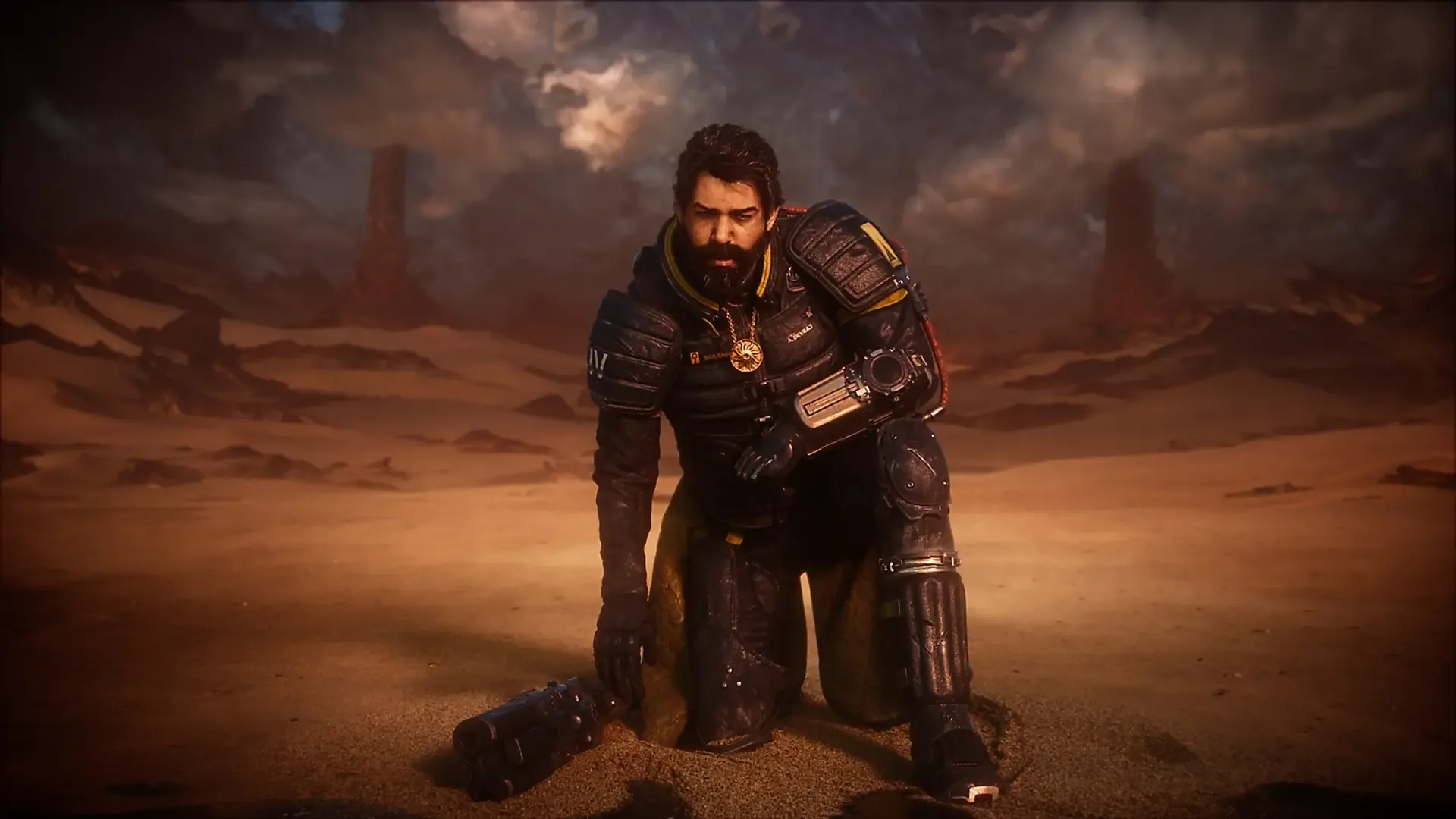
Saros is Housemarque's big PS5 action game, released on 30 April 2026 with Sony Interactive Entertainment as publisher, and its clearest idea is simple to state: the player is given a shield that eats bullets. In most bullet-hell games the screen is a hazard to be avoided. Here the same screen is also a pantry. The Soltari Shield lets the protagonist block attacks and absorb the energy of incoming projectiles, and that absorbed energy is then turned into weapon fire. The design puts the player's nerve at the centre. Moving away from a swarm is one answer, and stepping in and taking it on the shield is another.
That single choice gives the game its own identity next to Returnal, the 2021 game it is described as a spiritual successor to. The bones are familiar: a third-person shooter with bullet-hell patterns, a roguelite loop, a hostile alien world and a lead character with no memory of why he is there. The score of 8 reflects a game that is very good at the thing it sets out to do, and is held back by decisions that have nothing to do with how the shooting feels: where it can be played, what it costs, and how much of its planned content is still to come.
What makes Saros different#
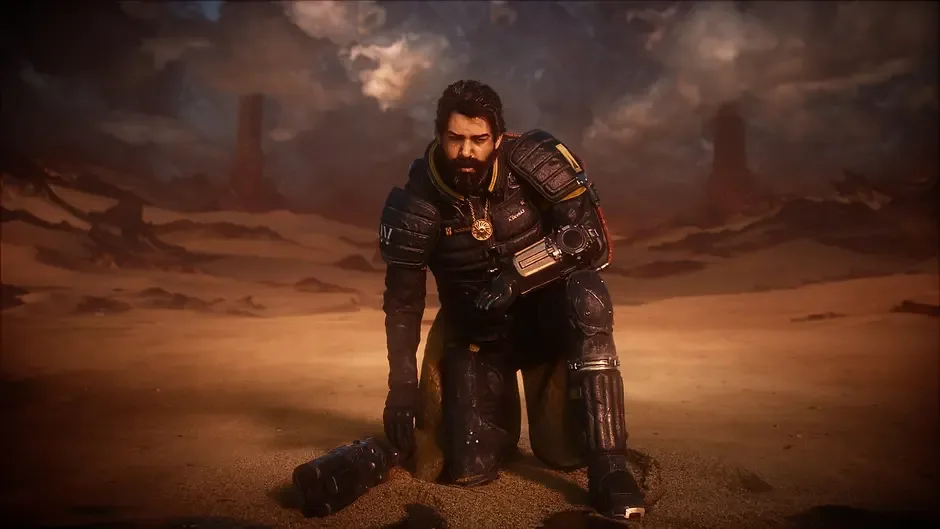
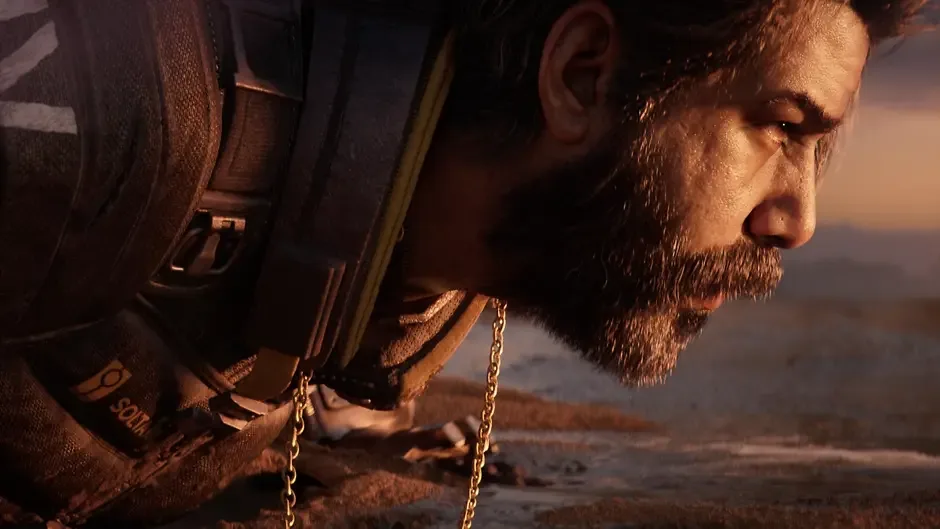
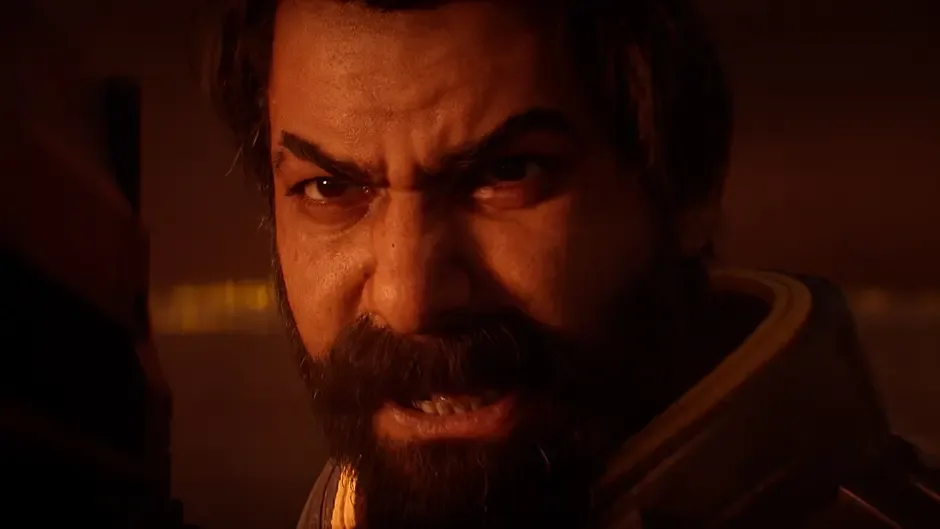
The one idea that carries the whole game is defence as offence. The player controls Arjun Devraj, a Soltari enforcer voiced by Rahul Kohli, and the Soltari Shield is the tool that defines his role. Blocking is not a pause button. Absorbed energy transforms Arjun's right arm into Carcosan Power Weapons that can be discharged at enemies, so the energy an enemy throws at him becomes the resource he answers with.
This inverts a habit that shooters with heavy bullet patterns usually teach. The safe instinct is to keep distance and thread through the gaps. Saros keeps dodging in the toolkit, and the official description of the game talks about a fluid dance of dodging, shielding and parrying, but it makes shielding a productive verb. Committing to the shield during a dense volley is not reckless; it is exactly what the game asks for. The rhythm that results is one of taking and returning fire, and it changes how a pattern is read. Instead of asking where the gaps are, the question becomes which projectiles are worth taking and when to release them.
The effect on difficulty is subtle but important. A bullet-hell game is at its most punishing when the only counter is perfect movement. Giving the player a second counter, absorption, widens the range of ways to survive without making the patterns themselves simpler. Enemy fire can still be thick and unforgiving. The player just has a more interesting answer than running in circles, and the answer scales with skill: better timing means more absorbed energy and a stronger return.
Carcosa: a planet under an eclipse#
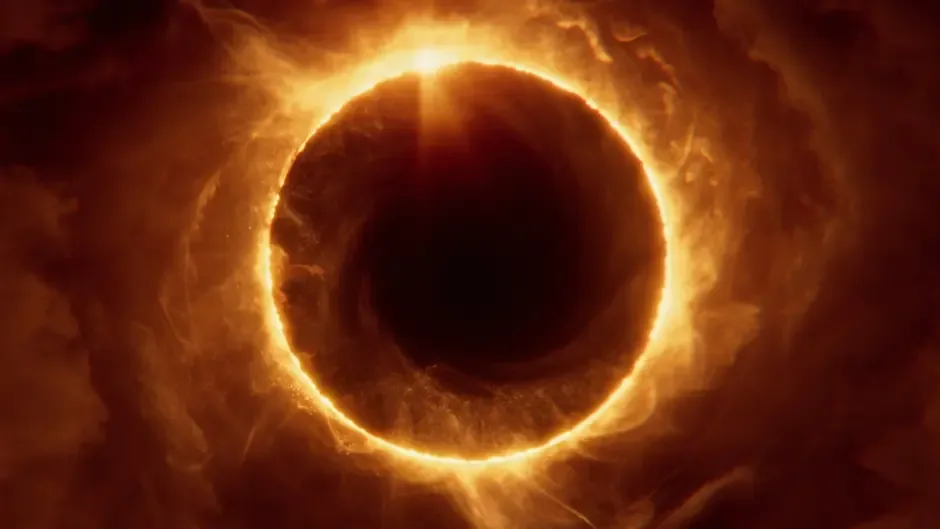
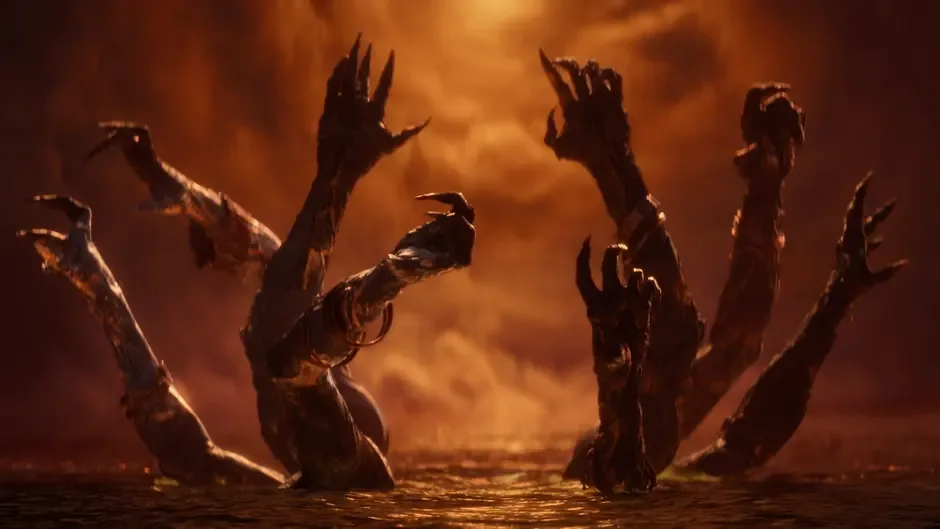
The setting is Carcosa, a hostile planet where a lost off-world mining colony sits at the centre of the mystery. Arjun awakens with amnesia and searches for that colony while the story picks at time dilation, an alien civilisation and an anomalous entity called the Yellow Shore. Above it all hangs an ominous eclipse, which the official description ties to corruption and to madness in everyone and everything on the planet.
The eclipse is more than a backdrop. Environmental changes during eclipse events are part of how the world is presented, and the planet itself is described as shape-shifting: after every run the player faces a changed world, with new paths opening up. That is a real design commitment for a roguelite. Instead of shuffling the same rooms with a random seed, the game frames each return as a return to a planet that has moved on. Carcosa has multiple biomes, and the changes are meant to make each descent feel like part of a larger sequence rather than a reset.
Backstory arrives through collectible Soltari holograms, which reveal the history of the planet and the events that unfolded there. This is a familiar choice in the genre, and it has predictable consequences. It keeps the action uninterrupted, it lets curious players dig, and it leaves anyone who wants a direct narrative waiting for pieces to arrive. The cast around Arjun is described as an ensemble that gradually succumbs to the eclipse's corrupting influence, so the story is tied to the same force that shapes the world: the longer the eclipse hangs over Carcosa, the worse things get.
The shield in practice#
It is worth spelling out what the shield asks of a player, because most of the game is built on top of it. First, it is a positioning tool. To absorb a projectile, the shield has to meet it, which means the player has to know where a volley is coming from and commit to a facing while other threats close in. In a genre where the controls are usually all about movement, that adds a second layer of decision-making.
Second, it is a resource loop. Energy that goes into the shield comes back out through the Carcosan Power Weapons, so a fight has a natural cycle: gather, discharge, gather again. A cycle like that is what turns a bullet-hell game into a flow-state game. The official pitch uses the word flow, and the design supports it. When absorption and discharge land in sequence, the shooting stops being a matter of survival and turns into something closer to a conversation with the enemy pattern.
Third, it changes how enemies can be designed. An enemy whose projectiles can be absorbed is an enemy that is also a supply. The game can throw more fire at the player than a pure dodging game would dare to, because part of that fire is a gift. That is why the density of bullets on screen can be high without the game feeling arbitrary, and why the shield remains the answer to most situations rather than a mere accessory.
There is also a cost, and it deserves to be named. A shield that asks the player to face danger makes the game more demanding to read. Attacks arriving from several directions at once force a choice about what to absorb and what to avoid, and a wrong choice is punished. That is the tension the game runs on, and it is also the reason some players will find it more stressful than a pure dodging shooter.
Permanent progress and Second Chance#
The roguelite layer is built around persistence. The game features a permanent resource and progression system that carries between runs, and players can permanently improve their loadouts from an evolving set of weapons and upgrades. The point of the system is easy to understand: a run that ends early is not a wasted evening, because something is banked.
Two features soften the structure further. The first is Second Chance, a mechanic that instantly revives the player once after a death, which lets a fight continue rather than forcing a restart the moment a pattern goes wrong. The second is the changing world mentioned above, which gives each new descent a fresh shape. Together they lean the game toward accessibility without touching the core challenge, and they are the clearest signs of how Saros differs in temperament from a harsher take on the genre.
That matters for who the game is meant for. A roguelite that wipes everything on death is loved by a specific audience and ignored by many others. Housemarque's design here aims at a wider group: players who want the intensity of bullet-hell combat and a run-based structure but do not want every mistake to end the whole evening. Whether that broader appeal costs some purity is a fair question, and it is exactly the trade the cards near the top of this page flag.
Bosses and the shape of a run#
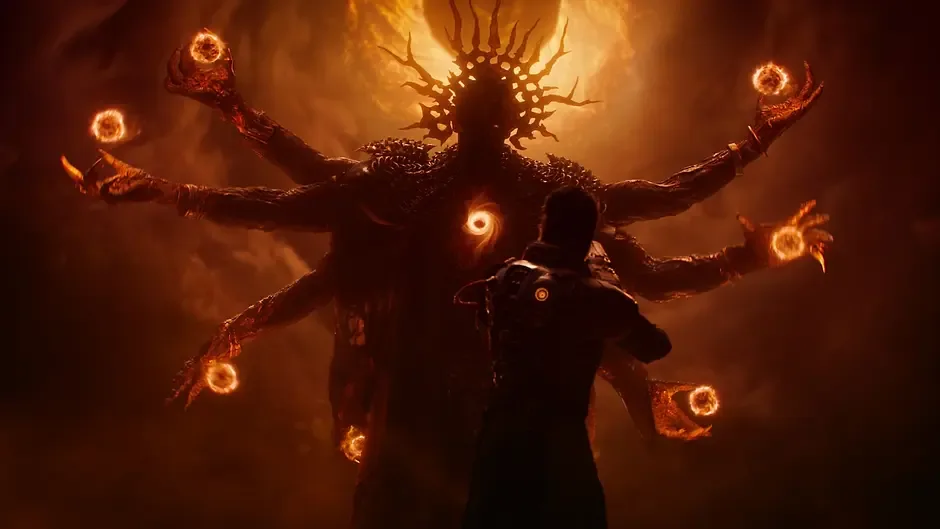
Boss battles are part of the campaign, and they are where a shield-based system is tested hardest. A boss fight in a bullet-hell game is a set of overlapping patterns, and a shield that absorbs energy changes what those patterns mean. A wall of projectiles is a threat, but it is also a large amount of energy waiting to be turned around. Games built on this idea tend to feel best when a boss escalates gradually, because the player then has time to learn which parts of an attack are worth catching.
Beyond the campaign, the free Zenith update adds Overlord Rush, described as arcade-style boss battles with leaderboards. That is a natural fit for a game whose main appeal is refining a fight until it looks effortless. A boss rush with leaderboards turns the same skill into a score and gives players a reason to return once the main story is done. The update was announced for later in 2026 at no cost, so at the time of writing it is a promise rather than a part of the package.
The same update adds Eclipse Layers, a New Game+ mode. For a run-based game this is a sensible extension, since it lets players who have mastered the base challenge raise it without waiting for entirely new content. Because the eclipse is the game's central image, tying the higher difficulty to it also makes thematic sense.
Sound, image and the PS5#
Housemarque has a long record with PlayStation hardware, and Saros continues it. The game supports 4K resolution, uses DualSense haptic feedback and adaptive triggers, delivers 3D audio and loads quickly. It is PS5 Pro Enhanced, with AI upscaling. Composer Sam Slater wrote the soundtrack. For a game about pattern reading, audio matters more than in most genres, since a cue can tell the player that a volley is about to begin, and the emphasis on 3D audio fits that need. Adaptive triggers and haptics also suit a game where absorbing and discharging energy is the central action, because the controller can carry the difference between the two.
The game was also designed with accessibility in mind. The official listing names high-contrast visuals, gyro aiming with the DualSense controller, and a toggleable Slow Game Speed option. The high-contrast option and the slow speed toggle are especially relevant in a genre where the screen can be dense with bright projectiles. Some of these options are tied to the Zenith update, so the exact set available at any given moment depends on whether that update has arrived.
The game has also been recognised: it has been nominated at the Golden Joystick Awards in the categories Best Audio Design, Best Visual Design and Console Game of the Year. Nominations are not wins, and this review does not treat them as a verdict, but they do point to the areas where the production is strongest.
Compared with Returnal and Hades#
Returnal is the obvious comparison, and the honest one. Both games are Housemarque productions, both mix third-person shooting with roguelite structure, and both send a lead character to a mysterious alien world. The difference is in emphasis. Returnal pushed players hard toward memorising and moving; Saros gives them a shield and asks them to hold ground. Returnal is a game about escape and its cost. Saros, judging by its design, is about facing what is thrown at the player and returning it. Anyone who found Returnal too punishing has a reason to look at Saros, and anyone who wanted more of that harder edge should weigh how much the Second Chance revival and the permanent progression system soften things.
Hades is a useful second comparison, because it is the roguelite most often held up as a model of how to make dying feel worthwhile. Hades does it with dialogue and a household of characters who react to every attempt. Saros uses a different lever: permanent resources, a world that changes, and a revival that gives a run a second breath. Hades is isometric and closer to hack and slash in its combat, where Saros is a third-person shooter built on bullet patterns. The two suit different moods. Hades wants a story to accompany the loop; Saros wants spectacle and rhythm.
| Game | Perspective | Core defensive idea | Platforms |
|---|---|---|---|
| Saros | Third-person shooter | Shield that absorbs projectiles | PS5 |
| Returnal | Third-person shooter | Movement and dodging | PS5, PC |
| Hades | Isometric action | Dash and boon-based builds | Multiple |
The table is a summary, not a ranking. The point is that the three games ask the player to relate to danger in three different ways, and Saros is the one that asks for the boldest answer.
New to bullet hell? Start here#
A game like this is easier to enter with a few habits in mind. None of them are secrets, and all of them follow from the systems described above.
- Treat the shield as the main tool, not the emergency button. The game is built so that absorbing fire feeds the return fire.
- Look for the accessibility options before the first run. High-contrast visuals and the Slow Game Speed toggle are named in the official listing and can make dense screens easier to read.
- Use the Second Chance revival as part of a plan rather than a surprise. It is one instant revival per death, so a fight that goes wrong is not always over.
- Spend permanent resources on the loadout early. The progression system exists so that a failed run still leaves something behind.
- Read the world as something that changes. New paths open after a run, so a return to Carcosa is a chance to try a different route.
What Saros does not do#
Being clear about what a game leaves out is part of judging it, and Saros leaves out several things.
It is single-player only. There is no co-op, so players who want to share a run with a friend have to look elsewhere. The game is a PS5 exclusive and is not available on PS4, and no PC version has been announced at the time of writing, which means anyone without the console cannot play it at all. The language options are also limited: the official listing names English, French (France), Portuguese (Brazil) and Spanish (Mexico), so readers who need Swedish or German text should check the PlayStation Store listing before buying.
The game also asks for patience with its narrative. Holograms and fragments are a legitimate way to tell a story, but they do not suit everyone, and an ensemble cast that slowly succumbs to an eclipse is a story that is meant to be assembled rather than watched. That is a preference, and no verdict can settle it for a reader. It simply needs to be known before purchase.
Finally, some of the content that would round out the package is not here yet. The free Zenith update is due later in 2026 with arcade modes, New Game+ in the form of Eclipse Layers, and additional accessibility options. That is a generous promise and a free one, but it also means the launch package is not the whole plan.
Worth the money?#
Saros costs 69.99 dollars for the Standard Edition on PS5. The Digital Deluxe Edition costs 79.99 dollars and adds three cosmetic armour sets, and an upgrade to it costs 10 dollars. No verified euro or krona prices are listed here, so buyers outside the United States should check the PlayStation Store for the local price. The official information does not give a campaign length, so there is no reliable hour count to set against that price.
What can be said is this. The price is at the high end for a single-player-only game, and the value depends on how much a player enjoys the roguelite loop, since a run-based structure offers many repeats and permanent progression gives reasons to return. The free Zenith update adds more reasons, in the form of a New Game+ mode, leaderboard-driven boss battles and options that make the game easier to approach. For someone who loved Returnal, the price is easier to justify. For someone who is curious but unsure about the genre, waiting for a sale, or for the free update to land, is a sensible choice.
Best platform: there is only one, the PS5, and the PS5 Pro Enhanced mode is the best way to see it. The game does not support PS4. Voice and text are listed for English, French (France), Portuguese (Brazil) and Spanish (Mexico); readers who need Swedish or German should confirm on the store page.
Play this instead if…#
Shorter: Hades delivers a complete run in a short sitting and rewards a failed attempt with new dialogue, which suits a player who wants a lighter commitment than a bullet-hell shooter asks for.
Easier: Dead Cells offers a gentler introduction to the roguelite structure, with permanent unlocks and a focus on movement rather than dense projectile patterns.
Cheaper or co-op: Risk of Rain 2 is a cheaper third-person roguelite shooter with co-op support, and it is available on more platforms than Saros.
Frequently asked questions#
Is Saros a sequel to Returnal? No. It is a new intellectual property from Housemarque, described as a spiritual successor to Returnal. It shares the studio's approach to third-person shooting and roguelite structure but tells a separate story.
Is Saros on PC or PS4? No. It is a PS5 exclusive and is not available on PS4. No PC version has been announced at the time of writing.
Does Saros have co-op? No. The game is single-player only.
How much does it cost? The Standard Edition is 69.99 dollars and the Digital Deluxe Edition is 79.99 dollars, with an upgrade available for 10 dollars. Local prices in other currencies are listed on the PlayStation Store.
Is there an easy mode? The official information names accessibility options, including high-contrast visuals, gyro aiming and a toggleable Slow Game Speed option, but does not list traditional difficulty settings. The Second Chance mechanic also gives one instant revival per death.
What is the Zenith update? It is a free update announced for later in 2026 that adds Overlord Rush, arcade-style boss battles with leaderboards, Eclipse Layers, a New Game+ mode, and accessibility features.
The Game Avant verdict#
Saros has a better idea than most shooters ever get: make the player's safety and the player's firepower the same thing. The Soltari Shield lets Arjun block attacks and absorb incoming energy, and the return fire from Carcosan Power Weapons turns every dense volley into a chance rather than a punishment. Wrapped in a roguelite structure with permanent progression, a revival that softens the worst moments and a world that reshapes itself after each run, it reads as a considered attempt to keep the intensity of Returnal while widening the door.
The score stops at 8 for reasons that sit around the game rather than inside its combat. It is a PS5 exclusive, it costs 69.99 dollars, it is single-player only, its story arrives in fragments, and part of its promised content, the free Zenith update, is still ahead. None of that undermines the design. All of it belongs in the calculation for someone deciding whether to buy now, wait for a sale, or wait for Zenith to land first.
8 out of 10 – a shooter that turns the enemy's bullets into its own best weapon.