 Master of Orion II: Battle at Antares
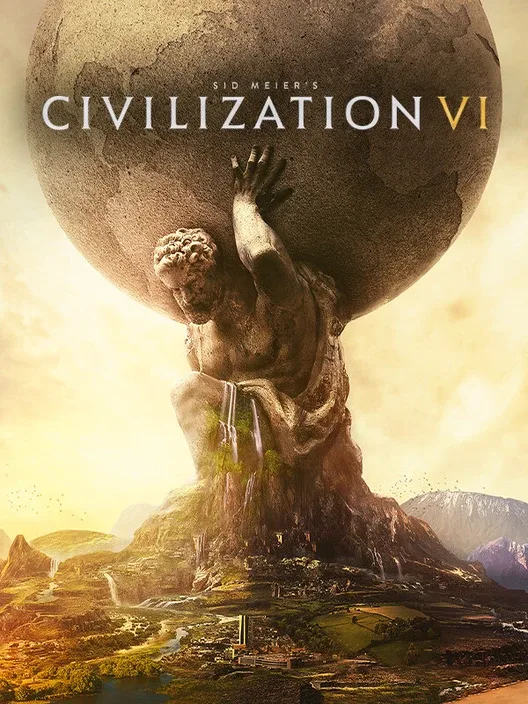 Sid Meier's Civilization VI
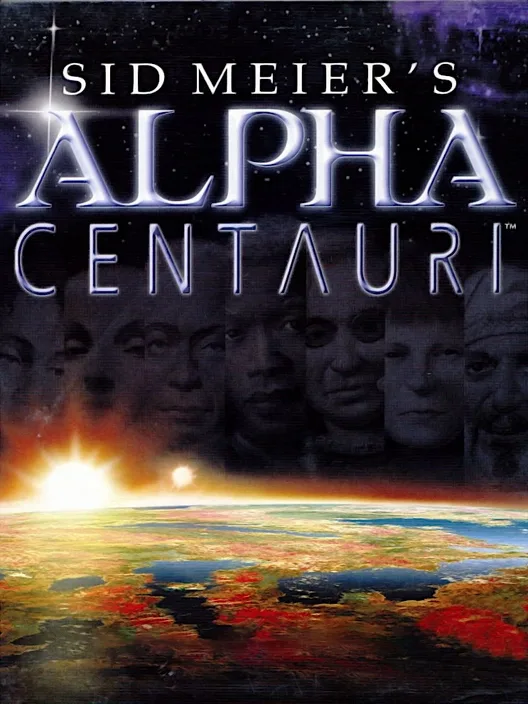 Sid Meier's Alpha Centauri
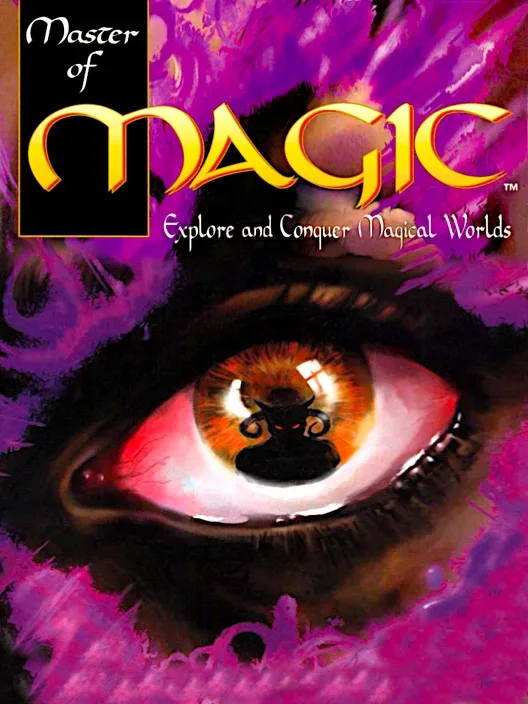 Master of Magic
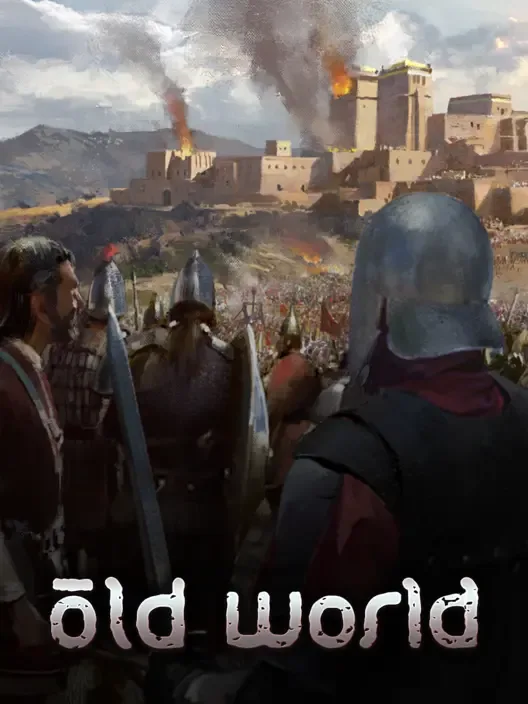 Old World
This is Game Avant's own ranked list of the best 4X games right now, built from the site's combined critic and player rating data rather than picked by hand. 4X stands for explore, expand, exploit, exterminate: a game earns the label by starting most campaigns from a small foothold — one city, one ship, one settlement — on a map that's largely unknown, then letting exploration, colonization, resource extraction, and eventual conquest or diplomacy grow that foothold into an empire over dozens or hundreds of turns. That structure is what separates 4X from grand strategy, where a game like Crusader Kings or Europa Universalis typically drops players into an already-existing nation on a historically fixed map with borders and rivals already in place. It's also what separates 4X from turn-based strategy more broadly: a tactics game like Into the Breach or Advance Wars is turn-based too, but its scope is a single battle or mission rather than an entire empire's growth from a blank slate to galactic or continental dominance.
The order below comes from blending IGDB's aggregate critic and user score with Steam's own user review percentage, weighted toward games with a real sample size behind the number rather than a handful of early ratings. That's why a nearly thirty-year-old space 4X can outrank a recent release, and why a niche historical strategy game can sit above a bigger franchise name — the math doesn't care which one you've heard of. Read the write-ups below for what each entry actually does on the map; the rank tells you how it currently scores among the best 4X games worth playing, not which one fits your evening.
1. Master of Magic#
MuHa Games' 2022 remake of MicroProse's 1994 fantasy 4X classic, published by Slitherine, rebuilds the original's dual-plane structure on a modern hex grid: the mundane world of Arcanus sits layered against the magical, monster-infested Myrror, and Towers scattered across the map let armies cross between the two. Choosing one of fourteen wizards and drafting a spellbook from roughly two hundred spells spread across five schools of magic at the start of a campaign means research priorities and combat doctrine diverge wildly from game to game, since a Life-focused wizard and a Chaos-focused one are effectively building different armies from turn one. Combat resolves on its own tactical grid rather than an abstracted stat comparison, giving unit facing and terrain a real say in outcomes that most 4X games skip entirely. Recruitable heroes, each with individual stat growth and equipment slots pulled from artifacts found while exploring Myrror's ruins, function as a second army-building layer running parallel to the roughly 196 regular unit types available for recruitment. Diplomacy with rival wizards runs on its own set of treaty options and grudges, so a war on one front can be defused or deliberately provoked depending on how a campaign's alliances are managed rather than being a fixed backdrop to the map. The honest drawback: the 2022 remake had a genuinely rough launch, with AI competence and balance problems that took several quarterly patches to sand down, and while post-launch support has been extensive, some of that early reputation still shadows a game that has substantially improved since.
2. Master of Orion II: Battle at Antares#
Simtex's 1996 space 4X, published by MicroProse, is still cited by genre veterans as a high-water mark for empire customization: building a custom species from a shared pool of "picks" — trading away diplomatic aptitude for a research bonus, say, across roughly a dozen pre-made races or a fully custom one — meant no two campaigns played identically even on paper-identical maps. The ship designer, slotting weapons, armor, and special components onto hull sizes running from Frigate up through the massive Doom Star, turned fleet combat into a genuine arms race where a cleverly built cruiser could outclass a numerically superior but poorly designed battleship. Planetary management, assigning population across farming, industry, research, and unrest control on a per-world basis, gave individual colonies enough internal complexity to matter on their own rather than feeding a single empire-wide total. Distinct AI empire personalities, each with a diplomatic and military philosophy that colored how they approached players and each other, made the galaxy feel genuinely inhabited instead of mechanically reactive. Research is split across competing categories — construction, force fields, propulsion, biology, and more — so no single tech-rush strategy dominates every game, and neglecting a whole field can leave an empire structurally exposed no fleet size fixes. The honest drawback: the interface and presentation are unmistakably a product of 1996, late-game empire micromanagement has none of the automation tools modern 4X games take for granted, and newcomers used to contemporary UI conventions need real patience to get past the surface.
3. Sid Meier's Civilization IV#
Firaxis's 2005 entry, published by 2K, is frequently cited as the high point of the pre-Civ V formula, and it earns that through a ruleset that rewards long-term planning without drowning the player in exceptions: the religion system, letting founded faiths spread organically between cities and become genuine diplomatic leverage, gave the game a layer of soft power no earlier entry in the series had modeled. Leaders paired with two distinct traits — Financial, Philosophical, Aggressive, and others — meant the same civilization played differently depending on who led it, encouraging replays built around a leader's strengths rather than a fixed national identity. Civics, a separate government-and-economy system layered across five categories (Government, Legal, Labor, Economy, Religion), gave mid-game decisions genuine weight: switching to Caste System or Vassalage reshaped an empire's entire strategy rather than just unlocking a unit. Great People, generated by specialist citizens working in a developed city, could be settled for a permanent bonus or expended for an instant one, adding a further layer of opportunity cost to how a capital's growth was managed. The honest drawback by modern standards: stacked armies moving and fighting as a single unit on the world map meant a lucky combat roll against an undefended stack could erase an entire invasion force in one turn, a design Civilization V would later abandon for exactly that reason, and the AI's diplomacy remains transparent enough that its stated grievances rarely feel like a real negotiation.
4. Sid Meier's Alpha Centauri#
Firaxis's 1999 spiritual successor to Civilization, published by Electronic Arts, drops seven ideologically distinct factions onto an alien planet and lets Social Engineering — separate sliders across Politics, Economics, Values, and Future Society, each choice granting bonuses for what a faction prioritizes and penalties for what it neglects — define an empire's identity far more precisely than a Civilization tech tree ever managed. The unit workshop lets players design their own military and civilian units from scratch, combining chassis, weapon, armor, and reactor components as new technologies unlock them, so a faction's army composition is a genuine engineering decision rather than a menu pick. Terraforming reshapes the map directly: raising or lowering terrain, planting forests, and carving canals and land bridges all carry real ecological consequences, since the planet's native fungus and the mind worms infesting it react to how aggressively a faction reshapes the landscape. The Planetary Council lets factions vote a rival into the Governorship, with real diplomatic and mechanical stakes riding on the outcome, giving multiplayer-style politics a place even in a single-player campaign. Research branches toward genuinely different late-game technologies — psionics, nanotechnology, or the eponymous Ascent to Transcendence — rather than one linear path everyone eventually walks. The honest drawback: the interface and 3D engine are unmistakably a product of 1999, the game never received an official modern remaster so newcomers lean on community patches like the Scient/Yitzi mod just to make the UI tolerable, and late-game micromanagement across dozens of bases has none of the automation a modern 4X takes for granted.
5. Age of Wonders: Shadow Magic#
Triumph Studios' 2003 stand-alone expansion to Age of Wonders II: The Wizard's Throne, released as its own boxed game, layers a genuinely deep fantasy 4X on top of a turn-based tactical combat system most rivals abstract away entirely: every battle plays out on its own tactical map with facing, terrain, and unit formation deciding fights rather than a stat roll. Leader Wizards, weak in melee but built around a specialization system spanning multiple magic spheres, cast global and combat spells that can reshape a campaign's whole trajectory, and Shadow Magic specifically reworked that system so a Cosmos-aligned wizard could draw from a variable spread of spheres rather than a fixed pair. The domain system carried over from The Wizard's Throne ties city loyalty and unrest to how far a settlement sits from its ruling race's preferred terrain, turning multi-race empires into a genuine logistical balancing act rather than a free expansion. Random map generation, new to the series with this entry, meant the campaign's hand-built scenarios sat alongside a genuinely replayable skirmish mode rather than a handful of fixed maps. A dozen playable races, from Elves to Undead to the underground Dwarves, each field unique unit rosters and racial bonuses that push strategy in different directions from the opening turns. The honest drawback: the 2D isometric engine and interface show real age next to the 2014 sequel Age of Wonders III, and the AI's late-game diplomacy and pathing are unmistakably a product of the era, showing their limits once empires sprawl across a full map.
6. Master of Orion#
NGD Studios' 2016 reboot, published by Wargaming, rebuilds the classic Explore-Expand-Exploit-Exterminate formula around a modernized presentation rather than a mechanical reinvention: the ship customizer, letting players slot weapons and components onto hulls as technology advances, keeps the series' fleet-design identity intact while streamlining some of the older games' deeper systems for a new audience. Full voice-over performances, including Mark Hamill, Alan Tudyk, and Michael Dorn voicing rival species leaders, give diplomacy scenes a personality the genre rarely invests in. Pausable real-time tactical combat, sitting alongside the turn-based strategic layer, lets players either watch fleet battles resolve automatically or step in to direct individual ship movement and targeting. A branching tech tree forces genuine choices between rival research paths rather than a straightforward unlock-everything-eventually queue, and espionage systems let a lagging empire sabotage a rival's production or steal technology outright instead of only competing militarily. Colony management folds population, industry, and food output into a streamlined per-planet panel that keeps a growing empire's late-game turns manageable rather than sprawling into dozens of individual sliders. The honest drawback: several systems from the classic games were deliberately simplified or cut to keep the reboot approachable, and longtime series veterans looking for the depth of Master of Orion II's planetary micromanagement or point-buy race design will find this entry noticeably lighter in both areas.
7. Imperium Galactica#
Digital Reality's 1997 debut, published by GT Interactive, blends 4X empire management with real-time tactical combat inside a single campaign structure built around rising through a chain of military ranks rather than a free-form galaxy grab. Colony management runs deep for its era: individual planets track food production, tax rates, and population growth separately, and roughly seventy-five distinct research paths unlock new ship hulls, weapons, satellites, and buildings rather than funneling everyone toward the same handful of late-game techs. Ground combat and space combat both resolve in real time rather than through abstracted battle calculators, letting players directly position fleets and troops instead of just committing forces and watching a result. The rank-based campaign structure — starting as a low-level officer and gradually gaining authority over more systems and larger fleets — gives the galaxy-spanning plot, involving alien threats and internal human rebellions, a sense of escalating stakes missing from more sandbox-style 4X games. Roughly seventy-five separate research paths unlock new ship hulls, weapons, satellites, and buildings, letting a player specialize an empire's technology toward economic growth, military hardware, or planetary infrastructure well before the endgame. The honest drawback: the rigid mission-based campaign structure means players can't simply set their own pace or expand freely the way a typical 4X allows, and the game's dated 1997 interface and 3D ship models show their age sharply next to modern genre entries.
8. Predynastic Egypt#
Clarus Victoria's turn-based strategy game covers the roughly two-thousand-year span between 5000 and 3000 BC, tasking players with growing a single early tribe on the Nile into the unified civilization that would become ancient Egypt. Forty-eight historically grounded technologies and cultural achievements, each with its own descriptive text, chart the tribe's slow shift from simple foraging toward organized agriculture, writing, and eventually statehood, giving the tech tree a genuine research-paper feel rather than generic strategy-game flavor text. Over a hundred historical and archaeologically inspired events fire as a campaign progresses, introducing droughts, migrations, and cultural shifts that reshape a tribe's priorities without the player choosing when they happen. The map itself is built from actual archaeological survey data rather than a procedurally generated grid, tying the game's geography directly to where predynastic settlements are believed to have actually stood. Resource and population management stays comparatively lean next to bigger genre entries, keeping expansion decisions focused on terrain and technology rather than juggling a dozen competing systems at once. The honest drawback: the small development team and niche historical focus mean the production values and unit variety are modest next to full-budget 4X games, and the tightly scoped time period and single civilization give the game noticeably less replay variety than a series built around dozens of playable factions.
9. Sid Meier's Civilization VI#
Firaxis's 2016 entry, published by 2K, rebuilt the series around unstacking the city itself: the district system moves most buildings out of the city center tile and onto dedicated district tiles placed across a city's surrounding territory, turning city planning into a genuine spatial puzzle where a Campus district gets real science bonuses for sitting next to mountains or other science-adjacent districts. Wonders and improvements compete for the same limited tile space as those districts, so growing a city wide across the map matters as much as growing it tall through population. Government types, unlocked through a policy-card system rather than Civilization IV's fixed civics tree, can be reconfigured turn to turn as a player swaps military, economic, diplomatic, and wildcard cards to match an empire's current needs. Great People are now individually named and available on a first-come basis across every civilization in the game, adding a genuine race element on top of the specialist-generation system earlier entries used. Later expansions layered in systems like Loyalty, where cities can revolt and defect to a rival civilization if unhappy enough, and a distinct Religion victory path with fully modeled theological combat. The honest drawback: the base 2016 release launched noticeably thinner than the eventual Gathering Storm-era game, missing several systems that later expansions added back in, and the AI's handling of district placement and late-game diplomacy remains a persistent weak point even after years of patches.
10. Songs of Conquest#
Lavapotion's turn-based strategy game, published by Coffee Stain Studios, entered early access in May 2022 and reached its full 1.0 release in May 2024, explicitly drawing on the Heroes of Might and Magic formula while building its own identity around magic-using commanders called Wielders. Each Wielder leads an army across an overworld map, gathering resources and recruiting units from a faction-specific roster before engaging in turn-based tactical battles where unit abilities and terrain matter as much as raw numbers. The Essence system ties each of the game's factions to specific schools of magic — Arleon leans on Order, Chaos, and Creation, for instance — so a faction's available spells and its army's strategic identity are directly linked rather than cosmetic reskins of the same toolkit. Settlement building follows a familiar town-screen structure, where structures unlock new unit tiers and economic buildings, but Wielders themselves can be customized and leveled individually across a campaign, giving long-running commanders a persistent identity beyond their army. The hand-painted pixel-art presentation, built from layered sprites rather than flat tiles, gives the game a distinct visual identity within a subgenre that's historically leaned on either nostalgia-driven pixel art or fully modern 3D. The honest drawback: the campaign content is comparatively light next to the genre's biggest names, and some systems inherited from the Heroes formula, like the pacing of early-game scouting, can feel slow for players used to more streamlined 4X design.
11. Imperium Galactica II: Alliances#
Digital Reality's 1999 sequel, released in Europe that December and in North America the following April, expands the original's blend of 4X empire management and real-time tactical combat into a genuinely bigger, freer sandbox spanning eight distinct playable races. Colonization starts from a single untouched world and grows outward through direct planetary management, research, diplomacy, and outright conquest, with players free to pursue any combination of those paths rather than being funneled through a rank-based campaign structure. Both space battles and ground combat resolve in real time with direct player control over unit targeting and positioning, letting a well-timed flanking maneuver or concentrated fire order matter as much as fleet size. Espionage lets players spy on rival empires' research and production directly, adding a covert layer of information warfare running alongside open diplomacy and war. Ship, tank, and building customization runs deep for the era, letting players fit vessels and ground units with their choice of weaponry and equipment rather than picking from a handful of fixed designs. Diplomatic agreements with the other seven races, from trade pacts to formal alliances against a shared enemy, give the political layer real weight alongside the game's open warfare and colonization race. The honest drawback: the game's ambitious blend of city-building, real-time combat, and 4X strategy in one package means none of those individual systems gets the same depth a genre specialist offers, and its late-1990s interface and 3D presentation are showing real age next to modern strategy games.
12. Thea: The Awakening#
MuHa Games' 2015 release blends 4X-style village management and exploration with role-playing progression and a card-based minigame that resolves nearly everything else in the game, from combat to social encounters to disease and curses. Players take on one of eight Slavic deities, each with distinct empire-wide bonuses, guiding a small band of villagers rebuilding civilization after a magical apocalypse has stripped the world of its former order. The card minigame, triggered whenever characters fight monsters, negotiate with strangers, or face a random misfortune, turns what would otherwise be a stat-comparison dice roll into an actual tactical decision about which character resource — strength, mind, or spirit — to commit to a given challenge. Crafting, built around gathering raw materials scouted from the surrounding wilderness, lets villagers turn base resources into weapons, tools, and magical items that directly improve their odds in the card encounters that follow. Village growth itself stays comparatively small in scale next to a traditional 4X's sprawling empire, keeping the game's focus tightly on a handful of named characters and their personal development rather than city count or territory size. The honest drawback: the hybrid structure means players expecting a conventional 4X's scale of territorial expansion will find Thea's scope deliberately intimate, and the card-based combat system, while inventive, resolves every encounter type through the same core minigame, which can feel repetitive across a long campaign.
13. Sword of the Stars#
Kerberos Productions' 2006 space 4X distinguishes itself from genre peers through a single core idea: each of its four playable races travels between star systems using a completely different faster-than-light method, and that choice reshapes strategy from the first turn onward. Humans rely on a network of naturally occurring nodes connecting some systems but not others, forcing expansion along fixed corridors and leaving gaps that have to be crossed at slower sublight speeds. The Tarka use a constant-speed warp drive that ignores those node networks entirely, letting them expand more freely but without the burst speed a node-hop offers. The insectoid Hivers travel at sublight speeds between systems but deploy instant-transit gate ships once they arrive, turning already-settled space into a fast internal transit network. The Zuul, similar to humans, use nodes but travel via specialized Ripper ships capable of tearing new nodes into existence, giving them a uniquely aggressive expansion option no other race shares. Real-time tactical space combat, sitting on top of the turn-based strategic layer, rewards direct fleet positioning and weapon-range management rather than resolving fights through an abstracted calculator. The honest drawback: the four races' wildly different FTL systems make the AI's handling of expansion and fleet movement noticeably uneven from race to race, and the interface and tutorial provide minimal guidance for a design this mechanically unusual.
14. Old World#
Mohawk Games' 2021 historical 4X, led by former Civilization IV lead designer Soren Johnson, replaces the genre's usual unlimited-actions-per-turn structure with Orders: a limited currency, set by a ruler's Legitimacy, that has to cover military moves, unit promotions, and diplomatic actions alike, forcing real triage over which action matters this turn instead of doing everything at once. Because every turn represents a year and rulers are mortal, a dynasty's story runs through actual succession: an aging leader eventually dies and is replaced by an heir with their own personality and family relationships, borrowing from Crusader Kings' character-driven approach rather than the ageless empires most 4X games depict. Council and family members carry individual traits, opinions, and rivalries that generate ongoing events and quests tying court politics directly to a values-based dilemma more than a pure numbers optimization, so a nation's diplomatic reputation carries consequences that ripple across generations. The honest drawback: the Orders system's tight per-turn action limit is a deliberate departure from genre convention that some longtime 4X players find frustrating rather than freeing, and the comparatively small scope of playable civilizations and maps next to Civilization-scale entries means less variety across repeated campaigns.
The ranking above blends IGDB's aggregate critic and user rating with Steam's own user review percentage, and only for games with a real sample size behind the score rather than a handful of early ratings that can swing wildly. Nothing on this list was hand-picked for inclusion or placement — the order is a direct output of that combined score, which means it shifts automatically as more people rate these games or as new releases join the catalog with enough reviews to be scored fairly. Whether you're chasing a galaxy-spanning space empire or a slower historical empire-building campaign, treat this as a live snapshot of how these games are currently rated relative to each other, not a fixed, permanent verdict on the best 4X games of 2026 — check back as the data changes, because it will.