 Backpack Battles
 Super Auto Pets
 Dota Underlords
 Mechabellum
This is Game Avant's ranked list of the best auto-battlers right now, built from the site's combined critic and player rating data rather than picked by hand. Auto-battlers are the subgenre of strategy where the entire skill expression lives in the drafting and building phase: assembling a roster, backpack, or army out of randomized or purchased pieces between rounds, then watching combat resolve on its own once the round starts, with no direct control over individual units mid-fight. That hands-off resolution is what separates an auto-battler from a tower-defense game, where combat is normally one-sided — a single player's defenses grinding down waves of attackers rather than two built rosters actually fighting each other — and from a tactical game, where the player keeps direct control over units for the entire engagement instead of handing it off once the fight begins. A few entries below blur that line a little, and the write-ups say so plainly rather than pretending the fit is cleaner than it is.
The order below comes from blending IGDB's aggregate critic and user score with Steam's own user review percentage, weighted toward games with a real sample size behind the number, exactly as it does on Game Avant's other strategy pages. Auto-battlers are also a genuinely young and narrow subgenre — barely eight years old as a distinct category, descended from a single Dota 2 mod — so this list is deliberately shorter than the site's other strategy pages rather than padded out with loose fits just to hit a round number. Ten games make the cut here; a thin catalog is the honest state of the genre right now, not an editorial choice.
1. Backpack Battles#
PlayWithFurcifer's inventory-management auto-battler entered Steam early access on March 8, 2024, published alongside IndieArk, and its hook is a physical one: items are literal Tetris-style shapes that have to be arranged inside a grid-based backpack, where adjacency between a ring, a flask, and a weapon can trigger stacking synergies — a fire enchantment feeding into a poison flask, say — that a poorly packed bag simply can't produce. Runs unfold over rounds of shopping and rearranging, spending gold on new items or additional pouches that expand the backpack's usable space, before each round's build fights automatically and asynchronously against another player's saved backpack rather than a live opponent. Classes are defined entirely by which items a player commits a bag toward — a heavy-armor tank build looks and plays nothing like a wand-and-spellbook caster build — and the build-crafting puzzle of squeezing one more high-value item into an oddly shaped remaining space is the game's real test of skill. Runs can be abandoned and restarted with a fresh shop if an early draft goes badly, keeping the loop fast even when a particular bag doesn't come together. The honest drawback: because PvP is asynchronous against recorded backpacks rather than live players, matches can feel like fighting a slot machine rather than an opponent, and the game is still in early access, with class balance and content additions changing significantly patch to patch.
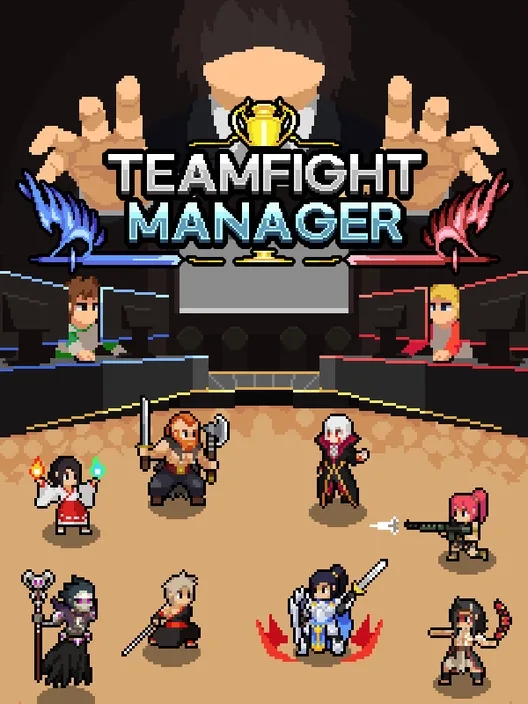
2. Teamfight Manager#
Team Samoyed's 2021 management sim, released on Steam on March 2 that year, puts the player behind the desk rather than on the roster: the job is coaching a fictional esports team through pick-and-ban drafts, training schedules, and match-day strategy calls, and once a match starts, the five drafted characters fight it out entirely on their own based on the stats, items, and matchups already locked in beforehand. Drafting is the whole game — reading an opponent's likely composition and banning their strongest pick, or countering a known matchup with the right hero, matters more than any single training session — and a manager who mismanages team chemistry or burns out a star player through overwork will lose matches the roster should otherwise win. The meta shifts over a career as patches rebalance characters, forcing a manager's drafting priorities to keep changing rather than settle on one dominant strategy. Facility upgrades and scouting new recruits give the between-match management layer its own long-term progression separate from any single fight. The honest drawback: the actual combat plays out as a fairly plain, spreadsheet-like simulation with limited visual spectacle, and a manager who has drafted and trained well still has to watch matches resolve with essentially zero further input, which can make the moment-to-moment loop feel thinner than the strategic layer around it.
3. Mechabellum#
Game River's mech-warfare auto-battler, published by Paradox Interactive and Dreamhaven, left early access for its full 1.0 release on September 26, 2024, after launching into early access in 2023, and it sits closer to the tactical end of the subgenre than most entries here: players purchase and place units on a hex-gridded battlefield before each round, and once combat starts those units can't be repositioned or directly ordered, but reinforcement cards — calling in an airstrike, dropping a swarm of small bots, or triggering a timed skill on cooldown — let a player intervene mid-round without ever taking manual control of an individual unit. The unit-tech system, where researched upgrades permanently improve a unit type for the rest of a match, turns early purchases into a long-term investment rather than a disposable round-by-round pick. Terrain and unit-placement zones give the drafting phase genuine positional stakes beyond raw army value, since a poorly angled deployment can get flanked even by a numerically inferior force. The best-of-three ranked ladder rewards reading an opponent's likely counter-pick between rounds as much as building a strong army in the first place. The honest drawback: the mid-round reinforcement abilities mean Mechabellum isn't quite as purely hands-off as some other entries on this list, and the sheer number of unit types and counters makes for a genuinely steep learning curve before a new player can read a battlefield at a glance.
4. Super Auto Pets#
Team Wood Games' pet-collecting auto-battler, released on September 24, 2021, strips the genre down to a deliberately minimal presentation: a round of shopping spends gold on pets and food items pulled from packs like Turtle, Puppy, and Star, and the entire preparation phase is arranging up to five pets in a line, feeding them stat-boosting or ability-granting food, and choosing which to roll over into the next round before combat resolves with zero further input. Pet abilities trigger off specific combat events — fainting, being hurt, the start of a battle — and chaining those triggers into a self-reinforcing combo, a cat that buffs whoever's ahead of it in line dying at exactly the right moment, is where the game's real depth lives despite the toylike presentation. Positioning in the line matters strategically even though it does nothing once the fight starts, since front-line pets absorb the first hits and trigger their abilities first. The ranked ladder, matching a player's current build against a pool of other real players' saved teams each round, keeps every run's shop offerings and matchups different. The honest drawback: the pet roster repeats across expansion packs with only incremental new abilities added, and a shop's random offerings can make or break a run regardless of how well a player reads the board, which leaves a real luck ceiling under even a well-played game.
5. Gratuitous Space Battles#
Positech Games' Cliff Harris-developed space-combat sim, released on November 17, 2009, is one of the genre's oldest and strangest entries: the entire game is fleet design and deployment, choosing fighter, frigate, and cruiser hulls and slotting weapons, armor, and engines onto their mounting points within a cost and weight budget, and once a battle starts the player has no direct commands at all — only pre-set AI behavior sliders and a starting formation dictate how a fleet actually fights, and the "gratuitous" in the title is a wink at how much of the appeal is simply watching the resulting carnage play out from a cinematic camera. Ship orders, aggressive, defensive, or focused on a specific target type, are the closest thing to tactical input the game allows, set once before deployment rather than adjusted mid-fight. Challenge scenarios pit a fixed budget against a preset enemy fleet, turning fleet optimization itself into the core puzzle rather than any live decision-making. The alien race packs, each with their own hull shapes and weapon philosophies, give the sandbox-design side of the game real variety beyond the base human fleet. The honest drawback: the interface and 2009-era visuals are unmistakably dated even next to its own 2012 sequel, and the lack of any in-battle input at all makes it a harder sell to players who want even the light interventions other entries on this list allow.
6. The Bazaar#
Tempo's roguelike deckbuilding auto-battler, created by former Hearthstone pro Andrey "Reynad" Yanyuk, moved into open beta in March 2025 and launched officially on Steam that August after a rocky earlier closed run, and its structure splits runs into two halves: PvE encounters against monsters that build up a hero's item board, and asynchronous PvP fights against other players' saved boards that resolve automatically once a run's shopping and item-merging for that day is done. Items occupy board slots of different sizes and can be merged into upgraded versions when duplicates line up, so a board's late-game power spikes from smart consolidation as much as from raw item count. Hero-specific item pools — a Vanessa run leans into weapons and combos, a Pygmalien run into constructs and gold generation — give the same roguelike shell genuinely different builds depending on which of the game's playable heroes a run starts with. Cooldown timers on individual items turn board arrangement into a real optimization problem, since a slow, powerful item can bottleneck an otherwise fast board if it's placed carelessly. The honest drawback: the game's 2024 early access launch was widely criticized for its monetization and technical issues, and while the 2025 release addressed much of that, the requirement for a constant internet connection even in solo PvE runs remains a real sticking point for some players.
7. Despot's Game: Dystopian Army Builder#
Konfa Games' roguelike auto-battler, published by tinyBuild, left early access for its full release on September 15, 2022, and casts the player as an AI overseer assembling a mismatched squad — up to 49 units recruited from a shop between fights — to survive a procedurally generated series of dungeon floors. Unit classes cover the expected roles, DPS, tanks, casters, buffers, and healers, but the game's dark comic tone shows up in the specifics: units include depressed office workers, martial artists, and boxers, each with wildly different stat profiles that force real trade-offs about squad composition under a limited unit cap. Formation placement on a scrolling battlefield, deciding who stands in front to soak hits and who hangs back to cast or shoot, is set before each fight and then plays out automatically, with runs ending permanently on a loss in classic roguelike fashion. Weapon and equipment drops scavenged between fights let a strong early unit scale meaningfully across a run rather than staying static. The honest drawback: dungeon layouts and enemy waves repeat noticeably across runs once a player has logged enough hours, and a handful of unit archetypes dominate the competitive meta strongly enough that many viable-looking compositions underperform against them in practice.
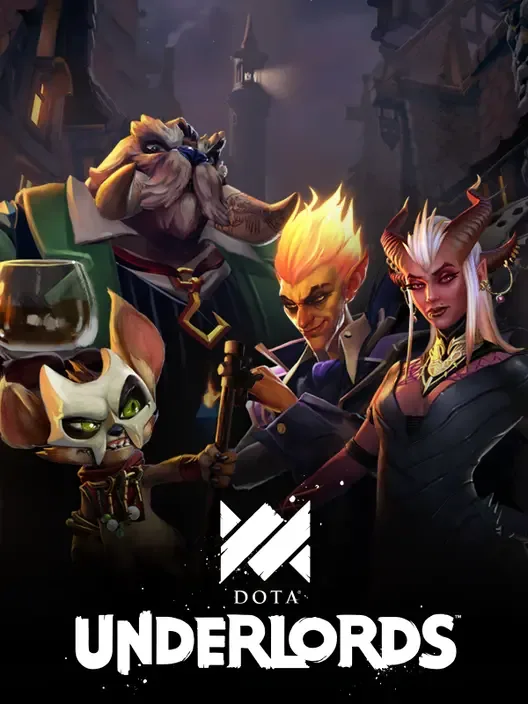
8. Dota Underlords#
Valve's take on the genre it helped popularize entered early access in June 2019 and left it on February 25, 2020, built directly on the Dota Auto Chess mod that started the whole subgenre: eight players draft Dota 2 heroes onto an 8x8 grid each round, and combat then resolves automatically with pieces attacking based on their stats, abilities, and positioning at the moment the round began. The Alliance system, where fielding enough heroes who share a trait — Knights, Mages, Trolls, and dozens of others — unlocks a stacking bonus for the whole team, is the central drafting puzzle, since chasing a strong synergy often means passing on a stronger individual piece. Underlords, four playable boss-tier characters with their own passive and active abilities usable between rounds, add a layer of run-defining strategy on top of the standard hero draft. Item drops from combat rounds slot onto specific heroes to boost their stats or grant new abilities, giving the mid-game shop phase a second axis of decision-making beyond simply buying more units. The honest drawback: Valve scaled back active development and esports support for the game not long after its full launch, and the player base has thinned out considerably since, in the shadow of Riot's Teamfight Tactics and other rivals the format spawned.
9. Legion TD 2#
AutoAttack Games' lane-based hybrid, released on October 1, 2021 after growing out of a Warcraft III custom-map lineage and a later Kickstarter campaign, sits at the genre's tower-defense border more than any other entry here: two players defend a lane against waves of computer-controlled creeps using purchased, auto-fighting units of their own, while simultaneously sending offensive waves down a shared lane to attack the opposing player's king directly, so unlike a typical auto-battler the two players never actually fight roster-versus-roster — they're racing to out-survive and out-damage each other in parallel lanes instead. Gold earned from surviving waves funds a roster pulled from a pool of well over 100 unique units, each with real elemental and type strengths that create a genuine rock-paper-scissors layer on top of raw stat comparisons. Mercenary camps, neutral objectives that can be captured for a one-time reinforcement, add a risk-reward decision to a lane's early rounds beyond simply building defense. The "leaking" mechanic, where creeps that get through a defense chip away at that player's king health directly, gives every round of imperfect defense a lasting, cumulative cost. The honest drawback: the lane-defense structure and reliance on computer-controlled creep waves make this feel meaningfully closer to a tower-defense game with auto-battler dressing than a pure roster-versus-roster fight, and the sheer unit-pool size is a genuinely steep wall for a newcomer to climb before matches stop feeling random.
10. Auto Chess#
Drodo Studio's standalone spin-off of the Dota 2 mod that started the entire subgenre launched on Android in April 2019, iOS in May, and Windows via the Epic Games Store that July, published on mobile in partnership with Dragonest, and it preserves the original mod's format closely: eight players draft chess-piece-styled units each round from a shared pool, arrange them on a personal board, and watch combat resolve automatically once the round's placement phase ends. Racial and class synergy bonuses, stacking when enough pieces sharing a trait are fielded at once, drive the same core drafting tension the format is now known for across every game it spawned. A courier unit, upgradable over a match, lets a player shop and manage their bench without losing tempo on positioning. The item-combination system, merging basic drops into stronger equipment mid-match, adds a resource-management puzzle running alongside the piece draft itself. The honest drawback: once Valve's Dota Underlords and Riot's Teamfight Tactics launched their own polished, heavily supported versions of the same format, Auto Chess lost much of the competitive spotlight and active player base it originally built, and it has received comparatively little content support in the years since.
The ranking above blends IGDB's aggregate critic and user rating with Steam's own user review percentage, and only for games with a real sample size behind the score rather than a handful of early ratings that can swing wildly. Nothing on this list was hand-picked for inclusion or placement — the order is a direct output of that combined score, which means it shifts automatically as more people rate these games or as new releases join the catalog with enough reviews to be scored fairly. Auto-battlers remain a small, young subgenre next to Game Avant's other strategy pages, so treat this as a live snapshot of a still-growing catalog rather than a fixed, permanent verdict — check back as the data changes, because it will.