 Crusader Kings III
 Europa Universalis IV
 Hearts of Iron IV
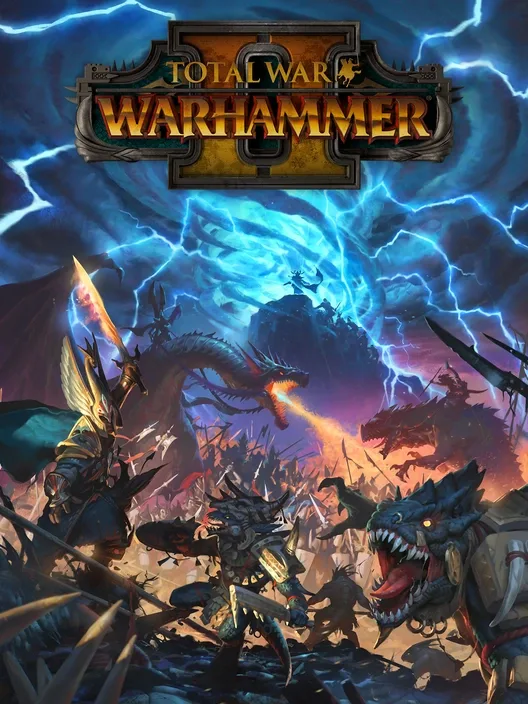 Total War: Warhammer II
 Crusader Kings II
This is Game Avant's ranked list of the best grand strategy games right now, built from the site's combined critic and player rating data rather than picked by hand. Grand strategy is the subgenre of strategy games built around running an entire nation, dynasty, or empire across a long historical timeframe — usually turn-based or pausable real-time — where diplomacy, economy, and internal politics carry as much weight as the armies on the map. That's what separates it from 4X games, which typically drop a faction onto a fresh, unexplored map and task it with exploring and settling from nothing: grand strategy usually starts from an existing historical or geographic situation, with borders, rivals, and institutions already in place, and asks how well a player can manage what's already there. It's also distinct from real-time strategy proper, where the unit of victory is a single battle or a short match — grand strategy measures success in decades or centuries, and a lost battle is rarely the same thing as a lost campaign.
The order below comes from blending IGDB's aggregate critic and user score with Steam's own user review percentage, weighted toward games with a real sample size behind the number, using the same 50-review floor as the rest of the site's rankings. That means an older wargame can outscore a recent release with a bigger marketing budget, because the math doesn't care which one is more recognizable. Read the write-ups below for what each entry actually does at the map table — the rank tells you how it currently scores among the best grand strategy games worth playing, not which one fits a particular evening.
1. Workers & Resources: Soviet Republic#
3Division's city-building and logistics simulation, developed by the Slovak studio and published by Hooded Horse, spent years in early access before reaching its full 1.0 release in June 2024. It carries Steam's own "Grand Strategy" tag alongside its city-builder classification, and the framing holds up: the game is built around running a planned economy at national scale, not just a single town. Its central mechanic is a moneyless domestic economy modeled on Eastern Bloc central planning — factories, farms, and resource chains can run entirely without currency once self-sufficient, with money only needed for foreign trade and imports, a genuinely distinct economic abstraction from the tax-and-spend loop nearly every other management game uses. Vehicle logistics are simulated down to individual truck routes, train schedules, and pipeline networks, so raw materials are physically hauled between mine, factory, warehouse, and shop rather than teleported along an invisible supply line. Separate electrical and water-and-sewage grids run underneath the whole simulation, and either one failing cascades into shortages across an entire republic's production chain. Border customs houses and international trade agreements let a republic import what it can't yet produce domestically, giving the whole system a geopolitical dimension beyond simple town management. The honest drawback: the game's roots as a city builder mean it lacks the diplomacy, warfare, and rival-nation interaction that most grand strategy games build around, and the sheer density of its interlocking logistics systems gives it one of the steepest learning curves in the entire strategy genre.
2. Crusader Kings III#
Paradox Development Studio's 2020 grand strategy game replaces the map-painting of most entries in the genre with a character simulation, and that swap is the whole appeal: dynasties, not borders, are the actual long game, and a brilliant ruler's death to old age or a badly timed assassination can undo decades of careful empire-building in an instant. The stress and mental-trait system, where a ruler who represses their true nature accumulates strain that eventually breaks out as an actual personality shift, gives characters an arc most grand strategy games never attempt. Scheming — seduction, blackmail, fabricating claims, poisoning a rival heir — turns court politics into an actual toolkit rather than flavor text sitting on top of a spreadsheet, and the succession laws players choose, gavelkind splitting a realm among heirs versus primogeniture keeping it whole, create genuinely different multi-generational problems to solve. Vassal management, where granting away too much land breeds rival power blocs while hoarding it starves loyal supporters of reward, turns the feudal hierarchy itself into a constant balancing act rather than a fixed org chart sitting quietly in the background. The honest drawback: the battles themselves are the thinnest part of the whole package. Combat resolves largely on stack size and terrain modifiers with little of the tactical depth a dedicated wargame offers, which makes the game's constant warfare feel more like a spreadsheet outcome than a fight, and the sheer density of interlocking systems from years of expansions is a genuinely steep wall for a new player to climb.
3. Total War: Warhammer II#
Creative Assembly's 2017 entry, published by SEGA, moved the Total War: Warhammer sub-series onto a new continent and onto Games Workshop's larger cast: six new playable races across the base game and its Legendary Lord roster — High Elves, Dark Elves, Lizardmen, Skaven, Tomb Kings, and Vampire Coast added later — each with distinct playstyles, such as the High Elves' Tyrion, a melee-focused swordmaster, set against his twin brother Teclis, a spellcaster built around the game's Lores of Magic instead. The Eye of the Vortex campaign, the game's original centerpiece, tasks every race with performing a chain of ritual battles to either stabilize or sabotage a reality-warping magical storm, turning the endgame into a race against rival factions rather than simple territorial conquest. Monstrous units unique to each race — Lizardmen dinosaurs, Dark Elf hydras, Skaven war machines built from stolen and scavenged technology — mean army compositions diverge from faction to faction far more than unit reskins would allow. The Mortal Empires campaign, added roughly a month after launch for anyone who also owned the first Total War: Warhammer, merges both games' maps and rosters into a single continent-spanning grand campaign, effectively doubling the playable content for owners of both. The honest drawback: the base Vortex campaign's map is comparatively small next to Mortal Empires, so getting the game's full intended scope means also owning its predecessor, and the game has since been folded into and effectively superseded by Total War: Warhammer III's combined campaign, leaving newcomers to sort out which entry point actually makes sense to buy today.
4. Darkest Hour: A Hearts of Iron Game#
Released in 2011 and led by developer Martin Ivanov's independent team rather than Paradox Development Studio itself, Darkest Hour runs on Paradox's Europa Engine but reworks the Hearts of Iron II formula into something closer to a community-driven wargame than a direct sequel. Its scenario range is unusually wide for the series, letting a campaign start as early as 1914 and run through 1964 depending on the chosen start date, well past the World War II window most Hearts of Iron entries confine themselves to. Province-level management covers political, diplomatic, espionage, economic, military, and technological development simultaneously, forcing every turn's decisions to be weighed across several axes at once rather than a single dominant resource. A brigade-attachment system lets core units like infantry be upgraded piecemeal — bolting on engineer, artillery, or anti-tank brigades to an existing division rather than replacing the whole unit — giving army design a modular, incremental feel closer to real interwar and wartime doctrine debates than a straightforward tech-tier upgrade. The dynamic diplomatic AI reacts to shifting alliances and border tensions across the whole map rather than following a scripted historical path, meaning a campaign can plausibly diverge from the historical record within the first few years. The honest drawback: the game's presentation and interface are unmistakably a product of the early Europa Engine era, its modding-heavy community support means much of its best content — total conversions like Kaiserreich among them — lives outside the base release, and newer players used to Hearts of Iron IV's focus trees will find its systems considerably less guided.
5. Sins of a Solar Empire: Rebellion#
Ironclad Games' 2012 definitive edition of its 2008 original, published by Stardock, earns its place among grand strategy games by fusing real-time strategy combat with the empire-scale planning of a 4X title — a hybrid the game's own community has nicknamed "RT4X." Its planetary economy runs continuously rather than pausing for turns: taxation rates, trade-port placement, and planet specialization toward extraction, refining, or military production all have to be balanced in real time while fleets are simultaneously in motion across the map. Diplomacy runs on a genuine treaty system, with trade agreements, non-aggression pacts, and alliances that can be proposed, honored, or broken between the game's three factions — TEC, Vasari, and Advent — each of which plays toward a structurally different strategy, from the TEC's economic flexibility to the Vasari's late-game desperation bonuses tied to their dying home region. The tech tree splits research into civilian and military tracks that compete for the same research points, so investing heavily in economic upgrades genuinely delays a fleet's late-game power spike. Capital ships gain experience and unlockable abilities the longer they survive a campaign, giving individual vessels a persistent identity closer to a named general than a disposable unit. The honest drawback: the real-time pace means the game's strategic-economic layer often gets overshadowed by fleet-to-fleet combat, and matches against the AI or in multiplayer can run long enough that the genre-blending ambition sometimes reads as unfocused compared with a dedicated 4X or a dedicated RTS.
6. Crusader Kings II#
Paradox Development Studio's 2012 grand strategy game, the title that established the character-driven formula Crusader Kings III would later refine, lets players guide a dynasty rather than a fixed nation across thereabouts of five centuries of medieval history. The De Jure system, which tracks a "rightful" claim to a title separate from who currently holds it, gives conquest and inheritance a legal dimension most grand strategy games skip entirely — a kingdom's de jure borders can pressure a ruler toward wars of unification long after the historical record's own borders have been redrawn. The Ruler Designer, added via a minor 2012 DLC, lets players build a custom starting character with chosen traits and stats, turning the game's opening moment into its own small design exercise for anyone not interested in the historical starting rulers. Plots and schemes — fabricating claims, arranging murders, inciting factions — give court intrigue genuine mechanical teeth rather than flavor text layered over a map painter. Council positions, where a ruler delegates authority over the treasury, army, or diplomacy to a vassal, trade a measure of direct control for expertise bonuses and a genuine risk of that vassal abusing the position. The honest drawback: nearly a decade of expansions layered mechanic on top of mechanic without much pruning, leaving the fully-loaded game considerably more convoluted to learn than its sequel, and the character models and UI show real age next to the polish Crusader Kings III brought to the same core ideas.
7. Europa Universalis IV#
Paradox Development Studio's 2013 grand strategy game covers roughly four centuries of world history, letting any of hundreds of playable nations rise, fracture, or vanish entirely depending on how well a player manages the game's central abstraction: monarch points, the currency spent on everything from research to diplomatic annexation. The trade node system, where goods flow along a mapped network toward dominant trade hubs that can be steered with merchants and light ships, models economic strategy with a depth few grand strategy games attempt. Mission trees, added years into the game's life, give sprawling campaigns concrete medium-term goals instead of an open-ended map-painting exercise with no throughline. The idea group system, letting a nation specialize toward exploration, quality, or offense over the course of a campaign, means the same starting nation can be played toward wildly different endgames. The estates system, where the nobility, clergy, and burghers each demand privileges in exchange for loyalty and tax income, layers an internal-politics problem on top of what would otherwise be a purely external, map-focused strategy game. The honest drawback: a decade of expansions has layered mechanic on top of mechanic without much pruning, making the UI dense and the onboarding curve steep, and the snowball nature of the monarch-point economy means an early lead compounds into a runaway game more often than a genuine back-and-forth contest.
8. Empire: Total War#
Creative Assembly's 2009 entry, published by SEGA, pushed the Total War series into the gunpowder era and, more significantly for the grand strategy side of its design, onto a genuinely global stage: the campaign map spans the Americas, Europe, and parts of Asia, and naval trade theatres let players run merchant convoys along mapped sea lanes that rival powers can raid or blockade. The Road to Independence campaign, a self-contained prologue built around the Thirteen Colonies, teaches the game's systems through a scripted arc rather than dropping players straight into the sprawling grand campaign. Line-infantry combat, built around volley fire, formation discipline, and the new ability to besiege and storm fortified positions with siege artillery, reframed Total War's real-time battles around an entirely different tactical vocabulary than the melee-focused entries before it. A research tree spanning military, economic, and cultural technologies lets a faction chase a matchlock-to-flintlock arms race or invest instead in trade efficiency and colonial administration, giving campaigns genuinely different characters depending on the balance chosen. Diplomacy and trade agreements between the era's major powers, layered on top of the existing faction-versus-faction warfare, give the campaign map a genuine geopolitical dimension beyond simple conquest. The honest drawback: the game's naval battles and campaign AI were notoriously undercooked at launch, with pathing and diplomacy issues that took several patches to meaningfully improve, and even years later the game's ambition occasionally outstrips what its engine can reliably deliver in a large late-game battle.
9. Knights of Honor#
Black Sea Studios' 2004 grand strategy game, published in Europe by Sunflowers Interactive and in North America by Paradox Interactive, casts a wide net across medieval Europe, letting players take charge of any of more than 100 playable kingdoms across three historical eras. Its marriage system turns royal family members into genuine diplomatic instruments: marrying a daughter into a rival royal house can later be leveraged into a legitimate claim on that kingdom's throne, especially if the new in-law king meets an untimely end arranged from afar. Espionage runs as its own persistent layer, with spies planted in rival courts and assassins available to eliminate troublesome rulers or generals, while a player's own court has to be defended against the same tactics turned back on it. Trade agreements and alliances negotiated through the diplomacy screen feed directly into a kingdom's income and stability, meaning economic strategy and foreign policy are inseparable rather than running on separate tracks. Unlike the series' turn-based grand strategy peers, battles and army movement play out in real time on the campaign map itself rather than resolving through a separate tactical layer, collapsing strategic and operational decisions into a single continuous simulation. The honest drawback: that real-time-only battle resolution means Knights of Honor never offers the kind of hands-on tactical combat a Total War or a dedicated wargame provides, and the game's two-decade age shows clearly in its interface, unit models, and overall visual presentation.
10. Hearts of Iron IV#
Paradox Development Studio's 2016 grand strategy game, released on the anniversary of D-Day, models the buildup to and fighting of the Second World War at a scale few strategy games attempt, letting any nation from the era be played from the mid-1930s onward. The national focus tree, a branching set of country-specific objectives unlocked over real in-game time, replaced earlier Hearts of Iron entries' more abstract decision menus with a visual roadmap that lets a nation diverge sharply from its historical path — a democratic United States can be steered toward fascism, or a neutral country pushed to rearm years ahead of its real timeline. Production lines cap how many factories can be assigned to a single piece of military equipment at once, forcing genuine trade-offs between quantity, efficiency gained from sustained production runs, and switching to newer equipment models mid-war. The division designer lets players build custom army compositions from individual battalions and support companies, so a light infantry division built for occupation duty and a combined-arms armored spearhead are assembled from the same toolkit rather than picked off a fixed roster. Supply lines, modeled through a linked network of railways, ports, and depots feeding the front, mean an otherwise successful offensive can stall out entirely if its logistics can't keep pace with the advance. The honest drawback: the game's diplomatic AI can behave erratically, sometimes forming or abandoning alliances in ways that break historical plausibility, and the sheer number of systems layered on through years of DLC has made the base experience considerably denser than the game's 2016 launch version.
11. Panzer Corps#
Developed by Flashback Games and The Lordz Games Studio and published by Slitherine in 2011, Panzer Corps is a turn-based operational wargame built as a spiritual successor to the classic Panzer General series, running entire theaters of the Second World War across a connected hex-grid campaign rather than isolated scenarios. Its persistent core army mechanic carries surviving units and their earned experience from one linked battle to the next, so a veteran tank battalion that survives the invasion of Poland arrives at the following scenario meaningfully stronger than a fresh replacement unit, giving individual formations a campaign-long identity rare outside a dedicated RPG. A deep roster of roughly 800 distinct unit types spans 19 unit classes, each defined across some 20 separate parameters covering attack, defense, movement, and specialization, giving army composition a granularity closer to a tabletop wargame than a typical video game unit list. Seventeen distinct terrain types modify combat and movement in specific, learnable ways, so understanding how forest, marsh, or urban terrain interacts with a given unit class is as important to winning a scenario as raw numbers. Prestige, earned through successful combat and completed objectives, is the single currency spent on reinforcements, unit upgrades, and new purchases, forcing a running trade-off between growing an existing veteran unit and buying entirely new capability. The honest drawback: the historical scope stays fixed on World War II's European and North African theaters with little of the diplomatic or economic simulation that defines Paradox-style grand strategy, keeping the focus narrowly operational and military rather than genuinely nation-spanning.
12. Napoleon: Total War#
Creative Assembly's 2010 entry, published by SEGA, narrows the Total War formula's usual sprawling scope onto a single historical figure, following Napoleon Bonaparte's campaigns from Italy in 1796 through Egypt and across the rest of Europe in a narrative-driven grand campaign more tightly structured than the series' typical open-ended map-painting. A new attrition system makes seasonal weather a genuine tactical concern: armies caught in unsuitable terrain during summer or winter campaigns lose soldiers steadily to disease and desertion, forcing supply and timing considerations that earlier Total War entries mostly ignored. Players can take the campaign from either side, leading France or one of four Coalition powers — Great Britain, Austria, Prussia, or Russia — each with a genuinely different strategic position and set of alliances to manage. Real-time battles retain the series' signature combination of formation discipline, artillery bombardment, and cavalry flanking, but the added attrition and reinforcement mechanics tie those individual battles more tightly to the surrounding campaign's logistics than earlier entries managed. A dedicated multiplayer campaign mode lets two players compete for the same historical territory simultaneously, layering direct rivalry on top of the single-player structure. The honest drawback: the tighter historical focus means less factional variety than a full grand-campaign Total War title offers, and the game's AI and pathing, particularly in large multi-army battles, show the same era-appropriate rough edges that affected Empire: Total War before it.
13. Star Wars: Empire at War#
Petroglyph Games' 2006 real-time strategy game, published by LucasArts and staffed heavily by former Westwood Studios developers, sets its story between Episodes III and IV and builds its Galactic Conquest mode around genuine grand-strategy planning layered on top of RTS combat. The three-dimensional galactic map is the mode's centerpiece: fleets and armies move between star systems in a persistent campaign where a planet's economic output, garrison strength, and strategic position all have to be weighed before committing forces, rather than simply the next mission in a fixed sequence. Space and ground combat are handled as two distinct battle types resolved separately — a system's orbital blockade has to be broken before ground forces can even be deployed to the planet beneath it, giving fleet composition and space superiority genuine strategic consequences beyond their own battles. Each faction's win conditions in Galactic Conquest vary by scenario but generally revolve around eliminating an enemy leader, defending or destroying the Death Star, or driving the opposing faction off the map entirely, giving the mode multiple viable paths to victory rather than one. Heroes drawn from the films — Darth Vader, Luke Skywalker, Mon Mothma — function as unique, named units with their own abilities, giving the campaign layer recognizable stakes beyond an anonymous unit roster. The honest drawback: the underlying economy and diplomacy systems are considerably thinner than a dedicated Paradox-style grand strategy game, with most of the depth concentrated in combat rather than the political or economic layers surrounding it.
14. Ultimate General: Civil War#
Game-Labs' 2017 tactical strategy game recreates more than 50 battles of the American Civil War, from small skirmishes to multi-day engagements across hand-drawn terrain built from satellite data. Its morale system is unusually granular: unit cohesion rises from successful combat, high ground, and proximity to a commanding officer, and falls under casualties, especially when struck from the flank, with units below roughly 17% morale wavering before routing outright. Terrain plays a direct tactical role — forests conceal movement, rivers and bridges create genuine chokepoints, and constructed defenses like trenches and fortified buildings modify a unit's effectiveness in ways that reward reading the map before an assault. A persistent campaign layer carries a general's core army and its veterans' accumulated experience across the entire war, so losses in one battle have consequences for every engagement that follows. Officer management, promoting commanders and assigning traits that buff their units, adds a personnel layer atop the battlefield tactics. The honest drawback: the focus stays narrowly on tactical command rather than the broader economic or diplomatic simulation that defines most grand strategy games, making its inclusion rest on its campaign layer rather than a full nation-management system.
The ranking above blends IGDB's aggregate critic and user rating with Steam's own user review percentage, and only for games with a real sample size behind the score — a 50-review floor — rather than a handful of early ratings that can swing wildly. Nothing on this list was hand-picked for inclusion or placement; the order is a direct output of that combined score, which means it shifts automatically as more people rate these games or as new releases join the catalog with enough reviews to be scored fairly. Treat this as a live snapshot of how these games are currently rated relative to each other, not a fixed, permanent verdict on the best grand strategy games of 2026 — check back as the data changes, because it will.