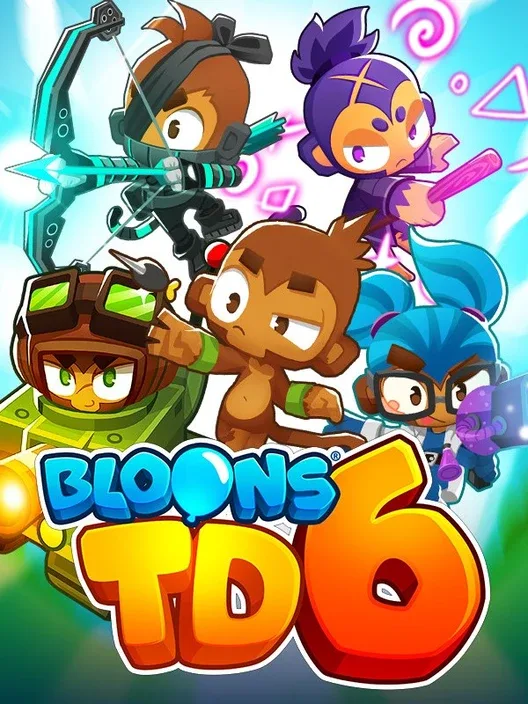
 Bloons TD 6
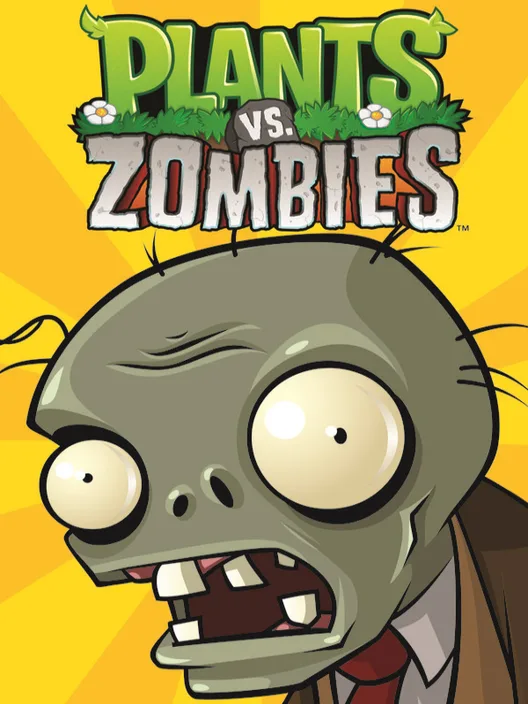 Plants vs. Zombies
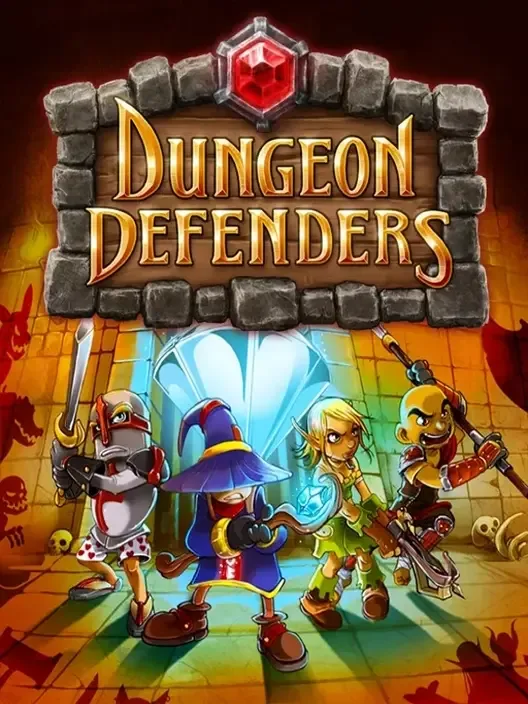 Dungeon Defenders
 They Are Billions
 Creeper World
Tower defense narrows strategy down to a single recurring problem: enemies are coming along a path or into an area, and the player's job is to place, position, and upgrade static or semi-static defenses to stop them before they arrive. That's a different discipline from strategy games built around active army control — there's no marching a squad forward to seize ground the way an RTS or a wargame does, and no base-building macro racing an opponent's economy. The player is reacting to a scripted or escalating wave of threats with a fixed or slowly expanding toolkit, optimizing tower placement, upgrade paths, and chokepoint geometry rather than commanding a mobile force in a symmetrical fight. It's also a different animal from an auto-battler: towers generally don't clash with each other the way auto-battler units do in a shared arena: the conflict runs one direction, from the defenses toward the enemy line, not between two mirrored rosters.
The order below comes from the same formula used across Game Avant's strategy rankings: IGDB's aggregate critic and user score blended with Steam's own user review percentage, weighted toward games with a real sample size behind the number rather than a handful of early ratings. A cult logistics-strategy hybrid can outrank a franchise name here because the math doesn't care which one is more recognizable — read the write-ups for what each game actually asks of a player's tower placement and wave management, not just where it lands.
1. Creeper World#
Knuckle Cracker — the small studio run by developer Virgil Wall — released the original Creeper World in 2009, and its central idea still sets it apart from nearly everything else in the genre: there's only one enemy, a slow-spreading, physically simulated blue fluid called the Creeper that pools, flows downhill, and rises against anything blocking its path rather than marching along a fixed lane in discrete waves. Mortars and blasters have to be placed to physically hold the Creeper's level down block by block, so defense here is closer to fighting a rising tide than picking off individual units. Energy collectors and relays have to be strung out from the player's base to distant totems to keep power flowing to weapons and shields, turning territory expansion itself into a defensive necessity rather than a bonus objective. Runners, small mobile units that can carry resources or attack, add a light offensive layer on top of the otherwise entirely defensive core loop. Completing a map means building a jump gate and teleporting the entire base to the next world, giving every level a hard endpoint instead of an open-ended survival clock. The single-enemy, fluid-simulation premise is unlike any wave-based tower defense game on this list, and it rewards players willing to think in terms of pressure and flow rather than DPS checks against a countdown timer. The honest drawback: the presentation is austere even by indie standards, with minimal music, sparse sound design, and an interface that leans on function over polish, so the fluid-physics hook has to carry a game that gives newcomers very little visual reward for sticking with it.
2. Creeper World 3: Arc Eternal#
Knuckle Cracker's 2014 entry keeps the original's fluid-Creeper premise but adds the tools that turned the series into something genre veterans still point to years later: Anti-Creeper, a counter-substance sprayed or bombed onto the map to physically push the Creeper back rather than just holding a line against it, gives players an actual offensive option against an enemy that previously could only be contained. The TERP unit lets players raise or lower terrain elevation directly, so a chokepoint that doesn't exist yet can be dug out of the map itself, turning the battlefield's shape into another resource to manage. The DMD (Dial Map Device) exposes dozens of tunable constraints on any given map — Creeper aggression, emitter output, starting resources — letting the same level be replayed as a genuinely different puzzle. Collectors need open space and an unbroken connection back to a command node to generate energy, so network topology matters as much as raw tower count. For players willing to go deeper, the built-in CRPL scripting language and map editor let the community build entirely custom weapons, enemies, and campaigns, and the game's own story missions were built with those same tools rather than a separate, more privileged toolset. The honest drawback: the sheer number of tunable systems and the CRPL editor's power make the game's ceiling enormous, but that same depth means the learning curve past the tutorial missions is steep, and the visual presentation remains functional rather than attractive.
3. Defense Grid: The Awakening#
Hidden Path Entertainment's 2008 release, later ported to Xbox Live Arcade in 2009, is frequently cited as one of the tightest classical tower defense designs ever shipped, built on a maze-based path system where towers placed to block the direct route force invading aliens into longer, more exposed detours. The power-core mechanic is the game's signature wrinkle: aliens that reach the player's cores steal one and try to physically drag it back to their spawn point, and towers can still kill a core-carrying alien to recover the core before it's lost for good, turning the late stage of every wave into a genuine chase rather than a simple damage race. Air units bypass ground-based maze layouts entirely and are punished disproportionately hard by dedicated anti-air towers, forcing a second, parallel defensive plan on top of the ground layout. A built-in developer commentary track, unusual for the genre, walks through the design reasoning behind specific levels for players who opt in. Score-based ranking on every level, measured against efficiency rather than just survival, gives completionist players a genuine reason to replay a cleared map with a tighter build. The honest drawback: the campaign's difficulty curve is notably gentle for the first half, meaning strategy-game veterans can coast through a large chunk of the game before the later levels' maze complexity and enemy variety start to demand real optimization.
4. Mindustry#
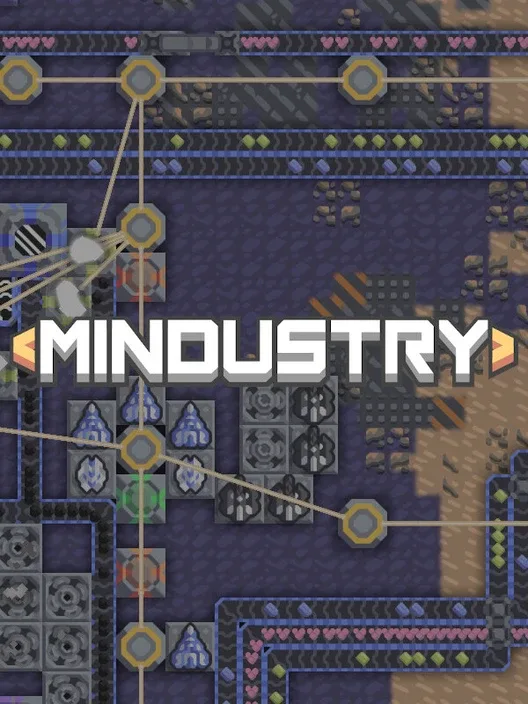
Developer Anuken (credited on some releases as Anuke), working largely solo and releasing the game under the GNU GPLv3 open-source license, has kept Mindustry in continuous development since it began as a 2017 game-jam project, and its blend of factory automation with tower defense is genuine rather than cosmetic: conveyor belts, ducts, and inserters have to physically move ore, ammunition, and processed materials from mines to factories to the turrets defending the core, so a defense's firepower is only as good as the supply chain feeding it. Survival maps send progressively stronger waves of enemy units at the player's core, and a supply line that can't keep pace with ammo consumption fails a defense as surely as an undermanned wall. Logic blocks, a visual scripting system, let players automate resource routing, turret targeting, and unit behavior without manually babysitting every system once a base scales past a certain size. Campaign mode strings maps together against a persistent enemy faction with escalating tech, while PvP servers pit two factories and their defenses directly against each other. The honest drawback: the interface and onboarding are unmistakably the product of a small, largely solo open-source project, and the sheer number of interacting systems — belts, power grids, liquids, unit AI, logic — gives new players a genuinely steep initial hill to climb before the factory-versus-waves loop clicks.
5. Fieldrunners 2#
Subatomic Studios' 2012 sequel, which launched on iOS before reaching Steam and other platforms, builds its identity around maze construction: towers double as walls, and clever placement can force the game's "fieldrunners" into long, looping detours that maximize time spent inside a kill zone. Enemy AI reacts to that maze-building directly — runners bump into each other at chokepoints, scramble over and under one another, and actively hunt for the least-defended path available, which punishes overly rigid maze designs in a way many tower defense games never simulate. Players select at most six weapon types and three consumable items before each level from a much larger roster, turning loadout choice itself into a strategic decision made before a single tower goes down. Elite enemy variants and a trading-card style collection system layered on top of the core waves give the campaign's 25 levels across four distinct zones extra replay incentive beyond a single clean clear. Three difficulty tiers — casual, tough, and heroic — let the same map be replayed as a substantially harder puzzle once the basics click. The honest drawback: the core loop leans heavily on repeated replays of the same maps to unlock the weapon roster and elite variants, and players who bounce off the maze-building learning curve early will find the difficulty spike into "tough" and "heroic" modes considerably steeper than the casual tier suggests.
6. Creeper World 4#
Knuckle Cracker's December 2020 release takes the series' single-enemy fluid-Creeper premise into full 3D for the first time, and the shift isn't cosmetic: proper wave physics govern how the Creeper pools, splashes, and rises around terrain, and elevation — always important in the earlier entries — becomes a genuinely three-dimensional concern once orbital and aerial units enter the picture alongside ground forces. Weapons are now split across land, air, and orbital categories, each interacting with the terrain and the Creeper's fluid behavior differently, so a defense built purely around ground-based mortars leaves real gaps an opponent's aerial pressure can exploit. Command nodes and energy networks return from earlier entries, still requiring an unbroken connection to function, but now have to be planned across genuine verticality rather than a flat map. Custom unit and scenario scripting, carried over and expanded from Creeper World 3's CRPL tools, lets the dedicated community keep building new content years after release. The scale of individual maps grew substantially over the earlier entries, giving long-form scenarios room to escalate across a much larger battlespace. The honest drawback: the jump to 3D adds a real camera and spatial-reasoning overhead that the earlier, simpler top-down entries never asked of players, and that added complexity can make the game feel like a bigger commitment than the series' comparatively lean earlier chapters.
7. Orcs Must Die!#
Robot Entertainment's October 2011 release reframes tower defense around direct, third-person player control: instead of watching towers work from an overhead view, players control the War Mage directly, running the halls of a fortress alongside the traps and Guardian allies doing the actual defending. The trap roster is the game's real strength — spike traps, tar pits that slow orcs into a killzone, swinging blade traps, and arrow walls can all be chained together along a single corridor to combine crowd control with raw damage rather than relying on any single trap type. Guardians, controllable ally units bought and placed like traps, add a light army-management layer without turning the game into a symmetrical RTS fight. Skulls earned by clearing levels fund permanent trap and weapon upgrades between missions, giving the campaign a persistent progression track on top of each level's individual scoring. The rift-defense objective — letting too many orcs through ends the level regardless of kill count — keeps every encounter framed around denial rather than pure damage output. The honest drawback: the game's relatively short campaign and heavy reliance on replaying levels for higher scores and better upgrades means the core trap-combo loop, however satisfying, runs out of genuinely new content well before a dedicated player runs out of appetite for it, and the sequel would go on to expand the roster considerably further.
8. Kingdom Rush Frontiers#
Ironhide Game Studio's June 2013 sequel keeps the original Kingdom Rush's four-tower foundation — archers, barracks (melee), mages, and artillery, each with two distinct late-game upgrade paths — while adding specialized new towers tailored to Frontiers' jungle-and-savanna settings, including Crossbow Forts and necromancer-style summoning towers that behave nothing like the base game's roster. Sixteen playable heroes, each moved and commanded directly on the battlefield rather than sitting in a fixed tower slot, gain experience and abilities across a level and can turn a losing wave around on their own if played aggressively. Heroic and Iron challenge modes, both built around a single life with no margin for a lost wave, give experienced players a genuinely harder version of maps that felt comfortable on normal difficulty. A star-based meta-progression system, earned by clearing those harder modes, unlocks permanent upgrades that carry across the whole campaign rather than resetting per level. Eighteen-plus distinct tower abilities across the roster mean tower choice itself, not just placement, is a real strategic decision every level. The honest drawback: the difficulty spike between normal and Heroic/Iron modes is steep enough that casual players may never see the content those harder modes gate, and the game's formula, while polished and confidently executed, doesn't meaningfully deviate from what the original Kingdom Rush already established two years earlier.
9. Kingdom Rush 5: Alliance#
Ironhide Game Studio's July 2024 entry is built around the series' biggest structural change since its 2011 debut: a dual-hero system that lets players field two heroes simultaneously on the same map, forcing real synergy decisions about which pairs complement each other's abilities rather than simply picking the single strongest hero available. The story frames an uneasy truce between the Kingdom of Linirea and the previously villainous Vez'nan's Dark Army, and that alliance shows up mechanically too, with darker, previously enemy-aligned tower types now available alongside the traditional Linirean roster. The core four-tower, two-upgrade-path structure from earlier entries returns largely intact, giving longtime players a familiar foundation to build the new hero pairings on top of. Wave composition and boss encounters are tuned around the assumption that two heroes are active at once, meaning maps ported forward conceptually from earlier entries play meaningfully differently here. Continued post-launch content drops have kept adding new hero pairs and towers rather than treating the release as a finished, static package. The honest drawback: the dual-hero system asks players already familiar with four prior entries to relearn hero synergy from scratch, and newcomers to the series may find Alliance a less natural entry point than the original Kingdom Rush for learning the franchise's base systems before tackling paired heroes.
10. Plants vs. Zombies#
PopCap Games' 2009 release, designed by George Fan as a defense-oriented successor to his earlier Insaniquarium, built one of the most recognizable tower defense loops ever shipped around a single resource: sun, collected passively from the sky or actively farmed by planting Sunflowers, funds every other plant on the lawn, and the choice to invest early sun into more Sunflowers rather than immediate defense is the game's core opening decision. The five-lane lawn layout keeps enemy pathing simple and legible, but plant choice does the actual strategic work — Peashooters, Wall-nuts absorbing hits without attacking, and explosive one-time plants like Cherry Bombs all solve different threats. Conveyor-belt levels remove plant selection entirely and force players to react to whatever appears next, while pool levels add lily pads as a prerequisite for planting in water lanes, layering genuine terrain variety onto an otherwise flat lawn. Mini-games and the Zen Garden, a separate low-pressure plant-collecting sideline, gave the release unusually broad appeal beyond players purely chasing the main campaign's difficulty curve. Zombies with specific counters — pole vaulters clearing a single obstacle row, football zombies tanking damage — reward keeping a varied plant roster rather than repeating a single winning combination. The honest drawback: the main campaign's difficulty is famously gentle once the opening resource curve clicks, and much of the game's real challenge lives in its post-campaign Survival and Vasebreaker modes rather than the core story levels themselves.
11. Kingdom Rush#
Ironhide Game Studio's July 2011 debut, first released through Armor Games before reaching mobile and Steam, established the four-tower foundation — Archers, Barracks (melee infantry), Mages, and Artillery, each branching into two distinct upgrade paths late in their tree — that every later Kingdom Rush entry has built on since. Heroes are the game's other defining addition to the genre's standard formula: unlike the passive towers around them, heroes are directly controlled units that can be moved anywhere on the map, gain experience and new abilities through a level, and respawn after a cooldown if defeated rather than being lost outright. Rain of Fire and Call Reinforcements, the game's two player-triggered spells, add a limited but genuinely impactful active layer on top of otherwise entirely passive tower placement. Gold earned from kills funds both new towers and upgrades to existing ones, and the choice of which upgrade path to commit a tower to — often locking out the alternative — gives even the earliest levels real strategic weight. Later Heroic and Iron challenge modes, added after launch, gave the original campaign's maps a substantially harder single-life replay layer for players who'd mastered the normal difficulty. The honest drawback: some tower types and upgrade paths are clearly stronger than others by the campaign's later stages, nudging repeat players toward a handful of dominant strategies rather than genuinely open build diversity.
12. Bloons TD 6#
Ninja Kiwi's 2018 release, built in Unity as the series' first entry with full 3D towers and environments, keeps the Bloons franchise's core "pop the balloons before they reach the exit" loop while substantially deepening its upgrade systems: each monkey tower now branches into three distinct upgrade paths, each five tiers deep, so committing a Dart Monkey toward its Juggernaut path versus its Crossbow Master path produces genuinely different late-game tools rather than a single linear power increase. Monkey Knowledge, a meta-progression system spanning the player's entire save file rather than a single map, unlocks small permanent buffs that carry into every future round. Paragons, an endgame upgrade tier requiring multiple maxed-out towers of the same type to be sacrificed into one, turn a late-game economy into a genuine long-term investment decision rather than simple spam. Heroes, directly placed units that level up automatically across a round and unleash periodic active abilities, add a Kingdom Rush-style active layer on top of the otherwise passive tower roster. Co-op multiplayer lets up to four players split tower placement and round strategy across a single shared map. The honest drawback: the sheer number of towers, upgrade paths, and Monkey Knowledge unlocks makes the game's true depth intimidating for newcomers, and the game's aggressive cosmetic and content monetization, while optional, is considerably more present than in the series' earlier, simpler entries.
13. Orcs Must Die! 2#
Robot Entertainment's July 2012 sequel keeps the original's third-person, trap-based core intact while making cooperative play its defining addition: a second player takes control of the Sorceress alongside the returning War Mage, and the two characters earn traps and equipment in a different order across the shared campaign, encouraging genuine specialization rather than both players building an identical loadout. Traps placed by one player can be triggered or interacted with by the other — setting off a partner's rockslide trap at the right moment is a real coordination skill the single-player original never asked for. More than fifty traps, weapons, and Guardians, a substantially larger roster than the first game's, can each be upgraded across three tiers, with optional trap-specific improvements that let a single trap type be specialized toward different threats. Endless mode strips away the campaign's level structure entirely in favor of survival against ever-escalating waves, giving the core trap-combo loop a genuinely open-ended test separate from the scripted story missions. Skull currency, earned per level, funds both new unlocks and the tiered upgrades across an entire shared or solo save. The honest drawback: the added co-op systems mean a good chunk of the sequel's best moments are meaningfully diminished playing solo, since several traps and combos are explicitly designed around two players coordinating rather than one, leaving a solo run feeling like half the intended experience.
14. Dome Keeper#
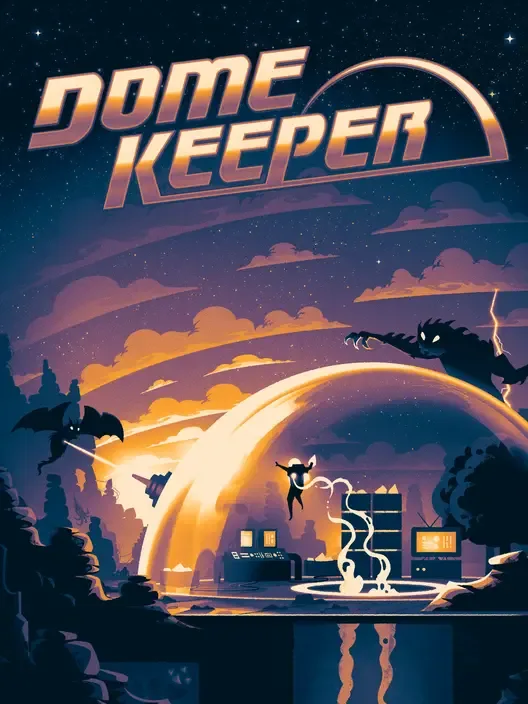
Bippinbits' September 2022 release, published by Raw Fury, structures its entire run around alternating between two sharply different modes: a mining phase where the player descends beneath the surface with a drill, carving tunnels to extract iron, water, and cobalt while managing a limited oxygen supply, and a defense phase where those same resources fund weapons and upgrades used to repel a wave of creatures attacking the single glass dome protecting the base. That dome is the whole game's stakes in miniature — there's exactly one structure to defend rather than a spread-out base, so every mining-phase decision about how deep to push before a wave hits is also implicitly a defense-readiness decision. Permanent upgrade purchases, spent on drill speed, movement mobility, and weapon systems, carry between waves, so a run's difficulty curve is really a race between the player's own power growth and the escalating creature waves. The default Relic Hunt mode adds a long-term goal — digging deep enough to find and extract an ancient relic — that gives an otherwise open-ended loop of mining and defending a concrete finish line. A co-op variant lets a second player split mining and defense duties simultaneously rather than switching between them solo. The honest drawback: a single successful run is relatively short, and the moment-to-moment loop, while tightly designed, offers comparatively little content variety once its central mining-versus-defense tension has been fully learned.
15. The Last Spell#
Ishtar Games' roguelite tactics game, developed in early access before its full 1.0 release in March 2023 and published by The Arcade Crew, splits every in-game day into two distinct phases that give it a genuinely hybrid identity: a daytime management phase for repairing walls, recruiting and equipping a squad of adventurers, and shopping for gear with resources earned the previous night, and a nighttime phase that plays out as full turn-based tactical combat defending the mages casting the game's titular spell. Each of the six playable classes has its own skill tree and equipment slots, and permadeath means a beloved, heavily invested hero lost on a bad night is gone for the rest of that run. Buildings and walls take real, persistent damage across nights that has to be actively repaired during the day phase, so the tower-defense half of the loop is really an attrition problem across an entire campaign rather than a per-level puzzle solved once. Enemy waves escalate night over night in both numbers and variety, forcing squad composition and positioning decisions to keep evolving rather than settling into one dominant formation. Meta-progression between runs, unlocked through resources banked across failed attempts, softens the roguelite's permadeath sting for returning players. The honest drawback: the genre-blending structure demands real competence at both turn-based tactical combat and longer-term resource management simultaneously, which makes the game a considerably steeper ask than a genre-pure tower defense title for players only looking for one half of that equation.
16. Defense Grid 2#
Hidden Path Entertainment's October 2014 sequel, published by 505 Games, expands the original's maze-and-core formula with nine distinctly roled tower types and a genuinely new competitive mode: Face-Off, explicitly inspired by Puzzle Fighter, pits two players against a shared enemy pool where killing an alien on one player's map spawns a stronger version on the opponent's, bouncing escalating threats back and forth until someone breaks. The returning orbital laser, a slow-charging superweapon that unleashes a massive area-effect burst once fully powered, remains a genuine strategic resource players have to time rather than a simple panic button. The power-core theft mechanic returns largely unchanged from the original — aliens that reach a core drag it back toward their spawn, and killing the carrier recovers it before it's lost — keeping the series' signature late-wave tension intact. Enemy variety expands meaningfully over the first game, including shielded units that protect nearby allies until their shield is stripped and stealth units that require dedicated detection towers to even target. Co-op campaign play lets two players split tower construction and upgrade decisions across the same maze in real time. The honest drawback: the core campaign doesn't meaningfully reinvent what the original Defense Grid already perfected, so most of the sequel's genuine novelty lives in Face-Off mode rather than the traditional single-player maps that make up the bulk of its content.
17. Infested Planet#
Rocket Bear Games' March 2014 release blends tower defense with direct real-time squad control: players command a squad of five marines directly across procedurally generated maps, while automated turrets and minefields built on already-captured territory handle the tower-defense half of holding ground the marines have already cleared. Enemy bugs mutate dynamically in response to player tactics on the harder difficulty tiers and the endgame level specifically — leaning hard on flamethrowers can provoke enemies that spawn with longer range or knockback resistance in response, turning the AI itself into a moving target rather than a fixed set of enemy types to memorize. Points earned by destroying hives and completing mission objectives fund new marine reinforcements, special weapon loadouts, and the turret and minefield defenses protecting captured ground, forcing a constant three-way spending decision between offense, defense, and squad size. Because every mission is procedurally generated rather than hand-built, no map's chokepoints or hive placements repeat exactly, which keeps the turret-placement puzzle from ever fully solving itself. The direct squad control gives the game an active combat layer well beyond what most tower defense titles ask of a player, closer to a light RTS with defensive structures layered on top than a pure tower defense game. The honest drawback: the procedural generation that keeps missions fresh also means map design is inherently less polished than a hand-crafted campaign, and the genre-blending focus on direct squad combat may frustrate players looking for a more traditional, placement-focused tower defense experience.
18. Defender's Quest: Valley of the Forgotten#
Level Up Labs' 2012 release, designed by Lars Doucet, replaces the genre's usual static towers with a heroes-as-towers system: instead of building permanent structures, players summon individual party members — six distinct hero classes, each recruitable multiple times to fill out a full defensive line — directly onto the map as living, repositionable units that can be pulled back and redeployed elsewhere mid-battle. Those heroes gain experience and level up through an RPG-style skill tree, spending points on stats, spells, and class-specific abilities rather than following a tower game's fixed two-branch upgrade path. Equipment, dropped and purchased between missions, adds a gear-optimization layer most tower defense games skip. The framing narrative, following librarian protagonist Azra through the Valley of the Forgotten after contracting a mysterious plague, gives the campaign an actual story throughline rather than a disconnected string of levels. Repositioning heroes mid-wave, pulling a wounded unit to safety while a fresh one fills the gap, makes active management a bigger part of the loop than in games where towers are placed once and left alone. The honest drawback: the RPG systems layered on top of the core loop mean build planning and stat allocation matter more than in most genre entries, which can feel like unwanted overhead for players who just want a straightforward wave-defense puzzle.
The ranking above updates automatically as Game Avant's combined critic-and-player score shifts, using the same IGDB-and-Steam blend and 50-review floor as the rest of the strategy category, so it reflects how these eighteen tower defense games are rated relative to each other right now rather than a fixed, permanent verdict. New releases and shifting review totals can move a game up or down the list without anyone hand-editing the order, so treat this as a live snapshot of where the genre's best defenses currently stand — check back as the data changes.