- Pick a Fighter, Cleric or Ranger for the simplest first run. They hit reliably, heal or shoot from range, and never ask you to track resources you do not understand yet.
- Play a custom character (a "Tav") rather than an origin companion for your first run if you want maximum freedom; play an origin character if you want a scripted personal story layered on top of the main plot.
- Advantage and Disadvantage decide more fights than raw damage does. Learn what grants each before learning any build.
- The tadpole choice is not cosmetic. Using its powers has consequences that ripple into Act 3, and the game never hides that a price is attached.
- Camp Supplies, not gold, are the real currency that limits how often you can Long Rest. Pick up every piece of food you see.
- Act 1 is roughly a third of the game by design; do not rush the Emerald Grove, the Underdark and the Blighted Village before moving on.
- Save before every dialogue with real stakes. Persuasion, Deception and combat checks in Baldur's Gate 3 can fail on a bad roll even when you did everything right.
What to know before you start#
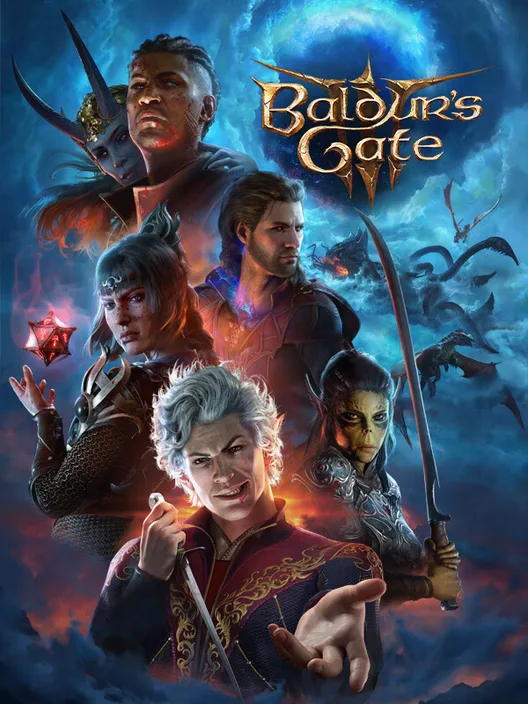
Baldur's Gate 3 is Larian Studios' role-playing game based on Dungeons & Dragons fifth edition rules, set in the Forgotten Realms. It entered Early Access on 6 October 2020, released in full for PC on 3 August 2023, followed by PlayStation 5 on 6 September 2023, macOS around 21 September 2023, and Xbox Series X|S on 7 December 2023. There is no Nintendo Switch or Switch 2 version: Larian confirmed in January 2026 that Wizards of the Coast, which owns the Baldur's Gate and D&D licence, did not approve a Switch 2 port the studio had wanted to make, so the game remains limited to PC, PlayStation 5 and Xbox Series X|S.
Patch 8, released on 15 April 2025, is described by Larian as the game's final major content patch. It added a new subclass for every one of the twelve classes, a photo mode, cross-play between all three platforms, split-screen support for Xbox Series S, and modding-toolkit updates. Since then the game has continued to receive hotfixes for bugs and balance, but no further story content is planned. There is no expansion or paid DLC: Larian has been open about moving on to new, unrelated projects and ending its arrangement with Wizards of the Coast rather than building a Baldur's Gate 3 add-on. Anything you read about the game holds up well across that whole timeline; the biggest practical changes for a new player are cross-play and the wider subclass selection.
The premise is simple to state and takes the whole game to resolve: you and your companions have been infected with mind flayer tadpoles that will eventually transform you into an Illithid, and the search for a cure runs straight through a conspiracy involving cultists, a goddess of murder, and three ancient brains. Everything else, the companions, the factions, the hundreds of side quests, sits on top of that spine.
Origin character or custom Tav: what actually changes#
When you start a new game you choose between playing one of six pre-made companions as your protagonist (an "origin character") or building your own from scratch. Fans call a custom protagonist "Tav," though that is not an official in-game name; the game itself just calls them your character.
The six origin companions are Astarion, Gale, Shadowheart, Wyll, Lae'zel and Karlach. Play one of them as your main character and you get a fixed race, a fixed backstory, unique dialogue options tied to that backstory, and a handful of scenes and outcomes nobody else can trigger, because you are living that companion's personal questline directly instead of watching it unfold as an ally. There is also a seventh, hidden origin: the Dark Urge, a custom character with a pre-written, dark past tied to a murder cult. The Dark Urge can only be played as your own created character, not as a companion, and it layers a second, disturbing plot on top of the main story with its own set of choices about whether to resist or embrace it.
A custom Tav gives you full control over race, class, subclass, appearance, and background, and lets you recruit all six origin companions as allies with their personal stories fully intact and voiced from the outside, which is how most players experience most of the origin content anyway, since your active party is capped at four. The downside is a thinner personal narrative for your own character, since a custom Tav's backstory is mostly whatever background you pick (Soldier, Sage, Criminal, and so on) rather than a scripted arc.
For a first run, a custom character is the easier and more common recommendation, mainly because it keeps all six companions available as allies rather than removing one of them from the roster. Playing an origin character is a legitimate and rewarding way to experience the game a second or third time, once you already know the wider plot and want a more personal lens on it.
Choosing a class for your first run#
Baldur's Gate 3 has twelve classes, each with three or more subclasses to choose from after Patch 8 added a new one to every class. None of them lock you out of the story, and multiclassing lets you mix two or three classes on one character later, but a first character does not need multiclassing at all.
| Class | Playstyle | Good for a first run? |
|---|---|---|
| Fighter | Reliable melee or ranged damage, extra actions, simple resource management | Yes. The most forgiving class in the game. |
| Cleric | Healing, buffs, some of the best support and control spells | Yes. Solves the "who heals the party" question by itself. |
| Ranger | Ranged or melee, an animal companion, decent spell list | Yes. Simple to play, strong from a distance. |
| Rogue | High single-target damage via Sneak Attack, best skill checks | Yes, if you like stealth and dialogue-heavy play. |
| Paladin | Melee with Smite spells and strong saving throws, oath-based roleplay | Yes, though the oath system asks you to think about your choices. |
| Barbarian | Simple, high-damage melee with Rage, very few buttons to track | Yes. Arguably the easiest class of all to play well. |
| Druid | Wild Shape into animals, strong control and nature spells | Moderate. Wild Shape forms are fun but limited in combat once transformed. |
| Bard | Support, buffs, some of the best social and skill-check bonuses in the game | Moderate. Rewarding for dialogue-focused players, less punchy in combat. |
| Monk | Unarmed and weapon strikes fuelled by Ki points, mobile melee | Moderate. Ki management takes a session or two to click. |
| Sorcerer | Flexible spellcasting fuelled by Sorcery Points, powerful but resource-heavy | Complex. Rewards careful spell-slot planning. |
| Wizard | The largest spell list in the game, learned from a spellbook | Complex. Extremely strong once you know which spells matter. |
| Warlock | Few spell slots that recharge on a Short Rest, unique Eldritch Invocations | Complex. Different resource logic from every other class, worth learning second. |
The recommendation, ranked for an easy first run
- Fighter is the simplest class to understand and one of the best in the game regardless of experience. Extra attacks, a Second Wind heal, and an Action Surge for burst damage cover most situations without asking you to memorise a spell list.
- Cleric solves healing on its own and comes with strong utility spells like Bless and Sanctuary. A Life Domain or War Domain Cleric can tank, heal and still contribute real damage.
- Ranger rewards positioning and ranged attacks, which is the safest way to fight while you are still learning enemy patterns, and the animal companion adds an extra body without extra complexity.
- Barbarian turns "hit the nearest thing very hard" into a complete strategy. Rage gives damage resistance and extra damage at the same time, which forgives a lot of mistakes.
- Paladin is nearly as sturdy as a Fighter with the added option of Smite spells that turn any hit into a big one, though tracking your Oath's tenets adds a light roleplay layer.
- Rogue is excellent once you understand Sneak Attack (it needs Advantage or an adjacent ally) and doubles as the best conversationalist and lockpick in the party.
- Druid, Bard, and Monk are all fully viable first classes but ask a little more from you: Wild Shape locks out your spells and gear while transformed, Bard's payoff is mostly social rather than combat, and Monk's Ki economy needs a few fights to understand.
- Sorcerer, Wizard, and Warlock are the strongest classes in experienced hands and completely fine as a first class if you enjoy planning, but they ask you to understand spell slots, concentration, and (for Warlocks) a completely separate resource system from day one.
A very common and effective approach is to build your own custom character as a simple class like Fighter or Cleric, then recruit companions who naturally fill in Wizard, Rogue and Cleric-style roles: Gale is a Wizard, Shadowheart starts as a Cleric, Astarion starts as a Rogue, and Wyll starts as a Warlock. That gives a first party a full toolkit without you personally needing to learn every system on day one.
The party, approval, and companions#
Your active party can hold up to four characters at a time, chosen from a much larger camp roster. Every companion, origin or not, has an approval meter that rises or falls based on what you say and do in front of them, including choices made without them in the active party in some cases. High approval unlocks personal story beats, romance where applicable, and better dialogue options; very low approval can end with a companion leaving or turning hostile. Companions do not need to be constantly babysat, but paying attention to reactions (a raised eyebrow icon appears when someone approves or disapproves of what you just did) is the easiest way to avoid an unpleasant surprise hours later.
Long Rests at camp are where most companion storylines actually progress, through conversations that trigger back at camp rather than out in the world. Resting often, rather than hoarding Camp Supplies for later, is usually the right call for both your party's health and your companions' stories.
Act structure and pacing#
The campaign is split into three acts of very different size and shape.
| Act | Setting | What it is for |
|---|---|---|
| Act 1 | The Sword Coast wilderness: the Ravaged Beach, the Emerald Grove, the Underdark, the Blighted Village, the Goblin Camp, and the Mountain Pass up to the Risen Road | The largest act by explorable space. Establishes the tadpole plot, most companions, and the game's core systems. |
| Act 2 | The Shadow-Cursed Lands around Last Light Inn and the ruined city of Moonrise | The shortest and most linear act, built around a single oppressive location and a ticking sense of dread. |
| Act 3 | The city of Baldur's Gate, its districts, sewers, and the Lower City | The largest act by quest density, with dozens of overlapping side stories, factions, and the game's endgame. |
Act 1 alone is often compared in scope to a complete smaller game, and it is meant to be explored slowly: most of the origin companions' early personal quests, the Underdark's own sprawling subplot, and several of the game's most memorable set-pieces (the Goblin Camp, the Absolute's cultists, the Druid Grove's central conflict) all live there. Rushing straight to the Mountain Pass skips a large fraction of what a first playthrough is for. Act 2 is intentionally tighter and more claustrophobic by design, a deliberate change of pace after Act 1's open sprawl. Act 3 opens back up dramatically and is where multiple earlier storylines, faction reputations, and companion arcs converge, so decisions made in Acts 1 and 2 tend to resurface here.
Key early decisions that matter#
Baldur's Gate 3 tracks consequences across the whole campaign, and a handful of Act 1 decisions are worth understanding before you make them, not because there is a single "correct" answer, but because each one closes some doors while opening others.
- The Druid Grove conflict. The grove sheltering refugees is under threat from a goblin warband, and the situation can be resolved by siding with the grove, siding with the goblins, or finding a way to remove the immediate threat first. This affects which companions and camp NPCs remain available and colours the entire tone of the rest of Act 1.
- What you do with your tadpole powers. Certain abilities gained from the parasite are more effective than ordinary spells early on, but using them draws you further along a path other characters react to, and some companions notice and comment on it directly.
- Companion personal choices. Several companions present a defining choice tied to their backstory in Act 1 or early Act 2 that shapes their arc for the rest of the game; these are usually optional and easy to stumble into without realising their weight, so a slower pace through dialogue pays off.
- Whether and how you deal with the tieflings and refugees. Their fate is tied to the grove conflict above and has downstream effects on later characters and quests that reference what happened to them.
- Recruiting or opposing certain Act 1 figures. A few companions and allies can only be recruited if you make specific choices earlier in the same act, and missing the window sometimes closes it permanently for that playthrough.
None of these need to be agonised over on a first playthrough. Baldur's Gate 3 is built to be replayed, and the game is explicit through its dialogue and its world reactions when a choice is a significant one.
Core mechanics: combat, Advantage, and the tadpole#
Turn-based combat
Combat is fully turn-based, following Dungeons & Dragons fifth edition rules: initiative is rolled at the start of an encounter, and every combatant acts in that order, without the real-time exploration pause-and-plan style of some other RPGs. On your turn you generally get one Action, one Bonus Action, one Reaction (usable on other characters' turns), and movement based on your speed. Actions cover attacks and most spells; Bonus Actions cover a smaller pool of faster spells and abilities; Reactions trigger automatically for things like opportunity attacks when an enemy walks away from you.
Advantage and Disadvantage
Nearly every roll in the game, attacks, skill checks and saving throws, is a d20 roll plus modifiers. Advantage means rolling two d20s and taking the higher result; Disadvantage means rolling two and taking the lower. If a situation grants both at once, they cancel out and you roll a single d20. Common ways to gain Advantage include attacking a target that cannot see you (from stealth or invisibility), attacking a target that has an ally standing within roughly 1.5 metres of it, or using specific spells and abilities such as Faerie Fire or Hold Person that impose Advantage against the affected target for everyone. High ground does not grant Advantage in the released game; instead it gives ranged attacks a flat accuracy bonus and extended range, a system Larian changed from an earlier version during development. Understanding what grants Advantage matters more to winning fights consistently than almost any other single mechanic in the game.
The Illithid tadpole choice
The parasite growing in your skull is both the plot's engine and a genuine gameplay decision. As the story advances you gain access to tadpole-derived abilities that range from minor utility to powerful combat options, and using them, along with certain story choices, pushes your character further toward embracing the parasite rather than resisting it. The game does not hide that there is a cost: characters comment on visible changes, certain companions react strongly to how far you have gone, and the path you choose meaningfully affects which endings and late-game options are open to you. There is no need to avoid every tadpole power on principle, since some are genuinely useful and low-stakes, but a first-time player should know that this is a real branching system with real consequences reaching into Act 3, not a set of free bonus abilities.
Long Rest, Short Rest, and Camp Supplies
A Short Rest can be taken almost anywhere out of combat, restores about half of each character's maximum hit points, and refreshes abilities that recharge "per Short Rest," at a cap of two Short Rests between Long Rests under normal rules (Bards have ways to extend this). It costs no resources.
A Long Rest fully heals the party, restores all spell slots, resets Short Rest charges, and is usually the trigger for camp conversations that advance companion stories, but it costs Camp Supplies, 40 units on Balanced difficulty (more on Tactician, Honour Mode or a stricter Custom setting). Camp Supplies come from food and drink items found throughout the world; every edible item in your inventory counts toward the total, and a single Supply Kit is worth 40 on its own, enough for one Long Rest by itself. Running low on supplies limits you to a partial rest that does not fully restore hit points or spells, so picking up food while exploring, rather than selling it, is worth doing on a first run even though it looks like clutter.
Commonly missed content new players regret skipping#
- The Underdark. A large, fully separate region reachable from Act 1 that many players miss because nothing forces them into it. It holds unique companions, quests and some of the game's best equipment, and skipping it removes a meaningful slice of Act 1's content.
- Withers and his services. A skeletal figure found early who sells character respecs and custom hireling recruits; new players sometimes never find him and then feel locked into a build they regret.
- Talking to companions after major story beats, not just at the start. New dialogue frequently unlocks after specific quests or Long Rests, and it is easy to walk past a companion at camp without realising they have something new to say.
- The full extent of Act 1's side content before leaving for the Mountain Pass. Because the main path forward is always visible, it is easy to push ahead before finishing Act 1's grove-related quests, the Blighted Village, and the goblin storyline, several of which become harder or impossible to complete once you move on.
- Non-lethal and stealth options in dialogue and combat. Many fights and confrontations can be resolved without killing everyone involved, sometimes with better long-term outcomes, and the option is easy to miss if you always default to combat.
- Camp conversations after Long Rests. These are frequently the only place a companion's next chapter becomes available, and skipping straight past a rest prompt to explore further can cause you to miss story content permanently for that run.
Frequently asked questions#
How long does Baldur's Gate 3 take to finish? A single main-path playthrough runs well over 50 hours for most players, and a thorough playthrough exploring side content commonly runs past 100 hours, largely because Act 1 alone is comparable in size to many full games.
Should I play a custom character or an origin companion first? A custom character is the more common first choice because it keeps all six companions available as recruitable allies. Origin characters are best saved for a second playthrough once you already know the wider story.
What is the Dark Urge? A hidden seventh origin available only to a custom-built character, with a pre-written, dark personal backstory involving a murder cult that runs alongside the main plot and offers its own choices about resisting or embracing it.
Do I need to know Dungeons & Dragons rules to play? No. The game teaches its core systems, turns, Actions, Advantage and so on, through tutorial prompts and context menus as you encounter them, and the tabletop rules translate cleanly to what you see on screen.
Is there co-op or multiplayer? Yes, up to four players can play together online or in local split-screen, with cross-play between PC, PlayStation 5 and Xbox Series X|S added in Patch 8. Each player controls their own character or a companion.
What difficulty should a new player choose? Balanced, the default setting. Explorer is available if you want an easier ride focused on story, and Tactician or Honour Mode are better attempted once you already understand the combat systems.
Is Baldur's Gate 3 coming to Nintendo Switch 2? No. Larian confirmed in January 2026 that Wizards of the Coast did not approve a Switch 2 port, so the game remains on PC, PlayStation 5 and Xbox Series X|S only.
Is there DLC or an expansion planned? No. Patch 8, from April 2025, is the last major content update, and Larian has said it is moving on to other projects rather than building paid add-on content for the game.