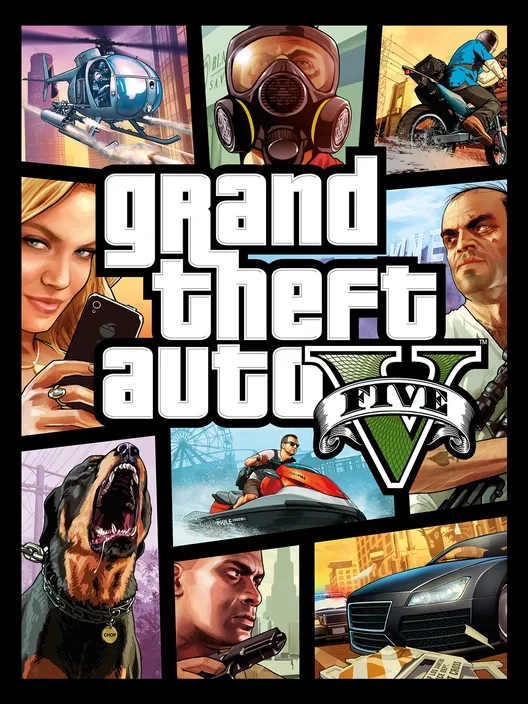
- Grand Theft Auto V has three playable protagonists, and switching between them mid-mission, not just between missions, is the game's core trick. Learn it early.
- Heists pay out based on the crew you hire and the approach you choose, and the payout differs by which protagonist gets which cut. Read the setup missions properly.
- The in-game stock market runs on two exchanges, LCN and BAWSAQ. LCN works completely offline and is where the money actually is; a handful of story missions move it directly.
- Grand Theft Auto Online is a separate, still-updated live game bolted onto the same disc or download, not an extension of the story campaign. Treat it as a second purchase decision.
- Strangers and Freaks missions, random events and property investment are all easy to walk past without ever seeing a marker for them. None of it is required for the credits to roll.
- The story campaign alone runs 30 to 35 hours; getting closer to 100% completion, hobbies and all three characters' side content pushes well past 60.
- If you only have time for one version, the PS5/Xbox Series X|S "Expanded and Enhanced" release from March 2022 is the one to buy today; the story and the open world are otherwise identical to 2013's original release.
What Grand Theft Auto V actually is#
Grand Theft Auto V is Rockstar Games' open-world crime game, originally released on 17 September 2013 for PlayStation 3 and Xbox 360. A rebuilt version followed on PlayStation 4 and Xbox One on 18 November 2014, and a PC version arrived on 14 April 2015 with the highest-resolution textures, denser traffic and the first-person camera mode that the older consoles never got. The most recent overhaul, marketed as the "Expanded and Enhanced" edition, launched on PlayStation 5 and Xbox Series X|S on 15 March 2022, adding ray tracing, faster load times, a 60 frames-per-second target and platform-specific extras. Under the hood it is still the same game released in 2013: the map, the story, the missions and the characters have not changed, only how the game looks and loads.
That continuity matters for a new player because almost everything written about GTA V since 2013 is still accurate. A twelve-year-old forum post about a mission or a heist strategy still describes the same mission running on current hardware. The one thing that has changed dramatically in that time is Grand Theft Auto Online, the separate multiplayer game bundled with every version, which is covered on its own further down.
The story follows three player characters whose lives intersect in Los Santos and Blaine County, a fictional stand-in for Los Angeles and Southern California: Michael De Santa, a retired bank robber living an unhappy life in witness protection; Franklin Clinton, a repo man and small-time hustler trying to get out of the street-level end of crime; and Trevor Philips, Michael's former partner, a violent, unpredictable drug and arms dealer running an operation out of the desert. The campaign takes most players 30 to 35 hours to finish on a straightforward run through the main missions, and considerably longer if you stop for side content along the way.
Three protagonists, one game: how switching works#
The single biggest structural difference between GTA V and every earlier game in the series is that you are not controlling one character with a rotating cast of allies. You are controlling three fully playable characters, and you can switch between them almost any time you are free-roaming the world, using a simple character-select wheel. The switch is not a menu that pauses the game and reloads a save; the camera pulls up and away from whichever character you are leaving, drifts across the map, and drops back down into the new character's life exactly where that character currently is, doing whatever the game decided they'd be doing.
That last part is the detail new players miss. Each protagonist keeps living their own life while you are playing as someone else. Franklin might be walking his dog, Trevor might be flying a plane, Michael might be in the middle of an argument with his family, entirely independent of whatever you were just doing. Switching characters is how the game reveals a huge amount of incidental, unscripted texture, and it is also how you access each character's unique skills, garage, phone contacts and side missions.
| Protagonist | Background | Special ability | Best used for |
|---|---|---|---|
| Michael De Santa | Retired professional bank robber, family man, deeply unhappy | Slows time during gunfights (a limited "bullet time" style aim assist) | Precision shooting sections, chaotic firefights with lots of targets |
| Franklin Clinton | Repossession agent and street hustler with a getaway-driving instinct | Slows time while driving, letting you steer through impossible gaps | High-speed chases, tight cornering, evading the police at speed |
| Trevor Philips | Unstable arms and drug dealer, former military pilot | Deals more damage and takes less in return while enraged | Head-on assaults, situations where subtlety has already failed |
You unlock Trevor a few hours into the story, once the plot introduces him properly; until then you switch only between Michael and Franklin. All three abilities recharge from a meter that fills as you perform actions the character would enjoy (Franklin driving well, Michael landing headshots, Trevor causing chaos), and once it's full, holding down the ability button activates it for a limited window.
Switching also matters for basic quality of life. Money is not shared between the three: each protagonist has their own bank balance, and large story-mode purchases (properties, weapons stored per-character, some vehicles) are tied to whichever character bought them. Before buying something expensive, check which character actually needs it.
Heists: why the three protagonists exist#
The three-character structure is not just a novelty; it is what heist missions are built around. From partway through the story onward, a handful of major missions are structured as full heists: a setup phase where you choose an approach (usually a loud, aggressive option and a quiet, careful one), a phase where you hire a crew for that job, and the heist itself, which you play out switching between characters as different roles come up mid-mission.
A heist crew is made up of specialists you recruit and, in most cases, pay a percentage cut of the take: a hacker, a gunman, and sometimes a driver. Multiple candidates are available for each role once you unlock them, each with a different skill level and a different cut. A cheap, low-skill hacker might botch an alarm and turn a quiet approach loud; an expensive, highly skilled one rarely fails but eats into the final payout. The trade-off is deliberate, and it is one of the few places in the campaign where money spent up front visibly changes how a mission plays out.
The payout itself is split between the crew's cut and the three protagonists', and the story assigns each protagonist a different percentage depending on the heist and the approach chosen. This is the reason to actually read the heist setup screens rather than clicking through them: choosing the loud approach for one heist and the quiet approach for another can noticeably change which character walks away with more money, which in turn affects how much each of them has to invest once the stock market opens up (see below).
| Heist element | What it does | Beginner tip |
|---|---|---|
| Approach (loud/smart) | Changes required setup missions and available crew roles | The smart/quiet approach usually needs more prep missions but reduces risk during the heist itself |
| Crew hiring | Recruits a hacker, gunman and/or driver for a percentage cut | A mid-tier crew member is usually the best value; the cheapest options fail often enough to cost you more than they save |
| Character switching mid-heist | Lets you play different roles (getaway driver, lookout, gunman) as the plan unfolds | Pay attention to on-screen prompts telling you who to switch to and when |
| Payout split | Divides the take between crew and the three protagonists by percentage | The split differs by heist and approach; it's worth checking before committing to one |
The stock market: LCN, BAWSAQ and how missions move it#
Grand Theft Auto V has a functioning in-game stock market, split across two exchanges: the Bawsaq (BAWSAQ), a global market whose prices move based on other players' activity and requires an active connection to Rockstar's Social Club service, and the Los Santos and Liberty City National Exchange (LCN), a fully offline market whose prices move only in response to in-game events and story progress.
For a beginner, that distinction is the whole guide: LCN works every time, in every session, with no dependency on outside servers, and it is the exchange several story missions are specifically designed to manipulate. BAWSAQ, being tied to a live online service the game has depended on for over a decade, is not something to build a strategy around; treat any BAWSAQ gains as a bonus rather than a plan.
The clearest example is Franklin's line of assassination missions, unlocked through his associate Lester partway through the story. Each of these missions targets a company whose stock is about to move sharply, and the trick is to invest in the right competing or associated company before carrying out the mission and sell once the story event causes the price to spike. Doing all of them correctly, and reinvesting the proceeds each time rather than spending them, is the single most reliable way to become extremely wealthy in single-player without touching GTA Online, and it also finances the more expensive heist crews described above. Money earned this way is Franklin's individually, so plan around that if you're hoping to fund a specific character's future purchases.
Property and business investment#
Beyond stocks, all three protagonists can put money into physical property once it becomes available: garages for storing extra vehicles, and businesses that generate a passive income once purchased, ranging from small operations like a taxi company to larger ones like a golf course or a film studio. None of this is required to finish the story, which is exactly why it's easy to skip entirely on a first playthrough.
A few points worth knowing before ignoring it completely: each business is bought once and then pays out on its own schedule without further input, which makes them a low-effort way to keep money flowing while you focus on missions; garages are the only way to permanently store vehicles you'd otherwise lose the moment you get in a fight or the police notice you; and several of the better properties are locked behind completing that character's related side content first, which is one more reason the Strangers and Freaks missions below are worth doing rather than skipping.
The side content most players never see#
Because the story never requires it and the map gives no persistent checklist, a large amount of Grand Theft Auto V's content is genuinely easy to finish the game without ever encountering.
Strangers and Freaks are a set of substantial side-mission chains, each tied to a specific oddball character found somewhere on the map, marked by a distinct icon that appears only once you get close enough or meet a story-progress requirement. They range from short, self-contained jobs to multi-part arcs that pay off much later in the game, and several of the more memorable character moments in GTA V live entirely inside these chains rather than the main story.
Random events are unscripted-looking encounters scattered across the map: a car crash you can intervene in, a robbery in progress, a hitchhiker who needs a ride. They trigger only if you happen to be nearby, they don't reappear if ignored for long, and most give a small reward in cash, weapons or reputation for getting involved. They're the fastest way to make the open world feel alive, and also the easiest thing to drive straight past without noticing.
Hobbies and pastimes include activities like golf, tennis, darts, the shooting range, yoga and street races, most of which are introduced through a specific character's phone contacts or a Stranger mission rather than being obviously signposted from the start.
None of this content is required to finish the story or to unlock GTA Online. It is required, however, for anyone chasing 100% completion, and it's where a large share of the game's better writing and best character moments actually sit, precisely because it wasn't written to fit into a straight-line campaign.
What GTA Online actually is#
Grand Theft Auto Online is a separate, persistent multiplayer game that shares the same map, engine and general aesthetic as the story campaign but has its own character, its own economy and its own decade-plus history of content updates layered on top. It launched shortly after the original 2013 release and has continued receiving new updates every year since, including major additions well into the PS5/Xbox Series X|S era. As of late 2026, GTA Online continues to receive regular weekly content and ongoing support from Rockstar, and Take-Two has publicly stated the game will keep receiving updates even after Grand Theft Auto VI releases.
This guide deliberately does not cover GTA Online's businesses, heists, vehicles or economy in depth; that's a large enough system to need its own guide. What matters for a new player deciding where to spend time is simpler: GTA Online is not an extension of the story you just read about above. Your story-mode characters, money and progress do not carry over into it. It has its own protagonist you create from scratch, its own separate progression, and, after more than a decade of updates, an economy and a content library that a brand-new player is joining a very long way behind everyone else.
Is it worth starting fresh in 2026? If the appeal is playing with friends, doing structured heists and jobs as a crew, and treating it as a long-term game you'll keep returning to, yes; it's still actively played, still actively updated, and Rockstar has committed to supporting it past the launch of the next mainline game. If the appeal was mainly the single-player story, characters and world, the story campaign covered in the rest of this guide delivers that on its own and needs none of GTA Online's grind or live-service structure to be worth playing.
Platforms and which version to buy#
| Version | Released | What you get |
|---|---|---|
| PlayStation 3 / Xbox 360 | September 2013 | The original release; no longer the recommended way to play |
| PlayStation 4 / Xbox One | November 2014 | Higher resolution, denser traffic and pedestrians, first-person mode added |
| PC | April 2015 | Highest available resolution and settings, mod support, first-person mode |
| PlayStation 5 / Xbox Series X|S ("Expanded and Enhanced") | March 2022 | Ray tracing, faster loading, up to 60 fps, HDR, platform-specific extras |
The story, missions, map and characters are identical across every version; the differences are entirely visual and technical. If you're buying today and have the choice, the PS5/Xbox Series X|S version gives the smoothest experience with no trade-offs; PC remains the most flexible option if you want mod support on top of the base game.
Frequently asked questions#
Do I have to play GTA Online to finish the story? No. The single-player campaign and GTA Online are separate games that happen to share a disc, a download and a map. You can finish the entire story and every piece of its side content without ever opening GTA Online.
Which protagonist should I play as most? The story controls this for you at first, alternating between Michael and Franklin before introducing Trevor. Once all three are unlocked, you're free to switch as often as you like outside of missions; there's no benefit to sticking with one over the others.
Is the stock market worth bothering with? Yes, specifically the LCN exchange and specifically around Franklin's Lester-assigned assassination missions. It's the most reliable way to build serious in-game wealth in single-player, and it works completely offline.
What happens if you ignore Strangers and Freaks missions? Nothing breaks. You can finish the story without touching any of them. You will, however, miss some of the game's best character writing and a chunk of the content needed for 100% completion.
Is GTA Online worth starting in 2026? Only if you want a long-term multiplayer game to keep coming back to with friends; it's still actively updated and Rockstar has said support continues even after Grand Theft Auto VI. If you only want the single-player story, you don't need it at all.
How long does the story take? Around 30 to 35 hours for the main missions alone. Add Strangers and Freaks, hobbies, property investment and full stock-market play, and it's easily 60-plus hours before you're near 100%.
Which version should I buy in 2026? The PlayStation 5 or Xbox Series X|S "Expanded and Enhanced" version if you own that hardware; it's the same game with the smoothest performance and fastest loading of any release.