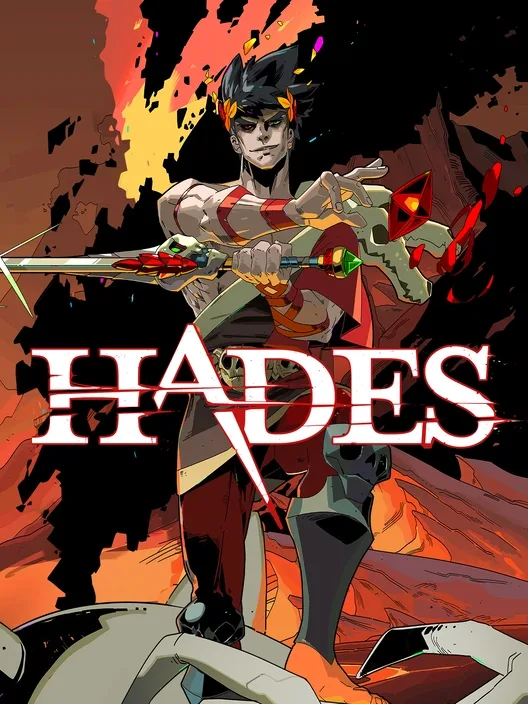
- Dying is not a loss condition, it is the game's structure. Every failed escape moves the story and the meta-progression forward, so a run that ends at the second region still paid for itself.
- The Stygian Blade, the starting sword, is the most forgiving Infernal Arm. Learn the loop on it before switching weapons.
- A Boon build is made of a small number of gods that combine well together, not the strongest Boon offered in each room. Committing to two or three gods produces stronger runs than collecting one of everything.
- Duo Boons need two gods' Boons active on the same slot type and unlock some of the strongest effects in the game; the codex tells you which pairs exist once you have met the requirement once.
- The Mirror of Night, unlocked early in the House of Hades, spends Darkness on permanent upgrades. A few keystone abilities matter far more than spreading points thin.
- Chthonic Keys unlock additional Infernal Arms and additional Mirror slots. Save a few instead of spending every key on the first thing offered.
- Pact of Punishment (Heat) is the difficulty slider for players who have already escaped once. It is optional, it stacks, and higher Heat pays out in Darkness, Titan Blood and rarer Keepsakes.
- Hades II is a separate, already fully released game with its own systems; this guide only covers the original Hades.
What Hades actually is#
Hades is Supergiant Games' action roguelike, first released into early access in December 2018 and launched as a full 1.0 game on 17 September 2020 for Windows, macOS and Nintendo Switch. A PlayStation 4, PlayStation 5, Xbox One and Xbox Series X|S release followed on 13 August 2021, along with an Xbox Game Pass listing. It won a large number of Game of the Year awards in 2020, including from several major outlets, and it remains one of the clearest entry points into the roguelike genre for players who have never finished one before.
The premise is simple to state and rich to play: Zagreus, son of Hades, wants to leave the Underworld. His father disagrees. Each attempt sends Zagreus through a sequence of procedurally arranged chambers across four regions, fighting his way toward the surface, and each attempt ends the same way regardless of outcome: he dies, or he is dragged back, and either way he returns to the House of Hades to try again. This is not a punishment mechanic bolted onto a normal game. It is the entire structure. The relationships with the cast, the story beats, the weapon unlocks and the permanent upgrades all only exist because Zagreus keeps failing and keeps trying again. A player who treats an early death as a disaster is playing against the game's own design; a player who treats it as one more conversation unlocked and one more resource banked is playing it correctly.
There is no difficulty setting in the traditional sense at the start, but there is also no punishing skill floor. The base game, before any optional modifiers, is built to be beatable by a first-time roguelike player within a reasonable number of attempts, and the systems below exist specifically to smooth that curve further.
The loop, region by region#
Each run moves through four regions in a fixed order, and each region ends with a boss fight that gates progress to the next.
| Region | What it looks like | Boss(es) |
|---|---|---|
| Tartarus | The starting region, red and industrial, with the widest variety of common enemies | The Bone Hydra (occasionally) |
| Asphodel | A burning, lava-filled region with the game's first serious damage checks | Megaera, one of the Furies, and later Alecto and Tisiphone in a joint fight |
| Elysium | A bright, marble region with the toughest regular enemies of the base four regions | Theseus and the Minotaur Asterius together |
| Styx (Temple of Styx) | A short, tense final stretch through the god of the dead's own halls | Hades himself |
A run is built room by room inside each region. Clearing a room's enemies rewards a choice: usually a Boon, sometimes a Centaur Heart for extra maximum health, a Chthonic Key, a bag of gold (Obols), a Daedalus Hammer that upgrades the current weapon's moveset for the rest of the run, or a Pom of Power that upgrades an existing Boon. The map branches, so a run is also a series of small decisions about which reward is worth the detour. There is no way to see the far side of a branch before choosing it, which is intentional: reading the icons above each door and understanding what each reward generally offers is the actual skill being tested outside of combat.
Dashing (a short dodge with brief invulnerability), the standard attack, a special attack unique to each weapon, a Cast (a ranged secondary attack, usually Nyx's Shadow), and a Call (a screen-clearing assist from one of the eight Olympians the player has bonded with) make up the full combat kit from the very first run. Nothing about the controls is unlocked gradually; what is unlocked gradually is power.
Infernal Arms: the six weapons compared#
Every weapon is unlocked from the start of a run once its Chthonic Key cost has been paid at the Mirror of Night room, and each weapon can carry any Boon, so the decision is about feel and about which basic attack pattern is easiest to build around, not about which one is objectively strongest.
| Weapon | Name | Basic feel | Best for |
|---|---|---|---|
| Stygian Blade | Sword | Fast, medium-range slashes, a spinning special that hits all around | Learning the game's core dodge-and-punish rhythm |
| Eternal Spear | Spear | Long reach, a special that can be thrown and recalled | Keeping distance and hitting groups in a line |
| Shield of Chaos | Shield | A dash-attack that doubles as an extra dodge, a throw-and-return special | Players who want a defensive, low-risk playstyle |
| Heart-Seeking Bow | Bow | Ranged basic attack, a charged special shot | Precise, high-damage single-target play from range |
| Twin Fists | Fists | Very fast basic combo, a dash-punch special that closes distance | Aggressive players comfortable staying in melee range constantly |
| Adamant Rail | Rail (gun) | A ranged basic shot, a special that arcs like a grenade | Players who want to kite while still dealing consistent damage |
Each weapon also has four Aspects, alternate forms unlocked with Titan Blood that change its stats and sometimes its whole moveset (the Stygian Blade's Aspect of Arthur, for example, turns it into a slow, powerful greatsword). Aspects are entirely optional for a first clear and worth exploring only once a weapon already feels comfortable in its base form.
The recommendation, ranked for a first run
- Stygian Blade is the intended starting weapon and the best teacher. Its range and speed forgive misreads better than the fists or the bow, and its special attack, a spinning strike, clears the small groups that cause most early deaths.
- Shield of Chaos is the safest second pick. The bull-rush basic attack acts as a second dodge with a hitbox attached, which means a player can often avoid damage and deal damage in the same motion. It rewards a cautious, patient playstyle.
- Eternal Spear rewards players who already understand spacing. Its reach keeps most enemies from ever reaching melee range, and its special can be thrown into a crowd and pulled back through it for a second hit.
- Heart-Seeking Bow is the most technical starting weapon. It deals excellent damage from a distance, but its basic attack has almost no answer once an enemy is standing next to Zagreus, so it punishes poor positioning harder than the others.
- Twin Fists is the aggressive pick. It has the fastest attack speed in the game and closes distance instantly, but it also puts the player in the most dangerous range constantly, which is unforgiving for someone still learning enemy attack patterns.
- Adamant Rail rewards players who like managing cooldowns and positioning rather than reflexes. Its grenade-arc special is powerful against groups and bosses alike, but its basic shot has a noticeable pause between bursts that a beginner will misjudge.
The Boon system: how the run's power is actually built#
Boons are gifts from the Olympian gods, offered as room rewards and at Charon's shops. Each Boon upgrades one of Zagreus's four active abilities (Attack, Special, Cast or Dash) or, for a smaller set of Boons, a passive effect. Eight gods offer combat Boons during a normal run, plus Chaos, whose Boons are a trade-off: a temporary debuff followed by a reward once a set number of rooms passes.
| God | Domain | What their Boons tend to do |
|---|---|---|
| Zeus | Lightning | Chain-lightning effects that strike multiple enemies at once |
| Poseidon | The sea | Knockback and high raw damage, good against single tough targets |
| Athena | Deflection | Turns incoming projectiles into damage against enemies, and grants brief invulnerability windows |
| Aphrodite | Weakness | Reduces enemy damage output rather than dealing damage itself, which stacks well with a slower playstyle |
| Ares | Blood, curses | Damage-over-time curses that detonate for large hits |
| Artemis | The hunt | Critical hit chance and critical damage, rewarding a build already dealing consistent hits |
| Dionysus | Wine, ecstasy | A damage-over-time effect that also heals Zagreus when enemies afflicted by it are hit again |
| Demeter | Winter | Slows and chills enemies, and adds cold damage that punishes grouped enemies |
| Hermes | Speed | Movement speed, attack speed and other utility effects, never a damage-dealing Boon on its own |
| Chaos | Chaos itself | A temporary debuff in exchange for a Boon once a handful of rooms pass, found behind Chaos Gates |
The building block above single Boons is the Duo Boon: two gods each need a Boon active on the matching slot (for example, both a Zeus Attack Boon and a Poseidon Special Boon), and once both conditions are met, that pairing can appear as its own, much stronger reward. Duo Boons are how a run turns from "a pile of separate upgrades" into "a build," and the game's own Codex, unlocked the first time a Duo Boon condition is met, lists every pairing once discovered. A beginner does not need to memorize the full list; committing early to two gods whose domains complement each other (Zeus and Poseidon for area damage, Ares and Dionysus for damage-over-time stacking, Athena and Aphrodite for a defensive, damage-mitigation run) and taking their Boons whenever offered gets a Duo Boon naturally within a normal run.
Legendary Boons, the rarest tier, are single, very powerful effects tied to one specific god each and unlocked partway through a run's progress; they are worth taking on sight even if they do not fit the current build, because their raw power usually outweighs synergy.
Meta-progression: Mirror of Night and Chthonic Keys#
Everything above resets at the start of each run. What carries over between runs is the meta-progression, and its two central systems sit in the House of Hades.
The Mirror of Night sits in Zagreus's bedroom, a gift from his stepmother Nyx. Reflecting at the Mirror spends Darkness, gathered from every run's rooms and boss kills, on permanent passive abilities: more starting health, a chance for a free Cast, better base damage, and several keystone abilities that unlock entirely new mechanics rather than small stat bumps. Two Mirror abilities sit on either side of every other choice and are pinned in place until a permanent Mirror slot is unlocked with Chthonic Keys, which is why keys spent on unlocking Mirror slots pay off more than keys spent on the first Infernal Arm offered.
Chthonic Keys are found as room rewards, bought from Charon, and given by a handful of NPCs and side systems. They unlock additional Infernal Arms beyond the Stygian Blade, and they unlock additional Mirror of Night slots so more than one ability from each side of the Mirror can be active at once. A beginner should spend the first several keys on Mirror slots rather than rushing to unlock every weapon, since a stronger core build across all weapons matters more early on than access to a sixth option.
Two smaller currencies matter for the same reason. Titan Blood, dropped rarely by bosses and their tougher variants, unlocks weapon Aspects. Diamonds, found later in runs, buy cosmetic and House-decoration items from the Wretched Broker and do not affect combat at all, so they are safe to ignore for anyone focused on getting stronger.
When the base game gets too easy: Pact of Punishment#
After the first successful escape, the Mirror room area also offers the Pact of Punishment, a menu of Heat modifiers that can be turned on individually and stacked. Each modifier makes the run harder in a specific way, from tougher enemies to a ticking damage-over-time on Zagreus himself, and the total Heat level from all active modifiers determines the size of the bonus rewards at the end of a successful run: more Darkness, more Titan Blood, more Chthonic Keys and a chance at rarer Keepsakes.
Heat is entirely optional, can be adjusted before every single run, and does not need to be raised all at once. A sensible way to introduce it is to turn on one or two low-cost modifiers that change enemy behaviour without adding a hard fail condition (extra enemies, faster enemies), get comfortable, then add modifiers that punish mistakes more severely (a damage-over-time on Zagreus, tougher bosses) once the run consistently reaches Elysium or further. High-Heat runs are also how most of the rarest cosmetic Keepsakes and weapon Aspects become realistically farmable, since their rates or specific unlock conditions often sit behind a minimum Heat level.
Commonly missed content#
The map, the currencies and the boss fights are hard to miss entirely, but a first-time player skips a surprising amount of the game's actual content without realizing it.
- Talking to everyone, every visit. The House of Hades cast, Nyx, Achilles, Dusa, Hypnos, Cerberus, Megaera and many more, has new dialogue after most runs, whether the run succeeded or not. Skipping the House on the way back to the next run is the single most common way to miss story content.
- Gifting Nectar. Nectar, found as a room reward or bought from Charon, given to a House character or an Olympian for the first time unlocks a unique Keepsake from that character and raises Rapport with them. Ambrosia, a rarer version found later, deepens the relationship further and is required to reach a Forged Bond with several characters.
- Petting Cerberus. The three-headed dog guarding the House has an interactable pet prompt, easy to miss if a player rushes past him toward the next run, and building a Forged Bond with him is part of the game's longer relationship content.
- The Fated List of Minor Prophecies. Available from the Fated List panel near the House entrance, these are small side objectives (specific weapon kills, specific Boon combinations, reaching certain milestones) that reward Chthonic Keys, Diamonds and other resources for goals a player might otherwise complete by accident and never claim.
- The secret, longer ending. The credits after the first successful escape are not the end of the story. Reaching the fuller epilogue requires raising Rapport with a majority of the eight Olympian gods (given through Nectar and Ambrosia gifts across many runs), hearing specific story dialogue with Demeter and Zeus about Persephone that unlocks gradually across further successful escapes, and eventually a family dinner sequence that only becomes available once those relationship and story conditions are met. None of this is missable in the sense of being lockable out permanently, since Rapport and story flags only move forward, but a player who stops playing right after the first escape will never see it.
- The Codex. Found in the House, it fills in automatically as gods, enemies, weapons and Boon combinations are discovered, and it is the fastest way to check which Duo Boon pairings exist without guessing.
Hades and Hades II are two different games#
Hades II is Supergiant Games' sequel, not an expansion of the original. It follows Melinoë, Zagreus's sister, and is built around a largely new set of systems: a witch-craft-themed meta-progression centred on the Crossroads hub, its own cast of gods and Boons drawn from an overlapping but distinct pantheon, animal familiars that fight alongside Melinoë, and a different set of regions and bosses. It entered early access on Steam and the Epic Games Store on 6 May 2024, reached its full 1.0 release on 25 September 2025, and later arrived on PlayStation 5 and Xbox as well as Game Pass in 2026, alongside Nintendo Switch and Switch 2 versions. Since its full launch it is a complete, standalone game, not an in-progress early-access title, and it continues to receive content updates the way any live game does. This guide covers only the original Hades; none of its systems, Boons, Infernal Arms or characters carry over into Hades II, and none of Hades II's mechanics apply here.
Frequently asked questions#
How long does it take to finish Hades? A first successful escape usually takes somewhere between fifteen and thirty attempted runs for a new player, spread across roughly twenty to thirty hours, though this varies enormously with how much time is spent exploring dialogue and side systems along the way. Reaching the fuller epilogue takes many additional runs after that first escape.
Is Hades hard for someone who has never played a roguelike? It is one of the more approachable roguelikes by design. Death never resets the meta-progression, the Mirror of Night makes each run measurably easier than the last, and the game keeps offering help (Boons, Daedalus Hammers, extra health) at a pace built for a first-time player.
Do I need to finish runs in a specific order? The four regions always appear in the same order within a run (Tartarus, Asphodel, Elysium, then the Temple of Styx), but which rooms are chosen inside each region, and which weapon and Boons are used, are entirely up to the player each time.
Does dying lose my progress? Combat progress within that single run is lost, but Darkness, Chthonic Keys, Titan Blood, Keepsakes, Rapport with characters and every Mirror of Night upgrade already purchased stay permanently. A run that ends early still banks meaningful progress.
What is the best weapon for a first run? The Stygian Blade, the default starting sword. Its balance of range, speed and a crowd-clearing special makes the early rooms far more forgiving than any of the other five Infernal Arms.
Should I turn on Pact of Punishment right away? No. It only becomes available after the first successful escape, and even then it is meant to be layered on gradually, one or two modifiers at a time, rather than switched fully on immediately.
Is Hades II required to understand Hades? No. They share a setting and some family relationships between characters, but Hades tells a complete, self-contained story with its own ending, and none of its systems require any knowledge of the sequel.
Which platforms is Hades available on? Windows, macOS and Nintendo Switch since its 2020 launch, and PlayStation 4, PlayStation 5, Xbox One and Xbox Series X|S, including Xbox Game Pass, since August 2021.