Escaping hell is the easy part#
Hades is the roguelike that solved a problem almost every game in the genre pretends does not exist: dying is supposed to be punishment, but a run that ends in ninety seconds still has to feel worth having started. Supergiant Games spent nearly two years refining that idea in early access before the full release on 17 September 2020, and the result is a game where death is not a wall you slam into but a hinge the entire story swings on. Zagreus, son of Hades, wants to leave the Underworld. He cannot, at least not for long, and the game is built entirely around the gap between those two facts.
The premise could not be simpler to state. The House of Hades sits at the bottom of the world, and Zagreus keeps sneaking out through it, past Tartarus, Asphodel and Elysium, trying to reach the surface. His father drags him back every time, usually by killing him. What elevates that from a gimmick to the best structural idea in the modern roguelike is that nothing about that repetition is wasted. Every attempt, however short, is logged by the household. That single decision is why Hades earns a 9 here rather than sitting alongside a dozen other well-made roguelikes.
What makes Hades different#
The one idea the whole game is built on is that permadeath can carry a story instead of erasing one. Most roguelikes treat a death as a reset: you lose your build, you lose your progress on the run, and the fiction resets with you, usually with a vague gesture at a time loop to explain why the world does not seem to notice. Hades does something sharper. It puts a full cast of characters in the room you respawn in, and it makes sure they always have something new to say.
Come back from a death at the hands of the Bone Hydra in Asphodel, and Achilles will comment on it specifically. Nyx, Zagreus's adoptive mother, tracks how many times you have died to each boss and eventually starts commenting on your improvement. Megaera, one of the three Furies guarding the early rooms, has an entire arc that unfolds only through repeated encounters with her as a boss, most of which you are meant to lose at first. None of this needs you to succeed. It only needs you to keep trying, which is the one thing permadeath guarantees you will do.
That turns the whole structure inside out. A roguelike run is normally judged on how far it got. In Hades, a run that ends on the first screen of Tartarus still moves several conversations forward in the House, still adds a bit of Darkness to spend on permanent upgrades, and still counts toward the relationship you are quietly building with whichever god handed you their favourite boon that time. Failure is not neutral, and it is not punishing either. It is simply how the story is told.
Boons: building a run out of borrowed divine power#
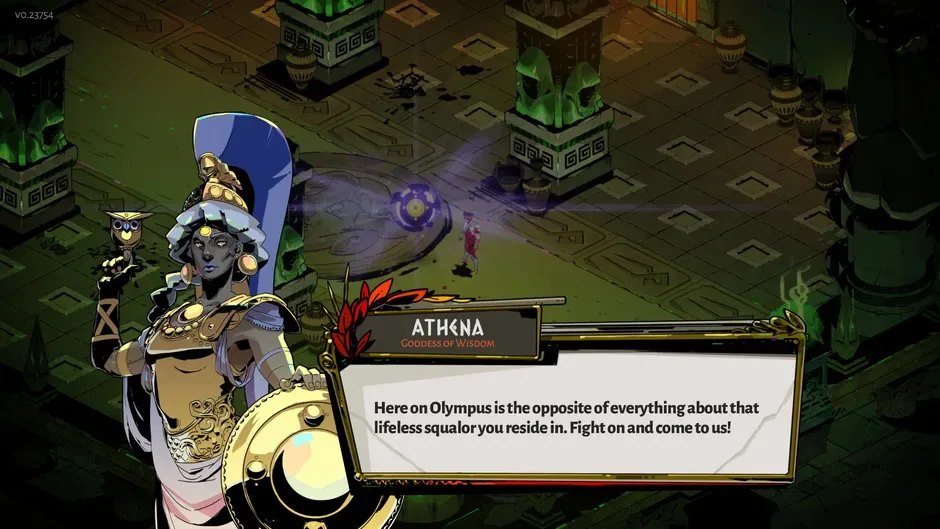
Boons are the system that makes each individual run feel different, and they come from the Olympians themselves, who appear as NPCs at doorways between rooms rather than as menu screens. Zeus turns your basic attack into a chain-lightning weapon. Poseidon adds knockback and a chance to make enemies slip. Athena grants deflection and bonus damage against enemies attacking you from behind. Ares stacks bleed damage that can be detonated. Artemis raises critical hit chance to absurd levels. Aphrodite makes enemies weak and lovestruck instead of aggressive. Demeter chills and slows. Dionysus stacks a poison-like effect that explodes when it hangs around too long. Chaos, encountered through hidden doors, offers a boon in exchange for a temporary curse that eventually flips into a bonus.
Every one of those gods has boons for your attack, special, cast, dash and call abilities, and the real depth is in how they interact. A Zeus attack boon paired with an Artemis crit boon and a Demeter cast turns a single Special into something that chains lightning through a chilled, critically vulnerable crowd. Duo Boons, which require levels of two gods' favour at once, push builds further still: an Ares-and-Aphrodite pairing that detonates bleed on weakened enemies plays completely differently from a Zeus-and-Poseidon combo built around chained knockback. No two runs offer the same spread of boons in the same order, so no two runs build the same way, and that randomness is doing the heavy lifting that keeps a genre built on repetition from feeling repetitive.
Six weapons that are really six different games#
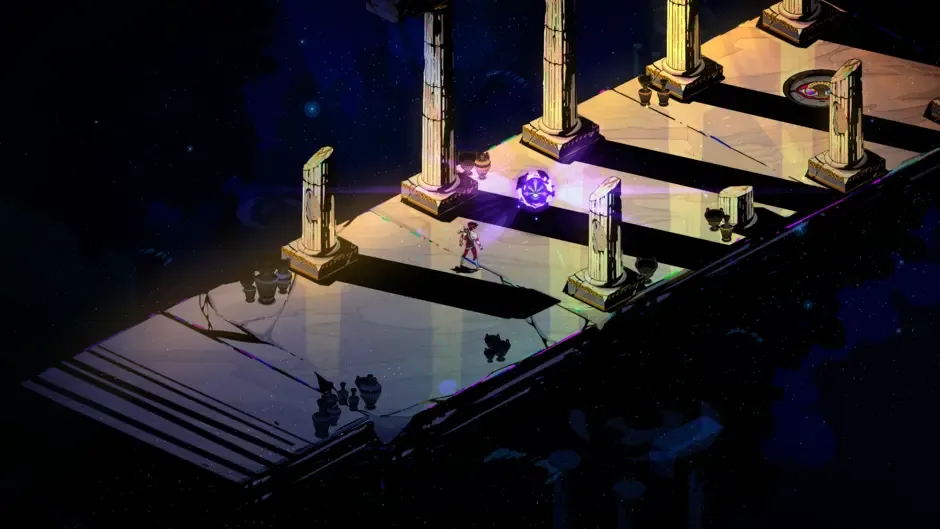
The other axis of variety is the Infernal Arms, and there are six of them: the Stygian Blade, a fast sword; the Eternal Spear, which trades speed for reach and a charge-throw special; the Shield of Chaos, a slower, defensive weapon built around blocking and a dash-charge attack; the Heart-Seeking Bow, which turns Zagreus into a ranged glass cannon; the Twin Fists of Malphon, brawler gauntlets with the fastest attack speed in the game; and the Adamant Rail, a gun-cannon hybrid with a cast that turns it into a mortar.
Each weapon also has multiple Aspects, unlocked with Titan Blood, that change its fundamental behaviour rather than just its stats. The Aspect of Nemesis turns the Shield of Chaos's charge attack into a thrown boomerang, turning a purely defensive tool into a mid-range weapon. The Aspect of Achilles extends the Spear's reach and adds a debuff on hit that makes follow-up damage sting harder. Combined with boons, a single weapon can play as six or seven distinct builds depending on the Aspect equipped, which means the game's real roster of playstyles is closer to thirty than to six.
Bosses: Megaera, the Bone Hydra, and a father who never stops being disappointed#
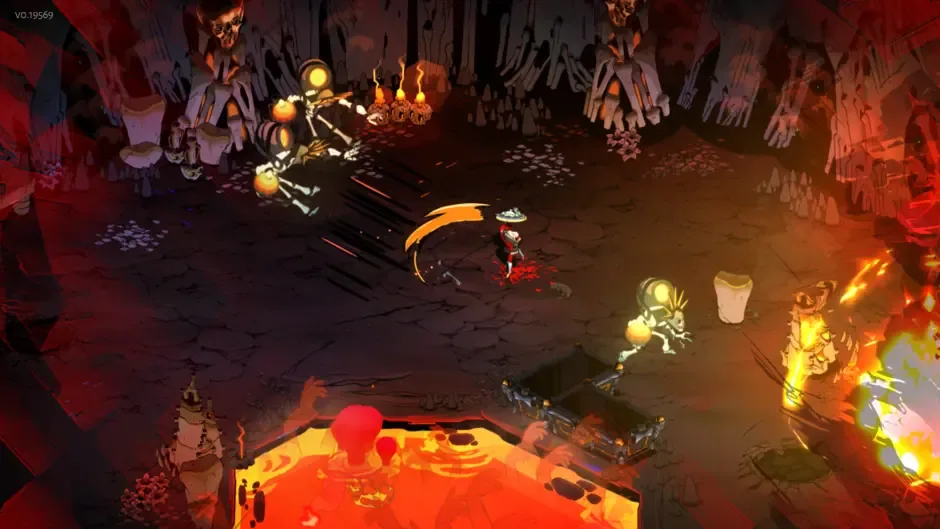
Each of the Underworld's regions ends in a set-piece boss, and Supergiant clearly understood that a roguelike lives or dies by whether its recurring fights stay interesting on the fortieth attempt. Megaera, guarding the exit from Tartarus, is a duel built on parryable jabs and a whip that punishes greedy dodges, and her fight doubles as the game's most personal story thread. The Lernaean Bone Hydra, waiting at the end of Asphodel, solves the boredom problem of a giant single-target boss by regrowing extra heads mid-fight that force you to split your attention.
Elysium ends with Theseus and the Minotaur Asterius fighting together, a genuine two-on-one encounter where the room's hazards matter as much as either combatant, and it is the fight most likely to catch a run off guard after an otherwise smooth run through the region. The Temple of Styx caps it all with Hades himself, fought across two escalating phases that make sure the run's final test is against the one character the entire story has been building toward. Beyond him sits a further, well-hidden confrontation tied to the game's true ending, one that asks for a longer, cleaner run than anything that came before it and rewards patience with the story's actual resolution.
The House of Hades: story told between the runs#
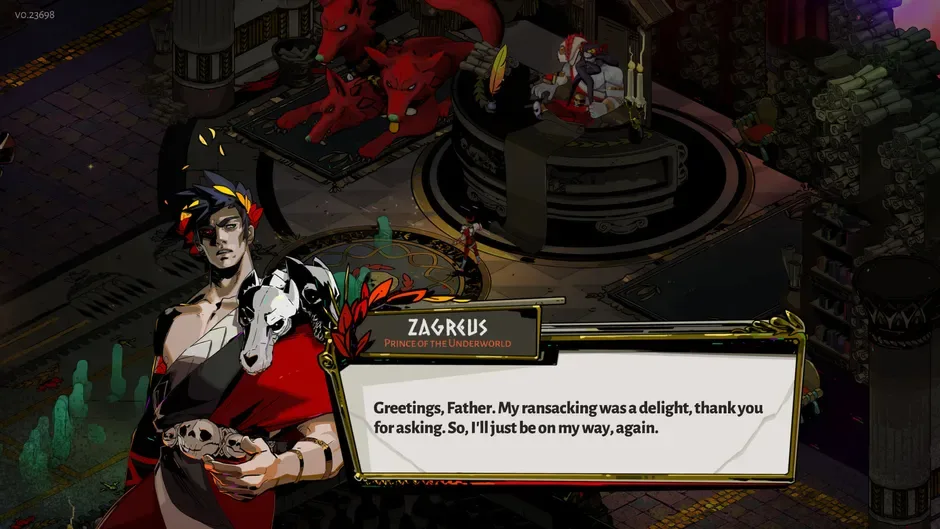
The framing device, a household of gods, ghosts and the dead going about their business while Zagreus keeps sneaking out, is where most of the writing lives, and it is unusually good for a genre that often treats narrative as an afterthought. Nyx, distant and guarded, slowly reveals why she took in the son of her old rival. Hypnos, god of sleep, narrates Zagreus's deaths with a cheerfulness that becomes its own running joke. Charon, the ferryman, never speaks but has an entire shop and a boss fight of his own hiding behind his silence. Sisyphus, still pushing his boulder, offers a kind of contentment none of the gods manage. Orpheus and Eurydice's thread, tied to the game's music, is one of the few moments the game slows all the way down.
None of this is delivered through cutscenes in any conventional sense. It arrives a line or two at a time, triggered by which room you are in, which weapon you are carrying, how many times you have died to a given boss, and who you have been giving gifts of Nectar and Ambrosia to build up your relationships with. The writing trusts you to piece a very long story together across dozens of hours without ever making that feel like homework, and it is the strongest evidence that Supergiant treated the roguelike structure as an opportunity rather than a constraint to write around.
Difficulty: the Pact of Punishment puts the dial in your hands#
Hades does not have a difficulty setting in the traditional sense, and it does not need one, because the Pact of Punishment does the same job better. Before starting a run, you can toggle a list of Heat conditions: tougher enemies, extra enemy types, timed rooms, more elite encounters, and several others, each raising the total Heat level of the run and, with it, the rewards for finishing it. A brand-new player can leave every condition off and still get a demanding game out of the base difficulty. A player thirty escape attempts in can layer on Heat until a familiar boss becomes a genuine puzzle again.
That system is also the honest answer to the common complaint that boon-driven roguelikes can feel like they are decided by the game rather than the player. A run with unlucky boon offers is still winnable at zero Heat, and a run with a dream spread of boons stops feeling trivial the moment enough Heat conditions are layered on top of it. The design keeps both ends of the skill curve engaged for a very long time without ever needing a story reason for why the Underworld suddenly got harder.
Free updates, and where Hades II fits in#
Hades kept changing for a long time after its release date, and almost none of it cost anything extra. Supergiant used free updates to add new weapon Aspects, rebalance boons that were clearly underperforming, expand the Pact of Punishment with new Heat conditions, and smooth out quality-of-life details like faster menu navigation between runs. None of that content sits behind a paywall, which matters for a game whose entire pitch is that replaying it should keep feeling worthwhile: a copy bought at launch and a copy bought today run on the same, steadily refined version of the same game.
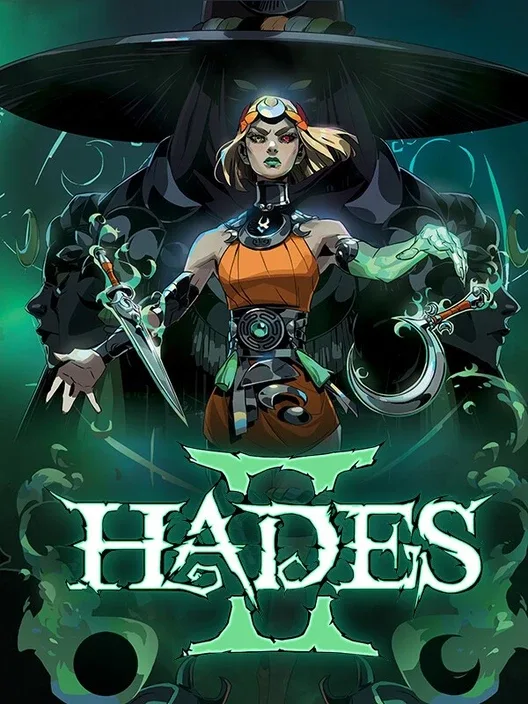
That is worth spelling out clearly because Hades II exists, and confusing the two is an easy mistake to make. Hades II is a separate game, not an expansion or a DLC pack for the original. It moved into early access in 2024, follows a different protagonist, Melinoë, sister to Zagreus, and is built around its own setting, cast and mechanical changes rather than reusing this game's House, weapons or story. Whatever happens with Hades II's own eventual full release and score belongs to a review of its own. Nothing about it changes what the original Hades is or how well it holds up on its own terms, which is the only game this review is about.
Compared with Slay the Spire and Dead Cells#
Slay the Spire is the sharper comparison for anyone drawn to the boon system specifically, because both games are ultimately about building something absurd out of a randomised set of tools across a single run. Slay the Spire is more purely mechanical: no story sits between runs, and the entire appeal is the deckbuilding puzzle itself. Hades trades some of that mechanical purity for a framing device that makes failure itself entertaining, which matters enormously for anyone who finds repeated deaths in a run-based game demoralising rather than motivating.
Dead Cells is the better comparison for anyone weighing the combat and movement specifically. Dead Cells is faster, more platforming-focused, and leans harder on player skill expressed through movement, while Hades' isometric camera and slower, more deliberate combat put more weight on positioning and boon synergy than on reflexes alone. Dead Cells also updates its build variety through unlocked weapon drops across a run, closer to a traditional loot system, where Hades' Aspects and Duo Boons create variety through fixed, learnable combinations instead. Anyone who wants the tighter platforming challenge should lean toward Dead Cells; anyone who wants a story to actually reward the grind should lean toward Hades.
New to roguelikes? Start here#
Hades is one of the friendlier entry points the genre has, and a few habits make the first several hours noticeably smoother. Take the first boon offered near the start of a run rather than holding out for a specific god, since an empty boon slot loses more value than almost any weak boon fills. Spend early Darkness on the Death Defiance upgrade in the Mirror of Night, which grants extra lives mid-run and is the single most forgiving purchase available. Favour the Stygian Blade or the Heart-Seeking Bow for the first dozen runs, since both punish mistakes less harshly than the Shield of Chaos or the Twin Fists. And do not chase the true ending immediately; the game is explicit that it wants you to build relationships with its cast first, and rushing past that content only makes the story's back half land with less weight. Reading item and boon descriptions in the House between runs is also worth the extra minute, since several of the game's clearest hints about which combinations work well are written directly into the text rather than left for players to discover through trial and error alone.
Worth the money?#
Hades sits around 25 euros at full price on every platform, and it goes on sale often enough that waiting for a discount rarely costs more than a few weeks of patience. For that price, a first successful escape from the Underworld typically takes somewhere in the range of 20 to 25 hours across many short runs, and reaching the true ending and unlocking most of the story content extends that well past 60 hours, with plenty of replay value left afterward for players chasing every weapon Aspect and every relationship thread. Very few games in any genre offer that much content per euro.
Best platform: the game runs well everywhere it is available, on PC, PlayStation 4 and 5, Xbox One and Series X|S, and Nintendo Switch, and its short-run structure makes it particularly well suited to handheld play, whether on Switch or Steam Deck. It has also been available through Xbox Game Pass since launch, which is worth checking before buying outright on that platform. Because a single run can be abandoned or finished inside fifteen minutes without losing any real progress, it is also one of the rare games this size that survives being played in short, interrupted bursts rather than long sittings, which is worth factoring in if most of your available time comes in small pieces.
Play this instead if…#
Shorter: Slay the Spire delivers the same one-run-at-a-time build-crafting thrill in sessions that rarely run past 45 minutes, with no story layer to invest in beyond the mechanics themselves.
Easier: Dead Cells offers a gentler learning curve around its movement-first combat, with permanent unlocks that soften the sting of an early death more directly than Hades' Mirror of Night does.
Cheaper or co-op: Rogue Legacy 2 covers similar ground, permanent progression carrying you past runs that end in death, at a lower price point, though neither it nor Hades supports co-op play. Anyone specifically after shared-screen co-op should look outside the boon-based roguelike space entirely, since the genre as a whole tends to build its systems around a single character's growing pile of temporary and permanent upgrades.
Frequently asked questions#
How long is Hades? A first successful escape usually takes around 20 to 25 hours of play across many short runs; reaching the true ending and most of the story content takes considerably longer, often past 60 hours, and chasing every weapon Aspect on top of that adds further time still.
Is Hades an open world? No. Each run moves linearly through four regions, Tartarus, Asphodel, Elysium and the Temple of Styx, with the specific rooms inside each region randomised.
Does it have co-op? No. Hades is a single-player game throughout.
Is there an easy mode? Not as a menu toggle, but the Pact of Punishment works in reverse as well as forward: leaving every Heat condition off keeps the base game approachable, and permanent Mirror of Night upgrades make each subsequent run easier regardless of skill. Death Defiance charms and keepsakes gifted by the House's cast add further cushioning on top of that for anyone who wants it.
Do you need to know Greek mythology first? No. The game introduces its cast, from the Olympians to the Underworld's own residents, entirely through its own writing, and familiarity with the myths adds colour rather than being required to follow the story.
Is Hades II the same game? No. Hades II is a separate sequel with a different protagonist and setting that entered early access in 2024; this review covers only the original 2020 release.
The GameAvant verdict#
Hades is not a perfect roguelike. Its camera occasionally hides a lethal projectile behind Elysium's scenery, a handful of boon combinations clearly outperform the rest, and the true ending demands one long, clean run in a genre that is supposed to be forgiving about exactly that. None of those flaws are enough to knock the score down far, because the thing Hades does that almost nothing else in its genre manages, turning permadeath into the engine of its story rather than an obstacle to it, is executed with a level of craft that makes the flaws feel like footnotes. Six years on from its early access debut, it remains the roguelike other roguelikes get measured against for exactly that reason.
9 out of 10 – the roguelike that figured out how to make dying feel like progress.