- Honor is tracked from the very first chapter and never resets. Small, repeated choices matter more than one big dramatic one.
- Bond with one horse early and stick with it. A level 4 bond gives real gameplay benefits, not just a prettier animation.
- Dead Eye unlocks its later ranks through the story, not a skill tree. Rank 1 alone gets you through most of Chapter 1 and 2.
- Donate to the camp fund whenever you can afford it. Camp upgrades unlock better crafting, cheaper supplies and a nicer place to sleep.
- Slow down after Chapter 2. The main story is paced to be interrupted; the open world is not a detour from the game, it is most of the game.
- Red Dead Online still runs, but Rockstar has not added major new content in years. Treat it as a bonus, not a reason to buy the game.
- Legendary animals, gang hideouts and stranger missions are almost entirely optional and almost entirely worth doing before the epilogue.
What Red Dead Redemption 2 actually is#
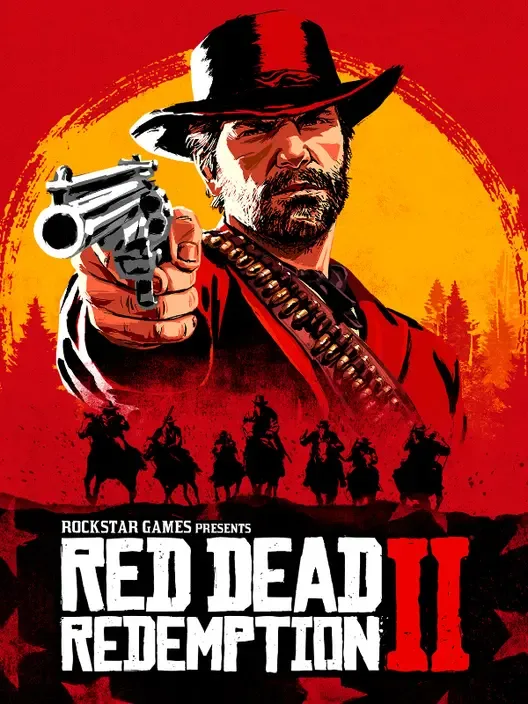
Red Dead Redemption 2 is Rockstar Games' open-world western, released on 26 October 2018 for PlayStation 4 and Xbox One. A PC version followed just over a year later, on 5 November 2019, first through the Rockstar Games Launcher and the Epic Games Store, then on Steam a month after that. It is a prequel to the 2010 original, following Arthur Morgan, a senior member of the Van der Linde gang, in the last years of the American frontier around 1899.
There is no difficulty setting and no class system. What there is instead is a very dense simulation: a world with its own weather, wildlife populations, NPC schedules and consequences that follow you around. New players usually arrive expecting a shooter with horses and discover, a few hours in, that the shooting is the least interesting part of it.
Two systems decide almost everything about how the game plays and how it ends: Honor and Dead Eye. Understanding both before you get too far in saves a lot of wasted effort.
The Honor system, explained properly#
Honor is a single hidden value that moves up or down based on what you do, and it is tracked separately for every save file from the opening chapter onward. It is not a morality meter that locks content behind a "good" or "evil" label; it is closer to a running tally of the kind of person Arthur is choosing to be.
What actually moves it
| Action | Effect on Honor |
|---|---|
| Greeting strangers, helping stranded travelers, returning lost items | Small increase |
| Looting unlooted bodies you did not kill, sparing enemies in duels, paying off bounties | Small to medium increase |
| Robbing and killing civilians, looting bodies you just killed, running from lawmen instead of surrendering | Decrease |
| Story missions with a built-in Honor choice (there is almost always a "kind" and a "cruel" option) | Larger swing, positive or negative |
| Killing named story characters outside of missions, animal cruelty, scalping | Larger decrease |
Everyday actions matter far more than most players expect. Greeting every NPC you pass, tipping your hat, helping the people you meet on the road, and paying your bounties down at a post office rather than letting them pile up will push Honor up steadily over the course of the game without you ever making a single "big" decision.
Why it matters
Honor changes several things you can feel directly:
- Discounts and prices. High Honor gets better prices from shopkeepers; low Honor gets worse ones.
- NPC reactions. Strangers greet a high-Honor Arthur warmly and a low-Honor Arthur with fear or hostility. Random encounters change their outcomes based on it.
- Arthur's appearance and coughing. How Arthur looks and sounds as his illness progresses in the later chapters is affected by his Honor level.
- The ending. This is the one that matters most, and it is worth saying plainly without spoiling the specifics: Arthur's fate in the final chapters plays out differently, with different scenes and a different final act, depending on whether his Honor sits high or low. Neither version is a "bad ending" in the sense of a game over; they are two different character conclusions, and one is considerably kinder to the people Arthur cares about than the other.
Honor also carries over conceptually into the epilogue playing as John Marston, though John's own Honor starts fresh and is tracked independently.
Dead Eye and the weapon wheel#
Dead Eye
Dead Eye is Red Dead Redemption 2's slow-motion aiming system, and unlike many RPG-style skills it is unlocked in fixed ranks tied to story progress rather than a spendable skill tree.
| Rank | What it adds | Roughly when |
|---|---|---|
| 1 | Slows time while aiming | From the start |
| 2 | Highlights weak points and critical zones on targets | Chapter 1 |
| 3 | Lets you tag multiple targets, then fire at all of them automatically | Chapter 2 |
| 4 | Auto-tags critical zones for you while tagging | Chapter 4 |
The Dead Eye meter drains while it is active and refills over time and by eating, drinking coffee or using tonics. Early on, rank 1 alone is enough to win most gunfights: aim, slow time, land headshots. Once rank 3 unlocks, tagging three or four enemies and letting Arthur fire on all of them in sequence turns most ambushes into a non-event, and it is worth practicing deliberately rather than saving it only for emergencies.
Cores also affect Dead Eye. Arthur has three cores — Health, Stamina and Dead Eye — each of which drains with use and refills with rest, food and specific items, and each of which has a passive bonus that improves as its core's own bar fills with experience over time (better Dead Eye recovery, longer sprints, and so on). Eating well-cooked, high-quality food keeps all three topped up and gives temporary boosts; eating raw or spoiled food does the opposite and can make Arthur sick.
The weapon wheel
Arthur can carry a large amount of gear at once, split across two horse-mounted long guns, one holstered sidearm, and a full set of throwables and tools, all reachable through the weapon wheel by holding the corresponding button. A second radial wheel handles items — tonics, food, ammunition types and camp supplies — and both wheels pause time briefly when opened, which is worth remembering during a fight gone wrong.
Ammunition types matter more than in most shooters: split point rounds do more damage to unarmored targets and less to armored ones, express rounds are a stronger all-rounder, and high-velocity rounds hit harder at range. Hunting specifically rewards using the right ammunition, since the wrong round type can wreck a pelt or a set of usable meat that a better-chosen round would have preserved. Custom gunsmiths, once unlocked, let you buy or craft ammunition types you cannot find at a general store.
Horses: bonding, care and buying the right one#
The horse is not decoration. Bonding, health and stamina genuinely change what the horse can do, and losing a well-bonded horse is one of the few losses in the game players tend to actually feel.
Bonding
Every horse has a bond level from 1 to 4, raised by riding it, grooming it, feeding it and calming it when it is startled. A maxed bond gives real mechanical benefits: better handling, faster stat recovery, the ability to calm the horse in dangerous situations instead of being thrown, and unique interactions specific to a fully bonded horse. It is a slow process at first and much faster with each additional horse once you understand the routine, since some bonding activities (brushing, feeding, calming after a fright) count more than simply riding around.
Health and stamina
A horse's Health and Stamina work like Arthur's own cores: Stamina drains from riding, sprinting and jumping, and Health drains from combat damage, falls and exhaustion once Stamina runs out. Both regenerate with rest and can be topped up faster with carrots, apples, peppermints and other feed bought from stables or found in the world. Riding a horse to total exhaustion is dangerous; keep an eye on the stamina core the same way you watch Arthur's own.
Buying a horse
Money spent on a good horse early is rarely wasted. The table below covers the broad categories available from stables and the Wheeler, Rawson & Co. catalogue rather than every individual breed.
| Category | Typical traits | Good for |
|---|---|---|
| Draft horses (Belgian, Shire, Suffolk Punch) | Very high Health and Stamina cores, slower top speed | Long trips, war-horse builds, players who rarely need to outrun a chase |
| Race horses (Thoroughbred, Eclipse) | High speed, lower Health | Covering distance fast, less suited to sustained gunfights |
| War horses (Nokota, Turkoman, Missouri Fox Trotter) | Balanced stats, good all-round core ratings, resistant to being spooked by gunfire | The best all-purpose choice for most of the game |
| Wild horses caught and broken by hand | Free, quality depends on the breed found in the wild | A good early-game option before Arthur has much money |
A horse can also be insured at any stable, which means a dead or stolen horse of that breed can be replaced for free from the nearest stable rather than lost for good. Insuring a horse the first time you buy it is close to free and worth doing immediately.
Camp: donations, upgrades and why it is worth caring about#
The gang's camp is not just a hub for missions. It has its own economy, run through a shared camp fund that Arthur, and later John, can donate to directly or by looting money and valuables during missions and free roam.
Donating
Donations go toward two things: keeping the gang's morale and supplies stocked, and unlocking upgrades. Donating regularly, even small amounts, is enough; there is no benefit to hoarding cash instead of spending it, since money past a certain point has few other uses beyond gear, ammunition and horses you likely already have.
Upgrades
Camp upgrades are chosen through Dutch's ledger or the relevant camp NPC and cover several categories:
- Feed for the animals and general provisions, which affects morale and camp health.
- Medicine for a better-stocked doctor's tent.
- Ammunition for a better-stocked supply wagon.
- Ledger upgrades to the tents themselves — a better tent for Arthur improves his core regeneration while sleeping there.
- Ambient upgrades like lanterns, decorations and a better campfire, which are cosmetic but change how the camp feels and looks over the course of the story.
A well-funded camp also changes small dialogue and ambient details among the gang, which is easy to miss if donations are ignored entirely. It costs nothing extra to loot money you already find on missions straight into the fund rather than pocketing it, and doing so consistently keeps the upgrades coming without any dedicated grinding.
Pacing: when to stop rushing the main story#
Red Dead Redemption 2's story is built in chapters, each centered on a different camp location, and the game is explicitly paced to let you leave the main missions and come back. Fast-travel, once unlocked at camp, exists specifically to make that back-and-forth painless.
The single most common mistake new players make is treating the story missions like a checklist to clear before "really" playing the game. That backfires for two reasons. First, several of the best story beats are spaced out deliberately, with gaps meant to be filled by side content, hunting, and just riding around; rushing through them compresses a game meant to breathe into a few marathon sessions and makes later story moments land with much less weight. Second, some content becomes unavailable or much harder to access once the story moves into its later chapters, so waiting too long to explore a chapter's map has its own cost.
A reasonable rule that works for most players: after finishing the main missions available in a given camp, spend real time in that chapter's map before pushing the story forward — hunt, do side activities, visit nearby towns, pick up any stranger missions on offer — and only move on once that area feels done. Chapter 2, in particular, is large and rewards this patience more than any other chapter in the game.
Red Dead Online in 2026: what it actually is now#
Red Dead Online launched in November 2018 as a public beta and became a standalone, separately purchasable product in December 2019. It shares its open world with the single-player game but runs its own progression, roles (Bounty Hunter, Trader, Collector, Moonshiner and Naturalist) and business systems.
Its support has clearly cooled. Rockstar has confirmed it is no longer developing large, sweeping content updates for Red Dead Online, with development resources shifted toward Grand Theft Auto Online and Grand Theft Auto 6. What remains is lighter maintenance: seasonal and holiday events, rotating bonuses on money, gold and experience, and periodic catalogue discounts, alongside basic server upkeep. Servers were operational at the time of writing.
What this means practically for a new player: Red Dead Online is not the reason to buy Red Dead Redemption 2, and it should not be treated as a live-service game still receiving meaningful new features. If the roles and businesses already appeal to you, it is still playable and still has an active-enough population for most activities, but do not expect a comparable pace of updates to Grand Theft Auto Online.
Legendary animals, gang hideouts and other easily missed content#
The open world hides a large amount of content that the main story never points you toward directly, and a first-time player following only the golden mission markers will miss almost all of it.
Legendary animals
A set of unique, named animals — legendary versions of bears, wolves, alligators, and more — are scattered across the map, each requiring a specific pelt or item from a trapper before you can craft its associated gear. They are tougher and often more dangerous than their regular counterparts and are tracked through their own dedicated menu once you learn of the first one from a letter or a trapper. Hunting them properly, with the right weapon and ammunition to avoid ruining the pelt, is worth doing well before the epilogue, since some legendary animals are easier to reach and safer to fight earlier in the story.
Gang hideouts
Scattered across the map are a number of enemy gang hideouts, each a small fortified camp guarded by several armed NPCs and worth clearing for cash, valuables and occasionally unique items. They are not marked on the map until Arthur gets close enough or hears about one from a stranger or newspaper, and clearing them is one of the more reliable ways to fund early camp donations and horse purchases without grinding.
Stranger missions
Stranger missions are the small, self-contained side stories triggered by NPCs marked with a question mark on the map. Several of them form multi-part arcs that pay off much later in the story or reference each other in ways a rushed playthrough will miss entirely, and a handful have real consequences for Honor or unlock unique items and outfits found nowhere else. They are the best evidence that the open world is not filler: much of the writing Rockstar clearly put the most care into lives in these encounters rather than in the main missions.
Other easy misses
- Hunting requests and the trapper. Selling perfect pelts to a trapper unlocks unique crafted outfits with passive gameplay bonuses (better cold resistance, quieter movement and so on), not just cosmetics.
- Treasure maps. Several multi-step treasure hunts reward some of the best money-making opportunities in the game, especially useful before the camp's economy is fully upgraded.
- Poker, blackjack, dominoes and other camp and saloon games. Entirely optional, genuinely well-implemented, and a good way to spend downtime between missions.
- Compendium and the satchel. The in-game compendium tracks every animal, plant, fish and item Arthur has encountered; a fully upgraded satchel, unlocked through trapper crafting and story progress, expands what he can carry and is worth prioritizing early.
Frequently asked questions#
How long is Red Dead Redemption 2? The main story alone runs roughly 50 hours for most players. Doing a meaningful amount of side content, hunting and exploration pushes that well past 60 to 80 hours, and reaching 100% completion (every stranger mission, every collectible category, every challenge) takes considerably longer.
Do I need to play the first Red Dead Redemption first? No. Red Dead Redemption 2 is a prequel and stands entirely on its own. Playing the original afterward adds context and emotional weight to certain characters and events, but nothing in Red Dead Redemption 2 assumes you have.
Can I change Arthur's Honor path partway through? Yes. Honor is cumulative and can shift in either direction throughout the whole game, including the later chapters. There is no point where it locks in early.
Should I buy Red Dead Online along with the base game? Only if the multiplayer roles and businesses genuinely interest you. It is included with most current releases of the game at no extra cost, but it receives only light seasonal support rather than major new content.
What's the best early money-maker? Selling perfect pelts to the trapper, clearing gang hideouts, and completing bounty hunter stranger missions are the most reliable early income sources without needing to grind any one activity specifically.
Is Red Dead Redemption 2 available on PS5 and Xbox Series X|S? It runs on those consoles through backward compatibility with the PS4 and Xbox One versions rather than a native next-generation release.
Does Dead Eye need to be levelled up manually? No. Its ranks unlock automatically as the main story progresses, though the passive Dead Eye core bonus improves gradually the more it is used.