A quarantine zone that never tells you where to go#
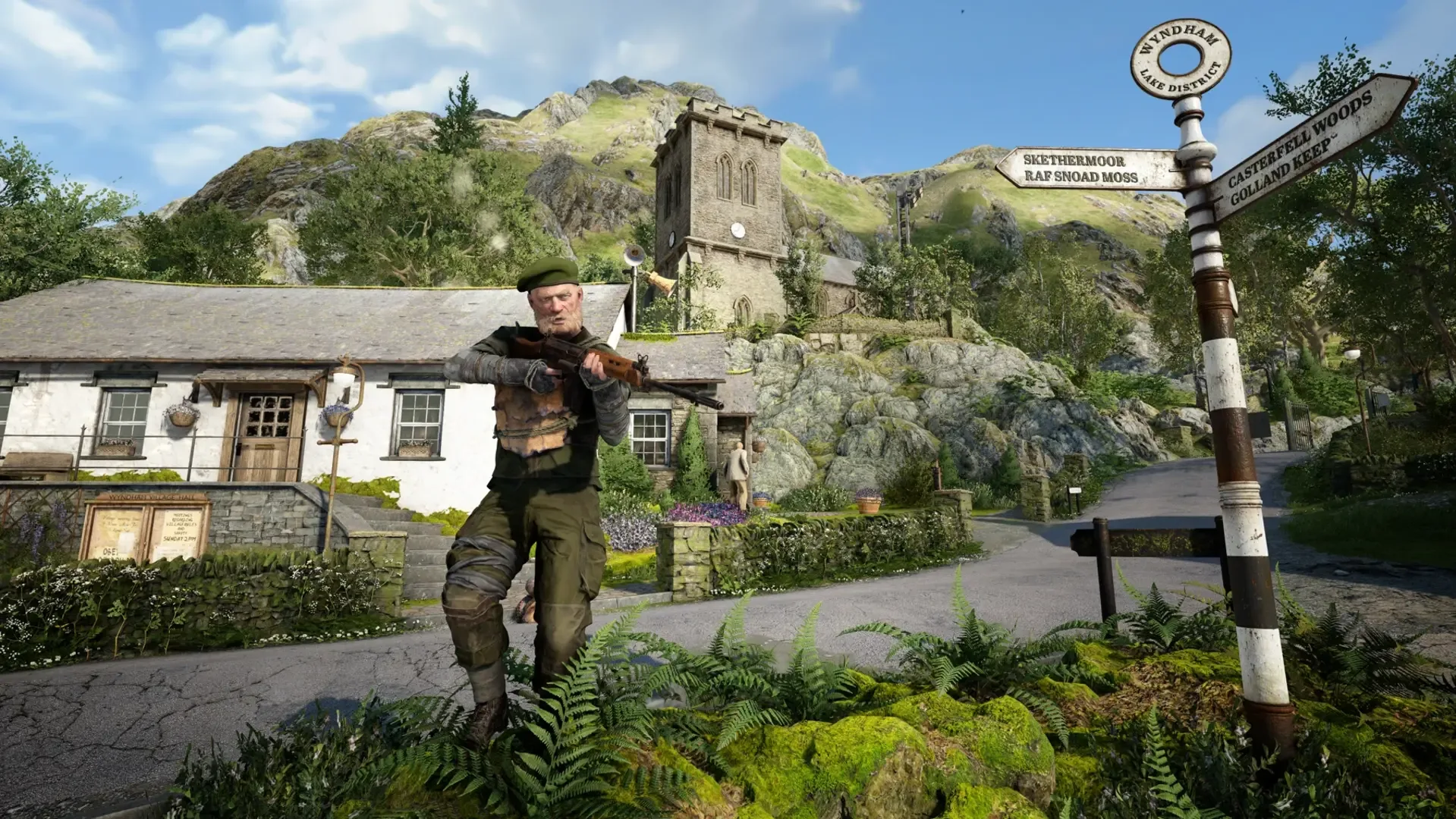
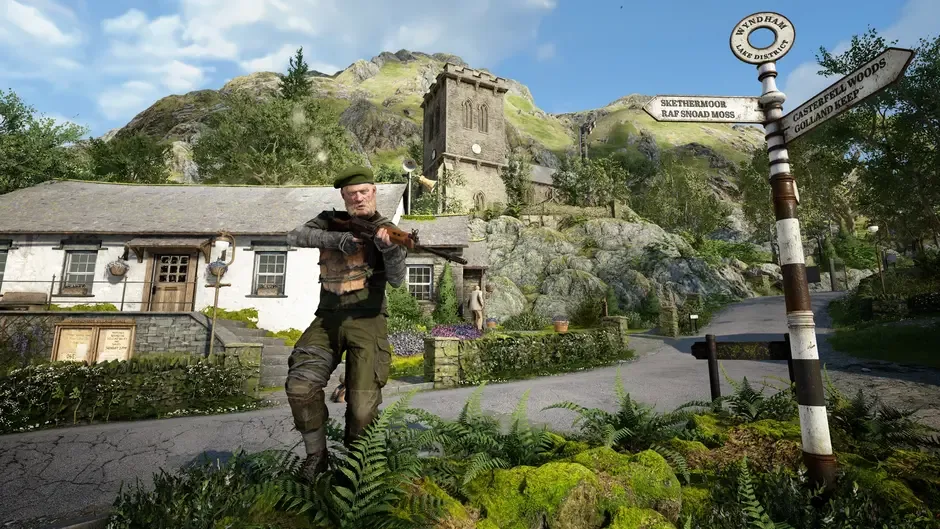
Atomfall is Rebellion Developments' attempt to build an open world around curiosity instead of icons, and for the most part it works. Released on 27 March 2025 for PlayStation 4, PlayStation 5, Xbox One, Xbox Series X|S and Windows PC, available day one on Xbox Game Pass, it drops you into a version of England where the 1957 Windscale nuclear fire never got contained. Five years after that disaster, the area around the plant has been sealed off as a quarantine zone in the Lake District, and you wake up with no memory in a bunker, wounded and alone, with a dying scientist telling you to reach a place called the Interchange. There is no map marker pointing you there. There barely is a map. What Atomfall does instead, hand you leads instead of quests and trust you to chase them, is the best reason to play it, and the one idea strong enough to carry a combat system that never really grows up.
What makes Atomfall different#
The one idea the whole game is built on is that a quest log is a crutch, and that a mystery is more compelling when you have to assemble it yourself. Rebellion calls this the Leads and Findings system. A Finding is a physical thing, a note tucked in a drawer, a holotape left running in an abandoned cottage, a scrap of conversation overheard near a checkpoint, and it unlocks a Lead in your investigation journal: a name, a place, a rumor. The game will not draw a line on your map to it. Instead you place your own marker on a landmark you have heard about, follow your compass, and figure out the rest on foot. A voice through a red telephone box near the starting bunker tells you flatly that "Oberon must die" before you have any idea who or what Oberon is, and chasing down what that means, through scientists, soldiers and a cult in the woods, is the entire game. Leads do not resolve neatly either. Some update across the whole runtime, a single Finding near the end can retroactively explain three separate leads you picked up hours earlier, and the game is content to let you finish without ever fully understanding what you did. That is a deliberate, slightly punishing kind of trust, and outside of dedicated immersive sims, almost nothing else released this year asks it of you.
The Lake District as a puzzle box#
The quarantine zone itself is not large by open-world standards, and that is precisely why it works. Slatten Dale, the village and surrounding countryside where you start, is small enough to walk in full within an afternoon, but it is layered rather than wide: a locked garden gate you cannot open in the first hour becomes a shortcut once you find the right key three areas later, and a boarded-up mine entrance near the starting bunker turns out to connect two zones you had been walking around separately for hours. The interconnection is the point. Rather than fast travel points scattered evenly across a huge map, Atomfall gives you a compact web of villages, farms, a research facility and underground tunnels where nearly every dead end you remember eventually opens from the other side. Finding that a shortcut you gave up on three hours ago now saves you a ten-minute walk is a small, real reward the game hands out constantly, and it never once needs a fast-travel menu to make you feel like the map has gotten smaller as you have gotten to know it.
Factions and conversations instead of a moral meter#
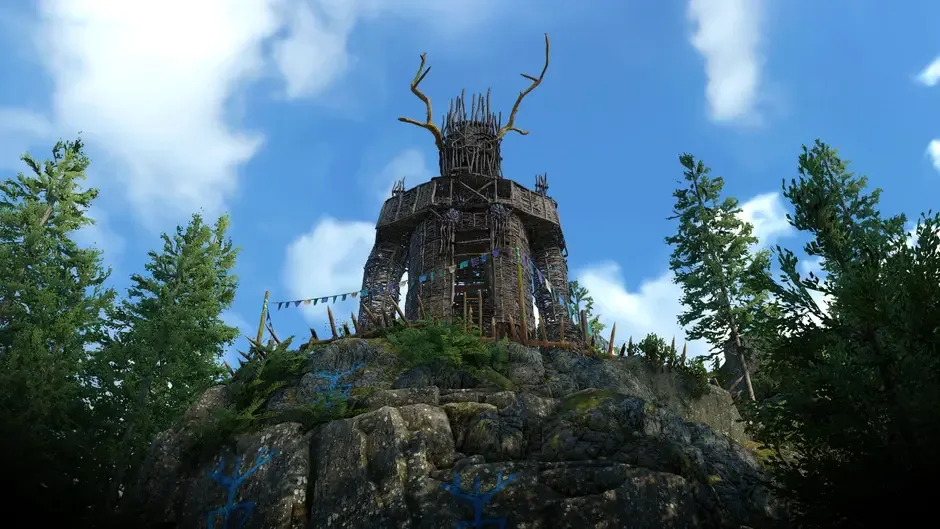
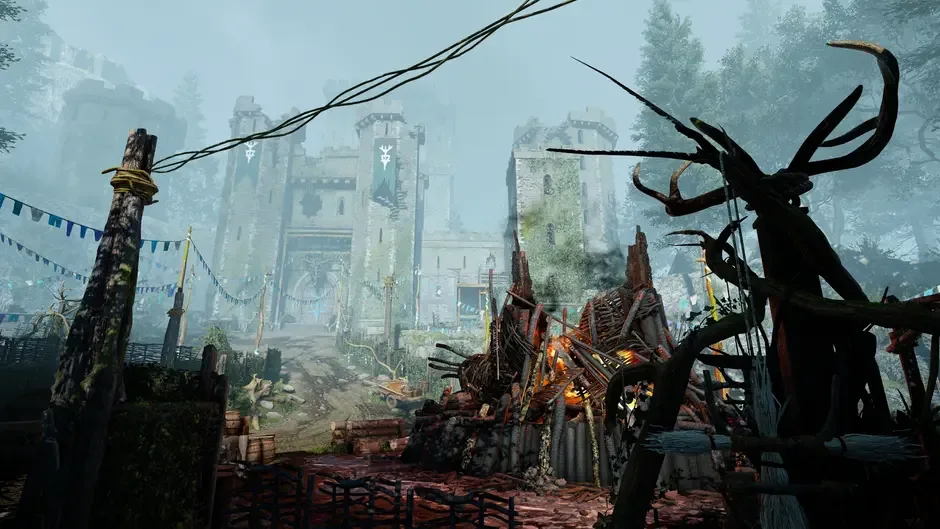
Atomfall's cast splits into a handful of factions who each hold a piece of the quarantine zone and a piece of the truth. Protocol is the military remnant trying to keep the disaster contained by force, run in practice by Captain Sims, who would rather see the whole valley erased than risk it spreading. The Druids are a cult of the infected who claim to hear "the Voice in the Soil" and are led by Mother Jago, a herbalist who has decided the radiation is less a disaster than a message. Scattered between them are individual scientists, most notably Dr. Garrow, the researcher most responsible for what happened here, and Dr. Holder, the last member of the original Oberon team still trying to undo it. None of these groups is flagged as the good guys. You can run errands for Protocol one hour and sell out one of its checkpoints to the Druids the next, and the game tracks the consequences rather than a hidden approval score.
What holds the factions together is a dialogue system that tags each response with a tone, confused, angry, placating, rather than a vague good or evil label, so you always know roughly what you are about to say before you say it. That sounds like a small thing, but it removes the guesswork that usually makes dialogue-heavy games feel like trial and error, and it makes the interrogation scenes, several of which are built entirely around getting a suspicious NPC to admit something they would rather not, feel like a genuine skill rather than a dialogue-wheel lottery. The writing backing it up is sharper than the marketing suggested going in: the villagers are dry, a little bitter, and rarely play the disaster for melodrama, which suits a story about a cover-up more than a story about a monster would.
Combat and survival: the part that never gets better#
This is also where Atomfall's biggest weakness sits. Melee weapons, cricket bats, kitchen knives, the odd length of pipe, are simple swing-and-retreat tools with no block and no dodge, which turns most close fights into an awkward shuffle backward while you wait for an opening. Firearms fare a little better in theory but are undercut by scarcity: guns are frequently single-shot or bolt-action, ammunition is deliberately rare, and carrying capacity is tight enough that you will spend more time avoiding a fight than winning one. That is clearly intentional, the game wants you sneaking past a Protocol patrol rather than shooting through it, and the five customizable difficulty settings, covering things like loot scarcity and healing efficacy, let you soften or sharpen that pressure to taste. The one genuine highlight is the bow, found a few hours in, which turns combat into something closer to patient stalking than a shootout and is by some distance the most satisfying way to deal with a threat. The problem is that nothing else in the toolkit ever catches up to it. The enemies you fight in the final hours are the same handful of soldiers, cultists and irradiated attackers you were fighting in the first, using the same handful of moves, and a game built almost entirely around discovery never manages to make its combat feel like it is discovering anything new.
Crafting is functional rather than deep: scavenged scrap becomes ammunition, basic upgrades and a handful of throwables, and it is enough to keep you supplied without ever becoming a system worth engaging with for its own sake. It is a survival layer bolted onto an investigation game, and it mostly just needs to not get in the way, which, outside of combat itself, it manages.
Sound, setting and the England that never was#
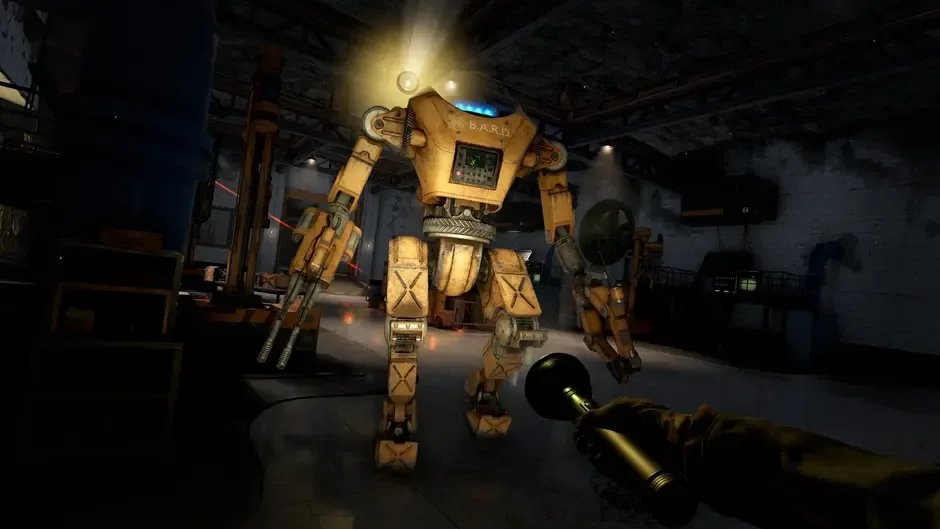
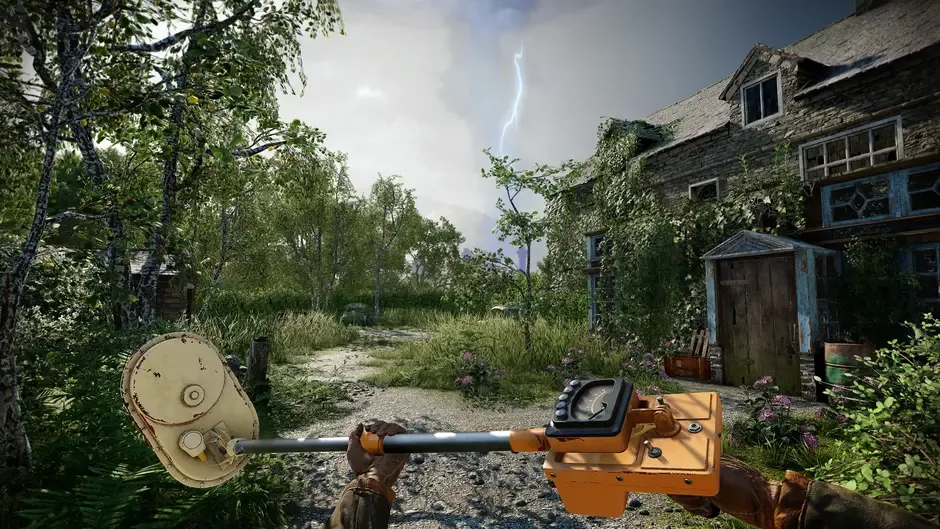
Atomfall's version of 1962 leans hard on a specific kind of Englishness, and it is one of the game's quieter strengths. Radios in abandoned cottages still crackle with pre-disaster broadcasts, telephone exchanges sit half-buried under ivy, and the villagers who remain talk about rationing and roadblocks the way people actually talked about wartime shortages a generation earlier, dry and matter-of-fact rather than panicked. The Lake District's fells and drystone walls are recognisably themselves even under a layer of fallout dust, and the game resists the temptation to turn every building into a monster closet; plenty of rooms hold nothing but a diary entry or a rationed tin of food, and that restraint makes the handful of genuinely dangerous spaces land harder. The audio design supports this well: distant sirens, the click of a Geiger counter rising as you near a hot zone, and the absence of a swelling orchestral score all keep the tone closer to a period drama than a horror game, which fits a story about bureaucratic cover-up better than jump scares would.
Accessibility and the five difficulty sliders#
The five customizable difficulty settings deserve a closer look because they are more thoughtful than the usual easy-medium-hard slider. Loot scarcity, healing efficacy, health regeneration, combat damage taken and combat damage dealt can each be adjusted independently, which means someone who wants the investigative side of Atomfall without the survival pressure can turn loot scarcity down and healing efficacy up without touching how hard enemies hit, while someone chasing a harder run can do the reverse. It is a smart acknowledgment that the game's two halves, detective work and survival combat, appeal to different instincts, and letting players tune them separately is more useful than a single blanket difficulty label would be. There is no separate puzzle-difficulty option, since the investigation itself has no fail state beyond a lead going cold, but the game is generally fair about seeding enough clues that a missed note rarely closes off a whole ending outright.
Compared with Fallout 4 and Firewatch#
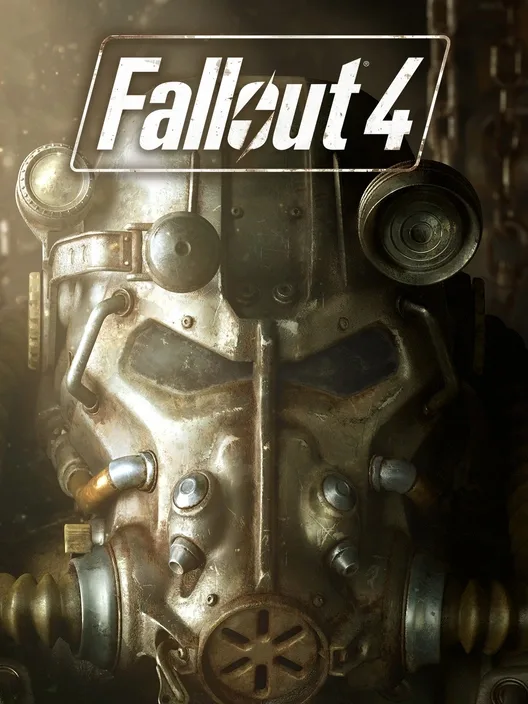
Fallout 4 is the obvious point of comparison, since both games drop a lone survivor into an irradiated countryside full of factions, scavenged loot and a central mystery about who caused the disaster. Fallout 4 is the far bigger, more mechanically generous game: its settlement building, deeper crafting and genuinely varied gunplay give players far more to do across a much larger map, and its factions come with fuller quest lines than Atomfall's more compact cast can offer. What Atomfall does better is restraint. There is no quest marker turning every faction errand into a checklist, no experience-point grind standing between you and a new perk, and no map cluttered with dozens of collectible icons; every discovery in the Lake District feels earned in a way Boston's Commonwealth rarely manages once its map fills up with markers. If you want scale and combat variety, Fallout 4 wins comfortably. If you want a tighter, more deliberately paced mystery where every note matters, Atomfall's smaller map is the better use of your time.
Firewatch is the sharper comparison for tone and structure rather than scale. Both games are built around a single mystery uncovered largely through environmental storytelling and conversation rather than combat, and both trust silence and empty space to do a lot of the emotional work. Firewatch commits fully to that idea and drops combat entirely, which makes its four-hour runtime feel tightly controlled from start to finish. Atomfall is the more ambitious, messier cousin: it wants the same slow-burn mystery but bolts a survival-combat layer onto it that never reaches the same quality as the investigation around it. Anyone who finished Firewatch wishing there had been more to do between story beats will find that here, at the cost of a combat system Firewatch wisely never attempted.
The Oberon mystery and six ways to end it#
The central question, what Oberon actually is and why a voice in a phone box wants it dead, ties every faction and every lead together, and Atomfall resists explaining it in full no matter how thoroughly you dig. The plant at the heart of the Interchange, the specimen the original scientists were studying before the disaster, and the reason the quarantine has held for five years instead of being lifted, all come into focus gradually rather than in one exposition dump, largely through the accumulated weight of notes, tapes and confrontations rather than a single climactic reveal. That restraint is a strength for most of the runtime and a mild frustration by the credits, since the game is content to leave real ambiguity in the finished story rather than resolve every thread.
There are six distinct endings, decided by which faction and which individual you side with in the closing stretch rather than a single binary choice near the credits. Helping Protocol's Captain Sims leads to the valley being wiped off the map outright to guarantee containment. Helping Dr. Garrow lets her continue the research that caused the disaster in the first place, implying the cycle is not over. Siding with Mother Jago and the Druids leaves Oberon intact and its influence spreading, and is framed as one of the story's two genuinely bleak outcomes. None of the six is labeled as correct, and the game is comfortable letting most of them be quietly grim, which fits a story about a cover-up rather than a rescue.
Worth the money?#
At $49.99 for the standard edition and $69.99 for the Deluxe Edition, Atomfall is priced like a full release rather than a shorter, focused game, and that mismatch is the fairest criticism leveled at it. A single run to one of the six endings takes somewhere between 8 and 15 hours depending on how many leads you chase down along the way, and a completionist run that unlocks every ending and most of the map's secrets stretches toward 45 hours, but only by replaying the same compact quarantine zone with the same enemies and the same combat multiple times. If seeing every ending matters to you, the price holds up reasonably well. If you plan to play it once and move on, it is a shorter and pricier evening than the box suggests.
Xbox Game Pass is the easiest way in at no extra cost if you already subscribe, and it is the option worth taking if the combat criticism above gives you pause about paying full price outright. On PC the game runs well across a wide range of hardware and was one of the better-optimized releases of its month, though it ships without DLSS, FSR or XeSS upscaler support and shows some shimmering at 1080p and 1440p; a day-one patch and a follow-up quality-of-life update addressed subtitle overlap, escalating AI aggression and mouse stutter issues that affected some PC players at launch. PlayStation 5 and Xbox Series X|S are the safest choice for a stutter-free first run. There is no confirmed multiplayer or co-op mode on any platform; this is a single-player game throughout.
Play this instead if …#
Shorter: Firewatch delivers a similarly quiet, dialogue-driven mystery in a fraction of the time, without any combat to speak of.
Easier: Fallout 4 gives you the same nuclear-disaster survival mood with a far deeper crafting and combat loop if Atomfall's fights leave you cold.
Cheaper: Rebellion's own Sniper Elite games are frequently discounted and scratch a similar British-World-War-adjacent itch with combat that is actually built to be the main event.
Frequently asked questions#
How long is Atomfall? A single playthrough to one of the six endings runs roughly 8 to 15 hours depending on how much of the map you explore, with a full-completion run covering every ending closer to 40 to 45 hours.
Is Atomfall open world? Yes, though the quarantine zone is compact rather than vast, built around interconnected shortcuts rather than a huge continuous landscape.
Does it have co-op or multiplayer? No. Atomfall is single-player only on every platform.
Is there a difficulty option? Yes, five customizable settings covering things like health regeneration, loot scarcity and healing efficacy, letting you tune both combat and survival pressure independently.
Do you need any prior knowledge of the Windscale disaster or British history to follow the story? No. The alternate-history premise is explained through what you find in the world, and no outside knowledge is assumed.
The GameAvant verdict#
Atomfall gets the harder half of its ambition right. Handing you a compact, interlocking map and a pile of notes instead of a quest log is a genuine risk, and it pays off almost every time you decide to follow a lead instead of ignoring it. What it never solves is the other half: a combat system that was clearly meant to be a pressure you route around rather than a system you master, and which stays exactly that simple for the entire game, whether you are swinging a cricket bat in the first hour or the fifteenth. Six endings and a story that resists tidy answers make a second run tempting; a short main campaign at a full-length price makes it a harder sell than it should be. It is a game that trusts its players more than almost anything else released this year, and that trust is worth the trip even where the mechanics underneath it are not.
7 out of 10 – a genuinely clever mystery wrapped around combat that never earns the same trust the writing does.