
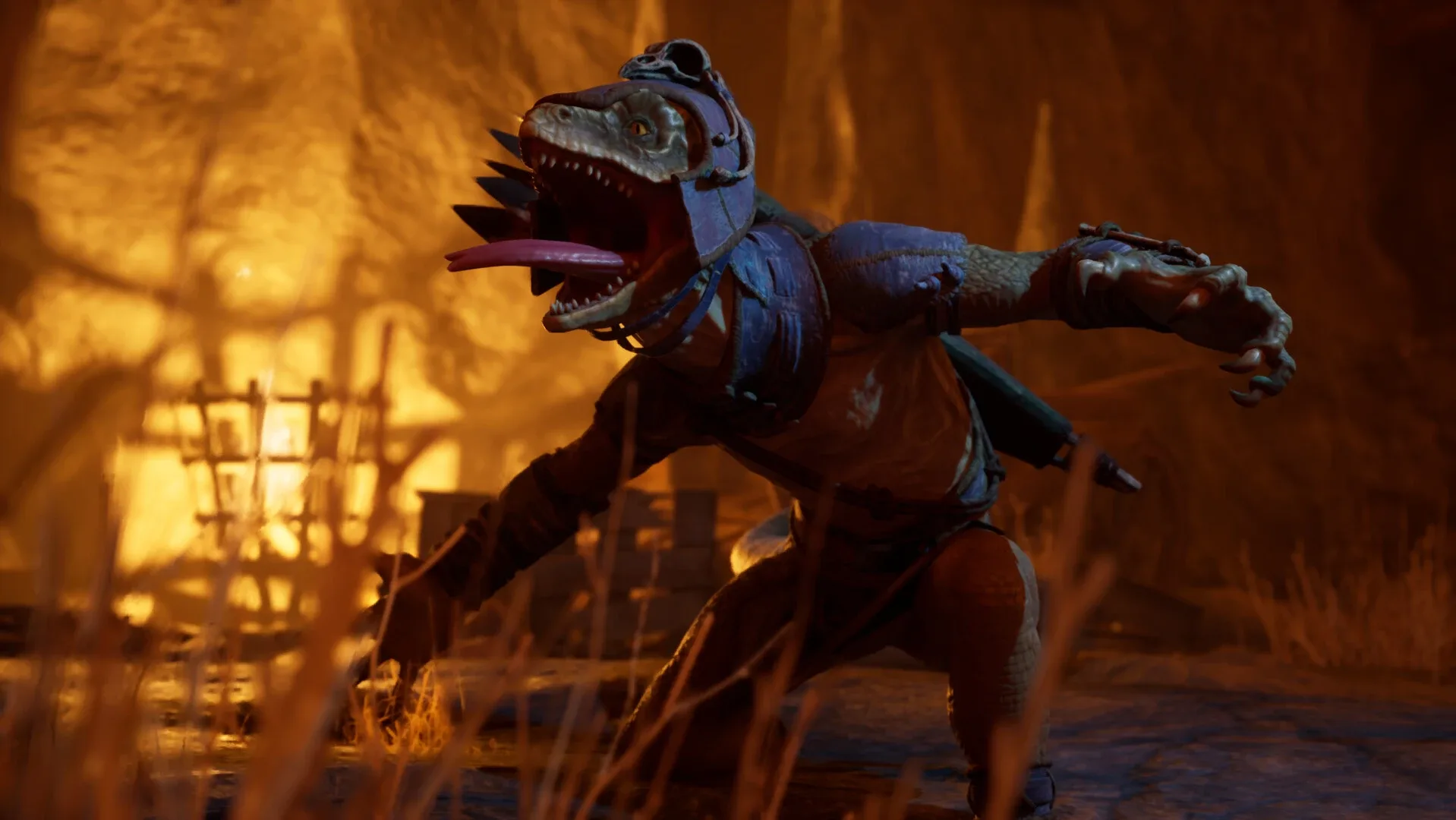
Avowed knows exactly how big it needs to be, and it commits to that size#
Avowed is Obsidian Entertainment's first-person RPG set in the Living Lands, a corner of the Pillars of Eternity universe that needs no homework to enjoy. Released on 18 February 2025 for Xbox Series X|S and PC, and available in Xbox and PC Game Pass from day one, it made the unusual choice to skip the open world entirely and build four large, dense regions instead. That choice, more than any single system, is what makes the game work. It has combat that lets you dual-wield a sword and a spellbook without penalty, a political story with real teeth, and a world that rewards curiosity because there's less of it to search. It is not the biggest RPG of the year. It might be the best-paced one.
What makes Avowed different#
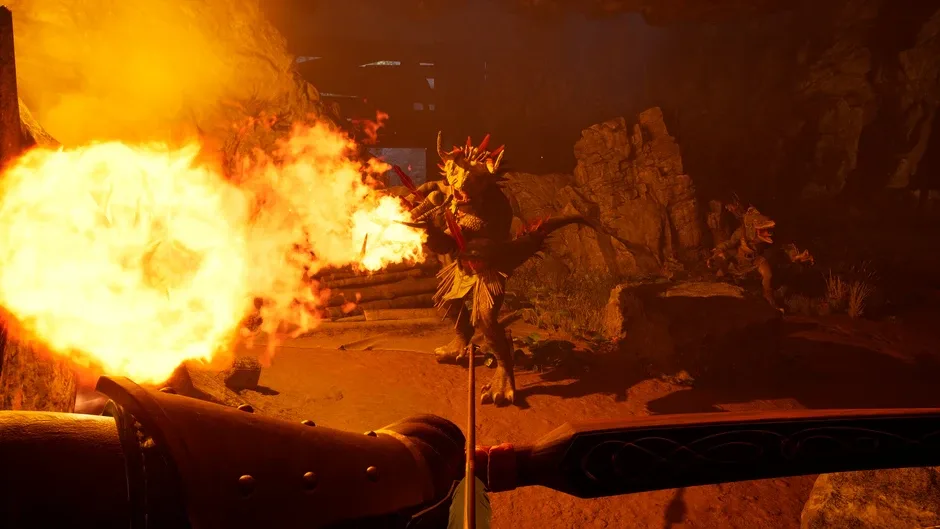
The one idea that carries the whole game is that a build should never be a commitment. Almost every one-handed weapon, swords, axes, spears, wands, can be equipped in either hand, in any combination, and swapped mid-fight with no cooldown beyond the animation itself. A grimoire, the game's spellbook item, can sit in the off-hand next to a sword, or be paired with a second grimoire for a pure caster, or a wand for a ranged-only build that never touches essence, the game's mana resource. Most RPGs make you choose a lane at character creation and spend hours undoing that choice later. Avowed lets you carry three loadouts at once, cycle between them with a button press mid-encounter, and never once ask you to justify the switch. A fight against a pack of xaurips might open with a bow, collapse into dual axes once they close the distance, and end with a grimoire's stun spell buying room to breathe, all without opening a menu.
The Living Lands, region by region#
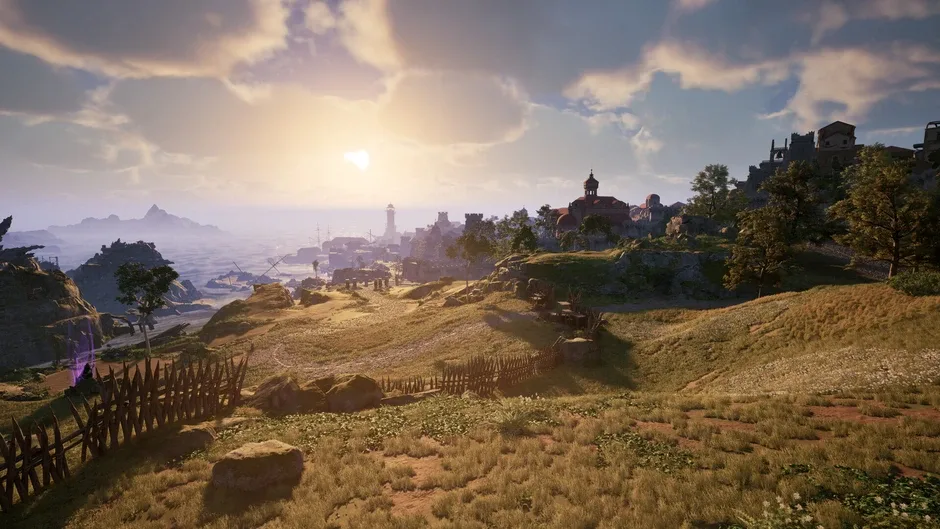
Where most modern fantasy RPGs chase scale, Avowed goes the other way. After a short tutorial, the player, an envoy sent by the Aedyr Empire to investigate a plague called the Dreamscourge, arrives in Dawnshore, a coastal region built around the city of Paradis, its shoreline, and a wide range of wildlife and hostile camps. From there the story moves into Emerald Stair, a greener, more overgrown region in the west with fewer roads and more of Obsidian's habit of hiding a full side story behind a landmark you'd otherwise walk past. Shatterscarp swaps the greenery for a dry, cracked expanse dotted with oases, and Galawain's Tusks closes the loop with volcanic ridges and the game's most vertical exploration. None of these regions connect into one seamless map. Each is its own loaded space, large enough to spend several hours in before the story pulls you toward the next, and the transition between them is a deliberate structural choice rather than a technical shortcut: Obsidian has said plainly that pacing gets harder to control the bigger and more open a world becomes, and building four discrete, dense regions instead of one sprawling one is the trade the studio chose to make. The result is a world where almost every named landmark, ruin, adra formation or abandoned camp actually has something in it, because there's a limit to how much space the team had to fill.
Exploration, loot and lore#
The reward for wandering off the critical path in any of the four regions is rarely a copy-pasted crate. Strangled Adra formations, lore tablets called Ancient Memories, hidden treasure maps and starmetal fragments are scattered across Dawnshore, Emerald Stair, Shatterscarp and Galawain's Tusks specifically to reward players who check the far side of a ridge instead of following the road. None of these systems are hidden behind a difficulty wall or a late-game unlock; they're available from the moment a region opens, which means a player who likes to fully clear an area before moving the story forward is rewarded with unique gear and extra lore rather than a currency sink with nothing behind it. It's a smaller-scale version of the same idea that makes Bethesda's open worlds compelling, applied to a map a fraction of the size, and it mostly works because the team clearly had time to hand-place what's inside every one of those landmarks rather than relying on a loot table to fill the space.
Builds without a class sheet#
Avowed doesn't have classes. Instead, six attributes, Might, Constitution, Dexterity, Perception, Intellect and Resolve, and a background chosen at creation set a starting lean, and from there every skill point is free to go anywhere across trees themed around fighting, ranged combat and magic. Nothing stops a character built around a background suited to a fighter from eventually running three grimoires and no melee weapon at all, and nothing punishes that pivot beyond the time spent respeccing. That freedom is the game's best trick and its one real risk: without a class rail to lean on, it's genuinely possible to spread points thin across every tree and end up with a character that's fine at everything and sharp at nothing. The systems reward reading a couple of skill descriptions before committing, but they never force that reading on you, which is exactly the kind of freedom some players want and others will find directionless.
Difficulty that actually scales the fight, not just the numbers#
Five difficulty settings sit on the menu: Story Time, Easy, Normal, Hard and Path of the Damned. The gap between them isn't cosmetic. Path of the Damned pushes enemies toward soulslike aggression, longer combos, less room for error, and it rewards actually engaging with the dual-wield and grimoire systems rather than mashing a single attack. Story Time strips almost all of that pressure so the plague investigation, the companion writing and the political fallout can carry the experience for players who came for the story rather than the fight. The setting can be changed at any point, which matters more than it sounds: a region that felt like a wall on Hard can be dropped to Normal without restarting, and a build that feels trivial on Normal can be tested properly on Path of the Damned without touching a menu deep in a settings submenu most games bury.
That flexibility matters because raising the difficulty doesn't just pad enemy health bars. On Path of the Damned, groups of enemies close distance faster and punish a melee build that lets itself get surrounded, ranged and spellcasting enemies force real decisions about when to close the gap versus trade at range with a wand, and cooldowns on grimoire spells suddenly matter enough to plan around instead of spamming on reflex. Dropping to Normal or Easy doesn't just make those same fights shorter; it removes the need to plan around them at all. That's a meaningfully different combat experience depending on the setting chosen, not just a damage-multiplier reskin of the same encounters.
Companions: a small roster with sharp roles#
Four companions exist across the whole game: Kai, Marius, Giatta and Yatzli. Only two can travel at a time, with the rest waiting back at camp, which keeps party composition a real decision rather than a formality. Giatta, a talented animancer recruited in Emerald Stair, is the only true healer in the roster, which makes her presence or absence change how a fight against a tough pack has to be played. Marius, a dwarf built around close-quarters durability, and Yatzli, a scholarly wizard whose spells are built for clearing groups rather than dueling one target, round out a set of companions that each solve a different problem rather than offering four variations on the same role. Every companion has their own skill trees that can be respecced independently of the player character, so a fight that goes badly with Marius tanking can be retried with Giatta keeping everyone standing instead. It's a smaller roster than genre rivals offer, and that's a real limitation if what you want from a party RPG is a big ensemble cast to rotate through. What it buys instead is four companions who are each individually well-defined rather than eight who blur together. Companion reactions aren't tracked through a single blunt approval number either; they come from specific choices in specific quests, which means bringing Yatzli along for a decision that touches her own backstory carries more weight than simply having her in the active party when a cutscene happens to trigger. Losing access to two of the four for most of any given stretch also means genuinely deciding what a fight needs, healing from Giatta, raw durability from Marius, or crowd control from Yatzli, rather than defaulting to whichever companion has the highest damage number.
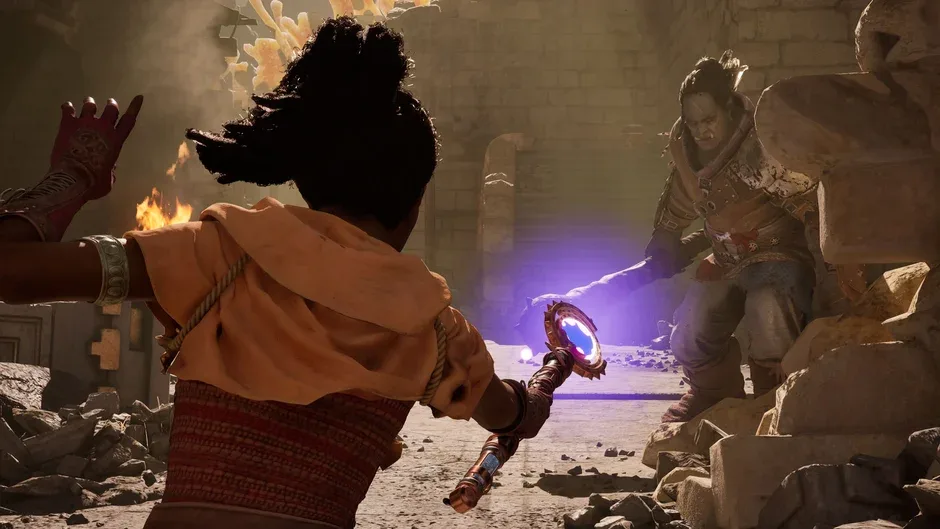
The Aedyr Empire, the Dreamscourge and the Steel Garrote#
The plot's engine is simple on paper: investigate a spreading plague, the Dreamscourge, on behalf of a distant empire, and get pulled into the Living Lands' own politics along the way. What elevates it is the Steel Garrote, an order of paladins devoted to the goddess Woedica and led by Lödwyn, a antagonist who spends most of the game manipulating rather than fighting directly. The Living Lands aren't a blank canvas waiting for an outside empire to civilize; they have their own leaders, their own grudges with Aedyr, and their own reasons to distrust an envoy who showed up chasing a disease. Choices about which factions to support, which leaders to cross and how far to go along with the Steel Garrote's agenda feed into a council scene late in the story that plays out differently depending on who you've sided with, and the game keeps track of far smaller decisions than that: companions reference choices made regions earlier, and quest states don't break if you finish things out of the expected order. None of this reinvents the political-fantasy-RPG plot. What it does is execute the familiar shape, an empire, a plague, a fanatical order, a fractured local population, with writing precise enough that the choices feel like they land somewhere rather than existing to unlock an achievement. Godlike characters, people marked from birth by one of the setting's gods, show up as both allies and threats rather than as one-note plot devices, and Lödwyn in particular is written as someone convinced she's the only adult in the room rather than a mustache-twirling villain waiting to be defeated in a boss fight. The council scene near the end of the main story is the plot's clearest payoff: which leaders are still alive, which factions still trust the envoy, and how far the Steel Garrote's influence has spread all feed into a handful of distinct outcomes rather than a single scripted victory lap, and the game is willing to let an outcome be genuinely bad for the Living Lands if that's where a player's choices led.
New to the Pillars of Eternity universe? Start here#
Avowed sits in the same setting as Obsidian's Pillars of Eternity games but tells a self-contained story that assumes nothing about prior knowledge. The Living Lands are new territory even to characters from the older games, the Dreamscourge is a plot invented for this story, and the handful of returning lore terms, gods, godlike characters, the Aedyr Empire, get explained naturally through dialogue and journal entries rather than assumed. Anyone arriving with zero background in the older isometric games loses nothing structurally; anyone who has played them gets a few extra nods and a firmer sense of what a "godlike" character actually is when one shows up in a cutscene. Either way, the natural entry point is simply starting the game.
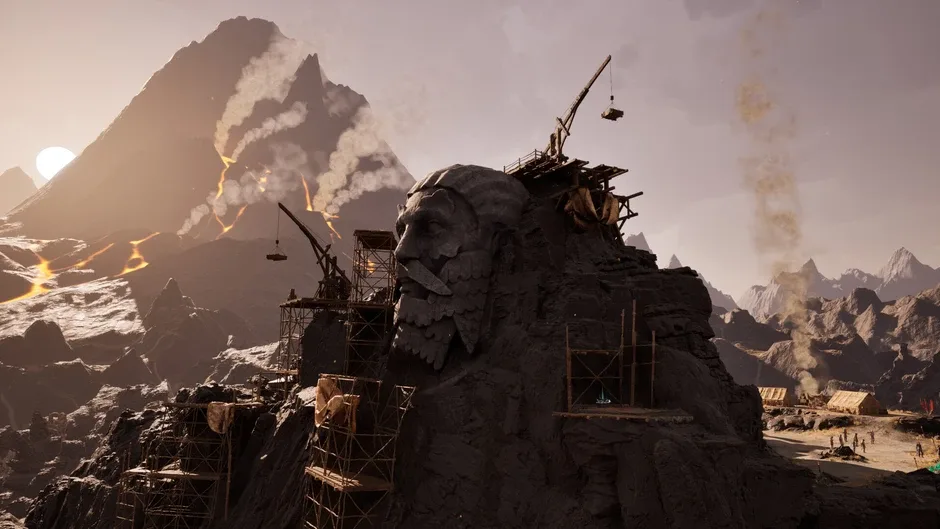
Compared with Skyrim and The Outer Worlds#
Skyrim is the comparison Avowed invites just by being a first-person fantasy RPG with dual-wielding combat, and the two solve the same problem very differently. Skyrim's answer to scale is to make the whole province walkable end to end with almost nothing gating your path; Avowed's answer is to cut the map down to four regions and make sure each one is worth the time spent in it. If what you loved about Skyrim was the sensation of the horizon always holding one more unmarked cave, Avowed's zone borders will feel like a leash. If what you loved was finding a fully realized side story behind almost every door, Avowed does that with a tighter hit rate, because there's less space for the team to spread itself across. Neither approach is simply better; they're built for different appetites, and Avowed is honest about which one it picked.
The Outer Worlds, Obsidian's own earlier RPG, is the closer structural cousin. Both games trade a single sprawling map for a set of self-contained regions visited in sequence, both hand out a small, tightly written companion roster instead of a huge one, and both let a build shift from combat archetype to combat archetype without punishing the player for changing their mind. The difference is scale and tone: The Outer Worlds is a tighter, more satirical 15-to-20-hour game, while Avowed stretches the same philosophy across four much larger regions and a straighter, more earnest fantasy plot. Anyone who liked how The Outer Worlds paced itself already knows roughly what Avowed is doing, just with more room to explore inside each stop.
Worth the money?#
Avowed launched at $69.99 for the standard edition, with a Premium Edition offering early access ahead of the 18 February 2025 release. It's included at no extra cost in Xbox and PC Game Pass from day one, which is the cheapest way in for anyone who already subscribes. A story-focused run through the main plot runs somewhere around 25 to 30 hours; a normal playthrough that clears most of a region's side content before moving on lands closer to 50 hours, and a full completionist pass across all four regions can stretch well past that. A PlayStation 5 version arrived a year after the original release, on 17 February 2026, bundled with a free Anniversary Update that added New Game Plus, a photo mode and a new quarterstaff weapon to every platform at once, which makes now a genuinely good time to start regardless of which platform you're on.
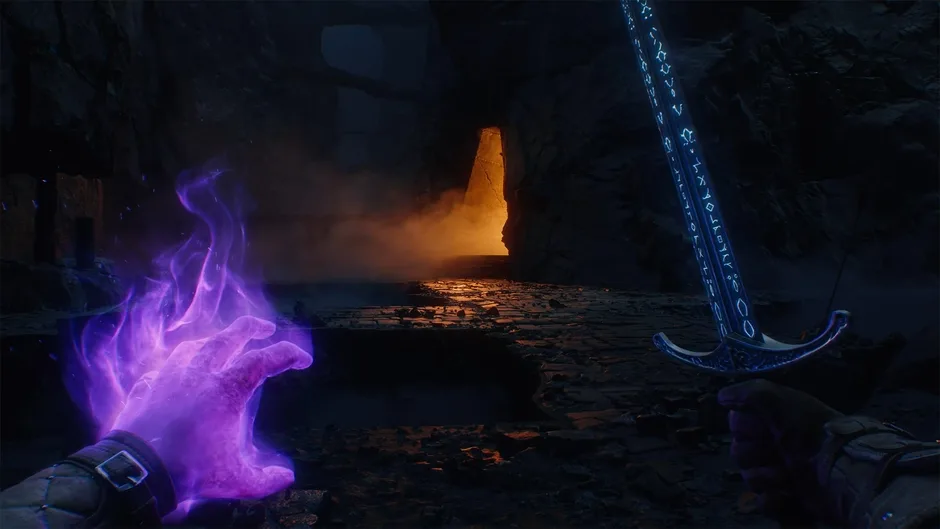
Play this instead if …#
Shorter: The Outer Worlds, Obsidian's own sci-fi RPG, delivers the same classless character building and companion-driven writing in roughly 15 to 20 hours.
Easier: Hogwarts Legacy trades Avowed's build depth for a more forgiving open world and a magic-combat loop that asks less of the player at every step.
Cheaper or co-op: Divinity: Original Sin 2 is routinely discounted, supports full four-player co-op through its entire campaign, and scratches the same party-based fantasy itch with a much larger ensemble cast.
Frequently asked questions#
How long is Avowed? Around 25 to 30 hours for the main story alone, roughly 50 hours for a normal playthrough with side content, and considerably more for a full clear of all four regions.
Is Avowed open world? No. It's built around four large, densely detailed regions, Dawnshore, Emerald Stair, Shatterscarp and Galawain's Tusks, connected by a critical path rather than one seamless map.
Does it have co-op? No. Avowed is a single-player experience with no multiplayer or co-op modes.
Is there a difficulty option? Yes, five settings from Story Time to Path of the Damned, changeable at any time without restarting.
Do you need to have played the Pillars of Eternity games first? No. The story and setting are self-contained, and returning lore terms are explained as they come up.
Is the PlayStation 5 version different from Xbox and PC? It launched a year later, on 17 February 2026, bundled with the free Anniversary Update, New Game Plus, photo mode and a new weapon type, that also came to Xbox and PC at the same time.
Can you respec your build or your companions? Yes. Both the player character and each companion can have their skill points reallocated, so a build that isn't working in a specific region doesn't require starting over.
Do companions react to your choices? Yes. Quest decisions and dialogue shape how each companion responds, and the game tracks smaller choices made hours earlier rather than relying on a single approval meter.
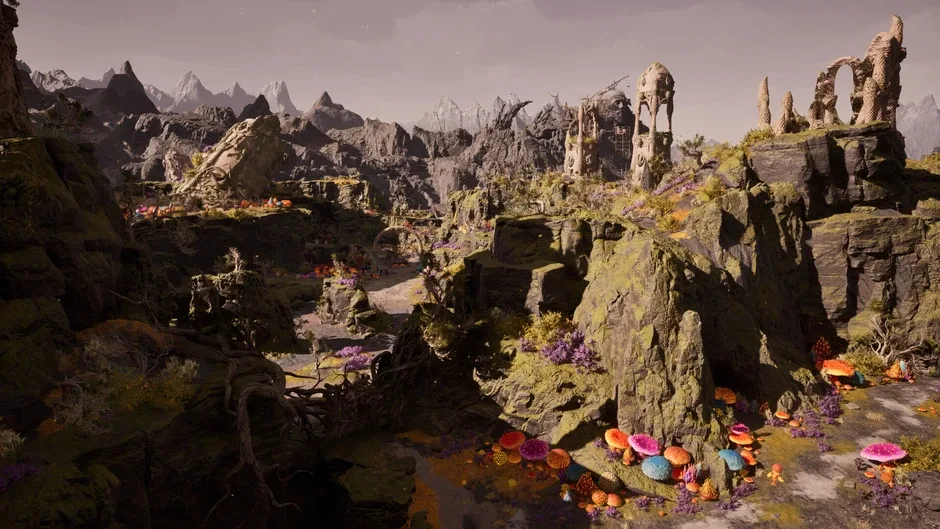
The Game Avant verdict#
Avowed's biggest decision is also its most divisive one: it isn't an open world, and it never pretends to want to be. That choice pays off almost everywhere it matters. The dual-wielding and grimoire systems make experimenting with a build nearly frictionless, the four regions are dense enough that exploring them rarely feels like busywork, and the Steel Garrote plot proves that a familiar fantasy-politics premise can still land if the writing tracks the player's choices closely enough. Where it costs the game something is in scale: four companions instead of a full roster, four regions instead of one continuous world, and a plot that plays a well-worn structure straight rather than subverting it. None of that stops Avowed from being one of the most confidently focused RPGs in years. It knows exactly what it is, and it never apologizes for what it isn't.
8 out of 10 – a first-person RPG that traded scale for precision, and mostly proves that was the right call.