The captive becomes the weapon#
Control Resonant is a sequel that does the least comfortable thing a follow-up can do: it changes who is holding the gun. Jesse Faden made the Federal Bureau of Control her own by force of will in 2019. Her brother Dylan spent the years since that story ended as a prisoner, not a director, and Control Resonant opens with the FBC he was taken by putting a weapon in his hands anyway, because Manhattan is under threat from a cosmic entity and there is no one else close enough to whatever he has become. That premise, more than any single mechanic, is why this sequel works as often as it does. Remedy did not simply make Control 2 with a new coat of paint. It asked what it looks like when the people who caused your worst years are the only ones who can arm you for your next fight, and then built a game around a protagonist who has every reason not to trust the badge on his handlers' chests.
Released worldwide on 24 September 2026 for PlayStation 5, Xbox Series X|S, PC via Steam and the Epic Games Store, and Mac, Control Resonant is Remedy Entertainment's self-published follow-up to Control, co-financed with Annapurna Pictures. Both of those production facts matter more than they usually would, because they say something about the confidence behind the game before a single frame of it plays. A studio does not self-fund and self-publish a sequel to a cult hit unless it believes the property can stand on its own without a publisher's marketing machine smoothing the edges off. That confidence shows in the writing, less in restraint than in a willingness to make its new lead genuinely uncomfortable to play as, at least at first.
What makes Control Resonant different#
The one idea that carries this sequel is that Dylan Faden is not a hero the FBC made. He is a hostage the FBC is now negotiating with under duress, and the negotiation is the plot. Jesse walked into the Oldest House as an outsider looking for her brother and left as its Director because she chose to be. Dylan was taken from his life years earlier in the fallout of the same paranormal events that shaped Jesse's story, held by the Bureau that now needs him, and given no comparable choice: the cosmic entity threatening Manhattan does not wait for anyone's consent, least of all his. Every scene between Dylan and the agency that once contained him carries that history underneath the dialogue. A briefing that would be routine exposition in another game becomes a small standoff here, because the person receiving the orders spent years as the subject of a different kind of order from the same institution.
That framing changes what "empowerment" means in a Remedy game. Control's whole appeal in 2019 was watching an ordinary-seeming woman discover she was extraordinary and take charge of a building that had swallowed people whole. Control Resonant inverts it: Dylan already knows exactly how extraordinary the FBC considers people like him, because that is precisely why they locked him away. His newfound powers are not a gift he is handed. They are the reason he was worth capturing in the first place, and the game is aware enough of that irony to let it sit uncomfortably rather than resolve it with a triumphant training montage.
The Federal Bureau of Control, seen from the other side of the glass#
Returning to the FBC as an institution rather than as Jesse's inherited command gives Control Resonant a different texture than its predecessor. The Bureau in the first game was a mystery Jesse was slowly granted access to as Director; here, it is an authority Dylan has direct, painful experience of from the inside of its containment procedures. Scenes set among FBC personnel read differently when the protagonist has spent years as one of the things the Bureau exists to contain rather than the person running it. The agency's usual bureaucratic surrealism, its memos, its rituals, its calm procedural language wrapped around genuinely horrifying subject matter, becomes something closer to gallows humor when the person reading the memo has personal history with what that language is designed to paper over.
This does not make the Bureau simple villains, and Control Resonant does not play it that way. The FBC needs Dylan because the cosmic threat facing Manhattan is bigger than its usual containment work, and the people assigning him to the field are, by their own accounting, out of better options. The tension is not "is the FBC good or bad." It is that an organization built to hold people like Dylan at arm's length now has no choice but to hand him a mission and hope his history with them does not get in the way at the worst possible moment.
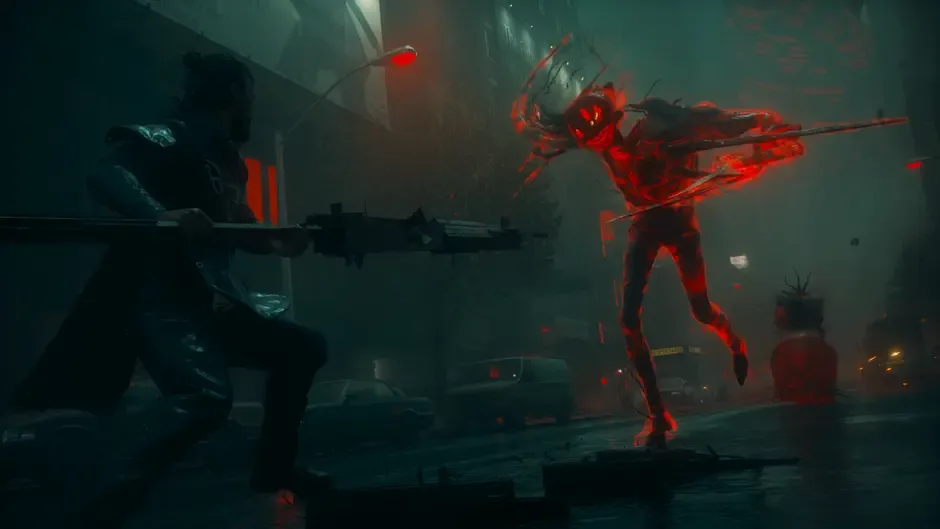
Manhattan, not just the Oldest House#
Control kept its entire supernatural mystery inside one building. That containment was part of the point: the Oldest House was a labyrinth precisely because it never let the story, or the player, out. Control Resonant moves the threat into Manhattan itself, and the shift says something about the scale the sequel is reaching for. A cosmic entity endangering an entire borough is a different order of problem than a hostile intelligence contained inside a shifting federal building, and setting the story in the same supernatural version of New York that the first game established gives the sequel a foundation to build outward from rather than reinvent.
Whether a whole city can sustain the same sense of dread that a single, endlessly rearranging building produced is the biggest open question a sequel like this has to answer, and it is also the question hardest to settle without overstating specifics that have not been confirmed in detail. What can be said with confidence is that the choice to leave the Oldest House's four walls is a real swing, not a safe one, and it puts weight on Manhattan itself to feel as unnervingly alive as the building did. A city block that behaves like the Oldest House's hallways used to is a harder trick to pull off consistently than a single corridor, because a city has more places for that illusion to break.
A protagonist built from captivity, not command#
Jesse Faden's arc across Control was fundamentally about acquiring authority: over the Hiss, over the building, over her own abilities. Dylan Faden's arc in Control Resonant starts from the opposite position, and that structural choice is the most interesting decision the sequel makes. He is not stepping into a role that fits him. He is being deployed by the institution that defined years of his life as a prisoner, against a threat that does not care about his consent either. The tension between those two facts, an unwilling asset and an involuntary crisis, gives the story a spine that a simple "sibling picks up where the last one left off" premise would not have had.
It also raises the stakes of trust as a mechanic of the narrative rather than of combat. Every ally Dylan is assigned, every FBC handler giving him instructions, carries the implicit question of whether this is the agency helping him or the agency using him again. Remedy has built entire games around ambiguous institutional power before, and Control Resonant leans into that history rather than smoothing it over for a more conventional sequel.
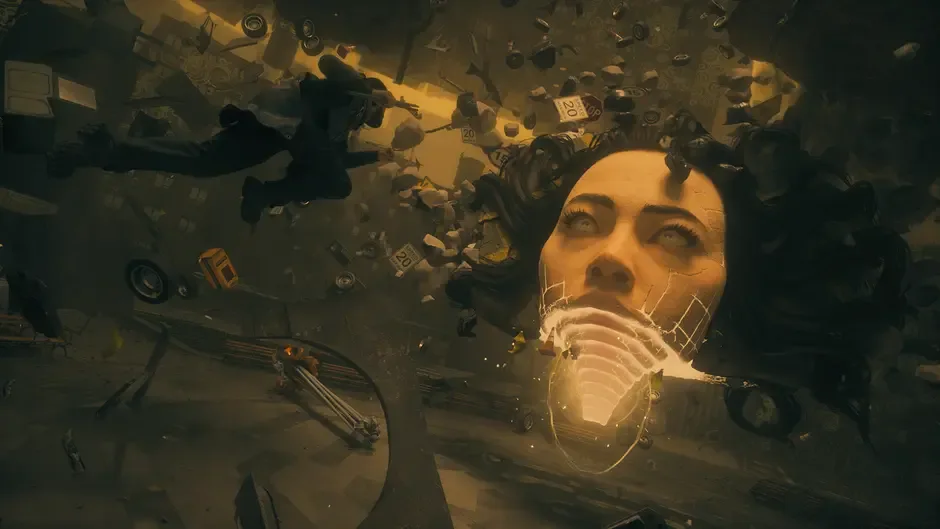
Powers he never asked for#
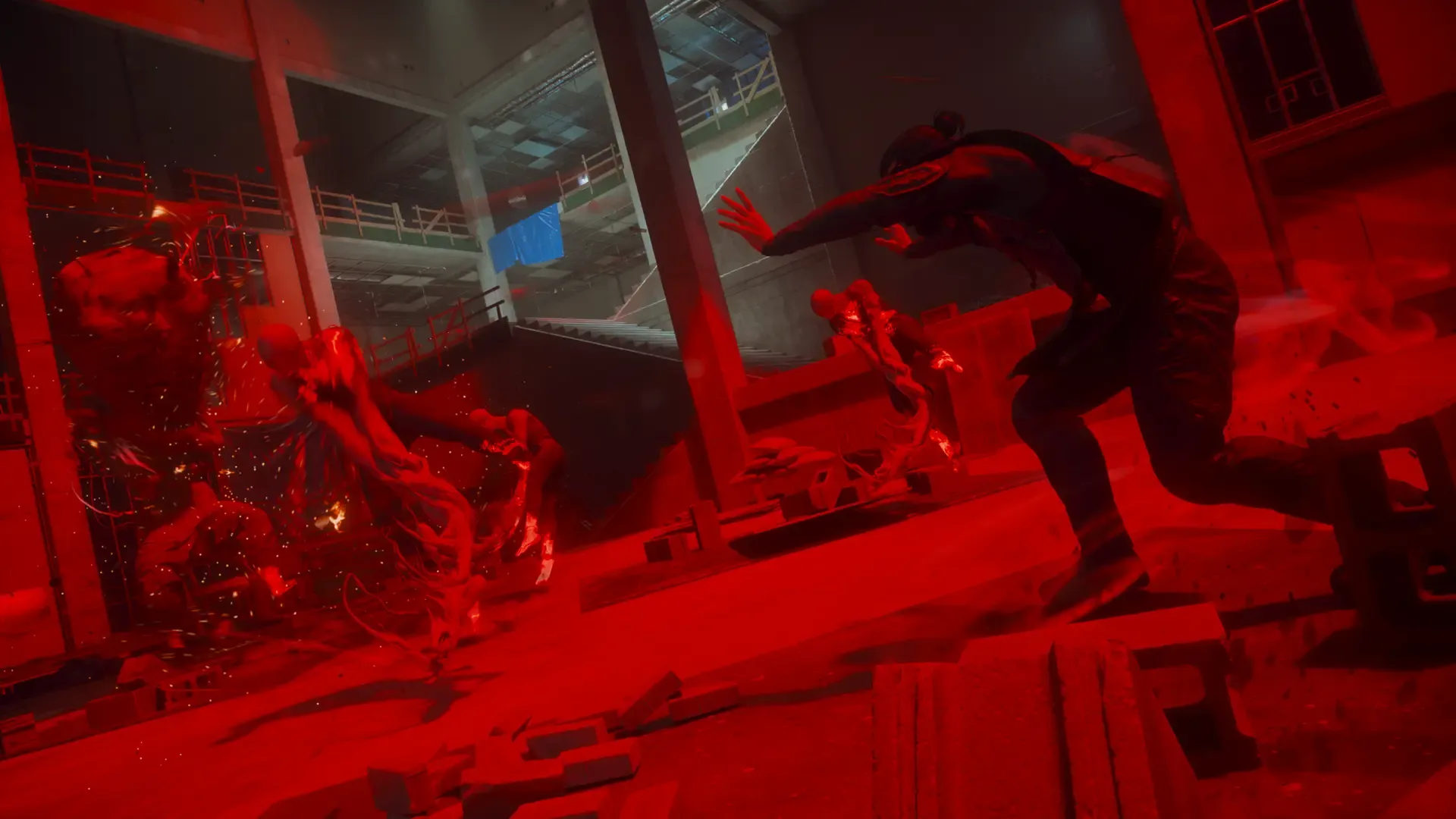
Control built its entire moment-to-moment identity around Jesse discovering what she could do and choosing to lean into it, one recovered ability at a time, until levitating through a shifting federal building felt natural. Control Resonant cannot use that same discovery arc in good faith, because Dylan's newfound powers are not framed as a gift he stumbles into and grows fond of. They are the reason the FBC considered him worth containing in the first place, and the game treats that history as baggage rather than a clean slate. Where Jesse's growing command over her abilities read as liberation, Dylan wielding his own abilities in the field, for the very organization that once studied him because of them, reads as something closer to being handed back a leash with a slightly longer lead.
That framing matters more than any specific ability would, because it changes what the player is meant to feel while using those powers rather than just what the powers let a player do. A game that wanted an uncomplicated power fantasy would have Dylan embrace his abilities the moment the FBC hands him a mission. Control Resonant is more interested in a protagonist who is good at what he can do and still resents every circumstance that taught him how. That tension between competence and resentment is harder to write convincingly than a straightforward hero's journey, and it is the clearest sign that Remedy was not interested in simply recreating Jesse's arc with different set dressing.
Annapurna, self-publishing, and what independence buys#
It is worth dwelling on the business side of Control Resonant longer than a review normally would, because in this case the production model is not incidental to the game's identity. Remedy self-published this sequel and co-financed it with Annapurna Pictures rather than signing with a traditional publisher the way it did for the original Control. That distinction is not just a line in a press release. A studio answering to its own timeline, rather than to a publisher's fiscal calendar, tends to make different decisions about scope, about how uncomfortable a protagonist is allowed to be, and about whether a sequel is required to repeat what worked rather than risk what might not.
Control Resonant reads like a game that took advantage of that room to maneuver. Committing to a captive protagonist with a fraught relationship to his own allies, and committing to expanding the setting from one building into an entire borough, are the kind of choices that are easier to make when a studio does not have to defend them to an external publisher nervous about alienating an established fan base. Whether that independence continues to pay off after launch, in the form of patches, post-release support, and how the game is priced over its first year, is the part that can only be judged with time. What can be said now is that the ambition on display lines up with what a self-funded, self-directed sequel would be expected to attempt.

New to Control? Start here#
Control Resonant assumes familiarity with the world Control (2019) built, but not total mastery of its lore. If Dylan's backstory, kidnapping, and years in FBC custody are unfamiliar going in, the sequel's opening stretch does the work of establishing who he is and why the Bureau both fears and needs him, so newcomers are not lost by the first mission. That said, the emotional weight of watching Dylan work alongside his former captors lands harder if Jesse's story, and the paranormal events that led to Dylan's disappearance in the first place, are already known. Playing Control first is not a requirement, but it changes the sequel from a competent standalone thriller into a story with real historical weight behind every scene between Dylan and the FBC.
Compared to Control (2019)#
Control Resonant and its predecessor share a setting, an institution, and a family, but they are built around opposite emotional engines. Jesse's story was about arrival: a woman walking into an impossible building and slowly becoming powerful enough to run it. Dylan's story is about aftermath: a man who was taken from his life by that same institution years ago being handed power now because the alternative is worse than trusting the people who wronged him. If what made the original Control compelling was watching authority get earned, Control Resonant is compelling for the opposite reason, watching authority get imposed on someone who has every right to resent it.
The scale is the other clear difference. Control's Oldest House was a single, self-contained mystery box; Control Resonant's Manhattan is a whole city under threat from something Remedy is calling a cosmic entity, which is a bigger and more externally visible kind of danger than a building most of New York did not even know existed. Players who loved the first game specifically for its claustrophobic, bureaucratic weirdness should go in aware that the sequel is reaching outward rather than staying contained. Players who wanted the world Control hinted at, one bigger than a single federal building, get exactly that here.

Worth the money?#
Control Resonant launched day one across PlayStation 5, Xbox Series X|S, PC (Steam and the Epic Games Store), and Mac, which removes the usual gap between console and PC release, and the Mac version on day one is notable on its own; console-first supernatural action games rarely arrive on Apple hardware at launch. Being self-published and co-financed with Annapurna Pictures means Remedy controls its own release cadence and pricing without a larger publisher's quarterly targets shaping post-launch support, which is generally good news for how the game gets supported once the initial wave of reviews and coverage passes.
Whether it is worth buying at launch versus waiting for a sale depends mostly on how strongly the premise lands for a given player. Anyone who finished Control and wanted to know what happened to Dylan Faden has a direct, specific reason to play this at launch rather than later; the story is squarely about him, and that curiosity does not get less relevant by waiting. Anyone coming in cold, without history with the first game, loses relatively little by waiting for a price drop, since the emotional core depends on knowing who Dylan is and what was taken from him. As with the original Control, playing on the platform that already has the first game installed is the path of least friction, since revisiting Control beforehand meaningfully changes how the sequel reads.
Play this instead if…#
Shorter: Alan Wake 2, also from Remedy and set in the same connected fiction, tells a tighter, more contained supernatural mystery if a full sequel-scale commitment is more than is wanted right now.
Easier or more familiar: Control (2019) itself is the obvious answer for anyone who has not played it, since it establishes Jesse, the FBC, and the Oldest House that Control Resonant builds directly on top of.
Cheaper: waiting for a first sale window on Control Resonant costs nothing but patience, and the story's weight does not diminish for arriving later, since it is not a live-service game built around being current.
Frequently asked questions#
Do you need to play Control (2019) first? Not strictly, since the sequel introduces Dylan's situation for newcomers, but the emotional stakes of his history with the FBC land far harder with Jesse's story already known.
Who is the main character in Control Resonant? Dylan Faden, Jesse Faden's brother, who was kidnapped years earlier following the paranormal events of the first game and is deployed by the FBC, his former captors, against a cosmic threat to Manhattan.
What platforms is it on? PlayStation 5, Xbox Series X|S, PC via Steam and the Epic Games Store, and Mac, all as of the worldwide launch on 24 September 2026.
Is it connected to Alan Wake 2? Both are part of Remedy's shared fictional universe alongside the original Control, though Control Resonant's story centers on Dylan Faden and the Manhattan threat rather than crossing directly into Alan Wake's story.
Who published it? Remedy Entertainment self-published Control Resonant, co-financing it with Annapurna Pictures rather than working with a traditional external publisher.
A cosmic entity, not another Hiss#
The nature of the antagonist is another place where Control Resonant chooses escalation over repetition. The Hiss in the first game was an invasive, corrupting intelligence that spread through the Oldest House and through people, which fit a story that never left one building: containment and infection are the natural vocabulary of a place built to hold dangerous things. A cosmic entity threatening Manhattan is a different category of threat entirely, something external and citywide rather than something that seeps through walls and minds inside a single structure. It is a threat that makes sense only once the story has already committed to leaving the Oldest House behind, and it gives the FBC's decision to arm Dylan an urgency that a smaller-scale return of the Hiss would not have carried nearly as convincingly.
That choice also changes what kind of dread the game is chasing. The Oldest House's horror was intimate and architectural: hallways that did not agree with each other, objects that refused to behave, an institution slowly revealing how little control it actually had over what it was meant to contain. A cosmic threat over an entire borough is a horror of scale instead, the kind that asks whether an organization built to manage one impossible building can manage an impossible sky over an entire city. Whether Control Resonant answers that question as confidently as Control answered its own is the single biggest thing worth watching for going in, since raising the stakes this far is the sort of decision a sequel cannot walk back once it has made it.
The Faden family, from the outside in#
One quieter strength of Control Resonant is how it treats the Faden family without leaning on Jesse simply reappearing to carry the emotional weight for her brother. Dylan's story stands on its own, built from his kidnapping, his years in custody, and his complicated present tense with the agency that held him, rather than functioning as a spin-off that borrows its stakes from someone else's completed arc. That is a harder needle to thread than it looks. Sequels built around a sibling or a successor character often lean on the audience's attachment to the original protagonist to do work the new character has not earned yet. Control Resonant instead asks players to invest in Dylan on his own terms, as someone whose history with the FBC is distinct from and, in some ways, darker than his sister's, since Jesse chose to walk into the Oldest House and Dylan was taken from his life without being asked.
The GameAvant verdict#
Control Resonant is not the safe sequel it could have been. Handing the lead role to a hostage instead of a hero, and moving the threat from one building into an entire city, are both real risks, and a game with lower ambitions would have just put Jesse back in the driver's seat and called it a day. What makes this sequel worth taking seriously is that its central tension, a man forced to fight alongside the institution that stole years of his life, gives every mission a weight that a simpler power fantasy would not have earned. The expansion from the Oldest House to Manhattan is the bigger swing, and it asks the game to sustain a sense of dread across a whole city that a single building produced almost by default; that is the part worth watching closely rather than assuming succeeds just because the premise is strong. Self-published, day-one across every major platform including Mac, and unwilling to give its own protagonist an easy relationship with his allies, Control Resonant earns its place as a sequel that expands what Control was about rather than repeating it.
8 out of 10 – a confident, uncomfortable sequel that trusts its world enough to leave the Oldest House behind.