A revenge story with five weapons and one familiar map#
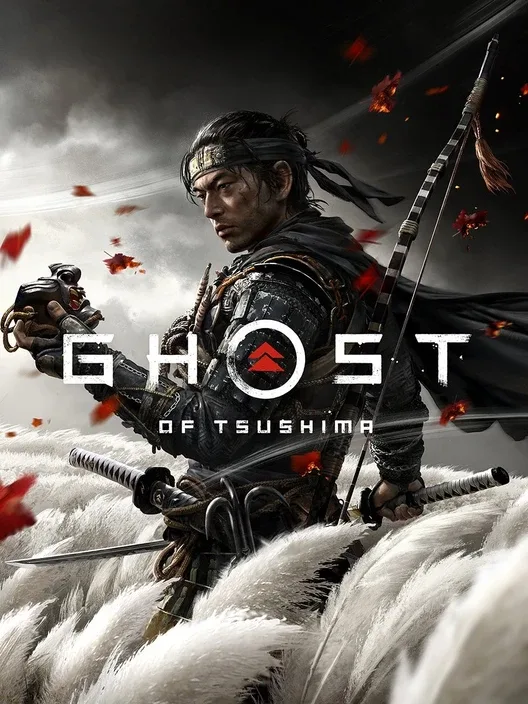
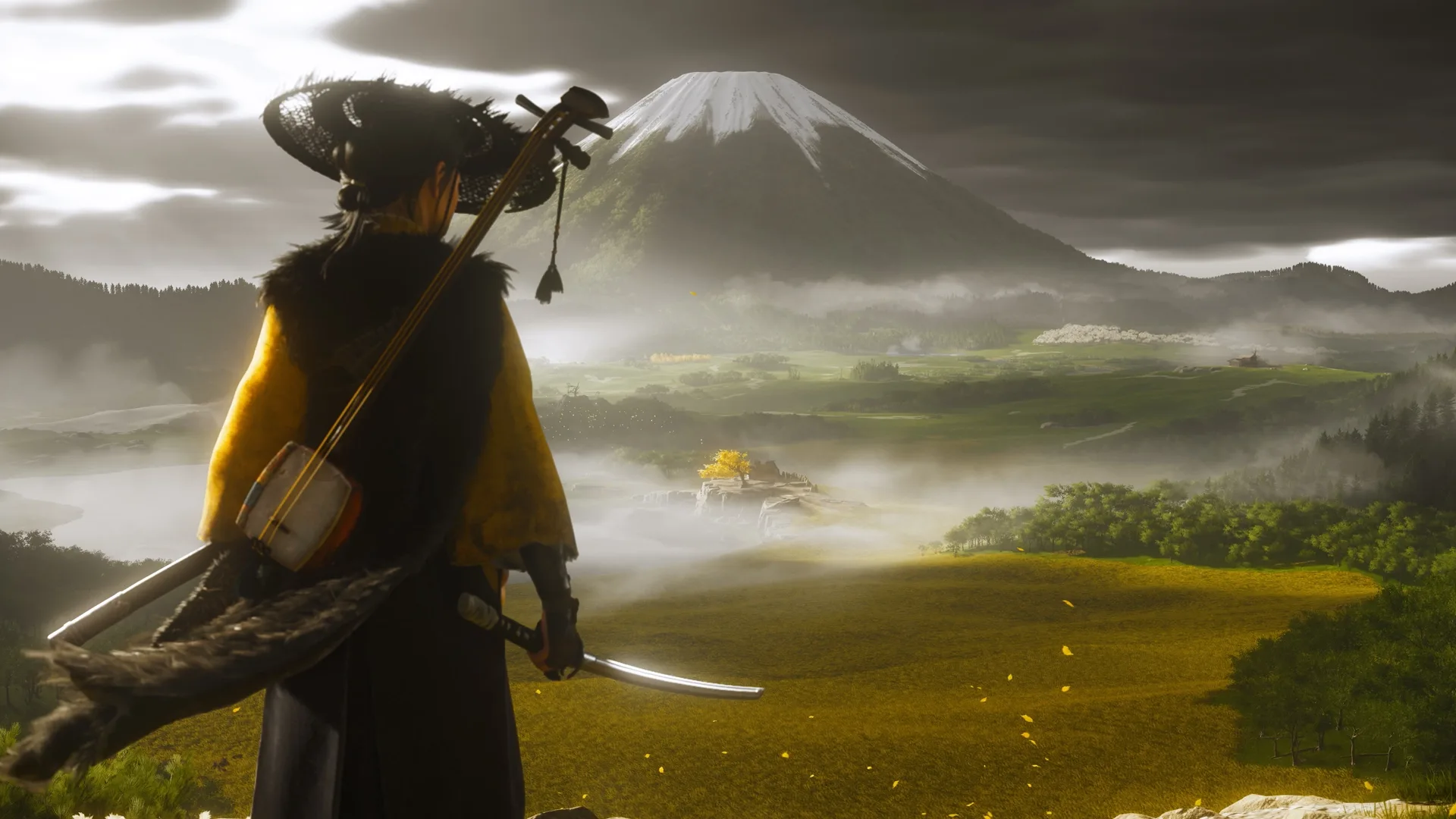
Ghost of Yotei is Sucker Punch Productions' standalone follow-up to Ghost of Tsushima, developed and published under Sony Interactive Entertainment's PlayStation Studios banner and released on 2 October 2025 exclusively for PlayStation 5. It trades Jin Sakai and 13th-century Tsushima for Atsu, a new protagonist, and 1603 Ezo, the northern frontier now known as Hokkaido, three centuries after the first game's setting. The premise is simple and old: a family is murdered, a child survives, and sixteen years later she comes home with a sword and a list. What makes the sixty-plus hours built around that premise worth the time is a combat system with real range and depth for the first time in the series. What keeps it from being a clean step forward is a map that, icon for icon, still plays like the last game's.
What makes Ghost of Yotei different#
The one idea the whole game is built on is that a killer needs the right tool, not just a bigger sword. Ghost of Tsushima locked Jin into a single stance that shifted only cosmetically between four postures; Ghost of Yotei throws that system out entirely and replaces it with a growing arsenal that behaves like real weapons with real trade-offs. Atsu starts with a katana, the same reliable all-rounder from the first game, but soon adds the yari, a long spear that keeps distance and stops charging enemies in their tracks; the kusarigama, a chain-sickle that pulls shields away and drags armoured brutes off balance; the ōdachi, a two-handed greatsword that breaks stances in one or two swings but leaves Atsu exposed mid-swing; and eventually a second katana for dual-wielding, trading reach for speed against groups. Firearms round out the kit: the returning hankyu and yumi bows for ranged picks, and two new additions in the tanegashima matchlock rifle and the tanzutsu matchlock pistol, both slow to reload but capable of ending a duel in one shot if you land it.
None of this is decorative. Sucker Punch built enemy types around specific counters, so a shielded spearman who shrugs off katana slashes folds instantly to the kusarigama's pull, and an armoured brute who no-sells a dagger throw staggers hard from an ōdachi stance-break. The game does not force constant switching, and a player who wants to stick with the katana and a bow for the whole campaign can, but the fights built around a full loadout are noticeably better than the ones fought with a single weapon, and the difference is obvious the first time a kusarigama yank turns a five-on-one ambush into a manageable fight instead of a death sentence.
Combat: a rock-paper-scissors system with real stakes#
Where Ghost of Tsushima's combat was largely about parry timing and stance selection from a static list, Yotei's fights are about reading a crowd and picking tools on the fly. A typical mid-game skirmish might throw a spear-armed guard, a shielded soldier and an unarmoured archer at Atsu simultaneously, and the fastest, cleanest way through is not to parry everything with a katana but to open with the yari to keep the spearman at range, switch to the kusarigama to strip the shield, and finish with a katana combo once the group is broken up. Weapon swaps happen on a radial wheel that can be assigned to the d-pad, and a well-drilled player can cycle through three tools inside a single ten-second exchange without ever pausing the action.
The parry window is tighter than in the first game and rewards genuine reaction rather than rhythm memorisation, and a new "resolve" system lets Atsu spend built-up meter on finishing techniques that differ by weapon: a spinning ōdachi decapitation, a katana quickdraw that can one-shot an unaware target, or a kusarigama strangle that silently drops a guard mid-patrol. None of these are new ideas in isolation, but stacking five distinct weapon movesets on top of a resolve economy gives Yotei's combat a ceiling the original game never reached, and by the time Atsu has unlocked the full kit somewhere around the twenty-hour mark, standard encounters that would have been rote in Tsushima become small tactical puzzles worth engaging with rather than skipping past.
Atsu's wolf and the shamisen#
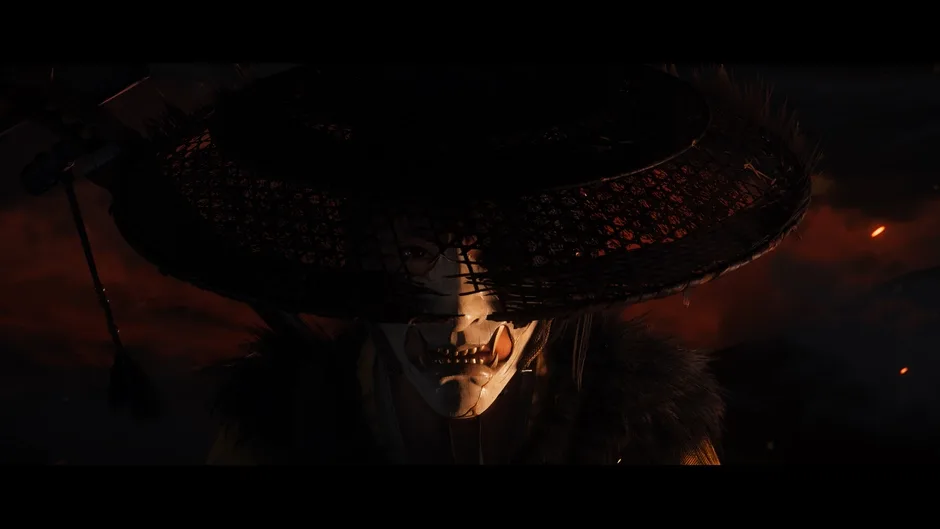
The clearest new ritual in the game is the shamisen, a stringed instrument Atsu carries and plays by swiping the touchpad. Different melodies do different things: Song of the Wolf calls in a wolf companion who fights alongside Atsu in coordinated attacks, flanking enemies she is locked onto and interrupting group ambushes before they close in; other songs let her rest at a campfire to restore health and spirit, or summon travelling merchants and old allies for a scene rather than a menu transaction. It is a small system, but it replaces the passive menu-browsing of most open-world RPGs with an actual action performed in the world, and the wolf in particular changes the math of ambush encounters by giving Atsu a second body to draw aggro during a spear rush.
Traversal borrows the previous game's guiding-wind idea and updates it: a touchpad swipe now sends a gust of wind toward the current objective rather than relying purely on ambient wind direction, which is a small but welcome concession to clarity in a game whose map otherwise avoids quest markers on the terrain itself. Atsu has a horse from the opening hours rather than earning one mid-campaign, and galloping through Ezo's white flower fields grants a temporary speed boost, a nice touch that rewards riding through scenery rather than always taking the shortest road.
The Yotei Six: named enemies who earn the build-up#
The game's spine is the hunt for the Yotei Six, the group responsible for slaughtering Atsu's family near Mount Yotei in 1587 and leaving her for dead pinned to a burning ginkgo tree with her own father's katana. Sixteen years later she returns to track them down: Lord Nariaki Saito, the ringleader; the Snake, Yukiharu, a poisoner who prefers ambush to open combat; the Oni, Lord Hyozo, a brute whose fights are built around breaking through Atsu's guard with raw power; the Kitsune, Dojun, a trickster whose arena fights lean on illusion and misdirection; and Saito's two sons, the Dragon, Ukichi, and the Spider, Sakichi, each fought as a distinct set-piece rather than a palette-swapped reuse of the others.
The order in which you hunt them is entirely up to you, mirroring the structure Ghost of Tsushima used for its late-game targets but expanding it across the whole campaign rather than a single act. That freedom is a genuine strength: gearing up against the Oni's brute-force fight before tackling the Kitsune's more evasive duel lets you shape a build around your own weapon preferences rather than being handed a fixed difficulty curve. It is also, honestly, where the game's writing is a little uneven, since Yukiharu and Dojun's confrontations are staged with more care, better dialogue and sharper location design than Ukichi and Sakichi's, and a player who happens to hunt the weaker two first will feel the story's momentum dip before Saito's own confrontation picks it back up.
Exploration: Ezo is bigger, and it plays exactly the same#
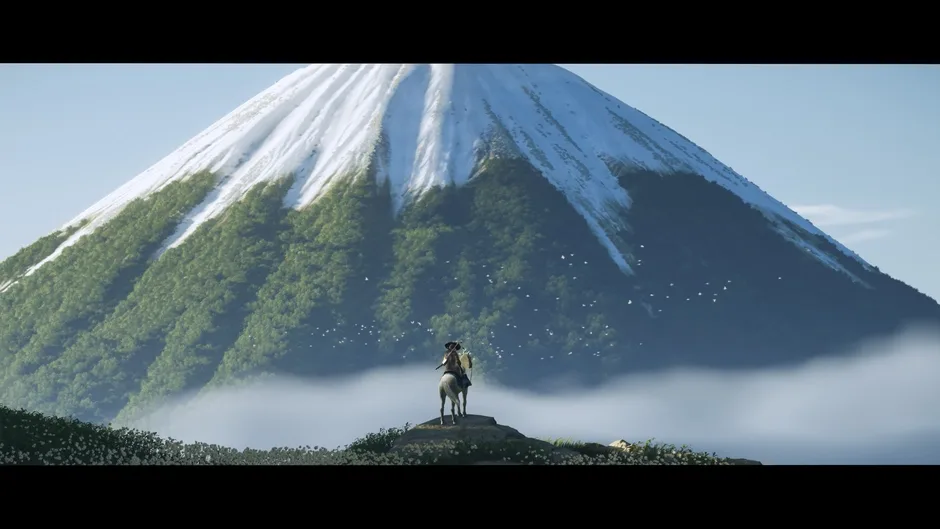
This is the section where Ghost of Yotei's biggest problem lives. Ezo is a genuinely striking region, colder and starker than Tsushima's coastline, with pine forests, volcanic ash fields around Mount Yotei itself, and small fishing villages that give the world a harsher, more frontier feel than the original game's cherry blossoms and rolling hills. The problem is not the setting. It is that almost every activity layered on top of it, the climbing challenges at scenic viewpoints, the bandit camps cleared one watchtower at a time, the spyglass that lights up points of interest across the horizon, plays out in near-identical fashion to Ghost of Tsushima. Sucker Punch clearly understood that structure worked once and chose not to meaningfully rebuild it rather than risk breaking what reviewers and players liked the first time. The result is a map that never confuses you and never quite surprises you either, and the fatigue of clearing another camp or another viewpoint sets in earlier on a second full region than it did in the first game, simply because the pattern is now familiar rather than new.
Stealth suffers a related issue. AI in dense outposts is generally sharp about noticing a dead body or a disturbed patrol, but there are enough moments where an alerted guard standing directly next to an unaware ally fails to pass on that alarm that a careful stealth run can be undone by what feels like a scripting gap rather than a fair mistake. It is not frequent enough to ruin an outpost clear, but it happens often enough across a full playthrough to notice.
Difficulty and accessibility#
Ghost of Yotei offers a difficulty slider that separately tunes combat aggression and puzzle assistance, similar in spirit to the original game's accessibility options, and a "Story" mode that removes most combat friction for players who came for Atsu's arc rather than the parry timing. On the default setting, most standard encounters are forgiving once you understand the weapon-counter system, and the real challenge sits in the Yotei Six duels and a handful of optional mini-boss encounters scattered through side content, which hold back damage and openings until you have correctly read the fight. It is a game that lets a patient player win through preparation as much as reflexes, which fits Atsu's arc as a survivor who trains rather than a natural-born warrior.
Side content beyond the six hunts includes smaller character-driven quest lines with allies Atsu meets on her way north, and these fare noticeably better than the generic camp-clearing activities scattered across the map. A handful revisit faces from Atsu's sixteen years away from Ezo, and the best of them are written with the same restraint as the main story rather than padded out with filler dialogue, which makes them worth seeking out even for a player who is otherwise skipping side content to stay focused on the Yotei Six.
Story and presentation#
Atsu is a quieter, more withdrawn protagonist than Jin Sakai, and the writing leans into that: much of her arc is carried through silence, through what she chooses not to say to old allies from her time in the south, rather than expository dialogue. Erika Ishii's performance carries a lot of that weight, and for the first time in the series the game ships with a full Japanese dub complete with proper lip-syncing rather than an English mouth animation stretched over a translated track, which makes the more intimate confrontations, particularly Saito's, land with noticeably more force than the equivalent scenes in the first game managed.
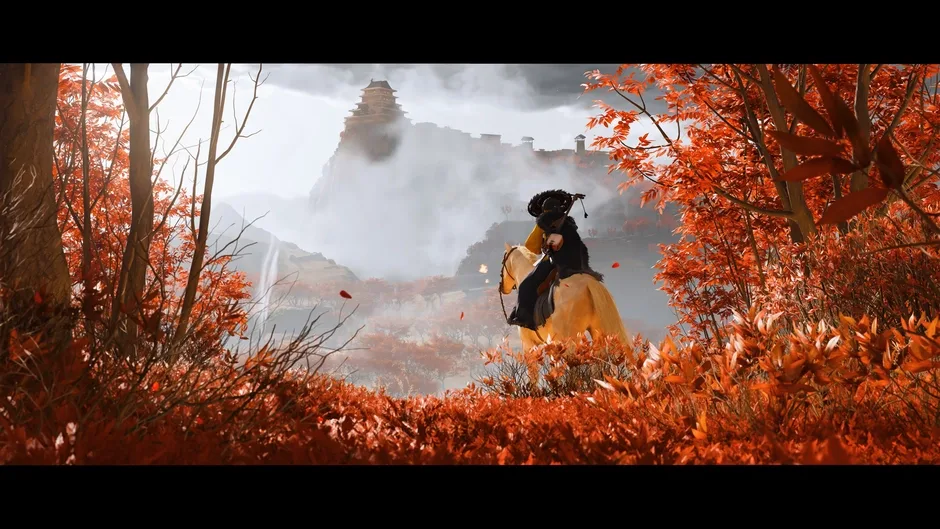
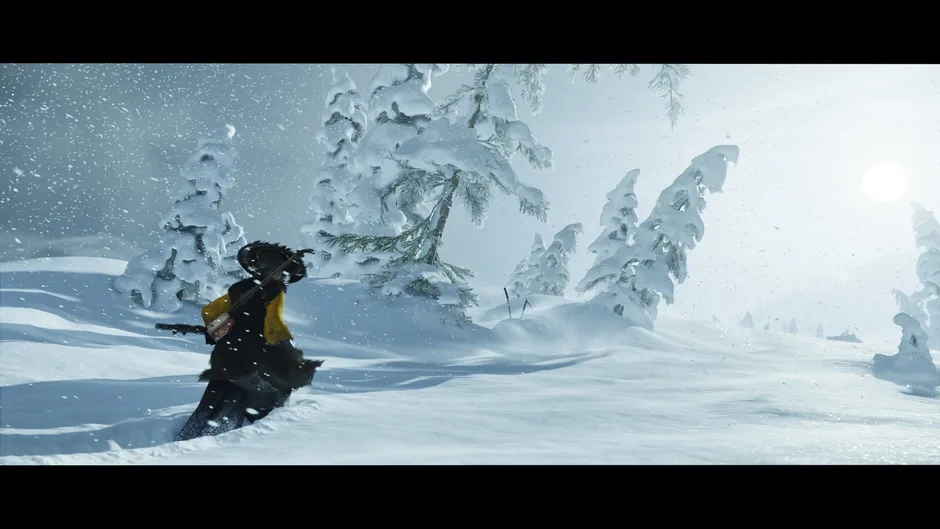
Visually, Ezo is one of the best-looking open worlds on PS5. The game ships with Quality, Performance and Ray Tracing modes on base PS5, and a PS5 Pro-exclusive Ray Tracing Pro mode that combines ray-traced lighting with a stable 60 frames per second through PlayStation Spectral Super Resolution upscaling, a combination the base console cannot manage at the same fidelity. Photo Mode, expandable at almost any moment including mid-combat, remains one of the more generous toolsets on the platform and is clearly built for a game whose landscapes are meant to be paused on. Weather and seasonal lighting shift as the campaign progresses, and the ash-grey slopes around Mount Yotei itself look and feel distinct from the pine forests and coastal fishing villages further south, which does a lot of work to keep a long campaign visually fresh even when the activities layered on top of that scenery start to repeat.
Compared with Ghost of Tsushima and Rise of the Ronin#
Ghost of Tsushima is the obvious comparison, and the honest answer is that Yotei improves almost everything underneath the open-world shell while leaving the shell itself untouched. Combat, the wolf and shamisen systems, the voice work and the boss design are all sharper here. The open-world loop of camps, viewpoints and collectibles is not, and anyone who found Tsushima's structure repetitive by the halfway point will find Yotei repeats the same pattern rather than solving it. If you loved Tsushima specifically for its world design and pacing, you will likely feel the same way here, just with better fights along the way.
Rise of the Ronin, Team Ninja's own samurai open-world game, is worth naming because it aimed at similar territory with a harder combat system built around parries and a wider cast of historical figures, but its world design and production values sit a clear tier below Sucker Punch's work. If Ronin's combat difficulty appealed to you but its presentation did not, Yotei's weapon-counter system is a gentler but more polished alternative. Neither game solves the open-world checklist problem the genre has carried since well before either studio started work, but Yotei at least dresses it up with the best production values either series has managed, and its combat variety gives you more reasons to actually finish a bandit camp than either Ronin or the original Tsushima did.
Worth the money?#
At $70 for the standard edition, Ghost of Yotei sits at current full price for a first-party PlayStation release, with a $249.99 Collector's Edition for anyone who wants physical extras alongside the game. For that money you get a story campaign that runs around 25 hours if you beeline the Yotei Six, 40 to 60 hours for a normal playthrough that dips into side content and gear upgrades, and 50-plus hours for full completion, which is a healthy amount of game for the price even before New Game Plus, added free in November 2025, extends replay value with new cosmetics. The Complete Edition, arriving 1 October 2026, bundles the base game with the free Legends co-op multiplayer mode and two paid expansions, Echoes of Sekigahara, which extends the story, and Most Wanted, a single-player survival mode built around repeatable combat runs, for existing owners at $14.99 or as part of the $69.99 full package for newcomers. Anyone buying fresh right now should strongly consider waiting the few days for the Complete Edition rather than buying the base game and the expansions separately later. PlayStation 5 is currently the only way to play it; no PC release has shipped as of this review.
Play this instead if…#
Shorter: Sekiro: Shadows Die Twice delivers a tighter, more focused samurai revenge story in roughly 30 hours with a single, deep parry system rather than five weapons to juggle.
Easier: Ghost of Tsushima itself remains the gentler entry point if the weapon-counter system sounds like more bookkeeping than you want, at the cost of the combat variety Yotei adds.
Cheaper or co-op: Ghost of Yotei: Legends, the free co-op mode added to Yotei itself in March 2026, supports up to four players and is the series' answer to a shared samurai experience without buying a separate game.
Frequently asked questions#
How long is Ghost of Yotei? Around 25 hours to beat the main story directly, 40 to 60 hours for a normal playthrough with side content, and 50-plus hours for full completion.
Is Ghost of Yotei open world? Yes, a single connected region called Ezo, larger than Ghost of Tsushima's island, explored on foot, by horse and with wind-based navigation guiding you toward objectives.
Does it have co-op? Not in the base campaign, which is single-player only. Ghost of Yotei: Legends, added free in March 2026, is a separate co-op mode supporting up to four players.
Is there a difficulty option? Yes, with sliders for combat aggression and puzzle assistance, plus a Story mode that reduces combat friction for players focused on the narrative.
Do you need to have played Ghost of Tsushima first? No. Ghost of Yotei is a standalone story set three centuries later with a new protagonist, and no prior knowledge of Jin Sakai's story is required.
Is there Japanese voice acting? Yes, with a full Japanese dub and matching lip-synced facial animation shipped alongside the English track at launch.
The GameAvant verdict#
Ghost of Yotei is the better game underneath the map. Five weapons and a resolve system built around real counters give Sucker Punch's combat a depth it never had in Ghost of Tsushima, the Yotei Six are staged with more ambition than a generic boss roster, and the shamisen and wolf systems replace passive menus with things Atsu actually does in the world. None of that changes the fact that the open world wrapped around all of it is the same climb-clear-collect structure the studio shipped in 2020, just painted onto a colder region, and that a full playthrough will eventually feel like clearing a familiar list rather than discovering a new one. It is a game worth playing for its fights and its two or three best boss confrontations, not for the promise that Sucker Punch reinvented the open world around them, because it did not try to.
8 out of 10 – a sharper, deeper combat system wrapped around an open world that refused to change.