 Silent Hill 2
 Doki Doki Literature Club!
 Omori
 Lisa: The Painful
 Faith
 Scarlet Hollow
Psychological horror is the branch of Game Avant's horror category built around the mind rather than the monster. Where the parent horror category spans everything from stalking creatures to slow-burn dread, and where its neighboring survival-horror subgenre needs an active mechanical threat and a resource system stretched thin against it, psychological horror often has no real combat at all — the fear comes from unreliable narration, characters whose grip on reality is slipping, meta-fictional tricks that blur the line between the game and the person playing it, and stories willing to sit in genuine trauma rather than resolve it with a boss fight. A game earns a place here by making the player doubt what's real, not by giving them a bigger gun.
The order below comes from blending IGDB's aggregate critic score with Steam's own user review percentage, counting only games with at least 50 reviews behind that score, and it moves automatically as more people rate these games or as new releases join the catalog. Read the write-ups for what each of the best psychological horror games is actually doing to unsettle a player and where that trick shows its seams — the goal is a working shortlist of the best psychological horror games worth playing, not a fixed hierarchy.
1. MOLE#
Off Black Creations, a small Swedish studio founded by former 10 Chambers developers, built its debut around a single unglamorous job: navigating a massive drill descending toward a mysterious underground signal nicknamed "White Rabbit." The player operates the drill's cockpit directly — levers, knobs, cassette-loaded systems — which turns basic maintenance into the game's primary tension generator, since a distracted moment at the controls matters as much as anything hiding in the dark below, and that constant low-grade responsibility is where the psychological pressure actually lives rather than in any single scripted scare. Chase sequences interrupt that slow-burn management rhythm with sudden, frantic pursuit, and the flashbacks threaded through the descent reframe the drill itself as a vehicle for grief and unraveling faith rather than just a horror-movie elevator going down, with the player's own uncertainty about which memories are real deepening as the descent continues. The game earned a 96% positive demo response months before its June 2026 launch, and the full release has held that reception. The honest drawback: the control-panel-heavy pacing that makes the early hours distinctive can feel like a chore once the novelty wears off, and players expecting the psychological horror to escalate through constant scares rather than slow erosion of certainty may find the simulation layer gets in the way.
2. Shipwrecked 64#
Squeaks D'Corgeh's creepysweet platformer commits fully to a bit: it presents itself as a "rediscovered" 1997 Nintendo 64 game, cartridge scratches and all, following a fisherman named Bucky who crash-lands on the island of Nulla Terra after his friends are dragged off by wolves. The unfiction framing is the real hook — load screens, manual pages, and community lore all reinforce the idea that this is an authentic lost artifact rather than a modern horror game, and that layered deception is itself a psychological trick aimed at the player rather than the character, making the moments where the facade cracks and the game turns openly graphic hit much harder than a straightforward horror title could manage. The N64-style tank controls and fog-draped low-poly visuals aren't just aesthetic cosplay; they're doing real work making the island feel unstable and half-remembered, mirroring the uncertain, dreamlike logic that governs Nulla Terra itself. Nearly 2,200 user reviews sit at 95-96% positive, an exceptional ratio for a game this strange. The drawback: the ARG-adjacent lore layer rewards outside research that a player going in blind will miss entirely, and the deliberately janky movement is a genuine barrier for anyone who came only for the psychological unease rather than the platforming.
3. The House in Fata Morgana: A Requiem for Innocence#
Japanese developer Novectacle's prequel to their acclaimed visual novel The House in Fata Morgana narrows its focus to two characters, Morgana and Jacopo, tracing the events that lead toward the tragedy haunting the original game's cursed manor. The narrative is almost entirely linear — the game contains essentially one choice with no real effect on the outcome — and that lack of agency is a deliberate psychological device rather than a limitation, forcing players to watch events unfold exactly as fate demands rather than believing they could have intervened, which mirrors the powerlessness at the center of Morgana's own story. Split into two parts with an interlude between them, the structure lets the tone shift from something closer to tender character drama in its early stretches toward the operatic tragedy the original game is built around, and the psychological weight lands hardest specifically because nothing about the interactive medium offers an escape hatch from where the story is headed. The gothic manor setting and its slowly encroaching supernatural elements are handled with the same restrained, painterly visual style the series is known for, letting suggestion do more work than explicit horror imagery. The honest drawback: as a prequel with essentially zero interactivity, its emotional weight depends heavily on familiarity with the original House in Fata Morgana, and newcomers going in blind will miss much of what makes the tragedy land.
4. Faith#
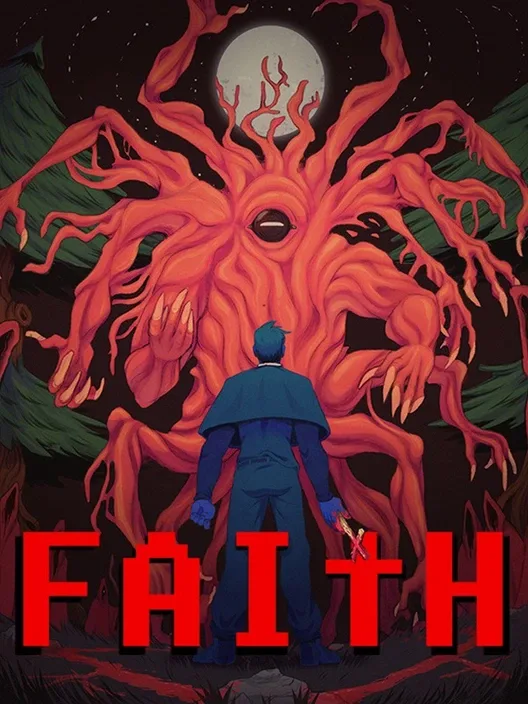
Airdorf Games' PS1-style horror trilogy strips its presentation down to blocky, low-resolution sprites and stark black-and-white environments, and that minimalism turns out to be one of the most effective psychological tricks on the whole list — the mind fills in horror that low fidelity only suggests, turning ambiguous shapes glimpsed at the edge of a dark room into something far worse than any detailed model could render. Playing an unnamed priest performing exorcisms across three connected episodes, the game builds its dread around occult ritual imagery and possessed-house set pieces that draw heavily on real exorcism-horror cinema, using suggestion, static-laced audio, and sudden simple sprite-based intrusions rather than combat or resource management to generate unease. The sparse ambient soundtrack does as much psychological work as anything on screen, letting long stretches of near-silence make a single distorted noise land with outsized weight. The game's cult following has pushed it to a remarkably strong Steam rating for something this deliberately rough around the edges, a reception built almost entirely on how effectively its low-budget presentation unsettles rather than on any technical showcase. The honest drawback: the retro presentation is a genuine taste test some players won't pass, and the connected-episode structure means jumping in on episode two or three without the first loses meaningful psychological and narrative context.
5. Your Turn to Die: Death Game by Majority#
This free-to-play visual novel traps its cast, including protagonist Sara Chidouin, inside a "Sacrifice Game" where survival requires other participants to die, and builds its horror less from monsters than from the accumulating psychological weight of watching likeable characters make impossible choices under pressure. The hybrid structure — escape-room puzzle segments bleeding into turn-based RPG confrontations — keeps the pacing from settling into either genre's usual rhythm, and branching story paths mean a player's early choices about who to trust can determine who's still alive by the game's later chapters, turning every interaction into a piece of psychological calculus about who deserves that trust. The game's willingness to kill off characters the story has spent real time humanizing, rather than protecting a cast of favorites, is what separates its horror from a typical death-game premise — the tension is emotional as much as mechanical, and the game leans directly into the guilt and second-guessing that comes from having picked wrong. The drawback: the game released in serialized parts over several years, and pacing between chapters is uneven, with some stretches of dialogue-heavy setup that test patience before the next real gut-punch arrives.
6. Z.A.T.O. // I Love the World and Everything In It#
Ferry's free visual novel sets its cold-war paranoia in 1986, inside the fictional closed Soviet city of Vorkuta-5, where a missing girl's disappearance becomes the thread pulling apart a much larger and stranger mystery involving a signal meant for transmission to the wider universe. The linear, no-choice structure is a deliberate design decision rather than a limitation — the horror here is about following a fixed, unstoppable descent into the truth rather than branching around it, closer to reading a novel than playing an interactive one, and that inevitability is precisely what builds the dread rather than undercutting it. Its Soviet closed-city setting, rarely used in horror games, does real atmospheric work: the isolation of a town that officially doesn't exist on any map gives the mystery a genuine sense of being unreachable and unwitnessed, and that isolation becomes a psychological trap for the player as much as for the characters trying to leave. Nearly 12,700 reviews sit at 98% positive for a completely free release. The drawback: a seven-to-eight-hour runtime with zero player agency over outcomes will frustrate anyone who wants their choices to matter, and the lack of branching means a single playthrough is functionally the entire game.
7. Scarlet Hollow#
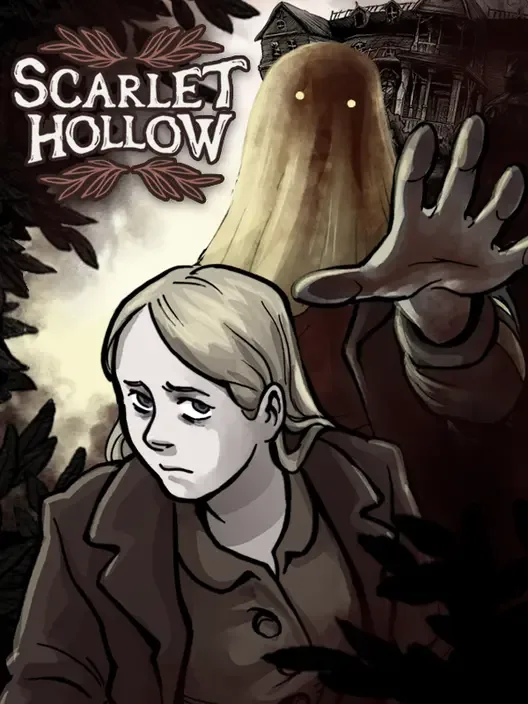
Black Tabby Games, the studio behind Slay the Princess, builds this episodic visual novel around the small Appalachian town of Scarlet Hollow, where the player's choices genuinely reshape which of several folk-horror storylines get explored across the town's tangled cast of residents. Body horror and rural-gothic dread sit side by side with dry character writing that gives the horror room to breathe rather than piling scare on scare without pause, and several major branch points hinge on relationship choices made many chapters earlier, rewarding attentiveness the genre doesn't always ask for and making a player second-guess decisions long after they were made. The episodic release model means the story has grown and been refined in response to player reaction, a rare degree of live iteration for a horror narrative, and the slow-drip release schedule itself becomes part of the unease, since players sit with unresolved dread between chapters rather than resolving it in one sitting. Its multiple-ending structure, tied closely to the specific townspeople a player chose to trust, gives it real replay incentive beyond seeing "the other path." The honest drawback: as an ongoing episodic release, the story is still incomplete, and newcomers are buying into a multi-year commitment rather than a finished experience.
8. Lisa: The Painful#
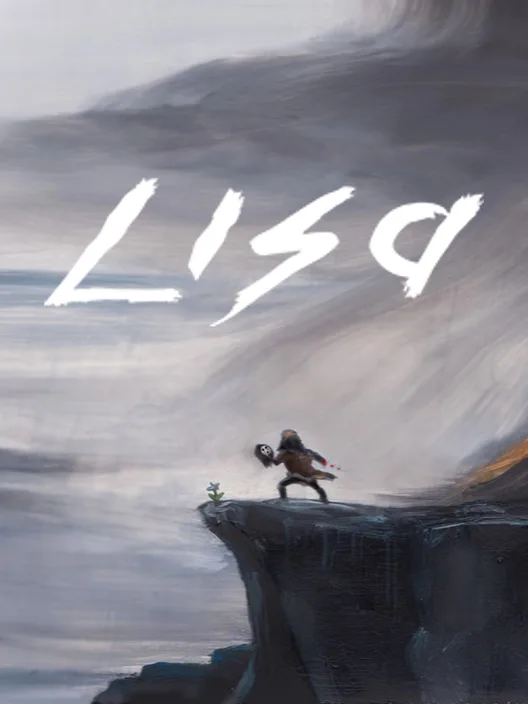
Written, designed, and composed almost entirely by martial artist and solo developer Austin Jorgensen, this 2014 RPG follows Brad Armstrong and a shrinking party of companions across a wasteland stripped of nearly every woman, and its signature psychological device is choice with real, permanent cost: an amputation mechanic that strips a party member of a limb — and the combos, strength, or defense tied to it — in exchange for saving someone else's life. A perma-death system means specific events and dangerous encounters can remove a party member from the game entirely and without warning, which turns ordinary difficulty spikes into genuine grief rather than a simple game-over screen to retry past. Jorgensen built the combat and Kung Fu-inflected tone as a release valve against the game's relentlessly bleak subject matter, and that tonal whiplash between dark comedy and genuine horror is itself part of the psychological unease, since the player is rarely sure which register a given scene will land in. The road-trip structure across the wasteland gives Brad's own addiction and denial room to surface gradually rather than through a single reveal. The honest drawback: the permanent-loss mechanics, while thematically potent, can also feel punishing in a way that discourages experimentation, and the combat system underneath the amputation choices is functionally simpler than the weight of those choices implies.
9. BirdGut#
Solo developer Micah Boursier's free puzzle-platformer casts the player as an underdeveloped bee, eaten by a bird and thrown into the bird's internal organs, which turn out to be a brainwashing facility processing other captured insects into the bird's service. The body-horror premise — organs as architecture, digestive processes as level hazards, other bees as either obstacles or fellow escapees — gives the puzzle-platforming a genuinely unsettling backdrop that most games in the genre don't attempt, and the Steam community's own classification of the game under psychological horror and surreal tags reflects how effectively that atmosphere lands despite the puzzle-first design. Multiple endings and a chapter-select structure after completion reward exploring the bird's anatomy more than once, letting players revisit the brainwashing facility's logic once they understand what it's actually doing to the other captured insects. The drawback: the horror here is tonal and thematic rather than mechanical — there's no real threat of death-by-monster driving tension moment to moment, and players expecting a scare-focused game rather than a creepy puzzle-platformer will find the balance tilted toward the latter.
10. Doki Doki Literature Club!#
Team Salvato's visual novel spends its first several hours presenting itself as a wholesome high-school dating sim about a literature club, and that patient, genuine setup is precisely what makes its turn into psychological horror land as hard as it does — this is a game whose scares depend entirely on having earned a player's guard being down first. Monika, one of the club's four members, becomes aware of her own status as a character within the game files themselves, and her subsequent manipulation of the game's code, save files, and even its title screen blurs the line between diegetic horror and something that feels like it's actually happening to the player's own computer, a meta-fictional trick few games on this list attempt as directly. Sayori's fate, which arrives without the narrative signaling typical of the genre, remains one of the more discussed gut-punches in visual novel horror specifically because nothing in the game's tone up to that point prepares for it. The drawback: the meta-horror trick, however well-executed, depends entirely on the element of surprise, and a game this widely discussed online is now nearly impossible to go into unspoiled.
11. Omori#
Omocat's RPG splits its world between Headspace, a colorful dream realm populated by Sunny's own subconscious, and Faraday, the real town where the consequences of a specific unspoken tragedy involving his friend Mari are slowly excavated through the dream logic layered on top of them. The game's central trick — using a bright, almost childlike art style to deliver some of the heaviest psychological content in the genre — makes its darkest moments hit with a specific, disorienting force precisely because nothing about the presentation prepares for them. Basil's fractured role in both worlds, and the way Headspace itself visibly degrades and distorts as buried memories get closer to the surface, turns exploration into an act of psychological excavation rather than simple dungeon-crawling, with the environment itself acting as an unreliable narrator. An emotion system layered onto standard turn-based combat gives battles a mechanical hook beyond the story, tying combat outcomes to the same emotional themes the narrative explores. The honest drawback: the game's slow-burn structure asks for real patience before its true stakes become clear, and combat can feel like padding between story beats for players chasing the psychological horror rather than the RPG.
12. The Cat Lady#
Harvester Games' point-and-click adventure opens with protagonist Susan Ashworth's suicide attempt and doesn't soften what follows: her forced return to a life she'd already decided to end, now pursued by the Queen of Maggots and a genuinely disturbing serial killer known as The Eyeless Brute, whose own philosophy about death gives him a presence more unsettling than a typical slasher villain. The game's refusal to treat Susan's depression as a plot device to be solved rather than a lived, ongoing condition gives its horror a psychological grounding that pure monster-chase games don't attempt, and several of its "puzzle" solutions are really about how far Susan is willing to compromise herself to survive, turning environmental puzzles into moral ones. The Eyeless Brute's dialogue-heavy confrontations, built around genuine philosophical debate rather than a chase, are some of the most unusual horror-villain writing on this list, forcing the player to sit with his worldview rather than simply escape it. The honest drawback: the low-budget point-and-click presentation, with static backgrounds and limited animation, is a real barrier for players who need modern production values to stay immersed in a game this narratively heavy.
13. Silent Hill 2 (2024)#
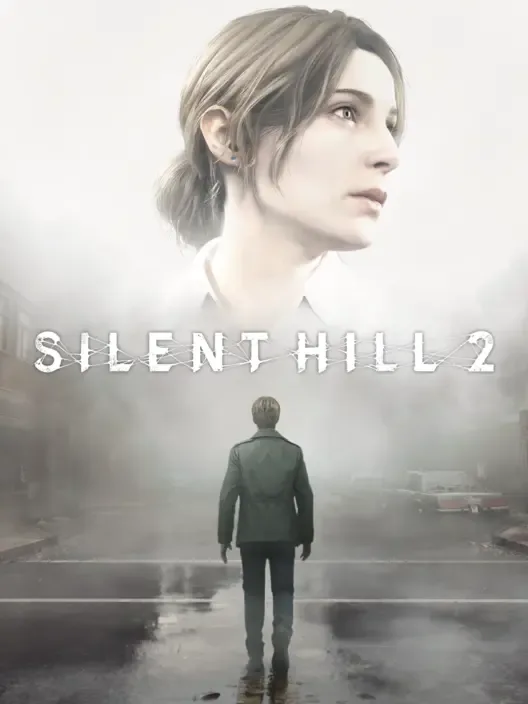
Bloober Team's remake of Konami's 2001 classic keeps James Sunderland's search for his dead wife Mary intact while rebuilding the fog-choked town of Silent Hill and its combat from the ground up, and the decision to keep the original's psychological core rather than modernize it into a more conventional action game is what makes the remake work. Pyramid Head, whose pursuit of James was originally more limited and symbolically loaded than later series appearances suggested, returns with that original restraint intact, and his presence still functions as a specific manifestation of James's own guilt rather than a generic recurring boss, which keeps the horror rooted in psychology rather than spectacle. Maria, whose unsettling resemblance to Mary drives much of the story's tension, and the ambiguous nature of the town itself as either supernatural or a projection of James's own unraveling mind, are handled with enough restraint that the remake doesn't over-explain what made the original's ambiguity so effective. The fog and darkness limiting visibility across the town do real psychological work, forcing players to fill in what they can't quite see. The honest drawback: combat, while improved from the original's clunkier systems, is still clearly secondary to atmosphere and story, and players expecting Resident Evil-style action will find it deliberately unsatisfying by comparison.
14. Jimmy and the Pulsating Mass#
Solo developer Kasey Ozymy spent four years building this RPG Maker VX Ace project alone, pairing an entirely original soundtrack and hand-drawn artwork with a central mechanic rooted in empathy rather than combat prowess: Jimmy, an empathetic boy, gains strength by imagining what it's like to be the different monsters he encounters, effectively switching between them as playable classes both in and out of battle. That empathy-as-power-system framing becomes a genuinely unsettling psychological device once the story's darker turns make clear exactly what some of those monsters have suffered to become what they are, and understanding a creature well enough to become it starts to feel less like a game mechanic and more like an act of complicity. A soft encounter-avoidance system, signaled by a colored indicator above the player's head, lets high-level players skip fights beneath them, keeping the pacing focused on the story's psychological unraveling rather than grinding. The game's shift from a whimsical, colorful children's-book tone into genuinely disturbing horror territory happens gradually enough that most players don't notice the turn until it's already happened. The honest drawback: the RPG Maker-era interface and movement carry real friction by modern standards, and a lengthy middle stretch of class-leveling and exploration tests patience before the story's psychological payoff fully lands.
15. Kara no Shoujo#
Japanese developer Innocent Grey's 2008 visual novel casts the player as private detective Reiji Tokisaka, brought in to assist a 1956 Tokyo police investigation into the serial murder of schoolgirls, a case that echoes an earlier incident that claimed Reiji's own fiancée and left him with unresolved psychological wounds of his own. The gameplay structure leans hard into inference: alongside dialogue choices that steer the story, players work through Reiji's own notebook of evidence, character profiles, and crime-scene details, then assemble those pieces into an inference sequence where the game demands the specific correct conclusion from the clues gathered rather than any generally reasonable one. That mechanical rigor mirrors Reiji's own increasingly compromised grip on the case, since his personal history with a nearly identical crime colors every deduction he makes and every character he suspects. The murder-mystery structure, threaded through Ouba Girls Academy where several students have already gone missing, keeps unearthing new psychological wounds among the cast rather than a single tidy culprit. The honest drawback: the inference sequences are genuinely unforgiving, often requiring the exact reasoning path the writers had in mind rather than any logically sound alternative, which can turn deduction into guesswork for players not already tuned to the game's specific logic.
16. Paper Lily: Chapter 1#
Canadian two-person studio Leef6010 built this Godot-engine release out of a shared love of mid-2010s RPG Maker horror, and it deliberately steers away from that scene's reputation for tedious, punishing trial-and-error by making exploration and multiple valid puzzle solutions the priority rather than harsh failure states. Subtle jump scares, sudden cuts in the music, and a persistently dark color palette build unease gradually rather than through constant escalation, and the game's psychological horror leans on uncertainty about what's actually being asked of the player in any given room rather than a single dramatic reveal. Each puzzle in the roughly four-hour experience can be solved multiple ways, and the specific path a player chooses shapes both the immediate outcome and the ending they eventually reach, tying mechanical choice directly to the story's branching psychological consequences. The RPG-like exploration structure, moving through a limited, claustrophobic set of interconnected spaces, keeps the scope tight enough that every returning visit to an earlier room carries the weight of things having possibly changed. The honest drawback: as the first installment of a planned episodic series, the story ends on a clear note of continuation rather than resolution, and the short runtime means several of its more unsettling ideas are introduced without full room to develop.
17. Sanitarium#
DreamForge Intertainment's 1998 isometric point-and-click adventure opens with a man known only as "Max" waking from a coma after a car accident, his face fully bandaged, inside a decaying sanitarium where he can't remember who he is or how he got there, and the entire game unfolds as an exploration of what his own damaged mind is hiding from him. Structured across nine chapters, the game moves players through fetch-quest puzzles built around talking to characters, reading diaries and tombstones, and retrieving items pointed to by other characters' clues, with no combat at any point — the horror here is entirely psychological, built from environmental storytelling and a steadily unraveling sense of what's actually real versus what Max's own subconscious has constructed to protect him. Each chapter shifts setting and tone dramatically, from the sanitarium itself to increasingly surreal dreamscapes that echo the trauma buried underneath, and the isometric perspective keeps players at a slight remove that makes the environments feel observed rather than inhabited. The game sold roughly 300,000 units and was later ported to mobile platforms, an unusually long tail for a late-90s adventure title. The honest drawback: the fetch-quest puzzle structure, typical of its era, can feel dated and occasionally obtuse by modern standards, and the complete absence of any action or combat pacing means momentum depends entirely on narrative curiosity.
18. Higurashi When They Cry Hou - Ch.3 Tatarigoroshi#
07th Expansion's third chapter in the Higurashi visual novel series, originally released at Comiket in August 2003, returns to the rural village of Hinamizawa and its recurring cycle of deaths tied to a controversial dam construction project and a covered-up murder case being quietly reenacted. Progression is almost entirely linear, driven by dense dialogue and expressive character sprites rather than branching choices, and that lack of agency mirrors the story's own preoccupation with fate repeating itself no matter what any individual character tries to change, a structural echo the series returns to across its question and answer arcs. A "Tips" section available between chapters supplies side stories, village lore, and contextual notes that deepen the psychological unease around Hinamizawa without interrupting the main narrative's pacing, letting curious players dig further into the village's history at their own pace. The chapter introduces new character sprites and viewpoints on already-familiar locations, subtly recontextualizing settings established in the earlier Onikakushi and Watanagashi chapters as the cover-up at the story's center comes further into focus. The honest drawback: the fully linear, choice-free structure offers essentially no player agency over the outcome, and arriving at Chapter 3 without having played the two question arcs before it strips away most of the accumulated dread the series is built to deliver gradually.
Treat the ranking above as a live, data-driven snapshot rather than a fixed verdict. It blends IGDB's aggregate critic and user rating with Steam's own review percentage, counted only where a real sample size sits behind the score, and it shifts automatically as more people rate these psychological horror games or as new releases join the catalog with enough reviews to be scored fairly — check back as the numbers move.