A town rebuilt, not repainted#
Silent Hill 2 is Bloober Team's full remake of Konami's 2001 psychological horror classic, developed with Masahiro Ito and Akira Yamaoka returning in consulting and composing roles respectively, and published by Konami. It released on 8 October 2024 for PlayStation 5 and PC, with an Xbox Series X|S version following roughly a year later. The premise has not changed: James Sunderland receives a letter from his wife Mary, three years after her death, telling him she is waiting for him in their "special place" in Silent Hill. What has changed is almost everything around that premise. The fixed camera angles that defined how the original hid its monsters are gone, replaced by a full over-the-shoulder third-person view, and the sparse, awkward combat of 2001 has been rebuilt into something with real weight behind every swing. The result is not a shot-for-shot remaster. It is a full reconstruction that keeps the original's geography, its letters, its silences, and asks whether a game this quiet can survive giving the player a proper camera and a proper fight. Mostly, it can.
What makes this remake different#
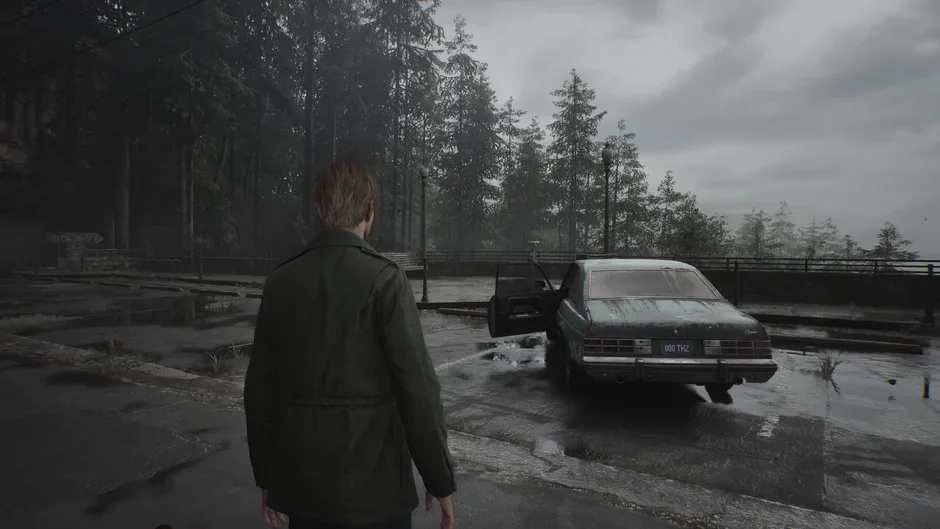
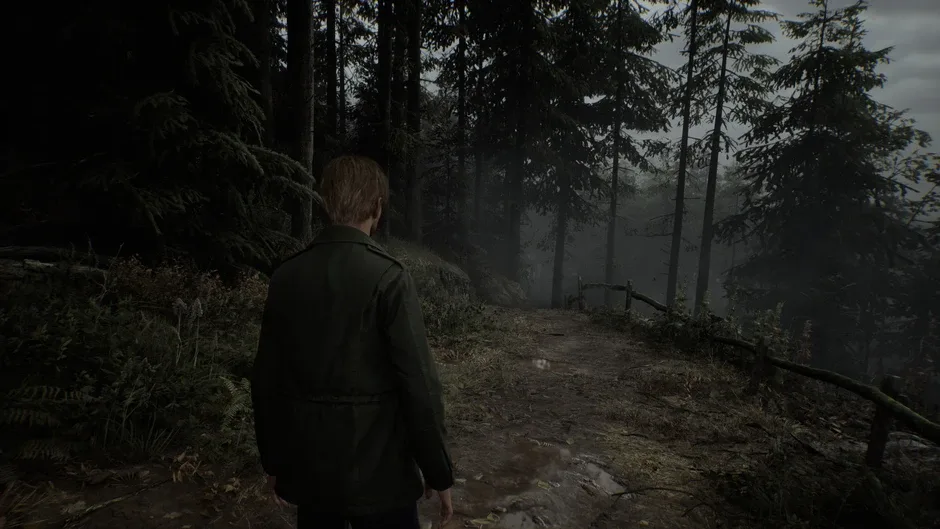
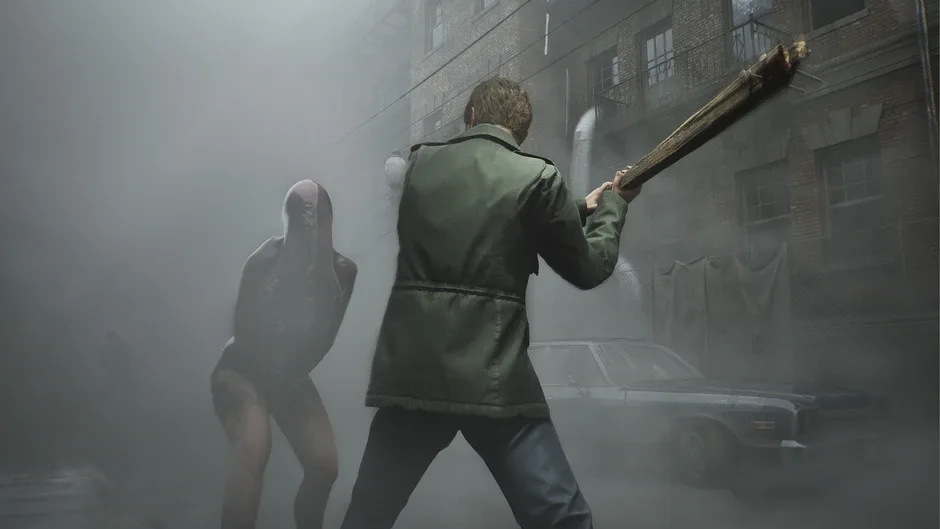
The one decision the whole project hangs on is the switch from a fixed camera to over-the-shoulder third person, and everything else in the remake exists to answer for that choice. The original Silent Hill 2 built its dread from what the camera refused to show: a Lying Figure lurching into frame from an angle you could not control, a hallway that cut to a wide shot the second something worse than usual was waiting in it. That trick is gone by design. In its place, Bloober Team gives James a genuine moveset: a three-hit melee combo, a dodge that actually creates distance, and a stomp finisher for anything crawling on the ground. Enemies respond in kind. Lying Figures now sway and dodge incoming swings, Mannequins can flip and grab from unexpected angles, and Pyramid Head, when he appears, drags his Great Knife across the floor with a scrape that carries through walls before you ever see him. The horror has not disappeared. It has moved from what the camera hides to what your own reflexes have to deal with, and the remake is honest that this is a trade, not a straightforward improvement, even as it commits to it fully.
Wood Side Apartments and a town rebuilt from the ground up#
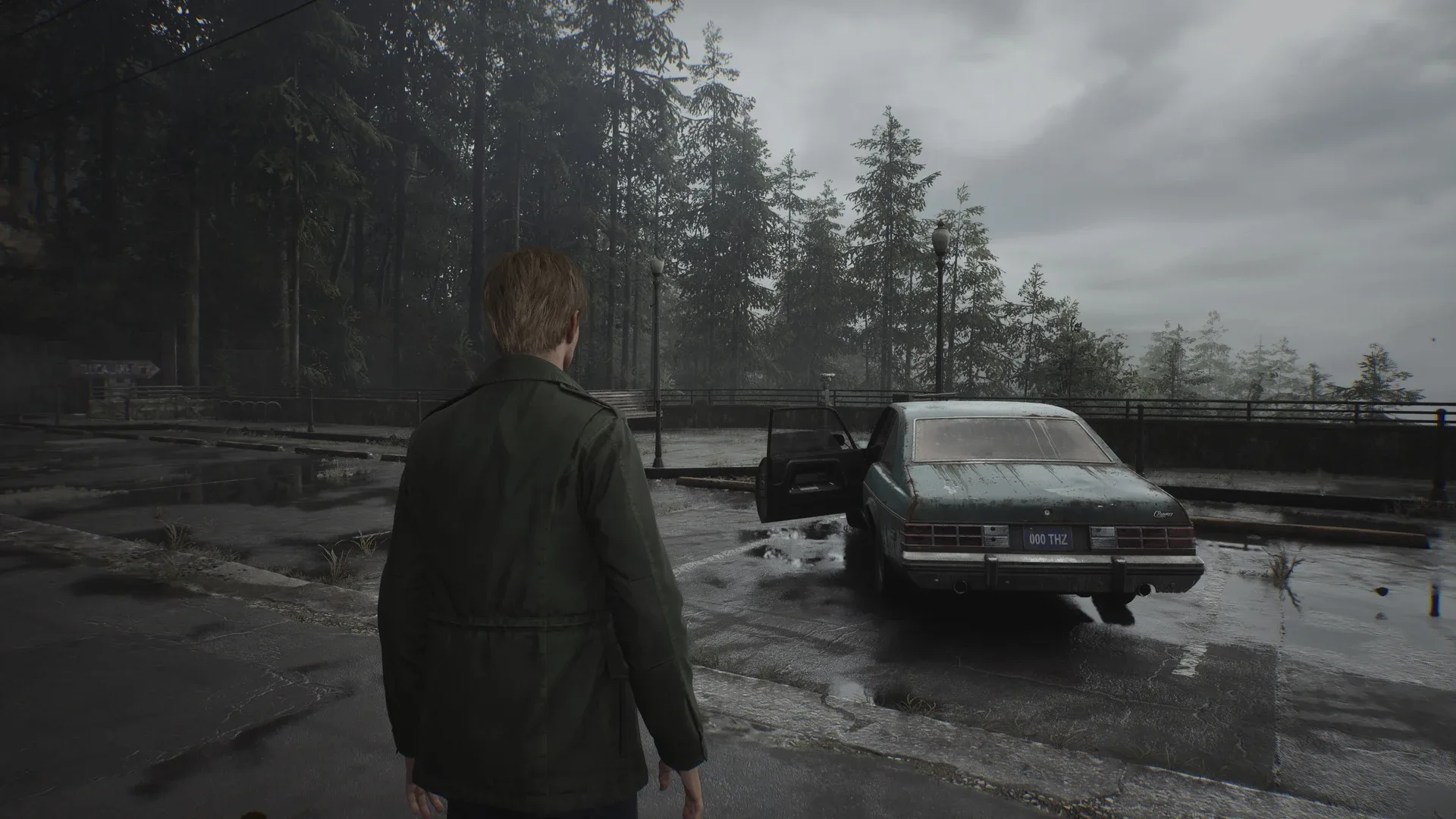
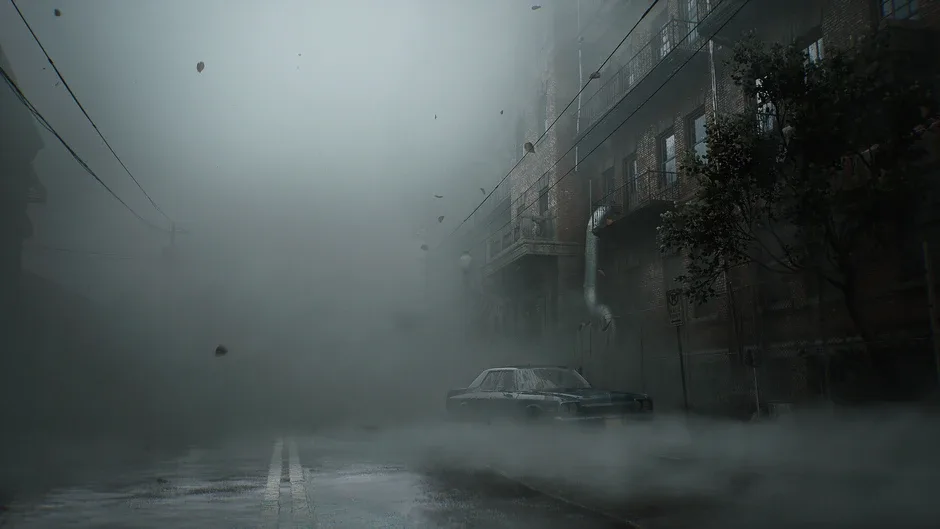
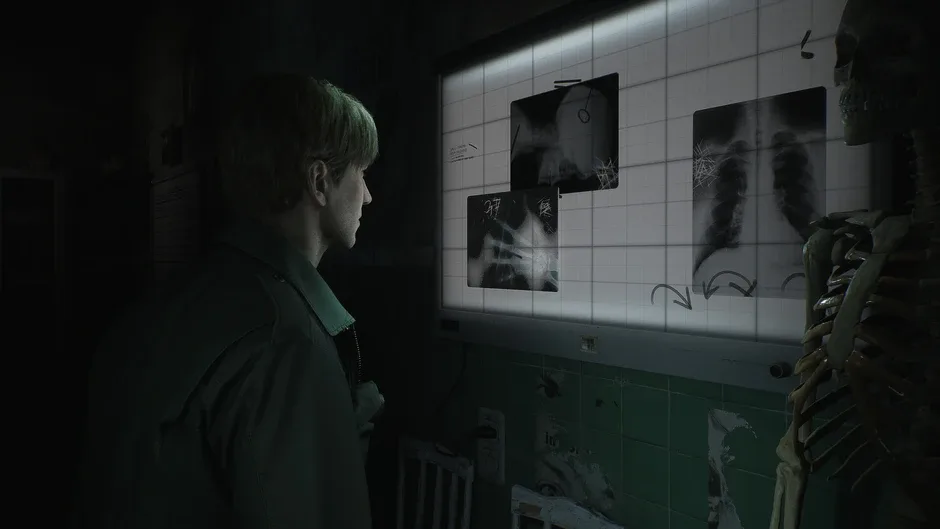
The geography of Silent Hill has not changed, and that turns out to matter more than any single new system. Wood Side Apartments, the Historical Society, Toluca Prison, Brookhaven Hospital and the Lakeview Hotel are all present in roughly their original layouts, but rebuilt at a scale and level of detail the PS2 original could never manage. Wood Side's corridors are longer than memory suggests, lined with locked doors that only open once a specific key or code has been found elsewhere in the building, and the building's mundane details, a child's drawing taped to a door, a message scrawled in a mirror, carry more weight in third person because James now physically turns to look at them rather than the camera cutting to a fixed insert shot. The fog, rendered with real volumetric density on PS5 and PC rather than a distance-hiding trick, rolls differently depending on where you stand, and Silent Hill's empty streets between buildings feel less like loading corridors and more like a town James has to choose to keep walking through.
Where the remake earns its keep is in how much has been added without breaking what was there. New rooms, new notes and small extensions to existing buildings expand the Toluca Prison and the Historical Society sections considerably beyond their original runtime, without changing what either place means to the story. The puzzles, largely rebuilt rather than copied, lean on the same logic the series has always used, a phrase scratched somewhere, an object that only makes sense once you have read a specific note, but there are more of them, and the separate puzzle difficulty slider means a player who only wants the story can turn the brainteasers down without touching how dangerous the enemies are. It is one of the clearer signs that Bloober Team thought about who plays a Silent Hill game for the atmosphere and who plays it to be tested, and refused to force one group into the other's experience.
Combat: a system built to be used, not endured#
James Sunderland is still not a soldier, and the remake never lets you forget it. His melee combo lands with weight and stagger rather than the flailing swings of the original, his dodge has a real window rather than a suggestion of one, and the new stomp finisher against a downed enemy is one of the most satisfying additions in the whole game, both mechanically and for how it lets you decide whether James is the kind of man who finishes what he starts. Firearms are still scarce, and pistol and shotgun ammunition run out fast enough that most encounters are still built around a choice between fighting and simply getting past an enemy rather than a shooter's instinct to clear every room. Lying Figures, wrapped in what looks like straitjacket fabric and lurching with unnatural joints, are still the game's most unsettling common enemy specifically because their new animation work makes them look wrong in a way the PS2 original's low-poly models could only suggest. Mannequins, the naked figures fused from what look like two sets of legs, now scuttle and flip in ways that make them genuinely dangerous in the game's tighter rooms rather than a one-note curiosity.
The trade-off is real. Giving James a dodge and a stomp finisher makes some encounters that the original intended as tense obstacles into something a competent player can simply outplay, and a handful of enemy types added or expanded beyond the Lying Figures and Pyramid Head feel more like filler between set pieces than a meaningful addition to the roster. None of this undoes the game's central achievement, which is that combat here finally feels like a system worth engaging with rather than a chore standing between the player and the next cutscene, but it is a legitimate shift in what kind of fear the game is asking you to feel, from claustrophobic helplessness to a more physical, controllable kind of dread.
James, Mary and the weight of what really happened#
The story is, deliberately, almost unchanged, and that restraint is one of the remake's smartest decisions. James still searches Silent Hill for his dead wife Mary, still crosses paths with Angela Orosco, a teenager fleeing something she will not name, and Eddie Dombrowski, a man whose paranoia curdles into something worse, and still finds Maria, a woman who looks exactly like Mary but acts nothing like her. Luke Roberts's performance as James carries the remake's expanded dialogue and its rebuilt cutscenes with a quiet, unravelling exhaustion that suits the material better than a louder performance would, and the apartment letters and photographs James finds along the way land with more weight now that the camera lingers on his face while he reads them rather than cutting away. Pyramid Head remains the story's clearest symbol, less a monster to defeat than a manifestation of James's own desire for punishment, and the remake's handling of the Maria and Mary reveal, still delivered mostly through implication and item text rather than a stated fact, respects the original's refusal to spell out its own ending.
The ending system has been reworked without losing what made the original's multiple endings work. Eight endings are available in total, the original six plus two new ones, unlocked through a combination of specific actions, items examined and how James treats the people he meets rather than a single visible meter, mirroring how the 2001 game tracked player behaviour without showing its math. Seeing more than one ending still means a second full playthrough of a 16-to-18-hour game, and a few of the triggers remain as easy to miss without intent as they were in 2001, which keeps the endings feeling like something the story earns rather than a menu option.
Sound design and Akira Yamaoka's return#
Akira Yamaoka's score, rebuilt and expanded rather than simply remastered, is still doing more of the game's emotional work than any individual monster design, and its industrial, half-melodic drones over Wood Side Apartments and the Otherworld sections remain some of the most distinctive sound design horror games have produced. The radio, James's early warning system for nearby threats, has been redone with a sharper, more layered static that makes the gap between silence and a burst of noise land harder in a modern sound mix than the original PS2 speakers ever allowed. Masahiro Ito's returning input on creature and environment design shows most clearly in small details, the way rust patterns spread across a wall or a Lying Figure's fabric catches light, that a player is unlikely to consciously notice but that add up to a town that feels considered rather than merely rebuilt at higher resolution.
Reception and how it sold#
The remake sold over a million copies in its first three days, passed 2 million within three and a half months, and has since climbed past 6 million copies sold, making it the best-selling entry the Silent Hill series has ever had. That commercial result lines up with how the game was received more broadly: at the Horror Game Awards 2024 it won Game of the Year, Best Soundtrack and Best Survival Horror, and Luke Roberts picked up Best Performance for his work as James, even though it left The Game Awards 2024 without a win despite five nominations there. None of that is why this review lands where it does, but it is a useful sanity check on a genre that rarely crosses into the mainstream: a slow, letter-reading horror game about grief outsold most of what launched around it in the same window, which says something about how well the rebuild landed with people who never played the PS2 original as much as with those who did.
Difficulty options and who the remake is built for#
Beyond the separate combat and puzzle sliders already mentioned, the remake lets a player mix and match in ways the original never allowed: a puzzle-focused player can set combat to its easiest setting and still face the hardest riddles the game has to offer, or vice versa, and neither choice locks out any of the eight endings. This matters more than it sounds, because Silent Hill 2 has always been a game people recommend to friends who do not normally play horror games, and the remake is the first version built with an explicit setting for exactly that audience rather than a single, compromise difficulty that tried to serve everyone at once.
Performance: strong on PS5, rougher on PC at launch#
The PlayStation 5 version runs the game at a steady frame rate in its performance mode with only occasional dips during the heaviest Otherworld transitions, and it was the version most players experienced at launch given the PC release's early problems. The PC port, built on Unreal Engine 5, suffered from shader-compilation stutter and inconsistent frame pacing for a stretch after release, a familiar complaint for the engine that Bloober Team addressed with patches over the following months rather than fixing outright at launch. Ray tracing is supported on both platforms, along with DLSS, FSR and XeSS upscaling options on PC, but players sensitive to stutter were better served waiting for the first round of post-launch patches before buying on Steam. None of this affects the story or the puzzles, but it is the one part of an otherwise carefully rebuilt game that did not arrive fully finished.
Compared with the original Silent Hill 2 and Resident Evil 2 Remake#
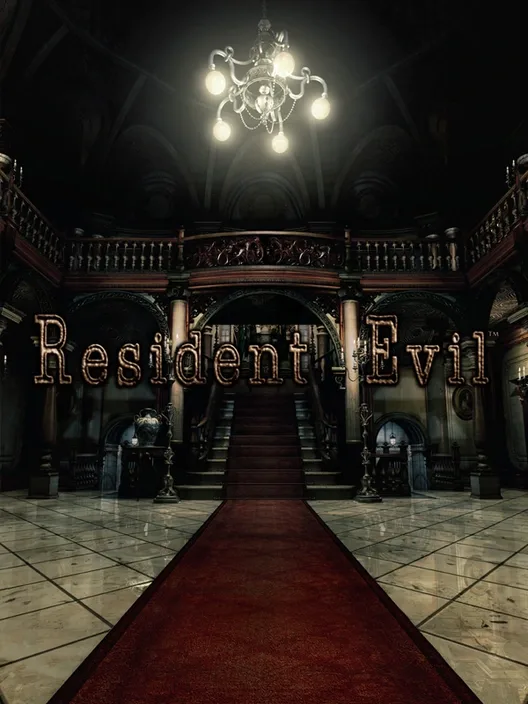
The comparison every Silent Hill 2 remake review has to make is to the 2001 original, and the honest answer is that neither version replaces the other. The original's fixed camera is not a limitation the remake merely fixed; it was a deliberate tool that hid enemies until the exact moment the designers wanted you to see them, and losing that tool means the remake is a different kind of scary rather than a strictly improved one. What the remake gains in return, a town you can actually walk through and look at, combat with real stakes, performances that land in close-up, is substantial enough that it earns its place rather than merely updating the visuals. Resident Evil 2 Remake is the closer structural comparison, since Capcom faced the same fixed-camera-to-third-person problem in 2019 and solved it in a similar way: rebuild the geography at scale, give the protagonist a real moveset, and trust that the atmosphere can survive full player control of the camera. Silent Hill 2 leans further into slow, letter-reading dread than Resident Evil 2's tighter action-horror loop, and its combat is deliberately clumsier by design, but the two remakes are solving the same problem from opposite temperaments, and both are worth playing for how differently they answer it.
Worth the money?#
At $69.99 for the standard edition and $79.99 for the Deluxe Edition, which adds a digital art book, soundtrack and cosmetic masks, Silent Hill 2 sits at full current-generation pricing rather than the discounted rate a remake sometimes commands. For that price, a single 16-to-18-hour playthrough is a reasonable but not generous amount of content, and a completionist run chasing multiple endings and every note runs closer to 20 hours. The game has sold several million copies since launch and has been discounted meaningfully in sales since, which makes waiting for one a sensible option for anyone put off by full price rather than by the game itself.
| Platform | Launch condition | Best for |
|---|---|---|
| PlayStation 5 | Stable performance mode, minor dips in Otherworld sections | The safest, most consistent way to play |
| PC (Steam) | Shader-compilation stutter at launch, improved by later patches | Ray tracing and the highest visual ceiling, once patched |
| Xbox Series X|S | Released roughly a year after PS5/PC, benefiting from the accumulated patches | Anyone who waited and wants the most stable version |
The game has full voice acting and text in English on every platform.
Play this instead if …#
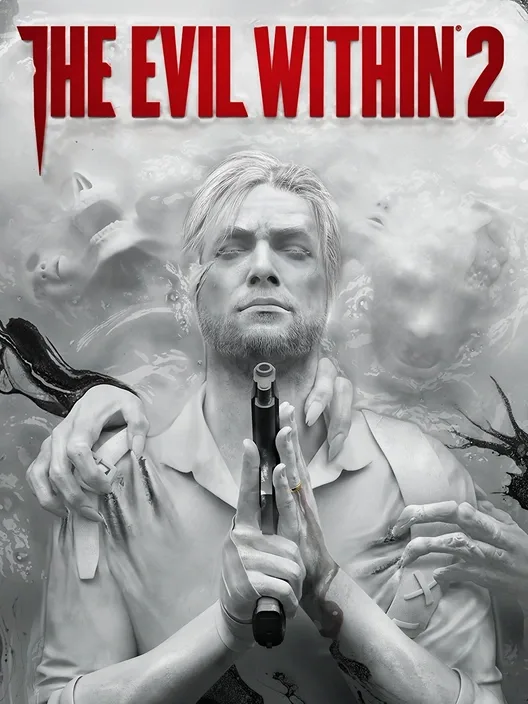
If you want something shorter, Visage delivers a tighter, two-to-three-hour haunted-house scare without Silent Hill 2's combat or puzzle systems. If you want something easier and more forgiving of a first horror game, Resident Evil 2 Remake trades some of Silent Hill 2's slow-burn dread for tighter pacing and more generous ammunition. If you want a cheaper way into the same fog and the same kind of guilt-driven story, the original 2001 Silent Hill 2 is still widely available and remains a legitimate way to experience the same plot with a starker, more minimalist presentation.
Frequently asked questions#
How long is Silent Hill 2? A single playthrough runs 16 to 18 hours, with a completionist run chasing every ending and note closer to 20 hours.
Is it a remaster or a full remake? A full remake. The game has been rebuilt in Unreal Engine 5 with an entirely new camera system, combat and much of its art, keeping the original's story, geography and letters intact.
Does it have co-op or multiplayer? No. Silent Hill 2 is a single-player story from start to finish.
Is there a difficulty option? Yes, with separate sliders for combat and puzzle difficulty, letting players lean into the story without tuning both at once.
Do you need to have played the original Silent Hill 2 first? No. The remake tells the complete story on its own, though anyone who played the 2001 original will recognise the buildings, letters and endings even as some of the details around them have changed.
Is the PC version stable now? Better than at launch. Shader-compilation stutter was a real issue in the first months, and post-launch patches have reduced it considerably, though players especially sensitive to frame pacing should check current impressions before buying.
The GameAvant verdict#
Silent Hill 2 is the rare remake that understands exactly what it changed and why, and it is honest with the player about the cost of that change. Trading the fixed camera's off-screen dread for a controllable third-person view and real combat is not a straightforward upgrade, and anyone who found the original's helplessness essential to its horror will feel the difference the moment James dodges a Lying Figure's lunge for the first time. What the remake earns in return, a Wood Side Apartments you can actually walk and look at, a James Sunderland whose face you watch while he reads his wife's letters, a fight against Pyramid Head that finally has stakes instead of just running, is enough to make this one of the strongest horror remakes made so far, not because it copies the original faithfully, but because it rebuilds the same story with a different, and mostly compatible, kind of fear.
9 out of 10 – a heavier, more physical Silent Hill that trades the original's stillness for stakes, and comes out ahead more often than not.