A war movie disguised as a role-playing game#
Mass Effect 2 is the game where BioWare figured out that the most interesting number in an RPG isn't a damage stat, it's the number of people who trust you enough to die for you. Developed by BioWare and published by Electronic Arts, it originally released on 26 January 2010 for PC and Xbox 360, followed by PlayStation 3 in January 2011. The version most players reach for today is the Mass Effect Legendary Edition, released 14 May 2021 for PC, PlayStation 4 and Xbox One, and playable on PlayStation 5 and Xbox Series X|S through backward compatibility. The original standalone release has since been superseded on storefronts by the Legendary Edition, which bundles all three original trilogy games along with more than 40 pieces of single-player DLC, remastered visuals and a set of gameplay rebalances, making it the practical way to play Mass Effect 2 now rather than hunting down the 2010 disc release. Fifteen years and one remaster later, it is still the point where the trilogy stops being a space opera about saving the galaxy and starts being a story about eleven specific people you have to keep alive.
What makes Mass Effect 2 different#
The one idea that carries the entire game is that every character you recruit is also a mechanical investment with a due date. Commander Shepard, having died and been rebuilt by the pro-human paramilitary group Cerberus, is sent after the Collectors, an insectoid species abducting entire human colonies for reasons that stay genuinely unclear until the closing hours. That plot is really a frame. The actual game is a two-act structure: first you spend the bulk of your playtime finding and recruiting a crew scattered across the galaxy, and then, once assembled, you take that crew through the Omega-4 Relay on a mission every character openly calls a suicide run. Nothing about that mission works unless the first half of the game has actually earned it. By the time the Normandy SR-2 heads into the relay, the decision of who defends the ship, who leads the second fireteam and who you trust to survive alone in a vent shaft isn't an abstract stat check, it's a decision about eleven people whose personal histories you've spent thirty hours learning. Few games make their finale depend so completely on everything that came before it.
Recruitment and loyalty: the real skill tree#
Every one of Shepard's squadmates comes with a loyalty mission, a personal, self-contained story that has nothing to do with the Collectors and everything to do with who that character actually is. Garrus Vakarian, now a vigilante calling himself Archangel on Omega, needs help holding off three merc gangs converging on his hideout. Mordin Solus, a salarian scientist who helped engineer the genophage that sterilized most of the krogan species, drags Shepard back to the plague-ridden slums of Omega to confront a modified strain of his own creation. Tali'Zorah's loyalty mission puts her on trial for treason aboard the quarian flotilla, in a courtroom sequence with no shooting at all. Completing a loyalty mission unlocks that character's strongest ability and their alternate armor, but the real reward is narrative: a squadmate who trusts you enough to open up about the thing they're most afraid of.
That system has real teeth because of what it feeds into. A loyal squadmate has a far better chance of surviving the endgame; a squadmate you never got around to helping is exposed. The suicide mission itself contains no random rolls or hidden dice: every death has a specific, traceable cause, whether that's sending an unproven leader into a fireteam command role or leaving the ship's weakest defense point uncovered because a key upgrade was never researched. It's possible to bring every single squadmate home alive, and it's just as possible, through a handful of avoidable mistakes across a thirty-hour game, to watch several of them die in the space of ten final minutes. Few finales in the genre convert that much of a playthrough's accumulated choices into a single, unambiguous outcome.
Combat: from RPG-shooter hybrid to something that actually shoots well#
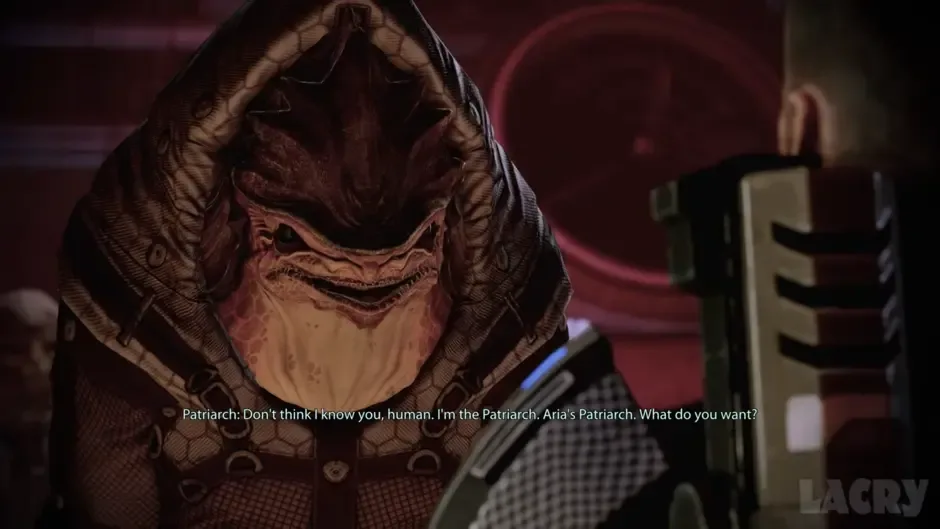
Mass Effect 2 fixed the part of the original game that its own fans complained about loudest. Where the first Mass Effect buried its combat under an inventory screen full of near-identical weapon mods and a cover system that only sometimes worked, the sequel strips the RPG scaffolding down to something that plays like a proper cover shooter with biotics and tech powers layered on top. Weapons are now class-restricted rather than universally available, ammo runs on thermal clips that eject when a weapon overheats rather than an unlimited-heat-sink system, and each of the six classes, Soldier, Adept, Engineer, Infiltrator, Sentinel and Vanguard, feels distinct in a firefight rather than just differently flavored. The Vanguard's charge-into-melee playstyle and the Infiltrator's cloak-and-snipe loop are genuinely different ways to approach the same encounter, which the original game's more uniform gunplay never quite managed.
The Legendary Edition sands down the two biggest complaints about the 2010 combat. Cover is easier to enter and stick to reliably, several encounters have been reworked with more usable cover placement, and ammo drops, which were notoriously stingy on higher difficulties in the original release, come more frequently now. None of this changes the underlying design; it just removes the friction that used to get between the player and it.
The cost: a much smaller inventory#
The tradeoff for that tighter combat is that Mass Effect 2 has almost no itemization left. There's no weapon-mod grid to fill, armor pieces are a short, fixed list per class rather than a deep loot pool, and Shepard's own gear is mostly a handful of upgrade research choices rather than anything found on the ground. Players who enjoyed digging through the first game's messy but genuinely deep inventory system will find far less to do here; everyone else will likely just be relieved the menus stopped getting in the way of the shooting. It's the game's most honest tradeoff: what got cut for combat to work is real, and the game never pretends otherwise. Anyone coming from the first game expecting to spend an evening comparing armor stat sheets should recalibrate that expectation before starting.
Story and writing: character work first, plot second#
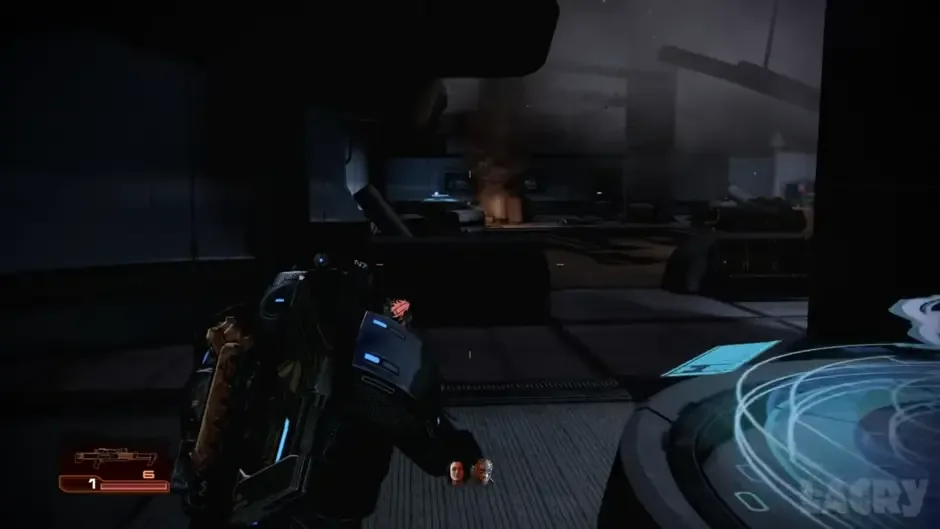
The Collectors, the Reapers looming behind them, and the question of what Cerberus actually wants from Shepard are all present, but they're clearly secondary to the character writing, and the game is better for admitting it. Jack, a biotic convict raised inside a Cerberus black site, and Miranda Lawson, the operative who oversaw Shepard's resurrection and remains loyal to the organization that built her, spend the whole game circling an ideological fight about what Cerberus is for. Thane Krios, a dying assassin looking for some kind of absolution before his illness kills him, gets one of the quieter, more affecting arcs in the game specifically because his loyalty mission is about a relationship with his estranged son rather than a firefight. Legion, a geth platform that speaks in the collective "we" of its programs, turns an entire species the first game treated as faceless machines into a genuine philosophical question about what personhood requires. None of these stories need the Collector plot to work; they'd stand on their own as short fiction. That the game hangs them all off a shared, mechanically consequential endgame is what elevates them past being a collection of good side stories.
Harbinger and the Collectors: a villain built for a final act#
The Collectors themselves stay deliberately opaque for most of the game, which turns out to be the right call. They're introduced as insectoid abductors working for an unknown employer, and it's only well into the campaign that they're revealed to be a modified, husked-out version of the Protheans, the extinct species whose ruins shaped the plot of the first Mass Effect. That reveal recontextualizes everything the Collectors have done and turns them from a generic alien threat into something closer to a warning about what happens to a species the Reapers decide to repurpose rather than destroy outright. Harbinger, the Reaper directing the Collectors from dark space, never appears in person for most of the game; instead, it periodically seizes control of a Collector's body mid-fight, glowing eyes and a distorted voice announcing "assuming direct control" before that possessed unit becomes a genuine threat rather than fodder. It's a smart, cheap way to inject a named antagonist's presence into ordinary firefights without ever having Harbinger physically show up until the finale allows it, and it does more to make the Reapers feel like an active menace than any cutscene in the game manages on its own. The final boss, a human-Reaper larva being grown inside the Collector base from harvested colonists, is one of gaming's more unsettling closing images specifically because it ties the abstract sci-fi horror of the setup to something the game has spent thirty hours making Shepard's crew fight to prevent.
Difficulty and pacing#
Mass Effect 2 doesn't ask much of the player mechanically; its difficulty comes from decision-making rather than combat execution, and even on higher settings the shooting rarely turns punishing in the way a dedicated cover shooter's would. The pacing is where the design shows its age slightly: the galaxy map requires scanning planets for resources to fund Normandy upgrades, a system that adds a light layer of busywork between story beats without much depth of its own. It's skippable if you only care about the main story and the loyalty missions, but a completionist run will spend real time pointing a scanner reticle at rotating planets.
The DLC: Lair of the Shadow Broker and Overlord#
Two pieces of add-on content are worth calling out specifically because they're better than a lot of full games. Lair of the Shadow Broker reunites Shepard with Liara T'Soni from the first game and turns into an extended chase across a storm-battered flying base, ending with one of the better final confrontations in the whole trilogy; it also has real consequences for the wider story that carry into Mass Effect 3. Overlord sends the squad to an isolated research facility where an experimental VI has gone catastrophically wrong, and plays closer to horror than anything else in the series, right down to a stretch where Shepard has to physically chase a hijacked mech across the facility's grounds. Zaeed's and Kasumi's loyalty missions, both originally sold separately, are shorter but still worth playing for the characters alone. All of this is included in the Legendary Edition, so there's no separate purchase decision to make the way there was in 2010.
New to Mass Effect? Start here#
Starting the trilogy at Mass Effect 2 works mechanically, since the game recaps the important plot beats from the first game in its opening hour. What it can't recreate is the effect of importing a save file: choices from the original Mass Effect, who lived, who Shepard romanced, what happened on Virmire, are meant to carry forward and subtly change dialogue and outcomes here. Playing the first game first, even at a fraction of the polish of its sequel, means Mass Effect 2's characters greet a version of Shepard that already has history rather than a blank slate. If time is genuinely short, jumping straight into Mass Effect 2 with a fresh Shepard loses relatively little of the plot, but it loses a real piece of what makes the series distinct. The Legendary Edition makes this easier than it used to be, since it bundles all three games and their DLC into one purchase, so there's no separate decision about whether the older, less polished first game is worth tracking down on its own.
Compared with Mass Effect 3 and Dragon Age: Origins#
Mass Effect 3 is the more urgent, more consequential-feeling game on paper, since it closes out the Reaper war and pays off choices from both earlier entries, but its combat and pacing are closer to a straightforward third-person shooter, and its ending remains the most argued-about moment in the series for reasons that have little to do with quality of writing along the way. Mass Effect 2 is the tighter, more disciplined game: a two-act structure with one clear goal, executed with almost no wasted missions. Dragon Age: Origins, BioWare's other major RPG from the same era, is the better comparison for players who miss deep itemization and a slower, more traditional fantasy RPG structure; it has the gear complexity Mass Effect 2 deliberately cut, but nothing in it matches the suicide mission's ability to turn thirty hours of accumulated choices into a single unrepeatable outcome. Both games share BioWare's signature approach to companions as fully written people with their own arcs rather than stat sticks, but Mass Effect 2 is the one that figured out how to make those arcs mechanically load-bearing rather than purely optional flavor.
Worth the money?#
The Legendary Edition typically runs around 60 euros or 60 dollars for all three games together, and it goes on sale regularly, often dropping to a third of that price or less within a year of any given sale window. For that price you get roughly 25 to 30 hours for a focused run through Mass Effect 2's main story and loyalty missions, and 45 to 50 hours or more if you're chasing every loyalty mission, every DLC and full squad survival on a first attempt. Buying the full trilogy bundle rather than trying to track down the individual original releases is the only sensible option now, since the original standalone Mass Effect 2 release has been phased out on major storefronts in favor of the Legendary Edition and its own updated single-title version. Best platform: PC for the sharpest resolution and frame rate if the hardware supports it, though PS5 and Xbox Series X|S run the Legendary Edition smoothly through backward compatibility and are the simplest choice for anyone on console. Voice acting throughout the trilogy is English only; menus and subtitles are available in German among the supported languages, but not in Swedish.
Play this instead if …#
Shorter: Mass Effect 2's own Overlord DLC is a self-contained four-to-five-hour horror detour that delivers a complete arc without touching the main campaign.
Easier: Dragon Age: Inquisition trades Mass Effect 2's high-stakes finale for a more forgiving, exploration-focused structure where a bad conversation choice rarely costs you a companion permanently.
Cheaper or more current: Baldur's Gate 3 offers a similarly deep companion cast with real relationship consequences, at a price point that's frequently discounted and without needing to buy two other games to get the full experience.
Frequently asked questions#
How long is Mass Effect 2? Around 25 to 30 hours for the main story and loyalty missions, and 45 to 50 hours or more for a full completionist run including all DLC.
Do I need to play the original Mass Effect first? No, the game recaps the necessary plot points, but importing a save from the first game changes dialogue and outcomes in ways a fresh start can't replicate.
Is Mass Effect 2 open world? No. It's a hub-based structure: the Normandy serves as a base between missions on individual planets and space stations, not a single connected map.
Does it have co-op or multiplayer? No. Mass Effect 2 is entirely single-player; multiplayer was introduced later, in Mass Effect 3.
Can every squadmate actually survive the ending? Yes, but only through a specific combination of loyalty, Normandy upgrades and correct assignment choices during the finale; there's no random chance involved, only decisions that can be gotten wrong.
Which version should I buy in 2026? The Mass Effect Legendary Edition, which is the actively maintained, remastered way to play Mass Effect 2 today and includes all its DLC.
The GameAvant verdict#
Mass Effect 2 is not the more ambitious game in its own trilogy, and it doesn't try to be. Its plot around the Collectors is thinner than it should be, its itemization is nearly gone, and a handful of loyalty missions lean on the same escort-and-shoot structure more than they should. None of that matters as much as it would elsewhere, because the game built something rarer than a good story: a structure where the player's actual choices, who you recruited, who you helped, who you trusted with the hardest job, determine who's still alive when the credits roll. Fifteen years on, and one thorough remaster later, nothing else in the genre has matched how completely Mass Effect 2 makes its finale belong to the player rather than the writers.
9 out of 10 – the sequel that figured out an RPG's best stat is how many people would die for you, and built an entire finale around proving it.