
Why a night-shop counter works as horror#
Shift at Midnight takes a very ordinary job and turns it into a trial of nerves. You work the late shift in a small shop in 1993, you serve customers, you keep the place running, and you slowly realise that some of the people walking through the door are not people at all. They are doppelgangers pretending to be human, and the only protection you have is attention. You question them, you check their paperwork, and you try to decide whether the story they tell you holds together.
The game was made by a solo developer, released on 22 July 2026 and published by Kwalee, and it supports one to three players online. It arrived after a free multiplayer demo that attracted a large audience and caught the eye of well-known horror streamers, which helped build a lot of attention before launch. That context matters, because the game is built to be shared. The reception since launch has been strongly positive among players and more mixed among critics, and this review lands on 8 out of 10 because the central idea is strong enough to carry the whole experience, while a handful of weaker sections stop it from being a modern classic.
What makes it different#
The obvious comparison is Papers, Please, and the comparison is fair. In both games the tension comes from a desk, a stream of strangers and a set of rules you have to apply correctly. The difference is that Shift at Midnight puts that idea inside a horror frame and then adds friends. The question is no longer only whether a document is valid. It is whether the person holding it can be trusted, whether your teammate agrees, and what happens in the next ten minutes if you are wrong.
Reviewers also mention Five Nights at Freddy's, and that makes sense for the mood. You are stuck in a small space at night, the threat is real but not always visible, and the game plays with your anxiety rather than with constant action. What it adds to that formula is a loop that is closer to a management game. You are not only surviving, you are working, and the work is what gives the scares their weight.
The core loop: serve, question, decide#
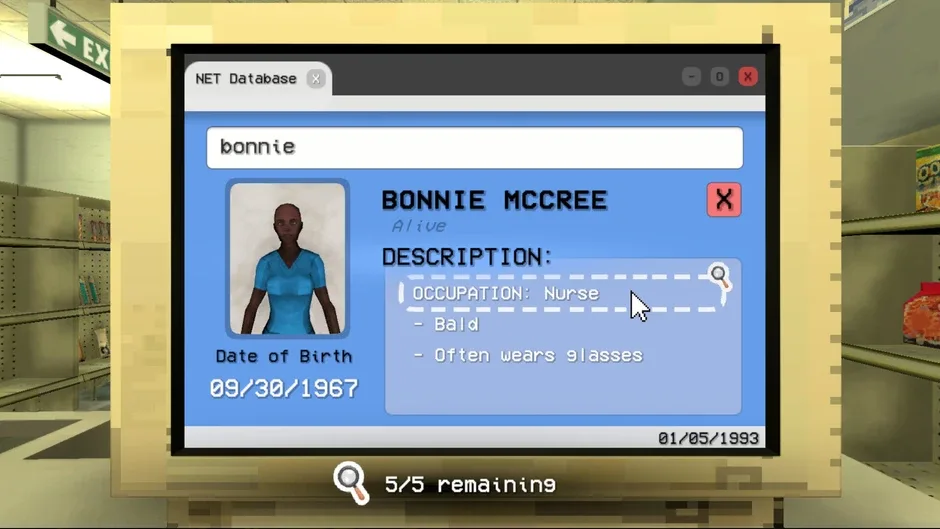
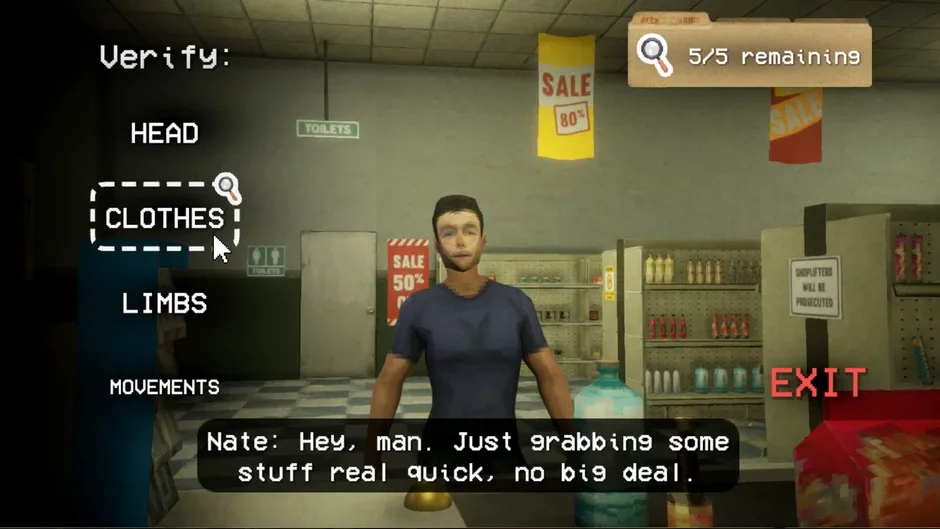
A typical shift is built around ordinary tasks. Customers come in, you serve them, and you keep the shop in order. Hidden in that routine is the real job, which is to notice who does not belong. The game gives you tools for this, including questions you can ask and paperwork you can inspect, and it expects you to use them. A customer who answers a little too smoothly, or whose documents contain a detail that does not match, is exactly the kind of clue the game wants you to notice.
This is where the game is at its best. The decisions are small and quick, but they carry a cost. Turn away a real customer and you create a problem of your own. Let a fake one through and you pay for it later in the night. Because shifts are generated differently each time according to the sources we found, you cannot memorise a pattern, and that keeps the tension fresh from one night to the next. The humour comes from the same source: the mix of absurd customers, awkward conversations and the dry seriousness of a job that should be boring.
When you get it wrong#
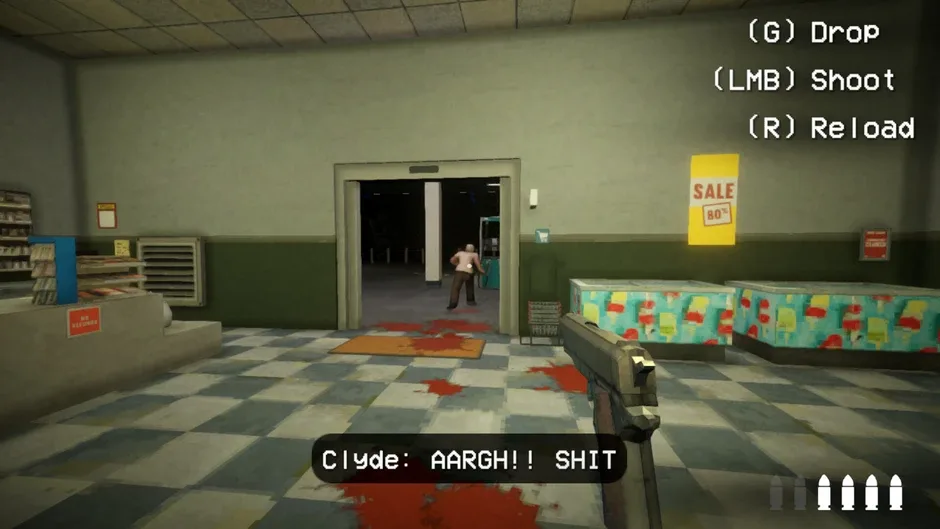
The second half of the idea is the punishment. Make one mistake and the situation changes. The crew has to board up, set traps and hide, and the quiet suspicion of the counter turns into survival horror. This shift of tone is the structural trick that makes the game memorable. The first part of the night is a management and detective game. The second part is a fight to get through until morning.
It is also where critics are most divided. The tension of hiding and preparing is praised, but the shooting and stealth sections are repeatedly described as the weaker part. Some reviewers call the combat chaotic and say it does not match the care that went into the shop and paperwork. That is a fair summary of the main compromise: the game asks you to be a careful investigator and then, if you fail, a competent action hero, and the second role is not built with the same polish as the first.
Co-op, proximity voice chat and the social comedy#
Up to three players can share the shop, and the game is clearly designed with that in mind. Proximity voice chat is the feature people talk about most. Sound fades with distance, so a teammate at the far end of the shop sounds thin and muddy, and you have to move close to talk properly. This turns communication into a mechanic. You cannot simply shout a verdict across the map, you have to decide who stands at the counter, who watches the door and who keeps an eye on the rest of the shop.
The result is a kind of comedy that comes from pressure. Friends argue about whether a customer is real, one person is certain and another is sure they are wrong, and the group makes a decision that goes badly wrong in a way everyone remembers. This is the strongest argument for the game. It is a horror title where the best content is produced by the players, and that gives it a lasting charm that many scripted horror games lack.
Solo play is possible, but it is a different and smaller experience. You lose the arguments, the shared panic and the division of roles, and the game becomes a quiet investigation. That is a fair way to play for anyone who prefers it, but most of the praise assumes company.
Atmosphere, visuals and sound#
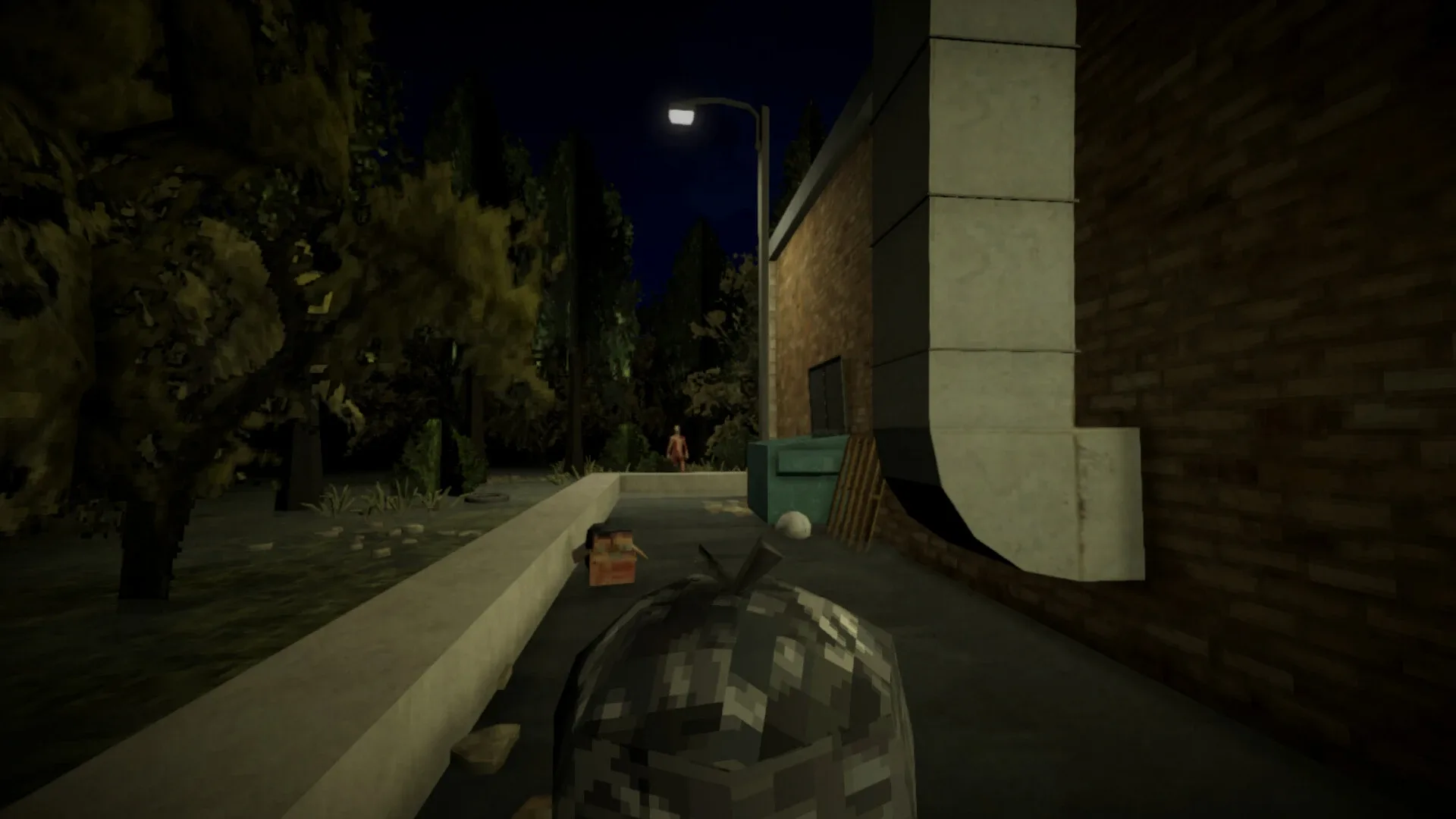
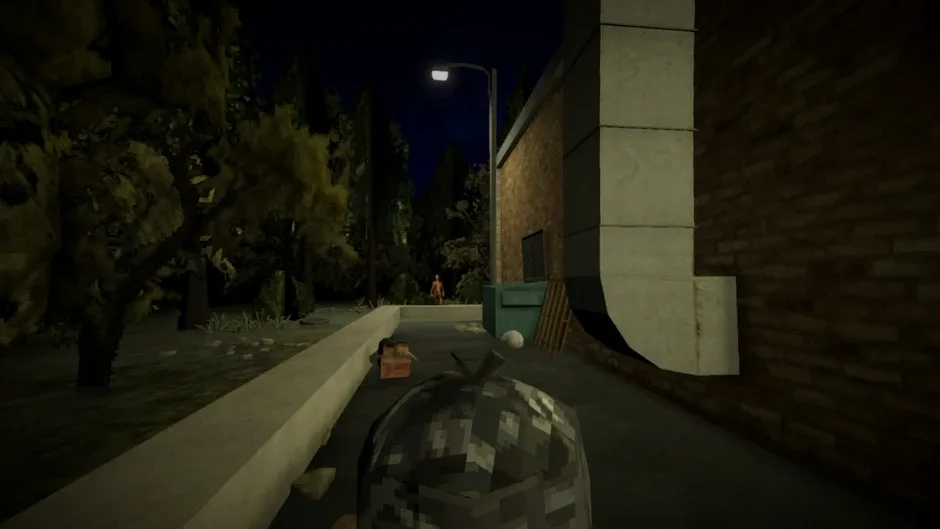
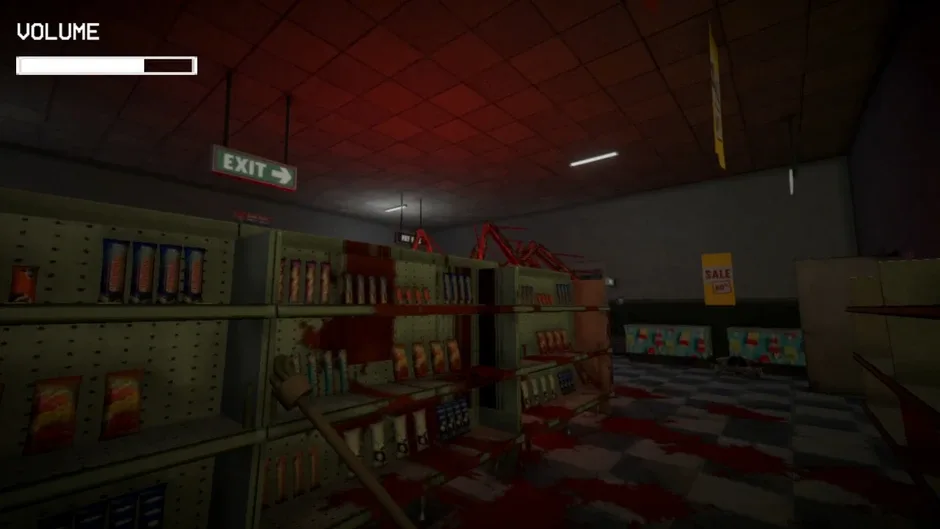
The look is deliberately retro. The low-poly 3D style and the 1990s setting give the game a nostalgic, slightly lo-fi atmosphere, and reviewers say the visual style helps the horror rather than hiding it. Rough edges in a character model or a flickering light feel intentional, and an uncanny customer is easier to believe when the world looks like a half-remembered video tape.
Audio carries a lot of the weight. A night shop is a quiet place, and the game uses that quiet to make small sounds matter: a door, a footstep, a voice that is slightly wrong. Combined with proximity chat, the soundscape becomes both a source of fear and a way to communicate. It is a good example of a small team using limited means in a smart way.
Story, structure and length#
The story is the least developed part. It exists to give the shifts a frame and a sense of progression, but few critics single it out as a strength, and one score breakdown rates it clearly below the gameplay. That is not a big problem in a game whose appeal is the moment-to-moment loop, but players who want a deep narrative will not find it here.
Length is a more important limit. Critics describe the main experience as brief, and the endless mode as weaker than the main run. One source estimates somewhere between ten and fifteen hours of multiplayer play, but that is an estimate and depends heavily on how often you replay the shifts. Check what current players report before deciding. The game is a good fit for a few evenings with friends and less of a fit for someone who expects dozens of hours of new content.
Difficulty and accessibility#
The rules are easy to understand. Serve customers, check details, trust or refuse. The difficulty comes from doing it under pressure, with other people talking, and with a clock running down. That makes the game approachable for people who do not normally play horror, because the first part is more of a puzzle than a fright.
The horror itself is real, though, and the sudden shift into survival mode can catch a new player off guard. Players who dislike tension or jump scares may want to try the free demo first. Because the game is built around speaking to your teammates, a working microphone is close to essential, and anyone who cannot or does not want to use voice chat should check how well the game works for them before buying. Check the store page for details on accessibility options and supported languages, as we could not confirm them.
Compared with Papers, Please and Lethal Company#
Papers, Please is the closest relative in mechanics. It is a quiet, single-player game about rules, documents and moral pressure. Shift at Midnight borrows the idea of inspecting people and adds a horror frame, a shop to run and multiple players. Papers, Please is deeper and more serious. Shift at Midnight is lighter, funnier and more social.
Lethal Company is the better comparison for the way the game spread. It is a co-op horror where friends laugh and panic together, and Shift at Midnight has a similar trajectory of word-of-mouth, streamers and clips. Lethal Company offers more variety in its missions and tends to feel larger. Shift at Midnight is more focused and cheaper.
| Shift at Midnight | Papers, Please | Lethal Company | |
|---|---|---|---|
| Core idea | Run a night shop and spot fake humans | Inspect documents at a border | Scavenge dangerous locations as a crew |
| Players | 1 to 3 online | Single-player | Co-op |
| Tone | Tense and funny | Serious and bureaucratic | Chaotic and funny |
| Strength | Suspicion and social play | Moral pressure | Variety and teamwork |
| Weak point | Combat and limited content | Little action | Less focus on detective work |
New to the game? Start here#
The first night is the time to learn the rules, not to be perfect. Take your time with each customer, and pay attention to what does not fit. A good group will quickly find a routine, and that routine is what stops panic from taking over.
- Agree on roles before the shift begins, such as who stands at the counter and who watches the rest of the shop.
- Ask the questions the game gives you, and compare the answers with the paperwork instead of trusting a good story.
- Use proximity chat on purpose: move close to a teammate when you need to talk quietly, and stay apart when you want to cover more space.
- When something goes wrong, board up and set your traps early instead of waiting to see what happens.
Worth the money?#
At around ten dollars or euros on Steam according to the sources we found, the game is cheap, and that changes the calculation. Even a few evenings of co-op fun cost less than a cinema ticket, and the free demo lets you test the idea before spending anything. Prices vary by region and sales, so check the current price on your platform.
The caveat is lifespan. If you play with friends, the game is likely to give a strong first few sessions and then slow down as the surprises are used up. That is a reasonable trade at this price, but it is the reason the score stops at 8 and not higher. For a solo player the value is lower, because the best parts depend on other people.
Play this instead if…#
Shorter: A single evening of Five Nights at Freddy's style horror is shorter and more focused on scares, and it works for anyone who wants the nervous night-shift mood without a management loop.
Easier: Overcooked-style co-op games offer shared chaos with no horror at all, and they suit groups where one player does not want to be frightened.
Cheaper or co-op: Papers, Please costs little and is a strong pick for anyone who mainly wants the document-checking idea. For a larger co-op horror with more variety, Lethal Company is the natural next step.
Frequently asked questions#
Is Shift at Midnight multiplayer? Yes. It supports one to three players online, and it can also be played alone.
Who made it? It is the work of a solo developer, published by Kwalee.
When was it released? On 22 July 2026.
Which platforms is it on? It is on PC through Steam, and the sources we found also list Xbox with Game Pass availability. Check the store page for the current list.
How long is it? Critics call the main experience short. One source estimates around ten to fifteen hours of multiplayer play, so treat that as a rough guide.
Is it very scary? It is tense and has a survival-horror part, but its humour and co-op nature soften it. The free demo is a good way to find out.
The Game Avant verdict#
Shift at Midnight is the rare horror game where the best scare is a decision. The idea of checking paperwork, asking questions and wondering whether the customer in front of you is real is simple, original and perfectly suited to co-op. The retro look, the proximity voice chat and the dark comedy of a bad call add up to something with far more personality than its price suggests.
The weaknesses are real and consistent across the reception. The combat and shooting parts are looser than the rest, the story is thin, and the content does not last as long as the idea deserves. None of that stops the game from being a very good time with friends, but it keeps it just below the best of its kind. For a low price and a free demo to try first, it is an easy recommendation for groups and a more cautious one for people who play alone.
8 out of 10 – a clever, funny and tense co-op horror that is best with friends and held back by its combat and short lifespan.