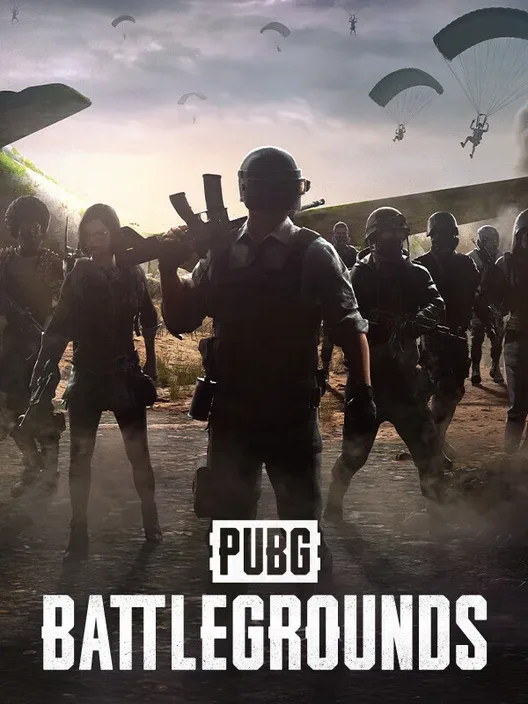
 PUBG: Battlegrounds
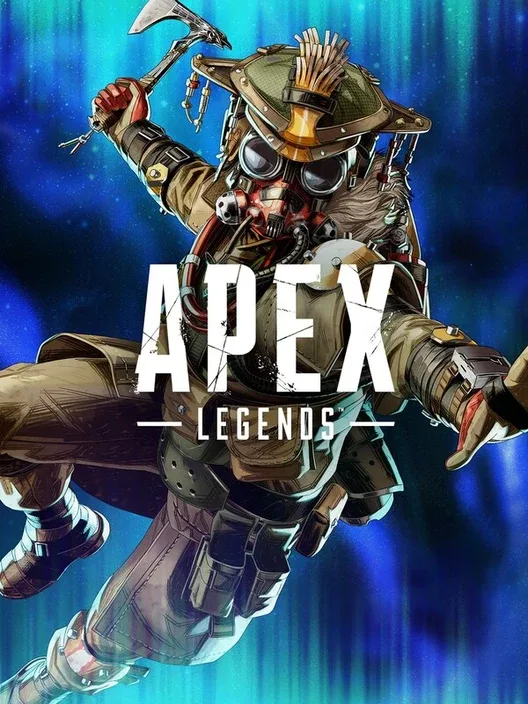 Apex Legends
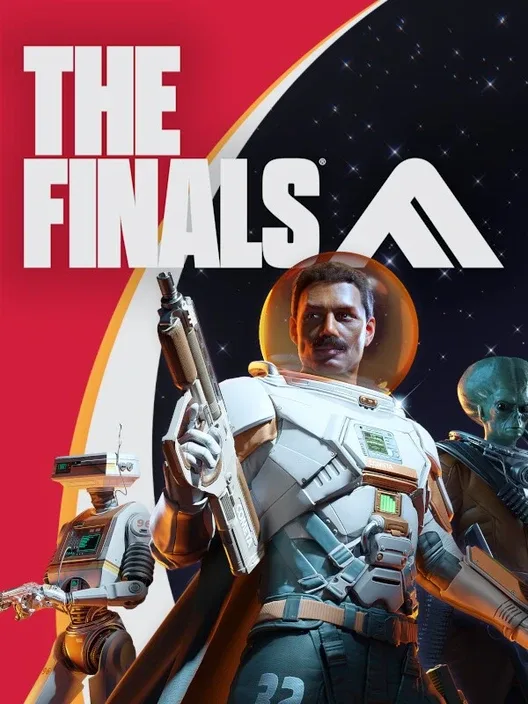 The Finals
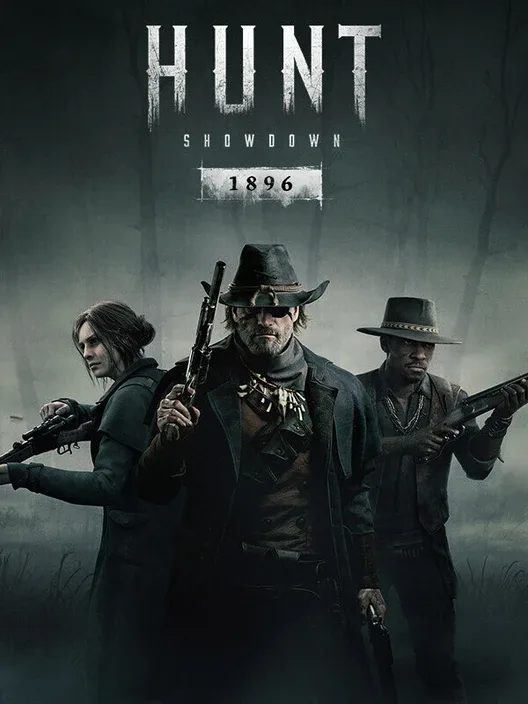 Hunt: Showdown 1896
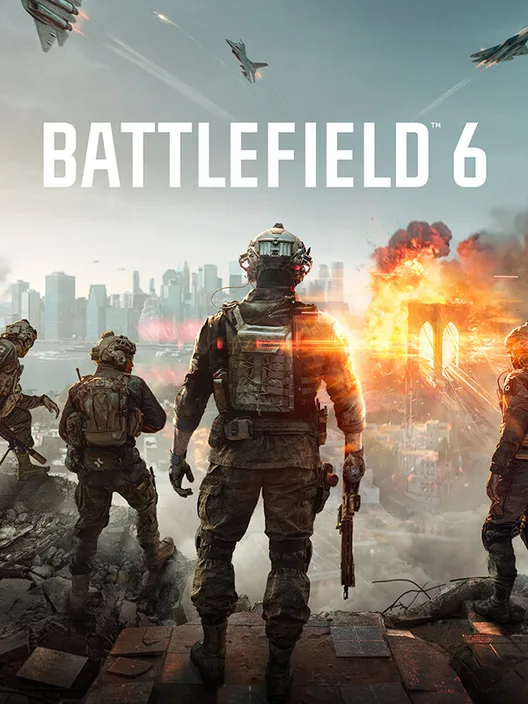 Battlefield 6
"Battle royale" on this page means the specific structural promise that separates this subgenre from the rest of Game Avant's shooters category: a large pool of players or squads drops into one shared map with nothing, scavenges gear from the ground, and fights until only one player or squad is left standing while a shrinking boundary forces the survivors together instead of letting anyone camp indefinitely. That's a different shape than a looter-shooter's repeatable gear grind or a straight first- or third-person shooter's symmetric round structure, and it's why a game with permadeath and a last-one-standing win condition earns a spot here even when its match format bends the formula, whether that's a bracket-style elimination tournament, a bounty-hunt raid where the last team walking away with the prize wins, or a closing arena hazard standing in for the usual storm circle. A few games below share DNA with this site's extraction-shooter and hero-shooter coverage for exactly that reason.
The order below blends Game Avant's combined critic-and-player rating data with an editorial pass for breadth, curated rather than a pure percentage sort, mixing the genre-defining giants with smaller and more inventive spins on the same last-one-standing premise. Read the write-ups below for what each of these best battle royale games actually does and where it falls short.
1. PUBG: Battlegrounds#
Krafton's PUBG Studios, under creative director Brendan "PlayerUnknown" Greene, released the 2017 game that effectively invented the modern battle royale template nearly every other game on this list borrows from: up to one hundred players parachute onto a large island with nothing, scavenge weapons and gear from the ground, and fight to be the last person or squad standing as an electrified blue zone continually shrinks the playable map and forces confrontation. The game's commitment to realistic, punishing ballistics — bullet drop, recoil patterns that genuinely differ between weapons, and no regenerating shield layer like several of its later competitors adopted — gives firefights a slower, more deliberate tension than the faster movement-heavy shooters that followed it. Vehicles, from motorcycles to boats, matter more here than in most battle royales, since the island maps are large enough that rotating on foot alone is rarely viable. The loot-based itemization, where finding a scope or an extended mag meaningfully changes a weapon's viability, gives scavenging genuine stakes beyond just finding a gun. The honest drawback: the game's dated Unreal Engine 4 foundation and notoriously inconsistent server performance, especially at launch, left it more technically fragile than the battle royales it inspired, and its slower, more methodical pace is a real turn-off for players who came to the genre through faster, more forgiving successors.
2. Apex Legends#
Respawn Entertainment's 2019 battle royale, published by Electronic Arts, launched without warning or marketing and immediately reshaped the genre around its ping system — a context-aware communication tool that lets a player mark enemies, loot, or destinations with a single button press, conveying nearly as much information as a voice callout without requiring one. The Legend roster, each character built with a genuine kit of abilities on top of shared gunplay rather than a cosmetic skin, gives every three-player squad a role-based structure closer to a hero shooter than a typical battle royale's identical-loadout format. The shrinking ring, standard to the genre, is paired with a respawn beacon system that lets a fully eliminated teammate be revived and dropped back into the match rather than sitting out the rest of it, softening one of battle royale's harshest traditional punishments. Movement tech — sliding down slopes, wall-bouncing off cover, and later Legends' outright mobility abilities — gives Apex a faster, more acrobatic pace than most of its genre peers. The honest drawback: the game's business model leans heavily on cosmetic battle passes and increasingly aggressive monetization events, and several Legends released in later seasons have needed repeated balance passes after launching clearly overtuned relative to the original roster.
3. Call of Duty: Warzone#
Activision's free-to-play battle royale, built on Infinity Ward's Modern Warfare foundation and launched in 2020, grafted the series' fast time-to-kill gunplay and killstreak-driven progression onto a hundred-and-fifty-player shrinking-map format, distinguishing itself from slower peers like PUBG with a movement speed and gunfight pace closer to a standard Call of Duty multiplayer match. The Gulag, a one-on-one duel fought immediately after a player's first death, gives eliminated players a genuine second chance to fight their way back into the match rather than sitting out the rest of the round, a structural idea few other battle royales have copied as directly. Buy Stations, letting squads spend money looted from the map on self-revives, loadout drops, or intel, layer a resource-management economy on top of the usual scavenging loop, and loadout drops specifically let players call in their own fully customized multiplayer weapon builds mid-match. Contracts, optional side-objectives scattered across the map like bounty hunts or scavenger hunts, give squads a reason to move toward action instead of passively rotating with the shrinking circle. The honest drawback: the game's map and mode have been rebuilt and rebalanced repeatedly across several base titles and engine changes, and its close integration with the mainline Call of Duty release cycle means its meta and content cadence shift on a schedule set by an entirely different game.
4. The Finals#
Embark Studios' free-to-play shooter, released in December 2023 and staffed heavily by former Battlefield developers, isn't a classic shrinking-circle battle royale, but its Tournament structure earns it a place here on the strength of the same premise stripped to a different shape: squads are eliminated across a bracket of matches within a single event until only one team is left standing, with a server-side destruction system that lets whole buildings collapse and reshape each round's map in real time. Contestants pick from three body-type Classes — Light, Medium, and Heavy — each with a distinct gadget loadout, from the Light's grappling hook and cloaking device to the Heavy's mounted machine gun and dome shield, giving squad composition real tactical weight round to round. The Cashout objective, where teams deposit stolen valuables at a station that then has to be actively defended while it processes, turns holding ground in a collapsing, gunfire-riddled building into the game's signature tension even without a literal storm circle pushing players together. Gadgets like C4 charges and goo grenades reshape the arena for tactical advantage as much as they damage opponents directly. The honest drawback: because its elimination structure runs across a bracket of separate rounds rather than one continuous last-player-standing map, it reads as a genuinely different experience from the rest of this list for anyone expecting the traditional battle royale shape.
5. Hunt: Showdown 1896#
Crytek's extraction-focused first-person shooter, rebuilt and relaunched under the "1896" name in August 2024 after five years as the original Hunt: Showdown, doesn't run on a shrinking storm circle, but its bounty-hunt structure shares the same last-team-standing pressure that defines this list: teams of one to three track and kill a monstrous Boss Target across a large map, only for the two Bounty Tokens it drops to broadcast their carriers' location to every other team on the map, turning the back half of every match into a tense, showdown-style fight to be the team that actually extracts with the prize. A hard countdown, dropping from forty-five minutes to just five once the last bounty is claimed, forces a genuine end-game convergence toward extraction points functionally similar to a closing zone even without a literal damaging boundary. Permadeath and full gear loss on death, carried over from the game's extraction-shooter roots, mean every encounter carries stakes closer to this list's other high-tension entries than to a standard respawn-based shooter. Distinct AI Boss Targets, each with a unique attack pattern and arena, give the mid-match hunt itself real variety beyond just waiting out the clock. The honest drawback: because it's genuinely an extraction shooter wearing battle royale's tension rather than a true shrinking-map format, players coming specifically for a classic last-one-standing circle will find its slower, clue-based hunting phase a different rhythm entirely.
6. Battlefield 6: REDSEC#
DICE and the wider Battlefield Studios' free-to-play battle royale mode, launched alongside Battlefield 6's first season in October 2025 under the name REDSEC, puts twenty-five squads of four into a hundred-player match built on the mainline game's full destruction engine, meaning cover itself can be blown apart mid-firefight in a way most battle royales only simulate cosmetically. The mode's closing ring deals lethal, near-instant damage rather than the gradual chip damage most battle royales use, forcing squads to respect rotations far more strictly than the genre's usual forgiving pace allows. Gauntlet, a separate squad-based competitive mode bundled into the same REDSEC package, and Portal, Battlefield's community-driven custom-mode toolset, both extend the core battle royale loop with community-built variants rather than leaving it as a single fixed format. Vehicles pulled directly from Battlefield's mainline arsenal, from light transports to attack helicopters, give REDSEC's larger map a rotational option most battle royales gate behind rarer spawns. The honest drawback: as a mode launched alongside a brand-new premium title, its long-term identity is still being defined against far more established competitors, and the unusually punishing instant-kill ring is a genuine adjustment for players used to more forgiving zone damage elsewhere.
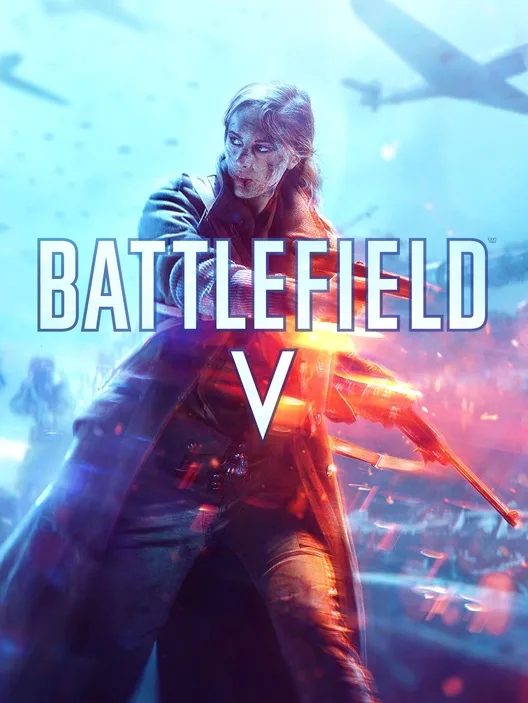
7. Battlefield V: Firestorm#
DICE and Criterion Games' Firestorm mode, added to 2018's Battlefield V as a free update in March 2019, brought sixty-four players into four-person squads on the dedicated map Halvøy, distinguishing itself from other battle royales of its era by keeping full Battlefield-style vehicular combat intact, including the Panzer tank as a genuinely powerful, high-value pickup that can turn a firefight one-sided if a squad claims it early. A literal wall of fire, the mode's namesake mechanic, closes in from the map's edges in place of the genre's usual toxic-gas or electrified-storm boundary, giving Firestorm's late-game positioning a distinct visual identity even though the underlying shrinking-zone pressure works the same way as its peers. Destructible environments, carried over directly from Battlefield V's core campaign and multiplayer tech, let squads blow entry points into buildings or collapse cover entirely rather than relying purely on found chokepoints. Revive mechanics and squad-based respawn tickets, both lifted from Battlefield's conventional multiplayer, soften the genre's usual permadeath structure more than most competitors attempt. The honest drawback: as a mode built on top of a full-priced premium title rather than a free-to-play standalone release, it never reached the sustained player base of its free competitors, and DICE's own support for it wound down well before Battlefield V's broader multiplayer content did.
8. Splitgate: Arena Reloaded#
1047 Games' free-to-play arena shooter, rebranded from the ambitious Splitgate 2 relaunch and released under its current name in December 2025, is built around a Portal-style gun that fires linked, walkable portals directly onto most surfaces, and while its core identity is arena deathmatch, a later Battlefield 6-era update reintroduced a dedicated battle royale mode built on the same portal-traversal tech that made the base game distinctive. Portals let players create instant flanking routes, escape a losing fight by stepping through a wall, or fire a rocket through one portal to have it emerge from another across the map entirely, translating the genre's usual foot-and-vehicle rotation into something far more vertical and unpredictable. The battle royale mode keeps a shrinking play zone but layers the portal gun's traversal options on top of it, meaning positioning against the closing boundary is a spatial puzzle in a way flat-map battle royales don't replicate. Weapon pickups and mastery-based cosmetic progression, carried over from the arena modes, give the battle royale format its own long-term reason to keep playing beyond a single match's placement. The honest drawback: the base game's rocky relaunch history, including a full rebrand mid-development after the original Splitgate 2's reception fell short of expectations, has left its battle royale mode with a smaller, less established player base than more mature competitors.
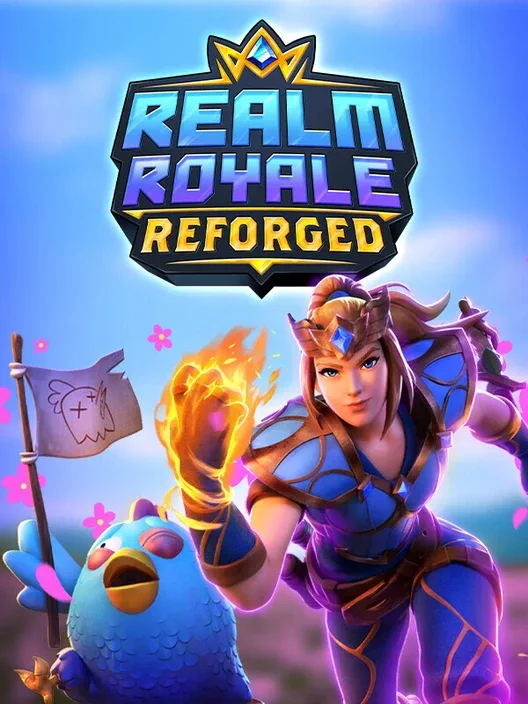
9. Realm Royale Reforged#
Hi-Rez Studios and developer Heroic Leap Games' free-to-play battle royale, relaunched in its Reforged form in 2022 after the original 2018 game's player base declined, pairs a hundred-player shrinking-map format with a class-based ability system pulled directly from Hi-Rez's own Paladins, giving each match a hero-shooter layer most straightforward battle royales don't attempt. The Forge mechanic, letting eliminated players' weapons and gear be smelted down into crafting materials at a stationary forge, turns picking a fight in the open into a genuine resource decision rather than a pure risk. Mounts, summonable at will to quickly cross the map, replace the genre's usual scavenged-vehicle rotation with an ability every player has from the start, changing how aggressively squads can reposition relative to the closing zone. Class abilities — from the Warrior's charge to the Mage's damage-over-time chaos orb — give gunfights a genuine tactical layer beyond aim and positioning alone. The honest drawback: the Reforged relaunch, while a real overhaul of the original's systems, is competing for attention years after the genre's biggest names had already established themselves, and its player base remains considerably smaller than the market leaders it's most directly compared to.
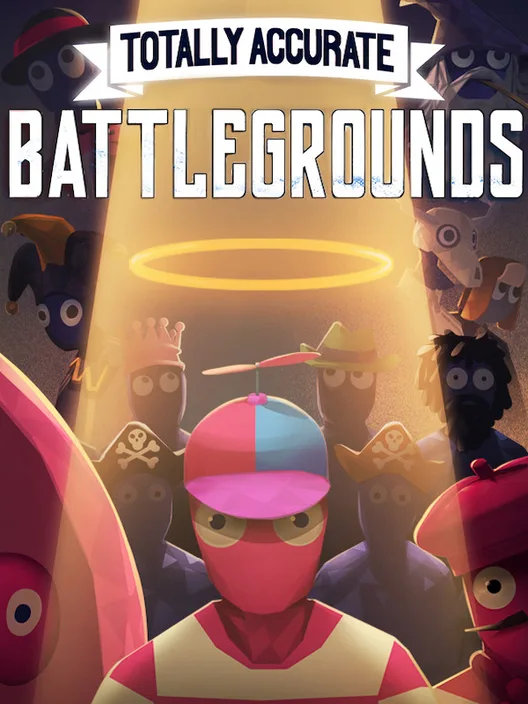
10. Totally Accurate Battlegrounds#
Swedish studio Landfall's 2018 parody battle royale, released as one of the studio's traditional April Fools projects before becoming a standalone commercial release, takes direct aim at PUBG and Fortnite with deliberately exaggerated ragdoll physics that turn ordinary movement, falling, and getting shot into slapstick rather than tense realism. The self-constructing wall mechanic replaces the genre's usual storm circle with a literal wall that builds itself around the shrinking safe zone, giving the closing boundary a uniquely physical, almost comedic presence on screen rather than an abstract damage-over-time effect. Dual-wielding nearly any weapon in the game, including improbable combinations the genre's more serious entries would never allow, leans into the game's core philosophy that unstable physics and a lack of self-seriousness make for a more replayable battle royale than another realistic clone. The wide, intentionally absurd weapon roster, pulled loosely from real-world firearms filtered through Landfall's own physics engine, keeps individual fights visually chaotic in a way that's core to the joke rather than a bug. The honest drawback: the deliberately janky physics and comedic tone are a real mismatch for players looking for the competitive precision the genre's biggest names built their reputations on, and the game's content update pace has slowed considerably since its early years.
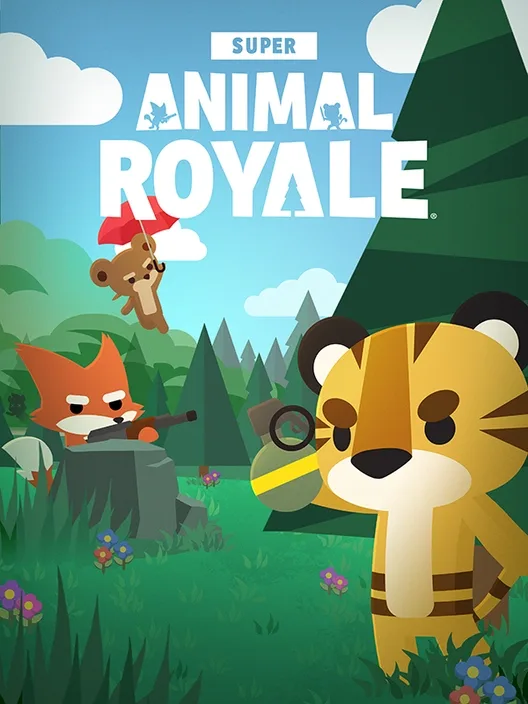
11. Super Animal Royale#
Pixile Studios' top-down battle royale, which moved out of its free demo period in November 2020 before a full 1.0 release the following year, reframes the genre's usual first- or third-person structure entirely, running up to sixty-four players as costumed animals across a 2D, fully top-down map with a fog-of-war system that limits vision to actual line of sight despite the flattened perspective. Cuttable tall grass, used to break line of sight from a bird's-eye view where cover would otherwise be nearly impossible to find, gives the top-down format its own stealth layer that a first- or third-person battle royale doesn't need. A closing poison-gas boundary pushes remaining players together in the genre's standard shape, but the top-down view means reading the zone's shrinking edge relative to open ground is a different kind of spatial read than judging distance in a 3D game. The game's cosmetic-forward "Super Animal" theme, built around dozens of unlockable animal skins and silly cosmetic items, keeps its tone consistently light against a genre that otherwise trends toward realism or grimdark military aesthetics. The honest drawback: the flattened top-down perspective, while a genuinely distinctive hook, strips out the verticality and cover-peeking tension that most of this list's other entries build their tensest moments around.
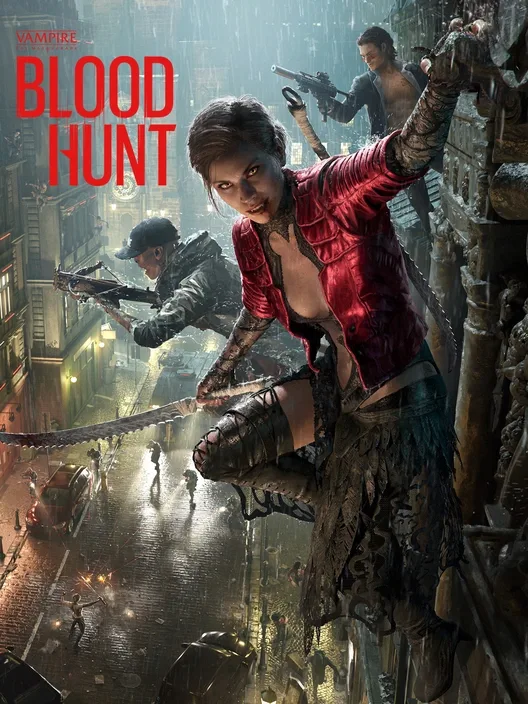
12. Vampire: The Masquerade – Bloodhunt#
Sharkmob's free-to-play battle royale, released in April 2022 and set in a vampire-warring version of Prague drawn from the World of Darkness tabletop setting, paired conventional firearms with vampiric Discipline abilities — wall-climbing, blood-draining melee attacks, and a bat-swarm dash among them — giving its third-person combat a verticality most ground-bound battle royales don't attempt, since a fight could reasonably move from street level to a rooftop mid-engagement. Archetype classes, each built around a specific Discipline loadout like the stealth-focused Saboteur or the tanky Brujah-inspired Muse, gave squads role-based variety on top of the usual scavenged-weapon structure. Blood as a resource, drained from downed enemies or NPC bystanders to fuel Discipline abilities, tied the game's core power fantasy directly into its combat loop rather than treating vampirism as pure cosmetic flavor. The honest drawback, and the most significant one on this list: Sharkmob ended the game's development and shut down its servers, with the game confirmed to have gone offline in 2026 after its player base declined below a sustainable level, leaving it playable today only as a historical footnote for anyone who experienced it during its active years.
13. Dark and Darker#
IRONMACE's hardcore fantasy dungeon-crawling shooter, released from years of contentious early access into a full June 2024 launch amid a high-profile legal dispute with Nexon over trade-secret claims that was ultimately resolved in the small studio's favor, sends squads of up to three into procedurally arranged dungeons armed with bows, crossbows, and melee weapons to loot treasure and fight both monsters and rival adventurers before a closing magical boundary forces a final confrontation near the level's limited exits. That closing arcane barrier functions as the dungeon-crawler equivalent of a shrinking storm circle, dealing escalating damage to anyone caught outside it and steadily compressing a sprawling dungeon layout down into a handful of contested choke points. Full-loot permadeath, losing every piece of gear carried into a run on death, gives even a routine early encounter genuine stakes closer to an extraction shooter's tension than a typical dungeon crawler's. Class variety, spanning Fighter, Wizard, Ranger, Rogue, and several other archetypes, each with a distinct approach to the same dungeon and the same closing boundary, gives squads real role-based decisions before a run even starts. The honest drawback: the game's turbulent development history, including a period pulled from Steam during litigation, left a real dent in its momentum that its eventual legal vindication and full launch have only partly repaired.
14. Spellbreak#
Proletariat's free-to-play battle royale, released in 2020 and built entirely around elemental spellcasting instead of firearms, let players choose from six magic-based classes — Fire, Frost, Toxic, Lightning, Stone, and Wind — each tied to a signature gauntlet ability, like Fire's flame-throwing cone attack or Frost's ice-shard barrage, giving every fight a projectile-dodging rhythm closer to an arena shooter than a conventional gunfight. Rune combinations, letting players layer a secondary elemental effect onto their primary gauntlet, created build-crafting depth the genre's gun-based entries generally leave to weapon attachments instead, since combining Toxic and Lightning runes, for instance, produced entirely different battlefield control than either element alone. Traversal spells, including a double jump and a short-range teleport available to every class regardless of loadout, gave Spellbreak a faster, more vertical movement game than most of its gun-based peers attempted at the time. The honest drawback, and the reason it sits near the bottom of this list: developer Proletariat shut the game down in January 2023 after being acquired to work on World of Warcraft instead, meaning Spellbreak survives today only through unofficial community-run servers rather than as an actively supported release.
The ranking above blends Game Avant's combined critic-and-player rating data with a deliberate editorial pass for breadth, mixing the genre-defining giants with smaller and more inventive takes on the same last-one-standing premise, including a few entries whose shrinking-boundary or elimination structure bends the classic formula rather than repeating it. It is not a strict output of that combined score alone — the goal is a genuinely representative answer to "what are the best battle royale games," including titles no longer actively supported where their historical importance to the genre earns them a place. Treat it as a working shortlist, and check back as the site's data and this curation both continue to evolve.