 Rocket League
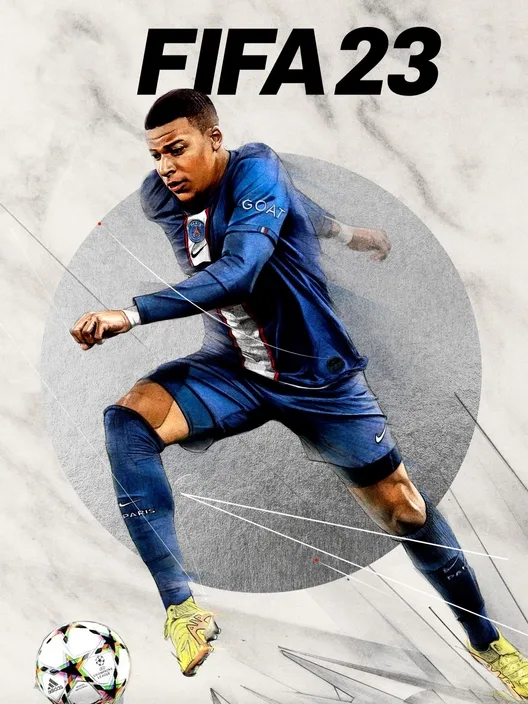 FIFA 23
 EA Sports FC 25
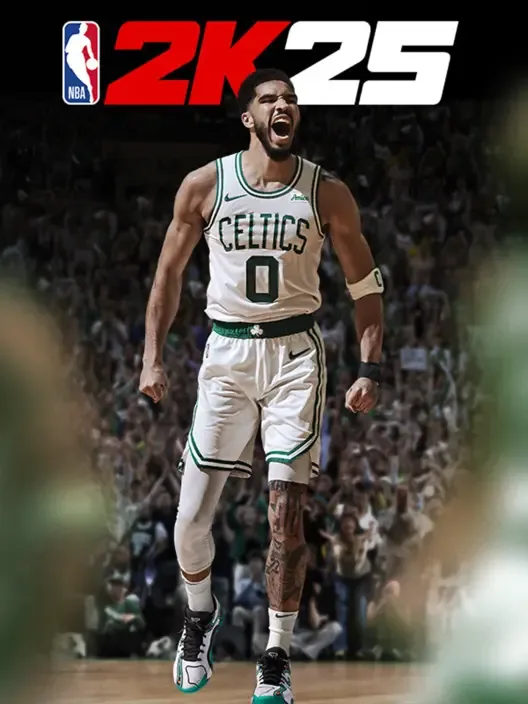 NBA 2K25
 Golf With Your Friends
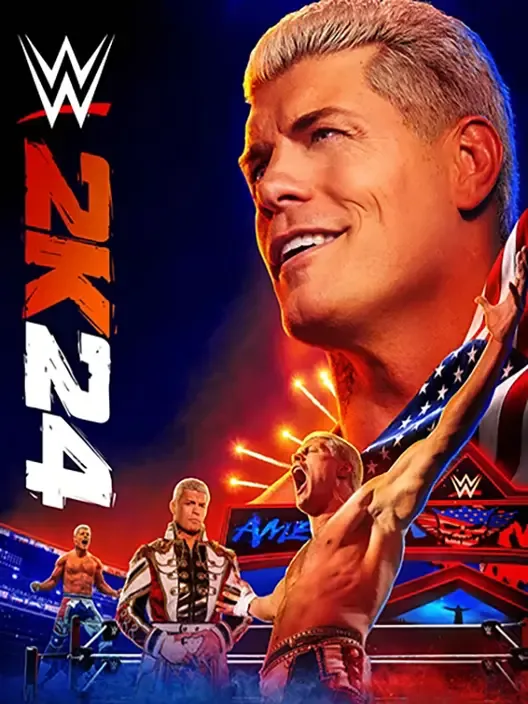 WWE 2K24
This is Game Avant's own ranked list of the best sports games right now, curated for genuine breadth rather than sorted by raw rating alone. "Sports" on this page means licensed team-sports simulations built around season-long career and management modes, arcade takes on real-world sports that trade simulation depth for pure spectacle, and combat or extreme-sports games where the competition is physical rather than ball-and-goal. It explicitly does not mean racing, rallying, or any other motorsport — Forza, Gran Turismo, Need for Speed, and the rest of that catalog have their own dedicated racing category on this site, and folding them in here would just duplicate that page under a different label.
The list below leans on the site's combined critic-and-player rating data, curated to make sure real, widely-played sports franchises anchor the ranking rather than getting crowded out by obscure titles with a handful of glowing reviews. It runs to 28 entries rather than a padded 30: "sports," defined narrowly and correctly, is a smaller pool on this catalog than genres like RPG or action, and stretching the list further would have meant including a driving game or a non-sport just to hit a round number. Read the write-ups for what each game does well and where it genuinely falls short — the rank reflects how a title currently scores against the rest of the field, not a verdict on which sport is worth a reader's time.
1. Rocket League#
Psyonix's vehicular-soccer hybrid, first released in 2015 and now published by Epic Games as a free-to-play title, remains the clearest example of a sports game built from a single, perfect idea rather than broad simulation ambition: rocket-boosted cars knock an oversized ball toward a goal across 3v3, 2v2, and 1v1 matches, and the physics underneath — momentum, boost management, aerial control — are precise enough to support a genuine competitive scene years after launch. Aerials, the mid-air boost-and-steer technique that lets a skilled player strike the ball well above the pitch, remain the game's signature skill ceiling, separating casual lobbies from ranked play almost entirely on execution. The Rocket Pass, a seasonal battle-pass structure, layers cosmetic progression on top of the core loop without touching matchmaking or balance, and extra modes like Hoops and Snow Day reskin the core physics into entirely different sports without rebuilding the engine. Cross-platform play across consoles and PC has kept the population healthy long past what a 2015 arena-sports title would normally expect. The honest drawback: the free-to-play transition brought aggressive cosmetic monetization, and the skill gap between casual and competitive play is steep enough that a new player can bounce off ranked modes before the mechanical depth that makes the game special has had a chance to click.
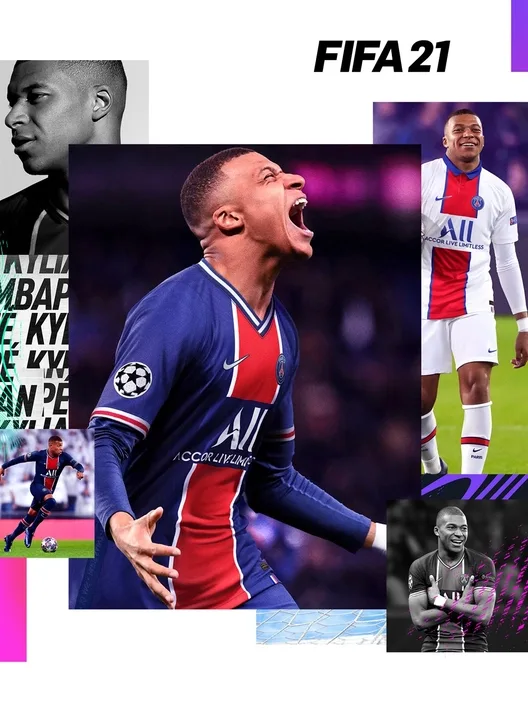
2. FIFA 22#
EA Vancouver's final entry under the FIFA license before the franchise's EA Sports FC rebrand introduced HyperMotion technology, built from motion-capture data pulled from actual professional matches to generate more realistic player movement and positioning than the series had managed before, at least on the console versions running the new-generation engine. Career Mode's overhauled create-a-club options and a deeper manager mode gave the single-player side more structural depth than recent yearly entries had bothered with, and Volta Football, the small-sided street-football mode introduced the year prior, returned with expanded customization for player-created characters. Ultimate Team, the collectible-card-squad-building mode that generates the bulk of the franchise's ongoing revenue, remained the game's most-played mode by a wide margin, built around chemistry links between players from compatible leagues and nationalities. The honest drawback: the last-generation console and PC versions didn't receive HyperMotion at all, creating a two-tier experience within the same release, and Ultimate Team's pack-based progression leans heavily on real-money purchases to stay competitive against players willing to spend.
3. Umamusume: Pretty Derby#
Cygames' anime horse-racing management sim, which launched in Japan in 2021 and reached a global English release in June 2025, reframes horse racing as a sports-management career sim wrapped around gacha-collected "Umamusume" — anthropomorphized horse-girl characters modeled directly on real Japan Racing Association legends. The core loop trains a chosen Umamusume across a compressed three-year career, balancing stat-building minigames, stamina and mood management, and a event-driven relationship system with rival trainees, all aimed at qualifying for and winning the fictionalized "Twinkle Series" races that mirror real Japanese racing's biggest events. Race outcomes are simulated using the stats built during training rather than played directly, which puts the actual skill test on management decisions — when to rest a tired character, which support cards to slot in — rather than on race-day execution. The idol-adjacent presentation layer, including fully rendered 3D concert sequences for victorious Umamusume, gives the management-sim core a spectacle layer most sports-management games skip entirely. The honest drawback: the gacha system gates access to specific support cards and characters behind randomized, real-money-adjacent pulls, and the dense stat-and-event systems assume a tolerance for menu-heavy management that a reader expecting a straightforward racing game won't find here.
4. Golf With Your Friends#
Blacklight Interactive's party mini-golf game, published by Team17, builds its whole identity around chaos-friendly physics rather than realistic putting: seven themed 18-hole courses — Candyland, Haunted, and Pirate Cove among them — layer in gimmicks like teleporters, moving platforms, and gravity-altering zones that a serious golf sim would never touch. Up to 12 players can compete in a single lobby, and alternate game modes like Hockey and Dunk repurpose the core putting mechanics into entirely different scoring objectives, giving a group session variety beyond eighteen more holes of the same format. The Steam Workshop-integrated level editor has produced hundreds of community-built courses on top of the roughly 230 official holes, which keeps the pool of available content growing well past what the base game shipped with. Cosmetic customization — ball skins, trails, hats — gives the format a light progression layer without touching the actual gameplay balance. The honest drawback: the physics-driven chaos that makes it a great group activity also means outcomes lean on luck as much as skill, and a player looking for a genuine golf simulation rather than a party game will find none of that depth here.
5. FIFA 23#
EA Vancouver and EA Romania's last game to carry the FIFA name before the licensing split closed out the era with cross-play support between console generations for the first time in the series' history, letting friends on PS4 and PS5, or Xbox One and Series X|S, share a lobby regardless of hardware. HyperMotion2 expanded the motion-capture dataset behind player animation, and the addition of women's club football — including the FIFA Women's World Cup content added post-launch — gave the roster a breadth the series had been slow to build out. AcceleRATE, a new player-speed categorization system splitting movement styles into explosive, controlled, and lengthy archetypes, changed how dribbling and sprinting actually felt depending on a given player's build rather than treating pace as a single flat stat. Ultimate Team again anchored the game's live-service side, with Moments and Evolutions giving grindable paths to upgrade specific player cards over a season. The honest drawback: as the final FIFA-branded entry, much of the core gameplay loop and menu structure carried over from the prior year largely unchanged, and the aging last-gen console versions were visibly left behind by the current-gen HyperMotion showcase.
6. Skate.#
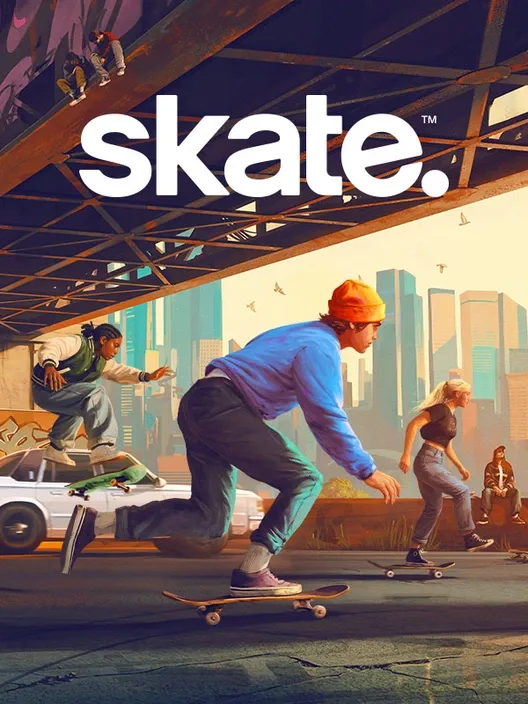
Full Circle's free-to-play revival of EA's skateboarding series launched into early access on September 16, 2025, dropping players into San Vansterdam, an open, four-neighborhood city built specifically around skateable terrain — rooftops, canals, plazas, and a converted cathedral among its signature spots. The series' long-running "Flick-It" control scheme, which maps flip tricks to analog-stick flicks rather than button combinations, returns as the foundation of the whole game, preserved deliberately because it's the mechanical identity longtime fans specifically asked to see back. The game is built as a live, evolving multiplayer world rather than a fixed campaign, with cross-platform play and cross-progression across PC, PlayStation, and Xbox, and content seasons — the first launching in October 2025 — adding new map areas, challenges, and cosmetics on an ongoing basis rather than shipping everything at once. Free-to-download access removes the entry barrier that kept casual players away from earlier premium entries in the series. The honest drawback: launching in early access means the game is explicitly unfinished, with content gaps and balance issues expected to shift release over release, and the free-to-play, seasonal-content structure introduces monetization questions a fully premium skateboarding game never had to answer.
7. EA Sports FC 24#
EA Vancouver's first release under the EA Sports FC branding, following the end of EA's decades-long FIFA licensing deal, introduced HyperMotionV, built from volumetric data captured across 180 real matches to generate over 11,000 true-to-football animations — nearly double the prior year's total. Precision Passing gave players more granular control over pass weight and direction than the series' traditional passing model allowed, and machine-learning-driven improvements to the Technical Dribble system made close ball control feel more responsive to input timing. The rebrand came with an expanded women's football presence and the addition of the Women's Champions League alongside existing men's competitions, broadening the licensed-competition roster beyond what FIFA-branded entries typically carried. Ultimate Team, unaffected by the branding change, kept its chemistry-and-card-collection structure as the game's dominant mode by playtime. The honest drawback: as the first post-FIFA entry, much of the underlying gameplay engine and menu structure was recognizably carried over from the prior year, and the new branding did little to change the mode's continued reliance on pack-opening monetization.
8. EA Sports FC 25#
EA Vancouver's follow-up introduced Rush, a 5v5 small-sided mode with AI-controlled goalkeepers built into Ultimate Team, Clubs, and Kick-Off alike, giving players a faster, more chaotic alternative to full 11v11 matches without needing a separate game mode to access it. FC IQ overhauled the tactics system with an AI model trained on real-world data, introducing Player Roles that shape positioning and decision-making more specifically than the older, broader tactical sliders ever did, and Manager Items began carrying real managers' actual tactical tendencies into Ultimate Team squads. The Women's Football expansion continued from the prior year, with additional leagues and competitions added to the roster. Career Mode picked up incremental depth around transfer negotiation and squad-role management, though it remained the less-resourced side of the game relative to Ultimate Team's live-service content cadence. The honest drawback: Rush's small-sided format, while a genuinely fun addition, pulled continued post-launch attention away from deeper Career Mode development, and the FC IQ tactical overhaul's learning curve is steep enough that casual players mostly ignore it in favor of default settings.
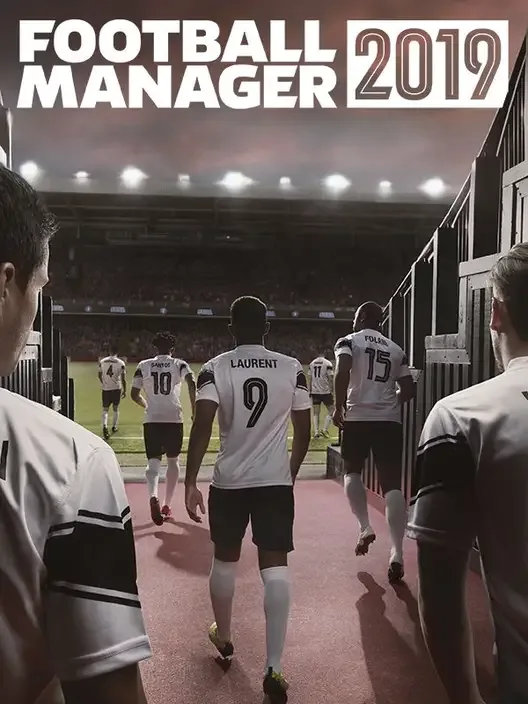
9. Football Manager 2024#
Sports Interactive's long-running management sim, the last mainline entry before a planned successor's delayed release pushed the series into an unusual gap year, refined its transfer-market AI so that computer-controlled clubs weigh squad weaknesses and player development potential more realistically when negotiating, rather than making the predictable, exploitable offers older entries were known for. A new Ask Agent About Market Interest option let a manager gauge a player's actual trade value before listing them, closing off a long-standing information gap between user-controlled and AI clubs. The Pre-Match Hub surfaced tactical and squad-fitness information ahead of major fixtures in one consolidated screen rather than scattered across separate menus, and reputation-based manager titles gave long-term save progression a sense of accumulated career identity beyond simple win totals. Financial management tightened considerably, with automatic alerts for transfer-budget overspending and board intervention triggered by unsold-player backlogs. The honest drawback: the interface remains dense and spreadsheet-heavy by design, which keeps the series a poor entry point for anyone who hasn't already bought into its specific, menu-driven idea of what a football sim should be.
10. eFootball#
Konami's free-to-play successor to the Pro Evolution Soccer line rebuilt the franchise around a new engine and a subscription-free access model, letting anyone download and play core modes without an upfront purchase, funded instead through optional player-pack and cosmetic purchases. Dream Team, the mode built around assembling an original squad from signed real players and coaches, lets a manager customize formation, kit, and team playing style while running a training-and-signing loop that mirrors traditional career-mode progression without gating it behind a paid game. Link-up Play, a passing-and-movement system that rewards positioning two compatible players near each other, adds a tactical layer to Dream Team squad-building beyond simply fielding the highest-rated eleven available. Seasonal Events tied to real football storylines keep the mode's content rotating, and casual online matches let players test squads without affecting their competitive match record. The honest drawback: the free-to-play relaunch was notoriously rough at release, missing modes and features the paid PES entries had for years, and the game's continued reliance on randomized player-pack pulls for Dream Team's best cards puts real budget pressure on players chasing a competitive squad.
11. EA Sports FC 26#
EA Vancouver's 2025 release split its core gameplay into two selectable presets — Competitive, tuned for faster head-to-head passing and sharper goalkeeper rebounds, and Authentic, built for Career Mode with more positionally disciplined defending and realistic set-piece outcomes — letting the same engine serve two different audiences without forcing one tuning philosophy on both. Manager Live Challenges introduced season-long scenarios pulled from real-world storylines, awarding cosmetic and player-item rewards for navigating them successfully, while Player Career's new Archetype system let a created player commit to a specific developmental path and playstyle rather than a generic stat-growth curve. A new international tournament mode built around 48 national teams and newly modeled stadiums gave the game a standalone competition beyond club football's usual club-license roster. Accessibility additions, including a high-contrast mode and adjustable pitch saturation, were a genuine first for the franchise's on-pitch presentation options. The honest drawback: splitting gameplay into two presets means neither Competitive nor Authentic play is quite what the series' core engine was built around by default, and Ultimate Team's Rush mode continues to draw live-content attention away from Career Mode's comparatively modest yearly additions.
12. Golf It!#
Perfuse Entertainment's multiplayer minigolf game built its identity around a course-creation tool as much as the golfing itself: a Multiplayer Editor lets up to eight players design and build a custom hole together in real time, and the Steam Workshop is stocked with thousands of community-made courses well beyond the eight official sets included at launch. The physics-driven putting model leans into genuinely unpredictable bounces off ramps, slopes, and moving obstacles, favoring group chaos over the precision a dedicated golf sim would demand. Voice chat and shared-lobby structure built specifically around online multiplayer sessions, rather than retrofitted onto a single-player mode, make it a natural fit for the same kind of group-watch-and-play sessions that built Golf With Your Friends' audience. The detailed level editor, offered as a standalone creative tool rather than a stripped-down version of the main game's building blocks, gives its community real design freedom rather than a handful of preset options. The honest drawback: the game has spent years in Steam Early Access with a relatively small official course count, and its niche, community-content-dependent identity means the base package alone feels thin next to more fully-produced minigolf competitors.
13. Riders Republic#
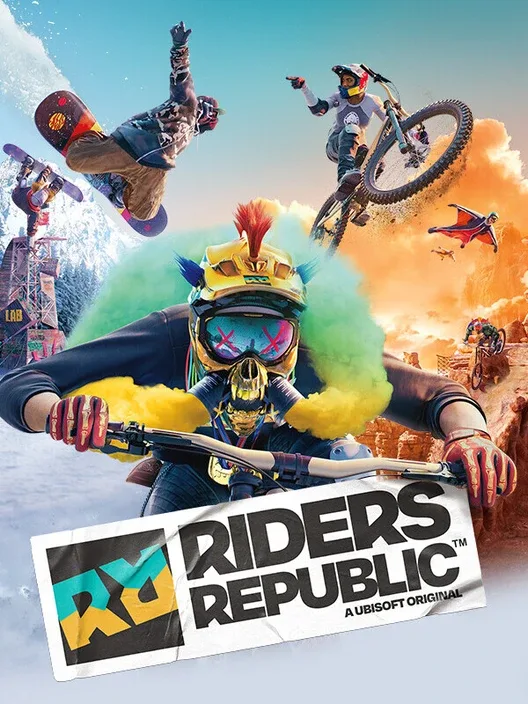
Ubisoft Annecy's mountain-sports playground, built by the same studio behind Steep, expands its predecessor's single-mountain focus into an open world stitching together real American national parks — Bryce Canyon, Yosemite, Sequoia, Zion, and Grand Teton among them — into one continuous, downhill-sport-friendly landscape. Four core disciplines — mountain biking, skiing, snowboarding, and wingsuit flying — share the same terrain and can be swapped mid-run, letting a player launch off a cliff on skis and switch to a wingsuit mid-air to keep the run going rather than resetting at a discipline-specific start line. Mass Races, competitions supporting up to 64 simultaneous players across mixed disciplines on the same course, are the game's signature large-scale event, while the 6v6 Tricks Battle Arena mode scores team-based trick execution separately from the open-world racing content. The career structure ties progression to sponsor-branded challenges across all four sports rather than specializing a player into a single discipline early. The honest drawback: the sheer scale and disciplinary breadth means no single sport gets the mechanical depth a dedicated skiing or biking game would offer, and the game's launch-era servers struggled under the load of its signature massive-lobby events.
14. Steep#
Ubisoft Annecy's 2016 open-world extreme-sports game, the direct predecessor to Riders Republic, built its Alps-and-Alaska setting around four disciplines — skiing, snowboarding, wingsuit flying, and paragliding — connected by a "mountain view" overview map that lets a player survey trick challenges, races, and points of interest before dropping in anywhere on the mountain by choice rather than a fixed course order. The always-online design put every player in the same persistent world, encouraging spontaneous team-ups for stunts or impromptu races rather than scheduled matchmaking, a structural choice that predated Riders Republic's more explicitly massive-multiplayer framing by five years. Dynamic weather genuinely altered visibility and snow conditions across runs, changing how a familiar descent needed to be approached on a return visit. The replay and clip-sharing tools, built around capturing a landed trick or a near-miss crash for the community feed, gave the open-world structure a social, highlight-reel-driven reason to keep exploring beyond the scored challenges themselves. The honest drawback: the open-world discovery pacing can feel aimless without a strong challenge structure pulling a player forward, and reviewers at launch noted the core trick systems, while functional, lacked the depth of dedicated single-sport games like the earlier SSX series.
15. NBA 2K25#
Visual Concepts' current-generation entry introduced ProPlay, a technology that converts real NBA broadcast footage directly into in-game animation data, adding roughly 9,000 new signature movements pulled from actual players' drives, jump shots, and finishes rather than hand-animated approximations of them. MyCareer's new Pro-Tuned build templates gave players expert-curated archetype presets that come pre-loaded with matching signature animations, lowering the barrier to building a competitively viable created player without deep system knowledge. The returning G.O.A.T. Rankings mode added a Dynasty component, letting a save track a franchise's historical standing against nine of the greatest dynasties in the sport's real history. The core on-court gameplay leaned further into ProPlay-driven realism for player-specific tendencies, meaning a created build modeled after a real star increasingly moved the way that player actually moves on television. The honest drawback: MyCareer and MyTeam remain heavily monetized around Virtual Currency purchases needed to progress a created player at a reasonable pace, and the yearly roster-and-animation refresh means much of the core simulation engine carries over from the prior release largely unchanged underneath the new coat of ProPlay animation.
16. NBA 2K24#
Visual Concepts' prior-generation entry, released the year before ProPlay's full rollout, still leaned on motion-captured animation refinements and an expanded MyCareer storyline built around a longer, more cinematic career arc than earlier entries offered. The Mamba Moments mode, a tribute set of playable recreations of specific real games from Kobe Bryant's career, gave the game a genuine historical centerpiece distinct from the usual create-a-player career loop. Park and Rec content, the online social hubs where created players compete in pickup-style 3v3 and 5v5 games against other users, remained the social backbone of the online side of the game, with seasonal content rotations keeping the hubs visually and mechanically refreshed across a year. Shot-contest and dribble mechanics received incremental tuning aimed at reducing the exploit-heavy meta that had defined competitive online play in recent entries. The honest drawback: the core gameplay loop and menu structure were, by this point in the series' yearly cadence, recognizably iterative rather than a meaningful leap, and Virtual Currency-driven progression in MyCareer continued to push players toward real-money spending to stay competitive against paying opponents.
17. WWE 2K24#
Visual Concepts' entry marked the 40th anniversary of WrestleMania with an expanded Showcase mode built around that milestone, and the returning WarGames match type — a multi-ring cage match built around tag-team chaos rather than one-on-one structure — anchored a broader classic-match-type roster that included Ambulance, Casket, and Elimination Chamber matches alongside new additions like Underground and Storage Room matches. Super Finishers, a new mechanic letting a player bank all three finisher charges into a single, more devastating move, changed the pacing of a match's closing sequence by giving skilled players a genuine risk-reward decision about when to cash in rather than automatically finishing at the first opportunity. MyGM, the wrestling-promotion management mode, expanded its roster-drafting and weekly-show-booking systems, giving the strategic side of the game more depth than the pure in-ring action alone offers. Create-a-Wrestler and Create-a-Championship tools remained deep enough to sustain a genuinely active community content-sharing scene years into the console generation. The honest drawback: the sheer number of match types and modes packed into a single release comes at the cost of polish in some of the less-played corners, and the yearly-release structure means core in-ring mechanics evolve incrementally rather than through any single dramatic overhaul.
18. PGA Tour 2K23#
HB Studios' entry brought official PGA Tour licensing to the 2K golf line for the first time, alongside a Topgolf mode that faithfully recreates the real Topgolf Las Vegas venue, tasking players with landing shots into specific, variably-sized and variably-distant targets for points rather than playing a traditional 18-hole round. The expanded Course Designer gave the community-content side of the game real depth, with a large enough toolset that fan-built replicas of real-world courses became a genuinely popular category of downloadable content. Playable Pros, letting a player compete directly as a licensed real PGA Tour golfer rather than only a created MyPLAYER character, gave the career and online modes a roster of recognizable names the series hadn't carried before. Multiple swing-mechanic options, from a simplified three-click system to a more analog-stick-driven model, let players choose their own preferred difficulty and control precision rather than forcing one system on everyone. The honest drawback: golf as a sport resists the kind of highlight-reel spectacle other entries on this list lean on, and the game's slower, more methodical pacing is a genuine mismatch for a player expecting the arcade energy of Topgolf mode to carry through the full simulation golf on offer.
19. WWE 2K25#
Visual Concepts' follow-up centered its Showcase mode around the Bloodline, the real-life Anoa'i, Fatu, and Maivia wrestling dynasty, narrated in-fiction by longtime Bloodline mouthpiece Paul Heyman across a series of career-spanning matches built specifically around that family's storylines. Chain Wrestling returned as a grapple-based opening exchange mechanic, giving matches a tactical mini-game at the start of a lock-up rather than jumping straight into scripted offense, and intergender matches — men's and women's roster wrestlers competing directly against each other — opened up new matchup combinations across most game modes for the first time. The new Bloodline Rules and Underground match types added structurally distinct objectives beyond the standard pinfall-or-submission format, and MyGM's online multiplayer expansion let up to four players run competing wrestling promotions against each other in the same season simultaneously. New barricade-diving moves expanded the environmental-offense moveset that's become a series staple since ringside brawling was introduced. The honest drawback: the Showcase mode's tight focus on one wrestling family, while well-executed, means it appeals less broadly than showcases built around a single legendary performer's whole career, and the yearly cadence again means much of the underlying in-ring engine is a refinement rather than a reinvention.
20. Madden NFL 24#
EA Tiburon's entry introduced FieldSENSE's next iteration alongside the debut of SAPIEN Technology, a full character-skeleton rebuild that gave player models more realistic body definition and physique variation, feeding directly into more anatomically grounded tackling, catching, and throwing animations than the engine had produced before. The expanded FieldSENSE control scheme gave players finer manual control over pass placement and tackling technique, moving away from purely animation-triggered outcomes toward inputs that meaningfully change a play's result. Superstar mode, the created-player career path, continued building out its story-driven off-field content alongside on-field progression, giving the single-player side more narrative structure than the mode traditionally offered. Franchise mode picked up incremental additions to coaching staff management and scouting depth, addressing some of the yearly community complaints about the mode's comparative neglect. The honest drawback: as the only major licensed NFL simulation on the market, the franchise faces no real competitive pressure to innovate faster than it chooses to, and Franchise mode in particular remained noticeably behind Ultimate Team in terms of yearly development resources and new content.
21. Madden NFL 25#
EA Tiburon's follow-up built its headline feature around BOOM Tech, a physics-based tackling system developed with the Frostbite engine team that models timing, momentum, weight, speed, strength, and individual player ratings together to generate a much wider range of collision outcomes than the older animation-blend tackling system allowed. The reengineered Hit Stick, rebuilt on top of BOOM Tech, gave defensive players more granular control over tackle timing and force, while a new ball-carrier balance-and-recovery system let a runner fight through contact rather than being locked into a single scripted tackle animation once contact began. The years-long development investment behind BOOM Tech represented, according to EA's own framing, the single most significant FieldSENSE-adjacent overhaul since that system's original introduction. Superstar mode and Franchise mode both received incremental narrative and management refinements layered on top of the new physics foundation rather than a structural overhaul of either mode. The honest drawback: a physics-driven tackling system introduces its own new failure cases — occasionally bizarre ragdoll outcomes on mistimed hits — and as with every recent Madden, the improvements concentrate heavily on core gameplay feel while Franchise mode's deeper management systems continue to lag behind fan requests.
22. Super Mega Baseball 4#
Metalhead Software's arcade-leaning baseball sim added a reworked fielder-input system that brought ball-tracking and throw mechanics more in line with genre convention, addressing one of the series' longest-standing points of friction for newcomers coming from more traditional baseball games. More than 200 exaggerated "Legend" versions of real retired pros — Vladimir Guerrero, Ozzie Smith, and Johnny Damon among them — joined the roster of original fictional players the series has always leaned on, letting a franchise or exhibition game mix real baseball history with the series' own cartoonish original cast. The expanded Team Chemistry trait system, alongside 55 new player Traits and a Shuffle Draft mode for randomized roster-building, gave the franchise mode considerably more build-variety options than the prior three entries offered. Cross-platform, cross-generation matchmaking in Pennant Race and Online Leagues meant the multiplayer population stayed unified rather than splitting across console generations. The Ego system, the series' long-running dynamic-difficulty slider that adjusts challenge in real time based on performance, remains one of the more elegant accessibility ideas in any sports game on this list. The honest drawback: the presentation and commentary remain noticeably lower-budget than the licensed MLB competition, and the absence of official MLB team and player licensing means every franchise save is built around invented team names and rosters unless a player manually edits them in.
23. Mario Tennis Aces#
Camelot's Switch entry pushed the series toward a more technical, combo-driven ruleset than earlier Mario Tennis games attempted, centered on the Zone Shot — an aimable, screen-freezing power shot triggered once the on-court energy gauge fills at least a third of the way, executed with motion-controlled aiming that rewards precise racket-face placement over a simple button press. Zone Speed, the complementary defensive tool, briefly slows time to let a player reach an otherwise unreachable shot, giving rallies a genuine risk-reward tension around when to spend limited energy on offense versus defense. Racket durability adds a structural stake to Zone Shot exchanges: landing three unreturned Zone Shots against an opponent breaks their racket outright, forcing an immediate forfeit if it was their last one in reserve. The Adventure mode, a lightly RPG-inflected single-player campaign built around boss-style tennis duels against character-specific gimmick courts, gave the package a structured story mode most sports titles on this list skip entirely. The honest drawback: the heavy emphasis on Zone Shots and racket-breaking mechanics is a deliberate departure from traditional tennis scoring that some series veterans found gimmicky, and the online mode at launch was notably thin on modes compared to the depth of the single-player Adventure content.
24. Tennis World Tour 2#
Big Ant Studios' licensed tennis sim, published by Nacon, rebuilt its predecessor's hitting mechanics around surface-reactive ball physics, where the same shot behaves differently on clay, grass, or hard court in ways that meaningfully change shot selection and rally strategy rather than existing as a cosmetic backdrop difference. The overhauled Career mode added character customization alongside genuine off-court management decisions — hiring and firing coaching staff, courting sponsors — giving single-player progression a management layer closer to the site's other career-sim entries than a pure arcade ladder. A 36-player licensed roster at launch, supplemented by legendary bonus characters like Marat Safin and Gustavo Kuerten, gave the game recognizable real-world names even without the biggest active stars under exclusive contract elsewhere. Local and online doubles support for up to four players, alongside a dedicated ranked singles ladder, gave the multiplayer side structure beyond simple exhibition matches. The improved serve-and-shot-timing system aimed to reward precise input timing more consistently than the notoriously rough original entry had managed. The honest drawback: the game launched with noticeable animation stiffness and AI inconsistency that reviewers flagged at release, and its licensed roster, while respectable, still fell well short of the officially sanctioned ATP and WTA tours that rival tennis games have since secured.
25. Mario Golf: Super Rush#
Camelot's Switch entry kept traditional stroke-play golf as a baseline option but built its real identity around Speed Golf, a mode that has every player on a hole simultaneously, sprinting to their ball after each shot rather than waiting through turn-based play, turning golf's normally deliberate pacing into something closer to a footrace punctuated by swings. Battle Golf, the second new mode, compresses that same speed-focused chaos onto a compact nine-hole special course where players race to sink three specific holes before their opponents, using character-specific special shots to interfere with rivals along the way. Character-specific abilities, ranging from movement-speed boosts to golf-ball-altering special shots, give the roster mechanical differentiation beyond simple stat variance, which matters more in Speed Golf's simultaneous-play chaos than it would in a traditional turn-based round. The traditional Golf mode, while less flashy than the new additions, retained the series' well-regarded shot-shaping and club-selection depth for players who wanted a more conventional round. The honest drawback: the game launched with a notably sparse content roster of courses and characters compared to prior series entries, and traditional stroke-play purists found the marketing's heavy focus on Speed and Battle Golf sidelined the mode they actually wanted more of.
26. MLB The Show 24#
San Diego Studio's entry introduced Storylines, a pair of documentary-style narrative modes woven directly into playable baseball rather than presented as separate cutscene content: a second season of Negro Leagues storytelling narrated by Negro Leagues Baseball Museum president Bob Kendrick, spotlighting new historical figures including a pioneering female player of the era, and a dedicated Derek Jeter tribute mode recreating career-defining moments like his rookie-year hit and the famous 2001 playoff "flip play." Diamond Dynasty, the collectible-card team-building mode, tied directly into Storylines progress, awarding unlockable player items for completing the historical narrative content rather than keeping the two systems siloed. The pacing of Storylines missions was deliberately built to be brisk rather than a taxing full-length campaign, letting players move through the historical content without it feeling like a chore blocking access to the modes built around it. Road to the Show, the created-player career mode, continued its long-running progression system largely unchanged from the prior year's structural baseline. The honest drawback: as an annual, PlayStation-first-party-adjacent release, the yearly core gameplay changes were incremental rather than dramatic, and Diamond Dynasty's best player items remain gated behind the same grind-or-spend structure common to every live-service sports card mode on this list.
27. EA Sports UFC 5#
EA Vancouver's mixed-martial-arts entry moved the franchise onto the Frostbite engine for the first time, powering the new Real Impact System, which tracks accumulated strikes and cuts across a fight and lets that damage genuinely degrade a fighter's mobility, stamina, and defensive capability in real time rather than existing as a purely cosmetic damage overlay. Facial damage alone supports more than 64,000 possible combinations, giving fights a visibly escalating sense of consequence round over round that earlier entries in the series couldn't render. The system also supports doctor stoppages triggered by accumulated damage, adding a genuine finish condition beyond knockout or submission that mirrors how real UFC bouts can actually end. Career mode continued building out its fighter-progression and event-booking structure, letting a created fighter climb a promotion ladder with individualized training-camp decisions along the way. The combat system itself retained the franchise's striking-and-grappling hybrid model, with ground control and submission mini-games layered on top of standing exchanges. The honest drawback: the Frostbite transition brought its own launch-era technical rough edges, including animation and hit-detection inconsistencies reviewers flagged at release, and as with the rest of EA Sports' licensed catalog, meaningful roster and mode updates slow considerably once the yearly hype cycle moves on to the next release.
28. NHL 24#
EA Sports' hockey entry introduced the Exhaust Engine, a Frostbite-powered system built around Sustained Pressure and Goalie Fatigue mechanics that reward a team for extended offensive-zone time by visibly tiring out the opposing goaltender, giving prolonged pressure a tangible in-game payoff beyond simply generating more shot attempts. Vision Passing overhauled the series' passing model to factor the actual distance between two players into pass speed and accuracy, replacing the older, more binary pass-success model with something that punishes a genuinely difficult cross-ice feed differently than a simple give-and-go. Total Control Skill Moves made the series' deep dangle-and-deke moveset more accessible through more intuitive stick inputs, lowering the skill floor for pulling off a highlight-reel move without removing the ceiling for players who'd mastered the older, stricter input system. Physics-based contact along the boards and in open ice gave checking and puck battles a more variable, less scripted outcome than earlier engine versions produced. The honest drawback: as with Madden, NHL faces no meaningful competitive pressure from a rival licensed hockey sim, and the yearly release cadence means Franchise and Be a Pro modes receive comparatively modest attention next to the live-service Hockey Ultimate Team mode.
The ranking above blends Game Avant's combined critic-and-player rating data with a deliberate editorial check against pure score-sorting: every entry here is a real, identifiable sports franchise or a genuine standout in its specific niche, not a name that happened to carry a "Sport" tag in the underlying database. Racing, rally, and other motorsport titles were excluded entirely regardless of tagging, since they already have a dedicated category on this site, and the list stops at 28 rather than stretching to a round 30 because that's what a properly, narrowly defined sports catalog actually supports right now. Whether the goal is a team-sports simulation to sink a season into, an arcade pickup game for a group, or something built around combat and extreme sports instead of a ball, treat this as a live snapshot of how these sports games are currently rated relative to each other, not a fixed, permanent verdict — it will shift as more people rate these games and as new releases earn a real sample size behind their score.