
A house built for two tiny cars#
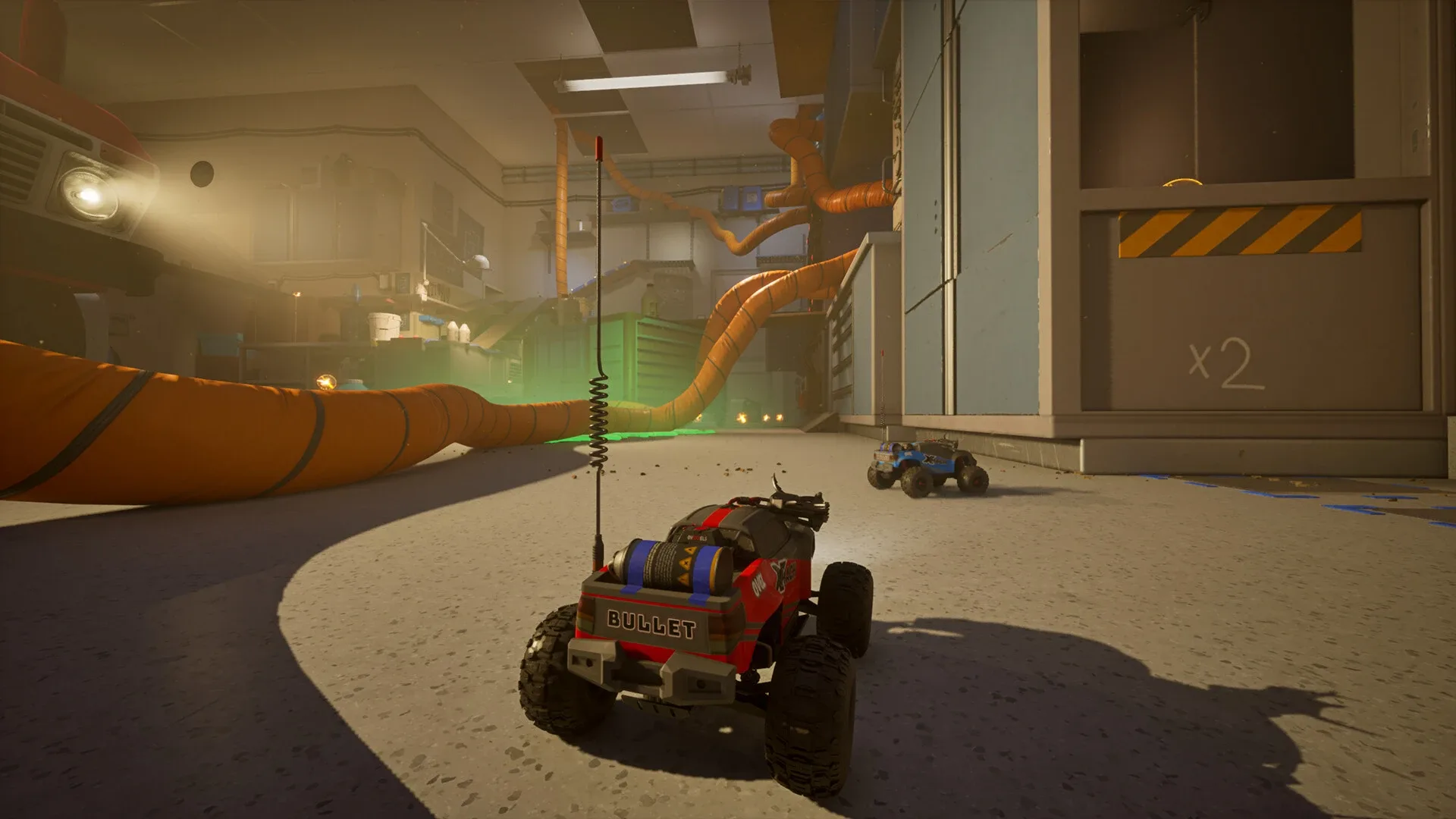
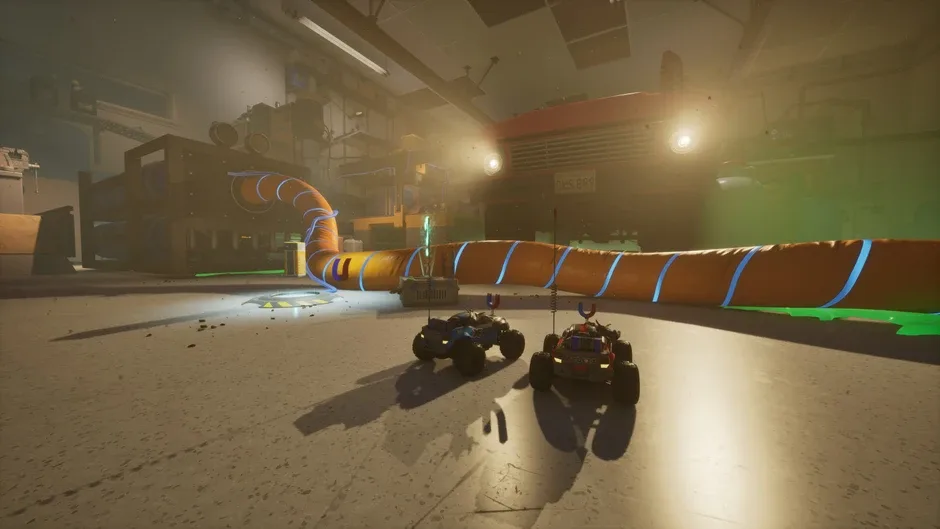
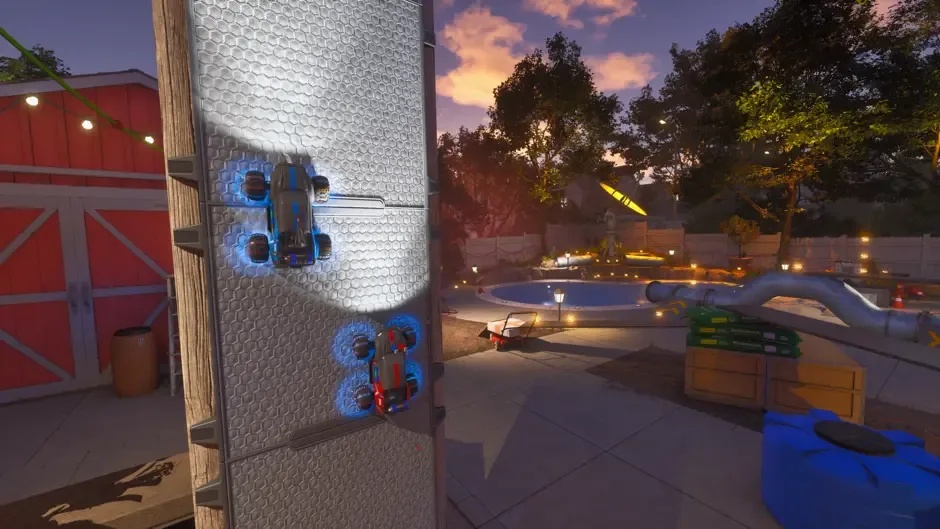
WheelMates is a two-player co-op driving adventure from developer Firevolt, released on 1 September 2026 for PC via Steam, PlayStation 5, and Xbox Series X|S. The premise is simple to state and unusual to picture: two players take control of tiny RC cars inside a professor's home laboratory, working through puzzles across rooms and household objects that have effectively become oversized terrain from a car's-eye view. As the pair progresses, the house itself opens up, revealing spaces that weren't accessible before, and slowly surfacing what happened inside it. It is a small game from a small studio, and it earns its score not by trying to be more than that, but by committing fully to a co-op idea that is genuinely distinct from most of what fills the couch-co-op shelf.
That distinction matters more than it might sound. A large share of two-player co-op games fall into a handful of familiar shapes: a slapstick physical-comedy game about chaos and failure, a cinematic adventure that alternates who gets to do the interesting thing, or a puzzle game that is really a single-player puzzle game with a second cursor bolted on. WheelMates instead starts from a spatial idea, shrink the players and let the house become the level, and builds its co-op structure around that. Whether the puzzle design underneath lives up to the premise is the one thing that can't be fully judged from what's public at the time of writing, and that honesty is worth stating plainly rather than papering over with invented detail.
What makes WheelMates different#
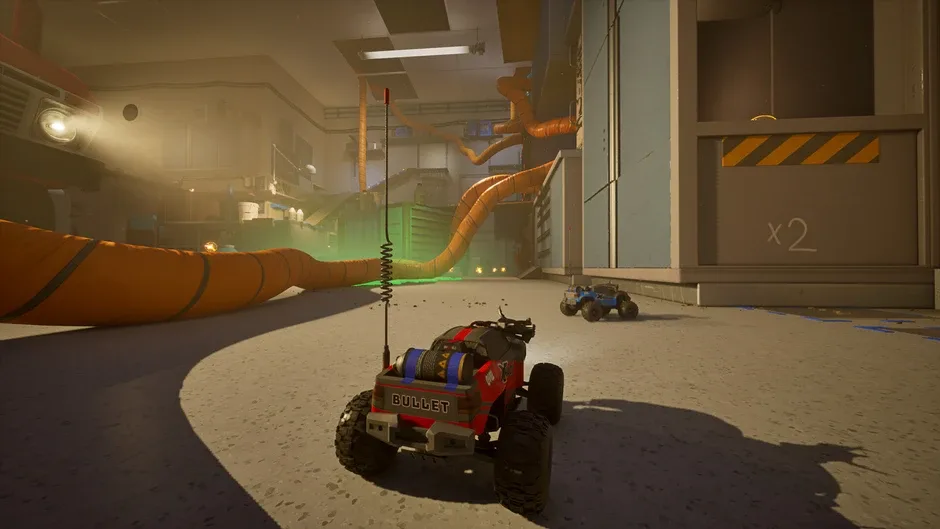
The one idea carrying the whole game is scale. Most co-op adventures put two ordinary-sized characters into an environment built to ordinary-sized proportions, and the co-op comes from dividing roles within that space. WheelMates instead changes the frame of the world itself. A living room becomes a landscape. A staircase becomes a climb. A gap under a piece of furniture becomes a route only a car small enough to fit could ever find. That single decision, told through the lens of a professor's home laboratory rather than a fantasy setting, gives the game a grounded, almost dollhouse-like quality that few co-op puzzle games attempt, because most designers reach for the fantastical rather than the domestic when they want a world to feel oversized.
The mystery layer sits on top of that spatial idea rather than beside it. As the two RC cars find hidden paths and solve the puzzles blocking them, the house doesn't just get bigger in the sense of more rooms unlocking, it gets more legible, with players gradually uncovering what happened inside it. That framing gives the co-op loop a destination beyond "solve the next room": progress and story are the same motion. It's a smart piece of structural design, even accounting for how little has been detailed about the specific puzzles or story beats that fill it in.
Two players, one house#
Because WheelMates is built for exactly two players and nothing else, everything about its design language points toward cooperation rather than coordination for its own sake. There's no public indication of a solo mode, no NPC partner to substitute for a human one, and no hint that the game was designed with anything other than two people sharing the experience in mind. That's a legitimate design choice for a game like this, one built around a specific spatial idea that presumably benefits from two viewpoints moving through the same space at once, but it does mean the game's audience is defined by access to a co-op partner as much as by taste in puzzle games.
What isn't confirmed, and shouldn't be assumed, is exactly how that cooperation plays out mechanically: whether puzzles typically require both cars in the same room working in tandem, or whether the house sometimes splits the pair into separate spaces working toward a shared goal. The general premise, puzzles across oversized household locations and hidden paths that open up as the house reveals itself, is confirmed. The specific shape of any individual puzzle is not, and rather than guess at set pieces or name rooms that haven't been detailed publicly, it's more honest to say that the appeal here rests on the strength of that spatial hook translating into puzzle variety over the course of a full playthrough.
A world built at RC-car scale#
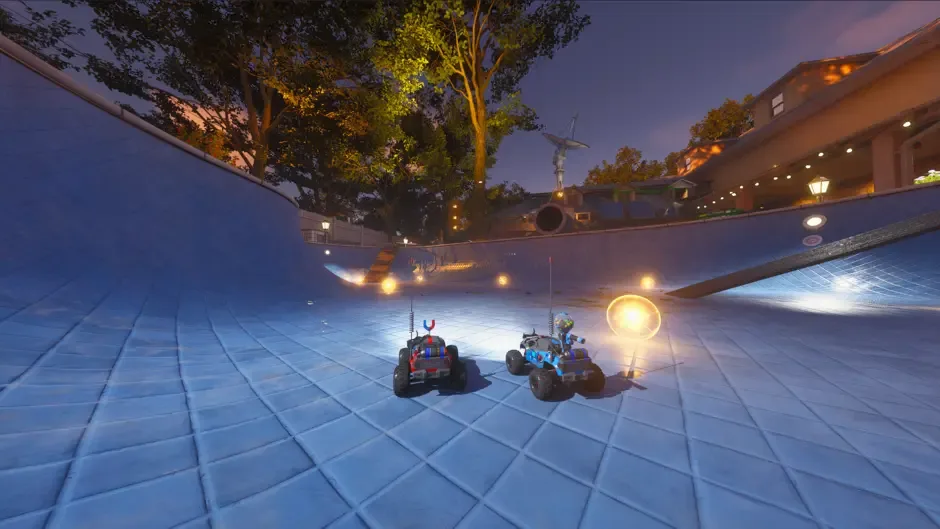
The choice to set WheelMates inside a professor's home laboratory rather than a more fantastical location is worth dwelling on, because it's the detail that separates this game from the wider "shrunk down" subgenre. Games about tiny protagonists exploring an oversized world tend to lean on gardens, forests, or fantastical dioramas. WheelMates instead stays domestic: an ordinary home that happens to belong to a professor, turned into a puzzle box by nothing more exotic than a change in scale and a driving perspective. That grounding is likely to be part of the appeal for players who want a co-op game that feels approachable and a little cosy rather than epic, even though it centres on uncovering some kind of mystery about what happened in that home.
It also shapes who the game is likely to suit. A domestic, puzzle-driven co-op adventure about small cars exploring a house reads as a comfortable fit for co-op partners who want something calmer than an action game, and it's easy to see it appealing to families or to players introducing a younger or less experienced co-op partner to games, given the gentler framing implied by the premise. None of that is confirmed as an explicit design intention or content rating, so it's offered here as a reasonable read of the setup rather than a stated fact, but it's a meaningfully different pitch from the survival-horror or platforming-heavy takes on the "tiny protagonist" idea that have come before it.
Why tiny-scale worlds work as a genre#
Shrinking the player relative to the world is one of the oldest tricks in game design precisely because it's cheap to justify and expensive to fake with any other technique. A studio doesn't need to build a genuinely huge, hand-crafted continent to give players the feeling of a huge world; it only needs to build one ordinary room in enough detail and then make the player small enough that the room does the work. A single kitchen counter becomes a cliff face. A sofa becomes a mountain range. A power outlet becomes a landmark. That efficiency is exactly why the "tiny protagonist in an oversized world" idea keeps resurfacing across decades of games in very different genres, from isometric adventures to survival crafting games to, now, a co-op driving puzzle game: the trick scales the sense of scope without scaling the art budget in the same way an open-world game would.
The other reason the convention keeps working is defamiliarisation. Players already know what a staircase, a bookshelf, or a garden hose looks like and does, so a game doesn't have to teach new rules for the environment itself, only new rules for how a tiny character interacts with it. That's a real head start for any small team: the learning curve is about the character's new relationship to a familiar world, not about learning an entirely invented one from scratch. It's also why these games tend to lean on curiosity and observation as core verbs rather than combat or resource management by default, since the most interesting question a shrunk-down world can ask is simply "what does this ordinary object become from down here," and a puzzle or driving game is a natural fit for answering that question at a steady, unhurried pace.
Where the convention runs into trouble is when the shrunk-down setting is treated as a one-time joke rather than a sustained design language. A single "look, the sofa is huge now" moment is easy; building a whole game's worth of terrain, hazards, and puzzle logic that consistently makes sense at that scale, chair legs as pillars, a rug as difficult terrain, a step as a genuine obstacle, is harder, and it's the difference between a shrunk-down setting that's decorative and one that's structural. WheelMates setting itself specifically inside a professor's home laboratory, rather than a generic house, at least signals an intent to lean on that structural version: a lab implies more varied surfaces, equipment, and obstacles than a plain living room would, which is a reasonable sign that the scale idea is meant to carry puzzle variety rather than just a visual gimmick, even if the specific puzzles built on top of it aren't detailed yet.
Who WheelMates is actually for#
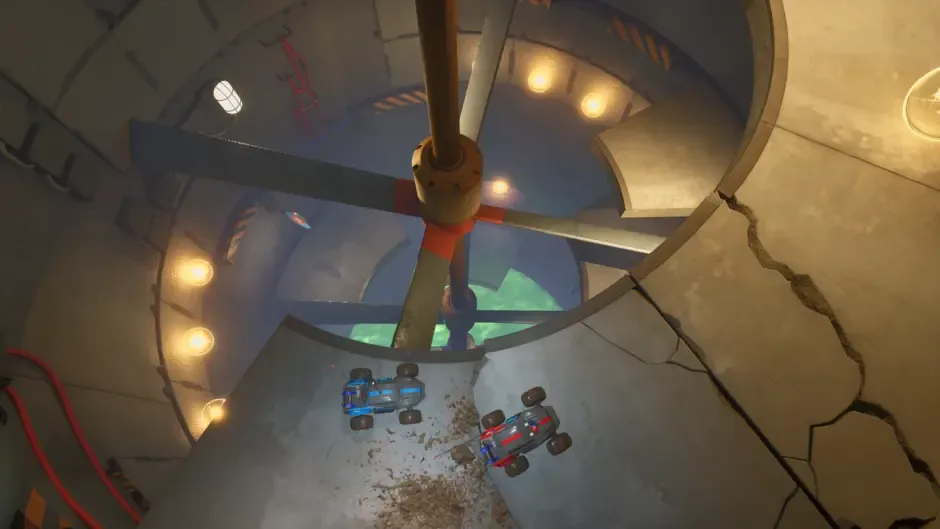
Because the entire game hinges on two people sharing a single experience, the more useful question for most readers isn't "is this game good" but "who is it good for." The clearest answer is co-op partners who already play together regularly, whether that's a couple, a pair of friends, or a parent and a child, since a puzzle-driven adventure with no solo fallback rewards exactly that kind of steady partnership rather than a pickup group assembled for one evening. The domestic setting, an ordinary house rather than a dungeon or a battlefield, and the puzzle-first pacing implied by the premise both point toward a lower-intensity co-op session than something built around combat or twitch reflexes, which makes it a reasonable pick for a family looking for a co-op game that doesn't ask for fast reactions from a less experienced player.
Puzzle fans specifically are the other clear audience, provided they're willing to accept a two-player structure as a feature rather than a limitation. A puzzle game that's designed from the start for two viewpoints exploring the same shrunk-down space has room to ask questions a solo puzzle game can't: not just "how do I get past this," but "how do the two of us get past this together." Whether WheelMates actually delivers on that promise across a full playthrough is the one thing that can't be confirmed without more detail than is public right now, but the structural setup, two RC cars, one house, a mystery that only fully resolves through cooperation, is built the right way to deliver it.
What the game is less obviously suited for is a solo player looking for a single-player puzzle adventure, or a co-op pair who mainly want fast, physical, comedic chaos rather than a calmer, exploration-driven pace. Neither of those readings is a criticism of WheelMates itself; they're simply a reminder that a game built this specifically around one audience isn't trying to be everything to everyone, which is exactly the kind of focus a small studio should be aiming for.
Compared to It Takes Two and Grounded#
The two most useful reference points for WheelMates are Hazelight's It Takes Two and Obsidian's Grounded, and each one highlights something different about where WheelMates sits. It Takes Two is built as a two-player-only adventure with constantly shifting mechanics from chapter to chapter, and its co-op design philosophy, that every scene should require two distinct roles working together rather than one player carrying the other, is the same philosophy WheelMates appears to be built on at a much smaller scale. That philosophy is a specific, well-understood design discipline: it means a studio can't lean on one player soaking up the interesting mechanics while the other watches, because the whole scene collapses if either role is missing. Where It Takes Two spans a sprawling variety of settings and mechanical gimmicks across a lengthy campaign, cycling through entirely new toolsets almost every chapter to keep that two-role structure fresh, WheelMates is committing to one setting and one core idea, the house as a puzzle box, rather than constantly reinventing itself. That's a reasonable trade for a small studio to make: a single sustained setting is far cheaper to build well than a dozen wildly different ones, and it should make for a more focused experience, provided the puzzle variety inside that single setting holds up across a full playthrough rather than leaning on the same handful of tricks.
Grounded is the closer comparison for the "shrunk down" framing itself, and the comparison holds specifically because both games solve the same design problem in the same basic way: take an environment players already know intuitively, a backyard in Grounded's case, a house in WheelMates', and re-teach it from a scale where every object's function has to be reconsidered. A pond becomes a body of water worth navigating around. A blade of grass becomes cover. In WheelMates, by the same logic, a piece of furniture becomes terrain and a gap becomes a route. Where the two games diverge is tone, structure, and pacing. Grounded is a survival game with crafting, base-building, and combat layered over its shrunk-down premise, built for open-ended play over dozens of hours where danger and resource pressure are constant. WheelMates, as a puzzle-driven adventure about uncovering a mystery, is shaped more like a guided co-op experience with a beginning, middle, and end, and a driving-and-puzzle-solving pace rather than a survival one. Players drawn to Grounded for the scale fantasy but put off by its survival mechanics, the constant hunger management, the crafting trees, the threat of losing progress to a spider, are a natural audience for WheelMates, and the reverse is true for anyone who finishes WheelMates and wants more open-ended room, danger, and systemic depth to keep exploring a shrunk-down world afterward.
Worth the money?#
Confirmed pricing for WheelMates isn't part of the verified facts available at the time of writing, so rather than guess at a figure, the fairer approach is to talk about value in terms of what the game is asking of its audience. This is a small, focused co-op adventure from an indie studio, not a lengthy blockbuster campaign, and the value proposition for a game like this typically comes down to whether the core idea, here, exploring an oversized house as a tiny RC car alongside a partner while a mystery unfolds, sustains itself across a full playthrough without repeating itself. That's the single biggest open question for anyone deciding whether to buy in at launch versus waiting to see how the puzzle content is received once more players have had time with it.
On platform choice, WheelMates launching simultaneously on Steam, PlayStation 5, and Xbox Series X|S removes most of the usual "which version should I buy" dilemma, since day-one availability across PC and both current console platforms means the decision comes down to which system the co-op partner already owns or prefers, rather than waiting for a delayed port. For a two-player game specifically, that shared decision, picking a platform both partners are comfortable with, matters more than it does for most single-player purchases.
Play this instead if…#
Shorter: Unravel Two offers a similarly two-player-only, puzzle-platforming co-op experience built around a small, tightly scoped world rather than a long campaign, if the appeal here is a compact co-op adventure rather than a lengthy one.
Simpler: Overcooked pares co-op down to fast, chaotic teamwork in small kitchen-sized spaces, and it's a good fit for a co-op pair who want the cooperation without any puzzle-solving pace to keep up with.
Bigger scope or a known quantity: It Takes Two delivers the same "built for two, not bolted together" co-op philosophy across a far larger variety of settings and mechanics, and it's worth considering as the more established alternative for a co-op pair who want more certainty about what they're getting going in.
Frequently asked questions#
Is WheelMates a co-op game only, or can it be played solo? It's built around two-player co-op, and there's no public indication of a solo mode at the time of writing.
What platforms is WheelMates available on? Steam (PC), PlayStation 5, and Xbox Series X|S, all from its 1 September 2026 release date.
What's the actual premise? Two players control tiny RC cars exploring a professor's home laboratory, solving puzzles and finding hidden paths across oversized household locations, while the house gradually opens up to reveal new spaces and what happened inside it.
How long does it take to finish? No confirmed completion time is available for this review, so it isn't stated here rather than guessed at.
Is it suitable for kids or a family co-op session? The domestic, puzzle-focused premise reads as gentler than an action-driven co-op game, but there's no confirmed age rating to point to, so that's a reasonable expectation rather than a guarantee.
Does it support online co-op, local co-op, or both? That detail isn't part of the confirmed facts available here, so it's left unstated rather than assumed either way.
The GameAvant verdict#
WheelMates is a small game making a clear, specific bet: that shrinking two players down to RC-car scale inside an ordinary house, and building a mystery around what the house is slowly willing to reveal, is enough to carry a co-op puzzle adventure on its own. On the strength of that premise alone, and on the studio's decision to launch it day one across PC, PlayStation 5, and Xbox Series X|S rather than staggering platforms the way many smaller releases do, it earns real credit. What keeps it from reaching higher here is exactly what should keep any honest review cautious: the specific puzzle content, its variety, and its pacing across a full playthrough aren't detailed enough yet to promise more than the premise itself. That's not a flaw in the game so much as a limit on what can be verified about it right now, and it's a fair reason to treat this as a promising, well-aimed co-op adventure rather than an instant genre landmark. For a co-op pair looking for something smaller, calmer, and genuinely different from the usual couch-co-op shape, it's a reasonable and interesting bet to make.
7 out of 10 – a small co-op adventure with a genuinely fresh hook, held to a solid score by how much of its actual content still has to be taken on faith.