

Bond before the tuxedo fits#
007 First Light is the game where IO Interactive, the studio behind Hitman, gets the most famous secret agent in fiction and immediately does something unexpected with him. It makes him young, unfinished and slightly out of his depth. This is a Bond at 26, an inexperienced MI6 agent who has not yet earned the number after his name, and the entire campaign is about how he gets there. The shift matters more than any single mission, because it changes what the character can do on screen. A veteran Bond can be effortless. This one has to be convincing.
The short version of this review is that the game largely succeeds as a directed, cinematic spy thriller, and that it succeeds partly by accepting a trade. Hitman is a sandbox where the fun is in the planning. First Light is a campaign where the fun is in the momentum. Players who arrive expecting the first will feel the constraints, and players who arrive wanting the second will find a well-made action stealth game with excellent casting and a consistent tone. It earns an 8 out of 10 because its best ideas, the licence to kill rule, the bluffing, the Q-Watch and the origin story itself, are more than a coat of paint on a linear shooter.

What makes 007 First Light different#
The idea that carries the whole game is that Bond has not been finished yet. Everything else follows from that. The story follows a young agent who survives an SAS ambush in Iceland, is recruited into MI6's revitalised 00 programme, goes through training, and then gets thrown into a mission that goes wrong almost immediately. During an operation to capture the rogue agent Rhys Beckett, his team is attacked by the mercenary Murto twins. From there the game unfolds into a conspiracy tied to Sir Nicholas Webb, a pioneer in artificial intelligence, and to THEIA, MI6's quantum supercomputer, whose mistakes he is trying to cover up.
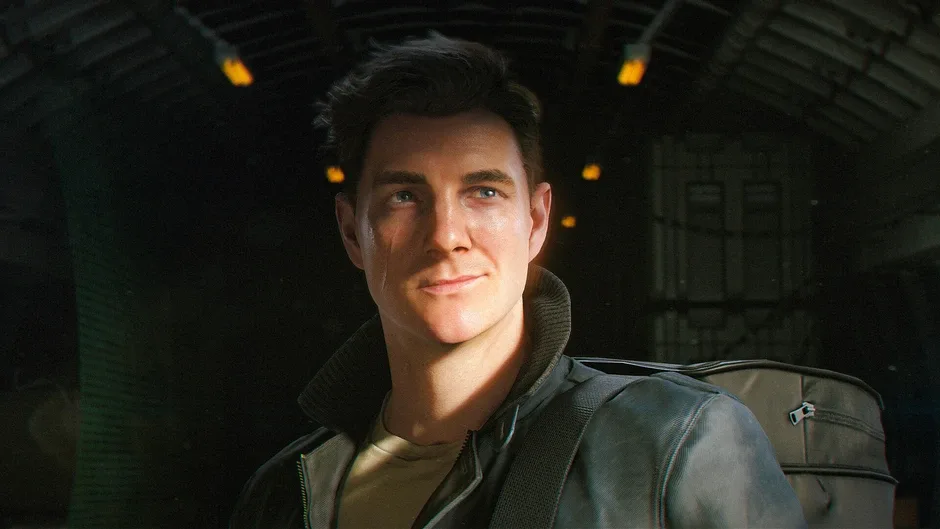
That setup does two useful things. First, it lets the game teach its mechanics as part of the fiction. Training is not a tutorial dropped in front of the story, it is the story, and the skills Bond picks up are the ones the player is asked to use. Second, it gives the character an arc. The confident, sardonic figure that decades of films have made familiar is not the starting point here. He is the destination, and the game is at its best when it lets small moments of hesitation sit next to the first flashes of that famous composure.
The lead is played by Patrick Gibson, an Irish actor, and the supporting cast is unusually strong for a game of this kind. Lennie James plays John Greenway, Bond's mentor. Priyanga Burford is M, Alastair Mackenzie is Q, and Kiera Lester is Miss Moneypenny. Gemma Chan appears as Dr. Selina Tan, Noémie Nakai as Isola Vale, and Lenny Kravitz plays the arms dealer Bawma. Anthony Howell and Bart Edwards play Sir Nicholas and Damien Webb. This is not a licence handled with a lazy voice cast, and the decision to build the game around performance is one of its most visible strengths.
The licence to kill, with conditions#
The most interesting mechanical decision is how First Light treats violence. The game uses a licence-to-kill mechanic that allows lethal force only when enemies show lethal intent. It sounds like a small rule, but it changes how encounters are read. Bond is not a soldier clearing a building. He is an intelligence officer working through a situation, and the game wants the player to read that situation before deciding how to act.
In practice, this shapes the way infiltration works. Non-lethal approaches are encouraged, and the moment an enemy commits to lethal intent, the game opens the door to a harder answer. That gives takedowns a reason rather than making them a default. It also lets the writers keep Bond sympathetic while still allowing him to be the dangerous man the films promise. A rule like that could easily have become a lecture. Here it works more like a compass, pointing the player toward a way of playing that suits the character.
The cost is improvisation. Sandbox stealth games are built on the freedom to answer any situation with any tool. Wherever a rule limits which tool is acceptable, the freedom narrows, and anyone who wants the sandbox answer will notice. The trade is defensible, but it is a trade, and it is the clearest place where First Light chooses character over systems.
Stealth, bluffing and eavesdropping#
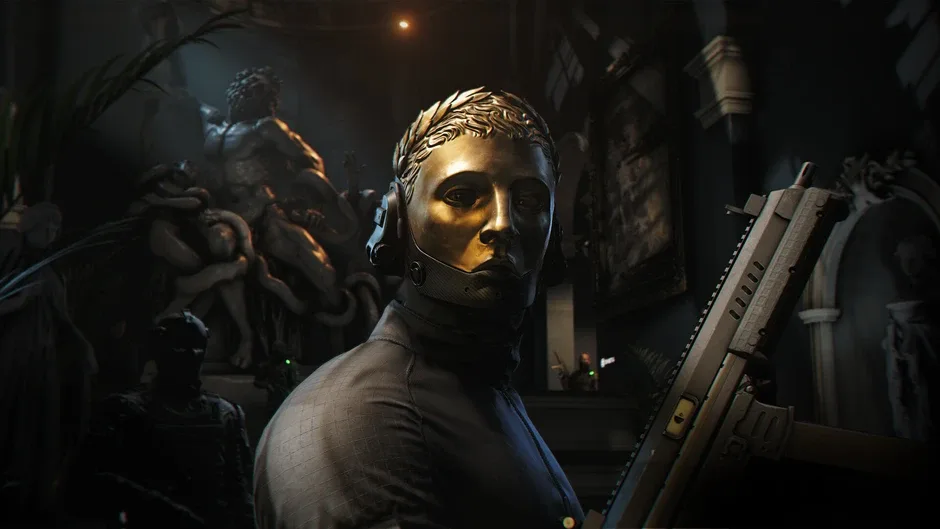
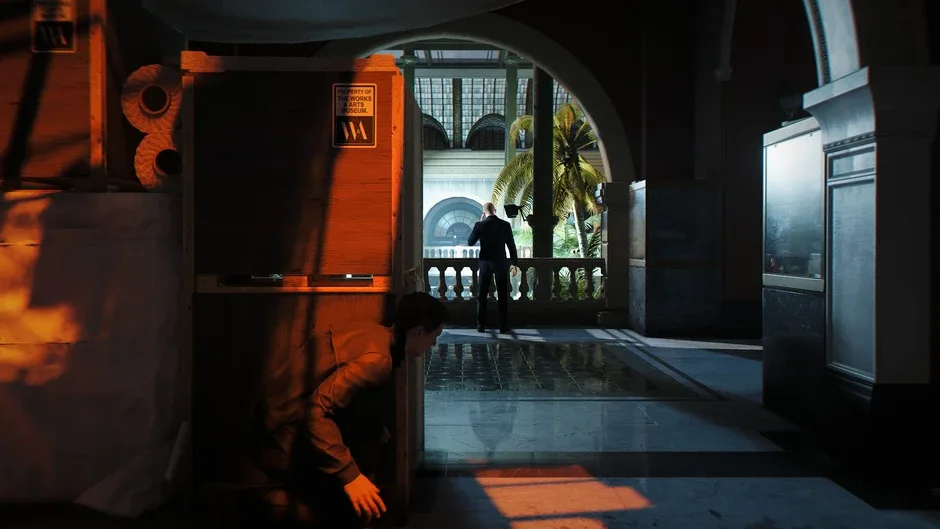
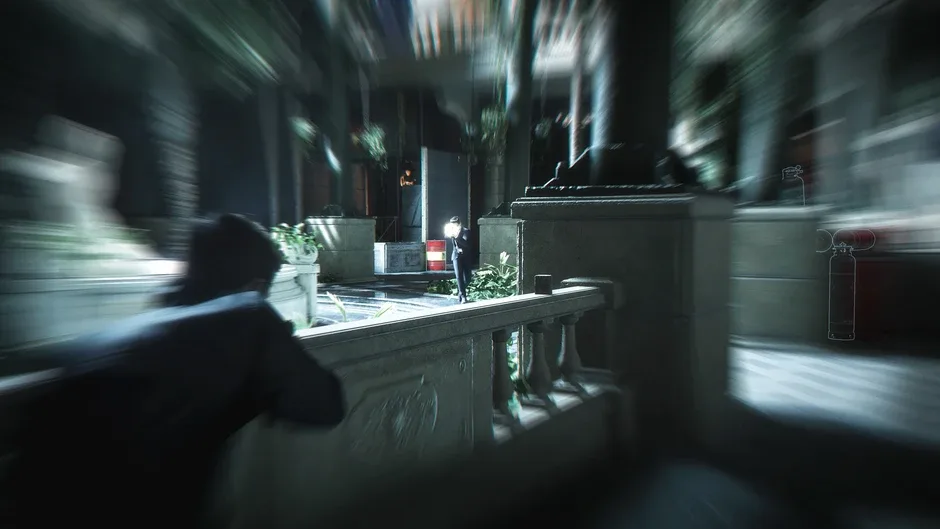
Stealth in First Light is not a copy of Hitman's, and this is deliberate. The game leans on forward momentum instead of a sprawling map with dozens of overlapping routines. That does not mean the stealth is shallow. The toolbox includes bluffing, where Bond talks his way past enemies; eavesdropping on conversations to pick up information; and use of the environment, including items lying around that can be turned into distractions or weapons.
Bluffing is the most Bond-like of these, because it turns a stealth game into a performance. Talking past a guard is not a failure of stealth, it is a different kind of success, and it suits a character whose defining skill is confidence under pressure. Eavesdropping does something related. It rewards patience and attention, and it gives information a physical place in the level rather than a menu entry. Combined with the Q-Watch, which can hack electronics and stun enemies with a laser, the toolkit gives each infiltration several ways in without pretending to be a sandbox.
The important point is the scale. Hitman offers a few enormous levels and asks the player to master them. First Light offers a series of missions across Iceland, Slovakia, Mauritania, Malta, London, Vietnam and Antarctica, each built for a single confident pass. That makes the game feel more like a film and less like a puzzle box, which is exactly the point.
Hand-to-hand combat and the Arkham influence#
When stealth breaks down, First Light turns to hand-to-hand combat with parrying and takedowns. The design is described as influenced by the freeflow system in the Batman: Arkham games, and that lineage explains a lot. The idea is to keep combat fluid, to let Bond move from opponent to opponent and to reward timing over button mashing. Parrying is central, and takedowns give the fights their finishing moves.
This is a good fit for the character. A Bond who is a marksman first and a brawler second would be too safe, and a Bond who is only a brawler would be too crude. Combining fluid melee with the stealth toolbox lets the game shift registers within a single mission, from quiet infiltration to sudden violence and back. The licence-to-kill rule sits on top of this and keeps the escalation deliberate.
The weakness of any freeflow-style system is repetition. Once the pattern is learned, fights can become a rhythm rather than a challenge, and a campaign of about 20 hours has to keep varying its enemies and its settings to avoid that. The varied locations help. It is a fair question whether every encounter escapes the pattern, and the answer will differ from player to player.
Gadgets and the Q-Watch#
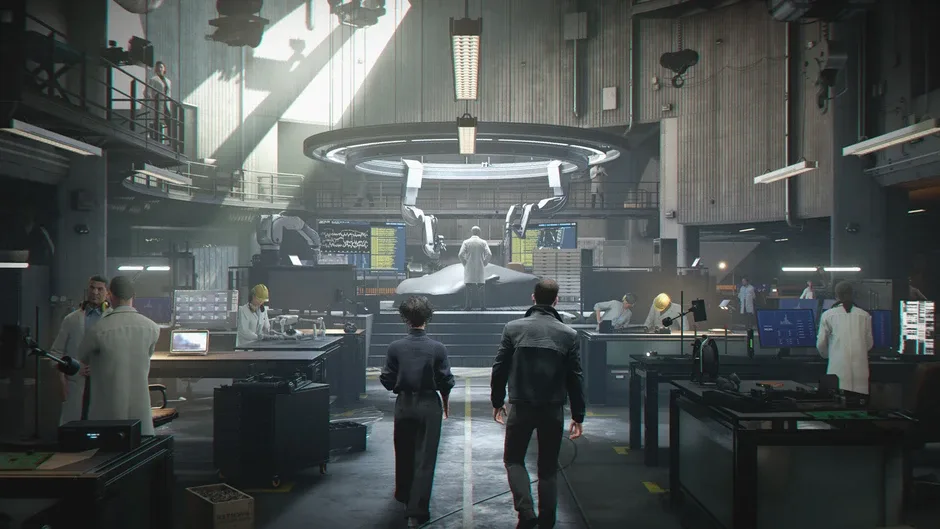
No Bond game can avoid the gadgets, and First Light handles them with restraint. The centrepiece is the Q-Watch, a modified Omega Seamaster Diver 300M that can hack electronics and stun enemies with a laser. Mission attire, weapons and equipment are supplied by Q's lab, which means that the gadgets are woven into the mission structure instead of collected as random pickups.
That has a design consequence. Because equipment is issued for a mission, each level begins with a sense of purpose, and the tools available shape the approach. It echoes the classic Bond scene in which Q briefs the agent and hands over something that will inevitably be needed, and it lets the game borrow that rhythm without forcing a literal briefing scene every time. The watch itself is a good design choice, because a wearable that hacks and stuns keeps the gadget in Bond's hand at all times and does not require menus to summon it.
Driving and the Aston Martin Valhalla#
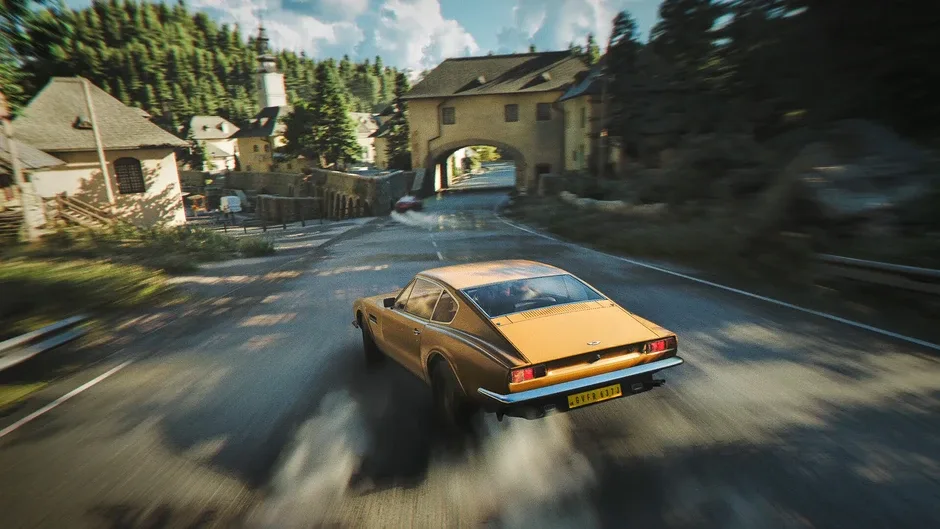
First Light is the first IO Interactive game with drivable vehicles, and the marquee car is the Aston Martin Valhalla. For a Bond game, that is close to mandatory. A car is part of the character's identity, and a spy game without a chase feels incomplete.
It is also the area where a first attempt carries the most risk. Stealth and combat build on years of studio experience, while vehicles are new territory. A driving sequence has to feel as good as the rest of the game to avoid becoming a break in the tone, and a studio's first vehicle mechanics rarely match the polish of systems it has refined for two decades. Treat the driving as a spectacle addition rather than the core of the game, and the expectation is right. Anyone buying First Light mainly for the car will be setting a high bar for a first attempt.
World, locations and structure#
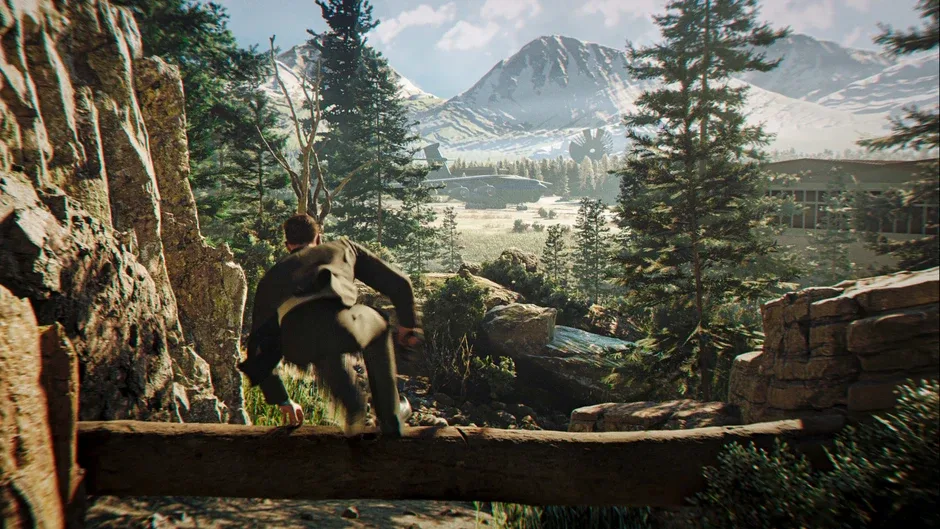
The campaign takes Bond to Iceland, Slovakia, Mauritania, Malta, London, Vietnam and Antarctica. The spread is one of the game's clearest pleasures, because the Bond formula depends on contrast: snow, desert, harbour, city, jungle. Each location gives the mission designers a new palette, and each one lets the game shift its tone from tense infiltration to wide-open action.
The structure is more linear than Hitman. The missions have a clear forward direction, with a sense of momentum instead of a sandbox that invites the same level to be replayed. That is the design choice that defines the game and the one most likely to divide its audience. A linear structure is easier to direct, easier to pace and easier to score, and it plays more like a film. It is also less replayable, and it gives fewer opportunities to invent a plan the designers did not anticipate.
The presentation supports the film comparison. Cutscenes and quick-time events are part of the toolkit, and the campaign is built like a season of a spy series rather than a single arena. Lana Del Rey performs the theme song, called "First Light", co-written and produced with David Arnold, who is known for his work on the James Bond films. The score itself is by The Flight. These choices place the game clearly in the tradition of the films, and they give it a sense of occasion.
Story: THEIA, HYPERION and a conspiracy about machines#
The plot is built around artificial intelligence. Sir Nicholas Webb, a pioneer in the field, orchestrates the attack as a cover-up for the mistakes of THEIA, MI6's quantum supercomputer. His larger plan is to replace the British government with THEIA's sibling AI, HYPERION. Bond goes rogue to stop him, and the story ends with HYPERION's core destroyed while Isola Vale escapes with THEIA's core.
The choice of an AI conspiracy is timely, and it fits Bond's tradition of villains who want to reshape the world through technology. It also gives the young agent a fitting opponent, because a machine that replaces judgement is the opposite of the instinct-driven agent Bond is becoming. The theme runs quietly through the game: an intelligence service that has outsourced too much of its thinking, and an agent who learns that human judgement still matters.
The supporting characters carry a lot of the weight. Greenway as mentor gives the origin story its emotional core, the Murto twins provide a physical menace, and Bawma, played by Lenny Kravitz, adds the flamboyant arms-dealer energy the series is known for. The Webbs are the intellectual threat. The structure of a rookie, a mentor, a trained team and a conspiracy that betrays them is classic, and the game leans on the familiarity instead of fighting it.
Difficulty and accessibility of the systems#
A game that combines stealth, bluffing, freeflow-style melee and gadgets has to be readable to be playable, and First Light leans on clear rules. The licence-to-kill principle gives the player a simple question, whether lethal intent is present, and everything else grows from it. Parrying makes combat a timing game with a clear window rather than a memorisation test, and the Q-Watch offers tools that can be used in any order.
That clarity makes the game approachable to players who have never touched a stealth game. It also means the systems are less punishing than a hardcore sandbox. A campaign that wants to keep a spy thriller moving cannot afford to stall on a failed plan, so the design tends to favour recoverable mistakes. For players who want a demanding stealth experience, that is a limit. For players who want to see the story through, it is a virtue.
Compared with Hitman and Batman: Arkham#
The obvious comparison is Hitman, because IO Interactive built it. Hitman is the sandbox: huge levels, dozens of routines, a hundred ways to remove a target. First Light is the campaign: directed missions, momentum and a fixed narrative spine. Hitman is better for replaying, for experimenting and for the joy of a plan that comes together. First Light is better for pacing, for character and for a story with a beginning, a middle and an end. Anyone deciding between the two should ask whether they want to invent their own scene or step into someone else's.
Batman: Arkham is the second reference, and it is the more useful one for understanding the combat. Arkham's freeflow system built its reputation on fluid, rhythmic fights that make the player feel skilled, and First Light borrows the idea for hand-to-hand combat. Arkham is more focused on the fantasy of being an unstoppable vigilante. First Light is more focused on the fantasy of being a spy who talks, sneaks and fights as the moment requires. If the Arkham combat was the attraction, First Light offers a cousin of it with a different attitude.
| 007 First Light | Hitman | |
|---|---|---|
| Structure | Directed missions with momentum | Large sandbox levels |
| Best for | Story, pacing, character | Replay and experimentation |
| Stealth toolbox | Bluffing, eavesdropping, environment, Q-Watch | Disguises, routines, elaborate plans |
| Combat | Freeflow-style hand-to-hand with parrying | Secondary to planning |
| Vehicles | Drivable, including the Aston Martin Valhalla | Not a focus |
New to stealth games? Start here#
First Light is a reasonable entry point into stealth, and a few habits help. Read the room before acting, because the licence-to-kill rule rewards paying attention to whether an enemy has shown lethal intent. Try bluffing early, since talking past a guard is a full solution and not a compromise. Listen to conversations when the chance appears, since eavesdropping is a source of information and not decoration. And treat the Q-Watch as the first tool to reach for, because hacking and stunning solve many problems before a fight starts.
- Look at the space before entering it, and note where enemies stand and where cover exists.
- Decide whether a bluff, a distraction or a takedown fits the situation.
- Use the Q-Watch to remove electronic obstacles or to stun an enemy without noise.
- Keep hand-to-hand combat as the fallback, and use parrying as the core of it.
Worth the money?#
The campaign is roughly 20 hours long, which is a healthy length for a directed, story-driven game and a comfortable fit for a Bond adventure. The game released on 27 May 2026 after a delay from March, and it has since passed four million units sold, which is a verifiable sales figure and says something about demand. A price is not confirmed in the sources this review relies on, so check the current price on your platform of choice before buying. Standard advice for any linear, story-driven campaign applies: it is the kind of game that gains from being played while the story is fresh, and it is also the kind that regularly appears in sales later.
The best platform depends on preference. First Light is available on PlayStation 5, Windows PC and Xbox Series X|S, and a Nintendo Switch 2 version has been delayed to March 2027. Anyone who wants the game now should choose one of the three available platforms, and anyone who prefers to play on a handheld may consider waiting for the Switch 2 release. Supported languages for text and voice have not been verified for this review, so check the store page for English, Swedish and German options before buying.
Replay value is the honest limit. A directed campaign without a sandbox rewards a second pass much less than Hitman does, and the value of the game therefore rests on the quality of a single playthrough rather than on hundreds of hours of experimentation. For a 20-hour spy thriller with this level of casting, that is a reasonable proposition, and it is likely to feel better at a lower price than at launch.
Play this instead if…#
Shorter: Batman: Arkham Asylum offers the freeflow combat that inspired First Light's fights in a more compact package, and it is the natural pick for anyone who wants that rhythm without a full campaign.
Easier: Uncharted 4 is a directed, cinematic adventure with a guided structure and a gentler learning curve, and it delivers a comparable blockbuster feel without asking for stealth planning.
Cheaper or co-op: Hitman World of Assassination is a stealth sandbox that regularly appears in discounts, and it offers more replayable levels for the money. First Light itself is a single-player campaign, so anyone specifically after co-op should look at cooperative games such as It Takes Two instead.
Frequently asked questions#
How long is 007 First Light? The campaign takes roughly 20 hours.
Is it an open world? No. The game is built around directed missions with forward momentum, spread across locations in Iceland, Slovakia, Mauritania, Malta, London, Vietnam and Antarctica.
Is it a Hitman game with Bond? Not exactly. It comes from the same studio and shares some stealth ideas, but it is more linear and more cinematic, with a stronger emphasis on story and hand-to-hand combat.
Which platforms is it on? PlayStation 5, Windows PC and Xbox Series X|S since 27 May 2026. A Nintendo Switch 2 version has been delayed to March 2027.
Does it have co-op or multiplayer? The game is a single-player campaign.
Do you need to know the Bond films? No. It is an origin story about a young agent, so it starts from the beginning, though longtime fans will recognise Q, M and Moneypenny as familiar figures.
The Game Avant verdict#
007 First Light is not the Bond game that Hitman fans might have imagined, and that is the most honest thing to say about it. It gives up the sandbox and gains a film. The licence-to-kill rule is a clever idea that gives violence weight, the stealth toolbox is broad enough to keep the missions varied, and the casting elevates the material well above what the licence usually receives. The cost is replay value, some restriction on improvisation, and a driving component that has to prove itself as the studio's first attempt.
The contrarian view is that this is the right decision. A Bond game that tried to be Hitman would have been a weaker Hitman, and a Bond game that commits to being a directed thriller has a better chance of being a good Bond game. It is a confident, well-cast and well-paced campaign that understands what makes the character work, and its flaws are the ones that come with its ambition.
8 out of 10 – a directed spy thriller that makes a young Bond convincing, at the cost of Hitman's freedom.