
A world that erases itself on a schedule#
Clair Obscur: Expedition 33 opens with a number and a countdown, and it never lets either one out of sight. Every character the player controls, every side quest, every quiet conversation in camp is shadowed by the knowledge that the world itself has an expiration date written into its architecture. That premise could easily have curdled into melodrama. Instead, Sandfall Interactive's debut turns it into the backbone of both its story and its combat: a game about people who know exactly how much time they have left, built around a fight system where every second of an enemy's turn matters just as much as the plan made before it.
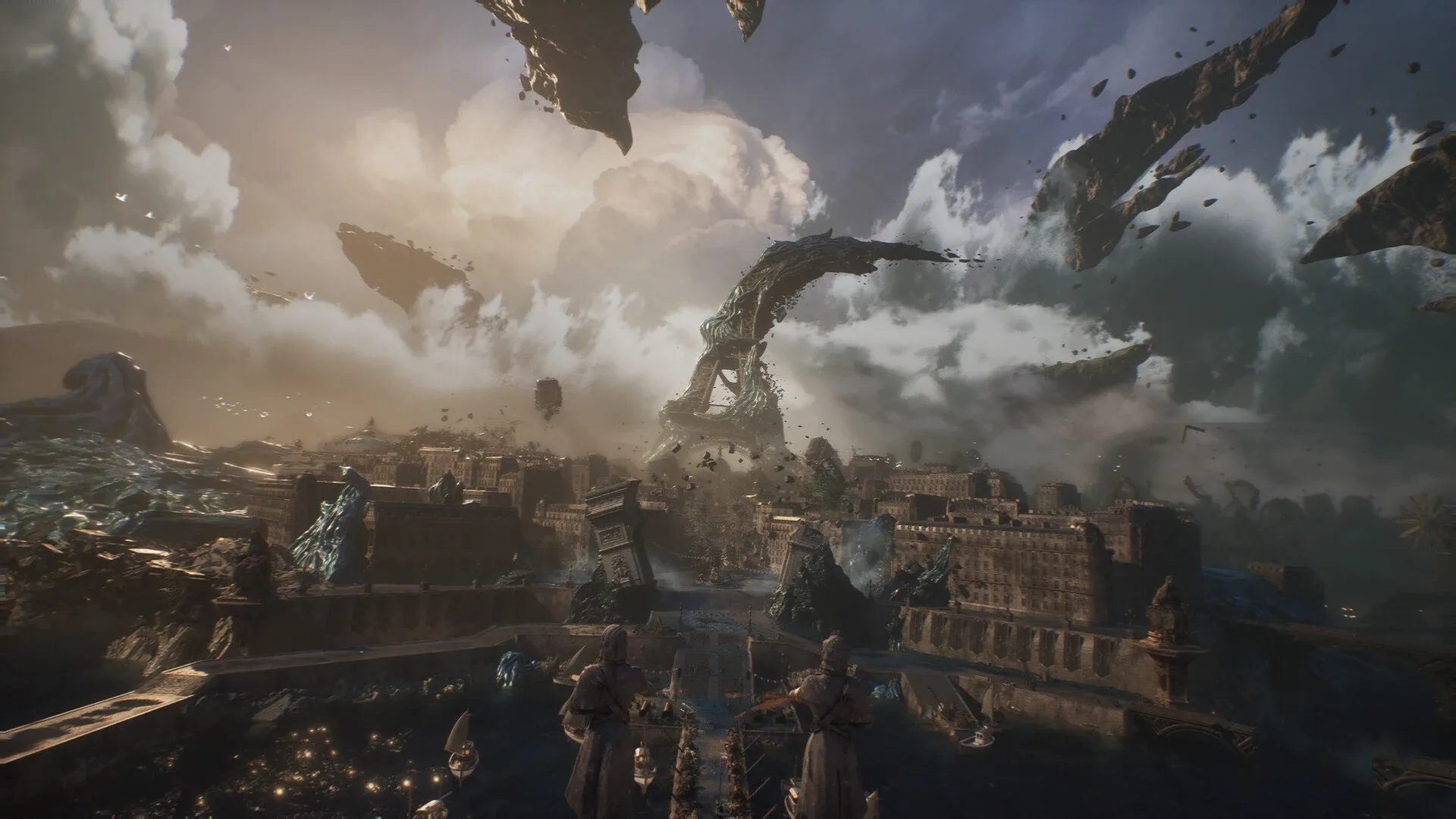
Lumière sits on a continent cut off from the rest of the world sixty-seven years earlier by a catastrophe its people call the Fracture. Since then, a towering, unexplainable figure known as the Paintress has appeared each year at a monolith overlooking the city and painted a single number. Everyone whose age matches or exceeds that number disappears in an event the citizens call the Gommage. The number has been falling for decades, and it is now low enough that entire generations vanish at once. Expedition 33 is the latest in a long line of expeditions sent out to reach the Paintress and stop her, named for the number on the monolith the year it departs. Every expedition before it has failed. The game does not hide that fact. It puts it in the title.
What makes Clair Obscur: Expedition 33 different#
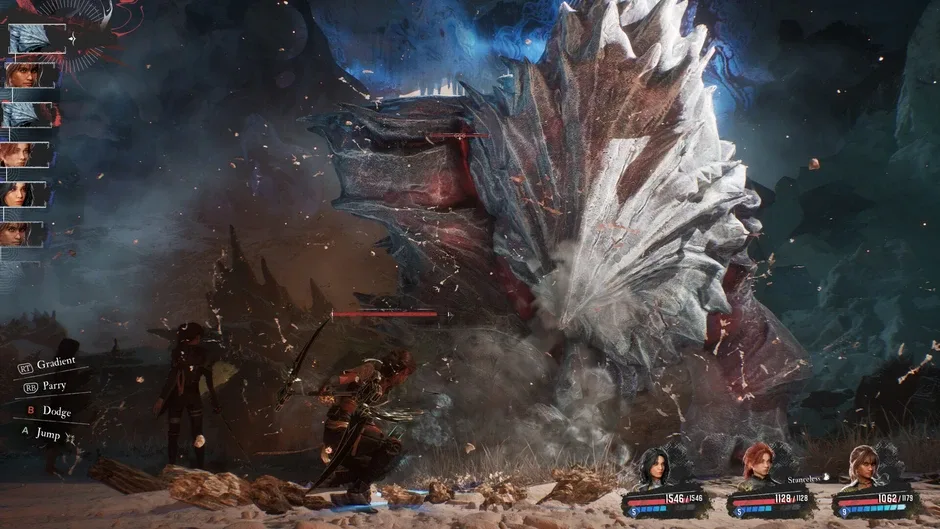
The one idea that carries the whole game is that turn-based combat does not have to mean passive combat. On your own turn, it plays like a classic RPG: pick a skill, spend action points, place a shot. On the enemy's turn, the controller never goes quiet. Every incoming attack can be dodged with a well-timed press or parried with an even tighter one, and landing a parry does more than avoid damage: it refunds an action point and, if every hit in an enemy's combo is parried in sequence, triggers a free counterattack that can stagger even a large boss. A single unremarkable trash mob turn becomes a small test of reading animations and reacting on rhythm, and a boss's five-hit combo becomes a genuine skill check that a menu alone could never provide. Nothing else on shelves blends the pacing of a turn-based JRPG with the reflex demand of an action game this cleanly, and once that hybrid clicks, going back to a passive turn-based battle in another game feels like watching combat happen to you instead of taking part in it.
The Gommage and the mission of Expedition 33#
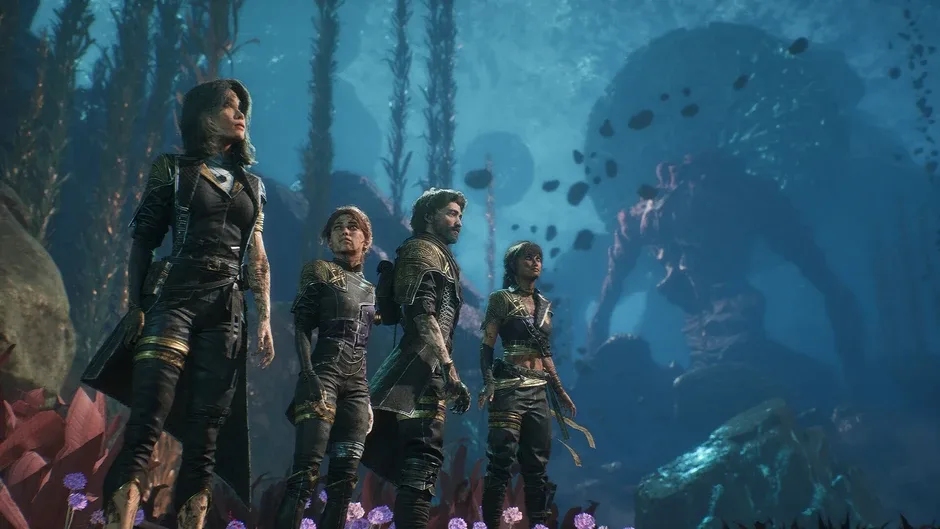
The premise is simple enough to state in a sentence, but the writing never treats it as simple. Expedition 33 is a mixed group of soldiers, scholars and civilians who leave Lumière together, most of them already the age the Paintress is expected to call next, which means the story's stakes are never abstract for its cast. Gustave, an engineer who spent years building the city's defences and the technology that channels a mysterious substance called Chroma, leads the group at the outset alongside Lune, a scholar chasing her late parents' research into the Paintress herself. Members of the expedition are lost along the way, sometimes mid-conversation, and the game does not soften those moments with a cutscene warning. It treats death as a mechanic of its own world rather than a plot beat that can be undone.
The story's structure rewards patience without demanding a guide to follow it. Its biggest turns, including who the Paintress actually is and what her husband Renoir's role in the Gommage really amounts to, land because of groundwork laid in optional conversations and journal entries as much as in main-quest cutscenes. A late-game shift in perspective, which recontextualises everything the first act establishes, is the kind of swing that could easily break a lesser story in half. Here it works because the characters' motivations, grief for people already gone and fear for people about to be, stay consistent on both sides of the reveal. It is a story about people trying to save each other with the clock already running, and it never lets the player forget that framing, even in its quieter camp scenes between fights.
Combat: turn-based rules, real-time reflexes#
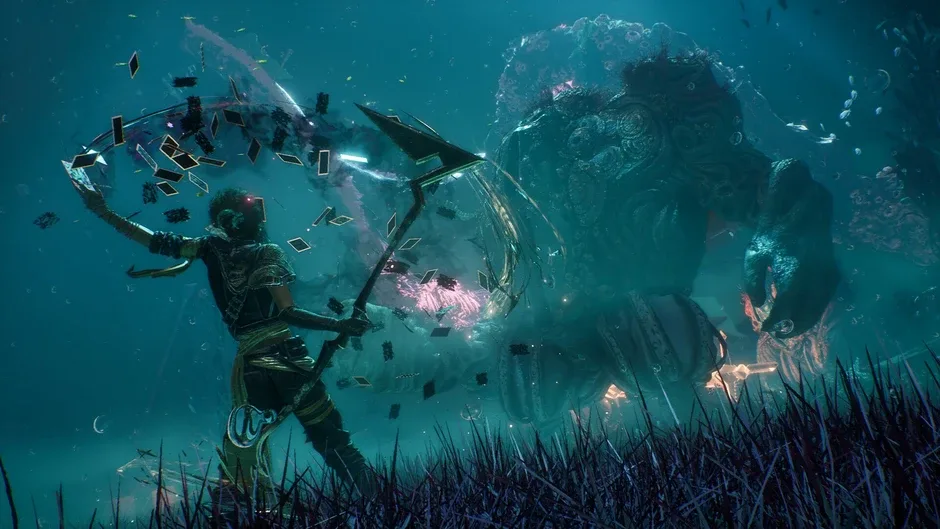
Combat is built around three interlocking layers. The first is the parry-and-dodge system already described, which governs how much damage the party takes and how quickly it can build back action points. The second is Gradient Attacks: certain skills can be charged by holding an input at the right moment for a damage bonus, at the risk of interrupting the attack entirely if the timing is wrong, which turns even a straightforward damage skill into a small decision every turn. The third is free aim, used on select attacks to manually target an enemy's weak points or, on some bosses, to break a specific piece of armour or a glowing gradient point that lowers its defences for the rest of the fight.
Each of the six playable characters puts a different spin on those layers. Gustave channels a build-up gauge into a single overcharged shot. Lune assigns elemental Stains to her spells and detonates them for area damage when the right combinations line up. Maelle shifts between offensive and defensive stances that change her entire skill list mid-fight. Sciel manipulates a tarot-like set of cards that can be sacrificed for burst damage or held for a bigger payoff later. Monoco, a scholarly, battle-hungry Gestral, can mimic an enemy's own last-used attack against it. Verso, who joins later as a survivor of an earlier, doomed expedition, plays with a stance system built around building and spending a resource across several turns. None of the six are reskins of the same kit with a different coat of paint, and switching a struggling party member out for one whose kit answers a specific boss's pattern is often the actual solution to a hard fight, not a slightly higher-numbered weapon.
Pictos, Lumina and the freedom to break the rules#
Character growth runs through two connected systems. Pictos are equippable items that grant a stat bonus and a passive ability, from small damage buffs to whole new mechanics such as extra dodge windows or bonus effects on parries. Using a Picto in enough battles unlocks its passive permanently as a Lumina, which can then be slotted onto any character in the party for a point cost, regardless of whether that character ever equipped the Picto itself. The result is a build system with no dead ends: an underused Picto found early is never wasted effort, because its Lumina stays useful for the rest of the run once mastered.
That openness is also where the game's most legitimate criticism sits. Certain Lumina and weapon combinations, once discovered, stack multiplicatively enough to turn a boss the game clearly tuned to be a wall into a formality, sometimes within a single patch of the story where the difficulty was meant to spike. It is a real tension: the same system that makes experimentation so rewarding in the first twenty hours can flatten the last ten for a player who happens to find the right combination early. The game never locks these builds behind anything resembling cheese detection, which is either generous design or an oversight depending on how much a given player wants combat to stay hard all the way to the credits.
Six expedition members, six different fights#
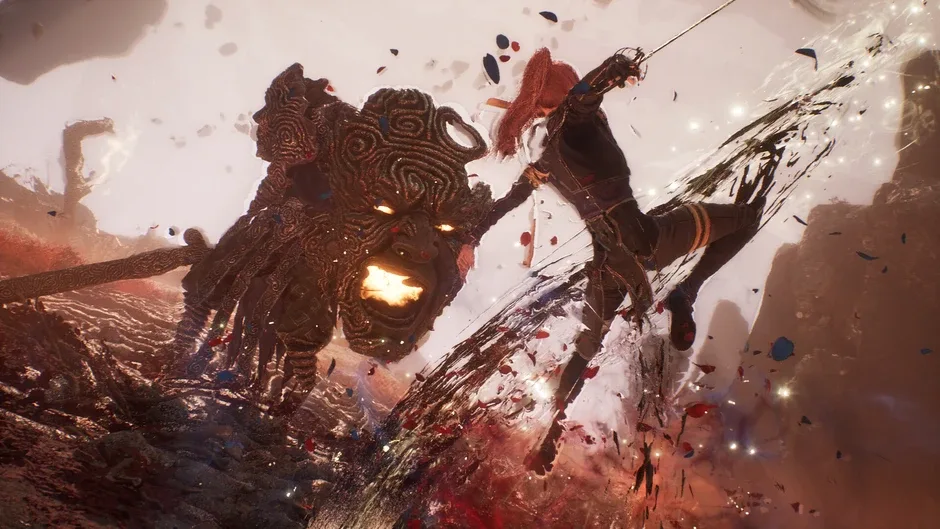
Bosses are where the combat system is asked to prove itself, and it mostly does. Early fights against Gestral warlords and corrupted wildlife establish the vocabulary of dodge-versus-parry decisions in relatively forgiving windows. The mid-game introduces named threats with genuinely distinct silhouettes and attack rhythms, some drawn from the world's painted mythology, that demand the player learn a new combo cold rather than lean on muscle memory from an earlier fight. By the late game, several encounters chain multi-hit combos with deliberately irregular timing specifically to punish players who have been parrying on autopilot, and a few late optional bosses are built almost entirely around a single mechanical gimmick the player has to solve before damage output matters at all. The difficulty curve is not perfectly smooth, since a couple of the strongest optional fights sit noticeably above the main story's pace, but the core loop of learning a pattern and then executing it under pressure holds up from the first hour to the last.
Exploration and a world with no map overlay#
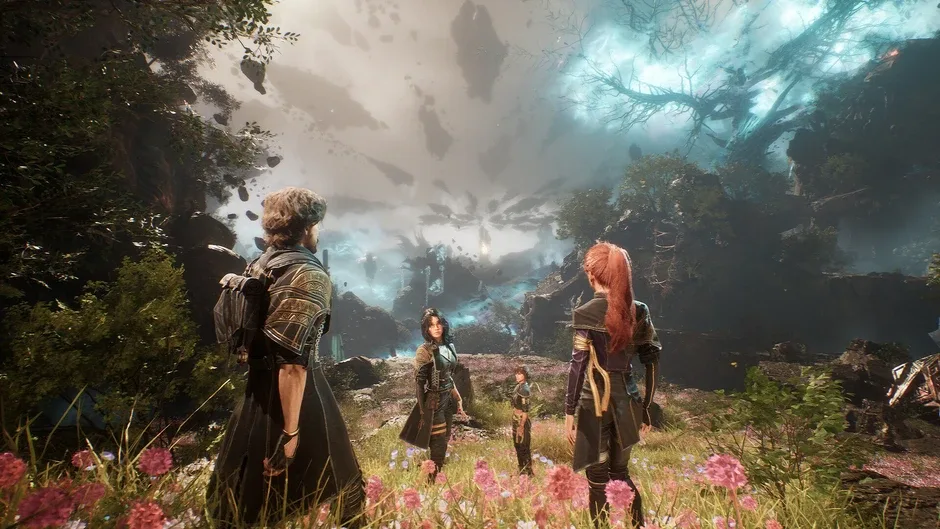
Between fights, Lumière's overworld map plays like a storybook: a stylised, hand-painted route crossed on foot and, later, with the help of a gentle giant named Esquie, who can carry the party over otherwise impassable terrain. Handcrafted regions branch off that route in every direction, most of them hiding an optional boss, a scrap of environmental storytelling, or a Picto worth backtracking for. What is missing, deliberately, is a minimap or a full-screen map overlay for most of these regions. Finding the way relies on landmarks, memory and the game's own visual language rather than an icon telling the player where to look next, which suits the tone of an expedition into unmapped territory far better than a waypoint would. It also means getting turned around in a dense area is a real, occasionally frustrating possibility, and there is no in-game concession for players who would rather have the convenience than the atmosphere.
The trade-off pays off most clearly in the game's handful of true secrets: an optional boss tucked behind a route that is never marked, or a piece of gear hidden in a corner of a region the main story never requires visiting. Discovering one of those without a marker pointing the way feels earned in a way that a quest-log arrow never manages, and the world is dense enough with hand-placed detail that wandering off the main path rarely feels like wasted time. Anyone who treats every unmarked area as a chore rather than an invitation will find the exploration loop more tedious than rewarding, but the regions themselves are compact enough that a wrong turn rarely costs more than a few minutes.
Art direction and Lorien Testard's score#
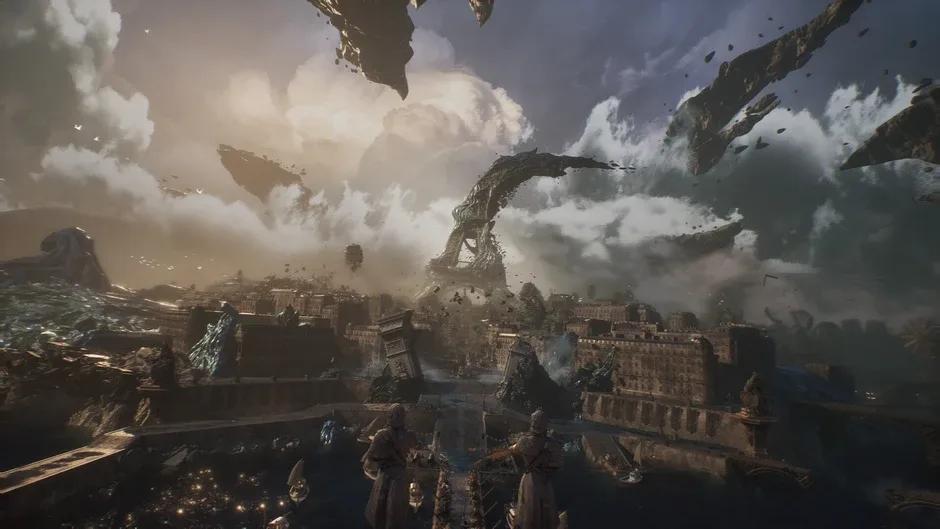
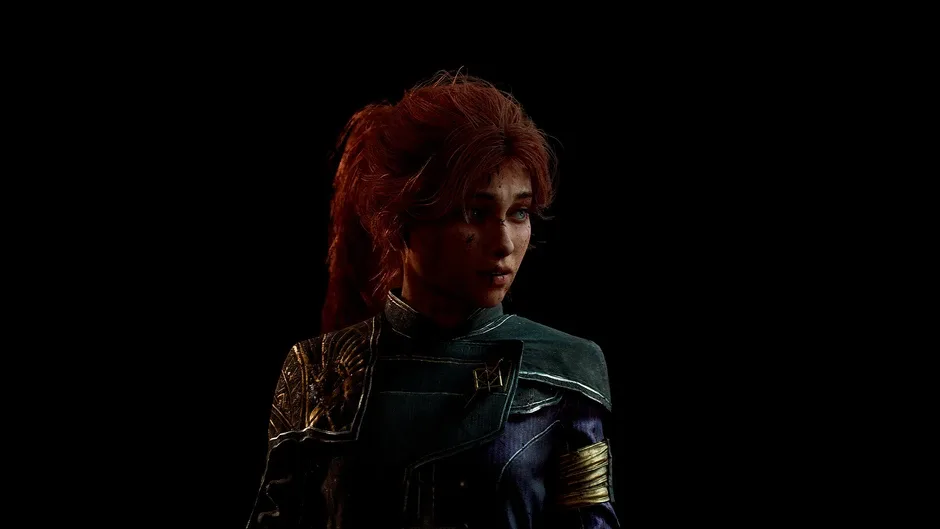
The Belle Époque-inspired art direction is the game's other unmistakable signature. Lumière and the regions beyond it are rendered as painterly, slightly unstable landscapes that shift between beauty and unease within the same screen, a look that draws as much from early-twentieth-century French illustration as from any other game on shelves. Enemy and character designs lean into the same painted aesthetic rather than defaulting to generic fantasy silhouettes, which keeps even a routine trash-mob encounter visually distinct from anything in a competing RPG.
Composer Lorien Testard's soundtrack matches that ambition. French vocal pieces sit alongside sweeping orchestral themes and aggressive, percussive battle music that shifts noticeably as a fight escalates, and the recurring musical motifs tied to specific characters land with real weight once their arcs pay off. It is a score built to be listened to on its own, not just to sit under the action, and it is one of the strongest arguments for playing through headphones rather than a television's built-in speakers.
Difficulty: kind at the start, unforgiving by the end#
The opening hours are unusually gentle for a game this mechanically dense, easing players into dodging before asking for a parry and rarely punishing a mistake with more than a health bar dip. That grace period disappears steadily through the middle third, and by the final stretch a missed read against a late boss's fastest combo can undo several minutes of careful play in a couple of seconds. There is no difficulty slider in the traditional sense, but the build systems function as an unofficial one: a party leaning hard into defensive Pictos and healing Lumina can outlast fights that a glass-cannon build would need to end quickly, and vice versa. Anyone who finds the parry timing genuinely unpleasant rather than tense has fewer levers to pull than in a game with an explicit easy mode, and that is worth knowing before committing to a fifty-hour story.
New to turn-based RPGs? Start here#
The game is a reasonable entry point into turn-based combat precisely because it explains its systems through play rather than through menus. The first proper boss fight is paced to teach dodging before parrying matters, and the tutorial prompts for free aim and Gradient Attacks appear exactly when a fight first calls for them rather than all at once. New players benefit from prioritising a Lumina slot that extends the parry window early on, since that single choice does more to make the combat feel fair than any amount of levelling. It is worth resisting the urge to rush past optional Pictos hunts in the first act; several of the most useful early Luminas come from side content that is easy to miss if the main story is the only priority.
Compared with Persona 5 Royal and Final Fantasy VII Rebirth#
Persona 5 Royal is the clearest reference point for tone and pacing, both games built around a tightly written cast whose personal stakes matter as much as the plot driving them forward, but the comparison stops at combat. Persona's turn-based system is entirely about pre-fight preparation and elemental weaknesses; nothing happens on the enemy's turn that the player has any hand in beyond having picked the right team beforehand. Expedition 33's insistence that every enemy turn is also the player's turn makes its combat considerably more demanding moment to moment, at the cost of the deep social systems Persona builds its hundred-plus hours around.
Final Fantasy VII Rebirth sits closer on the action-RPG spectrum, blending real-time positioning with an ATB-style command layer, and its open zones give it a scale Expedition 33 does not attempt. What Expedition 33 does instead is commit fully to the turn-based structure rather than hybridising it into something closer to real-time combat, which keeps its systems legible in a way a busier, more freeform battlefield sometimes is not. Anyone who wants the spectacle of a sprawling open world should look to Rebirth; anyone who wants a tightly authored turn order that still asks for reflexes should look here.
Worth the money?#
A main-story-focused run lands around thirty to thirty-five hours, with a broader playthrough that clears side content averaging closer to forty-six hours and a full completionist pass stretching past sixty. That is a substantial amount of content for a debut studio's first release, and it launched at a lower price point than most releases of comparable scope on PlayStation 5, Xbox Series X|S and PC, with day-one availability on Xbox Game Pass and PC Game Pass meaning subscribers can try the opening hours at no extra cost before deciding whether the combat rhythm suits them. There is no reason to wait for a sale unless budget is the only concern: the game shipped in a complete, polished state rather than one that needed a year of patches to reach its intended shape.
Play this instead if …#
If the length is the obstacle, Chrono Trigger delivers a similarly emotional, twist-driven turn-based story in a fraction of the time, without the reflex demands. If the parry timing is the sticking point rather than turn-based combat itself, Persona 5 Royal offers the same cast-driven emotional weight with combat built entirely around preparation instead of reaction speed. If price is the deciding factor, Sea of Stars is a shorter, cheaper turn-based RPG that borrows a lighter version of the same real-time-timed-hit idea without asking for split-second parries against late-game bosses.
Frequently asked questions#
How long is Clair Obscur: Expedition 33? A main-story run lands around thirty to thirty-five hours, a fuller playthrough with side content averages closer to forty-six hours, and a completionist pass can pass sixty hours.
Is it open world? No. A stylised overworld map links handcrafted regions rather than one continuous open map, closer to a classic JRPG's structure than a modern open-world game.
Does it have co-op? No. It is a single-player experience throughout, with no co-op or multiplayer modes.
Is there a difficulty option? There is no traditional difficulty slider, but build choices, particularly Pictos and Lumina focused on defence or extended parry windows, function as an informal one.
Do you need prior knowledge of the series? No. It is Sandfall Interactive's debut game and a fully self-contained story with no prerequisite games.
Is it on Xbox Game Pass? Yes, it was available on Xbox Game Pass and PC Game Pass from its release day, alongside standalone purchase on PC, PlayStation 5 and Xbox Series X|S.
The Game Avant verdict#
Clair Obscur: Expedition 33 earns its reputation the hard way, not through a single standout idea but through a combat system, a story and an art direction that all commit fully to the same premise: time is running out, so nothing here is allowed to feel wasted. Its rough edges are real. Late-game parry windows can feel punishing rather than thrilling for players who never fully click with the timing, most regions offer no map to lean on, and a determined player can find a Lumina combination that trivialises fights clearly meant to be hard. None of that undoes what the game gets right. Combat is a genuine hybrid rather than a turn-based system with a gimmick bolted on, and the story earns its late reveals instead of coasting on shock value. This is a debut that plays like a studio's fifth game, not its first.
9 out of 10 – a turn-based RPG that finally trusts the player to react, not just plan.