
A series that waited twenty-four years for this#
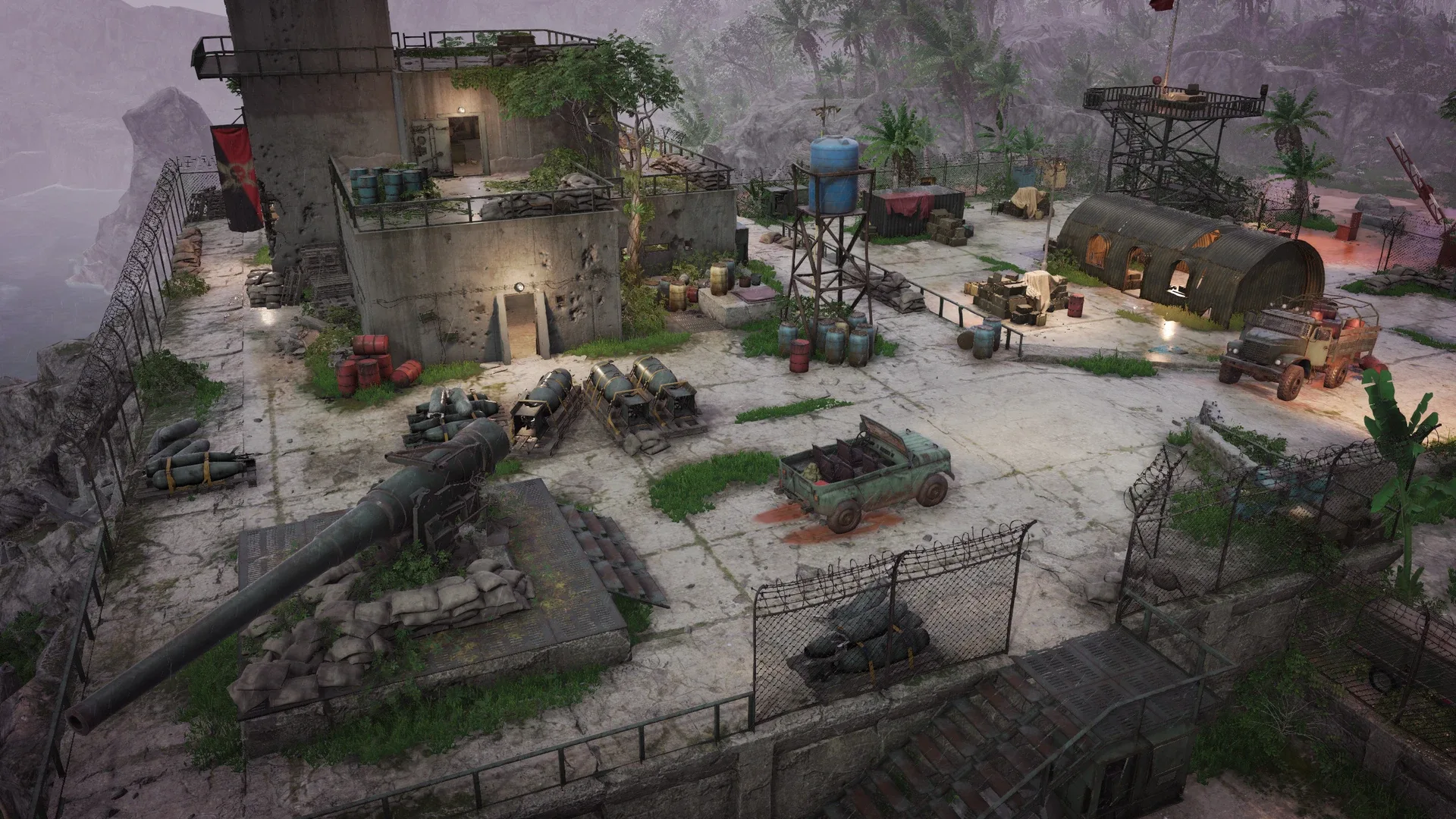
Jagged Alliance 3 is the first mainline entry in its series since Jagged Alliance 2 shipped in 1999, and it is built by people who clearly understood why that game is still discussed a quarter-century later. Developed by Haemimont Games, the Bulgarian studio best known for the Tropico series, and published by THQ Nordic, it released on 14 July 2023 for Windows, followed by PlayStation 4, PlayStation 5, Xbox One and Xbox Series X|S that November. The pitch is almost defiantly old-fashioned: hire a squad of mercenaries through a fictional recruitment agency, drop them into a fractured country, and fight a private war one sector at a time using turn-based combat. After several false starts and cancelled revival projects during the series' long dormancy, this is the one that finally gets the tone, the systems and the mercenaries right.
The setting is Grand Chien, a fictional West African nation thrown into chaos when its president, Alphonse LaFontaine, is kidnapped by a paramilitary force calling itself the Legion. His daughter Emma hires a mercenary broker known only as the Boss, funding a squad recruited through the AIM database, the Association of International Mercenaries, to find her father and push the Legion back out of the country. What starts as a rescue mission unravels into something closer to a corporate land grab, as it becomes clear the Legion's masked leader has been bankrolled by a security firm with an interest in Grand Chien's mineral wealth. None of that plot needs to be gripping for the game to work, and it mostly isn't gripping so much as serviceable, but it gives every sector on the map a reason to matter beyond simply being the next fight.
What makes Jagged Alliance 3 different#
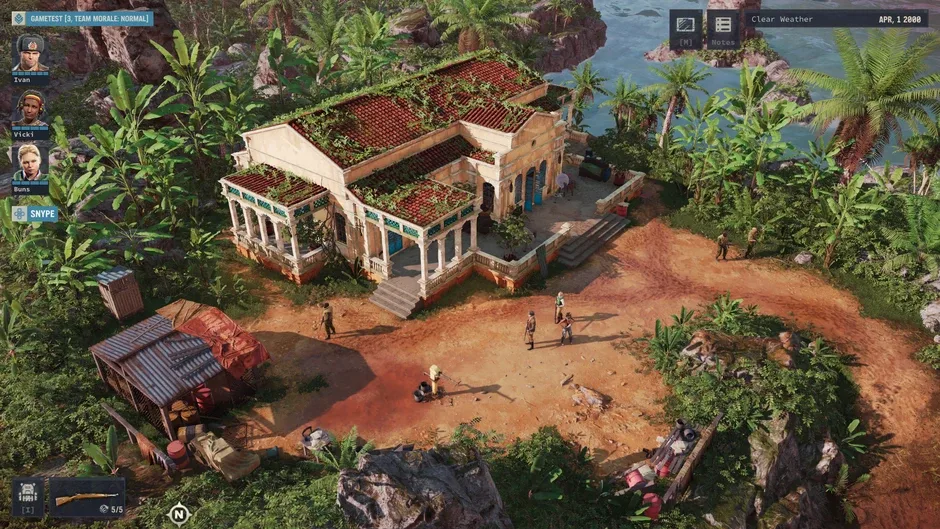
The one idea that carries the whole design is that a mercenary squad is a cast of characters, not a loadout. Every one of the roughly forty hireable mercenaries, split across ranks from Recruit to Legendary and roles like All Rounder, Marksman, Explosives Expert, Mechanic, Doctor and Leader, has a distinct personality, a voiced line for nearly every situation, and opinions about the other mercenaries on the roster. Ivan Dolvich, a former Red Army major, growls through combat and needles anyone who complains about danger money. Fox, precise and image-conscious, treats her looks and her medical skill as equally important tools. Barry crafts his own shaped-charge grenades and treats every fight as an excuse to run in swinging a modified shotgun. None of this would matter if the mechanical differences behind the personalities were shallow, but they are not: a squad built around Ivan's raw damage plays completely differently from one built around a stealth specialist and a dedicated medic, and swapping personnel between missions changes far more than a stat sheet would suggest.
That matters because the AIM hiring screen, a website-style interface you browse between missions, turns squad-building into an actual decision with trade-offs. Legendary mercenaries cost a fortune per week and can walk off the job if unpaid or mistreated. Cheaper Recruits need to be trained up through actual combat, and a badly managed early squad can bleed money fast enough to stall an entire campaign. Grand Chien also hands out a rotating cast of free local recruits and defectors from the Legion's own ranks, so the roster you end the game with rarely resembles the one you started with, and that drift feels earned rather than scripted.
Turn-based combat: cover, suppression and the quiet option#
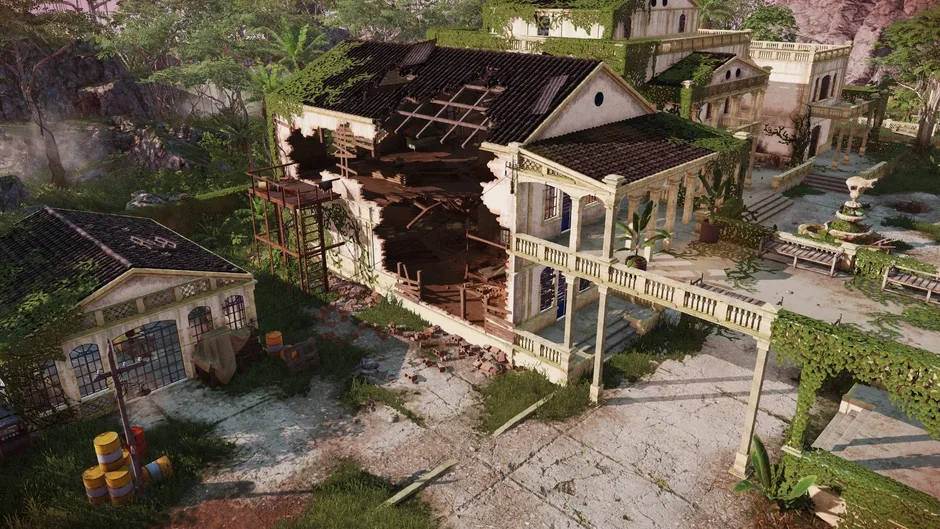
Combat runs on the genre's standard action-point economy, but Haemimont Games leans hard into making stealth and suppression genuinely competitive with straightforward gunfights rather than side options bolted on for completeness. A silenced pistol and a patient approach can clear a Legion outpost without a single alarm being raised, provided sightlines, noise radius and patrol timing are tracked carefully. Suppression fire, meanwhile, pins enemies in place and denies them reaction shots, which turns a mercenary with a light machine gun into a tool for area control rather than pure damage. Cover matters, verticality matters, and destructible terrain means a wall that looked safe in turn one can be rubble by turn three, exposing anyone still crouched behind it.
The difficulty curve here is honest in the way Elden Ring's is: the game does not soften its lower-tier enemies to compensate for a new player's inexperience, but it gives enough tools, stealth routes, suppression, terrain, retreat options, that almost any approach can work if it is planned. Where the combat loses some of its shine is in enemy variety during the campaign's opening third. Legion rank-and-file share the same handful of loadouts and behaviors for hours before officer tiers, specialists and eventually the Legion's own elite units start mixing things up, and a run of similar early sectors can feel like a warm-up that runs longer than it needs to.
The strategic map: sectors, mines and a country that fights back#
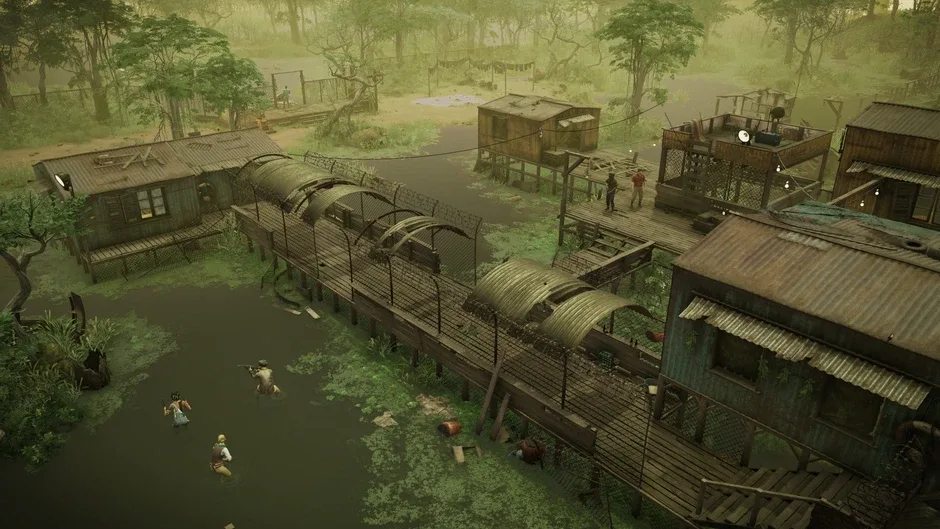
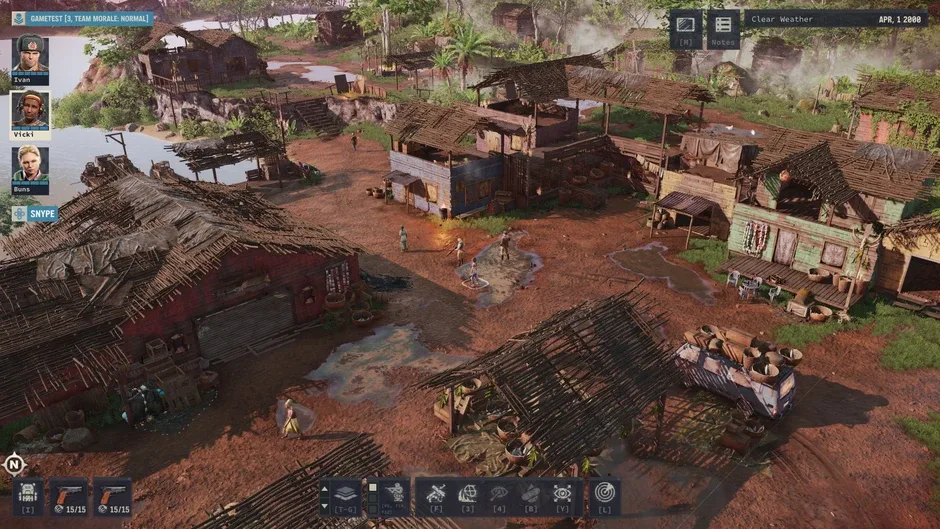
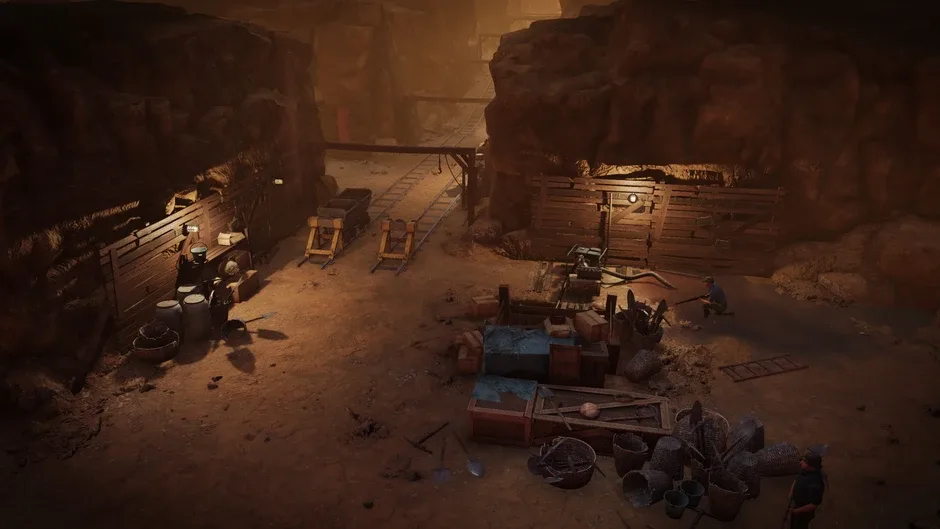
Between firefights, Grand Chien plays out on a real-time strategic map divided into dozens of sectors, each with its own population, loyalty level and resources. Controlling a sector is not the end of the job: mines need defending because they fund the entire campaign, towns need militia trained and armed to hold territory once a squad moves on, and loyalty has to be earned through side quests and a functioning economy rather than assumed after a single firefight. The Legion does not sit still while the next move is planned. Counterattacks roll toward undefended sectors on their own schedule, forcing decisions about which fronts get reinforcements and which get temporarily abandoned.
This is the layer that separates Jagged Alliance 3 from a pure tactics game like the recent XCOM entries, where the strategic side is mostly a resource-management menu between missions. Here, the map is alive in a way that keeps pulling attention even when no mission is currently loading, and a mine sector falling to a counterattack while the best squad is three turns into an unrelated firefight is the kind of pressure the genre rarely manages this well. It is also where the game's two halves occasionally fight each other: managing multiple simultaneous squads across a map that keeps moving asks for a kind of multitasking that the tactical missions, by design, do not want rushed.
Grand Chien: a small country with a lot going on#
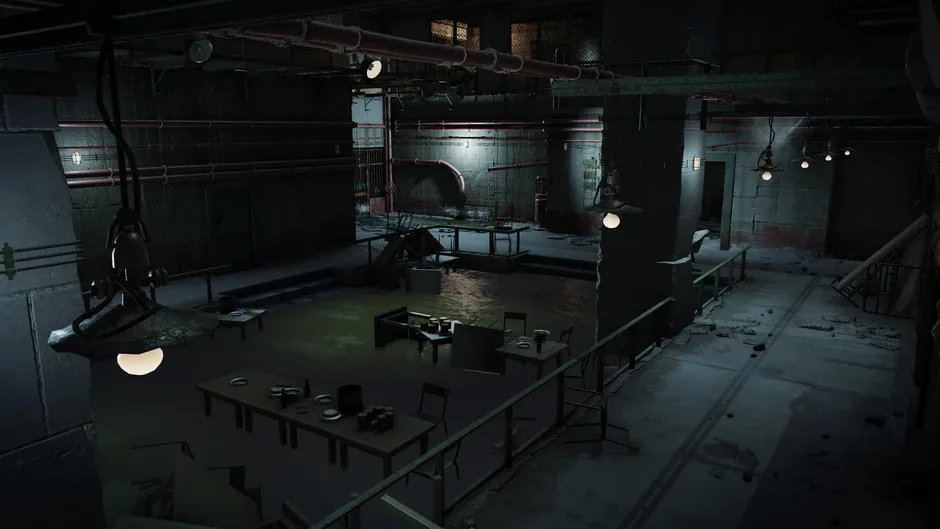
Grand Chien itself is compact by open-world standards but dense with things worth doing: a capital city under Legion occupation, jungle backroads, coastal towns built around fishing and mining economies, and a handful of set-piece locations that break from the usual outpost-and-checkpoint rhythm, including a late-game questline added in a free content update that opens up an underground transit system beneath the capital. Side content ranges from rescuing captured NPCs to running protection rackets for local businesses, and most of it feeds back into either loyalty, income or the mercenary roster rather than existing purely for completion's sake. A few of these side threads, particularly ones tied to faction relationships and militia upkeep, can quietly dead-end or bug out without explanation, which is the game's clearest rough edge outside of combat variety.
Gear, crafting and the arms trade#
Equipment matters just as much as personnel. Weapons accept a range of attachments, scopes, suppressors, extended magazines, drum feeds, and swapping a rifle's loadout between missions changes its effective range and noise profile enough to shift how a squad approaches an entire sector. A crafting system lets mercenaries with the right skills combine scavenged parts into custom grenades, improvised explosives and even weapon mods that never show up in a shop, which gives the Explosives Expert role a reason to exist beyond blowing holes in walls. Arms dealers scattered across Grand Chien buy and sell gear at prices that shift with local loyalty and supply, so a sector's economy is not just a number on a map screen but a reason to actually visit a town rather than fly past it. None of this is deep enough to carry the game on its own, but it gives the hours between firefights something to manage that feels connected to the fights themselves rather than bolted on as busywork.
Difficulty and the ruleset toolbox#
Three base difficulty settings, First Blood, Commando and Mission Impossible, cover the usual spread from forgiving to punishing, but the more interesting option arrived after launch in the form of optional rulesets that can be mixed and matched at the start of a new campaign. Ammo Scarcity makes every bullet count by tightening supply. Hard Lessons slows mercenary levelling to a crawl. Body Count throws larger Legion squads into fights across the board. AIM Legendary Deals lowers the up-front cost of top-tier hires, which is a welcome option for anyone who wants roster variety without the economic punishment. Stacked together, these rulesets let veterans of the older games rebuild something close to Jagged Alliance 2's infamous difficulty without the game ever forcing that experience on newcomers by default.
The Legion, the Major and a story that undercuts its own tension#
The plot is functional rather than gripping, and the game seems entirely comfortable with that trade-off. The masked figurehead known only as the Major, eventually revealed to be a disgraced former AIM mercenary working for a security contractor with designs on Grand Chien's mines, gives the campaign a clear villain and a reason to push toward the capital. What keeps the story from ever feeling weighty is the game's insistence on constant comic relief: mercenaries crack jokes over the radio during firefights, banter interrupts briefings that are clearly meant to land as serious, and even Emma LaFontaine's search for her kidnapped father is regularly played for laughs rather than dread. That tone works in the game's favor across the dozens of hours spent managing a squad and a map, where a lighter touch keeps the grind from wearing thin, but it means the handful of moments the writing clearly wants to land as heavy end up feeling smaller than they should.
New to tactics games? Start here#
Jagged Alliance 3 is not the gentlest entry point into turn-based tactics, but a few choices make the early hours far more manageable. Start on First Blood rather than Commando until the action-point economy and cover system feel automatic. Bring at least one dedicated Doctor early, since unhealed wounds carry between missions and compound quickly. Do not skip militia training in captured sectors; an undefended mine or town will fall to a Legion counterattack faster than most new players expect. And resist the urge to hire every Legendary mercenary at once, since their weekly wages can bankrupt a fledgling campaign before the strategic layer has generated enough income to support them.
Compared with XCOM 2 and the original Jagged Alliance 2#
XCOM 2 is the more polished, more approachable comparison, with a tighter mission structure, a clearer strategic loop built around base management rather than sector-by-sector territory control, and a difficulty curve that ramps more predictably. If cover-based turn-based combat is the goal without dozens of stat sheets and a persistent mercenary economy to manage, XCOM 2 gets there faster and asks less between missions. Jagged Alliance 3 trades that polish for scope: more mercenaries with more personality, a strategic layer that behaves like an actual living country rather than a menu, and stealth and suppression options that feel genuinely viable rather than optional flavor.
Jagged Alliance 2 remains the more mechanically punishing and less forgiving game, with a harsher economy and far less onboarding, and players who grew up on it may find the newer game's default difficulty comparatively gentle until the optional rulesets are switched on. What Jagged Alliance 3 does that its predecessor never could is present all of that depth with a modern interface, readable tactical maps and voice acting for a cast this size, which makes the whole system approachable in a way the 1999 original, for all its reputation, never managed for newcomers.
Wasteland 3 is worth a third mention here, since it occupies a similar space between squad tactics and RPG systems. Its Colorado is more heavily scripted, with branching story consequences baked into nearly every settlement, while Grand Chien leans harder on the emergent side, letting a militia collapse or a mine falling to the Legion tell its own story without a scripted cutscene attached. Neither approach is objectively better, but anyone who found Wasteland 3's writing more compelling than its tactical layer will likely find the reverse true here.
Worth the money?#
At $44.99 on PC and the equivalent on console, Jagged Alliance 3 sits at a mid-tier price point that a normal campaign easily justifies: a focused playthrough runs somewhere around 30 to 40 hours, and a completionist run chasing every sector, side quest and mercenary relationship can stretch past 70. Post-launch support has been generous rather than perfunctory, with a free content update adding a new late-game questline and underground area, and a later patch introducing the optional ruleset system that meaningfully extends replay value for veterans. The game has also seen periodic discounts of 40 to 50 percent since launch, which is a reasonable time to buy for anyone unsure about the mercenary-management learning curve.
Best platform is PC, both because the interface was clearly designed mouse-first and because the strategic map's many overlapping menus are more comfortable to navigate with a cursor than a controller stick. The console versions are entirely playable and run smoothly, but expect more button presses to accomplish what a single click does on PC. Voice acting is English only; menus and subtitles cover several languages, though not Swedish. PC players also get Steam Workshop support, which by now hosts everything from rebalanced mercenary stats to entirely new campaign maps, and it is one of the more active reasons to keep coming back to a campaign long after the credits.
Play this instead if …#
Shorter: Wasteland 3 delivers a similar turn-based squad-tactics loop in a tighter, more story-forward package without the ongoing strategic-map management.
Easier: XCOM 2 offers cover-based turn-based combat with a clearer mission structure and considerably less roster and economy management to keep track of.
Cheaper or co-op: Jagged Alliance 3 does not support co-op, but Broken Roads, a similarly styled turn-based tactics RPG, is often available for less and scratches a related itch for anyone priced out of the full-price entry.
Frequently asked questions#
How long is Jagged Alliance 3? A focused campaign runs roughly 30 to 40 hours, with a full playthrough exploring most side content and sectors stretching past 70.
Is Jagged Alliance 3 open world? Grand Chien is divided into dozens of connected sectors on a real-time strategic map rather than a single seamless open world, closer in structure to a campaign map than a traditional open-world game.
Does it have co-op or multiplayer? No. Jagged Alliance 3 is a single-player experience with no co-op or competitive modes.
Is there a difficulty option? Yes, three base difficulty settings from First Blood to Mission Impossible, plus a set of optional rulesets covering permadeath-style consequences, ammo scarcity and mercenary costs that can be combined for a much harder campaign.
Do you need to have played earlier Jagged Alliance games first? No. The story and setting are new, and while returning mercenary names will mean more to longtime fans, nothing about the plot or systems assumes prior knowledge of the series.
Is it available on Steam Deck? Yes, and its turn-based pacing and largely mouse-driven menus adapt well to the Deck's touch screen and trackpads once control bindings are set up.
The Game Avant verdict#
Jagged Alliance 3 does not reinvent the mercenary-squad tactics game so much as prove, after nearly a quarter-century of false starts and lesser attempts, that the original formula still works when someone builds it with care. The combination of a genuinely varied mercenary roster, combat that rewards stealth and suppression as much as raw firepower, and a strategic map that keeps fighting back while the next move is planned, adds up to a tactics game with more going on beneath the surface than almost anything else released this decade in the genre. The early-game enemy repetition and a story that never lets itself feel as heavy as its premise suggests keep it from the very top tier, but neither flaw undoes what the game gets right. Grand Chien was worth liberating, sector by sector, mercenary by mercenary, and this is the sequel the series earned after two decades of waiting.
8 out of 10 – the mercenary-tactics comeback the genre needed, held back only by a slow start and a script that won't stop joking.