
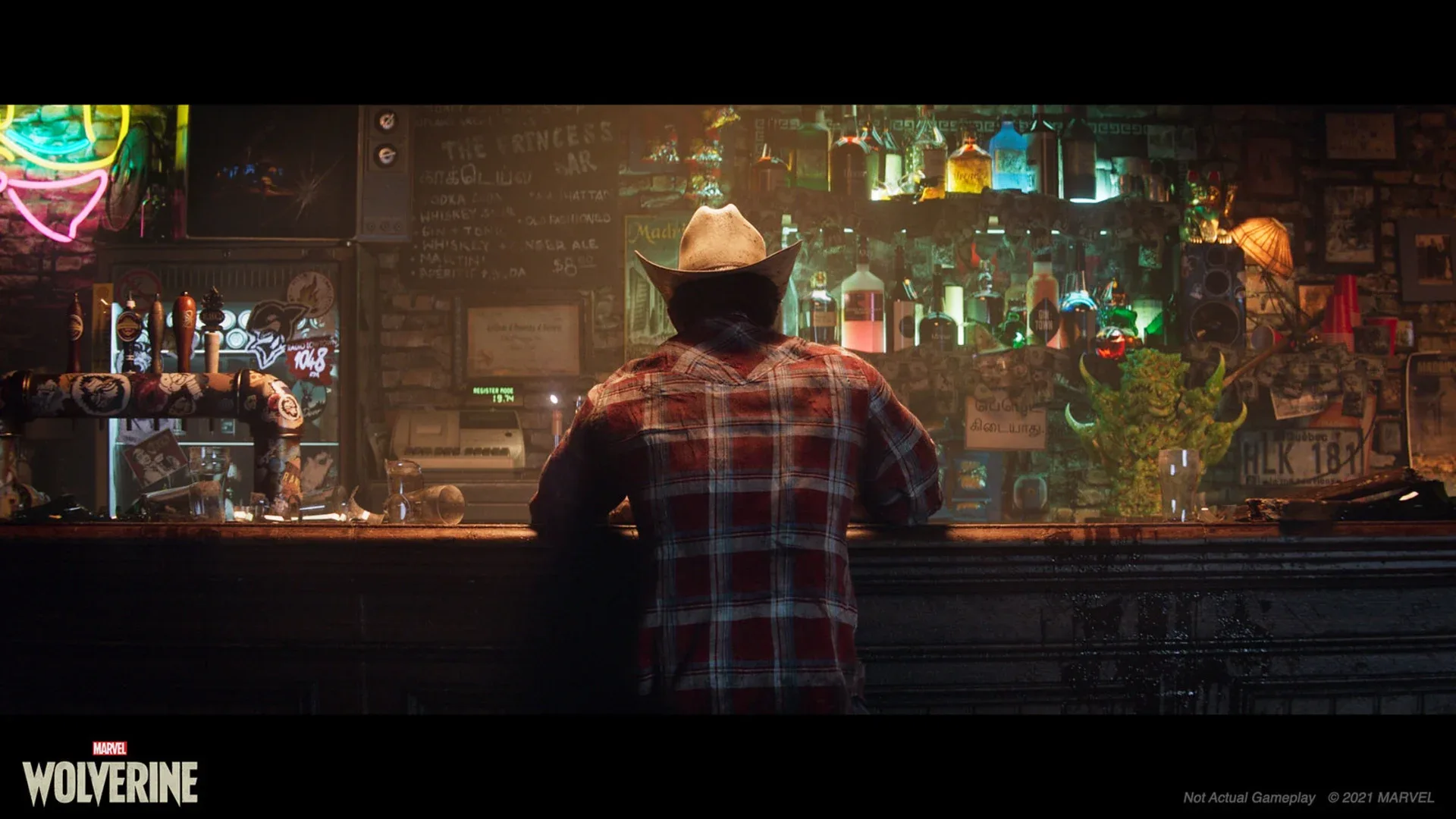
Logan without the X-Men, and with Insomniac's engine#
Marvel's Wolverine is Insomniac Games' third big Marvel project, and the studio does something that sounds simple and turns out to be demanding. It takes the technology and polish that made its Spider-Man games feel like a premium blockbuster and points all of it at a character who is the opposite of Peter Parker. Logan is angry, damaged, nearly impossible to kill and not especially interested in being a hero. The game is a single-player, third-person action adventure that arrived on 15 September 2026, published by Sony, and it is exclusive to PlayStation 5 at launch.
The short version of the critical reception is that this is a good game with a clear ceiling. Most reviewers praise the story, the cast and the presentation, and many describe it as one of the strongest narratives in a Marvel game. The same reviewers repeatedly complain that the combat is thin, that the structure is overly guided, and that it does not reach the level of Insomniac's best work. That produces a wide spread of verdicts, from enthusiastic to lukewarm, and it explains why this review lands at a 7 out of 10. It is a confident story game that delivers on its character and falls short on the part you do most of the time.

What makes Marvel's Wolverine different#
The biggest difference is the scale and shape. Insomniac's Spider-Man games were built around an open city and constant movement. Wolverine is a linear campaign with a defined route, set pieces and a much smaller toolbox. There is no web-swinging replacement, no big map of side activities, and no collectible-driven loop that stretches the game to dozens of hours. What you get instead is a story that lasts roughly 12 to 15 hours, depending on which reviewer's pace you trust.
The second difference is tone. The game is set before Logan joins the X-Men, in a period when he has left Team X and is trying to live alone. The story gradually pulls him back into other people's problems, and it leans on his anger, his memory loss and his trauma without turning them into a lecture. Reviews describe it as a game that respects the comic lore, with easter eggs and fan service throughout, and they highlight Logan's dry quips as a source of charm in a game that could otherwise be relentlessly grim.
Combat: claws, parries and the rage meter#
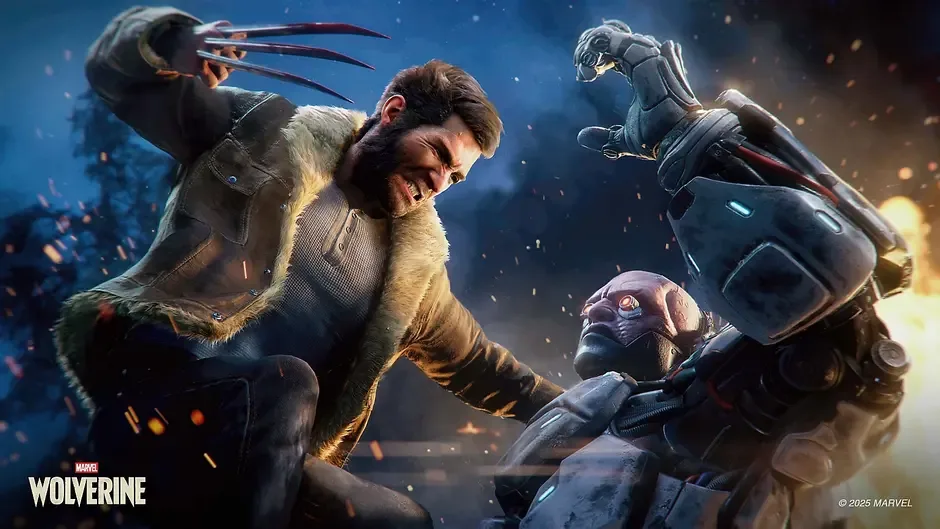
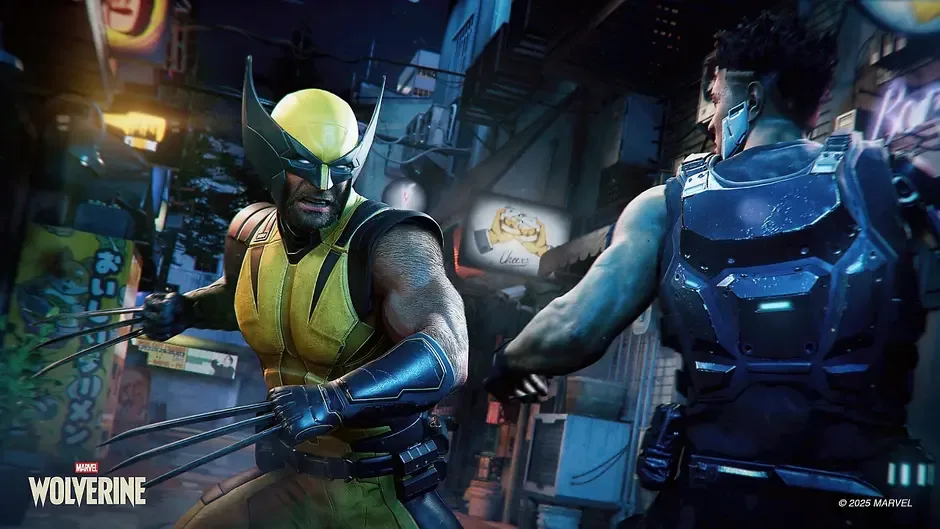
Combat is where the game spends most of its time, and it is where the opinions split. The foundations are clear. Attacks are fast and heavy, Logan can parry, counter, dodge and interrupt enemy moves, and fights regularly throw several enemies at once, including ranged attackers, so positioning matters. Reviewers compare the feel to the Arkham games, to Sifu and to the close-quarters part of Insomniac's own Spider-Man combat, and several describe it as satisfyingly brutal in the opening hours.
A rage meter gives the system its signature moment. Taking and dealing damage fills it, and once it is full a button combination lets Logan carry out claw finishers. Kills extend the rage, and going without them lets it fade, which encourages aggression rather than careful play. It is a good fit for the character, because the fantasy of Wolverine is controlled fury, and the game turns that fantasy into a readable loop.
The weakness is longevity. Critics who are lukewarm on the game describe the core melee as competent but dated, with the first hours and the last hours feeling nearly identical. That complaint appears often enough to be a consensus rather than a one-off. Even reviewers who enjoyed the combat tend to say it is at its best early and that it does not develop as much as the story does.
Abilities, upgrades and progression#
Progression is built on experience points. XP from combat, from smashing objects and from collectibles leads to level-ups, and each level grants a point to spend on attack sequences that unlock in small, linear groups rather than a sprawling tree. A separate system covers special attributes. Reviews mention six special abilities, of which four can be equipped, and these include stronger attacks, lunges at distant enemies and ways to recover some health.
The problem, according to critics who looked closely, is that these upgrades do not make Logan feel meaningfully more powerful as the game continues. A few reviewers add that scattered XP crates feel like filler, and that the level cap arrives so easily that collecting them seems pointless. Cosmetic suits and claws are available, but they do not change gameplay, so they are a reward for fans rather than a reason to engage with the systems.
Enemies and bosses#
Enemy design is one of the most criticised parts of the game. Reviewers describe a small number of enemy archetypes dressed in different outfits, which means the fights can start to feel stale in the middle of the campaign. At least one reviewer found that enemy variety improves later in the game, but the broader complaint is that the early repetition is noticeable.
There is a related complaint about the claws themselves. Several reviews note that Logan's claws feel oddly weak against armoured human enemies, while being deadly when sneaking up on someone or dropping from a height. That echoes a familiar problem in games with an overpowered weapon, where the design has to limit it to keep fights from ending too fast. Large enemies are described as spongy, which stretches fights without making them more interesting.
Boss fights are fewer than you might expect and are treated as set pieces. Some require the player to find a weakness, but at least one review says the parry-heavy structure is mastered long before the boss's health bar is worn down, which makes the later part of a fight feel like a formality. The spectacle is strong, and the mechanical challenge is modest.
Exploration, detective vision and the Nightmare Trials#
Outside combat, the game relies on a light investigative mode, often called detective vision, to search environments for clues. It fits the character, who has heightened senses, and it breaks up the fighting. However, it is also tied to what many reviewers call too much hand-holding. The game frequently takes control away for walk-and-talk sequences, even when the next objective is obvious, and critics say this undercuts the sense that you are in charge.
Optional content is thin. There is no real side-mission structure. The Nightmare Trials are optional areas with time trials, combat challenges and speed-focused navigation that restore Logan's memories, but reviewers who discuss them call them filler and say a story-based approach would have worked better. If you hope for a long tail of things to do after the credits, this is not that kind of game.
World and structure#
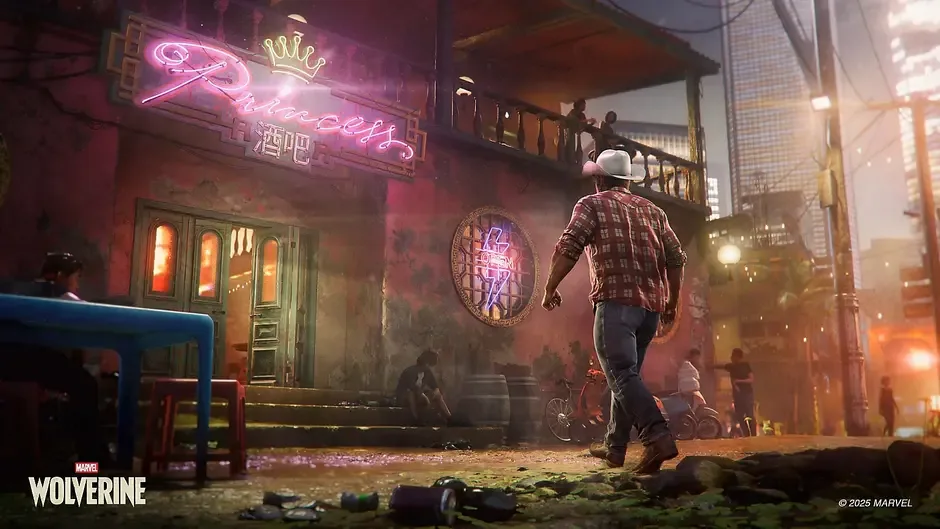
The game visits places from Wolverine's comic history, including Madripoor and Tokyo. The cities have cars and NPCs and look rich in detail, but reviewers stress that the structure is predominantly linear, with some zones offering more freedom than expected and others using invisible walls to keep players on track. Traversal is limited compared with Insomniac's Spider-Man games, so players expecting a movement-focused experience should adjust their expectations.
The trade-off is a campaign that does not feel padded. A linear route lets the writers control the pacing, and reviewers who liked the game say it never overstays its welcome. For players tired of open-world checklists, that is an advantage. For players who loved the freedom of the Spider-Man games, it is the clearest downgrade.
Story, cast and characters#
The story is the main reason critics recommend the game. After the events that set up Logan's solitary life, he is drawn into the rescue of Nathaniel Essex, who has been captured by the anti-mutant zealot Bolivar Trask. Trask is experimenting on imprisoned mutant children, among them a telekinetic Jean Grey, and Logan ends up helping a small group of mutants, including Callisto and Caliban, with a mission that he does not want. The game then widens to include Victor Creed, known as Sabretooth, and Raven Darkhölme, known as Mystique, as the story builds towards a larger X-Men universe that Insomniac clearly wants to develop.
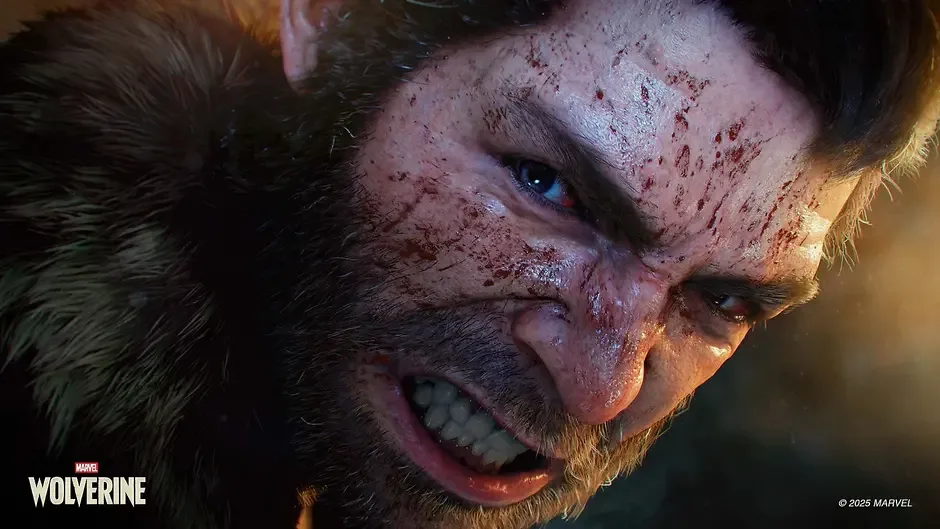
Liam McIntyre plays Logan, and reviewers praise his take as a comic-influenced performance rather than an imitation of a famous screen version. Troy Baker plays Essex and is also singled out. The relationship between Logan and Jean Grey is described as a highlight, as are the interactions with Sabretooth and Mystique. A few reviewers call the plot predictable, and one points out that the memories Logan unlocks are not shown in cutscenes despite how many cinematics the game has. These are minor complaints against a story that most critics consider the best part of the package.
Presentation, performance and bugs#
Visually, the game is praised across the board. Character models, environmental detail and motion capture are described as best-in-class, and reviewers say the technology behind Spider-Man has been used well in a linear, more cinematic format. The audio is also singled out, and the DualSense controller is used to add weight to Logan's movements, to deliver metallic claw sounds and to provide occasional audio cues. Directional audio helps signal incoming attacks. Players get Fidelity and Performance modes, and at least one reviewer reports consistent performance and minimal loading once the action starts. Check the store page for details on PS5 Pro enhancements before buying.
The technical state is less clean. At least one reviewer reports a number of bugs, including floating cars, NPCs and physics objects pushing or sliding Logan, and glitches in chase scenes such as enemies passing through vehicles. Others rate the game as polished and mention only cosmetic issues, so experiences seem to vary. Because patches may have addressed some of these problems since launch, it is worth checking the latest patch notes. The bugs are rarely described as game-breaking, but they sit awkwardly beside the high production values.

Difficulty and accessibility#
Wolverine's healing factor is a design choice as much as a story one. Deaths are infrequent, and fights are built to be recoverable, which makes the game friendly for newcomers. One reviewer calls it beginner-friendly and recommends it to players who find larger action games overwhelming, because the linear design keeps things manageable. Fights that do kill you can send you back through loading screens, which one reviewer found annoying during boss encounters.
Details on difficulty settings and accessibility options were not covered by the reviews this write-up relies on, so check the official store page or the in-game menu for the current list. What is clear is that the core challenge is modest, and that players who want a demanding action game will find it too gentle.
Compared with Spider-Man and Batman: Arkham#
The obvious comparison is Marvel's Spider-Man 2. Spider-Man 2 is a big open city with endless movement, a deep set of combat tools and plenty of side content. Wolverine is a smaller, darker, more linear game that wins on tone and character focus and loses on freedom and variety. Reviews say Wolverine feels like a spiritual cousin rather than a successor, and critics place it below Insomniac's best.
Batman: Arkham is the second useful reference, because its freeflow combat shares ideas with Wolverine's counters and rhythm. Arkham games keep fights fresh with a wide gadget set, enemy types that demand different answers and a gradual escalation. Wolverine has the brutality and a stronger sense of violence, but it has fewer tools, and that is where it falls behind.
| Marvel's Wolverine | Marvel's Spider-Man 2 | |
|---|---|---|
| Structure | Linear campaign | Open-world city |
| Best for | Story, character, presentation | Movement, variety, side content |
| Combat | Claws, counters, rage finishers | Wider toolset and gadgets |
| Length | Roughly 12 to 15 hours | Longer, with more optional content |
| Tone | Brutal, personal, grim | Brighter, more varied |
New to this kind of game? Start here#
Wolverine is a friendly entry point into third-person action games, and a few habits help. Treat parrying and countering as the core of every fight, because they keep damage low and feed the rage meter. Spend upgrade points on abilities that heal or close distance, since they make crowded fights more manageable. Use stealth approaches and height attacks when you can, because reviewers say the claws are at their deadliest when the enemy does not see you coming.
- Learn the parry and counter timing in the first fights, and use it as your default defence.
- Build rage by staying aggressive, and spend it on finishers when several enemies are close.
- Equip abilities that restore health or let you reach distant enemies.
- Use detective vision when a scene stalls, and do not worry about collecting every XP crate.
Worth the money?#
The campaign is compact, with reviews placing it between about 12 and 15 hours. That is a reasonable length for a story-driven action game, but it also means the value depends on how much you want the story. The price and edition details were not confirmed in the sources this review relies on, so check the current price on the PlayStation Store or your retailer before buying. A linear, single-player game with limited optional content is also the kind of title that often gets discounted later.
If the story and the Logan performance are what attract you, the full price is easier to justify. If you mainly want deep combat or a game you can spend dozens of hours in, waiting for a sale is a safer plan. The game is on PlayStation 5 only at launch, and this review has not confirmed which languages are supported for text and voice, so check the store page for English, Swedish and German options.
Play this instead if…#
Shorter: God of War, in its more compact entries, offers weighty combat and a strong character-focused story that does not take long to finish.
Easier: Marvel's Spider-Man: Miles Morales is a shorter and gentler Insomniac superhero game with accessible combat and a lighter tone.
Cheaper or co-op: Batman: Arkham Knight and its predecessors are often discounted and offer deeper freeflow combat for the money. Wolverine itself is single-player only, so anyone who wants co-op should look at games such as Marvel's Avengers or It Takes Two.
Frequently asked questions#
How long is Marvel's Wolverine? Reviews put the campaign at roughly 12 to 15 hours.
Is it an open world? No. It is a predominantly linear campaign with limited exploration and no real side missions.
Which platforms is it on? PlayStation 5, since 15 September 2026.
Does it have co-op or multiplayer? No. It is a single-player game.
Do you need to play Spider-Man first? No. It tells its own self-contained story, although it shares a universe with Insomniac's earlier Marvel games.
Is it brutal or violent? Yes. The combat is bloody and fast, and the tone is darker than the Spider-Man games.
The Game Avant verdict#
Marvel's Wolverine is a game that critics like more than they love, and the reasons are consistent. The performances, the story and the visuals are excellent, and Insomniac clearly understands the character. The combat, which makes up most of the playing time, is brutal at first but does not develop, enemies repeat, and the structure holds the player's hand too firmly. Bugs are reported by some reviewers and not by others, so technical experiences may vary.
The fair way to read the reception is as a split between those who value narrative and presentation and those who need a deeper action game. For the first group this is an easy recommendation, and for the second a game to pick up on sale. A 7 reflects that balance: strong in the places that matter most to its audience and held back in the place where players spend the most time.
7 out of 10 – a superb Logan and a strong story, held back by thin combat and a guided structure.