 Cuphead
 Celeste
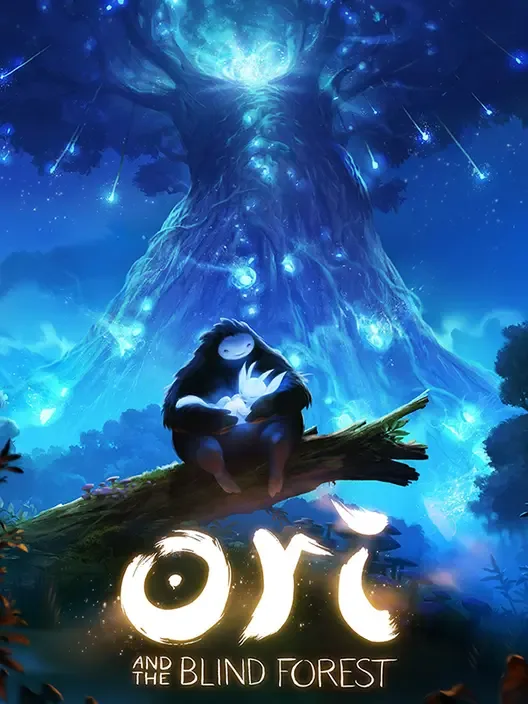 Ori and the Blind Forest
 Hollow Knight
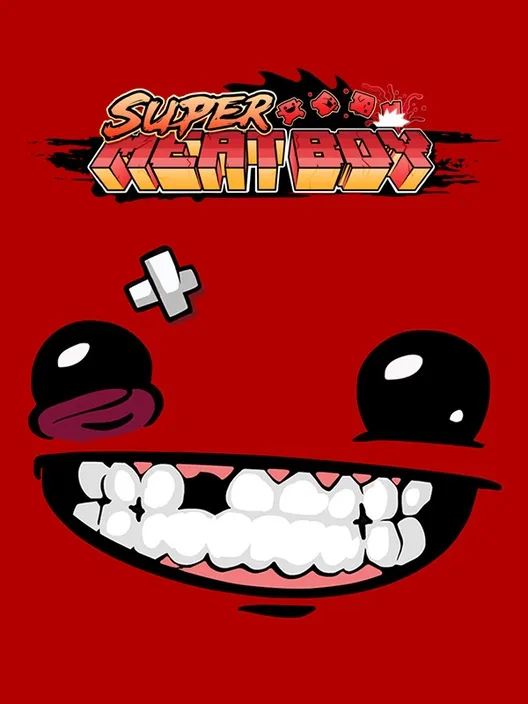 Super Meat Boy
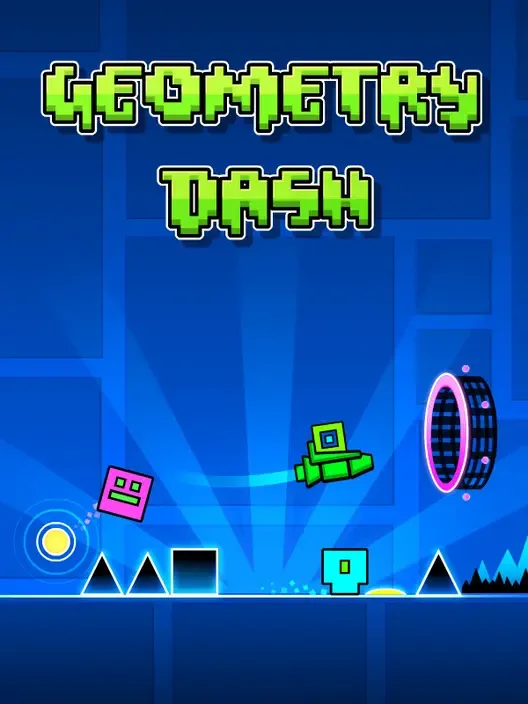 Geometry Dash
This is Game Avant's own ranked list of the best platformers right now, built from the site's combined rating data and curated for genuine breadth rather than picked purely on raw percentage. "Platformers" on this page covers a wide band: precision platformers built around pixel-perfect jumps and momentum, Metroidvania-style exploration games where movement upgrades double as keys to the map, stylish combo-driven action-platformers where combat and traversal share the same toolkit, and co-op platformers built to be played with someone else in the room or online. It does not mean pure character-action brawlers or open-world adventure games where jumping is incidental to a much larger system — those live on the separate action and adventure pages, because judging a tight, momentum-based platformer against a sprawling open world by the same yardstick flattens what makes each one work.
The order below blends IGDB's aggregate critic score with Steam's own user review percentage, then is curated for breadth so the list doesn't collapse into only the highest raw percentage regardless of how few people played it. That means genre giants with tens of millions of players sit next to small, recent indie titles most readers have never heard of, and both belong here on their own terms. Read the write-ups for what each entry actually does well and where it falls short — the rank reflects how the game currently scores and where it fits the list as a whole, not a universal verdict on which one is right for you.
1. Hollow Knight#
Team Cherry's 2017 Metroidvania set the bar the rest of this list is measured against: Hallownest is a single interconnected map with no loading screens between regions, and the Pale Ore-forged nail upgrades alongside the Charm system let players build genuinely different playstyles around the same base moveset. The Mothwing Cloak dash and later Monarch Wings double jump function as both traversal tools and combat options, so exploring never feels like downtime between the parts that matter. The Mantis Lords fight, placed early rather than late, is the game being upfront about the skill floor it expects for everything after it, and the Nail Arts (Cyclone Slash, Dash Slash, Great Slash) add real combo depth to what looks at first like a simple slash-and-jump loop. The Godhome and Pantheon of the Master post-game boss rush, added free after launch, gave the game an end-state challenge most Metroidvanias reserve for paid DLC. The honest drawback: the map system requires buying a compass charm and manually marking locations with pins rather than auto-mapping, an old-school choice some players find charming and others find a genuine usability gap.
2. Celeste#
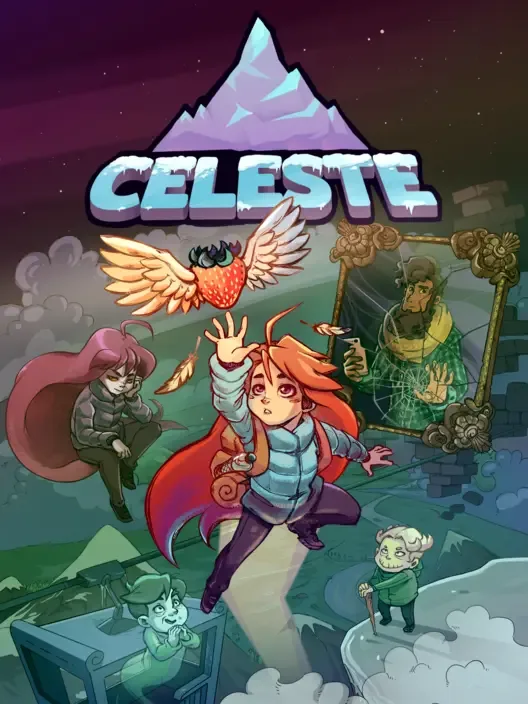
Maddy Makes Games' 2018 precision platformer follows Madeline climbing Celeste Mountain, and the entire moveset — jump, wall-cling, and a single air-dash that resets on touching ground or a refill crystal — is taught in full within the first few screens, then recombined into increasingly demanding puzzles for the rest of the game. The dash's eight-directional aim, combined with dash-jumps and wall-jump chaining, gives movement a real skill ceiling that the game's assist mode (adjustable air-dashes, game speed, and invincibility) lets players opt out of without altering the core level design for anyone else. Chapter 9, Farewell, added as a free epilogue after launch, is routinely cited as some of the hardest platforming ever shipped in the genre. The strawberry collectibles, hidden throughout every chapter, are entirely optional and never gate story progress, keeping the game's difficulty curve honest about what's required versus what's for players chasing mastery. The honest drawback: the story's themes of anxiety and self-doubt are delivered through fairly blunt dialogue in places, and a small number of the B-Side and C-Side remix levels lean so heavily on frame-perfect execution that they read as a different, much narrower game than the main campaign.
3. Hollow Knight: Silksong#
Team Cherry's long-awaited sequel finally released on September 4, 2025, swapping the original's silent Knight for Hornet, whose moveset is built around noticeably more acrobatic movement — pole-vaulting off her needle, flipping over large enemies, and a faster, more aerial combat rhythm than the deliberate original ever asked for. The needle-and-thread combat system layers new tools (throwing needles, silk-based abilities that consume a resource earned by landing hits) on top of the returning nail-combat framework, giving Hornet a more offense-forward baseline than the Knight's patient parry-and-poke style. The new region of Pharloom replaces Hallownest with its own interconnected map philosophy, keeping the series' commitment to no fast travel until deliberately unlocked and no hand-holding about where to go next. Early boss encounters lean harder into aggressive, fast-reading fights than the original's early game did, signaling a steeper opening curve than its predecessor. The honest drawback: because it only just released after years of anticipation, its difficulty pacing and back-half content are still being stress-tested by a massive player base in real time, and several early reports describe a harder opening stretch than the original game offered newcomers.
4. Dead Cells#
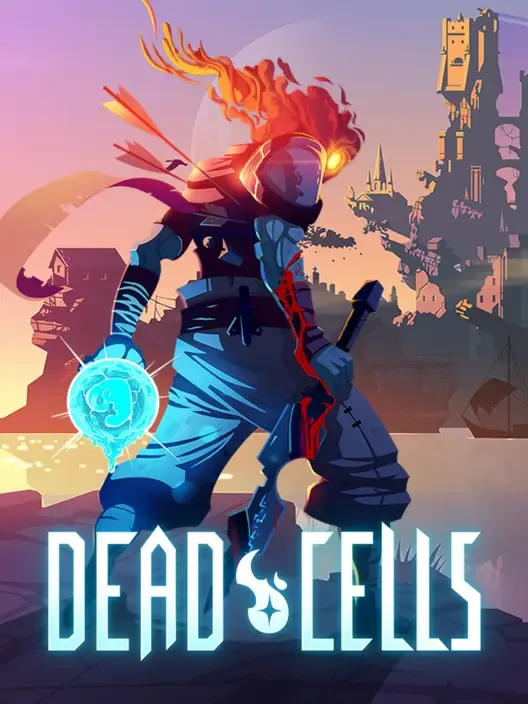
Motion Twin's 2018 roguelite Metroidvania sends a shapeless, regenerating prisoner through a procedurally reordered but structurally fixed castle, and the core hook is that permadeath and permanent progression coexist: dying resets weapons and gold but keeps the Cell-bought stat and mutation unlocks that gradually open new paths through the map. Combat is built around a two-weapon-plus-two-skill loadout swapped freely between runs, so a build focused on bows and traps plays nothing like one built around dual daggers and a shield, and roll-dodging with genuine invincibility frames rewards reading enemy tells over memorizing a fixed pattern. The Scroll of Fusion and Boss Cells systems let players tune build focus and difficulty independently, and biome-specific traversal tools (grappling hook, vine-climbing) gate new areas the same way an item unlock would in a traditional Metroidvania. The art and animation, especially the fluidity of the protagonist's movement, comes from actual former Dead Cells-team veterans of games like Castlevania, giving the moment-to-moment feel a pedigree the roguelite genre doesn't always have. The honest drawback: the procedural room ordering means level layout never develops the hand-crafted set-piece moments a fixed Metroidvania map can build toward, and the difficulty curve across Boss Cell tiers spikes sharply enough that casual players can hit a wall well before reaching the true final boss.
5. Ori and the Will of the Wisps#
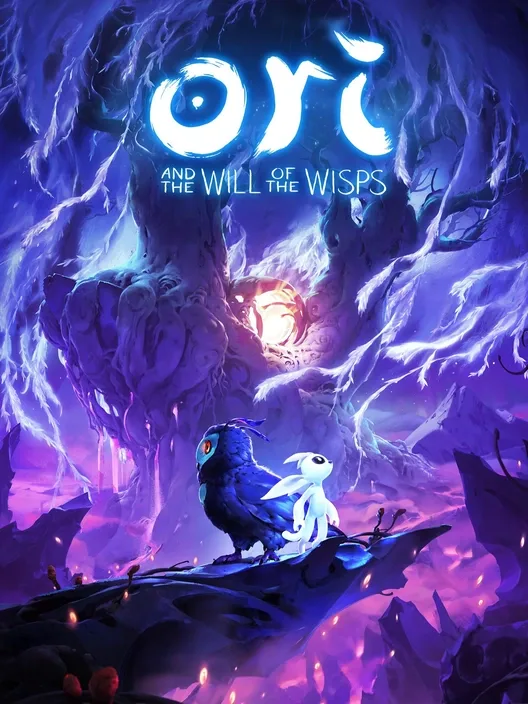
Moon Studios' 2020 sequel keeps the original's fusion of Metroidvania structure and precision platforming while adding a combat system with real weight: a sword, hammer, and charged bow give Ori actual weapon variety instead of the first game's single projectile, and the Spirit Shards system lets players customize which passive bonuses matter most for their playstyle. Traversal abilities like the Spirit Edge's directional dash-slash and the Sein-guided Spirit Flame double as both combat tools and platforming keys, keeping the exploration and combat halves of the design tightly fused rather than treated as separate systems. The escape sequences — extended, scripted chase setpieces where the whole screen is collapsing or flooding behind Ori — are staged as some of the most technically demanding platforming challenges in the genre, testing everything the player has learned in one uninterrupted stretch. Kwolok's Hollow and the surrounding Wellspring Glades give the hand-painted art direction a scale and variety the tighter first game didn't attempt. The honest drawback: the new combat system, while a real addition, is still mechanically shallower than dedicated action-platformers on this list, and a couple of the late-game escape sequences are demanding enough to function as a hard difficulty spike relative to the rest of the campaign.
6. Cuphead#
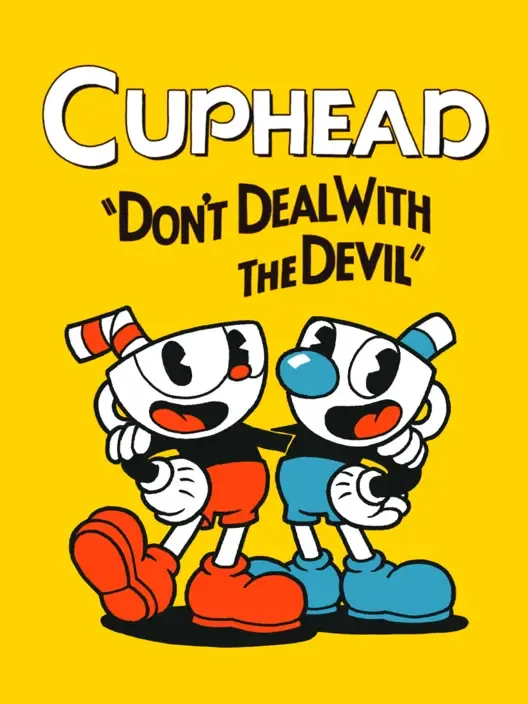
Studio MDHR's 2017 run-and-gun platformer is built almost entirely around boss fights rendered in hand-drawn cel animation styled after 1930s rubber-hose cartoons, and that presentation is inseparable from the difficulty: every boss telegraphs multi-phase attacks through the same exaggerated, squash-and-stretch animation language the whole game is drawn in, so learning a fight means learning to read cartoon logic as much as hitbox timing. The parry mechanic, bouncing off specific pink-tinted objects for a damage buff, adds an optional-but-valuable risk layer to the traditional run-and-gun loop of dashing, jumping, and aiming in eight directions. Co-op play, letting a second player control Cuphead's brother Mugman simultaneously, changes boss patterns and adds real teamwork value rather than just doubling damage output. The small number of side-scrolling run-and-gun levels between bosses break up the boss-rush structure without ever matching the bosses themselves for difficulty or memorability. The honest drawback: the game is unapologetically difficult with essentially no easy mode for the main campaign's core bosses, and that difficulty wall, combined with a genuinely small map of levels between bosses, means the game is far more boss-rush than traditional platformer for most of its runtime.
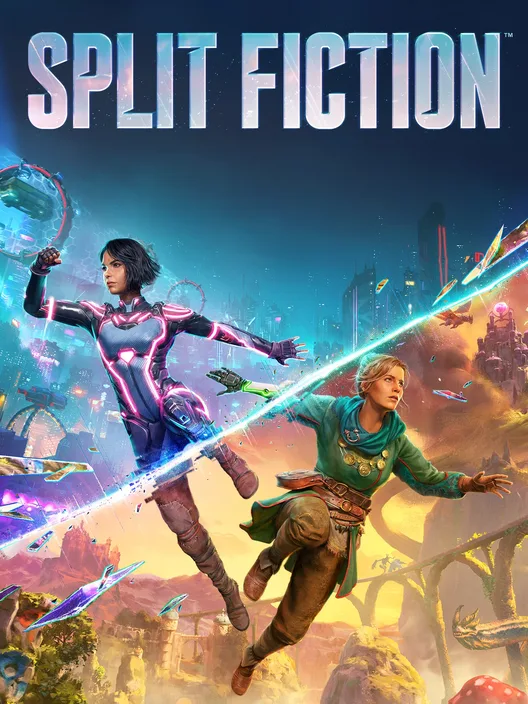
7. Split Fiction#
Hazelight Studios' 2025 co-op adventure, released March 7, 2025, splits two writers, Mio and Zoe, across alternating sci-fi and fantasy story fragments, and its platforming identity comes from constantly swapping each player's core moveset between levels — one stage might hand both characters wall-running and double-jumping in a cyberpunk chase, the next might turn them into a monkey and an otter with entirely different climbing and swimming abilities. Every level introduces a new mechanical pairing that only works through combined input, turning platforming challenges into two-player puzzles rather than parallel single-player tracks bolted together. The Friend's Pass system lets one owner invite a second player to the full campaign for free, removing the usual barrier to trying a co-op-only platformer with someone who hasn't bought the game. Side "Glitch" detours, short optional side-stages with their own standalone mechanic, give the game room to try ideas too small for a full chapter without disrupting the main story's pacing. The honest drawback: because nearly every mechanic is discarded after a single level in favor of the next new idea, the game rarely lets any individual platforming system develop real depth before moving on, and playing solo isn't an option at all — the entire experience requires a second player throughout.
8. It Takes Two#
Hazelight Studios' 2021 predecessor to Split Fiction follows a couple, Cody and May, shrunk into living dolls and forced to cooperate to reunite their family, using a similar level-to-level mechanic swap: one chapter hands the pair magnet-based platforming, another turns one player into a sap-slinging tree-branch character while the other gets an acorn-based grapple. The asymmetric ability design, where each player's toolkit is genuinely different rather than a mirrored copy, forces real communication rather than the kind of silent parallel play many co-op games allow. Minigames scattered throughout, from board-game-style competitive challenges to cooperative rhythm sections, add variety without derailing the platforming-and-puzzle spine of each chapter. The game's Friend's Pass, letting a second player join for free, established the model Split Fiction later reused. The honest drawback: the individual mechanics, while inventive, are each used for roughly one chapter before being discarded for the next idea, so nothing gets the chance to develop real depth, and — as with its successor — the entire game is unplayable solo.
9. Terraria#
Re-Logic's 2011 sandbox holds a real, if unconventional, place on a platformers list: beneath its crafting, building, and boss-progression systems sits genuine platforming DNA, with grappling hooks, wings, and later mobility accessories turning traversal across its procedurally generated 2D world into a skill in its own right rather than simple walking. Boss fights, from the early Eye of Cthulhu to late-game superbosses like the Moon Lord, are built around dodging telegraphed projectile and movement patterns in a side-scrolling arena, which plays far closer to a boss-rush platformer than to the top-down combat of most sandbox-survival games. The sheer accessory variety — Rocket Boots, the Wings tier, Lava Charms, grappling hooks with different ranges and swing physics — means late-game traversal across the world becomes genuinely fluid and platform-focused, a design layer that separates it from Minecraft-style building games. Housing and NPC systems, tied to base-building rather than movement, sit alongside the platforming and combat as a genuinely separate pillar of the design. The honest drawback: the platforming and mobility systems are gated behind substantial crafting and progression grinding before they open up, and players coming to Terraria expecting a pure platformer will spend many hours in mining, building, and inventory management before movement itself becomes the game's main draw.
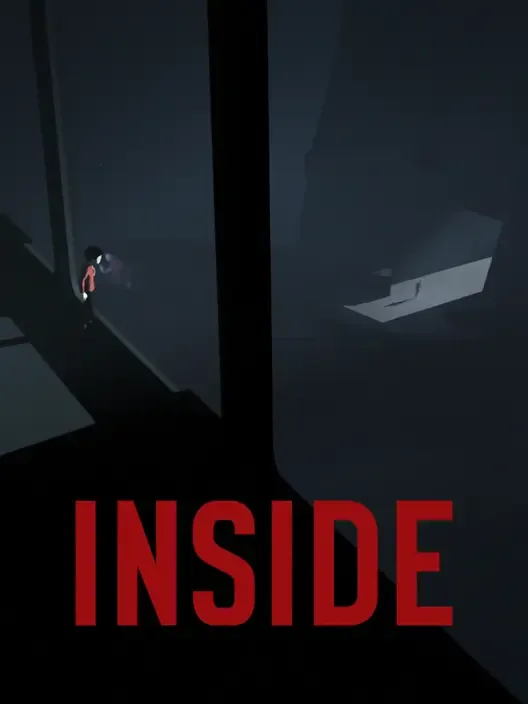
10. Inside#
Playdead's 2016 side-scrolling puzzle-platformer follows an unnamed boy through a bleak, dystopian world using almost no dialogue or explicit narrative text, letting environmental storytelling and increasingly disturbing set pieces carry the entire experience. The core platforming loop — running, jumping, and pushing or pulling objects to solve physical puzzles — stays deliberately simple throughout, so the game can layer stealth-avoidance sequences (silent search-lit guards, mind-controlled worker swarms) on top without ever needing new control complexity to teach. Water physics introduced in the back half, letting the boy swim and be pulled under by current, add an entirely new movement register late enough to feel like a genuine escalation rather than a mid-game gimmick. The game's climactic transformation sequence, reframing the boy's entire relationship to his own body mid-puzzle, remains one of the most talked-about single moments in the genre's recent history. The honest drawback: the puzzle difficulty stays consistently moderate rather than building toward a true skill test, and the deliberately oblique, dialogue-free storytelling leaves the game's central meaning genuinely ambiguous in a way some players find rewarding and others find frustratingly unresolved.
11. Gris#
Nomada Studio's 2018 art-platformer follows a grieving young woman whose world literally loses its color, and each of the game's chapters restores a new hue alongside a new traversal ability — a protective dress that turns into a heavy block, a swimming ability, a double-jump-enabling cape — tying mechanical growth directly to the game's central metaphor of processing grief in stages. The hand-painted watercolor art direction, doubling as both aesthetic and functional level geometry, means platforming challenges are frequently built from the same shifting shapes the story's emotional beats are expressed through, rather than treating art and mechanics as separate layers. There is no combat, no fail state, and no death in the traditional sense, letting the entire design focus on movement-as-expression rather than challenge-as-obstacle. Composer Berlinist's score, shifting in real time with the environment's mood, reinforces the same emotional beats the color-restoration mechanic is built around. The honest drawback: with no real difficulty or fail state, the platforming itself offers little challenge for players who want mechanical depth, and the roughly four-to-five-hour runtime, while tightly paced, leaves some of the later chapters' new mechanics underused before the game ends.
12. Ori and the Blind Forest#
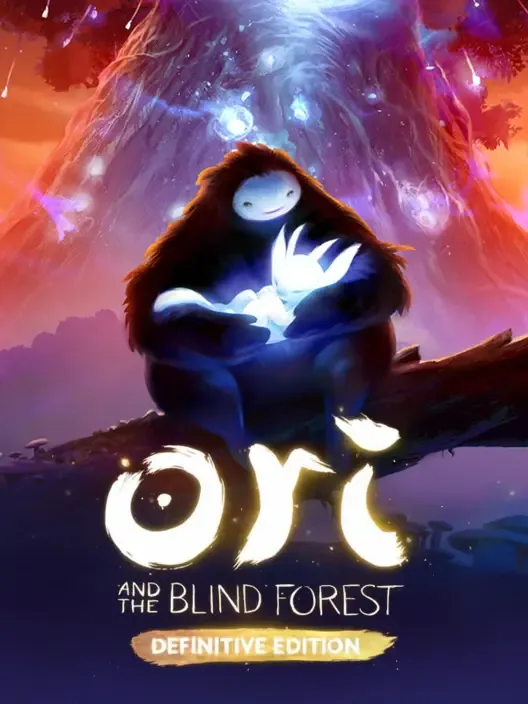
Moon Studios' 2015 original introduced the hand-painted, precision-platforming Metroidvania template the sequel above later expanded, sending the spirit-guardian Ori through the dying forest of Nibel using traversal abilities — the Bash mid-air redirect, the Charge Jump, the Stomp ground-pound — that double as both movement tools and puzzle-solving keys the moment they're acquired. The Escape sequences, particularly the flooding Ginso Tree climb and the collapsing Mount Horu finale, are scripted, no-checkpoint platforming gauntlets that ask the player to chain every ability learned up to that point in one unbroken sprint, and they remain some of the hardest sustained platforming challenges the genre produced that decade. The soul-link save system, letting players manually place save points using a limited resource rather than relying on autosave, adds a genuine risk-management layer to exploring dangerous areas. The emotionally driven, near-wordless story, told primarily through the relationship between Ori and mentor-spirit Naru, gives the traversal a narrative throughline that most precision platformers skip entirely. The honest drawback: the Escape sequences, while celebrated, are punishingly difficult relative to the rest of the campaign's more measured pace, and the manual save-point system, while thematically justified, is a genuine friction point against modern expectations for autosave-driven exploration games.
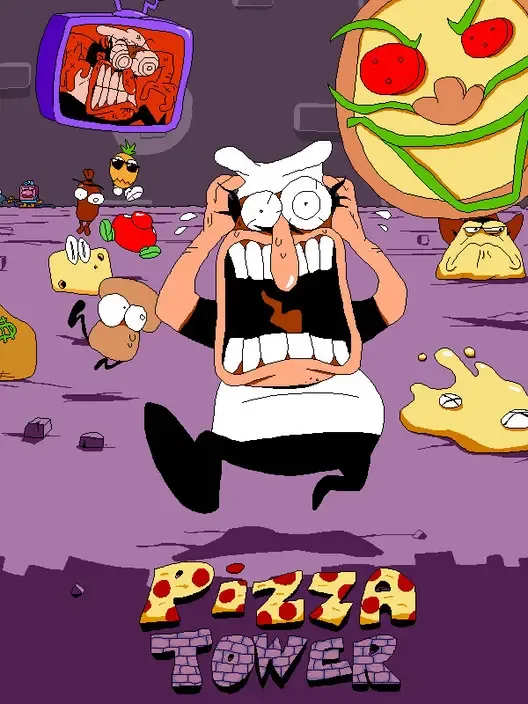
13. Pizza Tower#
Tour de Pizza's 2023 momentum platformer casts pizza chef Peppino Spaghetti racing through increasingly deranged levels to stop his pizzeria's demolition, and the core design goal is speed: wall-running, sliding, and the signature Mach Run turn every level into a puzzle about maintaining unbroken momentum rather than the careful, stop-and-start platforming most of the genre defaults to. The transformation system — Shotgun for ranged attacks and block-breaking, Pepper Pizza for temporary invincibility and flight, Knight for touch-damage and slope-sliding — layers combat and traversal options directly into the level's pickups rather than a separate menu. Every level's "Pizza Time" escape phase, triggered once the level's objective is found, forces a full-speed backtrack sprint to the exit while chased by an unstoppable threat, turning the entire level layout into a second, faster challenge on the way out. The Pizzahead boss fight, a multi-phase confrontation parodying broader gaming and cartoon tropes, is widely cited as one of the standout boss encounters in recent indie platforming. The honest drawback: the momentum-focused scoring system that rewards a no-hit, high-combo run punishes small mistakes severely enough that fully mastering a level for a top rank demands a level of replay-grinding well beyond simply reaching the exit.
14. Katana Zero#
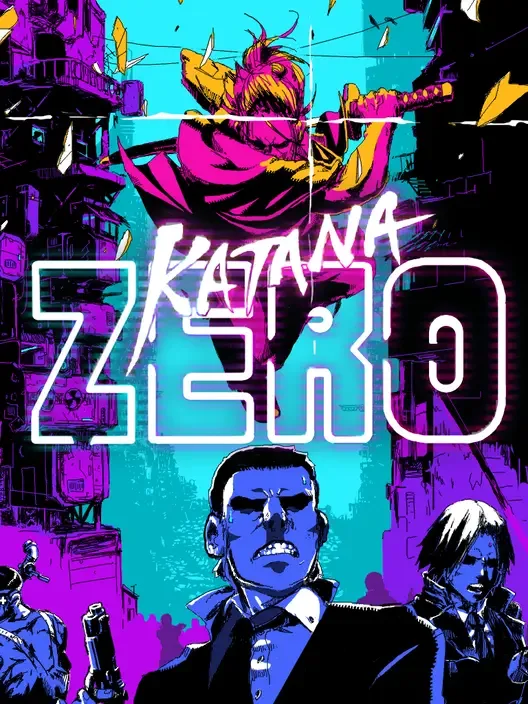
Askiisoft's 2019 action-platformer casts a katana-wielding assassin who dies in a single hit but can rewind each attempt instantly, and that single mechanic — die, learn, retry within seconds — reframes every level as a puzzle about ideal execution rather than a survival test, closer in spirit to a speedrun-optimization game than a traditional stealth-action title. The deflection system, letting Zero slash incoming bullets back at enemies with correct timing, and a limited slow-time meter both add tactical options on top of the base dash-and-slash moveset, giving skilled play noticeably more room than the surface-level "one-hit-kill assassin game" premise suggests. The neon-soaked, synthwave-scored presentation and the narrative's own unreliable-narrator structure, delivered through a therapist's-office framing device between levels, tie the game's time-manipulation mechanics directly into its story about a fractured, drug-suppressed memory. Each level's design encourages replaying a stage multiple times purely to find a faster, cleaner clear, which most linear action-platformers don't build room for. The honest drawback: the campaign is short even by the genre's standards, and the instant-death, high-precision core loop is a real access barrier for players who don't enjoy the trial-and-error rhythm of dying dozens of times per level before finding the clean route through.
15. Sanabi#
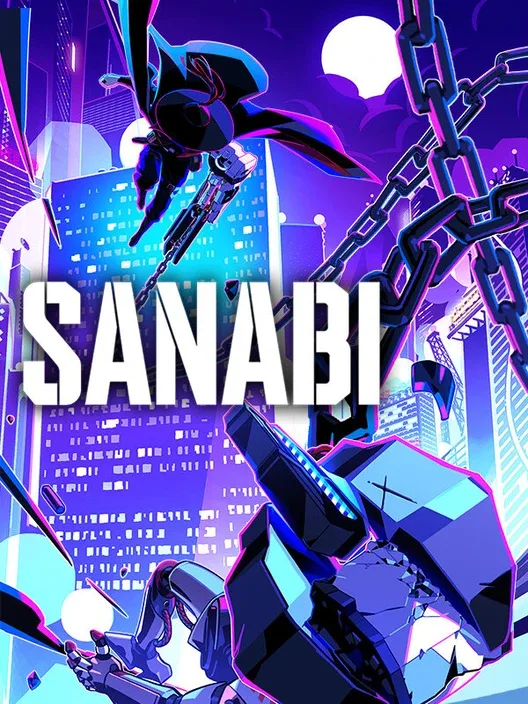
WONDER POTION's grappling-hook platformer, developed with NEOWIZ as publisher, left early access in November 2023 after launching in 2022, and it builds its entire traversal system around a robotic prosthetic arm used to grapple across skyscraper-scale industrial environments, chaining swings and zip-lines into fast vertical and horizontal momentum runs. Combat is folded directly into the grapple: pulling enemies in for a melee finisher or grappling projectiles to redirect them mid-fight means offense and traversal share the same input rather than sitting in separate systems. The narrative, a story about a father figure protecting a young girl across a dystopian futuristic setting, is delivered through pixel-art cutscenes woven between fast-action platforming stretches, giving the game an emotional register that most grapple-focused platformers don't attempt. Boss encounters lean on the same grapple-and-redirect logic as the traversal, turning fights into extensions of the movement system rather than a separate combat minigame bolted on top. The honest drawback: the story's emotional beats occasionally slow the pacing significantly compared to the game's genuinely thrilling movement-focused stretches, and the grapple-precision demanded in later chapters is steep enough that players who haven't fully internalized the swing physics can find the back half considerably harder than the earlier introduction suggested.
16. Geometry Dash#
RobTop Games' 2013 rhythm-platformer strips the genre down to a single input — tap to jump — and builds an entire game of escalating difficulty around timing that jump against a relentless, music-synced auto-scroll, turning every level into a memorization-and-execution test closer to a rhythm game than traditional platforming. The level editor, letting players build and publish their own stages with the same tools the developer used, has produced a community-made library that dwarfs the official campaign by orders of magnitude, including levels calibrated to a difficulty ceiling the base game alone never reaches. Different vehicle forms unlocked mid-level — the ship's hold-to-fly control, the wave's diagonal-only movement, the UFO's tap-to-hop physics — change the core input's feel entirely from segment to segment within a single stage, keeping the one-button premise from feeling monotonous across a full level. The game's tight sync between visual level design and its licensed and community-made electronic soundtrack means levels are frequently built to visually pulse and shift on the beat, reinforcing the same timing the jump mechanic tests. The honest drawback: the extreme demon-tier community levels, the ones most associated with the game's hardest reputation, are calibrated for a tiny fraction of the playerbase and can take hundreds of attempts to clear, which is either the entire appeal or a hard wall depending on tolerance for repetition.
17. Peak#
Aggro Crab and Landfall's 2025 co-op climbing game, released June 16, 2025, drops up to four players onto a crashed-plane island and tasks them with climbing to the titular Peak to summon rescue, and the entire design is built around first-person, physics-based climbing: boosting teammates over ledges, sharing ropes, and managing a stamina-and-injury system that punishes solo overconfidence far more than coordinated group movement. The randomly generated mountain, rotating through four distinct biomes on a daily cycle, means no two climbs play out identically, and the escalating "Ascent" difficulty tiers stack new environmental hazards and movement restrictions onto repeat climbs for players who've already reached the top once. Injuries, which visibly hamper movement until treated or allowed to heal, create genuine stakes around risky jumps rather than a simple health bar ticking down. The lack of any real combat or traditional level design puts the entire challenge on reading terrain and coordinating with teammates in real time, a genuinely different rhythm from nearly everything else on this list. The honest drawback: the game is built almost entirely around group coordination, and playing with strangers or a mismatched group can turn what's designed as tense cooperative problem-solving into frustrating, uncoordinated chaos.
18. Little Nightmares#
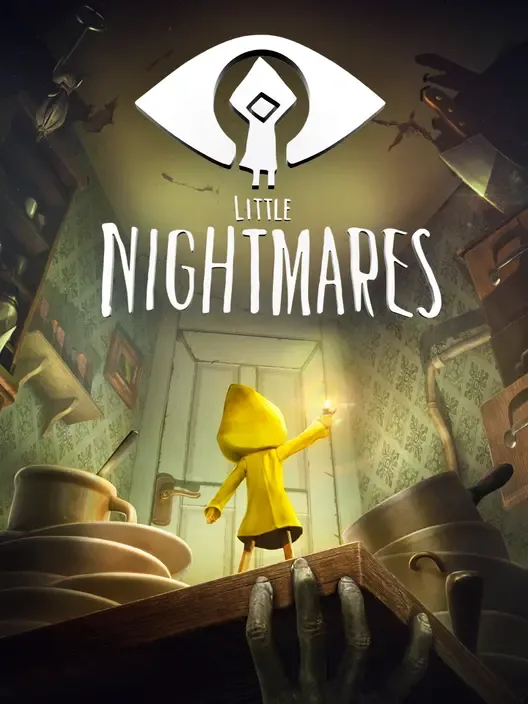
Tarsier Studios' 2017 horror-platformer casts a small, yellow-raincoat-wearing child named Six navigating the grotesque, oversized world of the Maw, and the game's signature trick is scale: every door handle, staircase, and piece of furniture towers over Six, turning ordinary platforming obstacles into genuine tension because the environment itself constantly signals how physically outmatched the protagonist is. Combat is almost entirely absent in favor of stealth and environmental puzzle-solving — hiding in cabinets, timing movement past a nearly-blind pursuer's hearing, using thrown objects as distractions — which keeps the platforming's vulnerability-driven tone consistent rather than undercutting it with power fantasy. The Janitor and Twin Chefs pursuit sequences, extended chase setpieces through increasingly cramped environments, are the game's clearest high points, building sustained dread through movement alone rather than jump-scares. The muted, desaturated art direction and near-total absence of dialogue lets the environmental design carry the entire narrative, forcing players to piece together the Maw's purpose from visual detail alone. The honest drawback: the game is short, roughly four hours, and several chase sequences rely on trial-and-error learning of a pursuer's exact patrol pattern, which can read as unfair death rather than a fair challenge on a first attempt.
19. Human: Fall Flat#
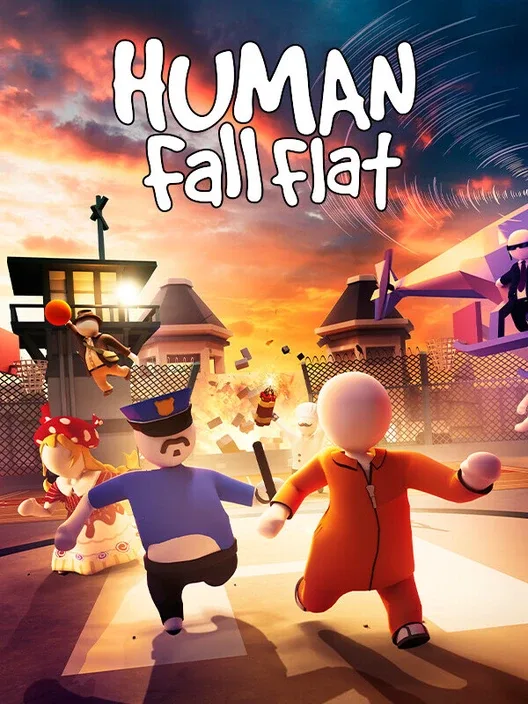
No Brakes Games' 2016 physics-comedy platformer puts players in control of a wobbly, ragdoll-limbed human named Bob, and the entire challenge comes from the deliberately loose, momentum-heavy physics controlling each limb independently rather than a tight, responsive platformer moveset — climbing a ladder or carrying a plank becomes a genuine minor puzzle in itself because Bob's grip and balance are never fully reliable. Levels are built as open-ended physics sandboxes with multiple valid solutions to each obstacle, so two players can clear the same level using completely different improvised methods, from building a makeshift ramp out of loose crates to simply flinging themselves across a gap and hoping the ragdoll physics cooperate. Online and local co-op, supporting several players moving through the same level simultaneously, turns cooperative problem-solving into slapstick comedy almost by accident, since coordinating multiple wobbly-limbed characters rarely goes as planned. Full character customization, unlocked through in-level collectibles, gives the comedic tone a persistent, silly visual layer across every level. The honest drawback: the deliberately imprecise controls that generate the game's comedy also make any genuinely precision-demanding platforming section frustrating rather than funny, and the lack of any real fail state or consequence means the challenge is almost entirely self-imposed.
20. Pseudoregalia#
Solo developer rittzler's 2023 3D Metroidvania began life as a first-place entry in the Metroidvania Month 19 game jam before its full Steam release on July 28, 2023, and it builds its entire design around fluid, momentum-chaining 3D movement — wall-kicking, sliding, and a slide-into-jump chain that lets a skilled player traverse most of the map far faster than the intended route once the movement tech is internalized. The low-poly, PS1-inspired visual style is a direct aesthetic and technical choice that keeps environments legible during fast, disorienting movement sequences, letting the tight scope (a roughly four-to-six-hour campaign) focus almost entirely on movement tech rather than padding with combat or crafting systems. Combat exists but stays intentionally secondary to exploration, with the map's real challenge coming from reading vertical terrain and chaining abilities rather than fighting through enemy gauntlets. The game's dreamlike setting, a collapsing castle the protagonist Sybil navigates while trying to escape a recurring nightmare, gives the abstract level layout a loose narrative frame without ever leaning on dialogue to carry it. The honest drawback: the movement-first design means the small amount of combat in the game feels genuinely underdeveloped by comparison, and the game's brevity, while tightly focused, leaves several late-unlocked movement abilities with comparatively little map left to actually use them in.
21. Getting Over It with Bennett Foddy#
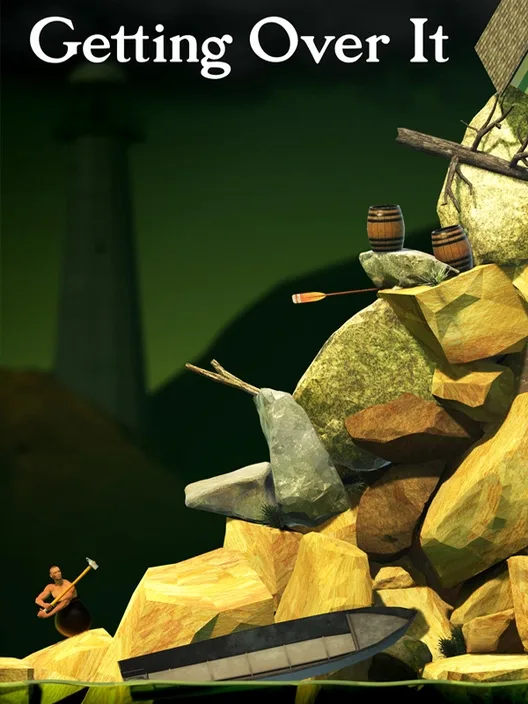
Bennett Foddy's 2017 game strips platforming down to a single, brutally unforgiving mechanic: a man named Diogenes, sitting in a cauldron, must climb an entire mountain of junk using nothing but a sledgehammer swung and planted with mouse movement, with no jump button and no way to recover lost progress except falling all the way back down. The physics-based hammer control, requiring the player to learn precise arcs and plant points through pure trial and error, makes every section of the climb a genuinely new problem rather than a repeatable pattern, since a single mistimed swing can send hours of progress sliding back to the bottom. Foddy's own continuous narrated commentary, mixing philosophy, game-design theory, and dry acknowledgment of the player's mounting frustration, turns the game's cruelty into something closer to a shared conversation about failure than a silent punishment. The complete absence of checkpoints or difficulty options is the entire point rather than an oversight — the game is explicitly built to be uncompromising about the cost of failure at every stage of the climb. The honest drawback: the total lack of any progress-saving mechanism means a single late-game mistake can genuinely erase an hour or more of careful climbing, and that design choice, while thematically deliberate, is a legitimate and severe barrier for players who don't find the resulting frustration cathartic.
22. Shovel Knight#
Yacht Club Games' 2014 debut, funded through a successful Kickstarter campaign by former WayForward developers, built an 8-bit-styled platformer around the Shovel Blade, a weapon that digs, attacks, and — crucially — pogo-bounces off enemies and certain terrain to reach otherwise unreachable heights, turning a simple gardening tool into the game's core traversal mechanic alongside its combat use. The relic system, unlockable secondary items purchased from a traveling merchant, adds situational tools (an anchor for a downward strike, a phase-locket for temporary invincibility) that expand the moveset without complicating the tight, responsive core controls. Boss fights against the Order of No Quarter, each with a distinct gimmick tied to their name and theme, are staged as discrete, memorable set pieces in the classic NES tradition the game deliberately evokes. The overworld map, styled directly after Super Mario Bros. 3's, gives level selection its own sense of place rather than a simple menu list. The honest drawback: the game's deliberate homage to 8-bit design conventions means some of its difficulty and checkpoint spacing reflects older, harsher genre norms that modern players accustomed to more generous checkpointing may find needlessly punishing in a few specific stages.
23. Rayman Legends#
Ubisoft Montpellier's 2013 platformer expands on Rayman Origins' hand-animated art style while adding Murfy, a companion character who can cut ropes, twist gears, and tickle enemies via touch-screen or a second player's direct control, turning several levels into genuine two-player asymmetric puzzles rather than simple co-op combat. The rhythm-based Musical levels, where the entire stage's platforming obstacles are timed to a licensed or original track, are the game's standout sequences, turning precision jumps into something closer to a rhythm game synced to the music rather than standard reflex platforming. Up to four-player local co-op lets additional players join as Rayman's series regulars, with the increased chaos of multiple characters on screen becoming part of the challenge rather than undermining it. The Invasion levels, short time-attack challenges built around a single mechanic pushed to its limit, give the game a genuine speedrunning layer beyond the main campaign. The honest drawback: the Murfy-controlled sections, while inventive, can feel like a tonal detour from the fluid, character-controlled platforming that defines the rest of the game, and the touch-based Murfy controls on non-touchscreen versions are noticeably less precise than on the platforms built for them.
24. Spelunky 2#
Mossmouth and BlitWorks' 2020 sequel to the genre-defining original keeps its predecessor's core loop — jump, whip, throw a bomb, toss a rope — largely unchanged while layering in improved liquid physics, letting water and lava move and pour in ways that create emergent platforming hazards no static level design could script directly. Procedurally generated levels combined with permadeath mean no run is repeatable, and the item and creature interactions, deliberately unpredictable and occasionally chaotic, produce the kind of emergent stories (a thrown idol triggering a boulder trap that kills a shopkeeper who then drops loot into a lava pool) the genre is specifically known for. Local and online co-op for up to four players adds a genuinely different risk calculus to the same unforgiving levels, since a teammate's mistake can now doom a run that a solo player might have survived. Shortcuts between areas, new to this sequel, let experienced players skip early levels once they've proven they can survive without the items found there, changing the risk-reward calculus of a fresh run. The honest drawback: the game's difficulty is unforgivingly steep even by roguelike-platformer standards, and the sheer density of interacting systems means newer players can die to combinations of hazards that are genuinely difficult to have anticipated on a first encounter.
25. Bomb Rush Cyberfunk#
Team Reptile's 2023 graffiti-and-skating platformer, released August 18, 2023, sends a crew of taggers across a stylized future city using inline skates, skateboards, and BMX bikes, each with distinct trick animations and momentum handling, turning traversal itself into the game's central skill expression rather than a means of getting between objectives. The core loop ties movement directly to the game's REP system: spraying graffiti in new spots earns REP for the crew, which unlocks challenges against rival gangs, while doing so raises a heat meter that eventually sends police after the player, forcing a genuine risk calculation about how much tagging to do before retreating. Trick-chaining across rails, walls, and gaps between the three vehicle types rewards fluidly switching movement style mid-run rather than committing to one traversal method for an entire level. The cel-shaded, funk-and-hip-hop-scored presentation gives the whole game a distinct visual and audio identity clearly in conversation with, though mechanically distinct from, the Jet Set Radio games that inspired it. The honest drawback: the police-chase heat system can feel like an unwelcome interruption to the flow-state trick-chaining that's the game's real appeal, particularly in the more open later districts where evasion takes noticeably longer than the tagging itself.
26. Super Meat Boy#
Team Meat's 2010 precision platformer follows a skinless cube of meat rescuing his bandage-wrapped girlfriend across hundreds of levels, and the design philosophy is brutal efficiency: individual levels rarely take more than 30 seconds to complete, but demand pixel-perfect jumps and wall-clings against buzzsaws, salt, and other instant-death hazards, so mastery comes from rapid, near-instant retries rather than long, cautious runs. The wall-cling and wall-jump system gives Meat Boy's moveset real depth beneath its simple jump-and-run surface, letting skilled players chain momentum through sections that look, on paper, like sheer walls of hazards. Dark World variants of every main level, unlocked as harder alternate versions, effectively double the game's content for players who've mastered the standard difficulty. The unlockable roster of guest characters, including Braid's Tim and the Bit.Trip series' Commander Video, each bring a distinct movement quirk that changes how familiar levels have to be approached. The honest drawback: the extreme, unforgiving difficulty and total reliance on instant, high-frequency deaths is a genuine access barrier, and the level design's total lack of mid-level checkpoints means even a near-perfect run can be undone by a single late mistake.
27. Webbed#
Sbug Games' 2021 physics-platformer, released September 9, 2021, casts the player as a peacock spider rescuing her kidnapped boyfriend, and the entire moveset is built around web-slinging traversal — spinning silk to swing between trees, bridge gaps by stringing webs across them, or hoist and reposition objects that block a path — rather than a traditional jump-focused control scheme. The physics-driven swing mechanics reward reading momentum and timing releases correctly, closer in feel to a rope-swing platformer than a standard run-and-jump game, and the frequent checkpointing keeps the learning curve on that swing-timing forgiving rather than punishing. Small optional side-quests scattered through each area, collecting ant larvae, pollen, or baby spiders for other bug characters, give the otherwise linear rescue plot some light exploration incentive without padding the main path. The peacock spider's own real-world courtship dance, referenced directly in the game's presentation, gives the whole game a specific, distinctly non-generic visual identity most indie platformers don't reach for. The honest drawback: the side-quest content is fairly thin and mostly cosmetic in its rewards, and the swing-based traversal, while satisfying once learned, has a noticeably awkward early learning curve that can make the opening hour feel clumsier than the rest of the game.
28. BattleBlock Theater#
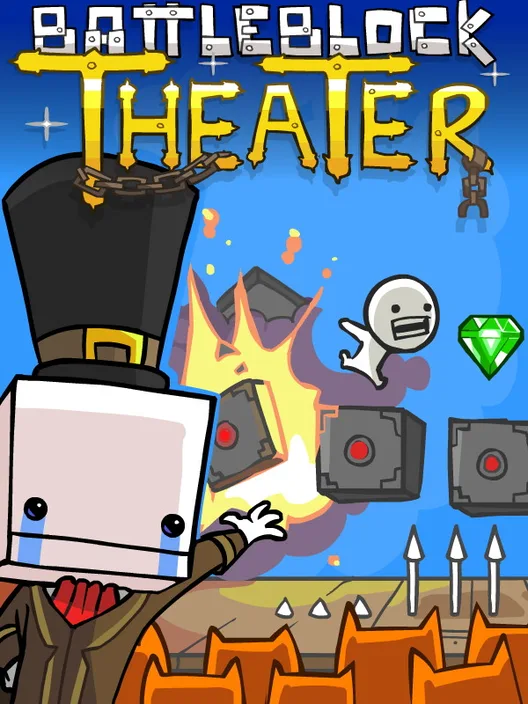
The Behemoth's 2013 co-op platformer frames its entire campaign as a stage play performed by imprisoned cats, and the core mechanics — running, jumping, and a punch-based attack — stay deliberately simple so the escalating complexity of its block-based level design can carry the difficulty instead. Static, interactive, and automated block types (lava blocks, moveable blocks, fan blocks, trigger-linked bridges and lasers) are introduced one at a time in isolated teaching sections before being combined into increasingly elaborate puzzle-platforming gauntlets. Local and online co-op for up to four players changes level design meaningfully rather than just adding bodies: several puzzles require one player to stand on a switch while another crosses a gap, and the game's arena minigames turn cooperative puzzle-solving into competitive party-game chaos between levels. The Behemoth's trademark humor, delivered through narrated commentary and the game's absurd, felt-and-cardboard-style visual presentation, keeps the tone light even as the block puzzles grow genuinely demanding. The honest drawback: the later story levels lean on a level of precise, cooperative timing that becomes considerably harder with an uncoordinated group, and playing solo strips out much of what the co-op-focused level design was actually built around.
29. Babbdi#
Brothers Sirius and Léonard Lemaitre's 2022 freeware exploration-platformer, released December 22, 2022, drops the player into the fictional, brutalist-architecture city of Babbdi with almost no explicit direction, and the entire design rewards vertical exploration: items found scattered through the city — a baseball bat, a pickaxe, a motorcycle — each unlock new movement options that open previously inaccessible rooftops and alleys, functioning as Metroidvania-style traversal keys inside an open, walkable city rather than a linear level structure. The parkour-driven platforming, built around scaling the city's dense concrete geometry rather than jumping between discrete platforms, gives movement a freeform, improvisational feel closer to an urban traversal sandbox than a structured platformer. Being entirely free and built by two developers, the game's scope stays tightly focused on the single mechanical idea of finding and combining mobility items rather than layering in combat, crafting, or a lengthy story. The brutalist visual identity itself, unusual for the genre, gives the city's dense verticality a specific and consistent aesthetic logic that reinforces why so much of the design is built around climbing it. The honest drawback: the game offers almost no explicit guidance about where new items or paths might be, which can leave players wandering without clear direction, and its short runtime and minimal narrative framing mean the experience is closer to a focused mechanical demo than a full-length adventure.
30. Brawlhalla#
Blue Mammoth Games' 2017 free-to-play platform fighter belongs to the same lineage as Super Smash Bros., building its entire combat system around knocking opponents off a stage rather than depleting a health bar, and its platforming identity comes from the same double-jump, dodge, and ledge-recovery tech that any stage-based platform fighter demands of its cast. Weapon-based combat, where each of the game's large roster of Legends can wield up to two of the game's dozen-plus weapon types with entirely different movesets, adds build-style variety on top of the base platform-fighting framework, so switching weapons mid-match changes both offense and recovery options simultaneously. Cross-platform play across essentially every major platform, combined with the game's fully free-to-play model with no pay-to-win mechanics, has made it one of the most broadly accessible platform fighters on the market regardless of what device a player owns. Ranked and casual online modes, alongside a robust local-and-online crossover for couch play, keep the game's competitive and casual audiences both genuinely served rather than one being an afterthought. The honest drawback: the free-to-play economy leans heavily on cosmetic and crossover-character purchases that can feel aggressively monetized over time, and the platform-fighter genre's inherent learning curve around edge-guarding and recovery tech is steep enough that new players face a rough on-ramp against experienced opponents in any open online match.
The ranking above blends IGDB's aggregate critic and user rating with Steam's own user review percentage, curated for genuine breadth rather than sorted purely by raw percentage — a methodology chosen specifically so the list reflects both the platformers most people have actually played and the smaller titles that earned their spot on merit alone. Nothing here was ranked by name recognition on its own, but nothing was excluded for having it either. Treat this as a living snapshot of the best platformers worth playing right now, not a fixed, permanent verdict — it will shift as more people rate these games and as new releases earn enough reviews to be scored fairly.