A war story the Jedi never show up for#
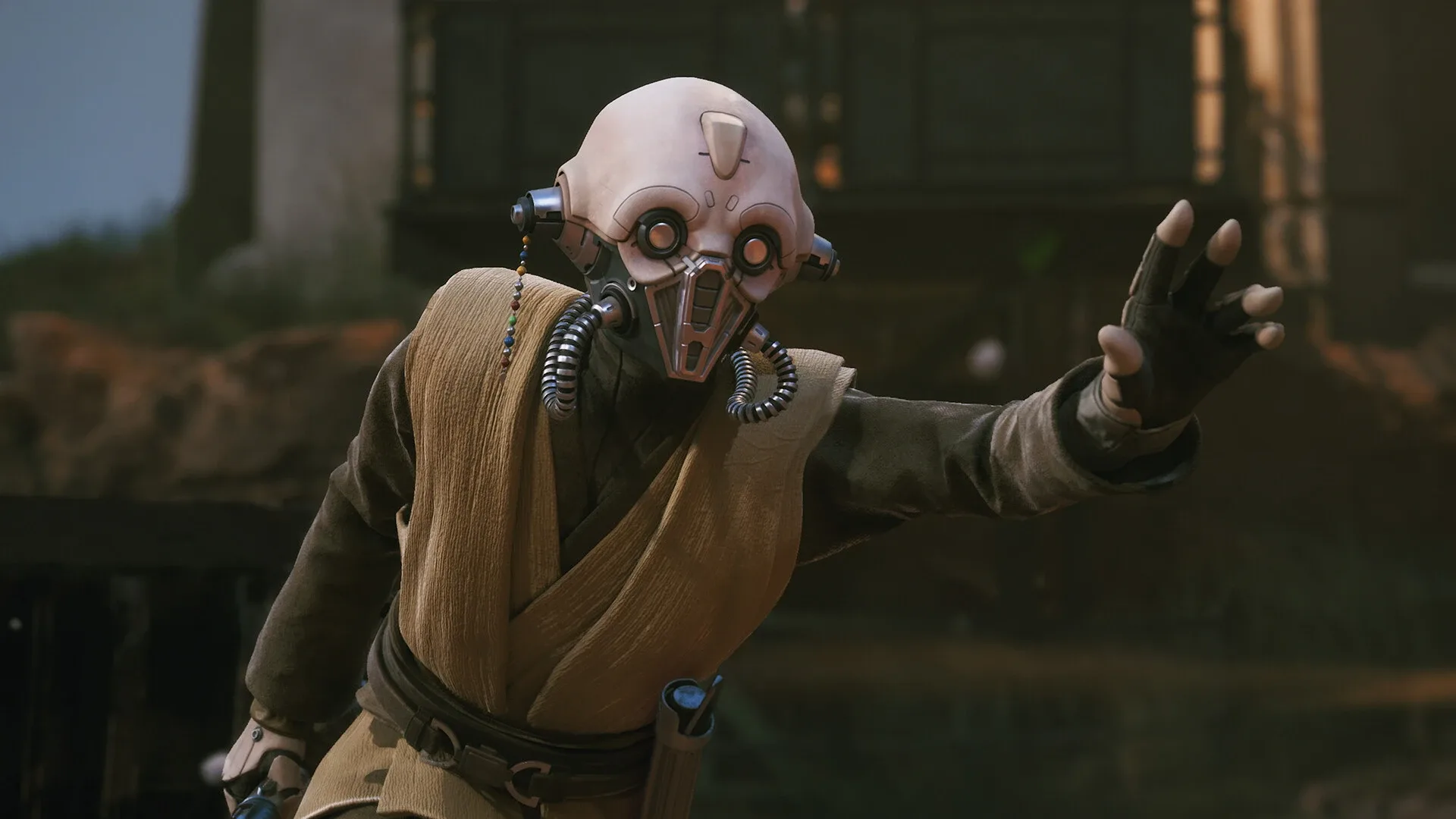
Star Wars Zero Company is a turn-based tactics game set during the Clone Wars, developed by Bit Reactor in collaboration with Respawn Entertainment and published by Electronic Arts. It released on 27 August 2026 for PlayStation 5, Xbox Series X|S and PC. Its premise sidesteps the franchise's usual center of gravity entirely: no lightsabers on the player's roster, no Jedi Council scenes, no Chosen One. Instead it hands you Tesh Hawks, a disgraced Republic captain, and Zero Company, a mercenary outfit built from the wreckage of a destroyed clone unit, and asks you to hold a turn-based battlefield against a cult that is trying to infect the galaxy with a living parasite. It is a smaller, stranger story than the marketing suggests, and it is stronger for it.
What makes Zero Company different#
The one idea the whole game is built on is that this squad is a unit first and a collection of classes second. Hawks and the clone trooper Trick are the only survivors of the 100th Clone Company, wiped out at the disastrous Battle of Antine in an operation Hawks was blamed for and dishonorably discharged over. Zero Company, the mercenary outfit Hawks assembles afterward, is named for the unit he lost, and that grief sits underneath every recruitment, every loss and every Dilemma the game throws at you. When Republic intelligence officer Jae Mordant pulls Hawks back into a Republic-adjacent operation to investigate the Infinite Coil, a paramilitary cult led by the Force-sensitive strategist Kundri Fathom, the game never pretends this is a clean redemption arc. Hawks works with the Republic that discarded him because the alternative is letting Fathom's Shadow Plague spread unchecked, and the tension between those two facts runs through the whole campaign.
That framing changes what the tactics layer is for. Where most turn-based tactics games treat their squad as interchangeable loadouts you optimize around, Zero Company treats every Operator, whether an Authored character with a full voice performance and a personal arc or a custom recruit you build from scratch, as someone whose relationships with the rest of the company matter as much as their stat sheet. You are not managing a roster. You are managing a company that remembers who saved whom.
Combat: action points, cover and a battlefield that keeps changing under you#
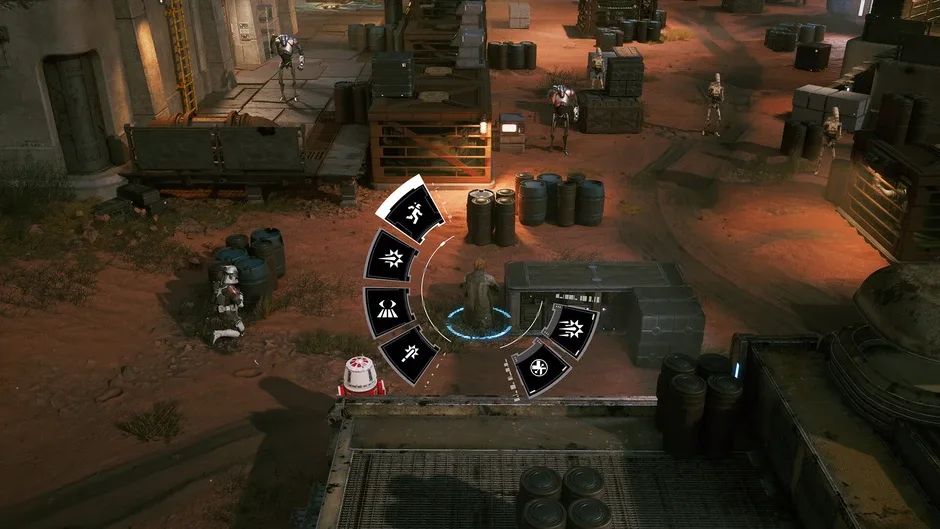
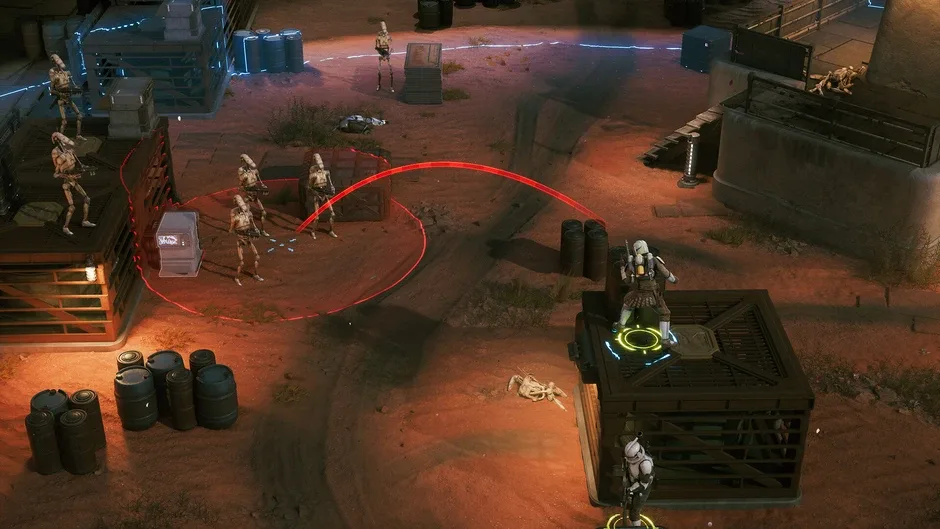
Combat runs on a three-Action-Point system per Operator per turn, spent on movement, attacks, abilities or holding a position in Overwatch, which lets an Operator spend an Action Point to guard a lane and fire automatically at the first enemy who crosses it. Positioning decides most engagements before a single shot is fired: cover reduces incoming damage significantly, but it is not a permanent shield, since sustained fire chips away at low walls and crates until an Operator who was safe at the start of a turn is exposed by the end of it. Advantage, granted by flanking an enemy or catching them out of cover, raises hit chance and damage enough that repositioning a Sharpshooter two tiles to the side is often a better use of an Action Point than firing immediately.
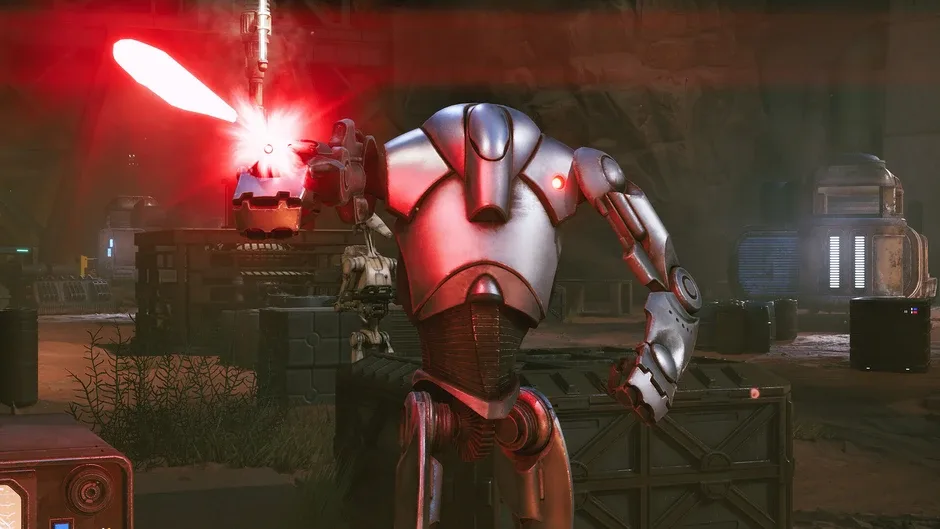
The genre's obvious point of reference is the modern XCOM template, and Zero Company does not try to hide the family resemblance. What it does instead of reinventing the loop is tighten it: three Action Points give enough room to move cautiously, reposition, and still fire, rather than forcing a binary choice between moving and shooting, and the result is a turn structure that rewards patience without ever feeling slow. A Heavy can push forward to draw fire and eat a hit that would otherwise have staggered a Sharpshooter. A Scout can dash into flanking position and still have the Action Points left to fire from it. The system is not a reinvention of turn-based tactics, and it does not pretend to be one, but the execution is precise enough that almost nothing about a given Tactical Mission feels like it is fighting the mechanics rather than the enemy.
Classes and Operators: Heavies, Sharpshooters and one very specific Jedi#
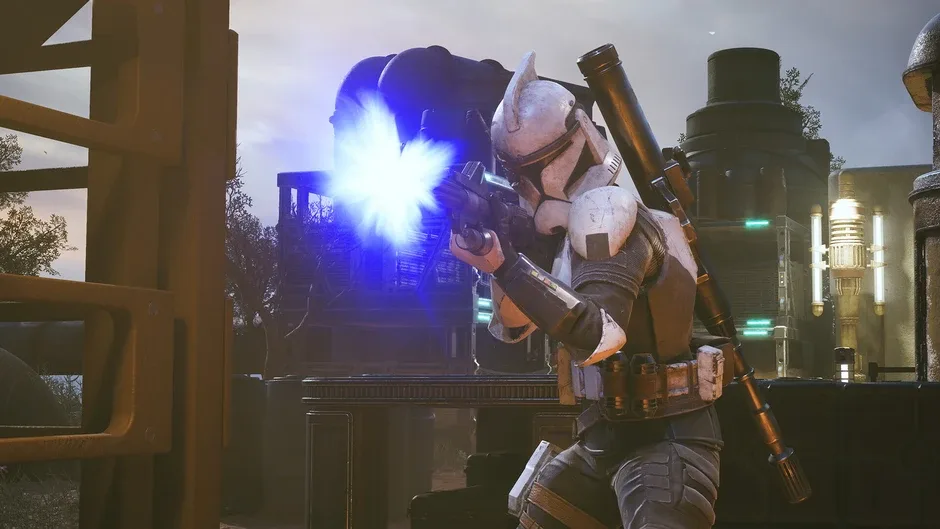
Zero Company's roster splits between Authored Operators, named characters with full voice acting, fixed appearances and their own personal story threads, and custom Operators you build yourself. Authored Operators include Hawks, Trick, the Umbaran sharpshooter Luco Bronc, the quartermaster and eventual field operative Runa Blask, the wordsmith Kabb "Kab" Uppercut, the intelligence officer Jae Mordant, the droid M-3VO, and several others who join across the campaign. Custom Operators, by contrast, let you choose species, gender, appearance, outfit, a Talent, a primary class specialization and a weapon type, and every one of those choices, aside from the class archetypes themselves, remains adjustable after recruitment.
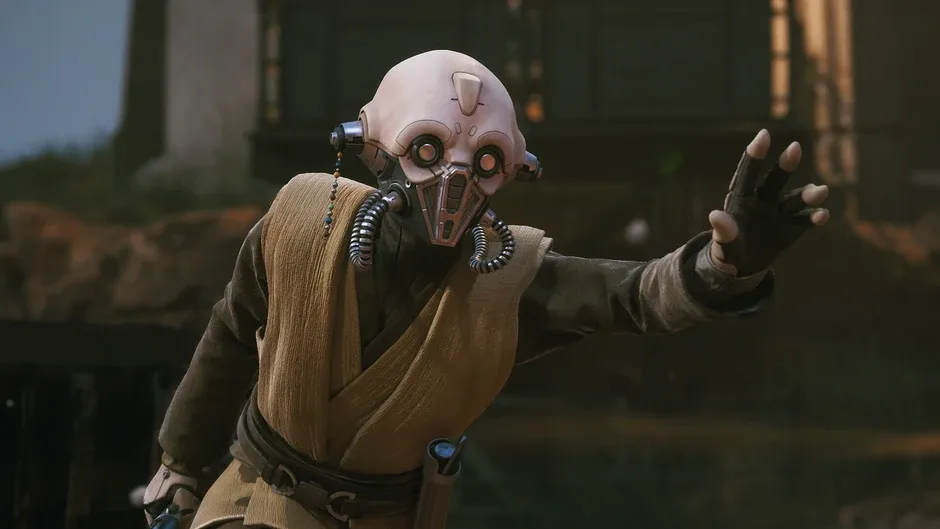
The class archetypes on offer, Heavy, Sharpshooter, Scout and a support-focused Medic role among them, cover the expected turn-based tactics roles without much surprise: Heavies tank and control space, Sharpshooters punish anyone caught in the open, Scouts flank and scout ahead, Medics keep a squad standing through a long engagement. The one deliberate exception is the game's single Jedi Operator, whose class cannot be reassigned and whose lightsaber-and-Force kit is locked to that one Authored character rather than opened up to the whole roster. It is a small design choice with an outsized effect: it keeps the game's tactical identity grounded in blaster fire and cover rather than letting a lightsaber trivialize every encounter, and it makes the one Jedi mission arc feel like an event rather than a permanent toolkit upgrade.
The roster itself grows over the course of the campaign, starting capped at seven Operators and expanding to a maximum of twenty through Den upgrades, story beats and Authored Operators joining Zero Company as the plot moves forward. That growth curve matters more than it sounds like it should, because it is the mechanism through which the game paces its own difficulty and its own emotional stakes at the same time.
The Bond system: chemistry as a combat stat#
The single mechanic most responsible for Zero Company feeling different from its genre peers is Bonds. Every pair of Operators in the company has a relationship that starts neutral, or in a few deliberately chosen cases actively negative, such as the friction between Luco Bronc and Trick, an Umbaran sharpshooter who does not trust the clone trooper he is forced to fight alongside. Fighting together in Tactical Missions and completing Operations on the galaxy map raises a pair's Bond level, and each time a Bond advances, both Operators unlock Cross Training: a permanent combat bonus chosen from a small randomly drawn set of options that applies to both members of the pair for the rest of the campaign. A Heavy and a Medic who fight side by side often enough might unlock a bonus that lets the Medic heal for more when standing near their partner, or a Sharpshooter and a Scout might gain a shared damage bonus when one flanks after the other spots an enemy.
What keeps this from being a background stat is that Bonds are not one-directional. Hawks periodically faces Dilemmas, story-driven decisions where every Operator in the company weighs in with their own perspective before Hawks chooses a course of action, and the choice can raise or lower Bond levels depending on who agreed with it and who did not. A Dilemma answered against a particular Operator's values can sour a Bond that took a dozen missions to build, and in a handful of the game's more serious Dilemmas, the wrong call can drive an Operator to leave Zero Company permanently. The result is a squad-management layer that feels genuinely reactive rather than decorative: pairing Runa Blask and Kab Uppercut on a mission is not just a loadout decision, it is an investment in a relationship the story can reward or punish.
The Den: a base that grows with the company#
Between Tactical Missions, the Den serves as Zero Company's headquarters, and it is where the campaign's slower, more strategic layer lives. Recruitment happens here, custom Operators are built and adjusted here, gear upgrades are purchased and assigned here, and injured Operators recover here rather than simply sitting out a single mission. The Den's upgrade track is what unlocks the roster cap increases that let the company grow from seven to twenty Operators, which means base management is not a cosmetic loop between missions but a direct lever on how deep a bench you can field by the campaign's harder late-game engagements.
Injuries carry real weight in this loop. An Operator who is knocked to zero health during a Tactical Mission is Downed rather than immediately lost, and an ally can spend an Action Point to Rally them back into the fight, but a Downed Operator picks up a new Injury regardless of whether they are rescued. Each Injury an Operator is carrying reduces their chance to hit by ten percent, which turns an Operator's injury count into a running cost that has to be managed through the Den's recovery time rather than ignored. On standard difficulty, a third Injury means permanent death rather than a trip to the infirmary, which is what gives even a routine Tactical Mission a low hum of tension once an Operator is carrying two.
Difficulty and permadeath: four ladders and one hardcore mode#
Zero Company ships with four difficulty tiers, Story, Normal, Hard and Expert, each adjusting enemy aggression, damage and the number of saves available mid-mission. Permadeath is switched on by default across every tier above Story but can be turned off entirely for players who want the tactical puzzle without the loss aversion, which is a meaningfully more flexible approach than forcing one philosophy on every player. Sitting above all four tiers is Beskar Mode, an optional hardcore setting that removes save-reloading entirely, so a bad turn cannot simply be undone by reloading a checkpoint. It is not a mode built for a first playthrough, but its existence signals how seriously the game takes its own permadeath stakes: it is willing to let the most committed players remove their own safety net.
The four-tier ladder does real work in practice. Story difficulty strips away enough of the punishment that players who want Hawks's arc and the Bond system without a steep tactical learning curve can get through the campaign comfortably, while Expert difficulty, particularly once Kundri Fathom's Infinite Coil forces start deploying infected troops with the Shadow Plague's parasite abilities in the campaign's second half, asks for genuine mastery of Overwatch positioning and Advantage stacking to avoid losing Operators outright.
Story and villain: a plague instead of a lightsaber#
Kundri Fathom is one of the more unusual antagonists the Star Wars strategy genre has produced. She is Force-sensitive but not a Sith or a Jedi in any recognizable sense: a charismatic strategist who has built the Infinite Coil around a biological weapon, the Shadow Plague, spread through parasitic Messenger arthropods that establish a forced Force-bond between Fathom and anyone infected, letting her communicate with and gradually brainwash her victims into her survivalist ideology. Fathom operates in loose coordination with the Confederacy of Independent Systems without being subordinate to it, which keeps the Confederacy's droid armies as a recurring tactical threat without making them the central story engine. The result is a Clone Wars story that treats the era's better-known factional war as background noise to a more intimate, more disturbing threat: an ideology that spreads person to person rather than army to army.
The writing keeps its scope narrow in the way the best turn-based tactics campaigns do, resisting the temptation to turn every mission into a galaxy-scale set piece. Hawks's guilt over Antine, Trick's complicated loyalty to a Republic that treated his brothers as disposable, and Runa Blask's abrasive, unsentimental competence as the company's quartermaster carry more of the campaign's weight than any single confrontation with Fathom does. That focus occasionally means the plot's bigger swings, particularly around the true scale of the Shadow Plague, land with less force than the character writing surrounding them, but it never derails the momentum of a campaign that is more interested in what this specific company survives together than in redefining the Clone Wars.
Mission structure: Cycles, Operations and the Tactical Missions that end them#
The campaign is organized into Cycles rather than a single continuous map. In each Cycle, Hawks spends Intel on Operations at the galaxy map, which resolve as smaller strategic choices and rewards, manages the Den, and then selects one Tactical Mission that closes out the Cycle and advances the story. Story-critical Tactical Missions are sometimes preceded by a short third-person infiltration segment, a scouting or stealth sequence that sets up the battlefield before the turn-based engagement proper begins, which gives a handful of missions a different rhythm from the standard drop-in skirmish. The structure keeps the 30-to-40-hour campaign feeling deliberately paced rather than sprawling, since every Cycle has a clear beginning and end, but it is also a firmly linear structure with no New Game Plus, so a completed campaign has little reason to be revisited beyond replaying individual missions for a higher difficulty run.
The one recurring weakness in that structure shows up in the campaign's back third. Enemy variety, generous in the campaign's first half as Confederacy droids, Coil cultists and eventually infected Shadow Plague carriers are introduced in sequence, thins out well before the story runs out of missions, and several late Tactical Missions lean on reskinned or reweighted versions of enemies the player has already learned to counter rather than introducing new threats to match the growing power of a twenty-Operator roster. It is a real shortfall in a campaign this long, though it is one the Bond system and the Den's recruitment options partly compensate for by keeping the player's own toolkit evolving even when the enemy roster stalls.
Worth the money?#
Star Wars Zero Company costs $49.99 for the standard edition on PC and $59.99 on PlayStation 5 and Xbox Series X|S, with a Digital Deluxe Edition at $59.99 on PC and $69.99 on console that adds three cosmetic bundles and no additional missions. For a 30-to-40-hour linear campaign with a genre-standard $49.99 to $59.99 entry price, that is a reasonable ratio, particularly since the Bond system and Den progression give most of that runtime a real sense of forward motion rather than padding.
Best platform: PC and PlayStation 5 are the safe choices, with Xbox Series X|S performing comparably. The game is not Deck Verified, and Steam Deck and other handhelds run it poorly, with framerates hovering in the 20s to low 30s on low settings and frequent dips below 20 frames per second in busier Tactical Missions; anyone planning to play primarily on a handheld should expect a compromised experience and consider a desktop or console instead. There is no PlayStation 4 or Xbox One version. Voice acting is fully performed in English, including two distinct performances of Hawks depending on the gender chosen for the character, one played closer to a wry outlaw and the other closer to a by-the-book field officer.
Play this instead if …#
Shorter: Gears Tactics delivers a similar cover-and-Action-Point loop in a tighter, more linear campaign for players who want the XCOM-adjacent structure without a 30-to-40-hour commitment.
Easier: Mario + Rabbids: Sparks of Hope softens the same genre's permadeath tension into a friendlier, more forgiving turn-based tactics experience with a comparable emphasis on squad chemistry.
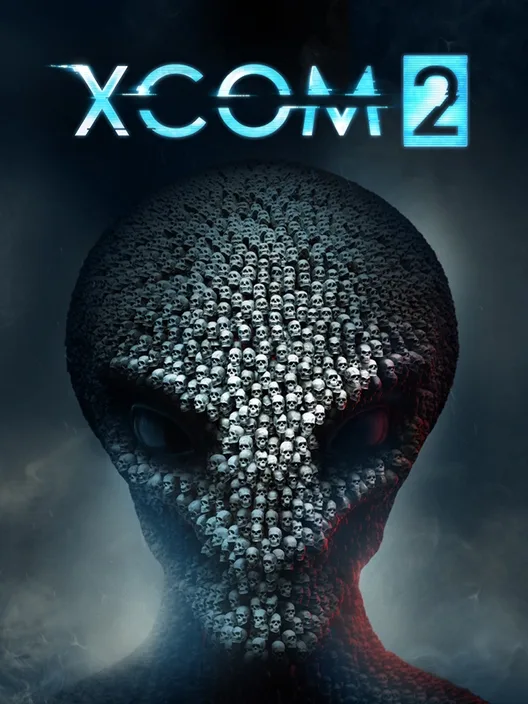
Cheaper or with more replayability: XCOM 2 is frequently discounted well below Zero Company's price and offers procedurally varied maps and a New Game Plus-style replay loop that this campaign's fixed, linear Cycles do not.
Frequently asked questions#
How long is Star Wars Zero Company? The main campaign runs roughly 30 to 40 hours, structured as a linear sequence of Cycles with no New Game Plus.
Is there a Jedi you can play as? Yes, one Authored Operator is a Jedi with a fixed lightsaber-and-Force kit, but the class cannot be reassigned to other Operators, and the rest of the roster fights with blasters and gear rather than the Force.
Does it have co-op or multiplayer? No. Zero Company is a single-player campaign from start to finish, with no cooperative or competitive modes.
Is there permadeath, and can it be turned off? Permadeath is on by default above Story difficulty, with an Operator dying permanently after a third Injury, but it can be disabled entirely for players who want the tactics without the loss risk. Beskar Mode, an optional hardcore setting, removes save-reloading for players who want the opposite.
Do you need to know the Clone Wars era or earlier Star Wars games to follow the story? No. Zero Company introduces its own cast, its own villain in Kundri Fathom, and its own conflict around the Infinite Coil and the Shadow Plague, and it explains the Clone Wars-era backdrop as it goes.
Is it playable on Steam Deck or other handhelds? Technically yes, but not comfortably. The game is not Deck Verified, and performance on handhelds is poor enough at launch that it should be avoided in favor of PC or console.
The GameAvant verdict#
Star Wars Zero Company earns its place among the better turn-based tactics games of the last several years by doing the fundamentals with real precision rather than by reinventing them: the three-Action-Point combat is tight, the cover and Advantage systems reward patience without punishing aggression, and the Bond system turns squad chemistry into a mechanic worth building a strategy around rather than a footnote in a character bio. What keeps it from the very top tier is a campaign long enough that its enemy roster runs out of new ideas before the story does, and a design that, for all its polish, rarely takes a genuine risk on the genre template it inherited. Neither flaw undoes what the game gets right: Tesh Hawks, Runa Blask, Luco Bronc and the rest of Zero Company are a better-written ensemble than this genre usually bothers with, and Kundri Fathom's Shadow Plague is a stranger, more effective villain concept than another lightsaber duel would have been. Play it on PC or console, expect the back third to lean on familiar enemies, and expect to remember the company more than any single mission.
9 out of 10 – a precisely built tactics game with a Star Wars story that finally trusts mercenaries and clones to carry it alone.