 Terraria
 Rust
Rust The Forest
 Valheim
 Palworld
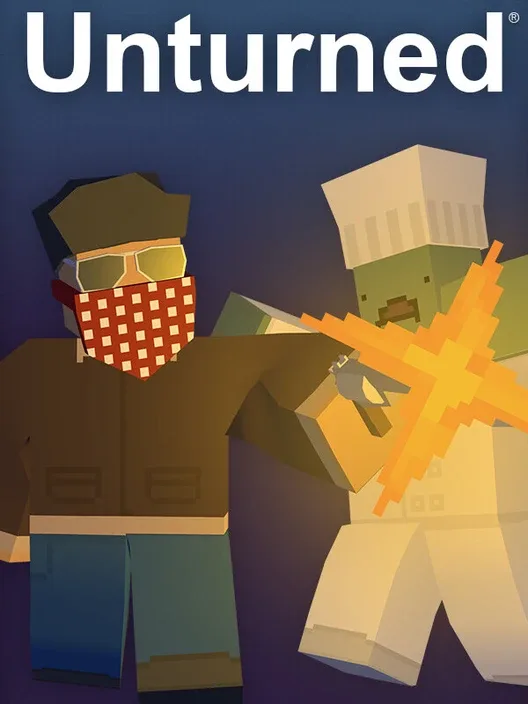 Unturned
This is Game Avant's own ranked list of the best survival games right now, built from the site's combined rating data rather than picked by hand. "Survival" on this page covers a wide range of play, because the genre itself does: wilderness survival against hunger, cold, and injury; base-building survival where a shelter grows into a fortress over dozens of hours; multiplayer PvP survival where other players are the real threat; and colony survival where the "character" being kept alive is a whole settlement rather than one body. A game only needed a credible claim on at least one of those pillars — real resource management, real consequence for failure, real systems for staying alive — to be considered here, not a passing crafting menu bolted onto an otherwise different genre.
The order below comes from blending IGDB's aggregate critic score with Steam's own user review percentage, curated for genuine breadth rather than handed over to a raw percentage sort. A list built purely on rating percentage skews hard toward small, devoted-fanbase titles and can quietly drop the games that actually defined the genre for most players, so this ranking deliberately mixes the massively-played backbone of survival gaming — the Minecrafts, the Rusts, the Valheims people have put thousands of hours into — with smaller, critically excellent titles that never had the marketing budget to match their quality. Read the write-ups below for what each of these games actually does and where it genuinely falls short, whether the goal is the best survival crafting games, the best multiplayer survival games, or the best base-building survival games worth playing right now.
1. Minecraft#
Mojang Studios' voxel sandbox, created by Markus "Notch" Persson and now owned by Microsoft, remains the reference point the entire genre gets measured against even well over a decade after its 2011 full release. The day-night cycle is the game's core survival engine: hostile mobs like zombies and skeletons spawn in darkness, which turns something as simple as building a torch-lit shelter before sunset into the first real decision every new player has to make. The Nether dimension, reached through obsidian portals, reframes the entire game once unlocked, trading the overworld's relatively gentle pacing for a hostile realm whose resources are required to progress further, including toward the End dimension and its dragon fight. Redstone circuitry, a logic-gate system built from in-game blocks, lets players construct working calculators, automated farms, and elaborate contraptions entirely within the game's own rules, giving Minecraft a creative ceiling almost no other survival game attempts to match. The honest drawback: the combat system underpinning all of this has aged the least gracefully of the game's core loops, and swinging a sword at a Creeper feels close to unchanged from a decade ago despite everything built around it.
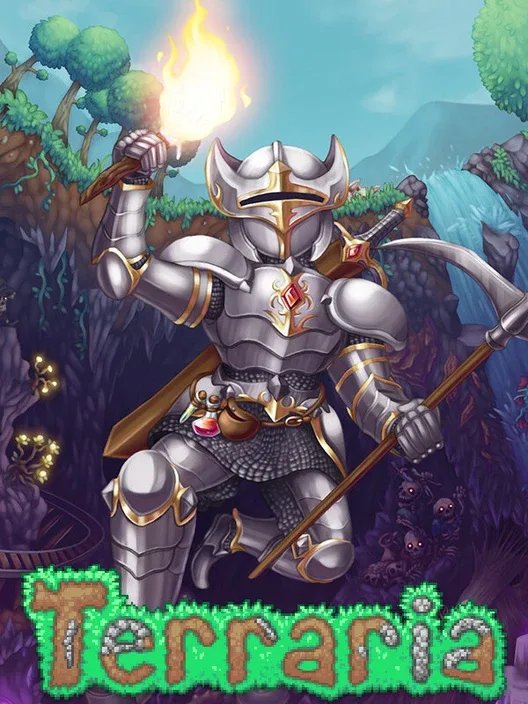
2. Terraria#
Re-Logic's 2D sandbox, largely the work of solo creator Andrew Spinks before the studio grew around it, turned Metroidvania-style progression into the backbone of a survival-crafting game upon its 2011 release, and the formula has only deepened across more than a decade of free content updates. Progression here is boss-gated rather than open-ended: defeating the Wall of Flesh permanently triggers Hardmode, reshaping the entire world's enemy difficulty and unlocking new ore tiers, which means the world itself evolves as a direct consequence of player skill rather than a timer. NPC housing, where defeating bosses and meeting conditions unlocks new vendors who need a valid room to move in, quietly turns base-building into an economic system rather than pure aesthetics. The corruption and crimson biomes, which spread across the map if left unchecked, add an active environmental threat that most sandbox-crafting games don't bother simulating. With well over twenty playable classes' worth of build variety by the endgame, few survival games on this list offer comparable replay depth. The honest drawback: without a wiki open in a second window, figuring out which boss unlocks which crafting material next is genuinely opaque to new players.
3. Valheim#
Iron Gate AB's Norse-mythology survival game, published by Coffee Stain and launched into early access in February 2021, became one of the fastest-selling early access titles ever on the strength of a simple structural idea: each of the game's boss trophies, once burned at a sacrificial altar, unlocks the next biome and the next tier of craftable metal. Longship construction and sailing turn ocean travel into its own survival challenge, since a storm can capsize a poorly-built vessel and scatter a hard-won cargo of ore across the seabed. The building system's structural integrity mechanic forces genuinely load-bearing architecture — a roof unsupported by enough beams will visibly sag and eventually collapse rather than floating in place. Stacking up to three separate food buffs at once, each governing a different pool of health and stamina, makes meal planning before a boss fight a real strategic decision rather than a formality. The honest drawback: ore famously cannot be moved through the game's portal network, which means every serious mining expedition ends in a slow, vulnerable boat haul back to base regardless of how convenient portals have made everything else.
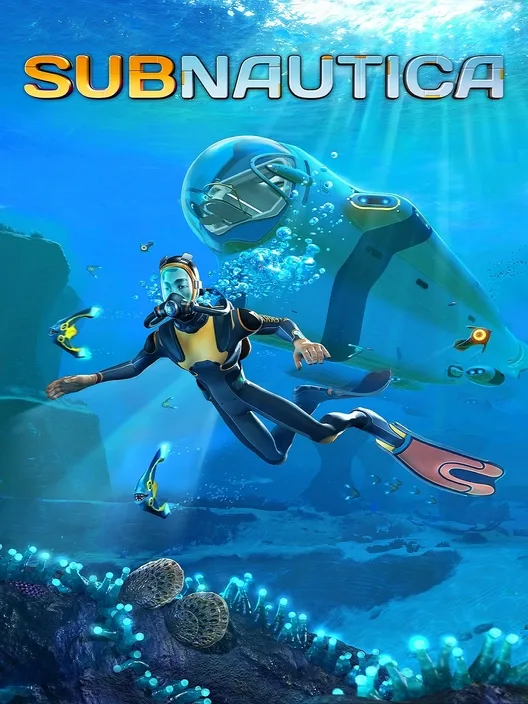
4. Subnautica#
Unknown Worlds Entertainment's underwater survival game, which left early access for a full 2018 release, builds its horror-adjacent tension almost entirely around sound and scale rather than combat, since the game gives players no real way to fight back against its largest predators. The Cyclops submarine, a slow, upgradeable mobile base capable of housing a full crew of systems, turns deep-sea expeditions into their own logistics puzzle distinct from the early-game's simple oxygen-tank dives. The PDA's blueprint-scanning system, which requires physically finding and scanning wreckage or creature fragments before a recipe becomes craftable, ties progression directly to exploration rather than a static tech tree. Reaper Leviathans, whose distorted roar can be heard echoing through open water long before the creature itself appears, do more to generate dread through pure sound design than most dedicated horror games manage with monster models. Modular base-building, letting players extend corridors and rooms directly onto an underwater frame piece by piece, gives long-term bases a genuinely personal, sprawling shape. The honest drawback: without meaningful offensive tools against the ocean's largest threats, several late-game encounters resolve into repetitive fleeing rather than tension resolved through player skill.
5. Rust#
Facepunch Studios' full-loot multiplayer survival game, which spent five years in early access before its 2018 full release, remains the genre's most uncompromising PvP experience: death means losing everything carried, and raiding another player's base with C4 or explosive ammunition is as central to the loop as gathering resources in the first place. Regular server wipes, typically monthly, reset the entire in-game economy and force every player back to square one on a fixed schedule, which keeps the early-game scramble for stone tools relevant to veterans and newcomers alike rather than becoming something only new players experience. The blueprint research table, which breaks down scavenged items to permanently unlock their crafting recipes, gives even a failed raid genuine long-term value beyond its immediate loot. Radiation zones scattered across the map, requiring hazmat protection to safely loot, add high-value areas that can't simply be avoided by cautious players hoping to skip risk entirely. The honest drawback: Rust's learning curve is notoriously hostile to newcomers, and the culture built around full-loot PvP raiding means a fresh player's first few hours are disproportionately likely to end at the hands of a well-armed veteran.
6. Ark: Survival Evolved#
Studio Wildcard's dinosaur-taming survival game, which reached full release in 2017 after roughly three years in early access, built its entire identity around one mechanic other survival games don't attempt at this scale: taming and riding more than 180 prehistoric and fantastical creatures, from a basic Raptor mount to a flying Argentavis capable of hauling cargo across the map. The imprinting system, layered onto creature breeding, requires actively caring for a newborn dinosaur at specific intervals to boost its adult stats, turning breeding from a passive waiting game into an ongoing commitment. Tribe-based base building lets groups of players pool resources and defenses into shared structures capable of housing dozens of tamed creatures at once. The Obelisk boss fights, which require assembling specific tamed creatures and gear loadouts before they're even accessible, give the game's endgame a genuine gear-check structure beyond simple exploration. The engram system gates crafting recipes behind character level and skill points, giving long-term progression real weight. The honest drawback: Ark launched with well-documented performance problems and bugs that took years of patches to fully address, and the game remains demanding on hardware even now.
7. The Forest#
Endnight Games' survival horror game, which moved from a 2014 early access launch to a full 2018 release, builds its tension around a mutant cannibal population organized into distinct family clans, each with its own territory and behavior patterns rather than a single generic enemy type spawning at random. The cave systems beneath the island, which require a handheld flare or other light source to navigate safely, hide some of the game's most dangerous mutant variants and its most valuable crafting materials in the same claustrophobic spaces. Building shelters from procedurally-assembled logs lets structures range from a simple lean-to to elaborate multi-story cabins, without locking players into prefabricated pieces. Crafting weapons from bones and scavenged materials, rather than pure metal tools, keeps the game's early arsenal grounded in what a stranded survivor could plausibly improvise. The story, following a father searching for his son after a plane crash, gives the exploration a narrative throughline most sandbox survival games skip entirely. The honest drawback: once a base's defenses are established, the cannibal AI can become predictable enough to exploit repeatedly, softening the tension that defined the game's early hours.
8. Don't Starve Together#
Klei Entertainment's multiplayer spinoff of the original Don't Starve, released in 2016, layers a sanity meter on top of the usual hunger and health bars, and losing sanity in the dark summons Shadow Creatures that punish players for letting the meter run out rather than simply displaying a status effect. The seasonal cycle — autumn sliding into a genuinely dangerous winter, then spring's flooding and giant threats, then summer's wildfire risk — means the survival priorities that worked a season ago can actively kill a player who doesn't adapt. Each of the game's many playable characters carries a distinct mechanical quirk: Wendy is followed by the ghost of her dead sister Abigail, Wickerbottom can craft books with powerful but risky effects, and Wolfgang's strength scales directly with how full his hunger meter is. Chester, a mobile storage creature that follows the player and can be fed a Shadow Chester Eye to unlock new forms, turns inventory management into an ongoing pet-care relationship rather than a static backpack. The honest drawback: permadeath in the game's default Wilderness mode means a single mistake late into a long, resource-rich run can erase dozens of hours of progress in seconds.
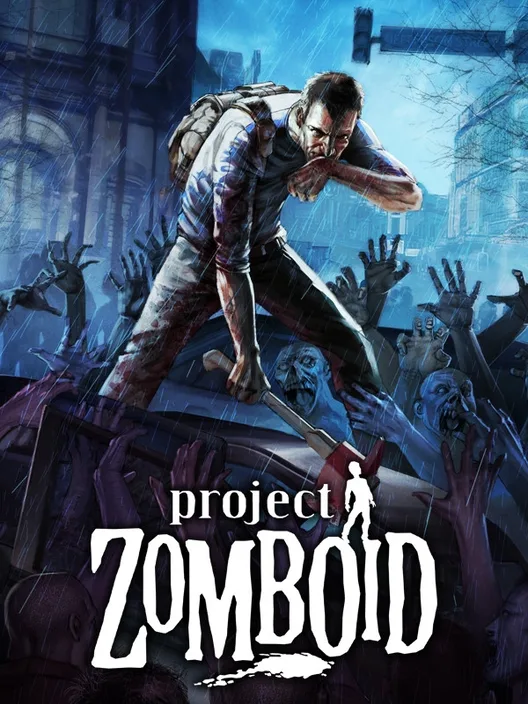
9. Project Zomboid#
The Indie Stone's isometric zombie survival game has spent more than a decade in early access, and its tagline — "this is how you died" — sets expectations honestly: permadeath is the default, and the entire design philosophy assumes every character's story ends badly. The trait and profession system, chosen at character creation, meaningfully changes which skills level fastest and which weaknesses a player has to plan around from the very first zombie encounter. Zombies here are drawn by sound rather than pure proximity, which means firing a gun to clear one threat can summon a horde from streets away, turning noise discipline into a genuine survival skill rather than a minor consideration. Vehicle mechanics, including maintenance, fuel, and the risk of alerting zombies with a car alarm, add a full logistics layer to a genre that often treats transportation as an afterthought. The "moodles" UI system, stacking icons for hunger, panic, boredom, and dozens of other states at once, keeps the sheer number of things that can quietly kill a survivor visible at all times. The honest drawback: despite continuing to receive major updates, the game remains officially in early access after well over a decade of development, and its difficulty curve is unusually steep for newcomers.
10. RimWorld#
Ludeon Studios' colony sim, largely designed by Tynan Sylvester and reaching its 1.0 release in 2018, replaces a fixed difficulty curve with an AI Storyteller — Cassandra, Randy, or Phoebe, each pacing raids, disasters, and windfalls differently — that actively authors a colony's story rather than following a script. Colonist mental breaks, triggered when mood drops too far from accumulated stress, can turn a single unhappy settler into an active threat to the rest of the colony, which means managing morale is as load-bearing as managing food or temperature. Every colonist carries a procedurally generated backstory and permadeath, so losing one to a raid or an infection carries real narrative weight rather than being a simple stat loss. The research tree gates increasingly advanced technology behind colonist time spent at a research bench, tying scientific progress directly to the colony's own labor economy. Raids scale dynamically with a colony's accumulated wealth, which means simply hoarding resources without building defenses to match is its own slow-building danger. The honest drawback: the interface is dense and unfriendly to newcomers, and much of the game's most useful information lives in tooltips and submenus a first-time player has no reason to know exist.
11. DayZ#
Bohemia Interactive's standalone survival shooter, which grew out of an Arma II mod before reaching full release in 2018, remains one of the genre's most punishing hardcore experiences: full-loot permadeath across a massive open map means every encounter with another player carries real stakes, since a single bad decision can erase hours of scavenging in seconds. The game's central loot economy dynamically tracks and limits item spawns across the map, which keeps high-value gear genuinely scarce rather than something every server eventually floods with. A disease and infection system, covering everything from food poisoning to more serious illnesses requiring specific medication, adds a survival layer beyond simple hunger and thirst management. Much of DayZ's reputation rests on emergent, player-driven stories — standoffs, betrayals, and unlikely alliances between strangers — that no scripted content could replicate. Vehicle repair, requiring specific parts scavenged and assembled correctly, gives long-term groups a genuine logistics project beyond day-to-day survival. The honest drawback: server desync and rubberbanding remain recurring technical complaints even years past full release, occasionally turning a fair gunfight into a frustrating coin flip.
12. 7 Days to Die#
The Fun Pimps' voxel-based zombie survival game spent over a decade in early access before reaching its 1.0 release in 2025, and its signature Blood Moon horde night — a scaling, increasingly dangerous zombie siege every seventh in-game day — remains the clearest structural deadline in the genre, forcing base defenses to be tested on a fixed schedule rather than whenever a player feels ready. The fully destructible voxel terrain lets players tunnel, reinforce, or collapse structures in ways few zombie games attempt, turning base design into genuine engineering rather than picking a prefab layout. A perk-based skill tree spread across attributes like strength and perception lets characters specialize meaningfully between combat, crafting, and scavenging playstyles. Specialized zombie types, particularly Screamers, actively attract more of the horde toward a noisy player, punishing carelessness with gunfire or power tools during the day just as much as at night. The honest drawback: the game's long history of performance and optimization complaints, while meaningfully improved by the 1.0 release, still shapes its reputation among players who remember its rougher early-access years.
13. Raft#
Redbeet Interactive's ocean survival game, which reached full release in 2022 after four years in early access, strips the genre down to a single expanding platform: players start on a small raft with nothing but a hook to snag floating debris, and every subsequent expansion is built directly from what's fished out of the water around them. Bruce, a recurring shark that circles the raft and attacks both the player and the raft's own structure, turns simple swimming trips for resources into a genuine risk calculation rather than a safe errand. The hook-and-rope resource collection system, requiring precise timing to snag drifting barrels and debris before they float past, is the game's core moment-to-moment loop and keeps early hours engaging even before any land is in sight. Story islands like Balboa Island, the abandoned town of Vasagatan, and the underwater research facility Tangaroa give the otherwise open-ended survival loop clear narrative waypoints and reasons to make landfall. The honest drawback: once the main story islands are completed, the endgame loop of raft expansion and resource gathering lacks a comparable sense of escalating challenge to sustain long-term play.
14. Sons of the Forest#
Endnight Games' sequel to The Forest reached its 1.0 release in February 2024, adding a voice-acted story, a new choice-based ending, and full cutscenes to the original's more sparse narrative approach. Kelvin, an AI-controlled companion who can be directed to chop wood, build structures, or carry supplies, gives solo players a functional second set of hands the original never offered. The 3D printer building system lets players construct furniture and structures from a curated blueprint list rather than assembling every piece by hand, speeding up base construction considerably compared to its predecessor. New mutant types introduced across the game's updates, including the elongated Legsy and the grappling Holey, expand the threat roster beyond the original's cannibal clans with genuinely different attack patterns to learn. The expanded cave systems, now considerably larger than the original's, hide both valuable crafting materials and some of the game's most dangerous encounters in the same claustrophobic tunnels. The honest drawback: even after 1.0, some of the mutant AI and story pacing still show the seams of a game that built out its systems gradually across early access rather than shipping them complete from the start.
15. Grounded#
Obsidian Entertainment's backyard survival game, which left early access for its 1.0 release in September 2022, commits fully to a single high-concept premise: the player is shrunk to insect size, and an ordinary suburban backyard becomes a sprawling, genuinely dangerous wilderness populated by spiders, wasps, and other arthropods scaled to terrify at that size. Base building here integrates directly with a "Raw Science" progression system, where scanning creatures and materials at a lab bench unlocks new tools and structures rather than gating them behind a fixed level number. Mutation perks, earned by repeatedly analyzing or fighting specific bug types, let players customize their character around a preferred playstyle — more damage against spiders, faster stamina regeneration, and similar targeted bonuses. Four-player co-op is built into the game's core design rather than added on, with objectives and base defenses scaled to accommodate a full group. BURG.L, a damaged robot assistant found early in the story, gives quest structure and narrative direction to what could otherwise be a purely open-ended sandbox. The honest drawback: the backyard setting, while inventive, is inherently smaller in scope than most open-world survival games, and its edges start to feel familiar once the full map has been explored.
16. Palworld#
Pocketpair's creature-collection survival game became one of the fastest-growing early access titles in Steam history following its January 2024 launch, built around capturing Pals with a throwable ball mechanic that plays as a clear homage to a much older creature-collecting franchise. Pals assigned to specific work stations at a player's base — mining, farming, or crafting — automate significant portions of resource production, turning creature management into a factory-adjacent optimization puzzle on top of the usual survival loop. A breeding system lets players combine Pals to produce offspring with inherited or randomized traits, adding a long-term collection goal beyond simply catching every species once. Firearms exist alongside the creature-combat systems, letting players fight and defend bases with guns as readily as with a Pal's own abilities, a combination the genre rarely attempts. The honest drawback: the game remains officially in early access, and its Pal designs drew significant public controversy and comparison to existing creature designs from elsewhere in the industry, a criticism that continues to follow the game regardless of its commercial success.
17. Green Hell#
Creepy Jar's Amazon rainforest survival game, developed by the Warsaw-based studio and reaching full release in 2019, builds its identity around two things most survival games treat as an afterthought: authentic bushcraft technique and a sanity meter tied directly to the protagonist's physical condition rather than a cosmetic side stat. Wound treatment goes well beyond a simple health bar, requiring players to apply leeches, set splints on fractures, and manage parasites and infections with specific, researched remedies rather than a generic bandage item. The GPS watch, used for navigation instead of a traditional map, keeps players oriented through the dense jungle canopy without breaking the game's commitment to a grounded, tool-based survival fantasy. Every piece of the crafting system is rooted in real bushcraft principles, from fire-starting methods to tool construction from found materials, giving the genre's usual crafting menu an unusually researched foundation. The story mode, following protagonist Jake Higgins, gives the otherwise systems-heavy survival loop a reason to keep moving forward beyond pure endurance. The honest drawback: the unforgiving injury and disease systems create a genuinely steep difficulty spike in the opening hours, well before players have the tools to manage them comfortably.
18. The Long Dark#
Hinterland Studio's Canadian wilderness survival game, which reached full release in 2017, strips out human and undead threats entirely in favor of a colder, quieter danger: managing body temperature, calories, and fatigue against a landscape whose weather alone can kill a careless player. Wolves and bears are the game's only real predators, and wolves in particular stalk and bark at a detected target before closing in, giving attentive players a genuine early-warning window that a jump-scare monster never would. Four distinct difficulty tiers — Pilgrim, Voyageur, Stalker, and Interloper — meaningfully change how aggressively wildlife hunts the player and how scarce resources become, letting the same core game serve both a relaxed survival experience and one of the genre's harsher challenges. The Wintermute story mode, told across multiple episodes following a plane crash survivor, layers narrative onto the sandbox survival mode's systems without replacing them. The honest drawback: Wintermute's episodic structure took years longer to fully release than originally planned, and the gap between chapters tested the patience of players following the story as it happened rather than picking it up complete.
19. Icarus#
RocketWerkz's session-based survival game, created by Dean Hall (best known for originating DayZ) and released in December 2021, restructures the genre around a hard time limit: players drop onto a hostile planet for a fixed-length mission and must return to an orbital station before time runs out, or lose their character and everything carried on that specific run. That permadeath-per-session structure raises the stakes of exploration in a way open-ended survival games rarely attempt, since wandering too far from an extraction point becomes a genuine gamble against the clock rather than a simple detour. Talents and crafting blueprints unlocked through play persist across sessions even when a specific mission ends badly, which means failure still contributes to long-term progression rather than resetting everything. Up to eight players can drop into a mission together, turning the time pressure into a coordination problem as much as a personal one. The orbital station hub, separate from the planet's surface, gives players a genuinely safe space to plan loadouts between drops rather than a base under constant threat. The honest drawback: the session-based structure with real permadeath stakes is a significant barrier for players used to the low-pressure, open-ended pacing most other survival games on this list offer.
20. Stranded Deep#
Beam Team Games' desert-island survival game, developed by the small Brisbane-based studio and reaching its 1.0 release in August 2022 after a 2015 early access launch, opens with a plane crash and gives players nothing but a life raft and the ocean around them. Building progressively larger rafts and boats is the primary route to exploring beyond a starting island, since the game's procedurally generated world spreads resources and story elements across islands too far apart to reach by swimming alone. A detailed injury system covers fractures, infections, and parasites with specific treatments required for each, going well beyond a simple health bar in a way that rewards careful play over aggressive resource-grabbing. Sharks patrol the surrounding waters and pose a genuine threat to underwater scavenging trips, forcing a constant risk calculation around exactly how deep and how far from the raft is worth the resources found there. Dynamic weather and tide systems change which parts of an island are accessible over time, adding a layer of environmental unpredictability most castaway-survival games skip. The honest drawback: the narrative framing is thin even by the genre's low standards, and the visuals show the game's indie budget more than most other entries on this list.
21. Unturned#
Smartly Dressed Games' free-to-play zombie survival game, largely built by solo creator Nelson Sexton before reaching full release in 2017, wraps a recognizably blocky, low-poly art style around a surprisingly complete survival loop, and its price point alone has made it one of the most widely played entries on this entire list. Vehicle scavenging, ranging from basic cars to helicopters found on specific maps, gives exploration a meaningful mobility upgrade that many free survival games skip in favor of pure on-foot loops. Community-curated maps and mods, supported through the Steam Workshop, let server communities build entirely custom survival scenarios on top of the base game's systems. Barricade-based base building, using craftable defensive structures rather than freeform construction, keeps base defense readable and consistent across the game's various official and player-run maps. Crafting blueprints unlock gradually as players find and combine specific item types, giving early scavenging runs a clear sense of forward progress. The honest drawback: the low-budget, blocky visual style has aged noticeably against genre peers with far larger production budgets, and it remains the single most common criticism leveled against the game.
22. Dead by Daylight#
Behaviour Interactive's asymmetric 4v1 horror game, released by the Canadian studio in 2016, reframes survival as a direct contest between one player controlling a Killer and four controlling Survivors, each side playing what amounts to a completely different game built around the same map. Survivors must repair generators scattered across a level while avoiding detection, and successfully powering enough of them opens the exit gates, giving the objective a clear, escalating structure distinct from most other games on this list. The Killer's job is to hunt and hook each Survivor as a sacrifice to a malevolent entity, and the chase mechanics — reading a Killer's terror radius, juggling pallets and windows for distance — reward spatial awareness over raw combat skill, since Survivors have no weapons at all. Licensed killers from outside horror franchises, crossed over into the game's own roster, give it a genre-crossover identity few other multiplayer horror games attempt at this scale. Perk loadouts, chosen before each match from a large pool tied to specific characters, let both sides build distinct playstyles within the same core rules. The honest drawback: killer-versus-survivor balance patches remain a perpetual source of community friction, and the game's competitive nature has attracted a reputation for toxic player behavior on both sides of the asymmetry.
23. R.E.P.O.#
Semiwork's cooperative extraction horror game, released into early access in February 2025, tasks up to six players with retrieving valuable but fragile items from procedurally generated facilities and hauling them back to an extraction point before a mounting profit quota runs out. Physics-based item handling means loot can be dropped, bounced, or smashed by careless movement, turning simple retrieval into a genuine coordination challenge closer to a comedic obstacle course than a straightforward loot run. Proximity voice chat, distorted and muffled at a distance, is central to how threats communicate danger to the group, since a sudden change in a nearby player's voice is often the first warning something has gone wrong. The game's dark comedic tone, blending genuine tension with deliberately absurd monster designs and physics mishaps, sets it apart from straighter horror-survival titles on this list. Procedurally generated facility layouts keep each run's threats and item placements unpredictable even for a group that's played dozens of runs together. The honest drawback: R.E.P.O. remains in early access, and its core loop — retrieve, extract, repeat with rising difficulty — offers meaningfully less structural variety than more established co-op survival games once its novelty wears off.
24. Once Human#
Starry Studio's free-to-play survival game, published by NetEase and released in July 2024, sets its post-apocalyptic open world around Stardust, a corrupting substance that has turned much of the population and wildlife into hostile Deviants. Deviations — a distinct category from the hostile Deviants — can be captured and put to work, farming resources or fighting alongside the player, giving base management an ally-recruitment layer beyond pure human crafting labor. Sanity functions as a hard cap on maximum health rather than a simple mood stat, which means managing psychological stress is directly tied to combat survivability rather than a cosmetic side system. Territory-based base building lets players construct and defend a persistent home base within the shared open world, while quests and boss encounters give the sandbox survival loop clear narrative structure. The game's seasonal "Scenario" reset structure periodically wipes or archives servers to introduce new content and balance changes. The honest drawback: the free-to-play monetization and the recurring server resets that come with each new Scenario frustrate players who've invested heavily in a base, since long-term structures don't necessarily carry forward unchanged.
25. Planet Crafter#
Miju Games' terraforming survival game reached its 1.0 release in April 2024 after two years in early access, building its entire progression around three rising meters — oxygen, heat, and pressure — that players must push upward through drilling platforms, heat-generating machinery, and orbital equipment to transform a dead planet into a breathable world. As terraforming milestones are hit, vegetation grows and spreads automatically across the map, sometimes forming natural bridges over terrain that was previously impassable, turning environmental progress into a visible, ongoing reward. DNA combination, letting players extract genetic material from plants, fish, and butterflies to create new hybrid creatures, adds a genuine biology-sandbox layer on top of the terraforming systems most other genre entries don't attempt. Eight-player multiplayer, added with the 1.0 release, lets terraforming projects be split across a group working the same planet simultaneously. The honest drawback: the early hours lean heavily on repetitive resource-gathering loops before the terraforming systems open up enough to feel genuinely rewarding, a pacing complaint that follows the game even after its full release.
26. Timberborn#
Mechanistry's beaver-colony survival sim, developed by the Polish studio, reached its 1.0 release in March 2026 after more than four years in early access, and its central conceit — humanity gone, beavers building an industrial civilization on a climate-ravaged planet — gives the usual colony-survival formula a genuinely distinct visual and mechanical identity. Water management is the core survival system: recurring droughts and waves of toxic waste threaten a colony's water supply directly, and irrigation networks built from natural water sources and artificial channels are what keep crops and colonists alive through them. Two playable factions, the nature-aligned Folktails and the industrious Iron Teeth, offer genuinely different building sets and colony philosophies rather than a single shared tech tree with a cosmetic skin. The 1.0 release quietly added a full automation system inspired by factory-building games, letting established colonies streamline production chains that earlier versions required manual management for. Geothermal fields and unstable, landscape-reshaping cores, both new to the 1.0 update, give late-game colonies fresh environmental hazards and power sources to plan around. The honest drawback: without zombies, raiders, or any direct combat threat, Timberborn's appeal is narrower for players drawn to survival games specifically for their danger rather than their engineering puzzles.
27. Abiotic Factor#
Deep Field Games' cooperative survival-crafting game, developed by the New Zealand-based studio, reached its 1.0 release in July 2025 with the Cold Fusion update, setting its 1-to-6-player co-op loop inside a sprawling underground research facility in the Australian outback during a 1993 containment breach. The crafting system leans into its science setting rather than generic wilderness survival, turning everyday lab equipment and scavenged office supplies into genuinely inventive improvised weapons and tools rather than reusing standard survival-game crafting tropes. Paranormal creatures loosed by the facility's containment failure give the game's threat roster a distinct identity from the zombies, animals, or human raiders most other entries on this list rely on. The underground setting, sealed off from the outside world, forces resource loops to work entirely within the facility's own systems rather than falling back on outdoor foraging as a pressure release valve. The Cold Fusion 1.0 update added an ultra-hard difficulty mode alongside other community-requested features, extending the game's challenge ceiling well past its early access baseline. The honest drawback: the underground research-facility setting, while a genuinely fresh premise, can start to feel visually repetitive across the long sessions cooperative survival games tend to demand.
28. Mindustry#
Anuken's open-source factory-automation and tower-defense hybrid, first built for a 2017 game jam before growing into a full ongoing release under the GNU General Public License, blends resource-extraction survival with base-defense mechanics rarely combined at this depth. Conveyor-belt logistics form the game's core loop: players design supply chains that transport raw materials into processing facilities and finished ammunition out to turrets, and a poorly designed belt network can starve defenses at the worst possible moment. Survival maps send waves of progressively stronger enemies whose pathfinding actively seeks out weak points in a base's defenses, which punishes uneven fortification far more directly than a simple damage-race would. Being free, open-source, and available across Windows, macOS, Linux, Android, and iOS gives it a reach and cross-platform consistency few other games on this list attempt, let alone achieve without a publisher behind it. Research trees unlock increasingly advanced production chains and turret types, giving long survival maps a genuine sense of escalating capability rather than a fixed toolkit from the start. The honest drawback: the minimalist, function-first visual presentation and the genuinely steep systems-learning curve keep the game a harder sell to players expecting the production values of a commercially published title.
29. Endling: Extinction is Forever#
Herobeat Studios' side-scrolling survival-adventure, developed by the Barcelona-based indie studio and released in July 2022, casts the player as the last mother fox on Earth, guiding her cubs through a collapsing, human-encroached world rather than managing a single self-sufficient survivor. The cub-rearing mechanic is the game's central system: feeding, protecting, and watching each cub develop a distinct personality and set of fears over the course of the story ties survival mechanics directly to an emotional stake rather than an abstract resource bar. A day-night foraging cycle forces the fox to search for food during limited safe windows, while nighttime stealth movement is how the family avoids the humans and predators that make daylight travel too dangerous. The game's environmental-collapse themes, explicit rather than implied, give its survival mechanics a pointed real-world message that most genre entries leave unstated. Its BAFTA recognition following the 2022 release reflects a critical reception well beyond its modest indie scale. The honest drawback: at a four-to-six-hour runtime, Endling is considerably shorter and narrower in scope than the sandbox survival games it sits alongside on this list, with none of their long-term systems to return to after the story ends.
30. Thronefall#
Grizzly Games' minimalist strategy game, built by the two-person team of Paul Schnepf and Jonas Tyroller and released in 2024, folds a day-build, night-defend survival loop into a low-poly, deliberately stripped-down package that trades the genre's usual crafting-menu depth for pure economic and tactical pacing. Troops auto-attack enemies that wander into range, removing the direct unit-micromanagement most strategy games demand and keeping the core loop focused squarely on where to build and when to expand rather than combat execution. Mutators, including modifiers like the God of Death and the Turtle God, let players opt into higher difficulty in exchange for score multipliers, giving both casual players and high-score chasers a reason to keep returning to the same core loop. The kingdom-expansion economy, where each day's building choices directly determine how prepared the base is for that night's attack, keeps the survival tension tightly looped rather than spread across a long open-ended session. The minimalist low-poly art style, paired with a tightly scoped feature set, lets the small team ship a genuinely polished experience without the scope creep that affects several larger survival games on this list. The honest drawback: that same minimalism means a very short overall campaign length compared to nearly everything else here, and Thronefall reads closer to a tight strategy-lite experience than a traditional, systems-heavy survival game.
The ranking above blends IGDB's aggregate critic and user rating with Steam's own user review percentage, curated to represent the genre's real breadth rather than handed over to a raw percentage sort that would quietly exclude the games most people actually associate with survival gaming. Nothing on this list was ranked purely by fame, and nothing was ranked purely by review score either — the goal is a working answer to "what are the best survival games right now" that a returning player, a newcomer to the genre, and a die-hard Rust veteran could all recognize as fair. Treat it as a living list rather than a fixed verdict, since it moves as more people rate these games and as new survival releases earn enough reviews to be scored alongside them.