 Valheim
 Palworld
 Ark: Survival Evolved
 Subnautica
 Raft
Raft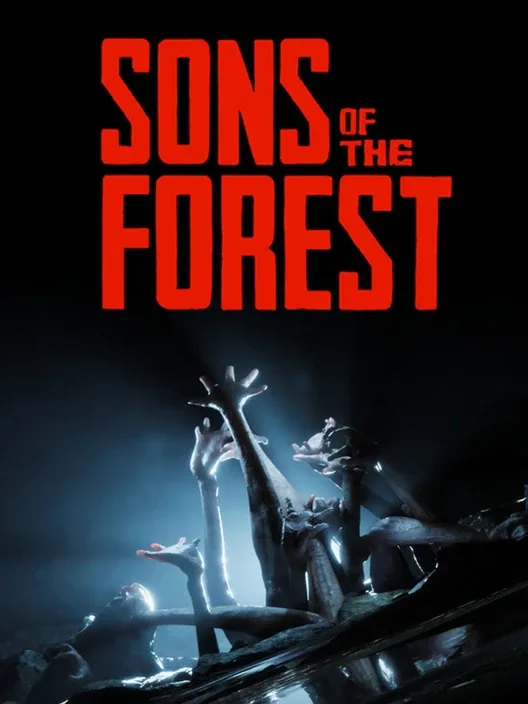 Sons of the Forest
Game Avant's ranked list of the best base building games, meaning base-building survival games specifically, narrows the survival category down to games where constructing and defending a physical structure — walls, foundations, crafting stations, storage — is the central, ongoing activity around which everything else, from resource gathering to combat to exploration, is organized. That's a meaningfully different loop than a pure survival-horror game about staying alive against a scripted threat, or an open-world survival game that treats a base as optional set dressing rather than a core system, which is why the games below all share a genuine building-and-defending backbone rather than base construction being a minor side feature bolted onto a different kind of game. Factory and colony builders such as Factorio, Satisfactory, and RimWorld are covered in the Building & Management category instead.
The order below blends IGDB's aggregate critic score with Steam's own user review percentage, with real editorial judgment applied on top of the raw numbers so a focused, beloved smaller release doesn't get buried under a bigger name's larger but less enthusiastic review base. It shifts as more people rate these games or as new releases, including Subnautica 2's early access run, settle into a stable review sample. Read the write-ups below for what each of the best base-building survival games actually does well and where it genuinely falls short.
1. Valheim#
Iron Gate Studio's 2021 release, which sold millions of copies within weeks of its early access launch on a five-person development team, builds its base-construction system around a Viking-mythology-inspired structural integrity mechanic, where every piece — timber beams, stone walls, thatched roofing — must be physically supported by connected pieces or it collapses, forcing genuine architectural planning rather than free-floating placement. Biome progression, from the starting Meadows through Black Forest, Swamp, Mountains, Plains, and beyond, gates new building materials and crafting stations behind defeating each biome's boss, tying base upgrades directly to combat and exploration progress. The portal network, built from a specific ore combination, lets players link distant bases together for instant travel, fundamentally changing how a growing settlement's geography gets planned once unlocked. Ward stones and defensive structures protect a base from both roaming monsters and the occasional targeted raid event, while the food and stamina system ties base-adjacent farming and cooking stations directly into combat viability. The Mistlands, Ashlands, and Deep North biome updates, added as free content over several years of ongoing development, considerably expanded the endgame well past the original five-biome scope. The honest drawback: the building system's structural integrity rules, while rewarding real engineering, can be genuinely fiddly and unforgiving when a complex build's support chain isn't immediately obvious, leading to frustrating collapses that aren't always intuitive to diagnose.
2. Ark: Survival Evolved#
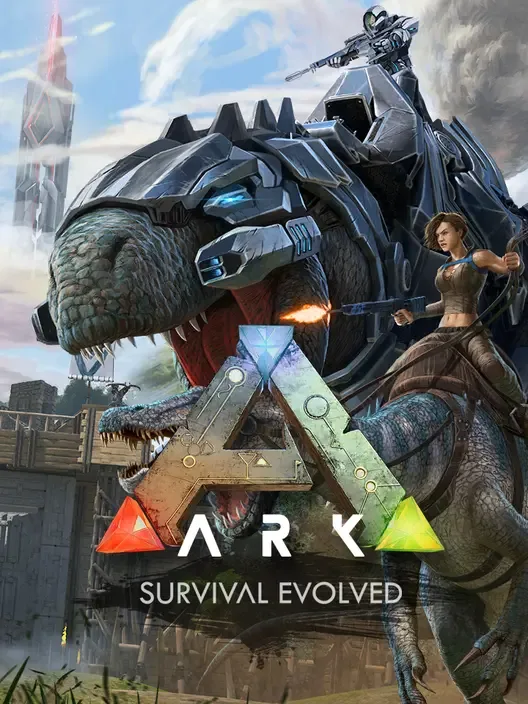
Studio Wildcard's 2017 release pairs dinosaur-taming survival with a deep base-building system spanning multiple tiers of material — thatch, wood, stone, metal, tek — each offering meaningfully different durability and defensive value against both wildlife and other players on PvP servers. Taming dozens of prehistoric creatures, each with a distinct method ranging from passive feeding to knockout-and-wait, turns tamed dinosaurs into mobile base infrastructure themselves, since creatures like the Brontosaurus can carry a mountable platform saddle supporting player-built structures directly on its back. The tech tree, gated behind an Engram-point leveling system, unlocks increasingly advanced base defenses, from simple spike walls to automated turrets, while the tribe system lets groups of players share ownership over a shared base and its tamed creature roster. Multiple distinct maps, from the original island to later DLC settings like Scorched Earth's desert survival and Aberration's underground radiation zones, each impose entirely different building and defense constraints specific to that biome's hazards. The game's often-criticized but genuinely ambitious scale, spanning dozens of official and player-run servers with persistent world state, gives base building real long-term stakes on PvP servers where a poorly defended base can be raided and destroyed by other players. The honest drawback: the game's notoriously demanding hardware requirements and history of technical instability, particularly on official servers, is a real barrier that its sequel was built specifically to address.
3. Subnautica#
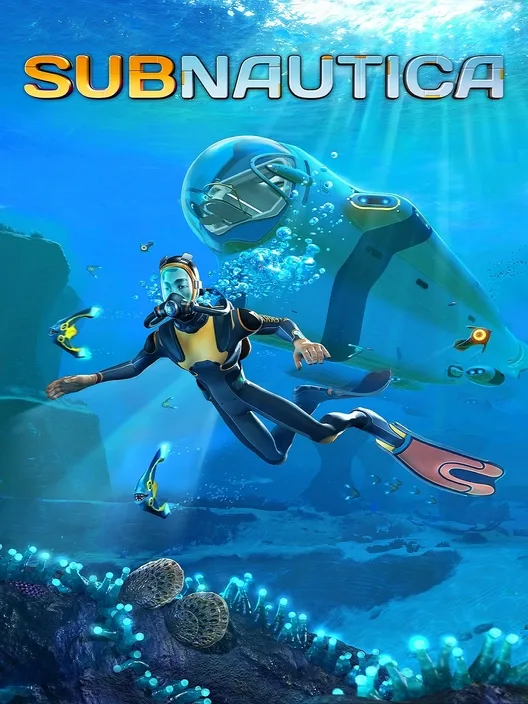
Unknown Worlds Entertainment's 2018 release, following roughly three years in early access, builds its base-construction system around underwater modular habitats — connected via corridors, hatches, and observation domes — that must be pressure-rated for depth and actively defended against flooding if a hull breach occurs, a survival stake most terrestrial base builders don't have to account for. The game's crafting and blueprint-scanning system requires physically locating and scanning wreckage or creature fragments before new base modules, vehicles, or upgrades become buildable, tying base expansion directly to the game's exploration-driven progression. Vehicles built and stored within a base, from the small Seamoth to the large mobile Cyclops submarine, function as extensions of the base itself, letting a player's effective range and safety net grow alongside their surface structures. The game's oxygen, food, and water management systems tie a base's internal facilities — a water filtration machine, a planter for growing food — directly into survival viability the further a player ventures from a home base. Its almost entirely wordless environmental storytelling, told through recovered logs and the wreck of the crashed starship Aurora, builds the planet 4546B's backstory without interrupting the moment-to-moment survival loop. The honest drawback: the game's leviathan-class creatures and the tension of building in open water are a deliberate design choice that reads as genuinely frightening rather than merely challenging to a real share of players uncomfortable with its aquatic horror elements.
4. Subnautica 2#
Unknown Worlds Entertainment's cooperative sequel entered early access in mid-2026 after a turbulent development period that included a significant leadership change at the studio following its acquisition by Krafton, and builds directly on the original's underwater base-building formula while adding native two-player cooperative base construction and exploration for the first time in the series. Habitat modules, corridors, and pressure-rated expansions carry over the original's core building logic, now built to support simultaneous construction and resource-sharing between two players working the same base rather than a single-player structure alone. The game's early access roadmap, according to Unknown Worlds' own public statements, plans roughly two to three years of continued content updates before a full 1.0 release, following a similar early-access-to-launch arc as the original Subnautica and its Below Zero follow-up. Scanning and blueprint progression return as the core unlock system gating new base modules and vehicles, tied once again to physically exploring wreckage and biome-specific creature life. The shift to a new, unnamed ocean setting distinct from planet 4546B gives the sequel a fresh biome layout rather than revisiting the original's specific map. The honest drawback: as a freshly launched early access release shaped by a genuinely disruptive change in the studio's leadership and direction, its systems, balance, and long-term content roadmap remain considerably less settled than the decade-refined original.
5. Palworld#
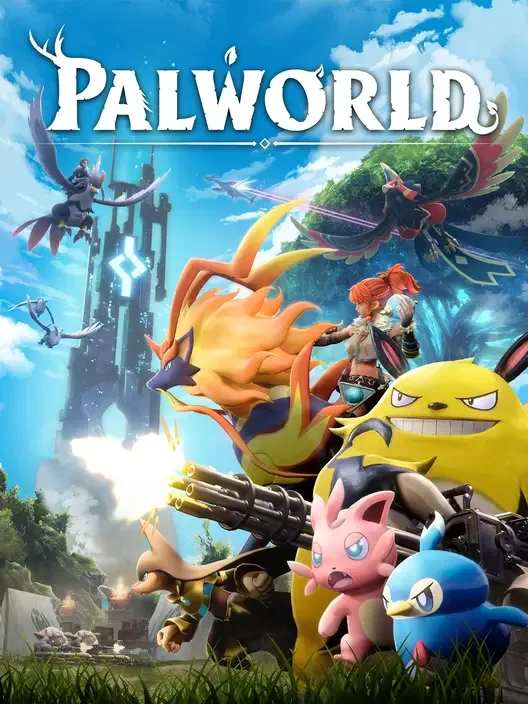
Pocketpair's 2024 release, which sold over 25 million copies within its first few months on Steam and Xbox Game Pass, pairs creature-collecting with open-world survival base building, letting captured Pals be assigned to work stations within a player's base — mining ore, farming crops, staffing a production line — based on each Pal's individual Work Suitability traits rather than functioning as pure combat pets. Base defense includes both manually built walls and turrets and the assigned Pals' own combat stats, since a base can be raided by hostile factions or other players on PvP servers, tying the creature-collection layer directly into base security. The technology tree gates increasingly advanced base structures and crafting stations behind both player level and specific resource requirements, while multiple bases can be established and staffed with different Pal rosters specialized around each location's available resources. Pal breeding, combining two owned Pals' traits and passive skills into offspring with inheritable stat bonuses, adds a genuine optimization layer to which Pals actually staff a base's most important production roles. The game's dungeon and raid-boss content, including large-scale Alpha Pal encounters, sits alongside the base-building loop as a separate but interconnected progression track. The honest drawback: the game's rapid, viral early success shipped alongside real server stability issues and ongoing patent-infringement litigation from Nintendo over specific capture and traversal mechanics, an unresolved legal cloud that adds genuine uncertainty to its long-term development.
6. Raft#
Redbeet Interactive's 2022 release, following roughly three years in early access, builds its entire premise around base construction on the literal raft itself: starting as a handful of floating foundation tiles, the structure expands plank by plank across an open ocean, with a hook used to reel in floating debris and resources drifting past as the only way to gather building material early on. The base's growing footprint directly increases both its resource-storage capacity and its vulnerability, since sharks periodically attack the raft's hull and can destroy unreinforced foundation pieces, tying the building loop directly to a persistent survival threat unique to an open-water setting. Story progression, delivered through a sequence of large, hand-crafted islands and story-specific locations reached by sailing the raft itself, gates new crafting recipes and base upgrades behind narrative milestones rather than pure resource accumulation alone. Farming plots, water purifiers, and other base-adjacent survival stations must all be built directly onto the expanding raft structure, since there's no separate land base to fall back on for most of the campaign. Multiplayer co-op, supported throughout the full story campaign, lets a group collaboratively expand and defend the same shared raft structure. The honest drawback: the raft's necessarily constrained buildable footprint, while core to the game's identity, is a real structural limitation compared to the more sprawling base designs possible in land-based survival games.
7. Sons of the Forest#
Endnight Games' 2023 release, a direct sequel to 2018's The Forest, refines that game's peninsula-survival base-building system with a more flexible structural system letting foundations, walls, and roofing snap together in more varied configurations, alongside a new 3D-printer-style Kelvin companion character who can be directed to gather specific resources or help construct a base autonomously. The demon-mutant enemy AI, considerably more advanced than the original's, actively probes and can breach poorly defended structures, forcing genuine investment in walls, spike traps, and defensive positioning rather than treating the base as a purely cosmetic home base. The crafting system splits between primitive survivalist tools and printed modern technology recovered from the game's central bunker network, letting a base's tech level meaningfully diverge depending on which resource path a player prioritizes. Virginia, an AI companion who can be directed toward combat, gathering, or construction tasks, functions similarly to Kelvin but with a distinct personality and skill set. The island's cave and bunker network, threaded beneath the surface world, holds story content and rare resources that require dedicated exploration trips launched from a player's surface base. The honest drawback: the game's early access launch in 2023 shipped with real performance issues and unfinished narrative content that later patches addressed only gradually, leaving its first several months of reviews considerably more mixed than the game's current, more polished state.
8. The Forest#
Endnight Games' 2018 release, having spent roughly four years in early access before its full 1.0 launch, established the cannibal-mutant survival premise its sequel later expanded on, with a base-building system built around a similarly flexible snap-together structural system for walls, floors, and roofing, defended against nightly enemy raids that specifically target weak points in an undefended perimeter. The crafting system splits primitive survival tools from a small set of rare modern technology recovered from crash-site wreckage and cave systems, giving base-building material choices real strategic weight depending on which crafting path a player leans into. Traps, including log deadfalls and spike pits, can be built directly into a base's perimeter to passively defend against the game's escalating cannibal enemy AI, which becomes more coordinated and aggressive as the story campaign progresses. The game's extensive cave network, requiring dedicated flashlight-and-rope exploration trips launched from a surface base, holds story content, rare resources, and some of the game's most unsettling horror-adjacent encounters. Its narrative, following a father searching for his son after a plane crash, ties the base-building and survival loop to an emotional throughline the sequel continued directly. The honest drawback: the game's persistent, low-key horror atmosphere and disturbing enemy design are a real mismatch for players drawn to the genre's building systems who aren't looking for the sustained psychological tension baked into its cannibal-mutant premise.
9. 7 Days to Die#
The Fun Pimps' 2024 full 1.0 release, following an unusually long stretch of roughly eleven years in early access since its original 2013 debut, pairs zombie-survival base building with a voxel-based, fully destructible world, letting walls, floors, and entire structures be dug into, reinforced, or torn down block by block rather than relying on a fixed set of prefabricated building pieces. The game's periodic Blood Moon horde events, escalating in size and aggression on a set schedule, specifically target a player's base, forcing genuine fortification planning around chokepoints, traps, and reinforced materials rather than a base that only needs to look defensible. The skill and perk system, spread across multiple attribute trees, lets a build specialize toward base defense, ranged combat, or crafting efficiency, with specific perks directly improving fortification strength or trap damage output. Vehicle and land-claim mechanics let a base's protected radius be marked and defended against both zombies and, on PvP servers, other players, while the loot and quest system tied to in-world trader NPCs gives base-adjacent economic activity beyond pure resource gathering. The game's full launch after over a decade in early access was treated as a genuine milestone by its long-running community. The honest drawback: the voxel-destruction engine, while enabling genuinely creative base designs, can produce serious performance strain on heavily modified or long-played worlds, a technical limitation the decade-plus development cycle never fully resolved.
10. V Rising#
Stunlock Studios' 2024 full 1.0 release, following roughly two years in early access, builds vampire-themed base construction around castle design specifically, with structural pieces like thrones, coffins, and blood-storage vessels that must be placed within specific room types to unlock their full functionality, tying interior design directly into gameplay systems rather than treating it as purely cosmetic. The day-night cycle imposes a genuine mechanical stake on base location, since direct sunlight damages the vampire player character outside of shaded areas, making a castle's roofing and territory placement a survival necessity rather than an aesthetic choice. PvP server rules let castles be raided during specific siege windows, with castle-heart health and defensive structures like servant guards and traps determining whether a base survives an organized attack from a rival clan. The blood-type system, tying a player's temporary combat buffs to whichever type of blood was most recently consumed from a specific NPC or creature, ties the game's vampiric feeding mechanic directly into both combat and base-adjacent resource decisions. Vassals, captured and converted NPCs stationed as base workers, staff crafting stations and provide low-level base defense once recruited. The honest drawback: the PvP-focused server structure that gives base raiding real stakes is also a genuine turnoff for players who specifically want a purely cooperative or single-player base-building experience without the risk of losing a castle to another clan.
11. Enshrouded#
Keen Games' 2024 early access release builds its base-construction system around a voxel-based terraforming tool that lets terrain itself, not just placed structures, be dug out, reshaped, and built into, so a base can be carved directly into a mountainside rather than only assembled from surface-level building pieces. The Flame Altar system requires a base to include specific crafting-station buildings, unlocked by defeating story bosses, before certain recipes become craftable at all, tying base expansion directly to combat and exploration progress rather than pure resource gathering. The game's poisonous Shroud fog, a persistent environmental hazard covering large portions of the map, forces base placement decisions around purified safe zones, since building and resource-gathering both become considerably more dangerous inside Shroud-covered territory. Multiplayer support for up to sixteen players lets a shared base be collaboratively terraformed and built, with each player's construction changes reflected in the same shared voxel terrain in real time. The skill and class-flame system lets a build specialize toward melee, ranged, or magic playstyles, indirectly shaping which base-adjacent crafting stations a given playthrough prioritizes first. The honest drawback: as a still-developing early access release, the game's endgame content and several class-balance systems remain comparatively thin next to the genre's more established, fully released entries.
12. Grounded#
Obsidian Entertainment's 2022 full 1.0 release, following roughly two years in early access, shrinks the player down to insect size in a suburban backyard, turning ordinary objects like a discarded soda can or a fallen twig into base-building material scaled to a character smaller than a blade of grass. The base-construction system uses grass-stem, pebble, and later acorn-shell building pieces with a structural weight system similar in spirit to other survival builders, but scaled entirely to the backyard's oversized insect and arachnid threats, which can and will attack an undefended base directly. Insect taming, including raising captured bugs from juveniles into base-guarding adult companions, adds a defensive layer distinct from purely built fortifications. The lab and mutation systems, unlocked through defeating specific insect bosses and collecting their research data, grant permanent player buffs that indirectly make base-adjacent resource gathering and combat considerably more efficient over a full playthrough. Co-op support for up to four players, core to the game's original early access design, lets a shared base be built and defended collaboratively across the same backyard map. The honest drawback: the game's family-friendly, Honey I Shrunk the Kids-inspired tone and comparatively guided story progression give it a lower difficulty ceiling than the genre's more punishing, open-ended survival entries.
13. Kenshi#
Lo-Fi Games' 2018 release, which left early access after roughly a decade of solo and small-team development, builds settlement construction around squad-based survival in an unforgiving open world with no scripted main story and no level-scaling to soften encounters around wherever the player's characters happen to be. Base building requires researching and unlocking building types through the game's tech tree, then defending the resulting outpost against raiders, wildlife, and faction patrols using the same real-time squad-combat system that governs the rest of the open world, giving base defense genuine stakes tied to the game's broader systems rather than a separate minigame. Individually simulated characters track limb health, and severe damage can sever a limb outright, which can then be replaced with a mechanical prosthetic — a permanent build consequence that also affects how a character contributes to base labor and defense going forward. Faction standing with the world's numerous settlements and factions shifts based on actions taken near or against them, meaning a base built too close to a hostile faction's territory invites real, escalating consequences. Skills level purely through use rather than spent points, so characters assigned to base construction or farming labor genuinely improve at those specific tasks the more they're used for them. The honest drawback: the game's total absence of hand-holding or tutorializing around its base-building systems is a deliberate design choice that a large share of players will read as a lack of direction rather than the freedom it's intended to offer.
14. Space Engineers#
Keen Software House's 2019 full 1.0 release, following roughly six years in early access since 2013, applies voxel-based, physically simulated construction to spacecraft and space-station base building, where individual blocks require actual structural connection and power routing to function, and a ship's mass, thrust, and center of gravity all genuinely affect how it flies rather than being abstracted away. The survival mode's resource and refining chains, requiring ore to be mined, smelted, and assembled into components before more advanced blocks become buildable, tie a growing base or fleet's capability directly to sustained industrial production rather than a simple tech-unlock list. Structural integrity is physically simulated, meaning an improperly braced station module or ship section can genuinely break apart under stress, collision, or combat damage rather than being purely cosmetic geometry. Programmable blocks and an in-game scripting API let players automate base and ship functions, from automated mining drones to defense turret logic, a depth of engineering customization uncommon even among the genre's more technical entries. Multiplayer servers support persistent shared bases and fleets, with faction-based ownership systems governing who can build on or raid a given structure. The honest drawback: the genuinely steep engineering learning curve, spanning power grids, structural physics, and scripting, is a real barrier to entry that the game's more approachable Creative mode only partially offsets for players who want the deeper survival mode's full base-building stakes.
15. Scrap Mechanic#
Axolot Games' 2024 full 1.0 release, following an unusually long ten years in early access, builds its identity around a physics-based, bolt-together construction system using modular blocks, wheels, and logic-gate components that let players build genuinely functional machines — vehicles, elevators, automated farms — as part of a base rather than static decoration alone. The Survival mode's base-building loop centers on Farmtown and other biome-specific locations, where resource scavenging and crafting feed into constructing a defensible base against the game's hostile robotic Farmers and other creature threats roaming the open world. The creative building tools, including a large library of interactive parts like pistons, sensors, and controllers, let a base incorporate working automated systems — sorting machines, moving walls, elevators — well beyond what most survival games' building systems attempt. Multiplayer support lets a shared base and its automated machinery be built collaboratively, with the same logic-gate systems available to every player working on the structure. The game's decade-long early access development, driven by a small Swedish studio, built one of the more dedicated modding and creation communities in the survival-building space well before its full launch. The honest drawback: the survival mode's narrative and progression content is comparatively thin next to the depth of its building and machine-crafting tools, which remain the game's clearest strength relative to its story structure.
16. Green Hell#
Creepy Jar's 2019 release, following roughly a year and a half in early access, sets its Amazon-rainforest survival premise around a base-building system that must account for jungle-specific threats, including insect infestations and disease, alongside the more familiar need for shelter, food, and water that other survival builders share. The crafting system is built around a genuinely research-heavy skill tree, requiring specific plant, insect, and mineral knowledge to be learned before certain building materials or medicinal items become craftable, tying base construction directly to the game's survival-education framing. The mental health system tracks psychological stress from isolation, injury, and traumatic story events, and a deteriorating mental state can trigger hallucinations that distort perception of the player's own base and surroundings, a mechanic uncommon among the genre's more purely physical survival threats. Wound and parasite management, including manually removing leeches or treating infected injuries with specific crafted remedies, ties the base's crafting stations directly into ongoing physical health maintenance rather than a simple health bar. The story campaign, following an anthropologist searching for his missing wife in the Amazon, gates specific base upgrades and new areas behind narrative progression, while a separate open-ended Survival mode removes the story entirely for a more freeform building loop. The honest drawback: the density of survival-education systems layered onto the base-building loop, while thematically consistent, creates a genuinely steep learning curve that can feel like busywork to players more interested in the building itself than the jungle-survival simulation wrapped around it.
17. Core Keeper#
Pugstorm's 2024 full 1.0 release, following roughly two years in early access, sets its mining-and-building loop underground, requiring players to dig through a procedurally generated cavern system to both gather resources and physically carve out space for a growing base, since unlike most survival builders, empty buildable space itself has to be excavated rather than simply cleared of surface obstacles. The building system supports both functional structures — crafting stations, storage, farming plots — and a genuinely deep decorative furniture and wallpaper system that gives base customization a scope closer to a life-sim than most survival games attempt. Boss fights, tied to specific biomes unlocked by digging deep enough or finding specific structures, gate access to new building materials and crafting tiers, tying the mining-and-building loop directly to combat progression. Farming and ranching systems, including crop growth under artificial light sources since much of the game takes place underground, let a base become self-sufficient for food production well away from the surface. Multiplayer support for up to eight players lets a shared underground base be collaboratively dug, built, and defended across the same procedurally generated world. The honest drawback: the underground-only setting, while distinctive, means the game lacks the open-sky base placement and environmental variety that most other survival builders on this list use as a core design pillar.
18. Planet Crafter#
Miju Games' 2024 full 1.0 release, following roughly two and a half years in early access, sets its base-building loop on a hostile alien planet the player is actively terraforming, with structures needing pressurized, oxygenated interiors early on that become gradually unnecessary as the planet's atmosphere, heat, and pressure stats are permanently improved through large-scale terraforming machinery the player constructs and deploys. The terraforming systems, including atmospheric processors, heat generators, and vegetation-seeding stations, function as base-adjacent megastructures whose stats directly and permanently change the entire planet's survivability over the course of a full playthrough, a base-building goal distinct from the genre's usual focus on a single defensible structure. Base modules, including habitats, greenhouses, and research stations, must be actively pressurized and oxygenated until the surrounding terraforming progress makes the open air breathable, tying moment-to-moment base design to a long-term planetary transformation project. Vertical construction, including tall support towers and elevator shafts, becomes necessary as terraforming progress unlocks new higher-altitude and underground biomes to build into. The game's tech tree, unlocked through gathering specific resources and reaching terraforming milestones, gates increasingly ambitious base structures and vehicles as the planet becomes more hospitable. The honest drawback: the absence of any hostile creatures or combat system at all means the game's survival tension comes entirely from environmental hazards and resource logistics, a real departure from the genre's usual creature-threat-driven base-defense loop that some players will miss.
19. Astroneer#
System Era Softworks' 2019 full 1.0 release, following roughly two years in early access, builds its entire base-construction system around a deform-and-build terrain tool that lets the ground itself be dug, flattened, or tunneled through freely, with modular base platforms and habitat pieces snapped together on top of whatever terrain has been shaped. Resource and power management ties directly into base layout, since oxygen tethers must physically connect a base to any exploration route, and power generation — solar panels, wind turbines, or RTGs — has to be planned around each planet's specific day-night cycle and weather conditions. The research and unlock system, using an in-world Research Catalog fed by scanning collected resources and artifacts, gates new base modules, vehicles, and terrain tools behind exploration-driven discovery rather than a simple linear tech tree. Multiple distinct planets, each with their own resource distribution, gravity, and hazards like electrical storms or extreme cold, force meaningfully different base designs depending on which world a given outpost is built on. Vehicle-based mobile bases, including the large Tractor and Rover platforms that can carry printers and storage directly, let a base's core functions travel alongside exploration rather than staying fixed in one location. The honest drawback: the complete absence of any combat or creature-threat system means base defense is a non-issue throughout the entire game, a real departure from the survival-threat-driven building stakes most other games on this list are built around.
20. Abiotic Factor#
Deep Field Games' 2025 full 1.0 release, following roughly a year and a half in early access, sets its base-building loop inside a secret underground research facility after a containment breach, letting players convert existing office rooms, labs, and storage areas into a defensible base rather than building on open terrain from scratch. The crafting and research system leans on a deliberately science-facility flavored tech tree, with base upgrades gated behind synthesizing specific chemical compounds or repairing damaged facility infrastructure like power relays and water systems rather than the genre's more common wood-and-stone material chain. Anomalous creature threats, ranging from mutated wildlife to reality-bending entities tied to the facility's failed experiments, require genuine defensive planning around choke points and barricaded doorways within the facility's pre-existing room layouts. Cooperative play for up to eight players lets a shared base be built collaboratively across the facility's sprawling, multi-floor map, with different rooms and departments offering distinct resource specializations. The game's comedic, X-Files-adjacent tone and voiced NPC scientist companions give its base-building loop a narrative framing distinct from the genre's more common wilderness-survival premise. The honest drawback: building within a pre-existing facility's fixed room layouts, while thematically fitting, offers considerably less creative freedom in base shape and placement than the open, terrain-based construction most other games on this list are built around.
Base-building survival games live or die on whether the structure a player raises actually matters to their odds of survival, and the twenty games above cover that idea from Valheim's Viking longhouses to Astroneer's terrain-sculpted outposts without losing that through-line. The ranking blends IGDB's aggregate critic and user score with Steam's own review percentage, weighted toward games with a real sample size behind the number, and it will keep shifting as Subnautica 2's early access reviews mature and as new releases earn enough ratings to be scored fairly. Treat it as a live snapshot of the genre's current standing rather than a fixed, permanent verdict.