
A countdown that makes The Witcher's successors look complacent#
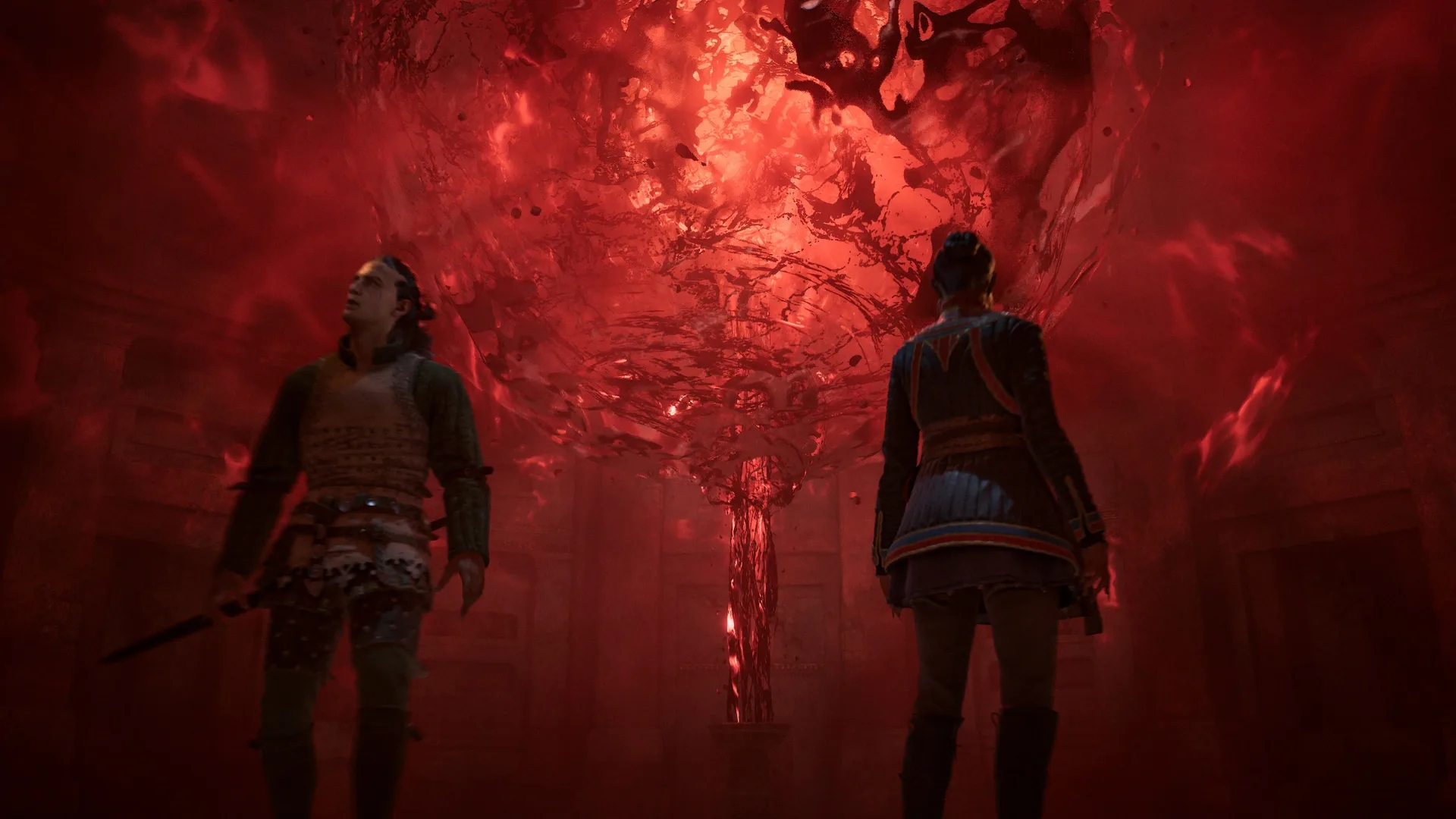
The Blood of Dawnwalker is the first game from Rebel Wolves, a Polish studio founded by former CD Projekt Red developers who spent years on The Witcher 3, and it announces its ambitions in its opening hour: a plague-ravaged medieval valley, a vampire aristocracy that has replaced human rule, and a hard deadline. Published by Bandai Namco and released on 3 September 2026 for PlayStation 5, Xbox Series X|S and PC, it plays as though the studio looked at a decade of sprawling open-world RPGs with hundred-hour completion times and asked what would happen if a game made you feel every single one of those hours cost something. The answer is a 30-day clock that never pauses for you, a protagonist who is a different creature by night than by day, and a narrative sandbox willing to let you fail people you like. It is not the smoothest RPG of the year. It might be the one that respects your choices the most.
What makes The Blood of Dawnwalker different#
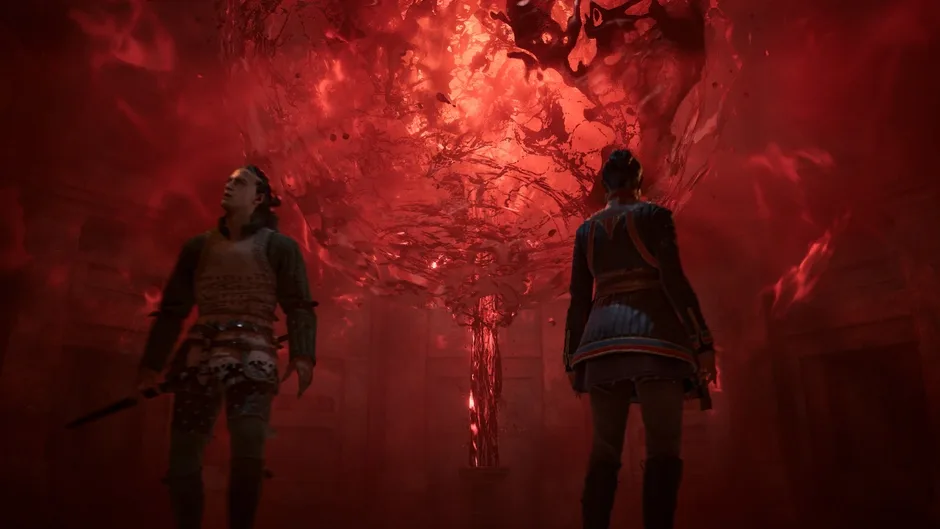
The one idea the whole game is built around is that time is the resource, not experience points or gold. Coen, a peasant from the small town of Laslea in the valley of Vale Sangora, watches his dying sister get healed with vampire blood by Brencis, an ancient vrakhir Knyaz who has ruled the valley from Greifberg Castle above the city of Svartrau since the Black Death arrived in 1347. The cure comes with a price: Coen's family is bound to Brencis, and when Coen rebels, Brencis turns him into a vrakhir himself and gives him thirty in-game days to either save his family from being sacrificed or accept what he has become. From that point on, every hour that passes is an hour you cannot get back. Helping a farmer clear his fields, chasing down a rumour in Svartrau's back alleys, or simply resting to heal takes real in-game time, and the days that vanish while you do it are days a captured family member does not have. The game does not pause the countdown for side content the way almost every other RPG since Skyrim has trained players to expect, and the discomfort of watching a clock tick while you decide whether a detour is worth it is the entire point.
Day and night: two characters sharing one body#
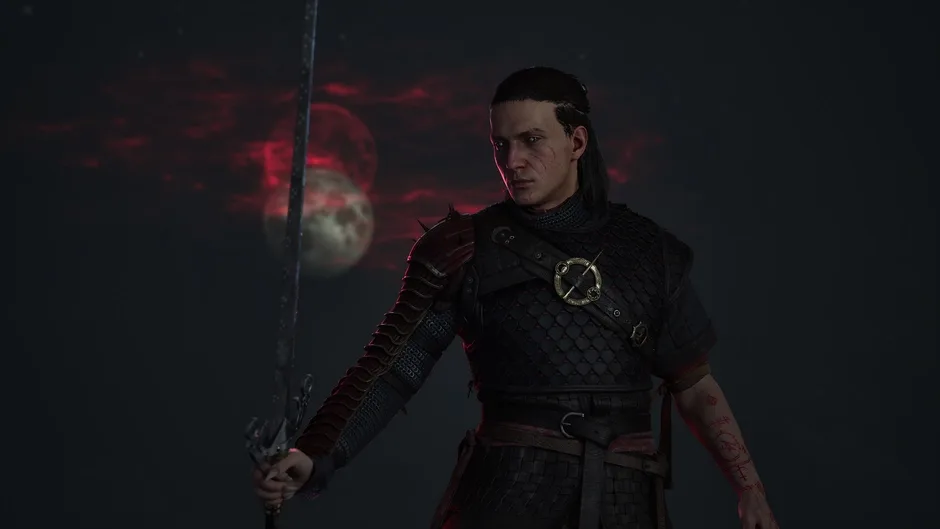
The mechanic that carries the rest of the design is the split between Coen's daytime and nighttime selves. By day he is a human swordsman who fights with directional sword combat and Witchcraft, a set of blood-carved hexes covering shields, weapon buffs, area interrupts and crowd control. In this form he can talk his way past guards, take on quests that require trust rather than fear, and walk into most of Vale Sangora's settlements without triggering violence. By night, once the sun sets, Coen becomes a vrakhir with claws, bite attacks, Voracious Bite to drain enemies at range, Shadow Step for a short teleport, Shadow Walk to climb walls and cross ceilings, and eventually Wolf Form. He is dramatically stronger, but the daytime Witchcraft hexes lock away until sunrise, since the runes carved into his skin heal over the moment he turns.
What makes the split work is that the same objective genuinely plays differently depending on when Coen arrives. A fort near Boar's Back that a fresh recruit will wave a human traveller through during the day becomes a heavily patrolled, hostile compound by night, when the guards assume anyone moving in the dark is a threat worth killing on sight. A locked warehouse in Svartrau City that would require a lockpick and a distraction by day is a five-second climb up a wall and across a rooftop for the vrakhir Coen at night. The game rarely tells you which approach is correct; it simply changes what is possible and lets the clock decide how much time either approach costs you. Feeding at night to sustain Coen's vampirism is not optional flavour, either: ignore it too long and his Bloodthirst can turn on the nearest person, human or ally, which has turned quest-givers into unintended casualties for players who let Corruption climb unchecked.
Vale Sangora: a valley shaped by two crises at once#
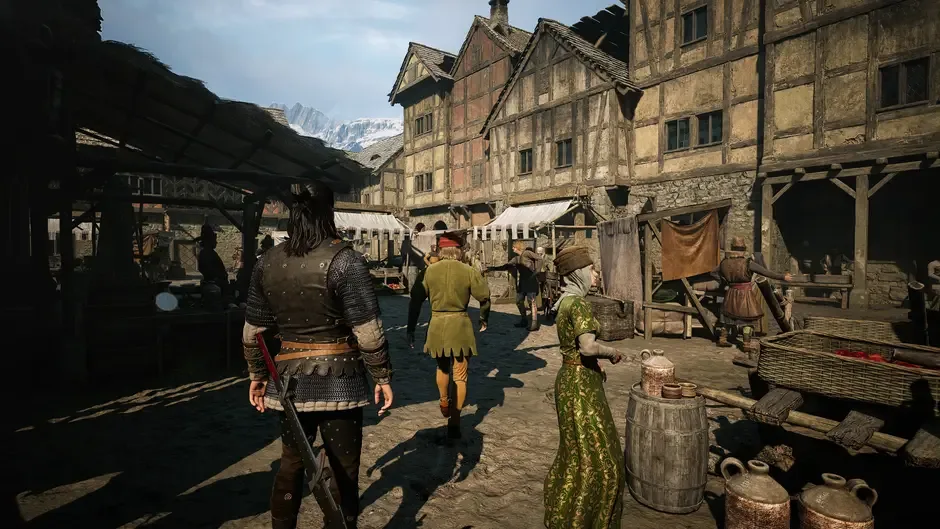
Vale Sangora is smaller than the Lands Between or Novigrad, but it is built with the day/night split and the Black Death both baked into its geography rather than layered on top. Laslea Glen, where Coen starts, is a scattering of plague-thinned farms; Svartrau City, the capital, rose to wealth on the silver trade before Brencis took Greifberg Castle above it and imposed a new order where blood buys protection from the plague. Between them sit the Briar Sloughs, the Maragir Wealds, Boar's Back, Rockfalls, St. Tyna's Grove, the Slits and Tantari Woods, ten regions in total, each smaller than a modern open-world zone but each doing more with less: a plague pit here, a burned chapel there, a checkpoint where the guards' attitude toward you visibly shifts based on whether the sun has set. The valley does not pretend the Black Death is background colour. Bodies pile up in Laslea's outskirts as the thirty days pass, quarantine lines shift, and the desperation that lets Brencis's blood-for-protection bargain make sense to the people living under it is visible in every settlement rather than explained in a codex entry.
Combat and Witchcraft: solid until it stops evolving#
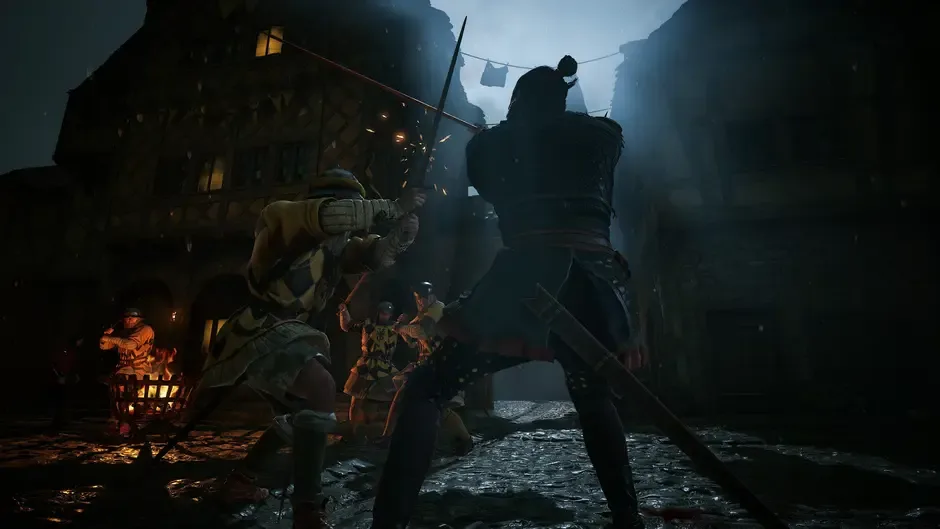
Combat is built around a single core read: directional parries, where matching your block to an incoming attack's flagged direction at the moment of impact deflects it cleanly and opens a riposte. It is satisfying for the first fifteen or so hours, particularly once Swordmastery perks add follow-up combos and stagger windows, and Witchcraft hexes give the daytime fights real texture: a shield hex to eat a heavy attack, a weapon-buff hex to burst down a tough target, an area-interrupt hex to stop a group ambush before it starts. The trouble is that the system does not grow much past its early lessons. Enemy variety in the back half leans on tougher versions of the same handful of archetypes rather than new patterns to learn, and once the directional parry has been mastered, most human encounters become a rhythm exercise rather than a puzzle. Night combat as the vrakhir is flashier, mixing claw combos with Shadow Step repositioning and the occasional Wolf Form detour, but it suffers from the same plateau: once Corruption unlocks the strongest night abilities, most fights stop being close.
Three skill trees, Swordmastery, Witchcraft and Vampirism, all draw from a single shared pool of points, which forces real trade-offs rather than letting you max everything by the credits. Swordmastery works at any hour. Witchcraft only functions during the day. Vampirism is gated behind Coen's Corruption level, which climbs the more he feeds and leans into his vrakhir nature, and pushing it high enough to unlock the best night powers can quietly cut him off from dialogue options and daytime abilities that a more restrained build would keep available. It is one of the more honest morality systems in a genre that usually treats "good" and "evil" as a slider with no real cost on either end.
Choices, companions and the shape of an ending#
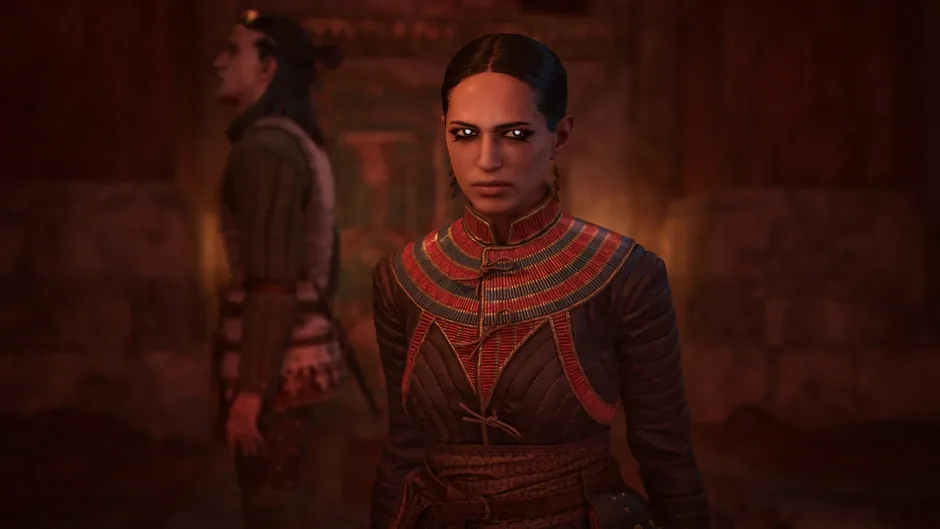
Rebel Wolves' pedigree from The Witcher 3 shows most clearly here, and the comparison holds up: choices in The Blood of Dawnwalker are not dialogue-wheel flavour, they change which content is reachable at all. Lacra, a vampire working against Brencis for reasons of her own, and Crake, the leader of a human resistance trying to restore the valley's murdered royal line, both offer alliances that pull Coen toward different solutions to the same problem, and siding fully with one can close off quest chains tied to the other. Because the thirty-day clock keeps running regardless of which thread you follow, a companion's storyline can simply expire unresolved if you spend too long elsewhere, which is a harsher and more honest form of consequence than the usual "your choice will be remembered" notification. The number of distinct endings depends on cumulative choices across the whole run rather than a single fork near the credits: how Coen resolves the conflict with Brencis, how much of his family survives, how much Corruption he has accumulated, and which allies are still willing to stand with him on day thirty. It rewards a second playthrough more than it demands one, and unlike many branching RPGs, none of the outcomes feel like a joke ending bolted on for completion's sake.
Where the writing carries the game#
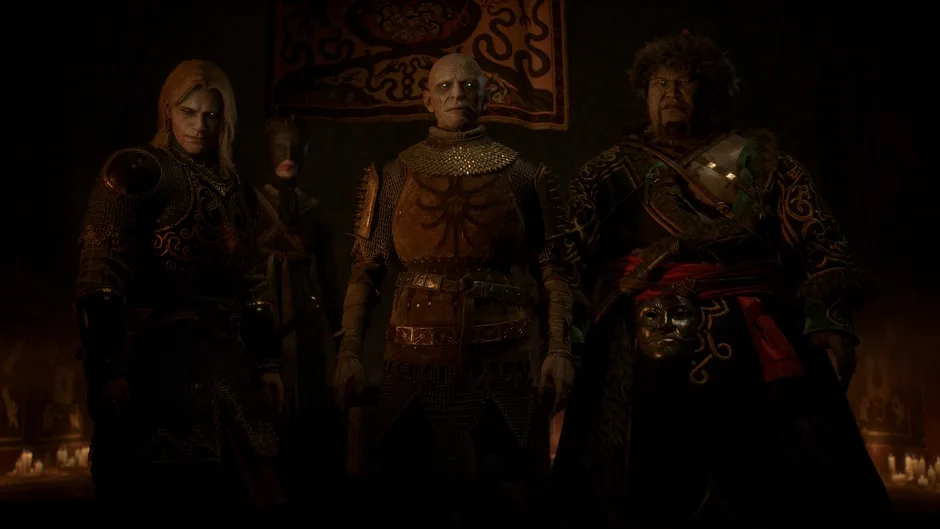
The strongest thing about The Blood of Dawnwalker is not a system, it is the writing, and the vampire framing is central to why it lands. Vampirism here is not a power fantasy dressed up in velvet; it is a moral cost that the game keeps making Coen pay, from the Bloodthirst that can turn him on people he cares about to the way Brencis's entire social order, blood in exchange for safety from the plague, makes uncomfortable sense once you have walked through Laslea's plague pits and Svartrau's quarantined districts. Brencis himself is the best antagonist Rebel Wolves has written: an ancient Roman vrakhir who is not simply cruel but genuinely believes his order is the only thing standing between the valley and total collapse, which makes every conversation with him more unsettling than a monologuing villain would be. The plague is never sanitised into set dressing, and the thirty-day structure means Coen's family is not an abstract stake mentioned once in an opening cutscene; it is a countdown you can watch tick down while you decide whether tonight's detour is worth it.
Where the game repeats itself#
The back half is where the ambition thins out. Svartrau's side content in particular settles into a rhythm: overhear a conversation, follow a marked NPC, eavesdrop or pickpocket, report back, repeated with new names and slightly different framing dozens of times across the outskirts and the city proper. The day/night split, which felt revelatory in Laslea and the Briar Sloughs, starts to feel like a coat of paint on familiar fetch-quest structures once you have seen a dozen variations on "this location is easy by day, dangerous by night." Combat's plateau compounds the issue: once the directional parry stops teaching you anything new, filler encounters between story beats start to feel like pacing rather than content. None of this sinks the game, because the writing and the clock keep pulling you forward, but a tighter middle third would have made the whole experience feel as sharp as its first ten hours.
New to this kind of RPG? Start here#
The Blood of Dawnwalker is a reasonable first stop for players who have never touched a Witcher-style branching RPG, but a handful of choices make the opening days far less punishing. Spend the first two or three days almost entirely on the main thread in Laslea Glen before wandering, since the earliest hours establish which side characters are worth protecting before the clock starts costing you anything meaningful. Put early skill points into Swordmastery rather than splitting evenly across all three trees; a competent daytime fighter makes the early game's human encounters far less frustrating than a half-built vampire does. Resist the urge to feed constantly at night just because Voracious Bite is available: Corruption is far easier to manage from the start than to walk back later, and a low-Corruption Coen keeps more dialogue options open for longer. Finally, treat the map's ten regions as a checklist to visit once during the day and once at night early on, since learning which routes flip completely after sunset in the opening week saves real in-game hours later, when those hours matter far more.
Performance: rough in the city, fine in the wilds#
The version that shipped on 3 September 2026 runs well across Vale Sangora's open countryside on both PlayStation 5 and PC, but Svartrau City's crowded plazas are a different story: frame drops are frequent there on both platforms, and a handful of players have reported hard crashes during cutscenes that follow major decisions or during boss encounters, which is a particularly bad place to lose progress. None of it is as severe as a broken launch, and Rebel Wolves has a patch cadence to prove out over the coming months, but anyone starting the game today should expect Svartrau specifically to be the rough patch rather than the exception.
Compared with The Witcher 3 and Vampyr#
The Witcher 3 is the inevitable comparison, and it is a flattering one that Rebel Wolves mostly earns. Both games are built by people who believe a fantasy world should feel lived-in through its side characters rather than its map markers, and Brencis's court has some of the same moral murk that made Novigrad's politics memorable. Where The Witcher 3 wins is scale and combat depth: Geralt's sign-and-steel toolkit and the sheer density of hand-authored content in Velen and Skellige still dwarf what a debut studio could build in one game, and CD Projekt Red never asked players to race a clock that could quietly end a companion's story. Where The Blood of Dawnwalker wins is stakes: nothing in The Witcher 3 makes you feel the cost of a side quest the way watching a real countdown does, because Geralt's world waits for him no matter how long a contract takes.
Vampyr, Dontnod's 2018 vampire RPG, is the more obvious genre neighbour, and the comparison is less flattering to Vampyr. Both games frame feeding as a genuine ethical weight rather than a meter to fill, but Vampyr's London was smaller, its combat far clunkier, and its systems never had anything like a day/night split to make its city feel different at different hours. The Blood of Dawnwalker takes the moral premise Vampyr introduced and gives it the production values, combat foundation and structural ambition to actually carry a full game.
Worth the money?#
At $69.99 for the standard edition and $79.99 for the Eclipse Edition, which adds a digital compendium, soundtrack and comic, The Blood of Dawnwalker sits at full RPG price. A focused run that follows the main thread and resolves it within the fiction's own thirty days runs roughly 30 to 40 hours; a completionist pass chasing every region, companion arc and ending path stretches toward 50 to 70 hours. That is a reasonable ratio for the asking price if the writing and structure appeal to you, though it is not the multi-hundred-hour value proposition some open-world RPGs promise, and that is by design rather than a shortfall.
Best platform: PC, if your hardware can absorb the Svartrau frame drops, since mod support and performance tuning will likely improve fastest there. PS5 and Xbox Series X|S are safe, steady choices for anyone who wants to avoid troubleshooting, though both share the same crowded-city hitching at launch. The game supports full voice acting in English, Polish, French, Italian, German and Spanish, with text-only localisation, including Swedish, in a longer list of additional languages.
Play this instead if…#
Shorter: Vampyr delivers the same feeding-as-moral-cost premise in a tighter, roughly 20-hour package, with a much smaller city to manage.
Easier: Dishonored trades the parry-focused combat and Corruption stakes for a stealth-and-powers sandbox that is far more forgiving to a cautious playstyle.
Cheaper or lighter: V Rising offers a survival take on vampirism, day/night included, at a fraction of the price and with none of the thirty-day narrative pressure.

Frequently asked questions#
How long is The Blood of Dawnwalker? Roughly 30 to 40 hours for a full playthrough of the main thread, and 50 to 70 hours to see most regions, companion arcs and additional endings.
Is The Blood of Dawnwalker open world? Yes, though its ten regions are smaller and more tightly authored than the biggest open-world RPGs, with Svartrau City as the largest single area.
Does it have co-op? No. It is a single-player game with no co-op or multiplayer modes.
Is there a difficulty option? Yes, including a Story mode that removes most of the directional-parry pressure for players who want the writing without the combat demands.
Do you need to have played The Witcher games first? No. The Blood of Dawnwalker is a new setting and story with no connection to The Witcher, though the influence on its tone and choice systems is clear throughout.
Does the 30-day clock actually run out if you are slow? Yes. Spending too much time on unrelated content can cause companion questlines to expire unresolved and can affect which endings remain reachable.
The Game Avant verdict#
The Blood of Dawnwalker is not the smoothest debut a former Witcher team could have made, and its combat plateau and Svartrau's repetitive side content keep it from matching the best open-world RPGs of the decade on pure moment-to-moment play. What it does better than almost anything else released this year is make a countdown feel like a design philosophy rather than a gimmick: every hour spent helping one person is an hour not spent saving another, and the game is entirely willing to let you lose people because of it. Brencis is one of the more interesting antagonists in recent memory precisely because his cruelty comes wrapped in a plague-era logic that makes uncomfortable sense, and the day/night split does real mechanical work rather than just reskinning the same objectives. Rebel Wolves clearly inherited The Witcher 3's instinct for choices with weight; they have not yet inherited its combat depth or its density of hand-crafted content, and the back half shows it. That is a debut-studio problem, not a fatal one, and what is here is worth the thirty days it asks for.
8 out of 10 – a vampire RPG whose ticking clock makes every choice matter more than the combat holding it up deserves.