

An RPG that treats every choice as permanent#
Baldur's Gate 3 is the game where Larian Studios took the Dungeons & Dragons 5th edition ruleset, built a three-act campaign around it, and then committed to something most RPGs only pretend to do: making choices actually change the game around you. Released in August 2023 for PC and PlayStation 5, and later brought to Xbox Series X|S, it is a turn-based role-playing game about a party of adventurers infected with a mind flayer parasite, racing to find a cure before it transforms them into monsters. That premise is the excuse. What earns the score here is everything that happens because of the choices you make along the way, none of which the game quietly reverses later.
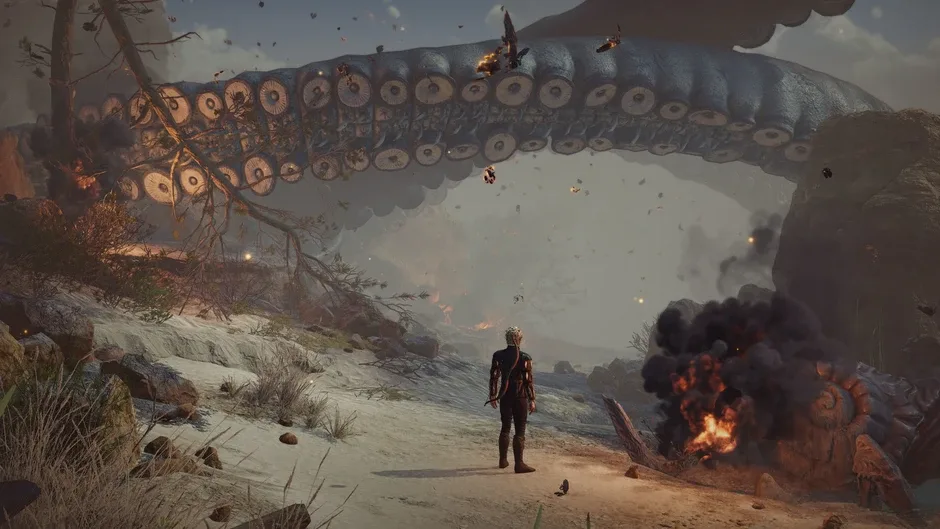
The setup starts on a nautiloid ship crashing through the Sword Coast. You wake up with a tadpole in your skull, a handful of strangers in the same situation, and no map. From there, the campaign fans out across three acts and a huge amount of optional content, all of it built to react to who you decided to be and who you decided to trust.
What makes Baldur's Gate 3 different#
The one idea that carries the whole game is that nothing is scripted to happen only one way. A locked door is never just a lock to pick; it is also a wall to break, a guard to bribe, a spell to cast through, or a companion with the right background to talk your way past. Killing a merchant does not just remove a shop from the map; it can quietly close off a questline three acts later that depended on that merchant being alive. Baldur's Gate 3 is built on the assumption that the player will make different decisions than the game's designers expected, and it tries to have an answer ready regardless.
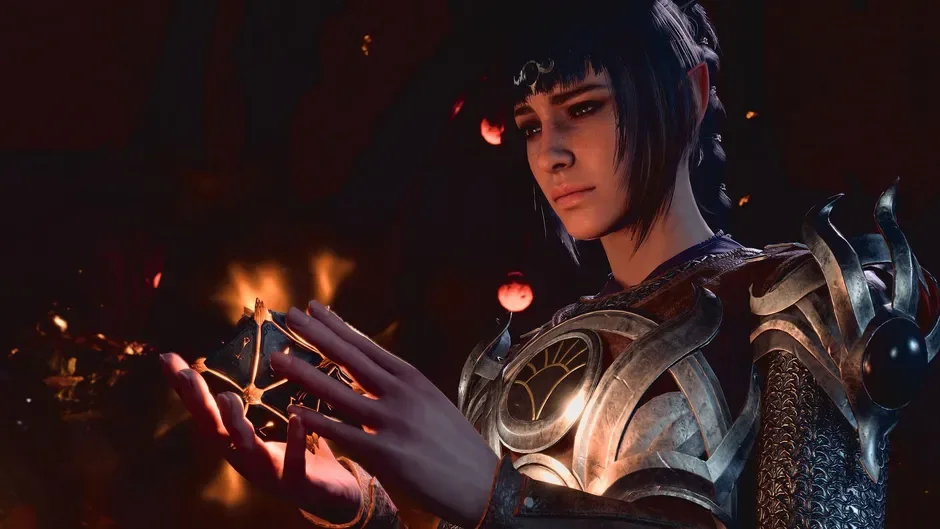
This shows most clearly in how companions react to what you do. Astarion, a vampire spawn hiding a dark secret, can become a manipulative ally, a genuine partner, or an enemy, depending on how you treat him and what you decide about his past. Shadowheart, a cleric wrestling with a hidden god and a hidden memory, can be pushed toward honesty or kept in denial for most of the game, and both paths lead to different endings for her. The game does not just remember your dialogue choices for flavour text later; it changes what people are willing to do for you, what they warn you about, and whether they are still alive by the credits.
Illithid powers add another layer that most RPGs never touch: the tadpole growing in your skull grants a handful of psionic abilities, but leaning on them too heavily has narrative consequences that surface later in the campaign. The game frames this as a genuine dilemma rather than a free power boost, and whether to embrace or resist the parasite becomes one of the quieter but more persistent choices running under everything else. Even small interactions carry weight: a jar that can be smashed instead of searched, a locked chest that a Rogue can pick while everyone else would need to break it open, a sleeping guard who can be talked past instead of fought. None of these moments are marked as important while they are happening. They only reveal their weight later, when a name from an early conversation resurfaces in an act you did not expect it to matter in.
Combat: a tactical puzzle built on the D&D rules#
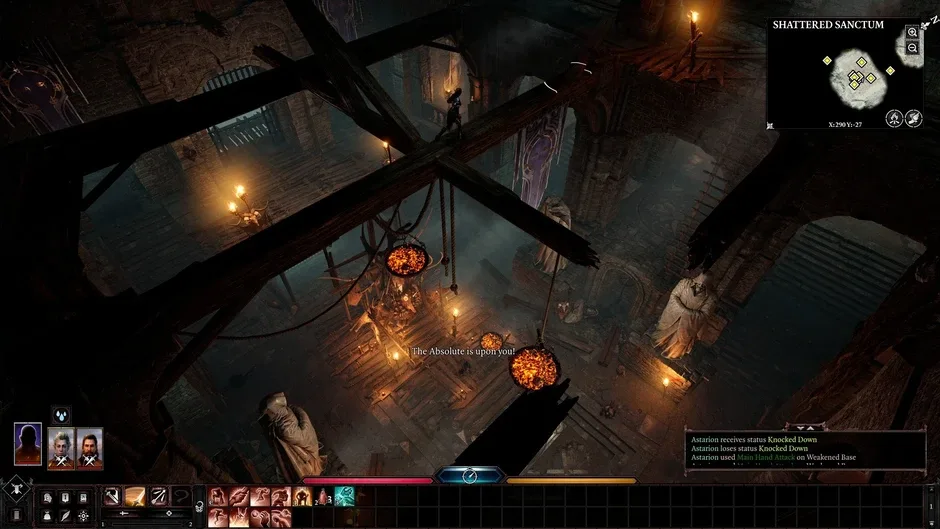
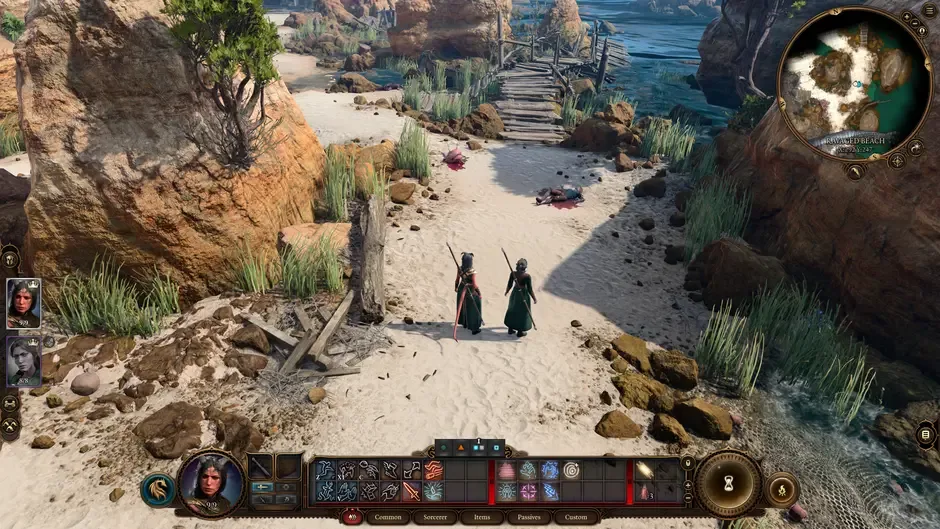
Combat is turn-based, following Dungeons & Dragons 5th edition rules closely: initiative order, action economy, advantage and disadvantage, saving throws, and spell slots that force real resource decisions rather than an unlimited mana bar. What makes it work as a video game rather than a spreadsheet is how much the environment participates. High ground grants advantage on ranged attacks. Oil on the floor can be set alight. A shove can send an enemy off a cliff or into a chasm instead of dealing damage at all. Grease, fire, ice and water interact with each other, so a smart party can end a dangerous fight in a single turn by combining terrain with the right spell.
The class system supports wildly different approaches to the same fight. A Wizard can control a battlefield with spells like Fireball or Hold Person, a Barbarian can wade in and tank hits that would kill anyone else, a Rogue can pick off targets from stealth, and a Bard can talk, charm and support their way through fights they never intended to join directly. Multiclassing lets you combine two or three classes on one character, so a Fighter who dips into Warlock for a couple of levels plays meaningfully differently from a pure Fighter. Because the rules are the actual D&D rules rather than a loose approximation, players who already know the tabletop game have a real head start, and players who do not can learn it through the game's own tooltips and rulebook references.
Resting matters as much as any spell in the list. A short rest recovers some abilities and lets certain classes regain spell slots, while a long rest fully restores the party but consumes camp supplies and triggers companion conversations, some of which only appear at specific points in the story. Resting too often can also let dangerous story events catch up with the party, so managing when to push forward and when to recover becomes its own layer of strategy on top of the moment-to-moment tactics of any single fight.
Character creation: origin characters or a blank slate#
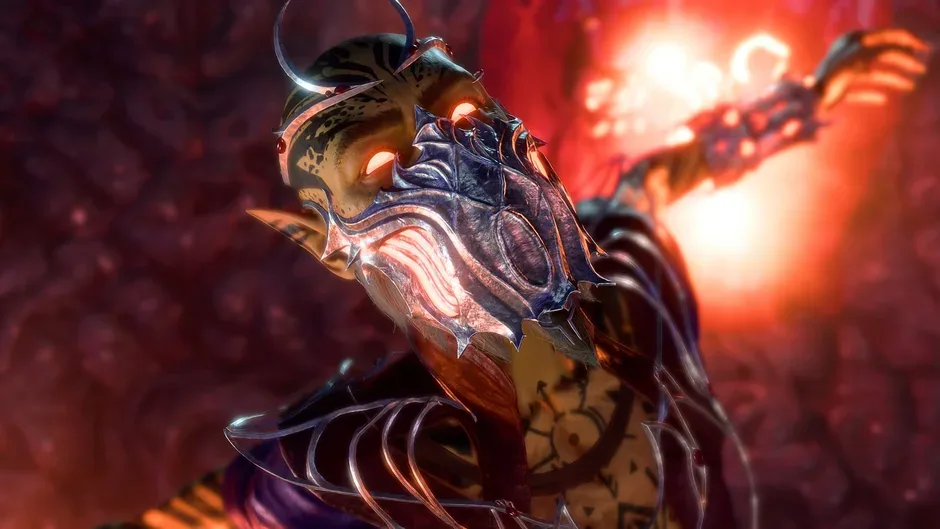
Baldur's Gate 3 offers two starting points that lead to different experiences of the same story. Origin characters, such as Astarion, Shadowheart, Gale, Wyll, Lae'zel and Karlach, are pre-written companions with their own backstory, personal quest and voice, and playing as one of them means experiencing their arc from the inside rather than watching it from outside as a party member. Alternatively, a fully custom character can be built from any of the game's races, classes and backgrounds, with the companions instead appearing as recruitable party members who react to a blank-slate protagonist. Neither approach is the "correct" one; a custom character sees more of the world as an outsider working out who to trust, while an origin character gets a personal stake in the plot that a custom character cannot fully replicate.
Race selection layers on top of class in a way that is more than cosmetic. Playing as a Githyanki carries built-in tension with the mind flayer plot, since Githyanki society treats the parasite as an abomination. Playing as a Tiefling ties into the questlines around the druid grove and the refugee camp in Act 1, since several Tiefling NPCs are directly affected by the choices made there. Humans, Elves, Dwarves, Half-Orcs, Halflings, Gnomes and Half-Elves all carry smaller flavour differences in dialogue rather than major plot branches, but the option to build a Dragonborn wizard or a Halfling barbarian, and have the game acknowledge it, is part of what makes a custom character feel like an actual choice rather than a set of stat sliders.
The companions: the real reason people replay this game#
Six core companions can travel with the party, and each has a personal quest that runs the length of the campaign rather than being resolved in a single side mission. Karlach, a tiefling barbarian freed from an infernal engine that is slowly killing her, has one of the more emotionally direct arcs in the game, built around finding a way to survive her own body. Gale, a wizard carrying a magical bomb in his chest that only certain items can safely defuse, hides a much larger secret about a god he angered. Wyll and Lae'zel both start the game bound to factions with their own agendas, and both can be pushed to break from those factions entirely depending on what the player says and does. None of these arcs are cosmetic dialogue trees bolted onto a fixed plot; they change what a companion will do in the final act, and in several cases whether they survive it at all.
Beyond the six core companions, the campaign is dotted with returning characters from earlier Baldur's Gate games and other recruitable allies who join under specific circumstances, such as Minthara, a drow commander who can be turned from an early-game antagonist into a companion depending on how a key Act 1 confrontation is resolved. These characters are optional in a stricter sense than the core six, since missing the right conditions simply removes them from the playthrough rather than blocking progress, which reinforces how much of the game's content is built to be found rather than handed over.
Acts 1 to 3: a campaign that keeps changing shape#
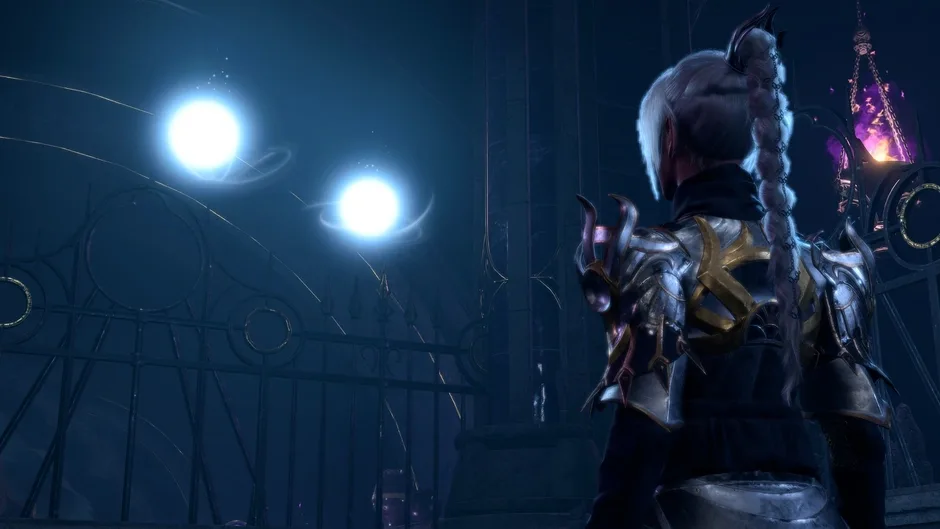
Act 1 takes place around the Sword Coast wilderness and the Underdark beneath it, and it is where the game's density is clearest: druid groves, goblin camps, a ruined temple and an entire underground ecosystem are all packed into a relatively small map, with almost none of it required to reach the act's end. Act 2 moves into the Shadow-Cursed Lands, a much darker, more linear stretch dominated by a corrupting darkness and a fortress under siege, which trades some of Act 1's sprawl for a tighter, more atmospheric campaign. Act 3 arrives in the city of Baldur's Gate itself, a huge urban area with dozens of side plots layered on top of the main one. It is also, by general consensus, the least polished part of the game: more bugs, more pacing issues, and a level of ambition that occasionally outpaces what shipped at launch, even after patches. It is still a strong act. It is simply the one place the game's reach outstrips its grip.
The Underdark beneath Act 1, reached through the same wilderness map rather than a separate loading area, is worth calling out on its own: a sunless cavern network with its own factions, its own merchants and its own dangers, entirely missable if a party sticks to the surface. Grymforge, further down still, houses one of Act 1's toughest optional fights and a forge tied directly to the act's climax. Act 2's Shadow-Cursed Lands centre on Last Light Inn, a fragile safe haven inside the darkness, and Moonrise Towers, a fortress that turns the act into something closer to a siege than an open exploration space. None of these areas repeat assets or layouts from each other, which is part of why the campaign rarely feels padded even at its longest.
Story and choice: no correct ending#
The main plot, stopping the mind flayer transformation and dealing with the Absolute cult behind it, is really a frame for dozens of smaller stories that intersect with it. Whether to save or sacrifice a particular NPC, whether to trust a companion with a dangerous secret, whether to romance one companion or several, and whether to play the whole campaign as a selfless hero or a self-interested opportunist, all of these change not just dialogue but which endings are even available. There is no single "true" ending the game is steering you toward; the credits reflect the sum of what was decided over the previous acts, which is why two players' accounts of the same campaign can sound like different games entirely.
Difficulty and party composition#
Baldur's Gate 3 offers several difficulty settings, from a more forgiving Explorer mode to a Tactician mode that sharpens enemy AI and encounter design for players who want the D&D rules to bite. Regardless of setting, party composition matters more than raw character level: a group with no healer or no way to deal with enemy spellcasters will struggle even on lower difficulties, while a well-balanced four-person party, whether the player's own custom build plus companions, or a co-op group of real people, can handle most encounters with the right preparation. The turn-based structure means a losing fight rarely feels like a reflex failure; it is almost always a positioning or resource problem that can be solved by retreating, resting and trying a different approach.
New to Dungeons & Dragons? Start here#
Baldur's Gate 3 is a reasonable first D&D experience, because its tooltips explain the rules as they come up rather than assuming prior knowledge. Starting with an origin character removes one layer of decision-making, since the class and background are already set. A Cleric or a Fighter is more forgiving early on than a Wizard, since spell management adds a layer that takes longer to learn. Saving before major decisions and difficult fights is worth doing, since the game does not warn before a choice becomes permanent, and resting between fights to recover spell slots is almost always the right call rather than pushing through on empty resources.

Compared to Divinity: Original Sin 2 and Disco Elysium#
Divinity: Original Sin 2, Larian's previous game, is the clearest ancestor here, and the two share a combat philosophy built on elemental interactions and environmental tricks. Divinity leans further into chaotic, systemic combat and a lighter tone, while Baldur's Gate 3 trades some of that freeform experimentation for the structure and balance of an established ruleset, and for a cast of companions with far more written depth. Players who found Divinity's combat more compelling than its story will likely find the reverse true here.
Disco Elysium is the sharper comparison for choice and consequence rather than combat, since it has almost none. Where Disco Elysium tells its entire story through dialogue and internal monologue, Baldur's Gate 3 splits the weight between conversation and turn-based combat, so a player who wants the reactive writing without any fighting at all will be better served by Disco Elysium, while a player who wants that same reactivity married to a full tactical combat system should choose Baldur's Gate 3.
Larian has also continued supporting the game well past launch with free patches, including one that added a full epilogue sequence letting players catch up with companions after the credits, along with new subclasses and quality-of-life changes to camera and multiplayer. None of this is paid downloadable content; it is the same base purchase getting expanded over time, which is unusual for a game of this scope and adds to the sense that the campaign was never really finished being cared for at launch.
Worth the money?#
Baldur's Gate 3 sits at a full-price point typical of a major single-player and co-op release, and a single playthrough that follows the main plot without exhausting every side path runs to roughly 75 to 100 hours, with a completionist run and a second playthrough exploring different choices easily doubling that. Given how differently a second playthrough with different companions and decisions can turn out, replay value here is unusually high for the genre. PC is the platform with the most stable performance and the widest mod support; PlayStation 5 and Xbox Series X|S both run the full game with couch co-op support, making console a strong option for playing with a partner in the same room. Waiting for a sale mainly matters for players unsure about turn-based combat or long-form RPGs; anyone already sold on the genre gets full value at launch price given the amount of content on offer.
Play this instead if…#
Shorter: Divinity: Original Sin 2 offers a similar tactical combat system and a lighter overall commitment, at roughly half the length of a full Baldur's Gate 3 playthrough.
Easier: Disco Elysium removes combat entirely and focuses purely on dialogue, investigation and consequence, for readers who want the reactivity without the tactics layer.
Cheaper or co-op: It Takes Two is not an RPG, but for a couch co-op story built for two players with no combat system to learn, it delivers a similarly reactive, choice-driven feeling at a lower price and a much shorter runtime.
Frequently asked questions#
How long is Baldur's Gate 3? Roughly 75 to 100 hours for a single playthrough following the main plot, with significantly more for a completionist run or a second playthrough with different choices.
Is Baldur's Gate 3 open world? Each of the three acts is a large, mostly open area rather than one continuous open world, with a significant amount of the map optional to explore.
Does it have co-op? Yes, up to four players online, and two players in split-screen or couch co-op on console, with each player controlling their own character through the same campaign.
Is there an easy mode? Yes, an Explorer difficulty setting is available alongside the standard and Tactician settings, changing enemy strength and AI rather than removing systems.
Do you need to know Dungeons & Dragons first? No. The game explains its rules through tooltips as they come up, though players who already know D&D 5th edition will recognise the systems immediately.
Do choices really change the ending? Yes. Which companions survive, which factions are intact, and which epilogue scenes play out are all determined by decisions made across the three acts, not by a single choice at the very end.
The Game Avant verdict#
Baldur's Gate 3 is not evenly polished. Act 3 shows the seams of a project that grew larger than its original scope, with more bugs and rougher pacing than the two acts before it, and the sheer number of systems on offer can be intimidating before the tooltips have taught you the rules. Those are real flaws, and in a lesser RPG they would be enough to cap the score well below the top. They do not here, because the thing this game does better than any RPG released before it, treating almost every decision as something the world will remember and react to, rather than a dialogue option that quietly resets, is achieved with a consistency that few games even attempt. It rewards curiosity, punishes carelessness, and never tells you there was only one right way to play it.
10 out of 10 – the RPG against which every choice-driven game will now be measured.