
A different kind of Game Freak game#
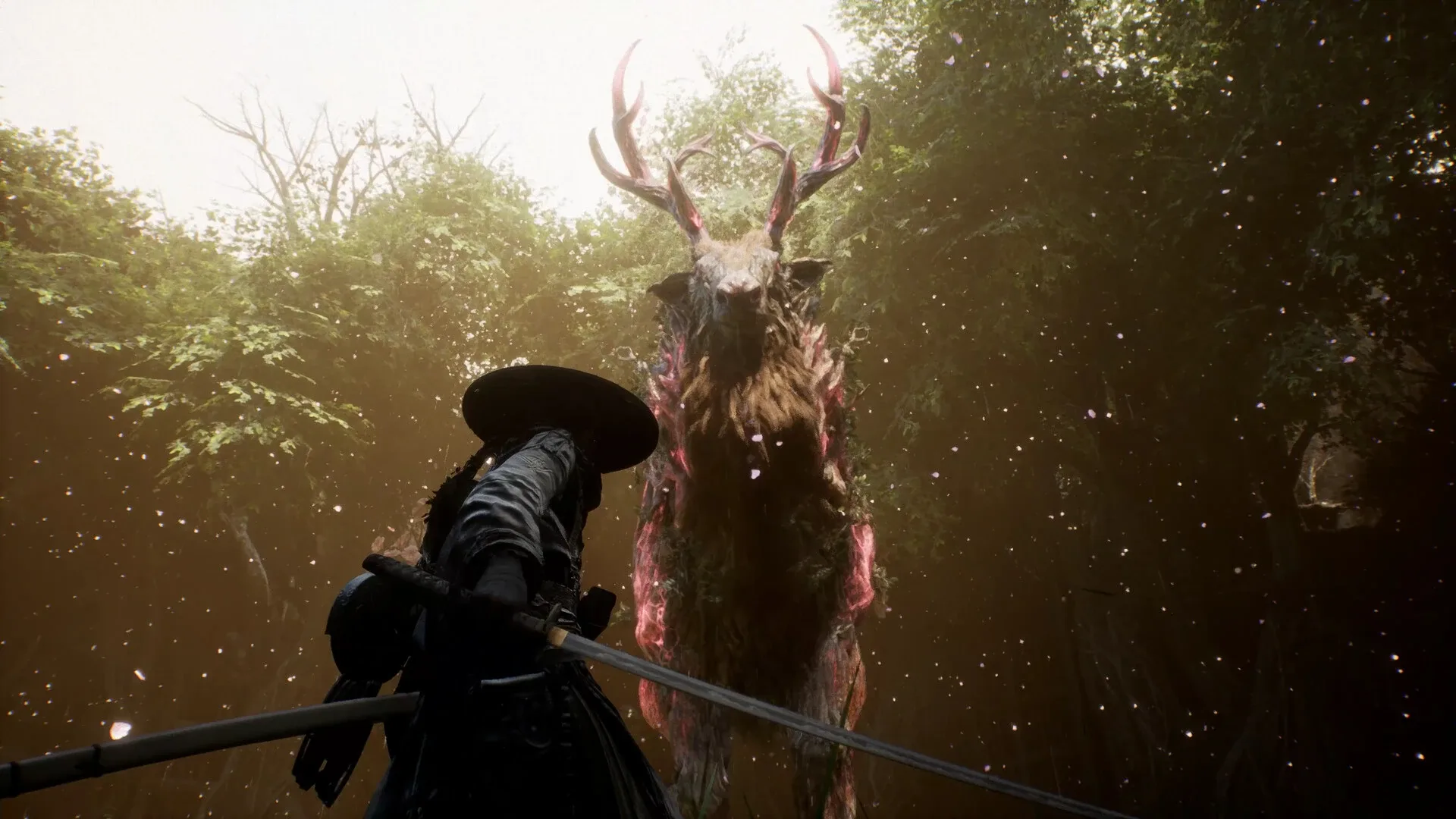
Beast of Reincarnation is the studio best known for Pokémon trying something entirely different. Instead of collecting creatures, it gives players one young woman, one wolf-like companion and a ruined, overgrown Japan to cross. The pitch is an action RPG built around demanding, technical combat, and the central relationship between Emma and her companion Koo is meant to carry the emotional side.
The short version of this review is that the combat and the partnership are strong enough to recommend the game, and that the length, repetition and technical state stop it from being a clear favourite. Critics have been generally positive, often calling it a confident step for the studio, while the Steam audience has been much more divided. A 7 out of 10 reflects both sides: a good game with a real identity, not yet a polished one.
What makes Beast of Reincarnation different#
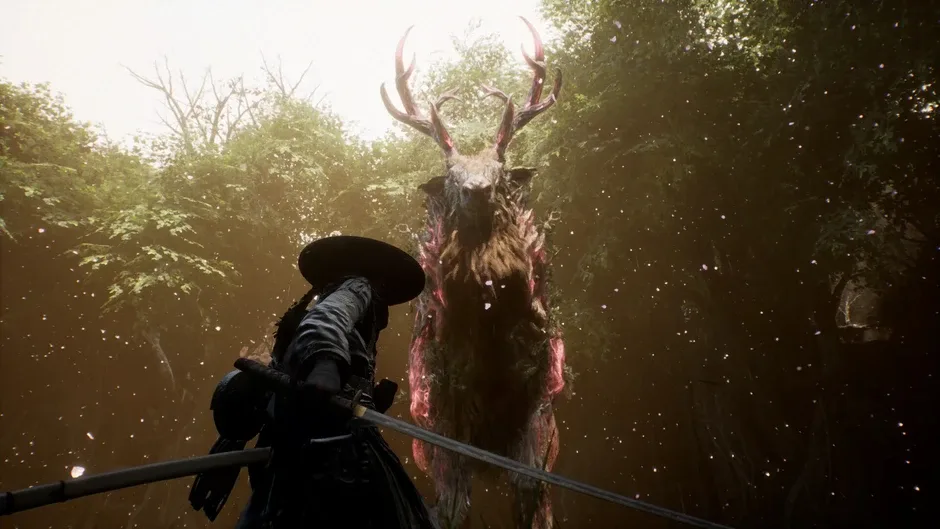
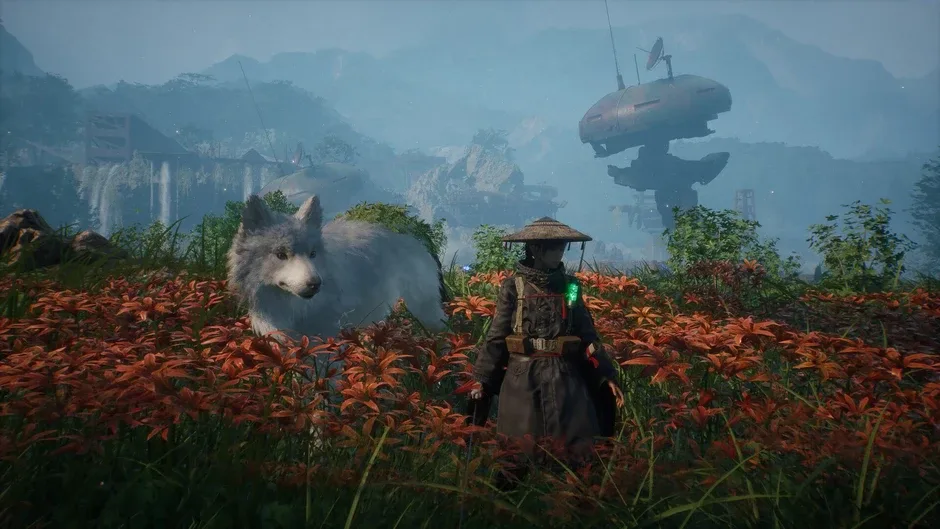
The idea that sets the game apart is the pairing. Combat is built around Emma and Koo acting as a team rather than a hero with a pet. Koo is a stray, wolf-type creature who becomes Emma's partner, fights alongside her and uses special abilities called Bloom Arts. Players build affinity by petting him and feeding him meals, which unlocks rewards and deeper conversations about his past.
Reviewers have compared the mix of influences to Sekiro, NieR and, unavoidably, Pokémon. The comparison with Pokémon is mostly about how Koo is commanded, giving real-time fights a faint turn-based feel. Everything else points toward the Souls-like family, with parrying, stagger and punishing bosses, softened by a more forgiving approach to checkpoints and the option of a story mode.
Setting and story#
The game is set in the year 4026, in a Japan overrun by a parasitic plant known as the Blight. Animals have turned into hostile creatures called Malefacts, and the strongest of them are elite enemies named Nushi. Emma is a Sealer, someone able to absorb the Blight and use it as a weapon. Her task is to defeat the Nushi and use their power against the Beast of Reincarnation, the entity whose existence is tied to keeping the world safe for a century.
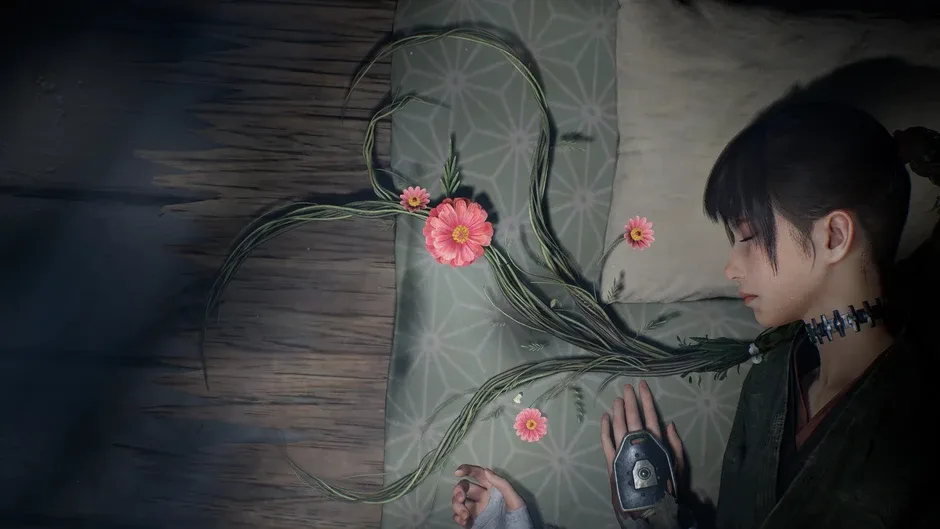
The themes are grief, letting go of the dead, life-extending technology and whether suppressing emotion actually solves anything. That is a heavy set of ideas, and the game treats them with a quiet tone. Critics note that the story is complex and sometimes under-explained early on, and that many characters arrive without much introduction. Much of the plot is delivered through conversation scenes with limited animation, which suits the melancholy mood but makes some stretches feel static.
Emma's emotional restraint is a deliberate part of her character, and it is also the point where opinion splits most clearly. For some players it gives the Koo relationship more weight by contrast. For others it makes scenes feel flat.
Combat: parrying, Bloom Arts and rhythm#
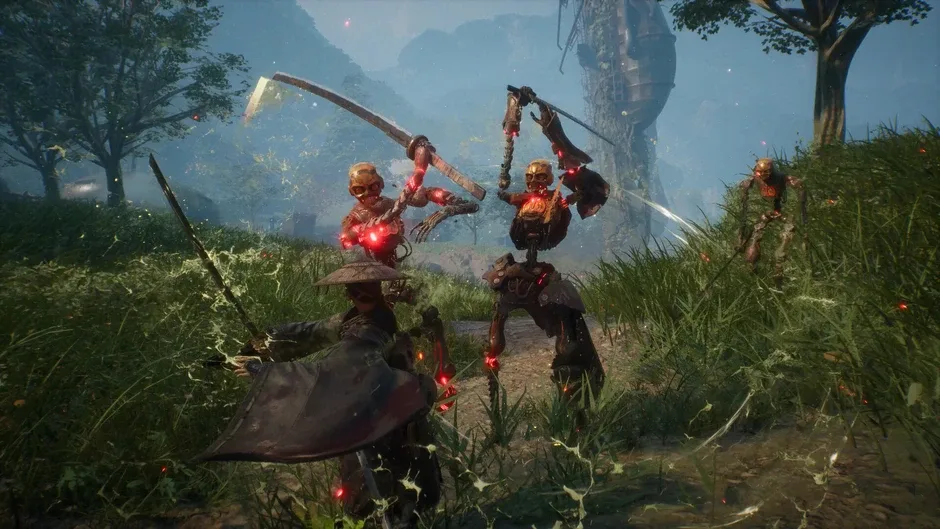
Parrying is the core of the defence. Blocking and dodging exist, but the game rewards players who learn enemy timing and deflect at the right moment. A successful parry restores Koo's energy, which powers his Bloom Arts, so good defence feeds directly into offence. That loop is the reason critics describe the combat as fast, fluid and satisfying.
Bloom Arts are triggered by slowing the action and choosing from a menu, a bit like the command systems in some modern action RPGs. Examples include acid sprays, root restraints and seed barrages that raise stagger and heal Emma. Ranged weapons with different ammunition, such as explosive or poison darts, add another layer. A large skill tree unlocks new attacks, Bloom Art modifications and movement options such as a dodge roll, and a hunger system affects combat strength, although reviewers say it is not strongly emphasised.
The downside is the early game. Many systems arrive quickly, and it can feel overwhelming before the structure becomes clear. Players who dislike parrying will also find that the whole design leans on it, and the story mode is the main safety valve.
Traversal and exploration#
Moving through the world is one of the more inventive parts. Emma can extend her hair to form plant bridges, use it as a spike for high jumps and grapple on designated points. That gives traversal a physical, slightly strange character that suits the Blight setting. Reviewers describe the movement as high-energy, although some report clumsy climbing and a lack of polish in places.
Campsites act as rest points where players spend experience on upgrades, buy skills and improve weapons. The mobile base, the Cleanse Walker, takes the role of a hub. A companion character called Kagura cooks meals there and runs research for recipes and better seedling yields. Exploration pays back with upgrade materials, weapons, shrines that increase healing items and hidden bosses.
World and structure#
The world is semi-open rather than a fully open world. It is split into chapters set in different regions and is largely linear, with few puzzles. That structure keeps the story moving, and it also contributes to one of the main complaints: a campaign that is long for what it offers. Estimates from reviewers vary with playstyle, from around 20 to 25 hours rushing the main story to about 35 to 40 hours with side content and well beyond that for completion. Our database lists a main-story time of roughly 32 hours.
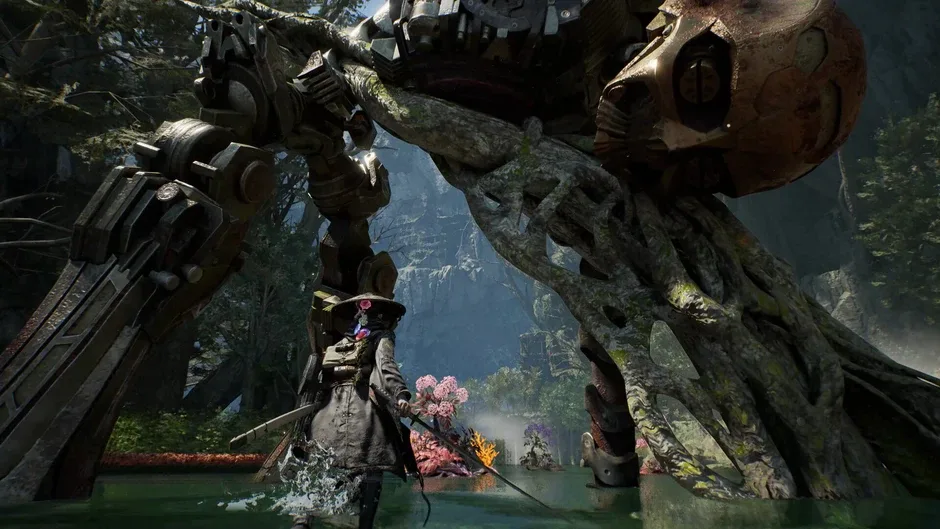
Visually the overgrown, ruined Japan is a highlight. Recognisable locations stand out, and the art direction draws on Princess Mononoke and the style of NieR. Critics also point out muddy textures and odd lighting, especially indoors and underground, and note that some regions look and feel similar to each other.
Bosses and enemies#
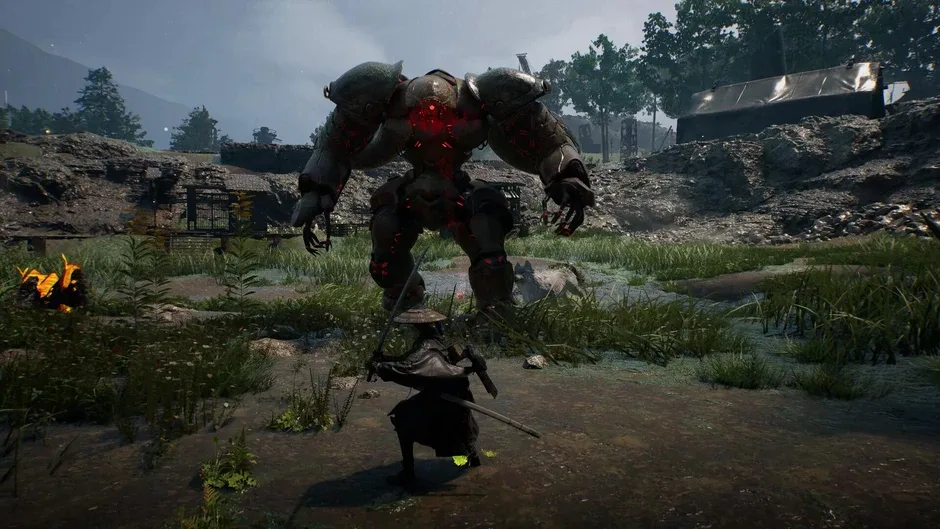
Boss fights are often named as a highlight, particularly the Nushi encounters, where patterns can be read, countered and learned. At the same time there are real complaints. One boss reportedly appears three times in the second half with little change, enemies are often stronger versions of earlier ones, and some reviewers found the patterns predictable. Camera trouble makes large bosses harder to follow, and clipping bugs involving big creatures and Emma's model have been mentioned.
The overall effect is a strong first half of discovery that gradually leans on repetition. That is the pattern behind most of the "overstays its welcome" criticism.
Technical state and patches#
Technical state is where the game divides opinion most. Reviewers on PlayStation 5 reported no noticeable performance problems in at least one detailed review. Other reviews mention camera issues, collision bugs and stiff animations. On PC, launch-week player reports described inconsistent frame rates, DLSS problems, a cinematic mode that defaulted to a low frame rate and text that was hard to read, with Steam Deck players reporting particularly poor results. An emergency performance fix was needed on Xbox.
Game Freak has responded publicly, promising regular updates. The first major update, in early August, adjusted the camera, increased text size and made Performance mode the default for cutscenes. The director acknowledged that some areas still need serious attention. Because patches continue to arrive, check recent player feedback and the store page for the current state before buying, especially on PC.
On Steam the reception has been described as mixed, with a little over half of reviews positive according to our data, far below the tone of the critics. That gap is worth taking seriously: it suggests the launch experience mattered to many players more than the combat did.
Accessibility and difficulty#
A story mode makes the game approachable for those who want the narrative without the hardest fights. Forgiving checkpoints and the absence of fall damage reduce frustration, and quick rewards keep the pace brisk. Missing features come up in reviews, including the lack of a photo mode and limited accessibility options in general, so players with specific needs should check the settings before buying.
Compared with Sekiro and NieR#
The two most useful reference points are Sekiro and NieR. Sekiro shares the parry-first philosophy, but is stricter and more focused on duels. Beast of Reincarnation is more forgiving, more systems-heavy and built around a partner. NieR shares the melancholy post-apocalyptic mood and the mix of action with a strange, emotional story, but is more experimental in structure. Beast of Reincarnation lands between them: easier than Sekiro, more conventional than NieR.
| Beast of Reincarnation | Sekiro: Shadows Die Twice | |
|---|---|---|
| Combat focus | Parrying plus companion abilities | Parrying and posture in duels |
| Difficulty | Adjustable, story mode available | Strict, no difficulty options |
| Structure | Semi-open, chapter-based | Interconnected, linear regions |
| Companion | Koo fights beside you | Solo |
| Tone | Melancholy, emotional | Dark, myth-driven |
New to action RPGs? Start here#
The first hours are crowded, so a few habits help. Learn parrying before anything else, since the whole system is built on it. Treat Koo as part of your attack, not as an extra. Spend experience at campsites regularly, and do not ignore the base upgrades.
- Practise parrying against ordinary enemies until the timing feels natural.
- Use Bloom Arts to open up enemies after a successful parry.
- Rest and upgrade at campsites before big fights.
- Use story mode if the bosses become a wall.
Worth the money?#
A price is not confirmed in the sources this review relies on, so check the current price on your platform of choice. Length is the main value argument: 30 to 40 hours is a solid campaign for the genre, and a New Game Plus mode adds a second pass. The caveat is the repetition and the technical reports, so waiting for further patches or a sale is a reasonable approach for the price-conscious. Supported languages have not been verified for this review, so check the store page for English, Swedish and German options.
Platform choice matters. Console reviews describe a smoother experience than the PC launch did, though patches have been addressing that. PC players should check the latest feedback and their hardware before buying.
Play this instead if…#
Shorter: Sekiro: Shadows Die Twice delivers the parry-focused combat in a tighter, more focused package, and it is the natural pick for anyone who wants the purest version of that idea.
Easier: Horizon Zero Dawn is a post-apocalyptic action adventure with a gentler learning curve and a strong sense of discovery, and it asks for less precision.
Cheaper or co-op: NieR: Automata often appears in discounts and offers a more experimental take on a similar mood. Beast of Reincarnation itself is single-player only, so anyone after co-op should look at cooperative action games such as Monster Hunter titles instead.
Frequently asked questions#
How long is Beast of Reincarnation? Roughly 20 to 25 hours rushing the main story, and about 35 to 40 hours with side content according to one review. Full completion takes much longer.
Is it an open world? Not fully. It is semi-open, split into chapters across different regions, and largely linear.
Is it a Souls-like? It borrows heavily from the genre, especially parrying and tough bosses, but it is more forgiving and includes a story mode.
Which platforms is it on? PlayStation 5, Xbox Series X|S and Windows PC since 4 August 2026.
Does it have co-op or multiplayer? No. It is a single-player game.
Do you need to know Game Freak's other games? No. It has nothing to do with Pokémon in story or setting.
The Game Avant verdict#
Beast of Reincarnation is a good game that tries to be a very good one. The combat has a lovely rhythm, Koo is a genuine strength, and the ruined Japan is memorable. The problems are also real: a middle section that drags, repeated bosses, a camera that causes trouble and a PC launch that left many players unhappy. Patches are improving the situation, but the gap between critics and Steam players shows how much launch quality matters.
The fair conclusion is that this is a worthwhile action RPG for those who enjoy parrying and a strong companion, and a more cautious purchase for those who want polish first. It is a promising new direction for the studio that does not quite finish the job.
7 out of 10 – a fluid, heartfelt action RPG with a great companion, held back by repetition and technical rough edges.