
An open world with no arrow#
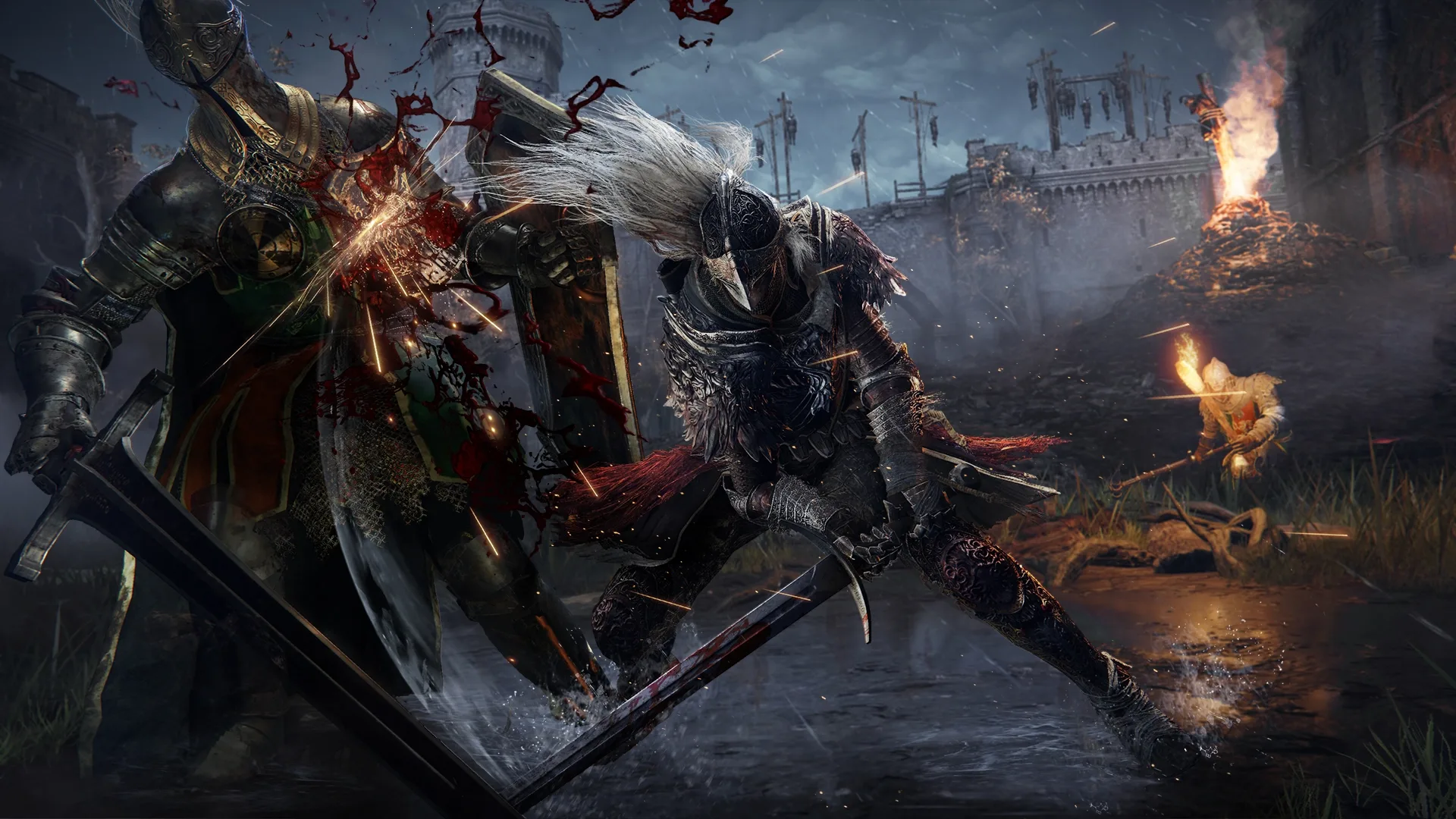
Elden Ring is the game where FromSoftware took the structure of Dark Souls, removed the corridors, and discovered that the formula got better rather than worse. Released on 25 February 2022 for PlayStation 4, PlayStation 5, Xbox One, Xbox Series X|S and PC, and since August 2026 on Nintendo Switch 2 as the Tarnished Edition, it is the studio's biggest, most generous and most approachable game. It won Game of the Year at The Game Awards 2022 and has passed 30 million copies sold. None of that is why it earns a 10 here. It earns it because it solves the one problem every big open-world game has had for 15 years: how to make a huge map feel like it is worth crossing. The answer, it turns out, is to stop telling the player where to go.
The premise fits in a sentence. The Elden Ring, the source of order in the Lands Between, has been shattered. Demigods each hold a fragment called a Great Rune. You are a Tarnished, called back from exile to collect them and become Elden Lord. What the game does not do is turn that into a quest log. There is a golden thread of "grace" that points vaguely at the next major boss, and there is a map you fill in by finding map fragments at stone monuments. Everything else is yours to discover, ignore or stumble into.
What makes Elden Ring different#
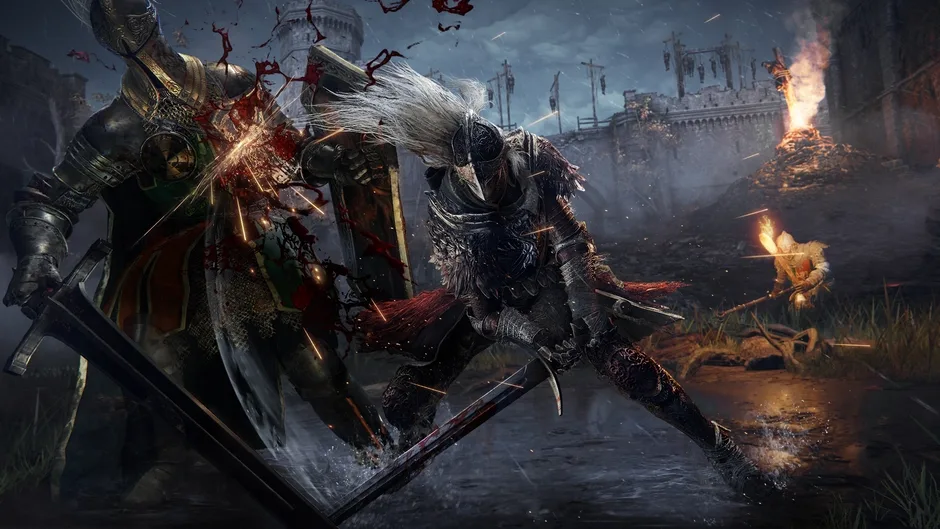
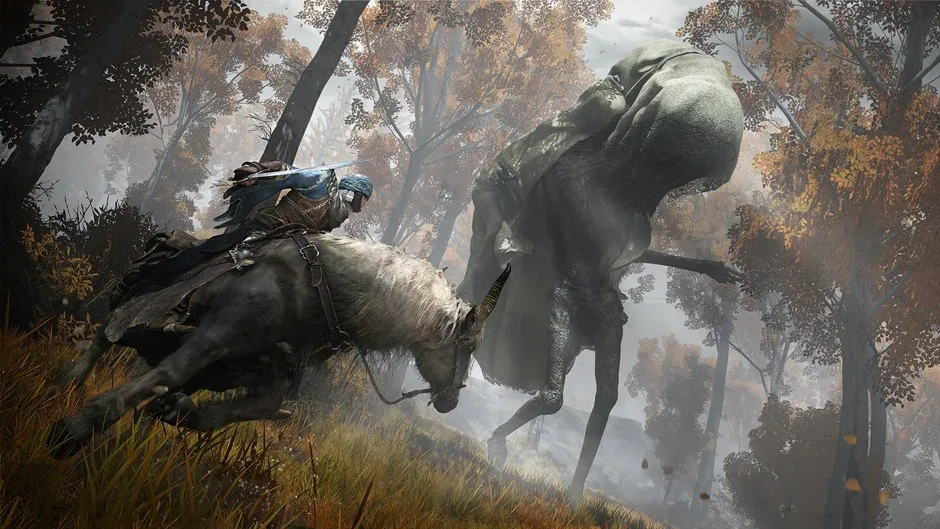
The one idea that carries the game is that difficulty is spatial. In Dark Souls, if you hit a wall, you had two options: get better or grind. In Elden Ring you have a third: go somewhere else. Margit, the Fell Omen, is the first real gatekeeper, standing on the bridge outside Stormveil Castle, and he is deliberately too much for a fresh character. The game does not lower him. It surrounds him with alternatives. You can ride Torrent, your spectral horse, south into the Weeping Peninsula for a gentler castle and a Great Rune-free legacy dungeon. You can find Sorceress Sellen in the Waypoint Ruins and start building a mage. You can hunt down the Spirit Calling Bell and summon the Lone Wolf Ashes so that Margit has to split his attention. Or you can go north, sneak through a rocky path behind the castle and skip him entirely.
That is the trick the whole game is built on. Every wall has a door next to it. The Lands Between is arranged so that Limgrave, the starting region, funnels into Liurnia of the Lakes to the north and Caelid to the east, and Caelid is a scarlet-rotted nightmare where every enemy is tuned for a character 30 levels higher. Nobody stops you from entering. A trap chest in the Dragon-Burnt Ruins will even teleport you there early. The lesson is one most games teach with a red skull icon; Elden Ring teaches it by letting you get eaten by a giant dog with a crossbow for a head, then quietly noting where the graces are so you can come back.
The result is that the world's difficulty curve is something you author yourself. Overlevel by clearing every catacomb in Limgrave and Liurnia and Godrick the Grafted becomes a formality. Rush the legacy dungeons and Rennala, Queen of the Full Moon, will teach you what a proper second-phase boss looks like. Both are legitimate playthroughs, and the game never judges either.
Exploration: the map only shows where you have been#
The map is the best piece of design in the game and the least discussed. It starts blank. Each region has a map fragment at a stone pillar, and until you find it, you see nothing but an outline. Once you do, the map shows terrain, roads and structures, but not what they contain. A squat square in the woods could be a catacomb, an Evergaol holding a bonus boss, or a merchant's camp. There are no icons except the ones you place yourself, with a small set of custom markers and a beacon.
That absence changes how you read the world. Instead of scanning for question marks, you look at the actual landscape. A ruin with a sunken staircase means a basement with a chest or a boss. A church silhouette means a Sacred Tear to upgrade your flask. A minor Erdtree glowing in the distance means a Crystal Tear for the Wondrous Physick. A long bridge with statues means something is going to ambush you on it. Within a few hours, you learn the visual grammar, and from then on, the map is a promise rather than a checklist.
The scale helps. Limgrave alone is larger than most Dark Souls games, and it is one of six major surface regions. Below all of it sits an entire second layer: Siofra River and Ainsel River, underground cities lit by a false sky, reached through wells and lifts you can miss entirely. Nokron, Eternal City is a full legacy dungeon that only opens after you defeat Starscourge Radahn, and a large fraction of players who finish the game never see it. The game is fine with that. It was built for a second playthrough.
Torrent is what makes the scale survivable. He double-jumps, sprints, and can use spirit springs to launch up cliffs that would otherwise be a 10-minute detour. Mounted combat is clumsy but useful for picking off the dragons that sleep on the plains. More importantly, he removes the tedium that usually comes with a map this size without ever offering a fast-travel-to-objective button. You still cross the world. You just do it at a gallop.
Combat: the deepest toolkit FromSoftware has shipped#
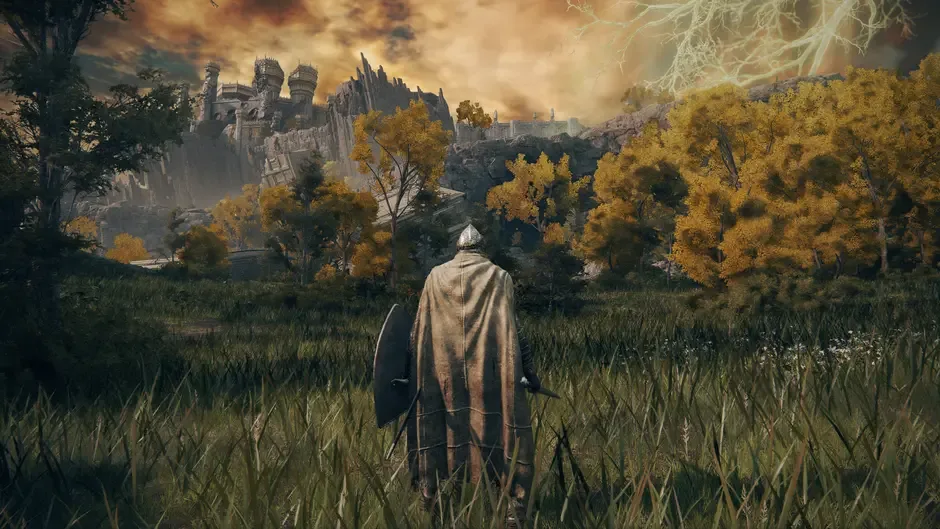
Underneath the open world sits Dark Souls III combat with three major additions. Jumping is now a real move: jump attacks stagger, and jumping over a sweep is a legitimate dodge. Guard counters let shield users press heavy attack right after a block for a fast, stance-breaking riposte, which turns the sword-and-board build from a defensive crutch into an aggressive one. Stealth is in, borrowed from Sekiro: crouch in tall grass and most enemies lose you, and a backstab from a crouch does critical damage.
The big system is Ashes of War. Almost every non-unique weapon can have its skill swapped out and its damage scaling changed. Put Bloodhound's Step on a curved sword, and you have a teleporting dodge. Put Lion's Claw on a greatsword, and every somersault slam breaks stance. Put Seppuku on twin katanas, and you bleed enemies to death in seconds. Because the Ashes also change the weapon's affinity, you can make a Keen dexterity version of a weapon one hour and a Sacred faith version the next. Builds stop being a commitment you make at character creation and become something you tinker with at every site of grace. Since patch 1.17 in August 2026, shields and parrying have also been buffed, so the guard-heavy playstyles are now as viable as the rolling ones.
Spirit Ashes are the other half. Summoning a Mimic Tear, a copy of your own character, or the Black Knife Tiche, an assassin with a health-draining blade, at a boss fog wall is the closest the game comes to a difficulty setting. Purists skip them. People with jobs use them. Both groups reach the credits, and the game hands out the same rewards.
Magic is finally worth building around. Sorceries from the Academy of Raya Lucaria hit hard at range, faith incantations range from healing to dragon breath to summoning lightning spears, and Comet Azur can delete a boss in one channelled beam if you have the Cerulean Hidden Tear to cancel its FP cost. A pure caster is one of the easiest ways through the first 40 hours and one of the hardest through the last 10, which is a nicely honest curve.
Builds and classes: the starting choice matters less than you think#
There are ten starting classes, from the heavily armoured Vagabond and the Samurai with katana and longbow to the Prisoner, who starts with both a sword and sorcery, and the Wretch, who starts naked at level 1 with a club. The class only decides the first few hours. Because every level is allocated freely, an Astrologer can end up as a colossal-sword bruiser and a Vagabond as a fire priest. Four builds carry the whole game without trouble: bleed with twin katanas or Rivers of Blood, pure strength with a colossal weapon and Lion's Claw, intelligence with Moonveil or Comet Azur, and faith with the Blasphemous Blade, which heals on every hit. If you want to change later, Rennala lets you reallocate every point for a Larval Tear after her fight, and there are enough tears in the world to try most things in a single playthrough. It is the freedom Dark Souls always promised and never quite delivered.
Bosses: from Margit to Maliketh#
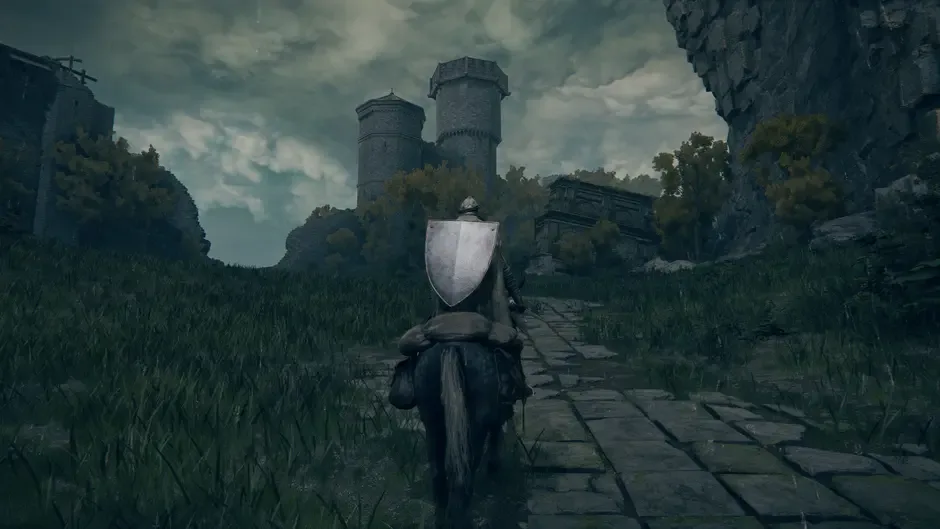
The main story runs through a chain of shardbearers, and the quality is consistently high. Godrick the Grafted is a grotesque who sews arms onto himself and ends the fight with a dragon's head grafted to his stump. Rennala is a two-phase fight where phase one is a puzzle about breaking a barrier and phase two is a spell-casting duel in a moonlit void. Radahn's fight is a battlefield with a festival attached: summon signs for a dozen NPCs litter the arena, and you fight a warrior who is riding a horse far too small for him because he refused to let it die.
Morgott, the Omen King, at the foot of the Erdtree in Leyndell, is the fight where the game asks whether you have actually learned to read attacks, and his delayed thrusts and holy-blade combos are the template for the rest. Rykard, Lord of Blasphemy, is a set-piece where the game gives you a giant serpent-slaying spear and tells you to have fun. Maliketh, the Black Blade, in Crumbling Farum Azula, is arguably the best boss in FromSoftware's catalogue: fast, aerial, readable, and dangerous enough that his Destined Death attack lowers your maximum HP with every hit.
The final stretch is where the design starts to wobble. Godfrey, First Elden Lord, is a superb fight. Radagon of the Golden Order is a superb fight. The Elden Beast that follows Radagon without a rest is a slow, floaty chase across a starry arena that would be fine as a spectacle and is frustrating as a second phase after a hard first one. Malenia, Blade of Miquella, hidden at the bottom of the optional Haligtree, is the fight everyone talks about: she heals with every hit she lands, and her Waterfowl Dance is a three-stage flurry that killed most players dozens of times before someone found the timing to dodge it. She is brilliant and slightly unfair, and the game is honest enough to keep her optional.
Difficulty and the "Souls for everyone" question#
Elden Ring is the easiest FromSoftware game and the hardest FromSoftware game, depending entirely on how you play it. That is not a dodge; it is the design. The base difficulty of enemies is high, and late-game mobs like the Crucible Knights and the Godskin Apostles will punish anyone who rolls on reflex. But the sheer number of levers, Spirit Ashes, overlevelling, co-op summons, bleed builds, Comet Azur and a Mimic Tear, mean that almost anyone can find a way through.
The honest criticism is that the game's back half leans on the wrong kind of hard. Enemies in the Mountaintops of the Giants and Crumbling Farum Azula have huge health pools and long, delayed combos designed to bait an early roll. The Godskin Duo fight is two already-tricky bosses at once in a small room. Catacombs reuse the Erdtree Burial Watchdog and the Grave Warden Duelist so often that you stop being excited to find one. None of this makes Elden Ring bad. It means that the last 15 hours are less inventive than the first 60.
Shadow of the Erdtree: the second game inside the first#
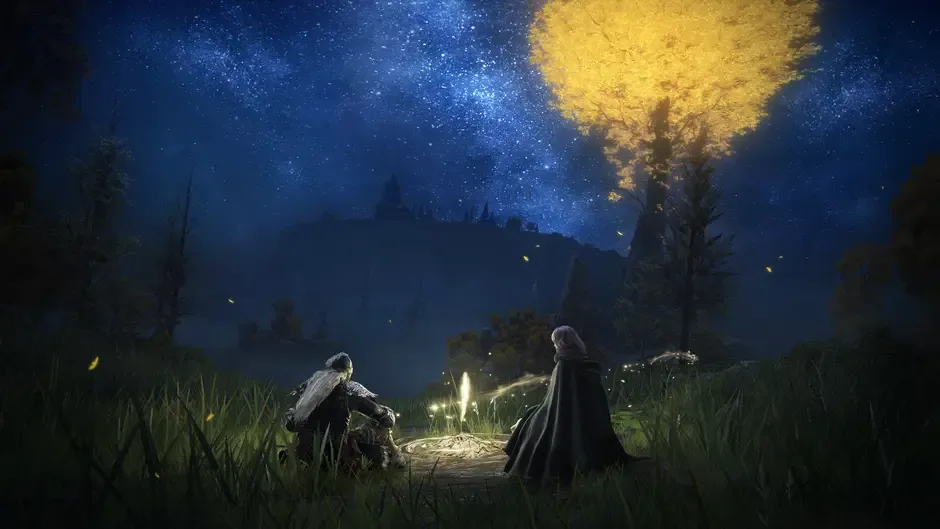
The expansion, released on 21 June 2024, is enormous. It requires beating Starscourge Radahn and Mohg, Lord of Blood, then touching the withered arm at Mohg's boss arena to enter the Land of Shadow. What you get is a region roughly the size of Limgrave and Liurnia combined, layered vertically with cliffs and hidden descents, a whole new progression system, and the toughest bosses the studio has made.
The Scadutree Fragment system is clever. The DLC does not scale to your level; instead, you find fragments across the map that raise a separate Scadutree Blessing level, which boosts your damage and defence only inside the Land of Shadow. It means the DLC has its own exploration reward loop even for a level 200 character, and it means that ignoring exploration in favour of rushing bosses is punished. The bosses are worth the effort. Rellana, Twin Moon Knight, is a fast sword duel that escalates into a double-moon spell. Messmer the Impaler, the DLC's face, is a snake-fuelled spear fight and one of the studio's best ever. Bayle the Dread is a proper dragon fight that fills an entire mountaintop. The final boss, Promised Consort Radahn, was so hard at launch that a patch lowered his damage, and he remains a fight that divides people between "peak" and "too much".
The expansion also fixes the base game's weak catacombs problem with new dungeon types and adds weapon classes the base game lacked: light greatswords, backhand blades, perfume bottles, throwing weapons and beast claws. It has passed 10 million copies sold on its own. The Shadow of the Erdtree Edition bundle is the version to buy if you are new, and the Tarnished Edition on Switch 2 includes all of it plus a small Tarnished Pack of two extra starting classes that also sells separately for around five euros on other platforms.
Story: a myth you assemble yourself#
George R. R. Martin wrote the world's backstory, and Hidetaka Miyazaki's team turned it into the usual FromSoftware puzzle: a handful of cutscenes, a few dozen NPCs with short dialogue, and thousands of item descriptions that contradict, correct and expand on each other. The core of it is a family tragedy. Queen Marika shattered the Elden Ring after the death of her son Godwyn the Golden; her children fought a war over the fragments; and her consort, Radagon, turns out to be the same person she is. That last reveal lands in a single line of text on a statue, and it recontextualises half the lore.
The NPC quests are the game's weakest interface and its best writing. Ranni the Witch's questline, which takes you through Nokron, the Lake of Rot and the Moonlight Altar, is the most rewarding, and it unlocks an alternate ending. Millicent's quest and Fia's quest are both quietly heartbreaking. The problem is that most of them can be failed permanently without any warning: kill the wrong boss, rest at the wrong grace, or simply progress too far and a character vanishes from the world. It is intentional, but it is the part of Elden Ring that most needs a wiki, and that is a real cost.
New to Souls games? Start here#
Elden Ring is the right first FromSoftware game, and a few choices make the opening hours far kinder. Pick the Vagabond for the most forgiving melee start or the Astrologer if you would rather fight from a distance; the Samurai's Uchigatana with its bleed build-up is the strongest early weapon in the game. Level Vigor first: 40 points before anything else stops the two-hit deaths that turn people away. Find the Spirit Calling Bell from Renna at the Church of Elleh on the first night, and use the Jellyfish Ashes as a tank. Buy the map fragment habit early: every region's stone pillar is marked on the map as a small icon once you are near it. And ignore Caelid until level 50, whatever the trap chest tells you. Do that, and the first 20 hours are a well-designed open-world RPG rather than a hazing ritual.
Compared with Dark Souls III and The Legend of Zelda: Breath of the Wild#
Dark Souls III is the tighter game. Its Lothric is a single interlocking structure where every shortcut is a small revelation, and its bosses, Abyss Watchers, Pontiff Sulyvahn, Nameless King, are set at a difficulty that assumes no escape route. If you want that pressure, Elden Ring's ability to walk away from a fight will feel like a leak. Dark Souls III is also 30 hours instead of 100, which matters if the idea of a second 100-hour game is a burden rather than a gift. But for everything else, world size, build variety, boss count and the feeling of discovery, Elden Ring is the stronger game.
Breath of the Wild is the fairer comparison for exploration, because it is the game Elden Ring learned from. Both drop you in a world with no markers and trust you to look at the horizon. Zelda's is friendlier: enemies rarely kill you in two hits, and its physics sandbox gives you toys rather than weapons. Elden Ring's is denser. Where Hyrule has dozens of near-identical shrines, the Lands Between has castles, cities, underground rivers and a dozen legacy dungeons with unique bosses. If you want to play with a world, play Zelda. If you want to survive one, play this.
Worth the money?#
At full price, the base game costs around 60 euros on PC and 70 on console, and Shadow of the Erdtree around 40. The bundle is regularly discounted to half or less, and the base game has been on sale at around 30 euros repeatedly since 2023. For that money you get roughly 50 to 60 hours for a focused run to the credits, 100 or more for a normal playthrough that explores the map, and 130 plus for a completionist run; the expansion adds another 30 to 40. Almost nothing else in the genre offers this ratio.
Best platform: PC, if you have a strong GPU and are willing to accept occasional shader-compilation stutter, which has improved since launch but never vanished. PlayStation 5 and Xbox Series X are the safest choice, running a 60 fps mode that dips in busy areas but holds most of the time. The Switch 2 Tarnished Edition runs at 1080p and 30 fps, docked or handheld, with no 60 fps option; it is the complete package, but it is for people who want portability more than smoothness. Steam Deck runs the game well at 30 to 40 fps with medium settings.
Text and voice: the voice acting is English only on every platform. Interface and subtitles are available in German among a dozen languages, but not in Swedish.
Play this instead if…#
Shorter: Sekiro: Shadows Die Twice, the same studio's 30-hour samurai game, has no builds and no open world, just one sword, one posture system and the best parry-based bosses in the genre.
Easier: The Legend of Zelda: Breath of the Wild gives you the same freedom to wander a marker-free map without the two-hit deaths.
Cheaper or co-op: Elden Ring Nightreign takes the same combat, shrinks it into 40-minute three-player runs against eight Nightlords, and costs around 40 euros; if you want the base experience with friends, the game's own summon system supports three-player co-op for any boss.
Frequently asked questions#
How long is Elden Ring? Around 50 to 60 hours for a direct route to the credits, 100 or more for a normal playthrough, 130 plus for everything, and Shadow of the Erdtree adds 30 to 40 more.
Is Elden Ring open world? Yes. Six major surface regions plus an underground layer, all reachable without loading screens, with legacy dungeons such as Stormveil Castle and Leyndell built into the map.
Does it have co-op? Yes, up to three players via summon signs, but co-op is limited to a single area and ends at the boss; there is no full campaign co-op without PC mods. Nightreign is the co-op-first spin-off.
Is there an easy mode? No menu option, but Spirit Ashes, levelling, summons and build choice change the difficulty dramatically.
Do you need to play Dark Souls first? No. The story is self-contained and the controls are similar enough that Dark Souls veterans have a head start, not a requirement.
The Game Avant verdict#
Elden Ring is not flawless. Its final act leans on delayed-attack enemies and reused dungeons, its quests need a guide, and PC stutter is a five-year-old problem. Those flaws would drag a lesser game to an 8. They do not drag this one because the thing it does better than every other game, letting you loose in a massive, hostile world and trusting you to find your own way through it, is done so completely that the flaws are things you notice on the way to another discovery. It is the rare open-world game where getting lost is the point, and the rare Souls game where the difficulty is a landscape instead of a wall. Four years, one expansion and a Switch 2 port later, nothing has caught it.
10 out of 10 – the open world every other open world will be measured against, and the deepest action RPG FromSoftware has made.