
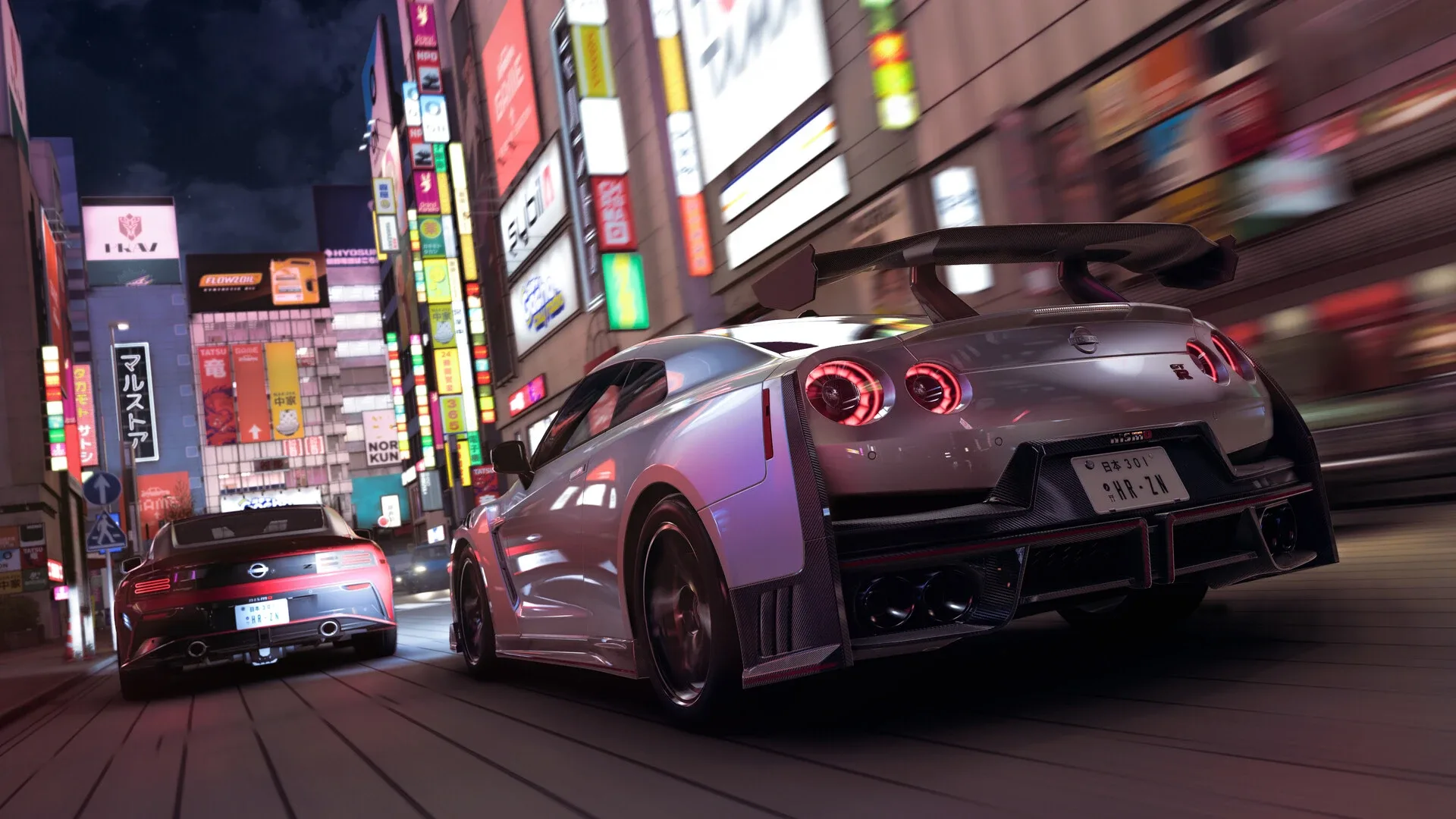
One city, built at a scale the series has never tried#
Forza Horizon 6 is the entry where Playground Games stopped building a country and started building a city. Released on 19 May 2026 for Xbox Series X|S and PC, through both Steam and the Microsoft Store, and developed with assistance from Turn 10 Studios, it trades the regional patchwork every earlier Horizon game relied on for a single, continuous setting: Tokyo City, the largest urban map the franchise has ever built. That single decision is both the best thing about the game and the reason it is easy to be cautious about it. The map is a genuine achievement. Everything around the map, what you actually do on it, how big the roster is, when the other half of the audience gets to play it, is still thinner than a Horizon launch should be.
Set in Japan rather than a fictional stand-in for it, Forza Horizon 6 asks a different question than its predecessors did. Forza Horizon 5 asked how many different landscapes you could stitch into one country. Forza Horizon 6 asks how much city you can build before a city stops feeling like a city. The answer, so far, is a map roughly five times the size of Forza Horizon 5's Guanajuato setting, which was already the biggest map the series had produced. That is the headline, and it is a real one.
What makes Forza Horizon 6 different#
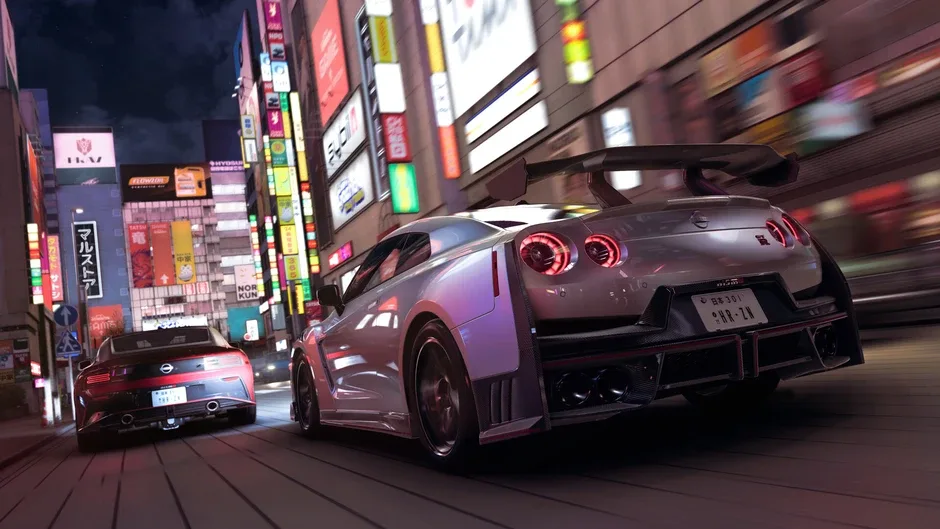
The one idea that carries this game is continuity. Previous Horizon maps were built from distinct biomes glued together at their edges: a desert next to a jungle next to a canyon, each one legible the moment you crossed into it. Tokyo City refuses that structure. It is one urban fabric that changes density and character as you move through it rather than changing identity outright. A dense commercial core gives way to quieter residential blocks, which give way to industrial waterfront roads, which climb into the foothills and eventually the named mountain passes at the map's edges. Nothing about that transition announces itself with a loading screen or a biome label. You simply notice the buildings getting taller, or the traffic thinning out, or the road starting to climb.
That continuity is only convincing because of what the roads are actually modelled on. Rather than inventing a generic idea of "a big Asian city", Playground built specific, recognisable pieces of Tokyo into the map: the C1 loop, the elevated expressway ring that has defined the city's driving culture for decades, and Gingko Avenue, one of Tokyo's most photographed streets, both appear as named, drivable roads rather than vague inspiration. Layered against that urban core are two real mountain settings, Mt. Haruna and Bandai Azuma, which bring the switchback climbs and elevation change that Japan's actual mountain-pass driving culture is known for. The result is a map that reads less like "a racing game set in Japan" and more like an attempt to reconstruct specific places well enough that someone who has driven them would recognise the shape of the road before recognising the name on the signpost.
Tokyo City: a metropolis five times the size of Guanajuato#
Scale on its own means little; plenty of open-world games have padded a map to a big number without making the extra space worth crossing. What makes Tokyo City's size notable is that it is being spent on density rather than emptiness. A map five times larger than Guanajuato that simply repeated the same handful of road shapes for five times as long would be a worse game than Forza Horizon 5, not a better one. The stated intent, and the reason the size is worth discussing at all rather than dismissing as a marketing number, is that it is built as a single urban organism: one connected grid of avenues, expressways, side streets and waterfront roads, layered with the elevation of the surrounding highlands rather than flattened out to make room for more square kilometres.
Whether that density holds up across the entire five-times-larger footprint, or whether it thins out the further you get from the recognisable landmarks, is the kind of question that only becomes fully answerable with more time in the city than a launch window allows and more specifics than the studios have shared so far. What is already clear is the ambition behind the number. No earlier Horizon map tried to be one city at this scale. This one does, and the decision to build it around a real metropolis rather than an amalgam gives it a spine the earlier maps, for all their variety, never needed.
The roads that are actually Tokyo#
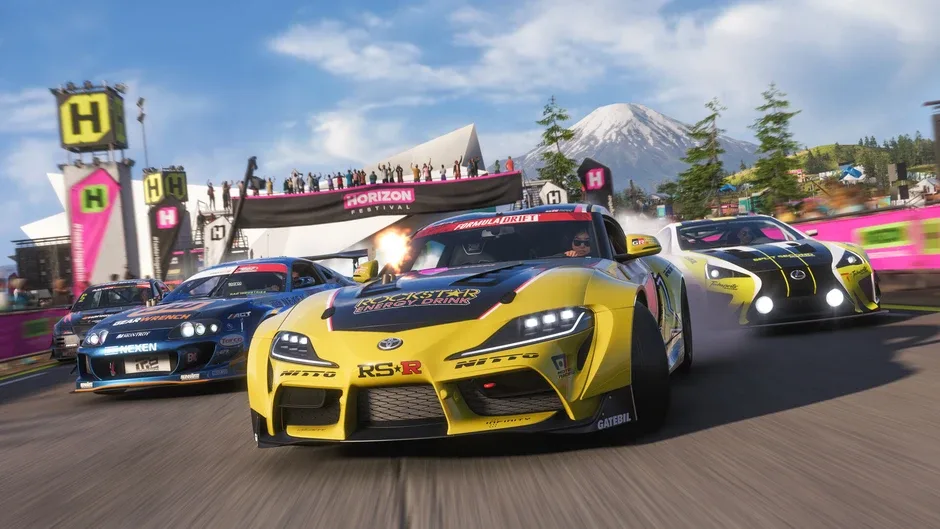
The most convincing argument for Forza Horizon 6's setting is not the size of the map but the specificity of what is on it. The C1 loop is not a generic elevated highway; it is the actual ring road that has shaped how Tokyo drives for two generations, and putting it into the game as a drivable, named structure rather than a vague expressway-shaped stand-in signals a level of care about place that earlier Horizon settings, built from composite fictional regions, never had to demonstrate. Gingko Avenue works the same way from the other direction: it is not a highway at all, but a single, specific street known for its own character, and its inclusion says the map is not only concerned with scale and speed but with texture.
This matters because it changes what "exploring" the map means. In a fictional composite region, discovery is about finding a road shape you like. In a map built from real, named places, discovery becomes recognition: noticing that a stretch of elevated road is the C1 loop before you are told, or realising a particular avenue is the one you have seen photographed a thousand times, now rendered at speed with your own hands on the wheel. That is a different kind of payoff than most open-world racers offer, and it is the clearest evidence that Tokyo City was not chosen as a fashionable setting but built with an eye for what actually makes the city recognisable.
Mt. Haruna and Bandai Azuma: the other half of the map#
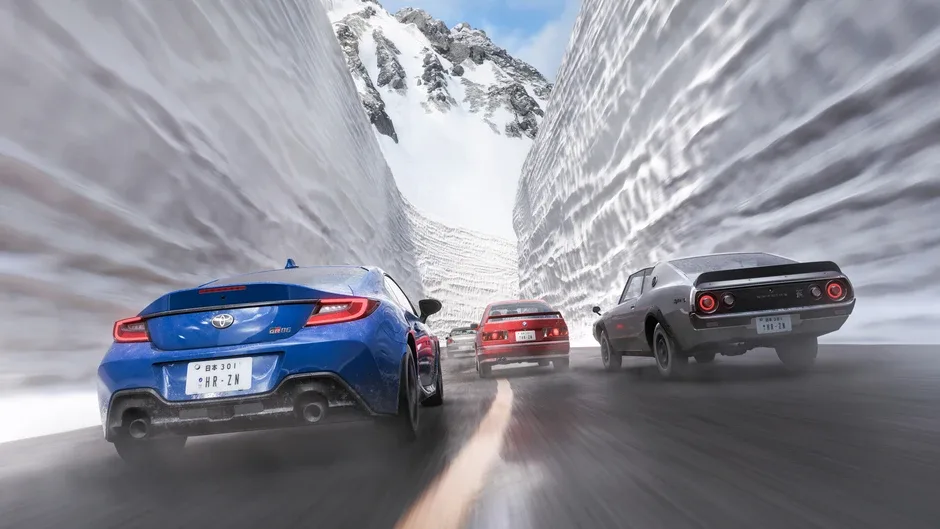
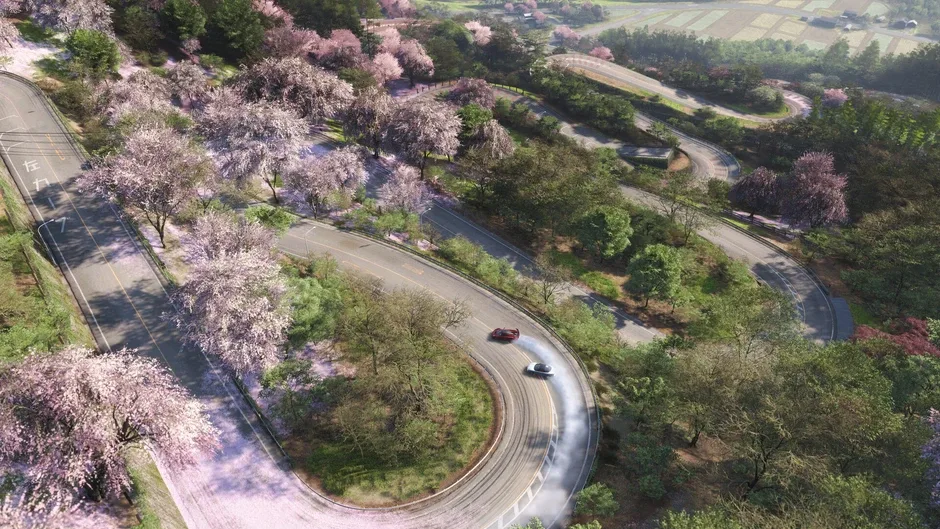
A metropolis this dense needs a counterweight, and Forza Horizon 6 finds it in the mountains rather than in a second city. Mt. Haruna and Bandai Azuma sit at the edges of the map as the vertical answer to Tokyo City's horizontal sprawl, and both are drawn from real mountain-pass roads, the kind of tight, elevation-heavy switchback routes that Japan's touge driving culture is built around. Where the urban core rewards reading traffic and threading tight junctions, the mountain roads reward reading a corner's camber and elevation change well before you reach it.
Structurally, this gives the map a shape rather than just a size: one enormous flat, dense centre, and two named highland regions pulling the eye and the wheel upward at its margins. It is a smaller number of distinct settings than Forza Horizon 5 offered, which spread its variety across many named biomes rather than concentrating it in two mountains and one city. Whether that trade is worth it depends on what you valued in the earlier game. If what mattered was constantly discovering a new kind of landscape, Tokyo City's approach will feel like less. If what mattered was roads that felt like somewhere real, Haruna and Bandai Azuma are a strong argument that less can still be more, as long as what remains is built with this much specificity.
The vistas critics keep mentioning#
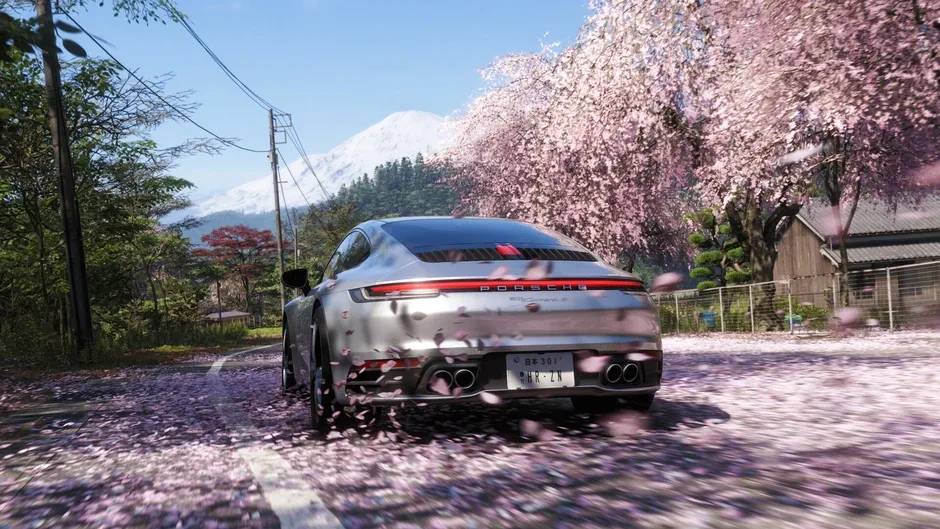
General press coverage of Forza Horizon 6 has converged on two things: the volume of content on offer and the quality of its vistas, with scores clustering in the 90s across outlets. Game Avant does not borrow anyone else's score, and a figure in the 90s from the wider press is not, by itself, a reason to rate the game any particular way here. What it does confirm is where the consensus is pointing, and in this case the consensus lines up with what the map itself supports: a setting built around sightlines. Tokyo City's verticality, the elevated C1 loop threading above street level, the density that stacks buildings close enough to frame a street rather than just fill a horizon, gives the game a different kind of view than Forza Horizon 5's open plains and volcanic backdrops ever could. Mt. Haruna and Bandai Azuma add the other half of that picture, the kind of elevated overlook where a switchback road doubles as a viewpoint over the valley you just climbed out of.
None of that is the same as confirming the game is fun to drive for fifty hours, and it would be dishonest to pretend a strong skyline is the same achievement as a strong driving game. But it is a real, verifiable strength, and one that matches the actual design decisions behind the map rather than existing independently of them. A city built with this much attention to real streets and real elevation was always going to look the part. The open question, still unanswered by anything Playground or Turn 10 have detailed so far, is how much of that view you get to enjoy while doing something other than looking at it.
The launch Playground chose, and what it leaves out#
Forza Horizon 6 launched on 19 May 2026 on Xbox Series X|S and PC, available through Steam and the Microsoft Store alike, which is the standard, expected footprint for a mainline Horizon entry on its home platform. What is not standard, and what any prospective buyer needs to weigh before buying in, is that a PlayStation 5 version was announced for later in the year without a confirmed date at the time of writing. That is a meaningfully different launch than the series' recent history, and it puts a large slice of the racing-game audience, everyone who owns a PlayStation and no Xbox or gaming PC, in the position of watching a launch they cannot yet participate in.
There is nothing dishonest about that rollout. Staggered platform releases are common enough across the industry that it is not, by itself, a reason to mark the game down heavily. But it does mean the game's actual audience at launch is narrower than its ambition, and it is worth being upfront about that rather than treating a five-times-bigger map as automatically available to everyone who might want to drive it. If you are a PlayStation-only household, the honest answer right now is that Forza Horizon 6 is a game you are waiting for, not one you are playing.
What Playground and Turn 10 still haven't said#
The clearest gap in what is known about Forza Horizon 6 is not the map, which has been described in real detail, but almost everything that usually anchors a Horizon review: car counts, named festival events, headline mechanics, and the specific systems that will decide whether Tokyo City is fun to drive for fifty hours or just impressive for five. General press coverage has been positive, with scores in the 90s largely built on the vistas and the sheer volume of content on offer, but a scenery-and-volume verdict is not the same as a verdict on what that content actually asks you to do behind the wheel.
That is not a reason to assume the worst. It is a reason to be precise about what can and cannot be said with confidence at this point, and a genuine mark against a launch that has led with landmarks and left the mechanical substance for later. A city this carefully modelled deserves a driving game built with equal specificity underneath it, and until more of that substance is confirmed, the fairest thing to say is that the map has earned trust the rest of the package has not yet had the chance to.
Compared with Forza Horizon 5#
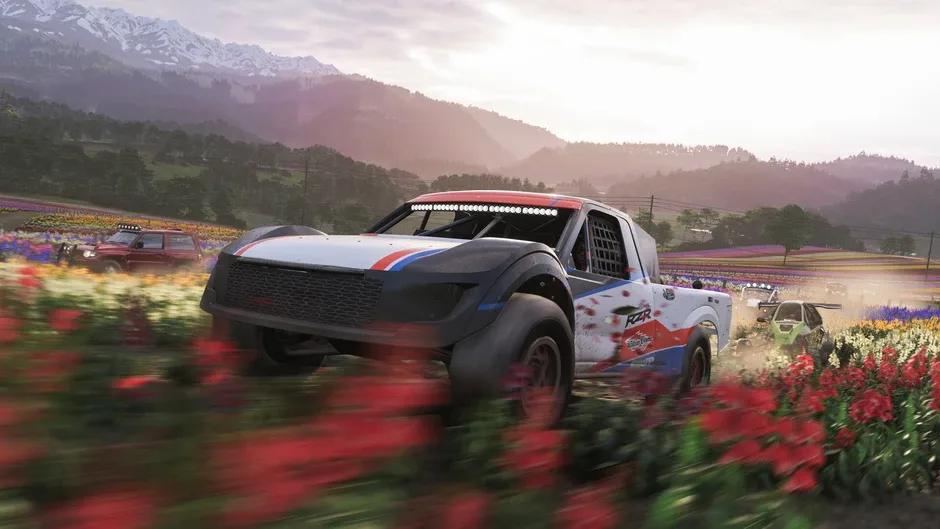
Forza Horizon 5's Mexico is still the fairest comparison, because it is the map Forza Horizon 6 is explicitly measuring itself against in scale. Mexico built its identity on variety: volcanoes, jungle, desert, colonial towns and coastline, each a distinct biome you could recognise within seconds of arriving. Tokyo City inverts that approach almost entirely, betting everything on depth within one setting rather than breadth across several. Anyone who loved Forza Horizon 5 specifically for the feeling of crossing an entire, wildly varied country in an afternoon will find Tokyo City's single-metropolis focus a narrower experience by design, whatever its footprint says on paper.
What Tokyo City offers instead is specificity Mexico's composite regions never aimed for. Forza Horizon 5's biomes were built to feel like their category, a jungle that felt jungle-like, a desert that felt desert-like, rather than to reproduce a single real, named place. Forza Horizon 6's decision to model the C1 loop, Gingko Avenue and two specific mountain passes rather than generic equivalents is a different kind of ambition, one that rewards recognition over range. Which map is "better" depends entirely on which of those two things you go to a Horizon game for, and for the first time in a while, the series is genuinely offering a different answer rather than a bigger version of the same one.
Worth the money?#
This is the section of a Horizon review that would normally weigh price against hours, but Forza Horizon 6's own studios have not detailed enough of the specifics, cars, events, edition tiers, that a confident hours-to-cost estimate would require, and the honest approach is to say so rather than to guess. What can be said with confidence is the platform picture: Xbox Series X|S and PC owners can buy in at launch, through either Steam or the Microsoft Store, while PlayStation 5 owners have nothing to buy yet and no date to wait for beyond "later in the year." If you already own an eligible platform and the setting itself, one real, dense metropolis built at five times Forza Horizon 5's scale, is what draws you in, that scale and the specificity of its roads are real enough to justify getting in early. If you are choosing a platform specifically to play this game, or waiting on PlayStation, patience costs you nothing extra and buys you a firmer date and a clearer picture of what is actually in the box.
Play this instead if…#
Shorter: Forza Horizon 5 remains the tighter, more varied pick if you want a Horizon-style open world without committing to a map built around a single city, and it has had years of updates and sales behind it already.
Easier or more familiar: Any earlier Forza Horizon entry gives you the same arcade-friendly, forgiving handling model in a setting you already know, without waiting on a platform release.
Cheaper or PC-first: Forza Horizon 5, discounted regularly since its release, delivers a comparable core driving feel at a fraction of a full-price launch, and is a reasonable way to decide whether the series' handling suits you before buying into a brand-new map.
Frequently asked questions#
When did Forza Horizon 6 release? It launched on 19 May 2026, on Xbox Series X|S and PC via Steam and the Microsoft Store.
Is Forza Horizon 6 on PlayStation? Not at launch. A PlayStation 5 version was announced for later in the year, without a confirmed date at the time of writing.
Where is Forza Horizon 6 set? Japan, centred on Tokyo City, described as the largest urban map in the franchise's history, roughly five times the size of Forza Horizon 5's Guanajuato map, with real-world roads including the C1 loop, Gingko Avenue, and mountain passes at Mt. Haruna and Bandai Azuma.
How big is the map compared with Forza Horizon 5? Roughly five times larger, though built as one continuous city rather than several distinct biomes.
Is there enough content to justify the map's size? General press coverage has praised the volume of content alongside the vistas, but specific figures on cars, events and systems had not been detailed at the time of writing.
Does it need previous Forza Horizon experience? No. Every Horizon entry, including this one, is built as a standalone starting point rather than a continuation of a story.
The Game Avant verdict#
Forza Horizon 6 earns its ambition honestly. Tokyo City is not a bigger number attached to a familiar formula; it is a genuinely different kind of map, one metropolis built with enough specificity, the C1 loop, Gingko Avenue, the climbs at Mt. Haruna and Bandai Azuma, that recognising a road becomes part of the appeal rather than an afterthought. That alone would be enough to call this the series' most interesting setting yet. It is not enough, on its own, to call it the series' best entry outright, because a launch that leaves PlayStation owners waiting on an unconfirmed date and leaves the rest of the audience with more detail about scenery than about substance is a launch that has not yet finished making its case. The map has already done its job. Everything built on top of it still has to prove itself.
Judged purely as a piece of world design, Tokyo City is the strongest argument the series has made in years for why an open-world racer's setting deserves as much scrutiny as its handling model or its car list. Judged as a complete, purchasable product today, it is a game roughly half-visible: one platform fully served, one still waiting, a map described in real detail and a feature set described hardly at all. Both of those things can be true at once, and neither cancels the other out. What tips the score toward an 8 rather than higher is that the studios chose to lead with the part of the pitch that was ready, the city, and leave the part that usually decides whether a Horizon game gets replayed for a season or two, until later. What tips it above a middling score is that the part they did finish is not a marketing exaggeration. Tokyo City, the C1 loop, Gingko Avenue, and the climbs at Haruna and Bandai Azuma are real enough, specific enough, and ambitious enough that the wait for the rest of the picture feels justified rather than concerning.
8 out of 10 – the biggest, most specific setting Forza Horizon has ever attempted, launched before half its audience or half its details are actually ready.