
A sequel that widens instead of repeating#
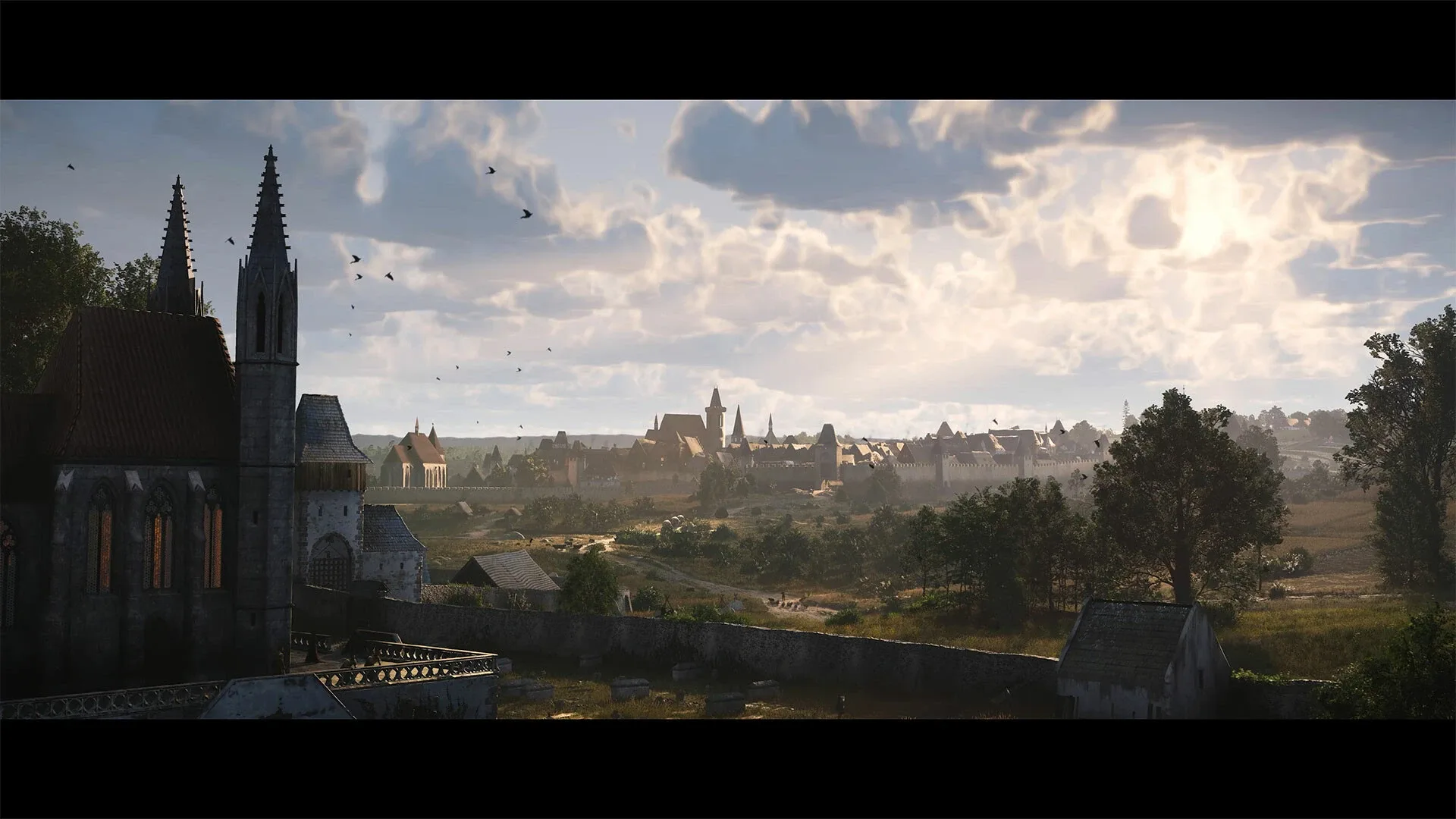
Kingdom Come: Deliverance II is what happens when a studio takes the strangest, most divisive parts of a cult RPG and decides the answer was never to sand them down. Developed by Warhorse Studios and published by Deep Silver, it released on 4 February 2025 for PC, PlayStation 5 and Xbox Series X|S, with a Nintendo Switch 2 version planned for 2027. It picks up two days after the first Kingdom Come: Deliverance ends, with Henry of Skalitz now serving as squire to Sir Hans Capon on a diplomatic mission to Lord Otto von Bergow at Trosky Castle, part of the wider Sigismund–Wenceslas war tearing Bohemia apart in 1403. The mission goes wrong almost immediately, and from there the game opens into two regions large enough to make the original's Rattay valley look like a training level. What makes it a genuine step forward rather than a bigger version of the same idea is how deliberately it makes every system, combat, reputation, alchemy, dialogue, feed into the others, so that the simulation stops feeling like a pile of mechanics and starts feeling like a place.
What makes Kingdom Come: Deliverance II different#
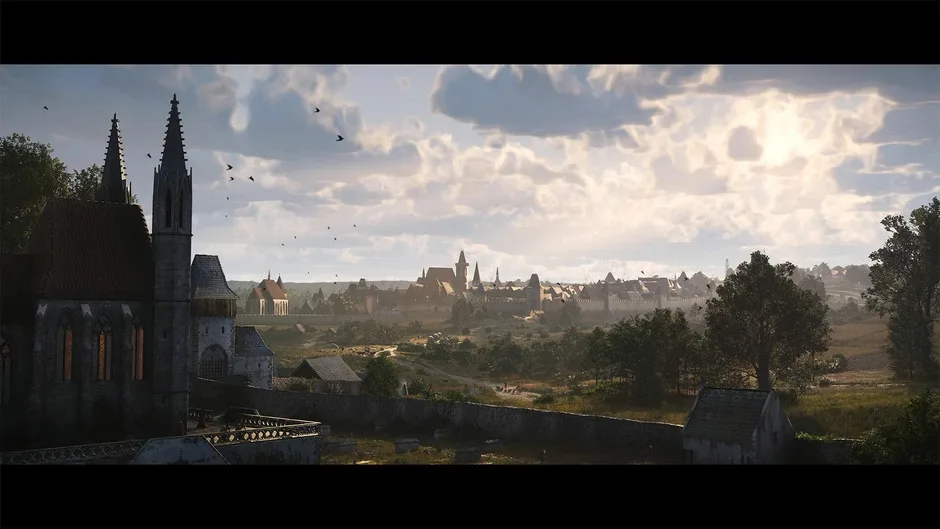
The one idea that carries the whole game is that Henry's world does not reset between towns. Steal a hen in a Trosky village and the theft is not just a flag that unlocks a bounty; it is remembered by the people who saw it, tied to Henry's appearance and clothing at the time, and it follows him if he is recognised later wearing the same coat. Reputation in Kingdom Come: Deliverance II is tracked separately in each settlement, and it responds not just to what Henry does but to how he looks doing it. A blood-spattered coat and unwashed face will get him refused service in Kuttenberg's better inns even if he has never committed a crime there, while a clean noble outfit opens doors that a stolen cap would slam shut. This is not a hidden statistic quietly nudging dialogue options; it is legible enough that a player can walk into a market, glance at how merchants react, and know whether Henry needs a bathhouse before he tries to talk his way into anything. Few RPGs make appearance and local memory this central to how the world treats you, and it is the mechanic that makes Bohemia feel inhabited rather than staged.
Combat: finally worth learning properly#
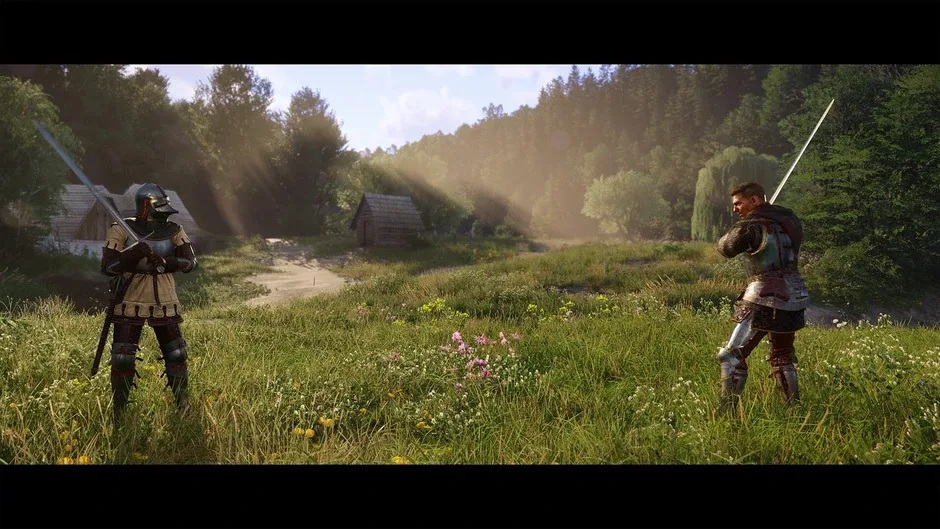
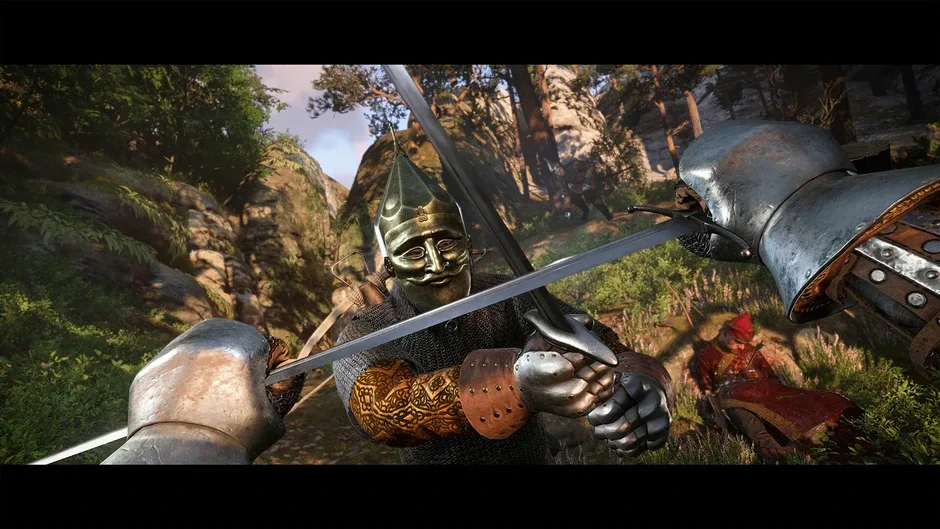
Warhorse rebuilt combat from the ground up for this sequel, and the change is the single biggest improvement over the original. The old game's stamina-heavy combo wheel is gone, replaced by a four-directional system, high, low and both sides, paired with combos that Henry can chain once a weapon's moveset is unlocked through training and practice. The core skill is Master Strike: attacking in the same direction and instant as an enemy's telegraphed swing parries it outright and opens a follow-up hit, and learning to read an opponent's wind-up rather than just mashing attack is what separates an early beating in a tavern brawl from a clean duel later on. The perk itself is not bought with a skill point; it has to be earned by training with a wandering fencing master named Tomcat at a nomad camp, which fits the game's broader habit of gating competence behind actually doing the thing rather than levelling up in the abstract. New weapon types, crossbows and early hand cannons among them, add ranged options that feel appropriately clumsy for the period: reloading is slow and loud enough that ambushing a single guard is viable while starting a firefight with three is suicide.
The system is not forgiving in the opening hours, and that is a deliberate cost. Henry starts the game weaker than most of what he meets, and a group of two or three armed opponents can still end a fight badly even once the basics click. That difficulty curve is honest rather than punishing for its own sake, matching a young squire's actual competence to what he can survive, but it means the first real tavern brawl or bandit ambush can feel like a wall before it becomes a rhythm.
Trosky and Kuttenberg: two regions that do not repeat each other#
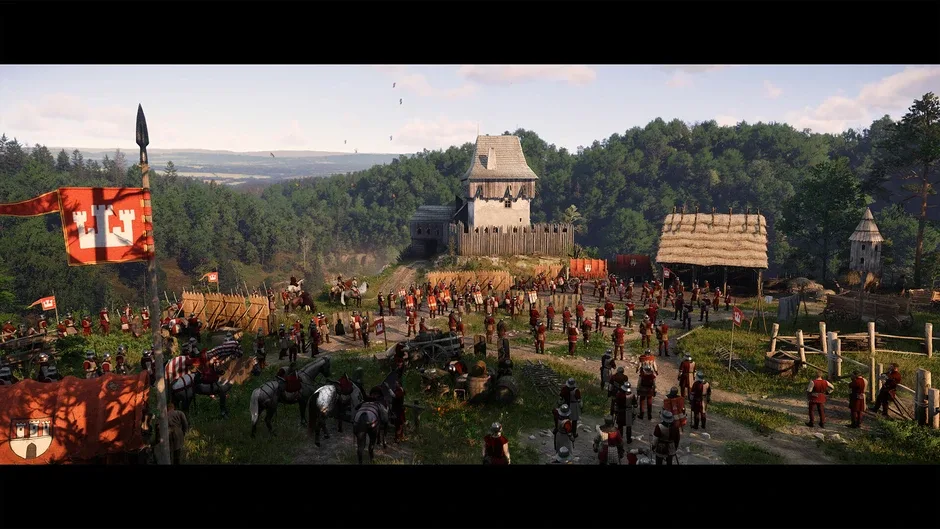
The game splits its map into two connected regions that together cover roughly 50 square kilometres, considerably larger than the original's single valley. Trosky is the smaller of the two, a network of villages, mills, forests and a hilltop castle with twin towers known as the Maiden and the Crone, and it plays like an expanded, more confident version of the first game's rural Bohemia: close-knit communities where a single rumour travels between three villages by nightfall. Kuttenberg, the larger region built around the historical silver-mining town of Kutná Hora, is the game's showpiece: a walled city with distinct districts, guilds, a working mint and a criminal underworld that operates on its own rules separate from Trosky's countryside gossip. Henry can be a trusted face in one region and a wanted thief in the other simultaneously, and the game never resets that tension for convenience. Moving between the two feels less like changing levels and more like moving between two different social contracts.
Alchemy, lockpicking and the value of doing things by hand#
Kingdom Come: Deliverance II keeps the original's insistence that skills are things Henry does with his hands, not numbers that tick up passively. Alchemy plays out as a genuine cooking process: grinding ingredients in a mortar, timing how long a mixture boils, adding components in the correct order and at the right moment, with a botched sequence producing a weaker or even harmful potion rather than a flat failure message. Lockpicking uses a physical tumbler system that rewards a steady hand more than a stat sheet, and pickpocketing runs on a timing-based minigame that gets less forgiving the closer Henry's target is to noticing him. None of these systems are fast, and none of them are meant to be. The point is that Henry's growth from a squire who burns his fingers making a simple healing draught into someone who can brew a Bane Potion or Marigold Decoction under pressure is something the player has to build through repetition, not something a menu hands him at level ten. It is slower than most RPGs are willing to be, and it is also one of the few places where a character's competence and the player's own familiarity with a system genuinely line up.
Stealth and the price of being seen#
Stealth in Kuttenberg's back alleys and Trosky's sleeping villages works on visibility, noise and a schedule system that has NPCs actually asleep at night rather than standing guard forever. Dark clothing helps Henry stay unseen, heavy armour makes him loud enough to wake a house, and guards patrol fixed routes that a patient player can learn and exploit. The catch is that being caught, even once, is expensive: a single failed burglary can turn a friendly village hostile for days, and reputation loss from getting spotted stealing tends to outlast the actual theft by a wide margin. It rewards patience in a way few open-world stealth systems bother with anymore, though the underlying loop of casing a house, waiting for a window and lifting valuables to sell to a fence does start to repeat itself across Kuttenberg's dozens of similar opportunities by the midpoint of the game.
Story: Henry, Hans Capon and a war neither of them chose#
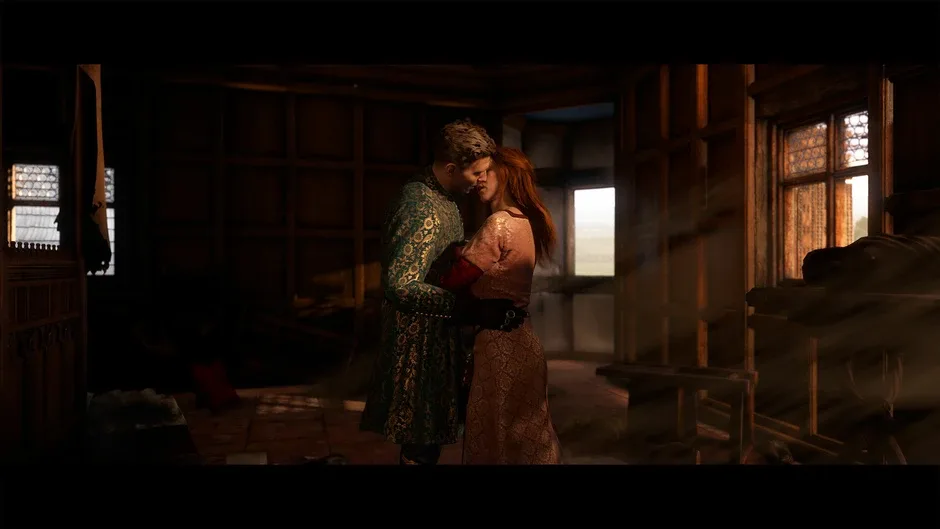
The narrative keeps Henry's low-born perspective on a conflict run entirely by nobles he cannot fully trust, but it hands Hans Capon a much bigger role than the first game's comic relief suggested he would ever get. Their partnership, an arrogant young lord and the blacksmith's son forced to keep him alive and sober, becomes the emotional spine of the whole story, and the writing is patient enough to let their friendship shift under the weight of the war around them rather than jumping straight to sworn-brothers sentimentality. The politics of the Sigismund–Wenceslas succession war stay grounded in specific betrayals and specific people rather than sweeping speeches, and the game trusts the player to piece together who is actually trustworthy from behaviour rather than dialogue-box hints. It is not a plot built for big twists; it is built for the slow accumulation of small ones, and that suits a game this committed to consequence everywhere else.
Difficulty and who Kingdom Come: Deliverance II is actually for#
This is not a game that softens itself for a general audience, and it is better for it. Skill checks in dialogue are tied to actual stats Henry has built through use, not dice rolls disguised as conversation options, so a low-Charisma Henry in a dirty coat will simply fail persuasion attempts that a well-dressed, well-spoken version of the same character would sail through. Combat assumes the player is willing to actually learn the parry-and-riposte rhythm rather than treat it as an obstacle between quests. None of this is inaccessible, exactly, but it does ask for patience that a lot of modern open-world RPGs no longer expect from their audience. Anyone who found the first game's commitment to realism, no fast map markers for objectives, saving tied to a consumable item early on before later patches loosened it, exhausting rather than rewarding will find more of the same here, just built with a decade more craft behind it.
DLC and where the game has gone since launch#
Warhorse committed to three story expansions under an expansion pass: Brushes with Death, released in summer 2025, follows Henry alongside a mysterious travelling artist with a past worth hiding; Legacy of the Forge, released on 9 September 2025, has Henry help restore the forge of his adoptive father Martin and prove himself as a blacksmith; and Mysteria Ecclesiae sends him to contain a spreading illness at Sedletz Monastery. None of the three are required to understand or finish the main campaign, and each is a self-contained detour rather than a chapter of the core story. Alongside the DLC, Warhorse has shipped a steady stream of patches, including a substantial update in May 2025 that improved quest stability and performance and added a horse racing minigame, addressing a meaningful share of the bugs and stutter that marked the first weeks on the market.
Performance: rough at launch, steadier now#
The game that shipped on 4 February 2025 was not free of problems. All three platforms saw reports of stutter, occasional crashes and a handful of quest-blocking states in the opening weeks, and the sheer size of Kuttenberg in particular strained streaming and frame pacing on PC hardware that should have handled it comfortably. None of it was severe enough to make the game unplayable for most people, but anyone who bought at launch was buying a version that needed the patches which followed. Warhorse's post-launch cadence has been genuinely good, with the May 2025 update in particular addressing a large share of the reported issues, and the game a year and a half on is considerably steadier than the one that shipped. It is still worth checking recent patch notes before a first playthrough on any platform, since a title this systems-heavy tends to surface new edge cases with every major update.
Compared with the original Kingdom Come: Deliverance and Red Dead Redemption 2#
The most useful comparison is the first Kingdom Come: Deliverance, and the sequel improves on it in almost every measurable way: two regions instead of one, a combat system that finally rewards skill instead of stamina management, and a reputation system with far more nuance than the original's blunter fame-and-infamy tracking. What the first game had that this one occasionally loses is a certain rawness, Rattay felt smaller and rougher in a way that made every early struggle feel personal, while Kuttenberg's scale can occasionally swallow that intimacy in favour of sheer breadth. Red Dead Redemption 2 is the fairer comparison for ambition: both games build worlds that react to appearance, reputation and small choices with unusual granularity, and both ask for patience most open-world games do not. Red Dead's version of that idea is wrapped in more forgiving mechanics and a more cinematic pace; Kingdom Come: Deliverance II is rougher, harder to learn, and more willing to let the player fail a social encounter or a duel because they genuinely were not good enough yet, not because the game wanted a dramatic beat. If Red Dead is the polished version of a living world, this is the one that makes you earn it.
Worth the money?#
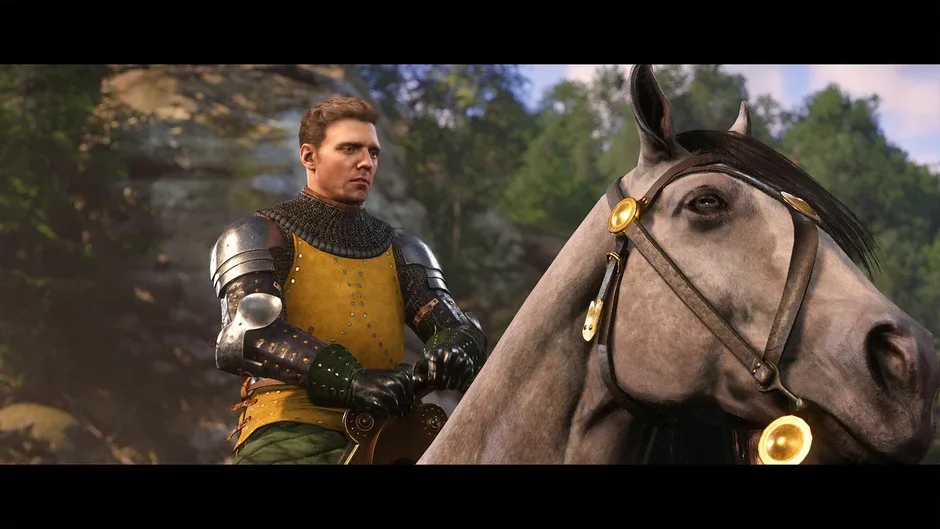
At a standard price of around 60 dollars or euros for the base game, with a Gold Edition bundling the season pass of three expansions, Kingdom Come: Deliverance II is priced like a full retail RPG and delivers accordingly: roughly 50 to 60 hours for players who focus mainly on the main story, closer to 80 hours for a normal playthrough that engages with side content in both regions, and well over 120 hours, some estimates put a full completionist run past 150, for anyone determined to see everything Trosky and Kuttenberg have to offer. The DLC adds further hours on top without being necessary to finish the core story. PC is the strongest platform if the hardware can handle Kuttenberg's dense crowds and interiors at a stable frame rate, while PlayStation 5 and Xbox Series X|S offer the steadier, more predictable experience for anyone who does not want to tinker with settings. Full voice acting is available in English, Czech, French, German, Japanese and European Spanish, with subtitle-only support in several more languages including Polish, Russian and both forms of Chinese; German-speaking players get the complete voiced experience.
Play this instead if…#
Shorter: Pentiment, Obsidian's narrative RPG set in a similarly detailed medieval world, delivers a tighter 15 to 20 hour story with the same commitment to consequence and none of the combat learning curve.
Easier: Kingdom Come: Deliverance, the original game, offers a gentler, smaller-scale version of the same simulation-heavy RPG for anyone who wants to build up to the sequel's scale.
Cheaper or more forgiving: Kynseed or a discounted copy of the first Kingdom Come: Deliverance during a sale trades some depth for a lower price and a shorter time commitment while keeping a similar medieval, systems-driven flavour.
Frequently asked questions#
How long is Kingdom Come: Deliverance II? Around 50 to 60 hours for the main story alone, roughly 80 hours for a typical playthrough that explores side content, and well over 120 hours for full completion across both regions.
Is Kingdom Come: Deliverance II open world? Yes, split across two large connected regions, Trosky and Kuttenberg, totalling around 50 square kilometres, with no loading screens between them.
Does it have co-op or multiplayer? No. It is a single-player game from start to finish with no cooperative or competitive modes.
Is there a difficulty option? There is no traditional easy or hard mode; combat and dialogue skill checks scale with Henry's own trained stats rather than a difficulty slider, though some accessibility and control options exist.
Do you need to have played the first Kingdom Come: Deliverance? No, the game recaps the essentials early on, though returning players will recognise more names, relationships and running jokes from the original.
Is the game stable at launch or should I wait for patches? The version that shipped in February 2025 had notable stutter and a handful of quest-blocking bugs; a substantial May 2025 update and subsequent patches have addressed most of the major issues, and the current build is considerably steadier.
The Game Avant verdict#
Kingdom Come: Deliverance II is not trying to be the biggest or the flashiest historical RPG on the market, and it does not need to be. What it does better than almost anything else in the genre is make Henry's world remember him, his clothes, his crimes, his reputation in three different taverns, in a way that turns every decision into something with a shelf life longer than the quest it came from. The combat finally rewards the patience it demands, the two regions are distinct enough to justify their size, and the alchemy and lockpicking systems make competence feel like something the player actually built rather than unlocked. The launch stutter and a stretch of Kuttenberg's side content leaning too hard on the same theft loop keep it from being flawless, and horse combat remains the one system Warhorse has not cracked. None of that changes the fact that this is the most complete version yet of an idea few other studios are even attempting: an RPG willing to let the world hold a grudge.
9 out of 10 – a demanding, deeply systemic sequel that finally makes Bohemia's memory the best mechanic in the genre.