

Roguebook
Card Battler · Deckbuilding · Roguelike Deckbuilder · Card Game · Turn-Based Tactics
Game page →
Review
A roguelite deckbuilder where you defend a train across three floors against waves of enemies. You build a deck of demon-themed cards, pick upgrades between battles and try to survive a full run. Every run plays differently, and there is also a PvP mode. Is it your kind of game?
Game Avant verdict
A vertical, dual-clan spin on the roguelike deckbuilder that turns a familiar formula into something that still has no real copy five years later.
By GameAvant · Published Oct 5, 2026 · Updated Oct 9, 2026 · 14 min read
Choose what matters to you
Every question is optional.
How do you feel about a tough game with lots of retries?
How do you want to play?
What suits you better?
Based on your choices
Pick what matters to you above and the result shows up here.
IGDB
83%
75 ratings
Steam:
95%
19,956 reviews
Fits you if
you enjoy card battlers and building a fresh deck every run.
Skip it if
you dislike randomness or want a fixed, story-led game.
Availability
Steam
$24.99
Monster Train comes from Shiny Shoe, a small team that looked at Slay the Spire's turn-based card combat and asked what would happen if a single battlefield became three of them, stacked on top of each other, all defended by the same deck at the same time. Published by Good Shepherd Entertainment, it first released on 21 May 2020 for Windows, reached Xbox One that December, arrived on Nintendo Switch as the Monster Train: First Class complete edition in August 2021, came to iOS in October 2022 and finally landed on PlayStation 5 in July 2024. Five years after its original launch, to the exact date, a full sequel arrived in May 2025. The hook is simple to describe and hard to master: you are given a train carrying the last burning ember of hell itself, and you need to defend it as it climbs toward the surface. The train has three floors of combat and a fourth where the Pyre sits, the thing worth dying for, and all three floors can come under attack in the same turn. Every run, you combine two of the game's clans, five at launch, later expanded to six, into a single deck, and the specific pairing you draft changes which combos are even possible, so no two runs build toward quite the same engine. Champions act as both strong individual units and the anchor a whole deck can be built around; figures like the Hornbreaker Prince and Penumbra are powerful on their own but become genuinely dangerous once the rest of your deck is shaped to support them. The Last Divinity expansion, added after launch at no extra cost, introduced a sixth clan, a risk-reward currency system and a harder final boss, giving the game more scope without asking anyone to pay again for it. What keeps people coming back years later is the Covenant difficulty system, an escalating set of modifiers that only opens up once you've cleared the base game, and it's where almost all of the long-term challenge actually lives, reaching the interesting higher tiers takes real hours of play first. Runs themselves rarely take more than forty-five minutes, which keeps the stakes of losing one low and makes "just one more" an easy habit to fall into, even when a badly defended floor can snowball into a lost Pyre within two turns. Five years on, Monster Train still doesn't have a real copy. Plenty of games have tried the deckbuilding-roguelike formula since, but the specific tension of juggling three fronts at once, with two clans fighting for space in the same deck, remains something only this game, and its 2025 sequel, actually do.
You may love it because
Splitting attention between the top, middle and bottom car turns unit placement into a real spatial puzzle instead of a straight line of blockers.
It may frustrate you because
A single weak floor can snowball into a lost Pyre in two turns, which can feel like the run was decided by one placement mistake rather than a string of bad decks.
You may love it because
Pairing clans like Hellhorned and Umbra can produce combos neither clan manages alone, so drafting rarely feels solved.
It may frustrate you because
Some pairings are simply better than others, and until you have unlocked most of the roster a run can feel steered rather than chosen.
You may love it because
A single climb to the Seraph rarely eats more than 45 minutes, so a bad run costs little and a good one is easy to chase with another.
It may frustrate you because
The flip side is that the game's real depth, the higher Covenant ranks, only opens up after enough short runs that the early hours can feel repetitive before the harder rules kick in.
14 min read
· By Game Avant
Three alternatives, one line each on why.
Card Battler · Deckbuilding · Roguelike Deckbuilder · Card Game · Turn-Based Tactics
Game page →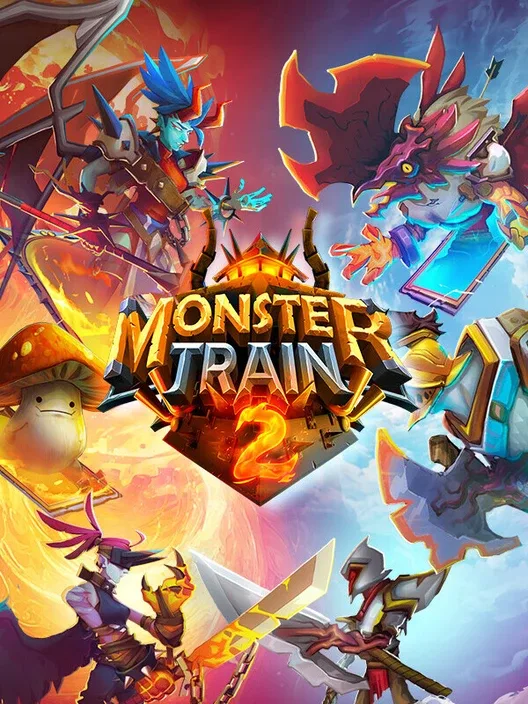
Roguelike Deckbuilder · Deckbuilding · Card Game · Turn-Based Tactics · Roguelike
Game page →
Card Battler · Card Game · Deckbuilding · Roguelike Deckbuilder · Roguelite
Game page →
Card Battler · Roguelike Deckbuilder · Card Game · Turn-Based Tactics · Roguelite
Game page →
Card Battler · Roguelike Deckbuilder · Deckbuilding · Card Game · Roguelite
Game page →
Card Battler · Roguelike Deckbuilder · Deckbuilding · Card Game · Turn-Based Tactics
Game page →Play it together
Online
Up to 8 players
Crossplay
PC · Xbox