
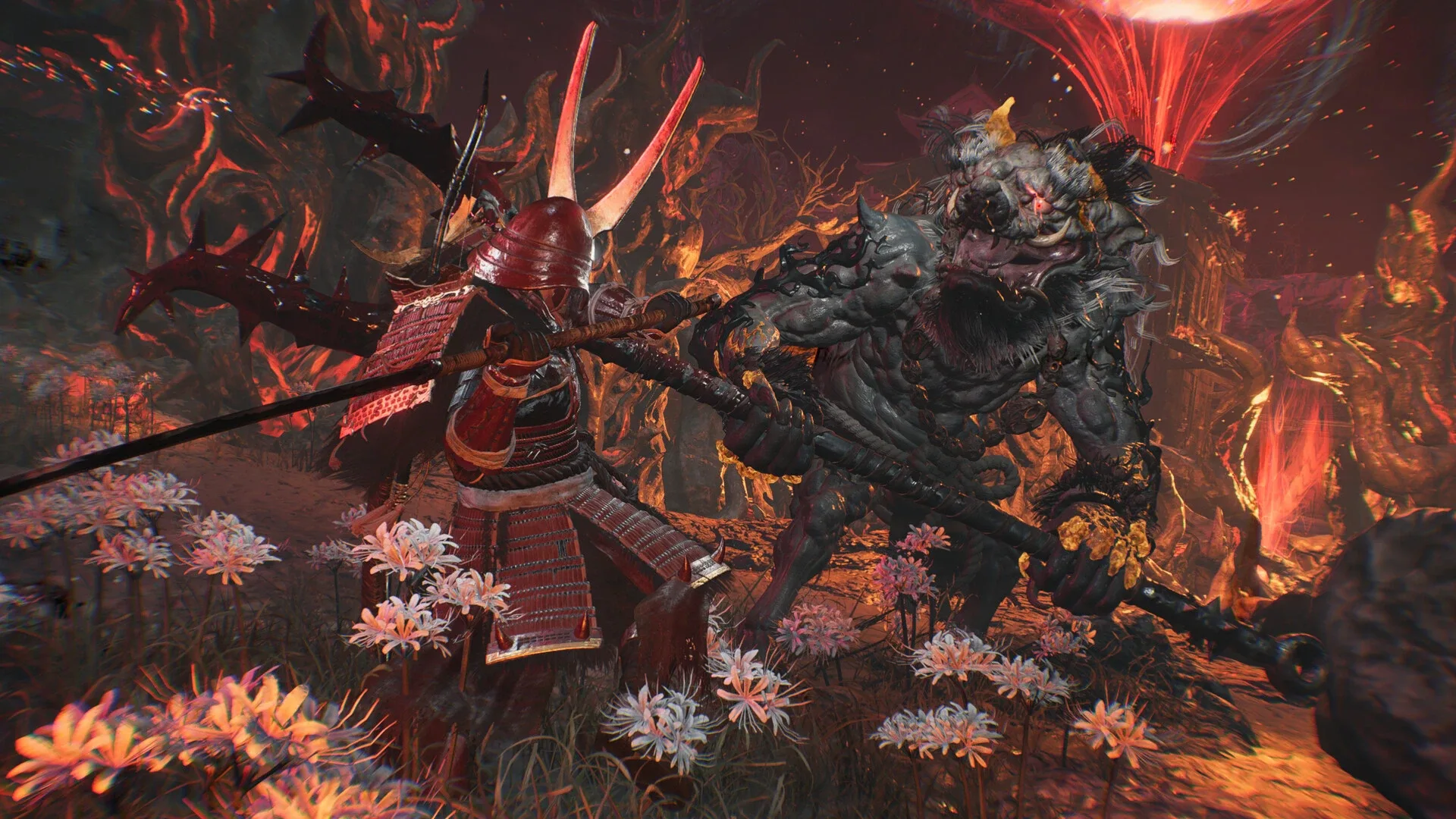
More freedom, more weight: Nioh 3 is the series at full stretch#
Nioh 3 is the point where Team Ninja stops polishing the same formula and starts stretching it. It keeps the things the series is known for: a punishing, stamina-driven sword game with an enormous loot economy, yokai as enemies and history as raw material. Then it changes the shape of the game around them. There are now two complete combat styles, Samurai and Ninja, and the levels have opened up into larger fields with things to find between the main missions. The result is the broadest game the series has produced, and also the one that asks the most of a new player.
Koei Tecmo's Team Ninja released Nioh 3 in early February 2026 for PlayStation 5 and Windows, after a playable demo appeared on 29 January 2026. It is the first mainline entry in the series made without Sony Interactive Entertainment involved in the project, and it runs on Koei Tecmo's own Katana Engine. This review gives it an 8 out of 10. That is a high mark for a game with a structure this demanding, and the reasons for it, and for the two points it does not get, are laid out below.
What makes Nioh 3 different#
The single idea that carries Nioh 3 is that you are no longer choosing one way to fight. You are choosing between two, and the game is designed around you moving back and forth between them.
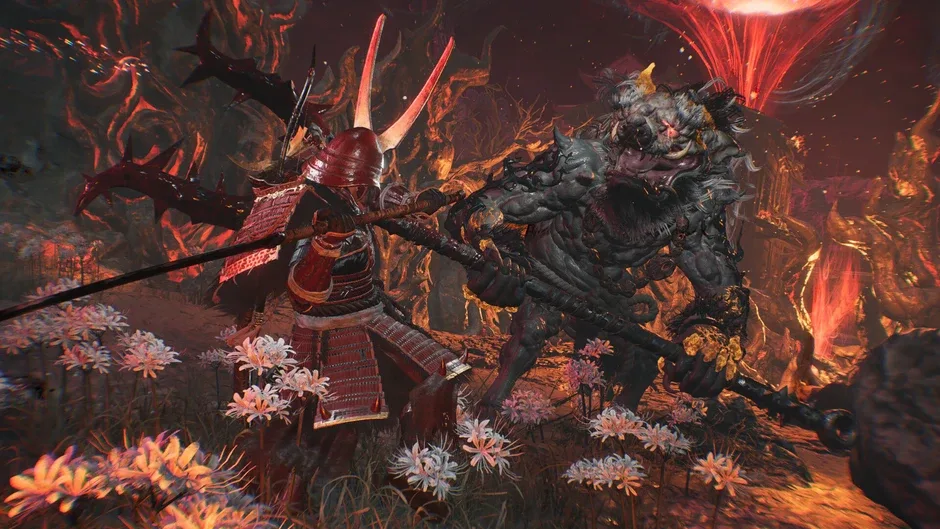
The Samurai style is the series tradition. It has three weapon stances, and combat actions consume Ki, the stamina-like resource that defines every exchange. After a combo, the Ki Pulse lets you claw stamina back, and the timing of that pulse is the difference between a fight you control and one that controls you. As damage accumulates, an Arts Proficiency gauge fills, unlocking the heavy attacks that make sword play feel like a decision instead of a habit. A new parrying mechanic adds a sharper defensive option, and it fits the way the series has always tried to reward attention.
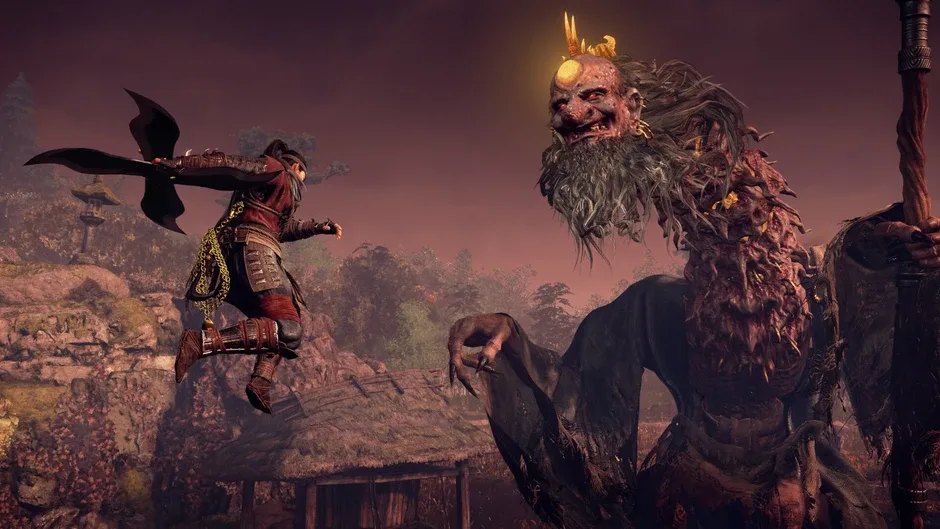
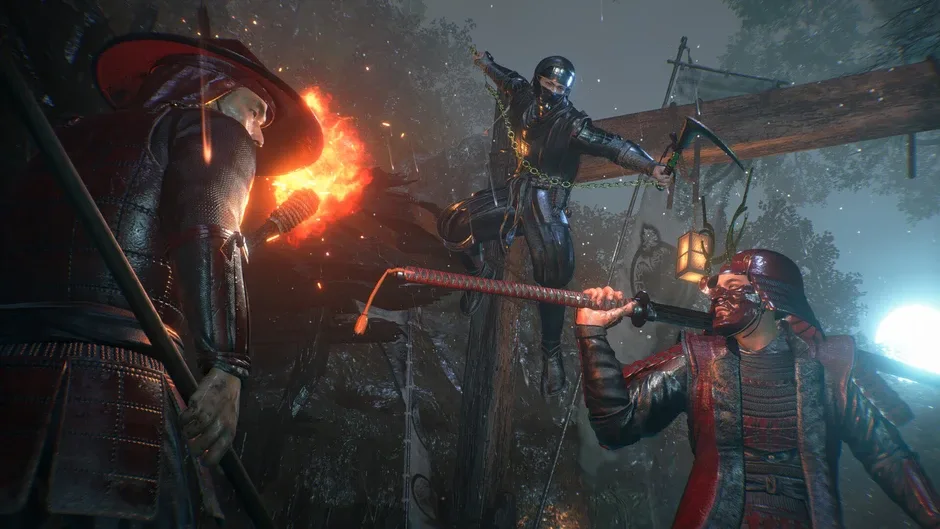
The Ninja style is new, and it is not a reskin. Instead of stances, it works from three ninja tools. Instead of the Ki Pulse, it uses a system called Mist, which lets a player create a clone of themselves to distract enemies and then dash behind them for a heavy hit. The style emphasises speed, evasion, aerial attacks and ranged play. The team's history with Ninja Gaiden and the international popularity of ninja both shaped the idea, and the developers deliberately left the Ki Pulse out of the Ninja side so that the two styles would feel different rather than similar.
The important part is the switching. The styles do not share equipment, but you can change between them freely, which means a boss encounter can start in a Samurai stance and shift into ninja evasion when the pattern calls for it. That is a real change to how a fight can be read. A traditional stance-based system asks you to pick a plan and stay with it. This one lets you hold two plans at once and pay a price for both, which is why it gets its own place in the score.
Combat: a resource puzzle wearing a sword#
Underneath everything, Nioh 3 is still a Ki management game, and that is where its identity lives. Most action RPGs treat stamina as a limit that stops you from attacking too much. Here, it is closer to a shared currency between you and the enemy. Every swing costs Ki. Every mistake drains it. Enemies drain it too, and when yours runs out, you are stuck in place while they act. The Ki Pulse exists to turn that pressure into rhythm: attack, pulse, attack again, and the fight becomes a series of small, tense decisions.
The three stances of the Samurai style change that rhythm. A stance is not a cosmetic choice. It sets how fast you attack, how far you reach and how much Ki each action costs, and a weapon is only as useful as the stance you match it to. The presence of an Arts Proficiency gauge makes the choice heavier, because building that gauge and spending it well is part of what separates a decent fight from a strong one.
Guardian spirit transformations and Soul Cores also return. The guardian spirit is the series' answer to the question of what happens when a player runs low on options: it lets you take on a powerful form for a short window. Soul Cores, gained from enemies, add abilities you can slot in and use in battle. Together with skills and gear, they form the layer of the game that sits above the moment-to-moment sword play, and they are the reason a Nioh build can feel very personal after enough hours.
The new parry
The parry is a small addition on paper and a meaningful one in practice. The series has historically leaned on Ki and dodging as its main defensive tools. Adding a proper parrying mechanic gives the Samurai side another way to answer a heavy attack, and it fits the general trend across the genre toward giving players a way to turn defence into offence. It does not replace the Ki Pulse or the dodge, and it does not make the game easier by itself. It gives you one more option in a system already rich in them.
The Ninja side in more detail
The Ninja style is easiest to understand as a counterbalance. The Samurai side is grounded, weighty and built around holding your position. The Ninja side is about moving. The clone from Mist gives you a moment of misdirection. The dash behind an enemy gives you a way to break a stalemate. The aerial and ranged attacks give you options when getting close is a bad idea. Since the two styles do not share equipment, a good Ninja build is its own project, and that matters for how much time the game asks you to spend in menus.
The world: fields, points of interest and a wider shape#
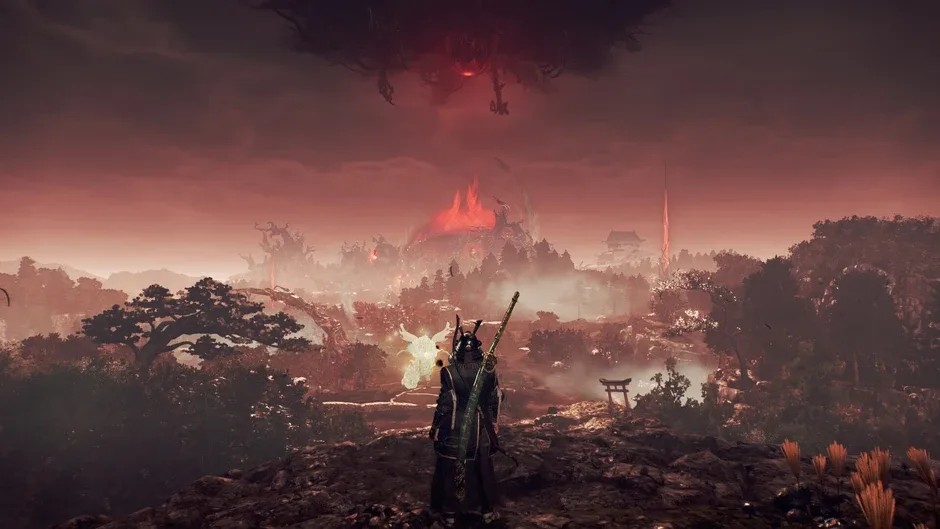
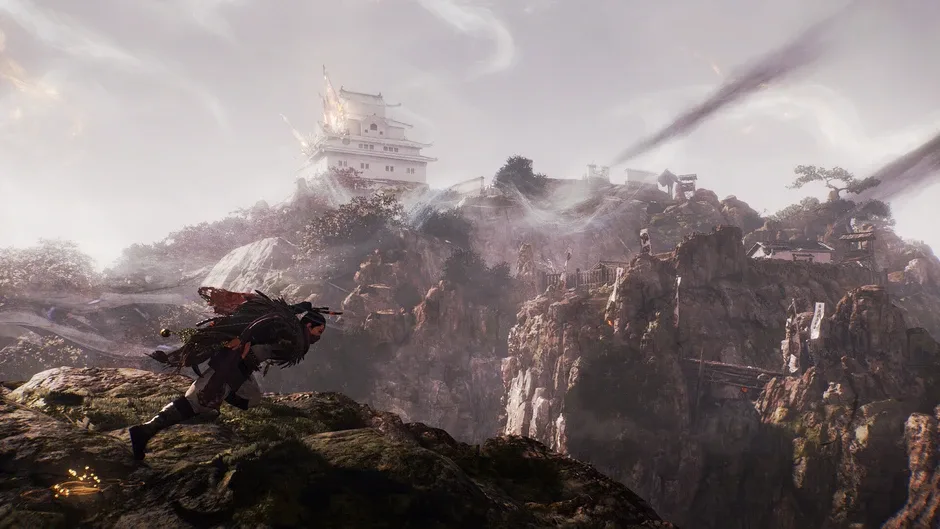
Earlier Nioh games were built from missions: enter a level, fight through it, reach the end. Nioh 3 keeps missions but is described as less linear, with larger explorable spaces. In those fields, points of interest lead to side quests and optional combat challenges. The Steam page frames it as exploring an open field, and that fits with how the rest of the game talks about itself.
That is a real structural change, and it cuts both ways. On the positive side, an open field gives the game a place to breathe. A player who wants to spend an evening on a side quest, test a new build against an optional challenge or simply see what is around the next hill now has room to do it. On the negative side, the pacing that made the earlier games so sharp came from their linear design. A corridor sets the tempo. A field asks you to set it yourself, and not everyone wants that job. A player who prefers a clear mission list and a clean line through a level may find the new structure looser than they would like.
It is worth being clear about what open field means here. Nioh 3 is not a game where a horizon is the entire pitch, and it does not turn the series into a sprawling open world. It is a mission-based action RPG that has been given wider spaces and more optional content. That is a more measured change than the phrase might suggest, and it is a change that fits the game's established strengths rather than fighting them.
Story: five eras, one desperate prince#
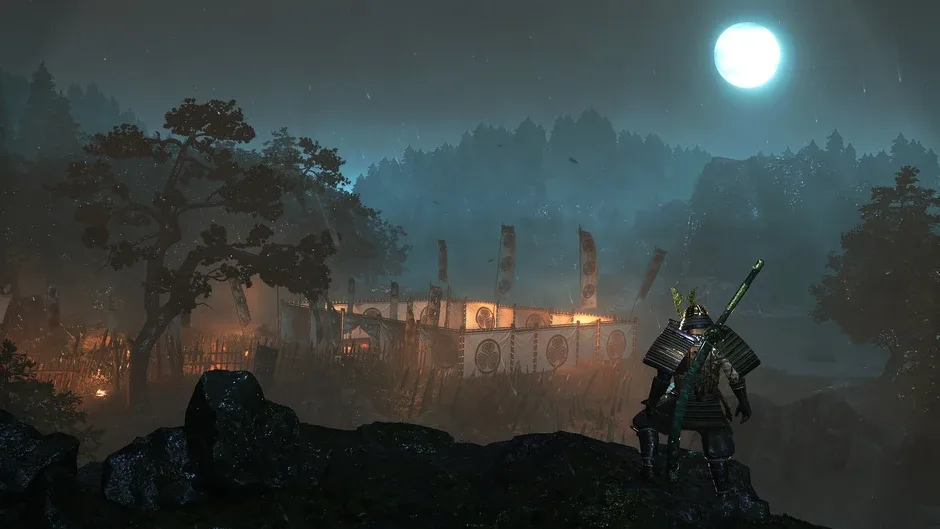
Nioh 3 begins in 1622. Tokugawa Takechiyo is about to be named Shogun when his jealous brother Kunimatsu, corrupted by dark forces, attacks Edo Castle with yokai. Takechiyo's guardian spirit, Kusanagi, lets him move through time, and that is the hook that pulls the game out of its opening setting.
From there the story crosses several periods of Japanese history: the Sengoku era in 1572, the Heian period in 1190, the ancient Yayoi period in 247, and the Bakumatsu era in 1864. Each period brings its own people and its own problems. Allies and adversaries drawn from history and legend include Hattori Hanzo, Honda Tadakatsu, Minamoto no Yoshitsune, Yagyu Munenori, Takasugi Shinsaku, Takeda Shingen, Minamoto no Yoritomo, Okita Soji and Queen Himiko of Yamatai. The series has always used history as a costume for its horror, and here the costume changes with every era.
This is a real advantage for a game built on repetition. A single setting, however atmospheric, wears out over a long campaign. Five of them give the visual and narrative design room to change. A Sengoku battlefield, a Heian mountain, the ancient world of Yamatai and a late-period city all ask for different art, different enemies and different tone, and the time-travel premise means none of that feels like a random change of scenery.
The protagonist is customisable in the way the series has offered since Nioh 2, so the hero you play is one you build rather than a fixed face. The story itself is told through the mix of historical figures and supernatural threats the series is known for, and it is worth knowing that a familiarity with Japanese history helps but is not required. The game introduces its people as it goes, and the yokai side of the fiction does not depend on a history lesson.
Co-op: Summon Visitor and Expedition#
Nioh 3 includes two online modes. Summon Visitor lets you call for help with a boss. Expedition lets you explore open fields cooperatively. Both fit the character of the game: a hard fight can be shared, and a large field can be explored with company.
That matters more than it might sound. The series has always had a reputation for difficulty, and a way to bring a friend into a stubborn encounter changes how approachable it is. It also fits the open-field structure. A field designed for wandering and side content is a natural place for a group to spend an evening, and the Expedition mode is built for exactly that.
The game does list single-player, multiplayer, co-op and online co-op as its categories on Steam, so the online features are a central part of the design rather than an afterthought. Anyone who plays purely offline still has the full campaign, and the co-op modes are additions rather than requirements.
Difficulty and who this is really for#
Nioh 3 is a hard game and does not pretend otherwise. The genre it belongs to is built on the idea that failure teaches, and the series has a long history of enemies that punish carelessness with Ki drains and heavy hits. What has changed is how much room the player has to solve a problem. Two styles, a parry, guardian spirits and Soul Cores all give more options than before. That does not lower the floor, but it does raise the ceiling of what a well-prepared player can do.
The honest way to describe the difficulty is that it is front-loaded in complexity. A new player faces the combat system, the Ki rules, the stances, the loot, the skills and the second style all at once. Someone who already knows the series can bring habits with them. Someone who does not may need a good while before the numbers and menus stop being noise.
The Hell Rising DLC, released on 19 August 2026, adds new stories and weapons and introduces extreme difficulty modes. That matters for anyone who finishes the base game and wants more pressure, and it reflects the fact that the series is built for players who want their difficulty to keep rising.
New to the series? Start here
A few habits will make the first hours easier. Learn the Ki Pulse before anything else, because it is the difference between fighting with a rhythm and fighting in panic. Try the Samurai style first and keep it as your home base, then add the Ninja style once the basic exchange of attacks feels natural. Read what each stance does before committing to a weapon. Use the co-op modes when a boss is a wall, since Summon Visitor exists for exactly that. And treat the open fields as optional sources of practice and gear rather than as tasks you have to complete.
Compared with Elden Ring and Ninja Gaiden#
Elden Ring is the obvious comparison for the open-field side. It is a much larger, much looser game in which the world itself is the main event. Nioh 3 is not trying to match that scale. Its fields are spaces within a mission-based structure, and its combat is far denser and more system-driven. Where Elden Ring rewards curiosity and stumbling into things, Nioh 3 rewards preparation and mastery of a system. A player who wants a vast world to get lost in should look toward Elden Ring. A player who wants a tighter, more technical fight will get more from Nioh 3.
Ninja Gaiden is the comparison for the Ninja style, and it is a fair one, since the team behind Nioh 3 made that series and has said it shaped the design. Ninja Gaiden is a pure action game with a strong focus on speed and aggression. Nioh 3 borrows that spirit for its Ninja side but wraps it in an RPG structure, with gear, loot and skills. That means the Ninja style here is less a raw action toy and more a build you assemble, which is a difference in kind rather than degree.
| Nioh 3 | Elden Ring | Ninja Gaiden | |
|---|---|---|---|
| Structure | Missions plus open fields | Open world | Linear action |
| Combat focus | Ki management, two styles | Broad build variety | Speed and aggression |
| Loot and gear | Heavy | Moderate to heavy | Light |
| Co-op | Summon Visitor, Expedition | Summons and co-op | Depends on the entry |
What the game does not do#
An honest review has to list the things a game is not, and Nioh 3 has a clear list. It is not a beginner's action game. It does not simplify its systems to be friendly, and it does not hide the fact that its menus are dense. It is not an open world in the way that phrase usually implies. It does not offer a Swedish text option, and its full voice acting exists only in English and Japanese, though German, French and several other languages have text. It is not a small game either: the listed install size on Steam is 125 GB.
It also does not attempt to be a story-first experience. The narrative gives the game its structure and its variety of settings, but the appeal lives in the combat and the builds. A player who wants a character-driven drama will find a premise, some strong historical figures and a good excuse to visit different eras, but the reason to keep playing is the fight in front of you.
Price, hardware and platforms#
The Standard Edition is listed at 69.99 US dollars on Steam, and a Digital Deluxe Edition is listed at 109.99. A Season Pass is listed at 39.99, and the Hell Rising DLC at 19.99. That places the base game in the standard range for a major release, and the extras add up quickly for anyone who wants everything.
On PC, the listed minimum is Windows 11, an Intel Core i5-10400 or AMD Ryzen 5 2600, 16 GB of RAM, and an NVIDIA GTX 1060 with 6 GB or an AMD Radeon RX 5600 XT, aimed at 1080p and 30 frames per second on the lowest preset. The recommended specification is an Intel Core i5-10600K or AMD Ryzen 5 5600X, 16 GB of RAM, and an NVIDIA RTX 3060 Ti or AMD Radeon RX 6700 XT, aimed at 1080p and 60 frames per second on the standard preset. Storage is 125 GB, with an NVMe SSD recommended.
The game is available on PlayStation 5 and Windows. Steam lists English, French, Italian, German, Spanish, Brazilian Portuguese, Russian, Simplified and Traditional Chinese, Japanese, Korean and Arabic for text, with full audio in English and Japanese.
Worth the money?#
For a player who enjoys this kind of game, yes, with a caveat about the extras. The base game is built as a long action RPG: five historical eras, larger fields, side quests, optional challenges, two combat styles with separate gear, and online modes for cooperative play. No official runtime is stated here, but the structure points to a game meant to be lived in rather than finished in a weekend. At 69.99 dollars, that is a fair ask for someone who will use the build depth.
The caveat is the extras. A Deluxe Edition at 109.99 and a Season Pass at 39.99 push the total well beyond the base price. Anyone who is not sure the game suits them should start with the free demo and decide from there. Anyone who already knows the series and wants the fullest version can judge the extras on their own terms.
On platform, the PC version has the clearest published requirements, and the recommended hardware is not extreme, though the 125 GB install and NVMe recommendation are worth checking before buying. The PlayStation 5 version is the other option. Which one suits you comes down mostly to where you already play.
Play this instead if…#
Shorter: Ninja Gaiden gives you the fast, aggressive ninja combat without the loot and the long build process, and it asks for far less time in menus.
Easier: Elden Ring lets you walk away from a wall and come back stronger, since its open structure gives you a way to change the problem instead of just facing it.
Cheaper or co-op: Earlier Nioh entries offer the core Ki-based combat that this game builds on, and co-op-friendly design has been part of the series for a long time, so they remain good places to start if the price of the newest release feels high.
Frequently asked questions#
How long is Nioh 3? No official length is published. It is structured as a long action RPG with five historical eras, larger open fields, side quests and optional challenges, so expect a substantial game rather than a short one.
Is Nioh 3 an open world? Not in the strict sense. It is a mission-based action RPG with larger, less linear explorable fields that include points of interest, side quests and optional combat challenges.
Does it have co-op? Yes. Summon Visitor lets you call for help in boss fights, and Expedition supports cooperative exploration of the open fields.
Is there an easy mode? No difficulty setting is listed on the Steam page, though the Steam listing does show multiple accessibility features. The Hell Rising DLC adds extreme difficulty modes for players who want more challenge, not less.
Do you need to have played the earlier games? No. Nioh 3 follows its own protagonist and story in its own set of time periods, so previous entries are useful for familiarity with the combat but not required for the plot.
Which platforms is it on? PlayStation 5 and Windows PC. It is not listed for Mac or Linux.
The Game Avant verdict#
Nioh 3 is a confident, ambitious action RPG that earns most of its ambition. The two combat styles are a genuinely good idea, the Ki-based fighting remains one of the most demanding and satisfying systems in the genre, and the move across five eras of Japan gives a long game the variety it needs. The open fields add room to explore and a way to share the experience through Expedition, even if they loosen a structure that used to be tighter.
What holds it below a higher score is not a single flaw but a pile of weight. There are a lot of systems to learn, a lot of gear to manage, a big install, a higher price once the extras are counted, and a shape that is less focused than the series once was. None of that stops it from being one of the better action RPGs of its year. It just means the game is for players who want to be asked a lot, and who will enjoy the answers.
8 out of 10 – a bigger, bolder and heavier Nioh that rewards the players willing to carry the weight.