

Onimusha: Warlords
Samurai · Hack and Slash · Swordplay · Violent · Dark Fantasy
Game page →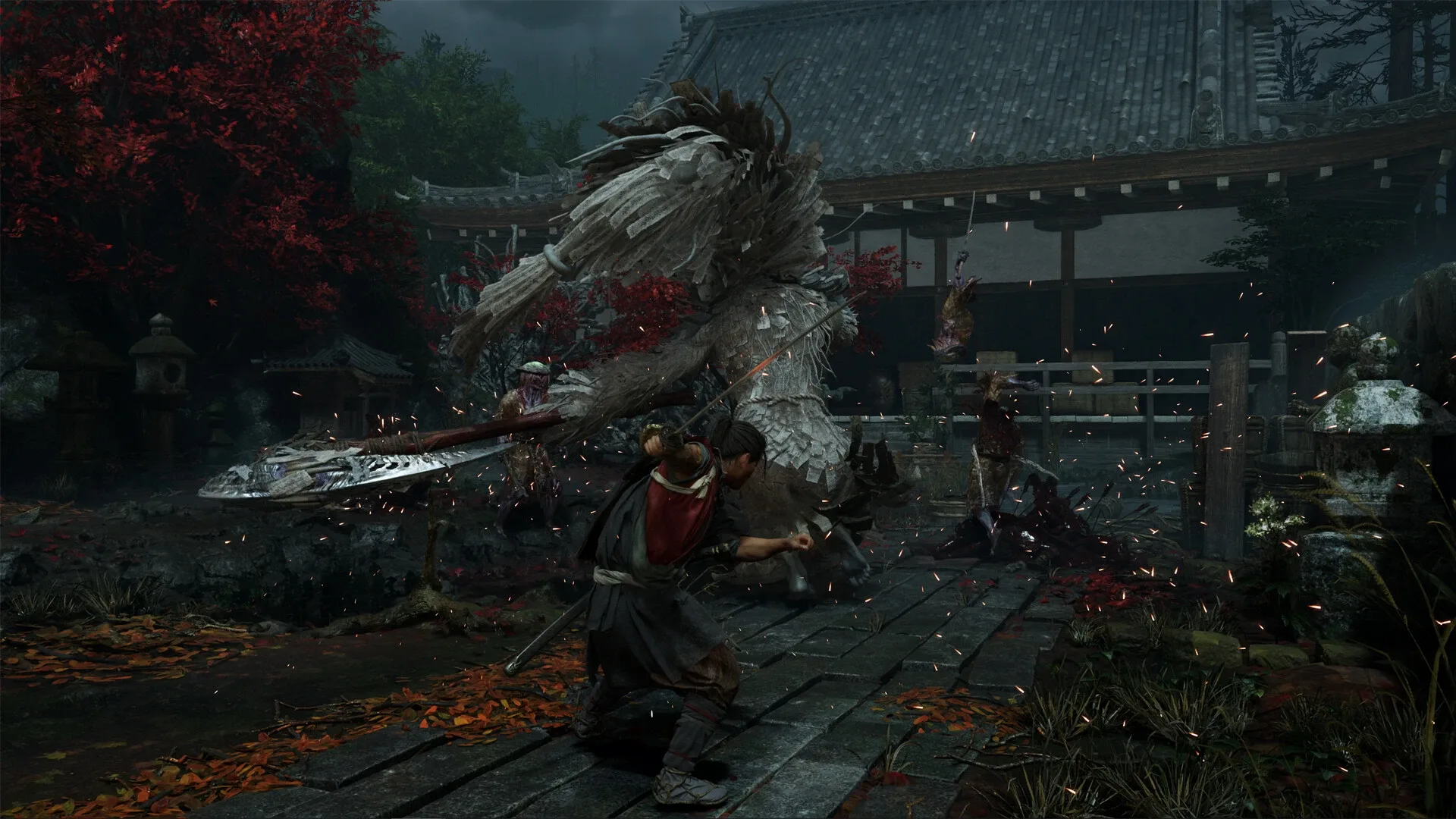
Review
A third-person action game set in Edo-era Kyoto, where you play a samurai who wields the Oni Gauntlet against demonic Genma. Combat is built around swordplay, with RPG elements and dark fantasy atmosphere in a single-player adventure. Expect a hard, close-range fight in which timing and positioning matter in every encounter. Is it your kind of game?
Game Avant verdict
A precise, demon-slaying parry system carried by genuinely memorable boss duels, dragged down by an uneven back half and a campaign padded well past its best ideas.
By GameAvant · Published Sep 26, 2026 · Updated Oct 9, 2026 · 14 min read
Choose what matters to you
Every question is optional.
How do you feel about a tough game with lots of retries?
How do you want to play?
Based on your choices
Pick what matters to you above and the result shows up here.
IGDB
87%
13 ratings
Steam:
90%
13,849 reviews
Fits you if
you want hard-hitting sword combat with a dark, feudal Japan setting.
Skip it if
you dislike gore or demanding combat.
Availability
Steam
$69.99
Onimusha: Way of the Sword is Capcom's first mainline entry in the series in more than two decades, and it spends its opening hour proving that the long wait was specifically about getting one idea right rather than simply reviving a dormant brand for its own sake. Released on 4 September 2026 for PlayStation 5, Xbox Series X|S, Nintendo Switch 2 and PC, three weeks earlier than its originally announced date, it drops the wandering swordsman Miyamoto Musashi into a sudden demon invasion of Edo-period Kyoto and asks the player to resolve essentially every single combat encounter with one blade rather than the kind of expansive toolbox of weapons and gadgets modern action games typically default to. The result is not a cautious soft reboot playing it safe with the franchise's established ideas from two decades ago. It is a combat system built almost entirely around a single, demanding skill, reading precisely when an enemy is about to strike and answering that specific attack at the exact correct instant, wrapped around a story that deliberately takes its time and a campaign that, by the time the credits actually roll, has clearly finished saying everything it genuinely needed to say roughly an hour before it stops talking. That central combat skill is built around the returning Issen counter system, a signature mechanic from the series' PS2-era peak that rewards split-second precision over raw reaction speed or pattern memorization alone. Successfully reading and countering an enemy's attack at the correct instant does not simply avoid damage; it actively turns the encounter in the player's favor, often resolving what would otherwise be a prolonged, attrition-based fight into something closer to a single decisive exchange. That design philosophy turns nearly every duel in the game, and especially the game's boss encounters, into a genuinely readable puzzle rather than a test of memorized button sequences, and it represents the clearest evidence yet that Capcom understood exactly what made the original PS2 trilogy's combat system beloved in the first place, rather than simply borrowing its name and aesthetic. The boss duels specifically stand out as the game's clearest highlight. Each major demon encounter is built around a distinct, readable attack pattern that rewards patient observation over aggressive button-mashing, and the satisfaction of correctly timing an Issen counter against a boss that has repeatedly punished earlier, less precise attempts is a specific kind of mechanical payoff the series has not delivered this consistently since its PS2-era peak. That combat quality alone would carry a shorter, tighter campaign to genuine greatness. What keeps this from reaching that tier is structural rather than mechanical. The campaign's back half grows noticeably uneven, repeating encounter types and narrative beats that already landed effectively earlier in the story without meaningfully building on them, and the overall runtime extends well past the point where the central Issen-counter combat system has fully demonstrated everything it has to offer. That padding is a real cost, not a minor nitpick, and it is specifically why this lands at an 8 rather than higher despite combat that is, on its own terms, the series' best since the PS2 era. For a franchise returning after more than twenty years away, getting the single most important thing, the sword itself, this precisely right matters more than a tighter runtime would have, even if the back half's pacing keeps the full package from reaching true greatness.
You may love it because
Every serious fight rewards a precise read over reflexive button-mashing, and Break Issen executions make mastering it feel earned.
It may frustrate you because
The counter window is unforgiving enough that anyone without quick reactions will bounce off the game's best idea rather than enjoy it.
You may love it because
Starting a new continuity means newcomers and twenty-year fans begin on exactly the same footing, with no homework required.
It may frustrate you because
Long-time fans lose the shared universe entirely, and the new story's slower stretches have to earn that freedom on their own merits.
You may love it because
Side shrines and purification tasks reward players who step off the main road with gear and context the story alone doesn't give.
It may frustrate you because
Those same detours are the main reason the back half runs longer than its ideas justify.
14 min read
· By Game Avant
Three alternatives, one line each on why.
Samurai · Hack and Slash · Swordplay · Violent · Dark Fantasy
Game page →
Souls-like · Dark Fantasy · Hack and slash/Beat 'em up · Hack and Slash · Action RPG
Game page →
Souls-like · Hack and Slash · Hack and slash/Beat 'em up · Action-Adventure · Dark Fantasy
Game page →
Souls-like · Dark Fantasy · Action RPG · Hack and Slash · Violent
Game page →
Spectacle fighter · Souls-like · Hack and Slash · Hack and slash/Beat 'em up · Action RPG
Game page →
Souls-like · Swordplay · Action RPG · Action-Adventure · Dark Fantasy
Game page →