
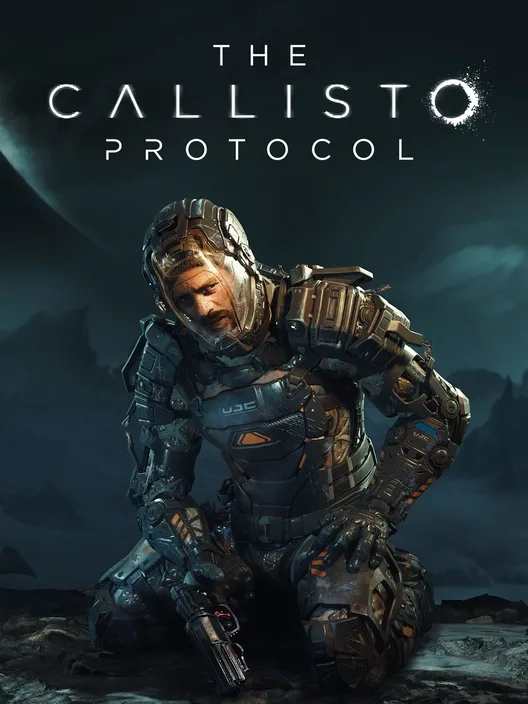
The Callisto Protocol
Third-Person Shooter · Robots · Sci-fi · Space · Futuristic
Game page →
Review
A sci-fi action-adventure set on a lunar research station, where Hugh and his android companion Diana make their way through the facility. Third-person shooting is combined with hacking, so you handle enemies and systems at the same time. Single player only. Is it your kind of game?
Game Avant verdict
A shooter that turns puzzle-solving into the weapon and a father-and-daughter bond into the reason to keep going, held back only by how much it leans on one clever idea.
By GameAvant · Published Oct 8, 2026 · Updated Oct 9, 2026 · 19 min read
Choose what matters to you
Every question is optional.
How do you want to play?
How much story and dialogue do you want?
Based on your choices
Pick what matters to you above and the result shows up here.
IGDB
87%
143 ratings
Steam:
96%
33,196 reviews
Fits you if
you want a story-led sci-fi adventure with an unusual take on third-person shooting.
Skip it if
you want multiplayer or a pure, straightforward shooter.
Availability
Steam
$59.99
Pragmata is what happens when a major publisher decides a brand-new franchise should not simply be a safe variation on something it already owns. Capcom developed and published the game itself, built it on the company's RE Engine, and released it in April 2026 for PlayStation 5, Windows and Xbox Series X|S, with a Nintendo Switch 2 version following a week later in Japan. It is a third-person action-adventure centred on a spacefarer named Hugh Williams and a young android named Diana, stranded together on a lunar moon base that has fallen under the control of a rogue AI, and the game's single defining decision is to keep both characters active on screen and in play simultaneously rather than letting one of them sit idle while the other does the work. The core idea is straightforward to state and genuinely rare to see executed this thoroughly: Hugh moves and shoots, handling the combat the genre normally expects from a third-person action game, while Diana hacks in real time, overlaying a grid-based puzzle system directly onto ongoing firefights rather than pausing the action to let the player solve a separate, disconnected puzzle screen. Enemies that would otherwise be untouchable, shielded, or functionally invincible become vulnerable only once Diana's hacking grid has been solved against them, which means every firefight is simultaneously a shootout and a puzzle happening at the same time, under the same time pressure, rather than two separate systems bolted together. Neither character functions without the other, and the game is built entirely around that interdependence rather than treating it as an occasional gimmick. That single mechanic is doing an enormous amount of work across the whole campaign, and for most of its runtime, it holds up remarkably well. The puzzle-hacking system scales in genuine complexity as the game progresses, introducing new grid shapes, enemy-specific hacking patterns, and time pressure that forces players to make real-time decisions under the same stress a traditional shooter would apply through incoming damage alone. Wrapped around that system is a small, genuinely human story: two characters who did not choose to be stranded together, slowly building something like trust while surrounded by hostile machinery and a moon base actively working against them. The one real limitation is structural rather than a flaw in execution. A single mechanic, however cleverly designed and however well it scales, is still one idea asked to carry an entire campaign's worth of encounters, and there are stretches late in the game where the hacking-and-shooting loop shows the edges of what it can meaningfully vary before repetition sets in. That is a real constraint on how far the game can go, not a failure of what it actually accomplishes within those limits, and Pragmata remains one of the more genuinely original big-budget action games released in recent memory precisely because it commits fully to an idea other studios would have hedged into something safer.
You may love it because
The grid puzzle keeps running while Hugh dodges, so every armoured enemy asks for a quick decision and a steady hand at the same time.
It may frustrate you because
Splitting focus between the grid and the arena can feel like patting your head and rubbing your stomach when the screen fills up.
You may love it because
Hugh and Diana are the entire emotional core, and the gifts built from REM data make their bond something you actively tend.
It may frustrate you because
A story this focused leaves little room for side characters, so anyone who wants a big cast will find the world quiet.
You may love it because
The hack-then-shoot loop is new enough that it stays interesting through upgrades and weapon crafting.
It may frustrate you because
Because nearly every encounter uses the same loop, long sessions can start to feel like the same puzzle in different rooms.
19 min read
· By Game Avant
Three alternatives, one line each on why.
Third-Person Shooter · Robots · Sci-fi · Space · Futuristic
Game page →
Third-Person Shooter · Robots · Sci-fi · Futuristic · Shooter
Game page →
Third-Person Shooter · Futuristic · Sci-fi · PvE · Action-Adventure
Game page →
Third-Person Shooter · Sci-fi · Shooter · Action-Adventure · Space
Game page →
Third-Person Shooter · Sci-fi · Robots · Futuristic · Shooter
Game page →
Third-Person Shooter · Sci-fi · Space · Action-Adventure · Shooter
Game page →