
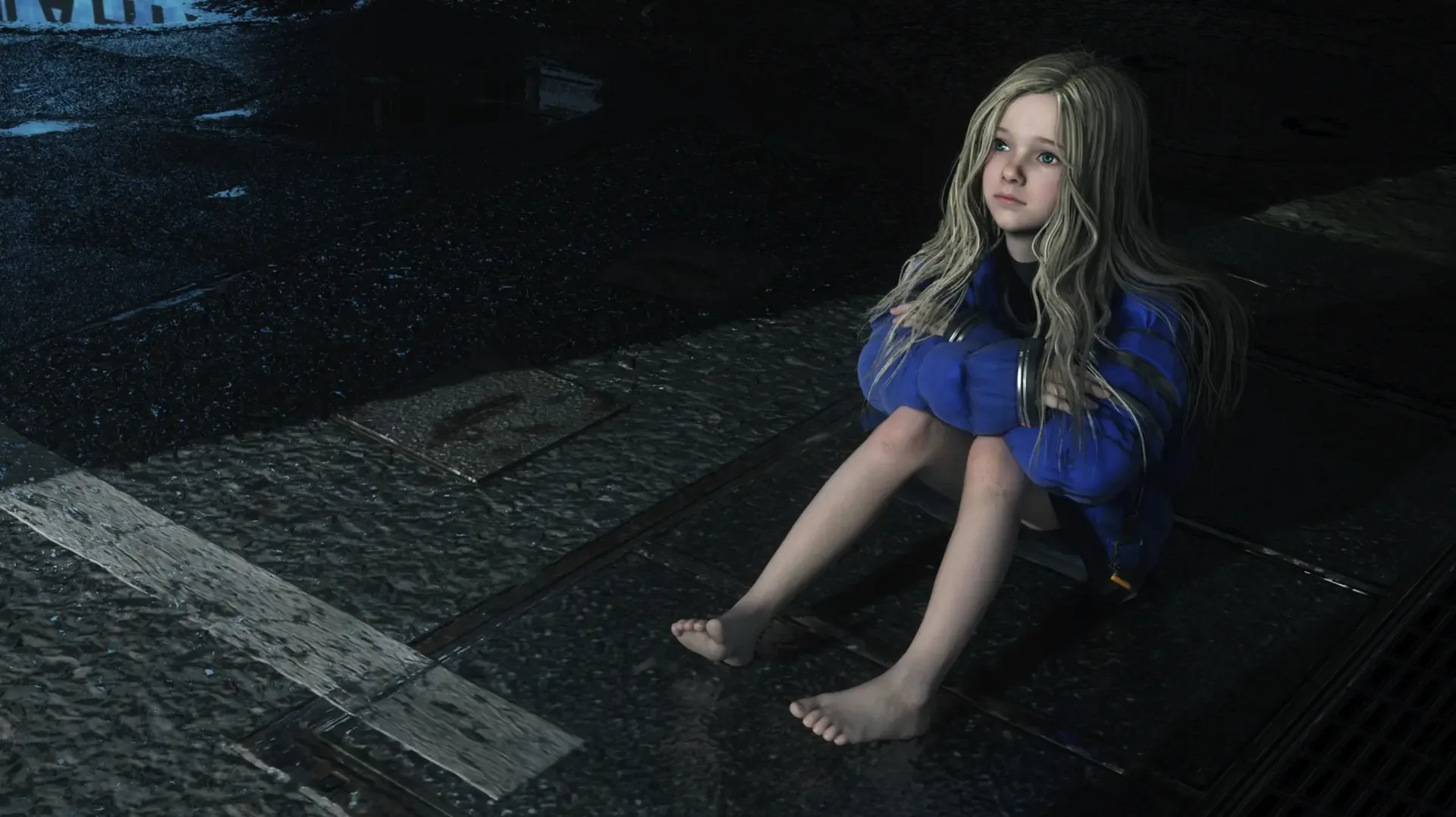
A shooter that hands the hard part to a child#
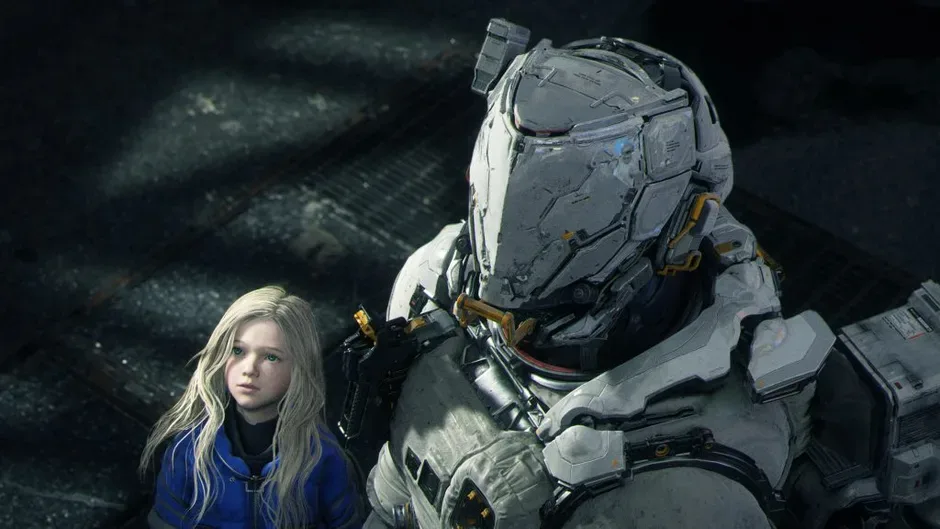
Pragmata is what happens when a big publisher decides that a new franchise should not be another safe variation on something it already owns. Capcom developed and published it, it runs on the RE Engine, and it arrived in April 2026 on PlayStation 5, Windows and Xbox Series X|S, with a Nintendo Switch 2 release following a week later in Japan. It is a third-person action-adventure about a spacefarer named Hugh Williams and a young android named Diana, and the game keeps both of them on screen and in play at the same time. Hugh moves and shoots. Diana hacks. Neither works without the other.
The thesis of this review is simple. Pragmata has one big idea, and it is a good one: the puzzle is not a break from the shooting, it is the shooting. That idea carries the game through most of its runtime, gives the fights a shape no other third-person game has, and wraps it all around a small, human story about two characters stranded on the Moon. It earns an 8 because the idea is strong enough to hold up for long stretches, and it stops short of a 9 because a single mechanic, however clever, asks a lot of a campaign.
What makes Pragmata different#
The one idea underneath everything is that hacking is a real-time minigame that runs inside the combat instead of pausing it. When Hugh faces one of the station's robots, most of them wear metal plating that his weapons cannot meaningfully damage. Diana opens a hacking grid, and the player guides a cursor across it to reach a target tile while avoiding obstacles. Complete the path, and the plating is stripped away, exposing a weak point that Hugh can now hit properly. The grid does not wait. Hugh is still being shot at, still needs to dodge, and still needs to keep his distance while Diana works.
That is the heart of it, and it is worth saying what it replaces. In a normal shooter, an armoured enemy is a health bar with a special rule attached: shoot the weak point, or flank, or use the right ammunition. Here, the armoured enemy is a question, and answering it takes a different kind of skill than aiming. The result is a fight that switches between two mental modes every few seconds. One moment the job is spatial planning on a grid. The next, it is movement and aim in a three-dimensional arena. The game asks for both, often at once, and that is why it feels unlike anything else Capcom has released.
There is also a piece of design honesty in how the puzzle works. The grid has bonus nodes, and the player can choose to route the cursor through them to gain extra advantages, such as a boost to weapon damage. That turns the puzzle into a risk-reward decision instead of a simple lock to pick. A safe path finishes quickly and exposes the enemy with no extra benefit. A longer route through bonus nodes takes more time, which means more time under fire, but rewards the player with a stronger next volley. The choice between speed and payoff appears in every hack, and it is what keeps the mechanic from becoming a chore.
The two-character setup is the second half of the idea. Because Diana is not a sidekick who follows behind and occasionally opens a door, but the source of the game's central mechanic, the relationship between the two characters is built into how the game plays. Hugh survives because Diana hacks. Diana is protected because Hugh moves and shoots. Every fight is a small piece of cooperation, and that quietly does more for the story than most cutscenes could.
The hacking grid, in detail#
The grid deserves a longer look, because it decides whether the game works for a given player. It is a compact pathfinding puzzle: a starting position, a target tile, and obstacles in between. The cursor has to be steered across the grid to the target while avoiding those obstacles. In isolation, this is a small puzzle that could sit comfortably in a mobile game. What makes it distinctive is that it happens while the arena around Hugh stays fully live.
The pressure comes from that overlap. A grid solved in a quiet room would be trivial. A grid solved while a robot is closing in and Hugh has to keep moving is a real test. The player learns to hack in the gaps between enemy attacks, to start a hack when the arena is calm, and to abort or delay one when a dangerous attack is coming. Getting a hack to complete mid-fight, then punishing the exposed weak point with a burst of fire, is the central satisfaction the game offers, and it is a satisfaction that grows as the challenge rises.
The bonus nodes matter more as the game goes on. Because the player can toggle them into the path for combat advantages, mastering the grid is not only about finishing it but about finishing it in a way that sets up the next few seconds of shooting. A player who reads the grid quickly can plan a route that ends with a damage boost right when Hugh has a clean shot. A player who freezes on the grid loses the initiative, and the enemy takes it. That is a skill curve worth having, and it makes the mechanic feel more like an instrument than a gimmick.
It is also where the difficulty lives. The grid does not have to be hard to be demanding, because the demand comes from the timing. Splitting attention between a grid that needs care and an arena that needs movement is the game's core challenge, and players who find it too much in the first hour will want to know that the feeling eases as the two skills become habits. It never disappears entirely, and that is by design.
Hugh's side of the fight: jetpack and energy weapons#
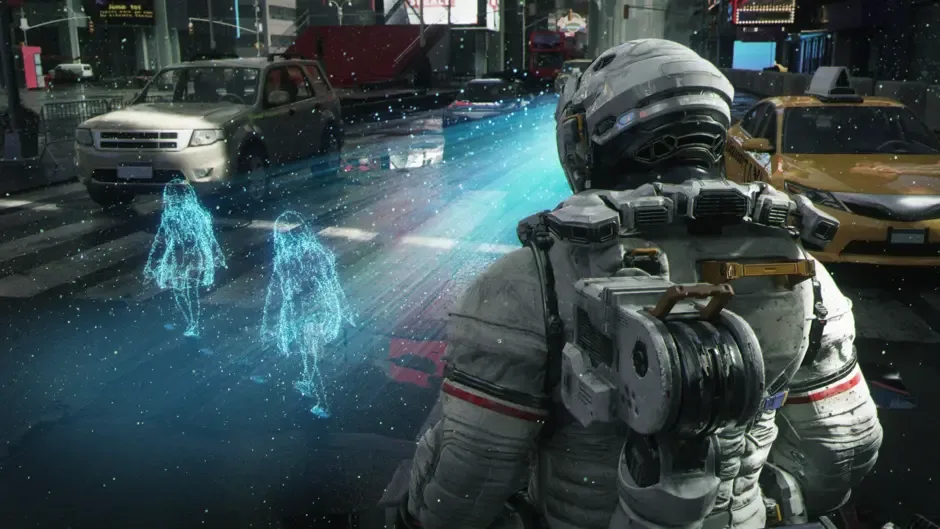
Hugh handles the other half of combat, and it is more than a supporting role. He carries energy and electricity-based weapons, and he wears a hip-mounted jetpack that serves as both a dodge tool and a way to move around the environment. The jetpack matters more than it might sound. In a lunar setting, the vertical dimension is part of the fiction, and using it in combat makes the fights feel less like standing behind cover and more like moving through a three-dimensional space.
Energy weapons also fit the setting. The Cradle is a research station, and the gear Hugh uses feels like tools that belong there rather than generic military hardware. The shooting itself is the counterpart to the hacking. Where the grid asks for careful routing, the weapons ask for quick reactions and clean aim on the weak points that Diana exposes. When the two halves lock together, the rhythm is unusual: a brief stretch of defensive movement while the grid is worked, then a sharp offensive burst when the plating drops.
Defeated robots leave behind a material called lunafilament, and it is the currency that drives progression. Lunafilament is used to craft new weapons and to upgrade both Hugh and Diana. That last detail is important. Upgrades are not only about making the shooter stronger. They also improve the hacker, which means the growth in one character's abilities directly supports the other. A player who invests only in firepower will find the grid harder to manage, and a player who invests only in hacking will find the exposed weak points harder to exploit. Balancing the two is a quiet strategic layer that suits the game's theme.
The Cradle and the rogue AI#
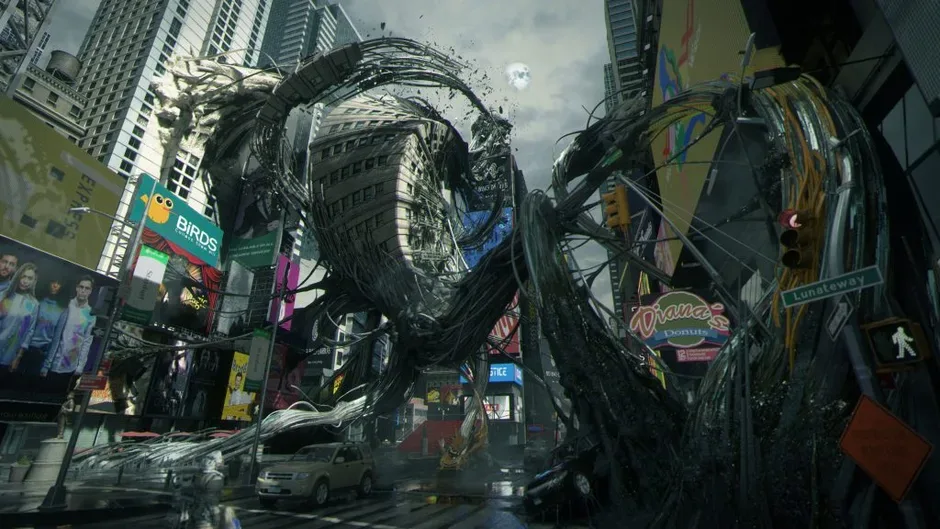
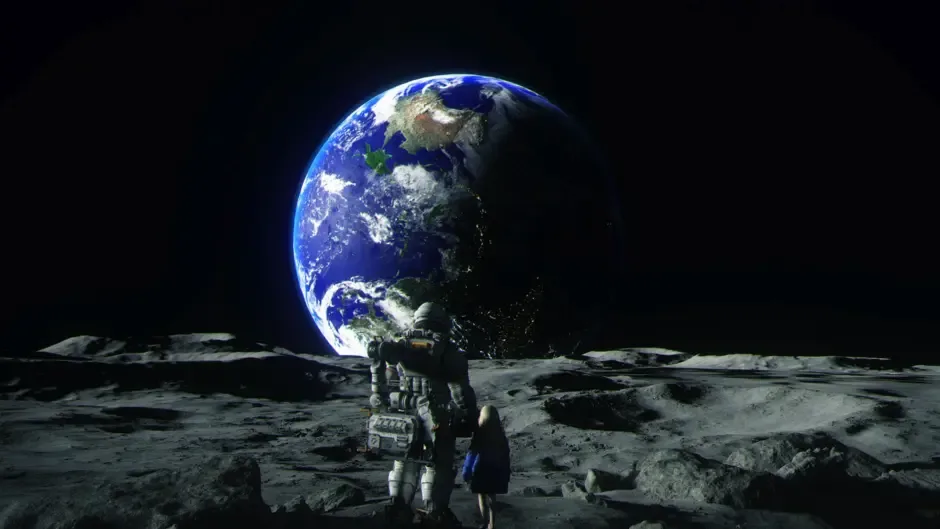
The setting is a lunar research station called the Cradle. A catastrophic accident has left it in the hands of a rogue AI named IDUS, and the station's original inhabitants have vanished. Hugh belongs to an ill-fated investigation team, and Diana is a young android he meets while both are looking for a way to Earth. That is the whole premise, and it is deliberately narrow. The game does not try to build a sprawling universe. It puts two characters in a closed, hostile environment and lets the setting do the work.
A closed setting suits the mechanic. The robots that attack Hugh and Diana are the station's own machines, turned hostile, and the plating that Diana strips away is the station's engineering being used against itself. The hacking fiction and the environment feed each other. The player is not solving arbitrary puzzles for the sake of a puzzle game. They are reprogramming the tools of a facility that has gone wrong, which gives every hack a reason to exist within the story.
World-building supervisor Shōji Kawamori, best known for his work on the Macross series, is credited on the game, and the station's identity reflects a designer's sense of how machines and spaces should look and behave. That credit is a useful pointer for anyone wondering where the game's visual confidence comes from. The setting does not feel like a generic sci-fi corridor. It has a clear identity, and the eeriness of an emptied research base gives the game a mood that stays consistent from start to finish.
Hugh and Diana: the relationship is the game#
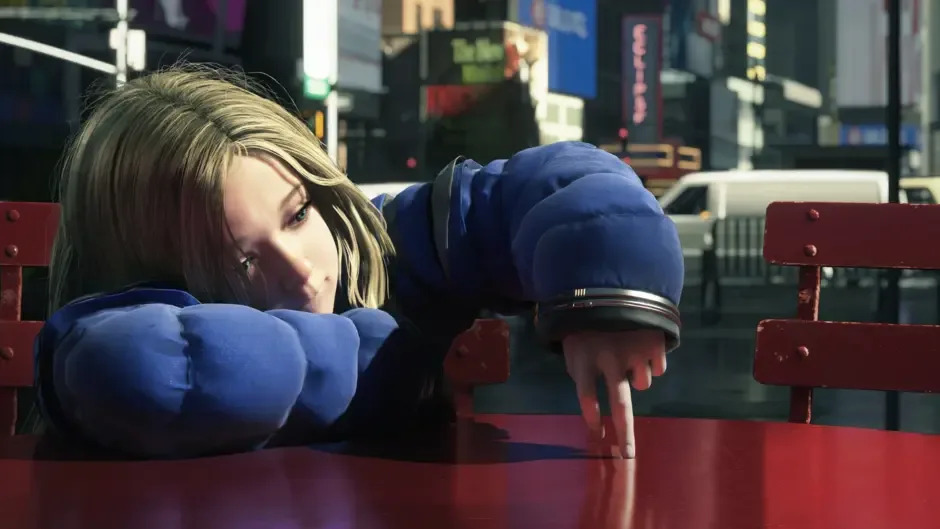
The story is where Pragmata is most likely to surprise anyone expecting a straightforward action game. The narrative explores themes of parenthood and sacrifice, and it does so through the bond between Hugh and Diana. Hugh is an adult stranded in a dangerous place. Diana is a young android who is, in effect, a child in his care. Their relationship starts as a matter of survival and grows into something more emotional, and the game makes that growth part of the play.
A small system supports this. Players collect REM data, and that data can be used to give Diana gifts. This is a mechanic that could easily feel like a checklist, but here it serves the theme: the gifts strengthen the bond between the two characters, and the player is invited to participate in that bond rather than simply watch it in cutscenes. It is a modest system, but it aligns the emotional core with the actual play, which is a harder trick than it looks.
Voice acting carries a lot of weight in a two-person story, and the game invested heavily in it. David Menkin performs Hugh in English, and the role took around 18 months of recording. Grace Saif performs Diana. The cast took part in a table read, which is uncommon for video games, although the two actors recorded their parts separately. The care shows in a relationship that depends on tone. A story like this lives or dies on whether a father figure and a young android sound like they belong together, and the performances make that believable.
The narrow focus is both a strength and a limit. Because the story is about two people, it can go deeper into them than a large-cast adventure ever could. But it also means the world is quiet. There are few side characters to meet, and anyone who wants a game that fills its space with personalities will find the Cradle stark. That is an honest trade-off, and it is one the game makes on purpose.
Six years in the making#
Pragmata has a long history, and it is worth knowing because it explains a great deal about how the game feels. It was first announced on 11 June 2020, during Sony's PlayStation 5 reveal stream, as Capcom's first original franchise in eight years. It was originally planned for 2022, then pushed to 2023 in January 2021, then delayed indefinitely in June 2023, before being confirmed for 2026 in June 2025. Development ran for six years.
Director Cho Yong-hee has said that the core concept did not change during development, and that the team went through extensive trial and error, particularly around the puzzle hacking. That detail matters. It suggests the delays were spent on the hard part, which is making the hacking grid work inside a live combat encounter, rather than on reworking the premise. And it shows: the grid is the most refined part of the game, and it is clear that a lot of iteration went into how it feels under pressure.
Yasuhiro Anpo shares the director role. The production team includes Naoto Oyama, Edvin Edsö and Masachika Kawata as producers. A long development cycle is not a guarantee of quality, but in this case it is visible in the way the central mechanic has been tuned, and in the way the game holds together despite its unusual design.
Presentation and technical notes#
Pragmata runs on Capcom's RE Engine, the same technology behind the company's recent horror and action releases, and the Steam listing shows a solid set of features: full controller support, with the gamepad recommended, DualShock and DualSense controller support, HDR, captions, Steam Cloud, Steam Achievements and Family Sharing. The controller recommendation is telling. A game that splits attention between a hacking grid and a fast-moving arena is well suited to a gamepad, and the layout is clearly built around it.
The Nintendo Switch 2 version has a staggered release, arriving on 24 April 2026 in Japan, a week after the other platforms. That matters for anyone who prefers to play on Nintendo hardware, because it means the game is available across the current console generation and on PC. Anyone on Switch 2 should check the regional release details before buying.
A free demo called Pragmata: Sketchbook exists on Steam, and it is the sensible first step for anyone unsure about the central mechanic. Because the game's whole identity rests on how the hacking grid feels, a demo is more valuable than usual. If splitting attention between the grid and the arena feels natural after a short session, the full game will hold up. If it feels like a chore, no amount of polish elsewhere will change that.
Difficulty and learning curve#
The demand in Pragmata comes from how much you have to do at once. The grid asks for spatial reasoning, the arena asks for movement and aim, and the two happen at the same time. For many players, the first hour is the hardest, because the two skills have not yet become habits. Later on, the combination smooths out, and the game becomes a question of how much more the developers can layer on top of it.
That is the honest description of the challenge, and it is why the game will not suit everyone. A player who likes to focus on one task at a time and to master it before adding another will find the design demanding. A player who likes to juggle will find it exhilarating. The game does not hide which kind of player it is written for.
The upgrade system softens the curve. Lunafilament lets the player improve both characters, so a player who struggles with the grid can invest in hacking, and a player who struggles with survival can invest in Hugh. That kind of flexibility is welcome, because it allows the game to meet different players where they are. It is not a difficulty slider, and it does not need to be one. It is a set of choices that lets each player decide which half of the partnership to strengthen first.
Where it wobbles#
An 8 is not a 10, and the reasons are specific. The first is repetition. The hack-then-shoot loop is the game's best idea, and it is also nearly all of the game's combat. Weapons, upgrades and new enemies vary the details, but the fundamental rhythm rarely changes. Over a long session, that rhythm can start to feel like the same puzzle in a different room, and it is the main risk to the game's staying power.
The second is the collectibles system. Collecting REM data feeds into the bond between Hugh and Diana, and that is a good use of it. But the pull of collectibles can draw attention away from the campaign's strongest moments, and the presence of a checklist works against the intimate mood the story builds. It is a small complaint, but it is a real one.
The third is scope. The story is narrow, the setting is closed, and the mechanic is single. Those choices give the game a strong identity, and they also mean there is less to fall back on when one part is not working for a given player. A game with a bigger world or a broader combat system would have more to offer a player who does not connect with the grid. Pragmata is a bet on one idea, and that bet is not for everyone.
Compared with Control and Astral Chain#
The most useful comparison is Control, Remedy's supernatural action game, because both games take third-person shooting and add a layer that changes how the fights feel. Control's layer is telekinesis and a shifting environment, and its combat is about controlling space. Pragmata's layer is the hacking grid, and its combat is about solving a problem while under pressure. Control is looser and more improvisational, with a heavy focus on atmosphere and lore. Pragmata is tighter and more structured, with a smaller cast and a more personal story. Anyone who wants a sprawling mystery with a vast, strange building to explore should lean toward Control. Anyone who wants a focused two-character story built around a mechanic that changes every fight should lean toward Pragmata.
Astral Chain is the other useful reference, because it also builds combat around controlling two entities at once. Astral Chain gives the player a partner creature that acts on command, and the fights are about coordinating the two. Pragmata does something related but different: the partner is not commanded but is a different mode of play, a puzzle running alongside the shooting. Astral Chain is faster and more style-driven, a game of combos and flair. Pragmata is more deliberate, and its thrills come from the moment a hack lands and a weak point opens. Players who want maximum speed and spectacle will lean toward the former. Players who want tension and a puzzle-like rhythm will lean toward the latter.
Neither comparison is a criticism. Pragmata stands on its own, and the fact that it invites comparison with well-regarded games is a sign of how ambitious its design is.
| Pragmata | Control | Astral Chain | |
|---|---|---|---|
| Core hook | Real-time hacking grid | Telekinesis and shifting rooms | Commanded partner creature |
| Tone | Intimate, two-person story | Mysterious, lore-heavy | Stylish, fast |
| Setting | Lunar research station | A shifting government building | A futuristic city |
| Best for | Puzzle-minded shooter fans | Explorers and lore hunters | Combo-focused action fans |
New to this kind of game? Start here#
Pragmata is a good entry point for players who like the idea of a shooter with a puzzle layer, but a few habits help.
- Try the free Pragmata: Sketchbook demo first, since it shows whether the hacking grid suits you before you spend anything.
- Practise hacks in calm moments, and only move to hacking under fire once the cursor movement feels natural.
- Use the bonus nodes deliberately. A slightly longer route that boosts weapon damage is often worth the extra seconds when Hugh has room to move.
- Spend lunafilament on both characters. Upgrading only the weapons makes the grid harder, and upgrading only the hacking makes the exposed weak points harder to punish.
- Use a gamepad. The Steam listing recommends it, and the split between grid and arena is far easier with a controller.
Worth the money?#
Pragmata costs 59.99 euros for the Standard Edition on Steam, with a Deluxe Edition listed at 69.99 euros. There are two DLC packs on the platform: the Shelter Variety Pack, listed at 14.99 euros, and a Mega Man Pack. The core game is the one that matters. For that price, the game offers a focused action campaign built around a new idea, which is a very different proposition from a sprawling open-world game with hundreds of hours of content.
The value calculation depends on what you want. A player who values novelty and a tight, story-driven experience will find the price fair, because the central mechanic is not available anywhere else. A player who wants the longest possible playtime for the money will find better ratios elsewhere. The sensible advice is to try the free demo first, since the demo answers the only question that really matters: does the hacking grid feel good in your hands?
Waiting for a discount is reasonable for anyone on the fence, since a game this focused loses little by being played a few months later. Anyone who is already convinced by the concept has no reason to hold back.
Best platform: PC, PlayStation 5 and Xbox Series X|S all offer the full experience, and the Steam version lists HDR and full controller support, with DualSense supported. The Switch 2 version is worth considering for anyone who prefers to play on Nintendo hardware, though it launched a week later in Japan than the other platforms.
Language: the Steam listing shows English, French, Italian, German, Spanish for Spain and Latin America, Brazilian Portuguese, Polish, Russian, Arabic, Simplified and Traditional Chinese, Japanese and Korean, with full audio in select languages. English text is fully supported. Swedish is not on the list.
Play this instead if…#
Shorter: Astral Chain packs a two-entity action system into a tight, stylish campaign, with combat built on coordinating a partner, which makes it a fast alternative for players who like the idea of controlling two things at once.
Easier: Ratchet and Clank: Rift Apart offers polished third-person shooting with a gentler learning curve and no puzzle layer to manage, which suits players who want the pleasure of the weapons without the split attention.
Cheaper or co-op: Control delivers a strong third-person action experience with a distinctive supernatural hook, usually available at a lower price after its years on the market, though it does not offer co-op play, and neither does Pragmata. Players who want to share the screen should look at dedicated co-op shooters instead.
Frequently asked questions#
How long is Pragmata? A verified campaign length is not stated on the store page, so the safest description is that it is a focused, story-driven action-adventure rather than a hundred-hour open-world game. The demo is the best way to judge whether the pacing suits you.
Is Pragmata an open world? The setting is a single lunar research station called the Cradle, a closed and hostile location rather than a sprawling open map.
Does it have co-op? No co-op mode is listed among the game's features. Pragmata is built around a single player controlling Hugh and Diana together.
Is there a demo? Yes. A free demo called Pragmata: Sketchbook is available on Steam.
Do you need to know anything first? No. Pragmata is a new franchise, announced in 2020 as Capcom's first original series in eight years, and it starts from scratch with its own characters and setting.
Which platforms is it on? PlayStation 5, Windows and Xbox Series X|S, plus Nintendo Switch 2, which arrived a week later in Japan.
The Game Avant verdict#
Pragmata is not a perfect game, and it does not pretend to be. It leans on one idea more heavily than a longer game would want to, its collectibles pull against its quiet mood, and its focus on two characters leaves the world sparse. But the one idea is a genuinely new one, the hacking grid that runs while the arena burns is executed with the confidence of a team that spent years tuning it, and the relationship between Hugh and Diana gives the mechanic a heart that most shooters never bother to build. Capcom took six years and a great deal of trial and error to make a new franchise, and the result is a shooter that has something original to say about what a shooter can be.
For a game of this kind, that counts for a great deal, and it counts for more than the flaws. It deserves the attention of anyone who is tired of the same shooting loop and wants a reason to be curious again. The demo is free, the concept is unique, and the price is fair for what is on offer.
8 out of 10 – the shooter that makes solving the puzzle the same thing as pulling the trigger.