 Portal 2
 Portal
 Baba Is You
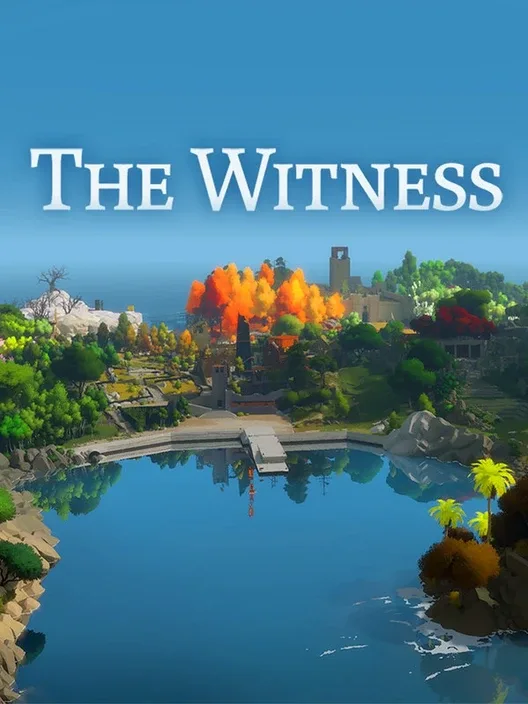 The Witness
 Tetris Effect: Connected
 World of Goo
This is Game Avant's own ranked list of the best puzzle games right now, built from the site's combined rating data rather than picked by hand — with one deliberate exception. IGDB's "Puzzle" genre tag turns out to be unusually noisy on this catalog: a raw pull against that tag surfaces horror games, action-adventure games, and anything with even a token inventory riddle sitting next to actual puzzle design, which is exactly backwards for a list meant to define the genre. The candidates below were filtered by hand to keep only games that are fundamentally puzzle games — spatial and physics puzzles, pure logic systems, narrative-mystery deduction, hidden-object and assembly puzzles — before the same combined critic-and-player scoring Game Avant uses everywhere else decided the order among them.
That filtering step matters because it's the difference between a list anyone recognizes and a list that technically matches a database tag. Expect franchise-defining names like Portal and The Witness sitting near smaller, stranger games most players have never heard of, ranked by the same underlying score once the noise is removed. Read the write-ups for what each entry actually does and where it comes up short — the rank reflects how a game currently scores against this specific, curated pool, not a universal verdict on which puzzle game is right for any one player.
1. Portal 2#
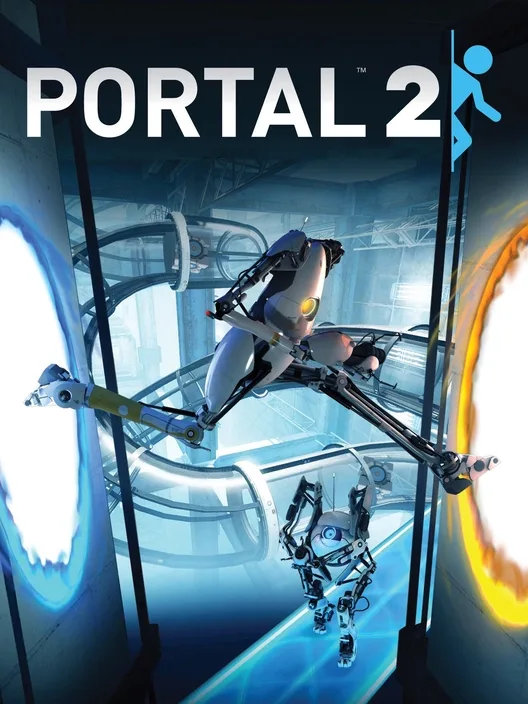
Valve's 2011 sequel took a short, singular experiment and built an entire physics-puzzle language out of it, and the expansion holds up because nearly every addition earns its place. The gels — Repulsion for bouncing, Propulsion for speed, Conversion for painting new portal surfaces onto previously portal-proof walls — turn the original's two-portal premise into a much larger design space without ever losing the clarity that made the first game legible. Wheatley's slow heel-turn from bumbling ally to antagonist gives the campaign a character arc the original's minimalist story never attempted, and the co-op campaign, built around two robots who must communicate entirely through portals and gestures, is a genuinely separate puzzle language from the solo game rather than a reskinned copy of it. The excursion funnels, hard-light bridges, and laser-redirection cubes each get their own dedicated puzzle chapters rather than existing as one-off gimmicks. The honest drawback: the game's difficulty curve back-loads its hardest, most satisfying puzzles into the final third, which means the middle stretch of the campaign can feel like a holding pattern of increasingly elaborate but mechanically familiar test chambers before the co-op-style multi-element puzzles finally show up.
2. Portal#
Valve's 2007 original remains one of the tightest puzzle games ever shipped precisely because of what it leaves out — no inventory, no combat beyond a single late-game turret room, no mechanic introduced that isn't immediately put to use. The Aperture Science Handheld Portal Device does exactly one thing, opening a linked pair of portals on flat surfaces, and the entire eighteen-chamber campaign is a masterclass in teaching that one verb through escalating test chambers rather than tutorial text. GLaDOS's dry, increasingly unhinged narration turns a silent, tightly-designed puzzle sequence into a comedic character study running in parallel with the mechanical difficulty curve, and the moment the test chambers break down entirely into the facility's exposed backstage is still one of the genre's best structural twists. Companion Cube, introduced as a throwaway puzzle prop, became one of gaming's most quoted emotional beats almost by accident. The honest drawback: at roughly three to four hours, the campaign is short enough that some of its best ideas — momentum-based portal flinging in particular — arrive and are explored only briefly before the credits roll, leaving a player wanting a fuller exploration of mechanics the sequel later delivered.
3. The Talos Principle#
Croteam's 2014 philosophical puzzler dresses a set of genuinely excellent Portal-adjacent puzzles — laser redirection, drone and fan manipulation, time-recording clones of the player's own movements — in a setting that constantly asks what the puzzles are even for, as an artificial mind is guided through ancient-ruin test chambers by a disembodied voice claiming divine authority. The tetromino-shaped sigils collected from each puzzle unlock further towers and narrative fragments, tying mechanical progress directly to the game's slow-burn questions about consciousness and obedience rather than treating collectibles as filler. Jammers that disable specific puzzle elements, connectors that redirect laser beams around corners, and the eventual introduction of a second, time-shifted version of the player character stack cleanly on top of each other without ever feeling arbitrary. The forbidden tower that explicitly tells the player not to climb it, and rewards climbing it anyway, is one of the more memorable pieces of environmental storytelling any puzzle game has attempted. The honest drawback: the philosophical dialogue delivered through in-world terminals is dense and occasionally repetitive, and a player focused purely on the puzzle mechanics may find the constant thematic interjections slow the pacing between chambers.
4. Return of the Obra Dinn#
Lucas Pope's 2018 follow-up to Papers, Please abandons conventional spatial puzzles entirely in favor of pure deduction: a ship's insurance investigator boards the derelict Obra Dinn armed with a pocket watch that freezes time at the moment of each crew member's death, and the entire game is built around correctly identifying who died, how, and at whose hand from sixty frozen tableaux and overheard fragments of dialogue. The one-bit Macintosh-style visual style isn't a nostalgia gesture so much as a functional choice — it strips away detail that would otherwise make faces too easy to distinguish, forcing genuine detective work through clothing, accents, and context rather than simple visual matching. The game's refusal to confirm individual guesses until three are locked in simultaneously means a player has to trust chains of logical inference rather than trial-and-error guessing, which is a genuinely rare design decision in a genre that usually rewards experimentation. The eventual scenes revealing the mutiny and its aftermath reframe earlier tableaux in ways that reward careful attention paid dozens of chapters earlier. The honest drawback: the deduction is unforgiving of a player who loses track of a name or a face partway through, and backtracking through memory to re-examine an earlier scene can feel like busywork rather than puzzle-solving in the game's back half.
5. Baba Is You#
Hempuli's 2019 breakout doesn't just ask a player to solve puzzles, it asks them to rewrite the rules the puzzles run on — pushable text blocks like "wall is stop" or "rock is push" can themselves be rearranged, so pushing "is" away from "stop" and toward "win" can turn a wall into a victory condition on the spot. That single premise, rule-manipulation as the core verb rather than an occasional twist, produces puzzles with genuinely surprising, non-obvious solutions that few other games in the genre can match, since the actual objective of a level can change entirely mid-solve. Later levels introduce recursive rule chains — rules that create or destroy other rules — that turn some puzzles into small logic-programming exercises without ever requiring outside knowledge of programming. The minimalist, colorful pixel-art presentation keeps every rule block legible even as boards get genuinely complex. The honest drawback: the game's non-linear level select and total absence of hints mean a player can get thoroughly stuck on an early puzzle with no in-game guidance toward the insight needed, and the pacing between "obvious" and "requires a genuine leap of lateral thinking" is inconsistent enough to frustrate some players well before the harder late-game rooms.
6. Superliminal#
Pillow Castle's 2019 first-person puzzler builds its entire mechanic around forced perspective — an object's in-game size is determined by how large it appears on screen, so carrying a small chess piece toward the camera can make it grow to human scale, while walking away from a huge object can shrink it down to pocket size. That single trick, mined across dream-logic environments that bend and reconfigure themselves as the player solves each room, produces puzzle moments genuinely difficult to predict from outside the game, since the solution to a locked door might be turning around and looking at an unrelated object from a specific angle. The dream-therapy narrative framing gives the disorienting, illogical environment shifts a reason to exist beyond pure spectacle, and later chapters introduce infinite-looping staircases and object duplication that build directly on the core forced-perspective trick rather than introducing unrelated new mechanics. The sudden tonal pivot partway through the campaign, when the dream setting's true nature is revealed, recontextualizes several earlier puzzles in hindsight. The honest drawback: at three to four hours, the campaign ends not long after it has fully taught its own vocabulary, and a small number of puzzles rely on camera-angle trial and error that can feel more like fiddling with the viewport than solving a genuine logic problem.
7. The Witness#
Jonathan Blow's Thekla-developed 2016 open-world puzzler scatters roughly six hundred line-drawing panel puzzles across a single uninhabited island, and its real achievement is teaching every new rule wordlessly — a cluster of panels in one area establishes a visual grammar (dots that must be separated by color, or shapes that must be enclosed within a region) purely through trial and environmental context, with no tutorial text anywhere in the game. Environmental puzzles layered on top of the panel puzzles — shadows cast by real trees that must align with a drawn line, or reflections in water that complete an otherwise-unsolvable panel — turn the entire island itself into a puzzle surface rather than treating the panels as isolated set pieces. The non-linear structure lets a stuck player simply walk to a different area of the island and make progress elsewhere, which keeps momentum in a genre that often stalls hard on a single roadblock. The occasional hidden audio logs and video recordings, philosophical monologues about consciousness and perception scattered through the world, add thematic depth without being required reading. The honest drawback: the sheer puzzle count means the back half of the island leans on rule combinations that are more exhausting than illuminating, and the endgame's hardest optional puzzles are deliberately obtuse enough that most players never see them without outside help.
8. Tunic#
Isometricorp Games' 2022 isometric adventure, designed by Andrew Shouldice and published by Finji, wraps a genuinely demanding Zelda-inspired action-adventure around a puzzle layer hidden in plain sight: the game's entire instruction manual is written in an invented language, and piecing together its meaning from scattered, torn pages is the actual central puzzle running underneath the combat and exploration. Manual pages found out of order reveal secret mechanics, hidden item combinations, and map fragments that reframe areas already explored, which means the genuine puzzle-solving here happens in a player's own notebook as much as on screen. The golden-path sequence in the back half, an obscure, community-solved cipher puzzle requiring information scattered across the entire game world, became one of the most talked-about collaborative puzzle-solving events in recent memory precisely because no single player was expected to find it alone. The hand-drawn manual pages themselves are a genuine art object, evoking physical NES-era game manuals rather than an in-game menu. The honest drawback: the action-combat half of the game is punishing enough, with real difficulty spikes against certain bosses, that players drawn purely by the language-decoding puzzle premise may find themselves stuck on combat rather than ciphers for long stretches.
9. Braid#
Jonathan Blow's Number None-developed 2008 platformer paired hand-painted, watercolor-style visuals with a time-rewind mechanic that turns ordinary platforming mistakes into puzzle material rather than failure states, since nearly any misstep can simply be undone. Each of the game's six worlds introduces its own distinct twist on the rewind premise — objects immune to time reversal, a shadow duplicate that repeats the player's earlier actions in real time, time that only moves when the player moves — rather than reusing the same trick across the whole runtime, which keeps the puzzle logic from ever feeling solved too early. The jigsaw-piece collectibles scattered through each world assemble into narrative paintings that recontextualize the game's fairly opaque story about a search for a lost princess, tying the collectible-hunting directly to the game's emotional core rather than treating it as pure completionism. The final world's puzzle, which asks a player to notice that time is running in two directions simultaneously depending on which character occupies the screen, remains one of the smartest single ideas the genre has produced. The honest drawback: the narrative framing is deliberately abstract and metaphor-heavy to the point that many players finish the game without a clear sense of what actually happened, and a handful of the hidden-star puzzles late in the campaign lean on genuinely obscure environmental logic that most players won't find without a guide.
10. Fez#
Polytron's 2012 platformer, primarily the work of designer Phil Fish, hides an entire second puzzle game inside what initially looks like a straightforward 2D platformer: the ability to rotate the 3D world in ninety-degree increments reveals that platforms and paths which look disconnected from one angle line up perfectly from another, turning traversal itself into the core spatial puzzle. Beneath that rotation mechanic sits a genuinely elaborate cryptography layer — an invented alphabet, a numeral system built on a different base than decimal, and QR-style codes scattered through the world — that the game never explains directly, leaving players to reverse-engineer an entire language from environmental clues alone. The anti-cube collectibles, which require combining knowledge from multiple areas of the map rather than simple exploration, reward the kind of cross-referencing and note-taking that few platformers ask of their players. The black-monolith puzzle late in the game, requiring information gathered from across the entire world and genuine real-world collaboration to crack at launch, became one of gaming's most notable community puzzle-solving events. The honest drawback: the deepest layers of the cipher content are genuinely inaccessible without either exceptional patience or outside help, and the core rotation-platforming, while clever, is mechanically simpler than the rest of the game's ambitions suggest once its central trick is understood.
11. Antichamber#
Alexander Bruce's 2013 first-person puzzler builds an entire game out of non-Euclidean, contradictory architecture — corridors that loop back on themselves impossibly, staircases that lead somewhere different depending on which direction they're climbed, rooms that only exist once observed from a specific angle — and refuses to explain any of it through conventional means. The non-linear map, deliberately disorienting and resistant to being mentally charted the way a normal game world can be, forces players to abandon expectations about spatial consistency entirely rather than gradually learn a set of rules, which is a genuinely disorienting experience few other games attempt this thoroughly. The gun introduced partway through, which can capture and place colored blocks to solve later puzzles, is deliberately withheld until well after the player has already been forced to unlearn ordinary spatial logic, layering a new system onto disorientation that's already been established. Wall-mounted aphorisms scattered throughout comment obliquely on problem-solving and frustration itself, giving the disorientation a loose thematic throughline. The honest drawback: the total absence of conventional signposting is by design, but it means a meaningful number of players get stuck wandering the same loop of corridors with no clear sense of progress, and the game offers almost no accommodation for players who find that specific kind of disorientation more frustrating than fun.
12. The Talos Principle 2#
Croteam's November 2023 sequel expands the original's laser-and-clone puzzle vocabulary into full 3D, open-hub environments shared cooperatively by an entire community of newly created robotic minds rather than a single isolated protagonist, and the puzzles themselves grow correspondingly larger — multi-stage chambers built around gravity-shifting platforms, hexahedron connectors, and stasis fields that freeze specific elements mid-puzzle while others keep moving. The philosophical framing shifts from the original's questions about individual free will to genuinely thorny questions about how a newly formed civilization should govern itself, voiced through a council of characters with real ideological disagreements rather than a single narrating authority. Optional "Golden Gears" puzzles, deliberately harder and more abstract than the mandatory story puzzles, give experienced players from the first game a genuine challenge ceiling the main path doesn't require. The scale of individual puzzle chambers, some spanning multiple interconnected areas solved out of order, is a genuine structural step up from the original's more contained test-chamber format. The honest drawback: the game's philosophical dialogue, while well-written, leans even further into lengthy, optional conversation than the original did, and the sheer scope of the open hub areas can make locating the next unsolved puzzle piece feel like navigation busywork between the actual puzzle-solving.
13. Manifold Garden#
William Chyr's 2019 first-person puzzler, seven years in development, is built around infinitely repeating, gravity-shifting architecture — walking off the edge of any surface doesn't mean falling to death but rather looping back around to the opposite face of an Escher-like, endlessly tessellating structure, and the ability to redirect gravity onto any surface the player is looking at turns every wall, floor, and ceiling into a potential path. Cube-based puzzles requiring specific colored cubes to be routed through gravity-shifted, looping spaces layer conventional block-puzzle logic on top of a spatial premise few other games attempt this rigorously. The stark, minimalist white-and-primary-color art direction keeps the genuinely disorienting architecture legible even as puzzles grow more spatially complex, and the game's slow reveal of color into an initially black-and-white world ties visual progression directly to puzzle-solving progress. The infinite, looping nature of the architecture itself is used as a puzzle element in later chapters, not just a visual gimmick established early and left alone. The honest drawback: the gravity-shifting movement is disorienting by design, and a meaningful number of players report genuine motion discomfort during the more aggressive perspective shifts, which is a real accessibility barrier the game doesn't fully address with its optional comfort settings.
14. Cocoon#
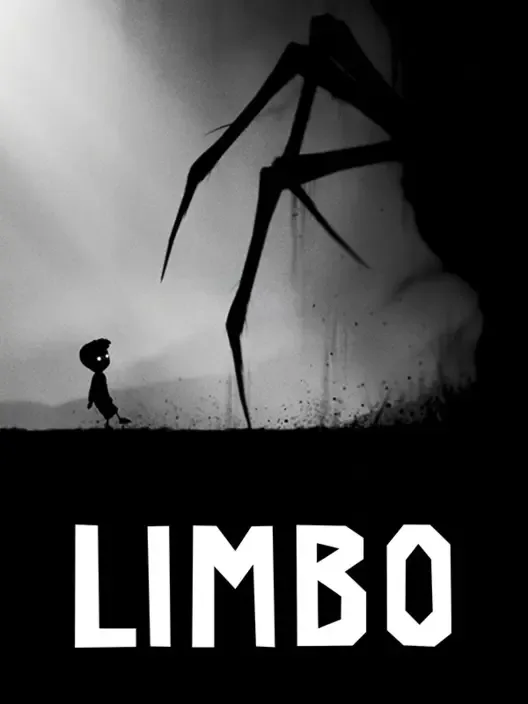
Geometric Interactive's 2023 puzzle-adventure, led by former Playdead level designer Jeppe Carlsen, builds its entire structure around portable, orb-shaped worlds that can be carried inside one another — stepping into an orb transports the player into an entirely separate, self-contained world nested inside the one just left, and puzzles frequently require carrying an effect or object from one nested world into another to solve something that world alone can't. The wordless, atmospheric presentation, inherited from Carlsen's earlier work on Limbo and Inside, keeps the puzzle logic legible through pure visual and audio cues rather than any text, and the eventual reveal that these nested worlds can themselves be carried into each other in increasingly recursive combinations produces some of the most inventive puzzle chambers released this decade. Boss-like encounters woven between puzzle sections use the orb-carrying mechanic itself as the combat solution, tying the game's few action beats directly back to its core system rather than introducing separate combat mechanics. The scale escalation, from a single orb to eventually juggling several nested worlds' properties simultaneously, is paced with unusual precision. The honest drawback: the game's five to six hour length means several of its most interesting recursive-nesting ideas are introduced and then the campaign ends shortly after, leaving a sense that the format had more chambers left to explore than the runtime allowed.
15. Opus Magnum#
Zachtronics' 2017 alchemy-programming puzzler asks players to build automated, cyclical machines out of rotating arms, pistons, and glyphs of transmutation to convert raw alchemical elements into finished compounds, and the puzzle-solving itself is really a soft introduction to circuit and program design without ever using programming terminology directly. Unlike a puzzle with one correct answer, nearly every Opus Magnum puzzle can be solved dozens of different ways, and the game's own scoring system — tracking a solution's cost, cycle time, and physical area used — turns optimization itself into a second layer of puzzle-solving after the first solution is found. The gif-exporting solution viewer, letting players save an animated recording of their finished machine, became something of a community art form in its own right, with elaborate, aesthetically choreographed solutions shared well outside any strict optimization context. Later puzzles introduce increasingly exotic glyphs and multi-stage reaction chains that build meaningfully on earlier lessons rather than simply adding more pieces to the same toy box. The honest drawback: the genre-typical ceiling on this kind of puzzle-optimization game is real — a player uninterested in revisiting solved puzzles purely to shave down cost or cycle count will experience roughly half of what the game is actually offering.
16. World of Goo#
2D Boy's 2008 physics-puzzler, one of the defining early indie hits of its era, asks players to build precarious structures out of small, sticky, googly-eyed balls of goo to bridge, tower, or catapult toward a suction pipe, and the appeal comes almost entirely from watching genuinely convincing physics simulation respond to structures that are clearly one gust of wind away from collapse. Distinct goo-ball types introduced across chapters — goo that detonates, goo that becomes weightless in specific conditions, goo that can only be placed once — force a structural rethink of the core building premise roughly every few levels rather than letting the same tower-building strategy carry the whole game. The tonal shift from the earlier chapters' slapstick charm toward the game's genuinely bleak corporate-satire back half, centered on the World of Goo Corporation's monopolistic ambitions, gives the puzzle progression an unexpectedly sharp narrative edge. The sandbox mode, letting players build with an effectively unlimited goo supply after finishing the story, extends play well past the campaign's own puzzle content. The honest drawback: the game's age shows in its control scheme and interface, both clearly designed around mouse-and-touch input from an earlier console generation, and some of the later structural-collapse puzzles rely on physics behavior specific enough to feel like trial and error rather than deliberate planning.
17. Human Resource Machine#
Tomorrow Corporation's 2015 programming puzzler disguises actual assembly-style coding as office work: an employee stands between an in-box and an out-box, and the player writes short instruction sequences — grab, drop, copy, jump — to process the numbers or letters that flow between them, with no visible code syntax to intimidate a player who has never programmed before. The corporate-office satire wrapping around the puzzle content, complete with a slowly rising skyscraper that reflects the employee's tenure, gives an otherwise abstract logic exercise a consistent, dryly funny visual throughline across its roughly forty puzzles. Later puzzles introduce loops, conditional jumps, and genuine algorithmic thinking — sorting a list, computing a Fibonacci sequence — entirely through the same simple instruction set established in the opening chapters, making it one of the more effective games at teaching real programming logic to someone with zero prior coding background. The optional size and speed constraints on each solved puzzle add a genuine optimization layer for players who want to revisit a finished level and write a tighter program. The honest drawback: the back third of the puzzle set assumes a level of comfort with loop logic and conditional branching that some players never fully build, and a handful of the hardest optional-constraint solutions require genuinely advanced algorithmic thinking well beyond what the core campaign teaches.
18. Tetris Effect: Connected#
Monstars and Resonair's audiovisual reinterpretation of Tetris, originally released in 2018 and expanded into the multiplayer-focused Connected version in 2020, wraps the unchanged, decades-proven core of falling-block Tetris in a synesthetic audiovisual presentation where music, background art, and even the board's particle effects shift and build in direct response to how well a player is stacking and clearing lines. The Zone mechanic, letting a player freeze time briefly to clear a large backlog of lines in one deliberate burst, adds a genuinely new strategic wrinkle to the classic formula without altering the piece set or core rules a Tetris veteran already knows by heart. Connected's cooperative multiplayer mode, letting up to three players share a single stack of Tetris boards to combine Zone effects and clear lines together, is a genuinely novel structural addition to a formula that's otherwise stayed largely fixed for decades. The presentation itself, journeying from serene underwater scenes to full symphonic crescendos, gives the famously abstract puzzle format an emotional arc most competitive Tetris implementations don't attempt. The honest drawback: underneath the audiovisual reinvention, the actual puzzle mechanics are still stock modern Tetris, and a player who finds the core falling-block gameplay unengaging on its own terms will find the presentation dressing, however impressive, isn't a substitute for genuinely new puzzle-solving.
19. Islands of Insight#
Lunarch Studios' 2024 open-world puzzler scatters thousands of grid-based logic puzzles — Picross-style shading grids, Nurikabe-style region puzzles, laser and light-beam puzzles — across a large, cooperative-friendly island explored with other players in real time, turning what's normally a solitary genre into something closer to a shared social space built entirely around puzzle-solving. The sheer volume and variety of puzzle types on offer, each with its own distinct logical ruleset, means a player who tires of one puzzle format can simply wander toward a different puzzle garden built around an entirely different logic system, which keeps the overall pace from stalling the way a single-format puzzle game eventually can. The game's approach to progression, tying new areas and puzzle types to cumulative puzzle-solving rather than a linear story gate, rewards genuine engagement with the puzzle content over narrative pacing. Seasonal and rotating puzzle content added after launch has kept the puzzle pool actively growing rather than static. The honest drawback: the open, exploratory structure and heavy emphasis on discovery over guided instruction means new players can spend real time simply locating puzzles that match the specific logic system they're in the mood for, and the sheer density of available puzzles can feel overwhelming rather than inviting in the opening hours.
20. A Monster's Expedition#
Draknek & Friends' 2020 island-hopping puzzler builds its entire mechanic around pushing logs into the water to form temporary bridges between a chain of small islands, and the twist — a pushed log can only be walked across once before it drifts away, permanently altering the path available for the rest of that puzzle — turns simple sokoban-style block-pushing into genuinely novel spatial planning, since every move changes what's physically possible afterward rather than just moving a block from one spot to another. The overworld itself is the puzzle map, with no menus or level-select screens breaking up the exploration, which means solving one island's puzzle often visibly and immediately opens a path toward the next rather than existing as a discrete, walled-off challenge. The game's dry, deadpan environmental signage, mostly comedic asides about tourism and monster behavior, gives an otherwise entirely mechanical puzzle premise a genuinely funny narrative voice without ever interrupting the puzzle flow with dialogue trees. Optional harder variants of already-solved islands, unlocked after finishing the main path, give the format a real challenge ceiling for players who want to push the log-bridging logic further. The honest drawback: the free-roaming, non-linear island structure means a stuck player has no in-game hint system to fall back on beyond wandering to a different island entirely, and a small number of the hardest optional puzzles require log-path planning precise enough to feel closer to trial and error than deduction.
21. Stephen's Sausage Roll#
Stephen Lavelle's (increpare) 2016 sokoban-style puzzler asks players to roll sausages across a grid using a two-pronged fork, cooking each side evenly by rolling it correctly over grill tiles without ever letting a side burn or stay raw, and the premise's apparent simplicity conceals what critics widely regard as some of the hardest, most rigorously logical puzzle design ever shipped in the genre. The deliberately ugly, low-poly presentation is a genuine design choice rather than a technical limitation, stripping away any visual noise that might obscure the precise spatial relationships every puzzle depends on. Later puzzles layer multiple sausages, narrow ledges, and irregular terrain on top of the core rolling mechanic, and the difficulty escalation is unusually honest — nothing about a late-game puzzle's rules changes from the tutorial, the spatial reasoning required simply compounds until a single correct solution can take genuinely serious, sustained thought to find. The game's total refusal to add hint systems or difficulty options is itself a stated design philosophy, aimed squarely at players who want the format's reputation for extreme difficulty rather than a gentler on-ramp. The honest drawback: that same uncompromising difficulty is a real barrier rather than a hidden virtue for most players, and the intentionally rough, unpolished visual style is a genuine turn-off for anyone judging a puzzle game on presentation before mechanics.
22. Taiji#
Matthew VanDevander's 2022 open-world puzzler, released after a multi-year solo development period and clearly built in conversation with The Witness's panel-puzzle format, replaces that game's line-drawing panels with pixel-art, mandala-style circular puzzles scattered across a large, non-linear, top-down world, teaching each new rule set the same wordless way its clearest influence does. The open, exploration-driven structure means a player stuck on one puzzle cluster can wander toward an entirely different region and make progress there instead, and environmental puzzles tied to specific in-world locations — seasons changing, structures unlocking based on distant progress — tie the puzzle-solving to the wider world rather than isolating each panel as a discrete challenge. The game's willingness to introduce entirely new puzzle rule families deep into its runtime, rather than front-loading every mechanic early, keeps the back half of the campaign from feeling like more of the same. Its pixel-art presentation, distinct from The Witness's photorealistic island, gives the format its own visual identity rather than reading as a straightforward clone. The honest drawback: the game's similarity to The Witness in structure and pacing is close enough that some of its harshest criticism centers on that resemblance specifically, and a handful of its hardest late-game puzzle clusters are obtuse enough that most players won't solve them without outside reference.
23. Patrick's Parabox#
Patrick Traynor's 2022 sokoban-style puzzler takes the classic push-a-box-onto-a-target premise and adds genuine recursion: boxes can themselves contain smaller copies of the puzzle room they're sitting in, meaning a player can push a box into itself, walk inside a box to solve a puzzle nested within it, or even push the outer room into one of its own contained boxes. That single recursive twist, executed with rigorous internal consistency throughout, produces puzzle logic genuinely unlike anything else in the sokoban tradition, since a solution frequently requires thinking several nested layers deep simultaneously rather than solving one flat grid at a time. The game's pacing, introducing recursion gradually across a large, tree-structured level list rather than dumping the full complexity at once, keeps a genuinely mind-bending mechanic approachable for players without a formal logic or math background. Optional harder puzzle branches, clearly marked and skippable, let players opt into the format's most demanding recursive puzzles without blocking progress through the main path. The clean, minimalist geometric presentation keeps even deeply nested nine-layer nested puzzles visually legible rather than collapsing into noise. The honest drawback: fully grasping the recursive premise takes real time even with the gentle introduction, and a small number of players report the nested-box conceptual model never quite clicks, at which point the entire back half of the game remains largely inaccessible.
24. Monument Valley: Panoramic Edition#
ustwo games' mobile-born puzzler, originally released in 2014 and brought to PC as the Panoramic Edition in 2022 alongside its sequel, is built around Escher-inspired impossible architecture — rotating a level's camera reveals paths that don't actually connect from one angle but do from another, and princess Ida must be guided across these optical-illusion structures by manipulating levers, rotating towers, and repositioning geometry that only becomes walkable once viewed correctly. The game's brief, deliberately meditative pacing, roughly two to three hours for the original campaign, is matched by a hand-painted, jewel-toned art direction that turns each level into something closer to a moving illustration than a conventional puzzle environment. The Crow People antagonists, silent, geometric figures that block Ida's path without ever posing direct combat danger, are used as environmental puzzle elements rather than enemies, keeping the entire experience free of anything resembling failure states or time pressure. The Panoramic Edition's widescreen, higher-resolution presentation and bundled expansion chapters give the mobile original meaningfully more content and visual fidelity than its phone-screen origins suggest. The honest drawback: the puzzles themselves are gentle by genre standards, rarely posing a serious challenge to anyone with prior puzzle-game experience, and the full campaign plus expansions still clocks in short enough that some players will finish it in a single sitting and want more.
25. The Room 4: Old Sins#
Fireproof Games' fourth entry in its tactile object-puzzle series, released on mobile in 2018 and brought to PC in 2021, moves the format out of the earlier games' single-box focus into a dollhouse-sized miniature mansion, where each room folds open to reveal hidden compartments, sliding panels, and nested mechanical puzzles inside a single central object rather than scattering puzzles across a wider space. The series' signature lens mechanic, letting players view an object under different light spectrums to reveal hidden ink, symbols, or mechanisms invisible to the naked eye, returns here layered on top of genuinely intricate physical craftsmanship — cogs, latches, and concealed drawers that respond with a satisfying tactile click when solved correctly. The narrative, following a detective investigating a family's disappearance connected to occult experimentation, uses journal entries and environmental clues to motivate the puzzle progression without ever pulling focus from the puzzle-box craftsmanship itself. The escalating scale, from a single ornate box in the earlier games to an entire miniature house of interconnected puzzle-boxes here, is a genuine structural achievement for the format. The honest drawback: the hint system, while optional, is generous enough to trivialize genuine difficulty for a player who leans on it even slightly, and the game's short six-to-eight-hour length means the miniature-house premise ends not long after it's been fully introduced.
26. Q.U.B.E. 2#
Toxic Games' 2018 first-person puzzler follows up its Portal-adjacent original with a glove that manipulates specific colored panels — extending platforms, launching pistons, rotating spherical rooms entirely — across environments that shift from the sterile white test-chamber aesthetic of the first game into a genuinely striking alien-ruin setting partway through the campaign. The core puzzle-panel system, requiring players to correctly sequence which colored cube to extend and when across increasingly elaborate multi-stage rooms, builds cleanly on the mechanical foundation of the original without simply reskinning the same puzzle ideas. The narrative framing, following a scientist stranded on an ancient structure investigating a first-contact scenario, gives the puzzle-solving a stronger sense of place and stakes than the deliberately sparse original attempted. Environmental puzzles unique to the alien-ruin sections, involving light refraction and gravity manipulation absent from the earlier lab-based chambers, keep the back half of the campaign from feeling like more of the same panel-pushing established early on. The honest drawback: the resemblance to Portal's premise and presentation is close enough that the game struggles to escape the comparison entirely, and several puzzle solutions rely on precise platforming execution as much as logical deduction, which can turn a correctly solved puzzle into a frustrating platforming exercise anyway.
27. Kine#
Chump Squad's 2019 debut, developed largely by solo creator Gwen Frey before growing into a small team, builds its puzzle-platforming around three distinct characters — a robot, a forklift, and a dancer — each with entirely different movement rules, that must be combined and swapped between mid-puzzle to reach otherwise-unreachable ledges and switches. The jazz-scored, tap-dance-and-machinery aesthetic gives the puzzle-solving a genuinely distinct visual and tonal identity most puzzle-platformers don't attempt, and the character-swapping premise itself, requiring players to think in three entirely different movement grammars simultaneously, produces puzzle logic that a single-character format can't replicate. Later puzzles require using all three characters' movement types in sequence within a single solve, layering genuine combinatorial complexity onto what initially looks like a straightforward three-character gimmick. The roughly six-hour campaign is tightly paced, introducing and then meaningfully escalating each character's role rather than padding the runtime with filler puzzles. The honest drawback: the three-character-swap premise, while clever, is a genuinely smaller design space than more open-ended puzzle mechanics offer, and the game's puzzle difficulty plateaus somewhat in the back half rather than escalating all the way through to the credits.
28. Recursed#
Portponky's 2016 puzzle-platformer, published by Shambles Software, builds an entire game out of a single disorienting premise: rooms exist inside chests, and chests exist inside rooms, so carrying a chest into another room effectively nests one puzzle space inside another, and pulling a chest back out can un-nest it again in ways that ripple through whatever was solved inside it. That recursive chest-and-room structure, executed with total mechanical consistency, produces puzzle logic that rewards genuinely careful spatial reasoning about which space currently contains which, since moving a chest can retroactively undo progress made inside it if not planned around correctly. The game's pixel-art dungeon aesthetic keeps the potentially confusing nested spaces visually distinct enough to track, even as the puzzle rooms grow more elaborately layered across the back half of its roughly six-to-eight-hour campaign. Its scoring system, tracking how efficiently a puzzle was solved, gives players who enjoy optimization a genuine reason to revisit already-cleared rooms. The honest drawback: the recursive chest-nesting concept takes real mental effort to fully internalize, and the game offers little onboarding beyond gradual exposure, which means players who don't build a clear mental model early can find later rooms genuinely bewildering rather than merely difficult.
29. A Castle Full of Cats#
Devcats' 2022 hidden-object puzzler, a standalone follow-up to the studio's earlier A House Full of Cats, sends players scouring detailed, hand-illustrated castle rooms for cats hidden in increasingly clever ways — camouflaged against patterned wallpaper, disguised as decorative objects, or tucked into corners easy to overlook on a first pass — with no time pressure or fail state attached to the search. The game's low-stakes, deliberately cozy pacing is matched by a genuinely charming, storybook-style art direction, and its scale, while modest next to full-priced puzzle games, includes enough individually hand-crafted rooms to give the hidden-object premise real variety rather than reusing the same visual tricks throughout. Achievement-style bonus objectives, like finding every cat in a room without opening the hint menu, give the format a light challenge layer for players who want more than pure relaxed searching. The soundtrack and ambient sound design lean fully into the cozy framing, giving the whole experience a distinctly different mood from the tenser puzzle games ranked above it. The honest drawback: the hidden-object format is genuinely shallow compared to nearly everything else on this list mechanically, offering little in the way of escalating logical difficulty, and the game's short length and low production budget mean it's best understood as a palate-cleanser between denser puzzle games rather than a headline recommendation on its own.
The ranking above blends IGDB's aggregate critic and user rating with Steam's own user review percentage, applied only after the candidate pool itself was manually filtered down to genuine puzzle games — spatial, logical, and deduction-based design specifically, with the horror games, action-adventure games, and loosely tagged outliers that a raw genre-tag pull returns removed by hand before any scoring happened. That filtering step is a one-time curation decision; the ordering within the filtered pool still moves automatically as more people rate these games or as new puzzle releases join the catalog with enough reviews to be scored fairly. Read it as a live snapshot of how these puzzle games are currently rated relative to each other, not a fixed, permanent verdict.